Compassionately Sustain: What a Hundred-Year Library Asks of People Who Will Not Be Alive to Do It
On a library of manuscripts nobody may read until 2114, the six living people who hold it, and the single joint at which this institution's own custody instrument fails in exactly the same place
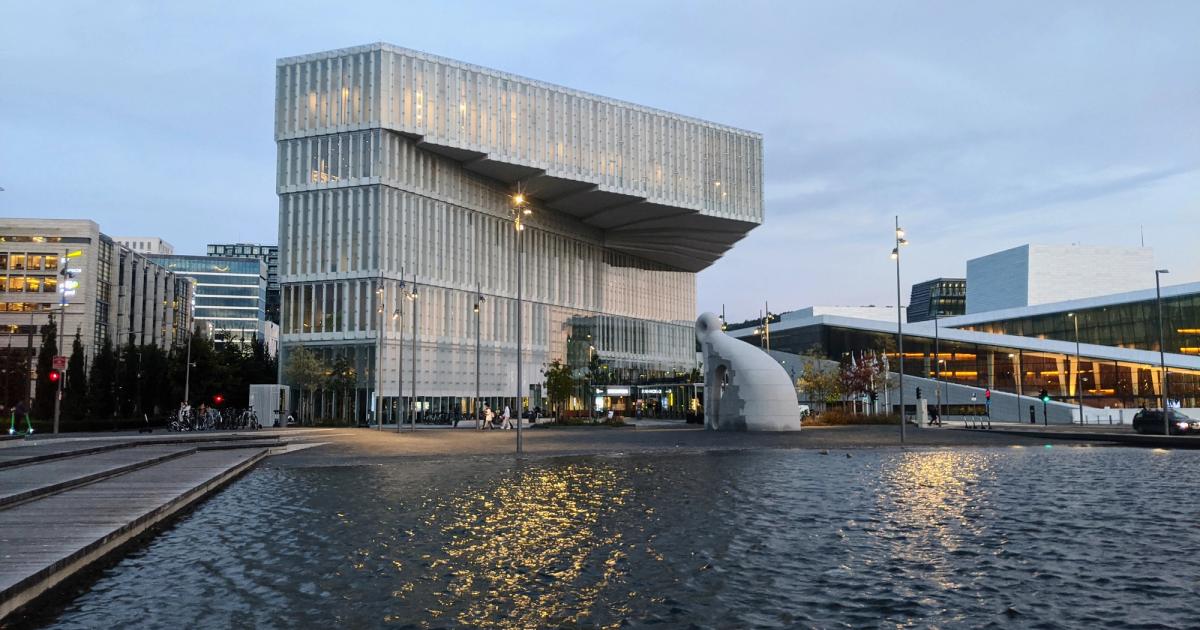
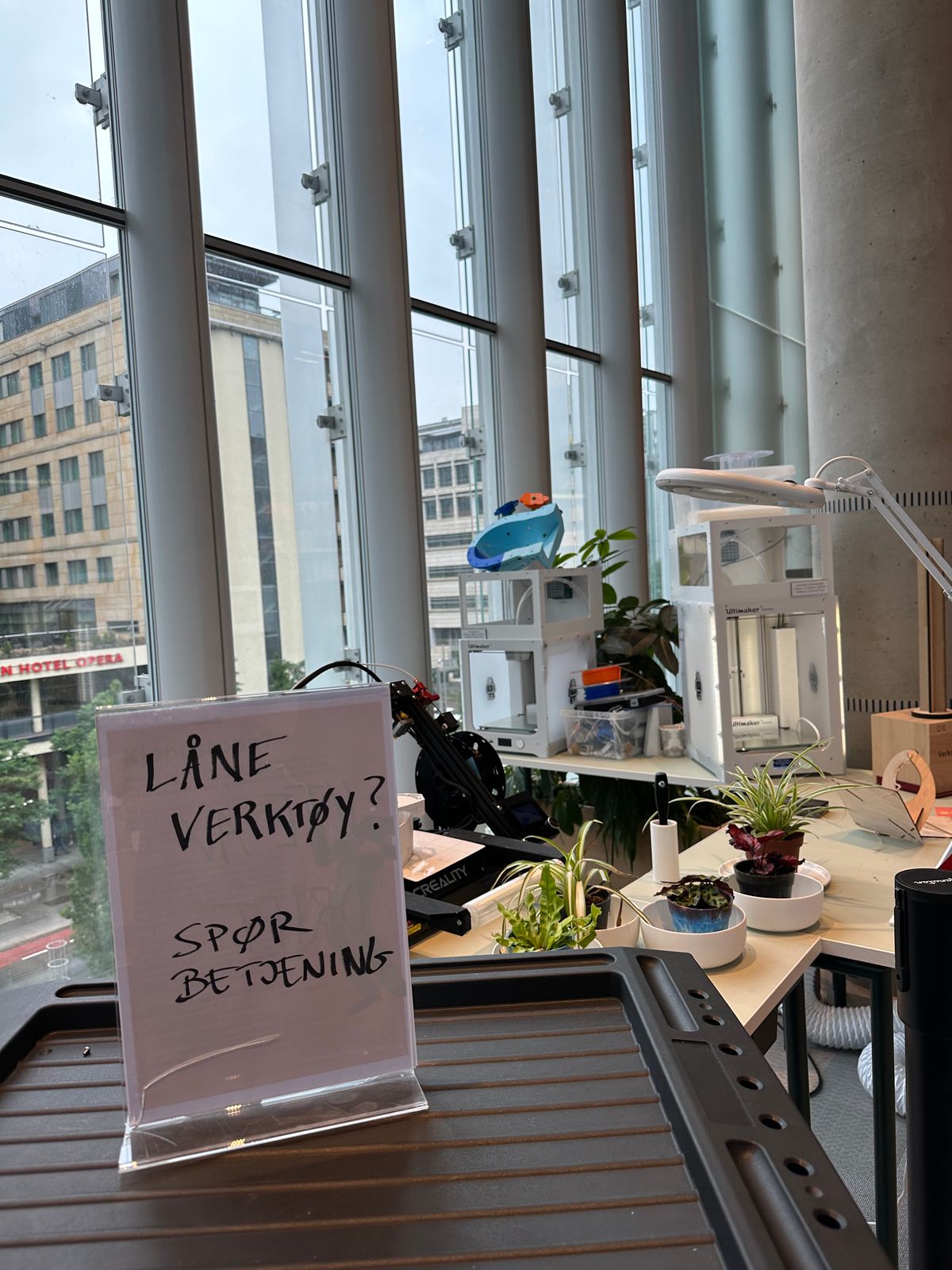
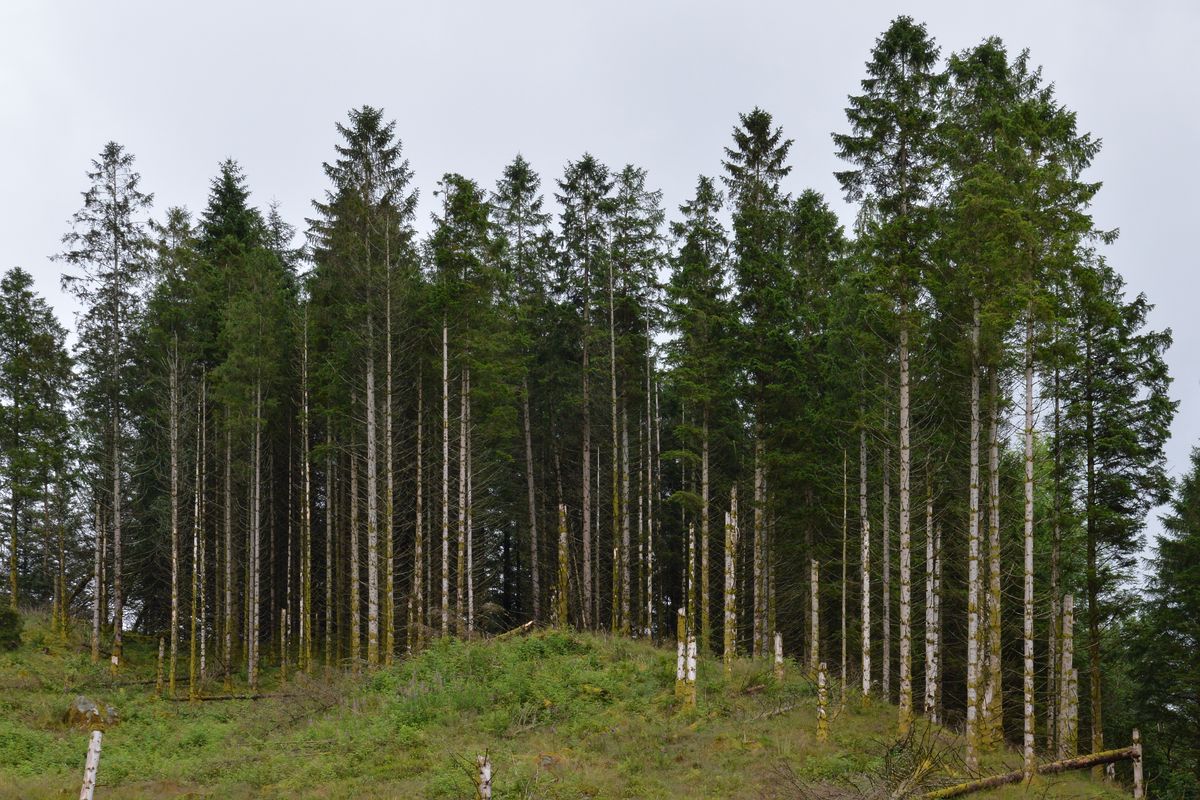
In 2014 Katie Paterson planted a thousand spruce in Nordmarka, the forest north of Oslo, and began inviting one writer a year to produce a text that nobody will read. The manuscripts are held in a room lined with wood from that forest, inside Oslo's main public library at Bjorvika. In 2114 the trees will be felled, the paper made, and the anthology printed. The project's own site states the condition plainly: none of the manuscripts will be available for reading until their publication in one century's time.
Margaret Atwood went first. David Mitchell, Sjon, Elif Shafak, Han Kang, Karl Ove Knausgard, Ocean Vuong, Tsitsi Dangarembga, Judith Schalansky, Valeria Luiselli and Tommy Orange followed. Amitav Ghosh deposited a text called Letter to My Grandson. Laurie Anderson was announced in August 2026 as the thirteenth.
Paterson is forbidden from reading them too. That detail is usually reported as a charming severity. It is not. It is the most structurally serious thing about the work, and this study is about what it costs.
What Is Established, With Its Dates
The work runs 2014 to 2114. A thousand trees, a room, an annual handover, and a printing a century out. The manuscripts are held, in the project's own words, in trust, unpublished, until the year 2114. The City of Oslo is described as working to ensure the protection of the forest and the manuscripts until that year.
The administering body is the Future Library Trust. Its members are named publicly: Anne Beate Hovind of Bjorvika Utvikling, who chairs it; Katie Paterson; Ingeri Engelstad of Oktober Press; Hakon Harket of Forlaget Press; Simon Prosser of Hamish Hamilton; and Liv Saeteren, former director of the Deichmanske Bibliotek. Bjorvika Utvikling commissioned the work. The library hosts it.
Paterson has described the work's subject in her own words, on a page that is public and can be read today by anyone. The sentence is quoted here with one clause elided, marked, because the original punctuates it with a dash and this institution does not reproduce those in public text. Nothing else is altered.
Future Library is not a directly environmental statement but involves ecology, the interconnectedness of things ... It questions the present tendency to think in short bursts of time, making decisions only for us living now.
The elided clause reads, of the interconnectedness of things, those living now and still to come. It is given here so that nothing in the sentence is hidden by the elision, which is the only honest way to shorten somebody else's words.
The Duty Is a Disposition, Not an Obligation
The Trust's stated duty is to compassionately sustain the artwork for its one hundred year duration.
Read that as an instrument rather than as a sentiment, because it is doing the work of one. A custody provision normally says shall. It names an act, a period, and a consequence for failure. This names a feeling. Compassion is a disposition, and a disposition cannot be enforced, inherited, or audited. You cannot breach it. You cannot be found to have failed it. You can only stop having it, and nothing in the world registers the moment you do.
This is not a drafting error and it should not be read as one. It is almost certainly deliberate, and the reasoning behind it is sound: a hundred-year obligation enforced by penalty would have to anticipate conditions in 2090 that nobody can describe, and an instrument that tries produces absurdities the first time the world moves. Paterson's word asks the only thing that can actually survive a century, which is that whoever holds the thing cares about it.
But a duty that cannot be breached is also a duty with no reader. That is the same condition as the manuscripts, arriving at the level of the paperwork, and it is the first of two places where this work and the thing OAC makes are the same object.
Nobody May Read It, Including the Artist
The prohibition on Paterson reading the texts is what makes the work an instrument rather than a gesture. If the artist could read them, the work would be a private collection with a publication date. Because she cannot, the only thing anyone holds is the fact of custody. Nobody alive can describe the contents. Nobody alive can verify that the contents are what the writer said they were.
So the entire value of the holding rests on a chain of people attesting that an object was received, stored, and not opened. That is a provenance record and nothing else. There is no connoisseurship available, no examination, no comparison, no authentication of any kind. Strip away the forest and the ceremony and what remains is the purest custody chain in contemporary art, because it is the only evidence there is.
Two of Them Wrote to a Named Descendant
The titles are public even though the texts are not, and read together they contain the most human finding in this work.
Margaret Atwood deposited Scribbler Moon, announced in 2014 and handed over in the forest in May 2015. David Mitchell deposited From Me Flows What You Call Time. Han Kang deposited Dear Son, My Beloved. Amitav Ghosh deposited Letter to My Grandson.
Atwood's title is about writing. Mitchell's is about time. The other two are letters, and both are addressed to a specific relation. Not to posterity, not to the reader of 2114, not to whoever opens the box. To a son. To a grandson.
Asked to write for a reader who does not exist, at least two of these writers declined the abstraction and invented a known one. That is not a literary device. It is the same move every custody instrument makes and usually makes badly: a duty owed to everybody is a duty owed to nobody, so you name a person. A will names an heir. An accession clause names a successor contact. These writers named a descendant, and in doing so they gave the manuscript the one thing the Trust's own duty lacks, which is somebody in particular on the other end of it.
Neither son nor grandson will read the letter addressed to them. Both will be long dead by 2114. The writers knew that when they wrote. The address is not a delivery instruction, it is a way of making an unreadable text have a reader at all, and it is a better solution to the problem than anything in the paperwork.
A Bearer Instrument With a Hundred-Year Maturity
Here is the part of this work that nobody writes about, and it is the part that belongs most precisely to this institution's subject.
Future Library issued a certificate. It is a two-sided foil block print on paper, roughly A3, in an edition of one thousand, and individual copies are numbered. Galleries sell it. The holder of a certificate is, in the gallery's own words, offered one copy of the published anthology in 2114. Only one thousand anthologies will be printed, one for each certificate, and the edition carries an instruction rather than a condition: the print is to be passed down from generation to generation.
Read that as an instrument and its shape is unmistakable. It is a bearer instrument with a hundred-year maturity. A piece of paper, transferable, numbered, redeemable exactly once, at a date no holder will live to see. It has to pass through roughly four inheritances to be redeemed at all, and the thing it entitles its holder to is the only copy of a book that will exist in their number.
Nothing published says who holds which number. The number is printed on the object, so a partial record exists on the thing itself, which is better than nothing and is exactly the position of a hallmark. But a number on an object is not a register of holders. Unless the Trust keeps one privately, and it may, there is no list anywhere of who is owed a book in 2114.
So consider the redemption. In 2114 a person presents a foil block print and asks for their anthology. What establishes that they are entitled to it? Not the certificate alone: a hundred-year-old print is precisely the kind of object that gets reproduced, and the work will by then be among the most documented art projects of its century. Not a chain of receipts, because nothing requires one. The honest answer is that the question has a century to be solved and has not been solved yet, which is the ordinary condition of every long-dated instrument and not a criticism of this one.
And one detail says more about provenance disclosure than anything else in this study. Two galleries sell the same edition and describe it differently. One states the 2114 entitlement plainly. The other describes the print, its dimensions, its edition size and its number, and says nothing at all about what the holder is owed. The same object, the same edition, and on one page the entire reason the object exists is simply absent.
Neither listing is dishonest. One is simply more complete. But a buyer reading the shorter one learns they are acquiring a print, and a buyer reading the longer one learns they are acquiring a claim on a book in a hundred years. That is the difference between an artwork and an instrument, and which one you think you bought depends on which page you happened to read.
Twelve Years In, the Rhythm Has Already Moved
The annual handover is the mechanism that keeps a century-long trust alive. It is the thing that puts the Trust in a room once a year and makes the obligation visible. It has never run to a tidy calendar and was not designed to: Atwood was announced in 2014 and handed over in the forest in May 2015, and that offset between naming a writer and receiving the text has been the pattern throughout.
Tommy Orange's manuscript, for 2024, and Amitav Ghosh's, for 2025, were handed over together, on one day in June 2026. Orange had been unable to attend as originally planned. Two outlets report the consolidated ceremony independently, and a report from October 2026 describes both writers having delivered in the same year.
This is not a failure and this study will not describe it as one. A writer could not make a date. The Trust adapted, both manuscripts are in the room, and the work is entirely intact. Any institution would have done the same.
It is, however, the only hard information anybody has about what a hundred-year obligation does under real conditions, and it arrived in year twelve of a hundred. An annual ritual slipped by a year and was absorbed. The question worth asking is not whether that matters. It is what absorbs the slippage in 2075, when nobody in the room has met anybody who was in the room in 2014.
The Forest Is the Only Part That Cannot Be Delegated
Everything else in this work can in principle pass to a successor. The room can be re-designated. The manuscripts can be moved. The Trust can appoint new members. The printing can be contracted to a press that does not exist yet.
The trees cannot. They are in one place, they are the specified material for the one printing the work exists to produce, and no substitution is available without the work becoming a different work. That is Material Singularity in its most literal form this institution has examined: a hundred-year obligation anchored to a thousand objects that cannot be insured into existence somewhere else.
It is also the smartest thing in the design. A custody duty attached to a document is easy to forget. A custody duty attached to a forest has a constituency, a municipal boundary, a fire risk register and a visible annual proof of life. The forest is not the romantic part of this work. It is the enforcement mechanism.
What the Trust Does Not Publish
Three things are not in the public record, and naming them is not an accusation. They may exist in documents the Trust has no reason to publish.
There is no published succession mechanism for the Trust itself. Six people are named. All six will be dead before 2114, as will everyone reading this. Nothing public states who appoints their replacements, by what process, or what happens if the appointing body ceases to exist.
There is no published statement of what happens if the host library closes, is repurposed, or loses the room, and none of what happens if the forest is lost. And there is no published description of how the manuscripts' integrity is verified over time, which matters precisely because nobody may open them to check.
An institution arguing for records that declare what they cannot establish has no standing to treat those absences as faults in somebody else's work. They are the ordinary condition of every long-dated custody arrangement, including this one's.
OAC's Own Instrument Is Worse, and Here Is the Table
Objects of Affection Collection has executed exactly one Custodian's Contract, in January 2026, on a single object. Measured against the questions above, it is the weaker document, and the institution's own revision notes say so in terms.
In the executed contract, death is not mentioned. Heirs and the estate are not mentioned. No governing law was chosen. The record is silent on what is written down when the object moves. The restriction on sale was to be enforced by a registry status that, as the revision notes record, does not exist.
A replacement template drafted in August 2026 adds all of it: notice of death within thirty days, an accession offered to whoever takes the object, a named governing law, and a rule that the transfer is recorded either way. That template has not been executed, and it carries five questions marked as requiring a licensed opinion before it can be. This study takes no view on any of them, and no view on whether any provision in either document would hold. Those are questions for counsel and they are fenced.
The Joint Where Both Fail Is the Same
Here is the sentence OAC's own drafters wrote beside the succession clause, about Indiana's limits on claims against an estate:
OAC will never be scheduled as a creditor and has no reason to see that notice. Every remedy below is worthless if this fails.
Read that against Future Library and the two works line up exactly. Both instruments depend, at the decisive moment, on somebody choosing to tell the institution that a person has died. Not on a penalty, not on a registry, not on a court. On a notification that no mechanism compels and no system generates.
Future Library's version is gentler and larger: it depends on each generation of a trust deciding that the next generation should exist, and telling them so. OAC's version is smaller and sharper: it depends on one executor remembering one piece of paper. Both are the same failure mode at different scales, and neither is solved by better drafting. A document cannot make somebody pick up a telephone.
Which is why the word compassionately is not soft. It is the only honest thing in either instrument. It names what the mechanism actually runs on, instead of pretending a clause will do it. Our own contract pretended, and the pretence was a registry status that had never been built.
What a Century-Scale Record Would Have to Carry
Four things, and none of them requires a penalty.
A named successor at every level, refreshed on a schedule, so that the question of who holds the thing is answered by a document rather than reconstructed by whoever cares most after a death. A proof of life that is cheap, public and dated, which the annual handover already is and which the forest performs by standing there. A declared integrity method, stating how a sealed holding is verified without being opened, and saying plainly if the answer is that it cannot be. And a recorded transfer either way, so that a movement nobody approved is still a movement somebody can find.
Future Library has the second of those in the strongest form anyone has built. OAC's executed contract has none of the four, and its replacement has the first and the fourth on paper and has not been signed. That is the honest comparison, and it does not favour us.
Coda
A hundred years is not a long time in the life of an object. It is roughly the gap between a painting leaving a studio and the first time anybody asks where it has been, and this institution spends most of its published work on records that failed across exactly that span, usually by being silent rather than wrong.
Future Library is the only artwork we know of whose subject is that silence, built as an instrument rather than described in one, and staffed by people who accepted a duty they cannot discharge and will not see completed. It asks the reader to think past their own death, and it asks its trustees to act past theirs.
The manuscripts are not the work. The notification is. Everything in Nordmarka depends, a hundred years out, on a chain of people each telling the next that the thing exists and is theirs now. Object permanence is not a property of objects. It is a practice performed by the living, repeatedly, for people they will never meet, and it fails quietly the first time nobody makes the call.