Nine Fields. None of Them Is Provenance.
Most museums inherit their object pages. The fields were chosen decades ago, by people who have gone, in a system that has been migrated twice, and changing them now means changing them for everything at once. That is why the public record of an object looks much the same almost everywhere. It describes the thing in front of you, carefully, and says very little about how it got there.
A museum that opens from nothing inherits none of that. For a short window it decides what its object page says, including what the page says when something is not known. That window closes on the day the collection goes online, and it does not reopen.
What follows is about what is on the public page, today, and about one published policy. Nothing here concerns any institution's internal records, which are not mine to describe.
What three museums in one district publish
Start with what is already visible in Saadiyat Cultural District.
Louvre Abu Dhabi. Its collection is online. Read again this morning, the page for LAD 2009.009, a Gandharan schist Bodhisattva of about 100 to 300 CE acquired in the museum's first year, is labeled with ten things: date, inventory number, geography, category, artistic period, material and techniques, dimensions, owner, current location, and a short description.
None of them is provenance. There is no acquisition line either.
That is not a criticism and it is not unusual. The page describes the object and does not judge it, which is the older and more defensible convention. The point is narrower. A reader who wants to know what happened to that sculpture between Gandhara in the third century and Abu Dhabi in 2009 is not told, and is not told that they are not being told.
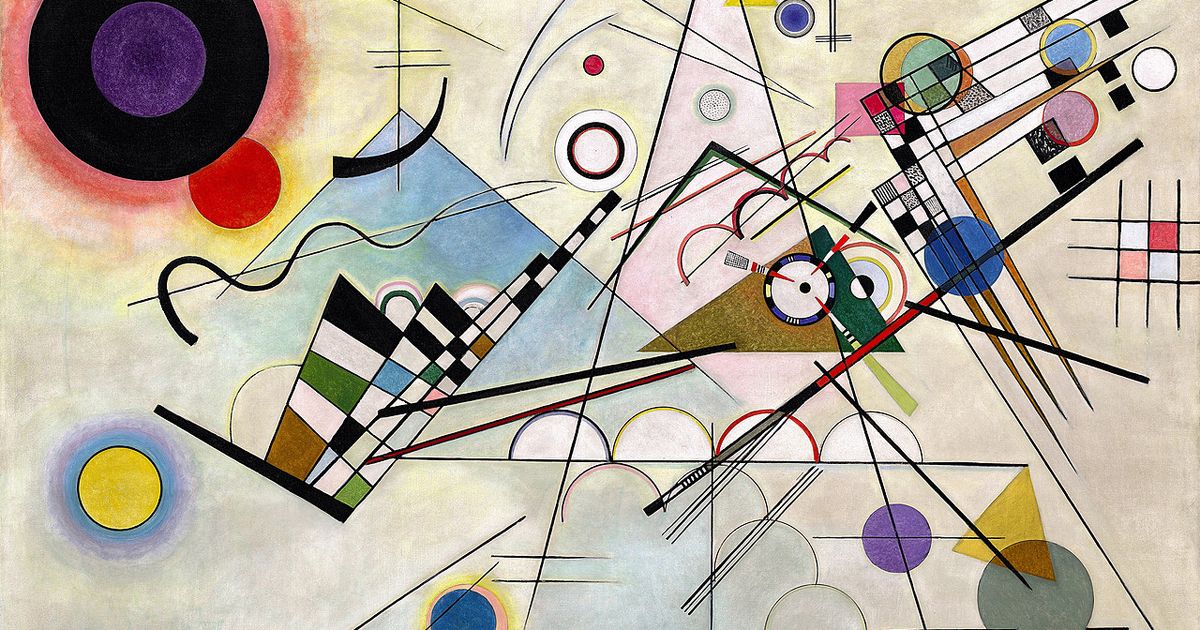
The Solomon R. Guggenheim Foundation's Collection Online. Read the same morning, the page for Kandinsky's Composition 8 carries nine labeled fields: artist, title, date, medium, dimensions, credit line, accession number, copyright, and artwork type. July 1923, oil on canvas, accession 37.262.
The credit line is the closest the page comes, and it is worth reading precisely. It says the work is in the Solomon R. Guggenheim Founding Collection, by gift. That is a true fragment of custody. It names how the museum came to hold the painting and from whom. It says nothing about the fourteen years between the canvas leaving Kandinsky's hands in Weimar and entering that collection.
There is no provenance section on the page at all.
Zayed National Museum, which opened to the public on 3 December 2025, publishes something the other two do not. It publishes the route in. Its donation page sets out five numbered steps, names an Acquisitions Committee that reviews the proposed acquisition, and carries the form itself, on which object history is a required field. The process by which an object enters is public, in order, on one page. A public object database in which the resulting record can be read is not findable from outside.
Three institutions, one district, and the pattern holds. The process is sometimes published. The description is always published. The history before the institution is not.
The exception that proves the convention
The Guggenheim Foundation's Collections Management Policy, adopted by its board on 12 December 2024, is published in full. It is more interesting than any object page.
It requires the curator recommending a work for accession to write a detailed report covering, among other things, the work's exhibition, publication and conservation history, and its provenance. So the information is gathered, by rule, before anything is acquired.
Then there is a clause about the Nazi era, and its trigger is the part that matters. Where that provenance is incomplete, the Foundation researches rigorously. If there is credible evidence of unlawful appropriation without restitution, it does not acquire. And in the absence of such evidence, the work may be acquired, but the Foundation shall then publish an image of the work and a summary of the available provenance information on its website.
Read that twice. The duty to publish attaches precisely to the case where a search was carried out and came back without a finding. An institution whose object pages have no provenance field has a written rule obliging it to publish an incomplete history, in public, for one category of work, in exactly the circumstance where looking produced nothing.
The convention for publishing a searched silence therefore already exists inside the institution. It was built for a particular historical reckoning, it is narrow by design, and it takes the form of a summary written in prose. What it is not is a field. A reader cannot sort by it, a machine cannot act on it, and a curator twenty years from now cannot tell from it whether a given blank means nobody has looked or somebody looked hard and found nothing.
The same policy shows that the apparatus for typing a state onto a record is already there too. It names the Foundation's electronic database, The Museum System, and for works that have been decommissioned it requires a status flag on the object record together with notes of explanation. A flag and a note, machine readable, attached to the object.
That is the whole gap. Not an absence of will, and not an absence of information. An absence of a place to put it.
Four silences that look identical
Any empty space in a provenance record can mean at least four different things.
Nobody has looked yet. Somebody looked, carefully, and found nothing. The evidence is known to be destroyed or dispersed and cannot be recovered by anyone. Or the question does not apply to this object at all.
Those are four different facts about the record, and they tell the next researcher four different things to do. One is a job waiting. One is a job already done by a named person on a known date, which a later reader may still overturn. One is a closed door. One is a category error.
On a page they are the same blank.
A record that distinguishes them costs very little. It says which of the four a silence is, who established it, when they stopped, and what would reopen it. It does not require certainty. It requires only that the record say what kind of uncertainty it is holding.
The owner has said the record does not exist yet
This is usually a retrofitting argument. Here it is not, and the reason is in the announcement rather than in any inference.
On 28 July 2026 the Department of Culture and Tourism in Abu Dhabi announced that Guggenheim Abu Dhabi, a collaboration between the department and the Solomon R. Guggenheim Foundation, will open on 11 December 2026 with thirty galleries. The same announcement says that since 2009 the museum has been building a growing collection of modern and contemporary art, and that the museum will work through its collection, commissions, research, exhibitions and programming. It closes with one sentence that is the whole occasion for writing this.
More information about the collection and commissions will be announced in the coming months.
So the owner has said in public that the public record of this collection has not been published yet. Two things follow, and neither needs anyone's internal files.
The commissioned works have no history to lose. A work being made now has a complete record available for the asking, because the person who made it is reachable and the decisions are being taken this year. The record of a commissioned work is the cheapest complete provenance any institution will ever hold, and it is only cheap before the work is finished.
The acquired works have a first public page that has never existed. Whatever those pages say in December is what they will say, and the conventions chosen for the first few hundred objects will govern thousands later, because nobody rebuilds a field after the fact.
What this is not
It is not an argument that any institution should publish more than it can support. A record that overstates what is known is worse than a blank, because a blank announces itself and a confident sentence does not.
It is not a claim about anyone's internal documentation. Collections systems hold far more than object pages show, and the distance between them is a publishing decision rather than a research failure.
And it is not a view about where any object came from, how it traveled, or where it should be. That argument is conducted by other people, and nothing here touches it. The question is only what a record says about its own limits.
The thing worth saying plainly
Every museum that has rebuilt its catalog has found the same thing. The expensive part is never the research. It is that the research was done once, by someone who has since left, and was never written down in a form that survived them.
A museum opening in 2026 starts without that debt. It can decide, before the first page goes live, that a silence in its records will say which kind of silence it is.
That decision takes an afternoon. Not making it takes decades to undo.