What a Record Loses When It Moves
A record is supposed to travel with its object. Most of the time nobody checks whether it did, because the object moved sounds like one event with one outcome.
It is not one event. Over the past six weeks this institution put the same question to people who keep records for a living: a scientist holding a national archive of ancient wood, a heritage steward working through an uncataloged museum collection, and the head of library and archive at a company that has been marking precious metal in London since the fourteenth century. Their answers did not overlap, and the fact that they did not is the finding.
Moving is at least four different events. The object moves and the record does not. The record moves and the object does not. The custodian moves. And the record is destroyed and rebuilt from the object. A record loses something different in each, and only the last of the four has demonstrably been survived.
The object moves and the record does not
Dr Andrew Lorrey is a principal scientist at Earth Sciences New Zealand. He holds an archive of ancient kauri, wood dug out of Northland swamps that can be tens of thousands of years old. He spoke to this institution on 9 September 2026 and consented on the call to be quoted by name.
Asked whether a plank brought to him tomorrow could be matched back to a tree in his archive, he said the chances are probably not, because they obtained only about five percent of the wood that ever came out of the ground. He might identify the sub-region. Sometimes the site. The individual tree, no.
The limit is not method. It is coverage, and coverage was decided years ago at the moment each log came out of the ground. That is his real point, and it is sharper than a gap in an archive:
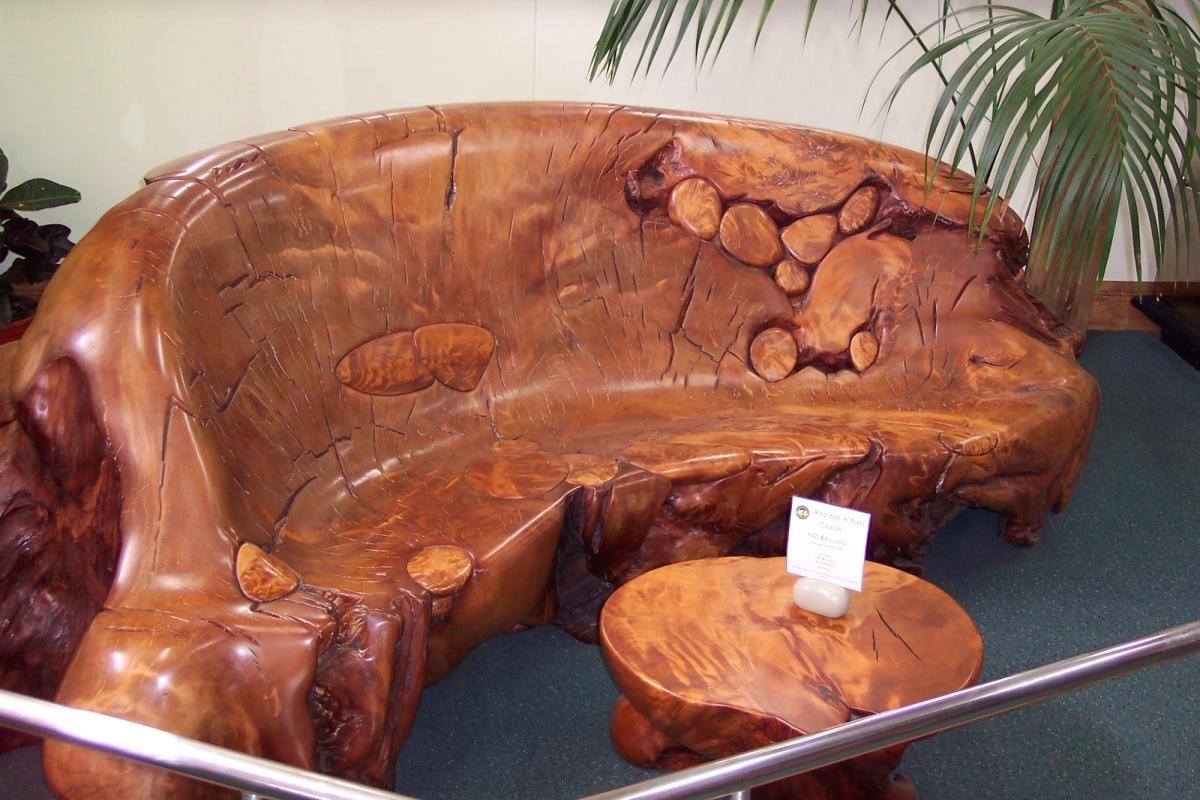
“The intrinsic values to science start to become lost as soon as they touch the tree. As soon as it's not in situ, pristine, if it's been touched, moved, prodded, whatever, the values start to get stripped away.”
The act of recovering the object is the act that strips its record. By the time anybody wants the provenance, the event that would have produced it is years past and cannot be repeated.
He has already built the fix and sold it. Working with an operator at Ahipara he developed a certificate of authenticity for a piece of wood, with a cross section and a label matching the field labeling of the log, and he taught yards to run what he called, unprompted, a chain of stewardship, so that whatever product came off a log they could put their hand on their heart and say it came from sample P21, tree P21.
It moved the price. Buyers paid more for older wood, although a four thousand year old piece and a forty thousand year old piece look identical. Where the age could be authenticated, the wood commanded more. That is a market paying for paper, and it should not be confused with a market paying for custody. Dating is a claim about an object at a moment. It is not a record of who held it over time.
The record moves and the object does not
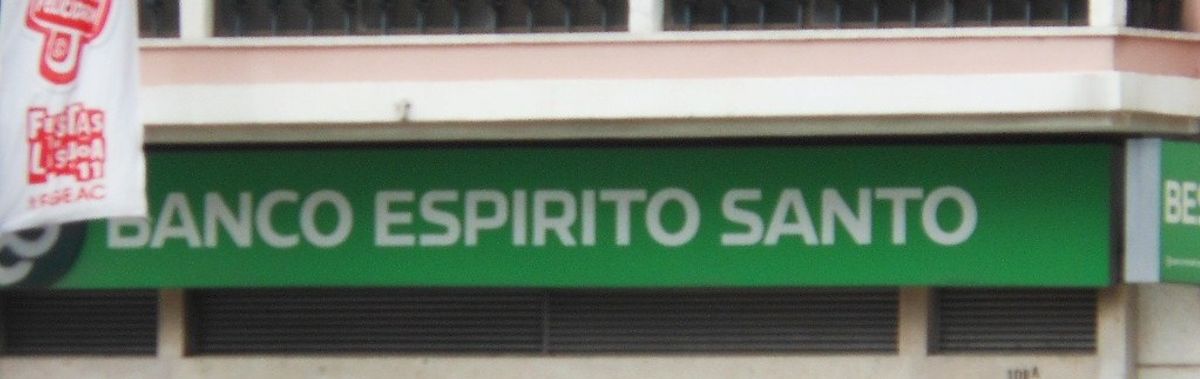
On the evening of 3 August 2014, in Lisbon, the Governor of the Bank of Portugal announced that its Board had that day applied a resolution measure to Banco Espírito Santo. The general activity and assets of the bank, he said, are transferred to a new bank, called Novo Banco. Most of its assets and liabilities were, in his words, immediately and definitively transferred, as well as its collaborators and other material resources.
Among them was a photography collection. The collection's own entry in the International Association of Corporate Collections of Contemporary Art records it plainly: novobanco was established in August 2014 by a resolution of the Bank of Portugal according to which the majority of assets and liabilities of the former Banco Espirito Santo, including the photography collection, was transferred to novobanco. Over a thousand works, three hundred artists, thirty eight nationalities, begun in 2004.
Nobody carried a print anywhere. There was no crate, no courier, no condition report, no loan form. Every work stood in the same rack on 4 August as on 2 August. What changed was the name of the owner, and it changed by an instrument, at a stroke, overnight.
This is the purest case here, because it is the most precisely dateable thing that ever happened to those objects and it is exactly the sort of event a record organized around location cannot see. A system that asks where is it has nothing to write down. A system that asks who holds it has to record the largest change in the collection's history.
This institution wrote to the collection on 10 September 2026 and has had no reply. Everything above is taken from the public record, and nothing in it comes from inside the institution.
The custodian moves
The third case came from a heritage steward and curator working through an uncataloged collection. She consented to be quoted on condition that her employer is not named, and that condition is kept here.
“Should I leave before the cataloguing is completed, the museum's succession-continuity policies don't account for the information uncatalogued/unpublished in my head.”
Read that as an inventory problem. There is a body of knowledge about the collection that exists, that the museum depends on, that has exactly one copy, and that is stored inside a person who is free to leave. No policy references it. Nothing in the record would show that it had gone.
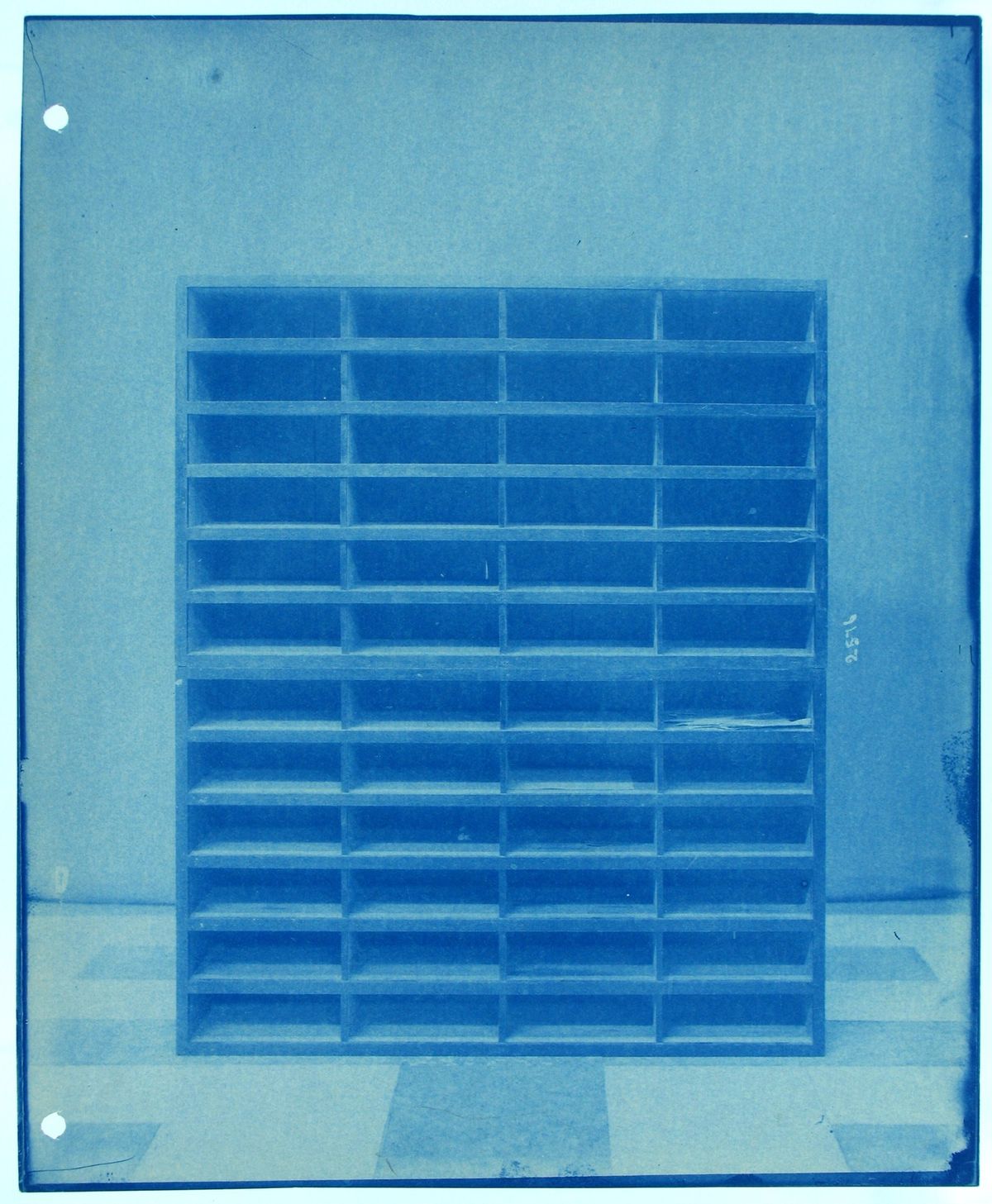
She also gave the sharpest small example anybody in this correspondence has offered: an empty photograph sleeve. An empty sleeve is not nothing. It is evidence that somebody looked, found the slot, and established that the thing was not in it. An absence that has been examined and an absence nobody has ever checked look identical in almost every record, and they are not the same fact.
This is the burden of preservation in its least visible form. The work of keeping a collection legible is being done, continuously and competently, by one person, and it is not being written down anywhere the institution can reach. She is also the first practitioner in this correspondence to ask this institution to solve her problem rather than answer its question, which is worth recording on its own.
The record is destroyed and rebuilt from the object
The Goldsmiths' Company has been assaying and marking precious metal in London since the fourteenth century, and its archive holds records from 1334 to the present day. Eleni Bide, Head of Library and Archive, The Goldsmiths' Company, spoke to this institution on 2 September 2026 and answered a further question in writing on 11 September.
Two things have to be held apart here. A system being interrupted and its documentation being destroyed are different events. The Goldsmiths' system has run for seven hundred years without interruption. Its records have not. They have been damaged by fire and by war.
The objects came through. The registers did not, entirely. And some of the register information was afterward reconstructed, from the objects and from what documentation survived.
Some, not all. That correction is hers, and she supplied it unprompted while approving the quotation below, writing that database and book is accurate, but she should say that they reconstructed some, not all, of the register information. Any account of this that describes the rebuild as complete is wrong, and she has corrected it in writing.
She has now said who did it. The reconstruction was carried out by Dr David Mitchell, with the assistance of Dr Mark Merry, at the direction of the Goldsmiths' Company, which sponsored the project. Its object was reliable attributions for sponsor's marks struck between 1578 and 1697. To get there they built a database of goldsmiths and their careers from a variety of surviving sources, the Company's own records among them, and matched the marks on objects against it. Mitchell then wrote a book, Silversmiths in Elizabethan and Stuart London: their lives and their marks, published by the Boydell Press in 2017, carrying the attributions that evidence supported. Both the book and the database are publicly available through the Company's library.
Here is the part worth copying, in her words:
“The reconstruction is distinct from the original record: it takes the form of a database and a book.” Eleni Bide, Head of Library and Archive, The Goldsmiths' Company.
The reconstruction was not merged into the original. It is a different object, in a different form, and anybody consulting it can tell which of the two they are holding. That was the Company's decision. It directed the work, it sponsored it, and it chose the form the result would take.
That is the entire difference between a record that survived a loss and a record that quietly absorbed one. A rebuilt entry silently folded into an original register would read as continuous evidence, and it would be a lie of the most durable kind, because nothing later could distinguish it. Declared as a rebuild, it stays useful and stays honest at the same time.
What that leaves is a register in four states, and she set them out in writing on 11 September. There is what survived of the original record. There is the official reconstruction, covering 1578 to 1697. There are attributions of earlier marks made by other scholars, which the Library notes separately but does not make part of the official record, in her words, as they can be challenged. And there are marks that carry no attribution at all, because the evidence to support one was not there. The book did not assign an attribution where the evidence fell short, and it did not attempt the earlier period, where so little documentation survives that the task would have been harder still.
Read that as a register grading its own entries by how much weight each can bear. An attribution that can be challenged is kept beside the record and not in it. A mark without evidence is left blank rather than guessed. And she added that both Dr Mitchell and the Library are open to revising the attributions if further scholarship brings more evidence to light. A record that can tell a reader which of the four states any given entry is in, and that says in advance on what terms it would change, is the strongest form of this, and it is strong precisely because it does not pretend to be whole.
None of these losses announces itself
That is what the four have in common, and it is why they go unrecorded.
The kauri record was lost in a paddock years before anyone wanted it. The Novobanco collection changed hands with nothing to see. A steward's knowledge leaves on a day that looks like an ordinary resignation. And the Goldsmiths' registers burned in events nobody at the time would have filed as a provenance failure.
Note what is not the problem. Object permanence holds in every one of these cases. The kauri furniture stands in a museum, the photographs are in their racks, the collection is on its shelves, the silver still carries its marks. The objects are all fine. What went was the account of where they came from and who held them, and an object that has outlived its account can prove less than one that has not.
So a record has to be built to survive four events rather than one, and they ask for different things. Extraction asks for capture at the moment of recovery, because there is no second chance at it. Transfer asks that custody be recorded rather than location, or the largest events leave no trace. Succession asks that what sits in a person be got out of the person while they are still there to ask. Destruction asks that the rebuild be declared as a rebuild.
Only the fourth has been survived by anyone in this study, and it was survived by an institution that has had seven hundred years of practice at it. The other three are still open, and the Custodian's Contract exists to close them: it is the instrument that makes the account travel with the object rather than beside it, so that a custodian who wants to know what they are holding is not dependent on somebody else having happened to write it down.
The people quoted here are not describing a failure of care. Every one of them is careful, and two of them have built real machinery against exactly this. They are describing a gap in what a record is asked to do. Nobody has been asking records to survive the move.