Artnet Auctions: Unmasking Speculative Velocity in the Hollowed Luxury Market.
On Artnet Auctions, the specialist confession, and the conversion of contemplation into sales velocity.
This study is an Artnet Auctions analysis in the strict sense: a structural reading of the June 2026 edition of “What Artnet Auctions Specialists Can’t Stop Thinking About This Month,” conducted as an art market speculation critique rather than a review. The column arrives dressed as reflection: three specialists, three preoccupations, yet every preoccupation resolves into live inventory. Within the PLCFA framework, this is the Aura Transaction in its most refined contemporary form: contemplation converted into Speculative Velocity, the Hollowed Object produced not by counterfeiting but by curation, and the Archival Death Mandate operating in public view. Anyone tracking luxury art market trends should read the column twice: once for what it says, and once for what it is.
The Column as Catalogue
The facts first, because the facts are the mechanism. On June 26, 2026, Artnet published the month’s edition of its specialist column under the byline of Artnet Auctions itself, not a critic, not a reporter, but the sales division as author. Three auction specialists speak: Carys Lake Edwards on photography, Conner Williams on prints, Johannes Vogt on the post-war and contemporary market. Two sales frame their thoughts: Trailblazers in Photography, live through June 30, and Contemporary Art, running June 30 through July 14 with lots by George Condo, Yu Nishimura, and Chloe Wise.
Every image in the piece is credited “Courtesy of Artnet Auctions.” Every artist discussed at length has work on the block. The column’s opening sentence concedes the architecture with disarming honesty: much of the art world is on vacation, but “Artnet Auctions never take a break.” This is the structure from which any serious art market speculation analysis must begin: the contemplation is real, the specialists are credentialed, and the container is a catalog. Those seeking auction house experts' predictions are, in fact, reading a consignment pipeline narrated in the first person.
The monthly cadence is itself part of the mechanism. A one-off essay persuades; a recurring column habituates. By returning every month with a fresh set of preoccupations, the format trains its readership to experience the sales calendar as an intellectual season, a rhythm of thought that happens, every time, to coincide with a rhythm of consignment. The genre borrows its authority from criticism, its intimacy from the diary, and its deadline from the auction clock. None of the three sources is acknowledged as such, and the blend is precisely what makes the form effective. It would be less effective and more honest if it were titled what it structurally is: "What Artnet Auctions Needs You Thinking About This Month."
The column is not journalism about a sale; it is the sale, wearing journalism’s clothes.
The Correction on the Record
OAC’s institutional council staged this signal before verification, and the council’s dominant hypothesis requires correction on the record. The Arena assumed the column would be uniform promotional acceleration, a “continuous search for the next big thing,” as one agent put it. Verification against the primary text found something more interesting. Johannes Vogt, Head of Post-War and Contemporary Art, spends his entire section conceding that the ultra-contemporary bubble burst, itemizing the wreckage, and explicitly disavowing the flip: the artists who recover, he writes, are “the ones who were never really about the flip.”
The correction matters, and it strengthens the study. The specialists are not naive accelerants; one of them is the most candid bubble diagnostician currently publishing under an auction house masthead. But the candor does not falsify the critique, it relocates it. A confession published inside a sales apparatus is not outside the apparatus. It performs trust, and trust is the scarcest input of the next cycle. What Vogt calls optimism about the next boom, PLCFA reads as Speculative Capital rebuilding its own runway.
When the specialist confesses the bubble, the confession is priced in before the ink dries.
Nerve as Inventory
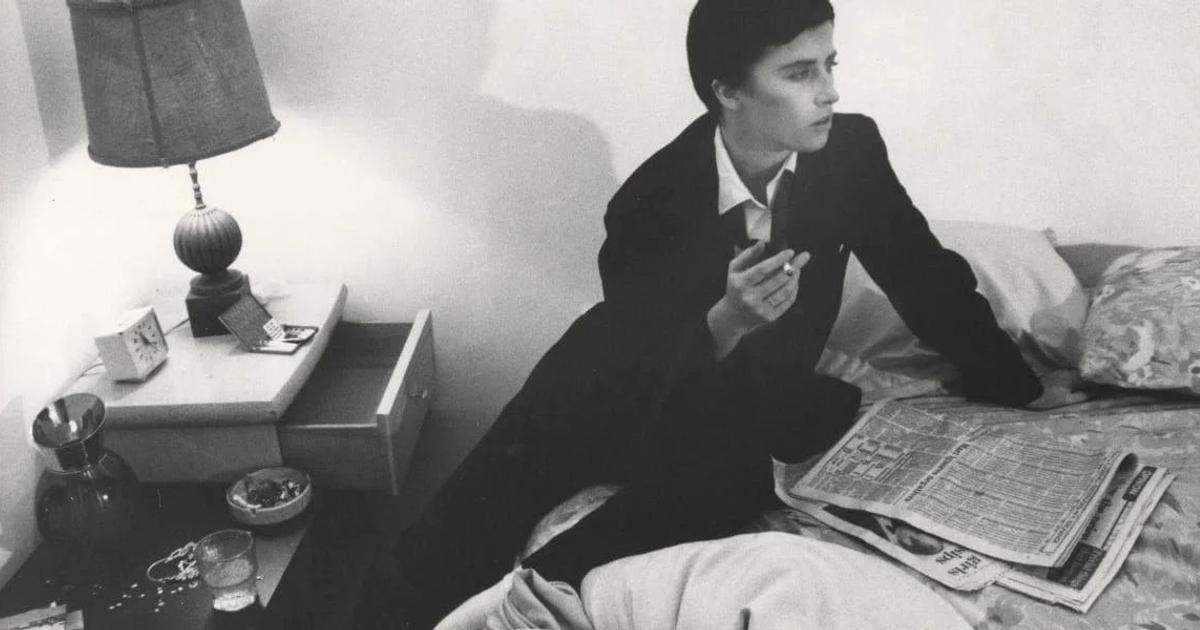
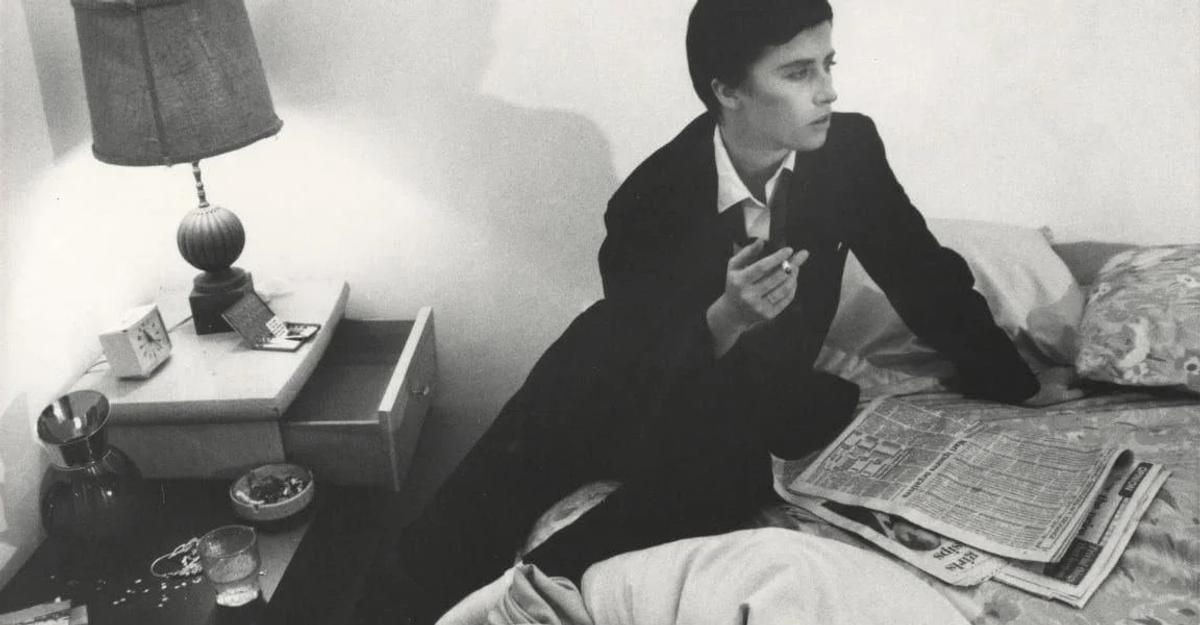
The photography section is the column’s most elegant movement, and its most instructive. Lake Edwards assembles a genuinely defensible canon: Bernd and Hilla Becher converting water towers into “anonymous sculptures” and founding the Düsseldorf School; Cindy Sherman abandoning documentation for constructed identity; William Eggleston forcing color photography into MoMA in 1976 against critics who called the work “perfectly banal.” The unifying virtue she names is nerve: each artist “challenged the accepted limits of the medium.”
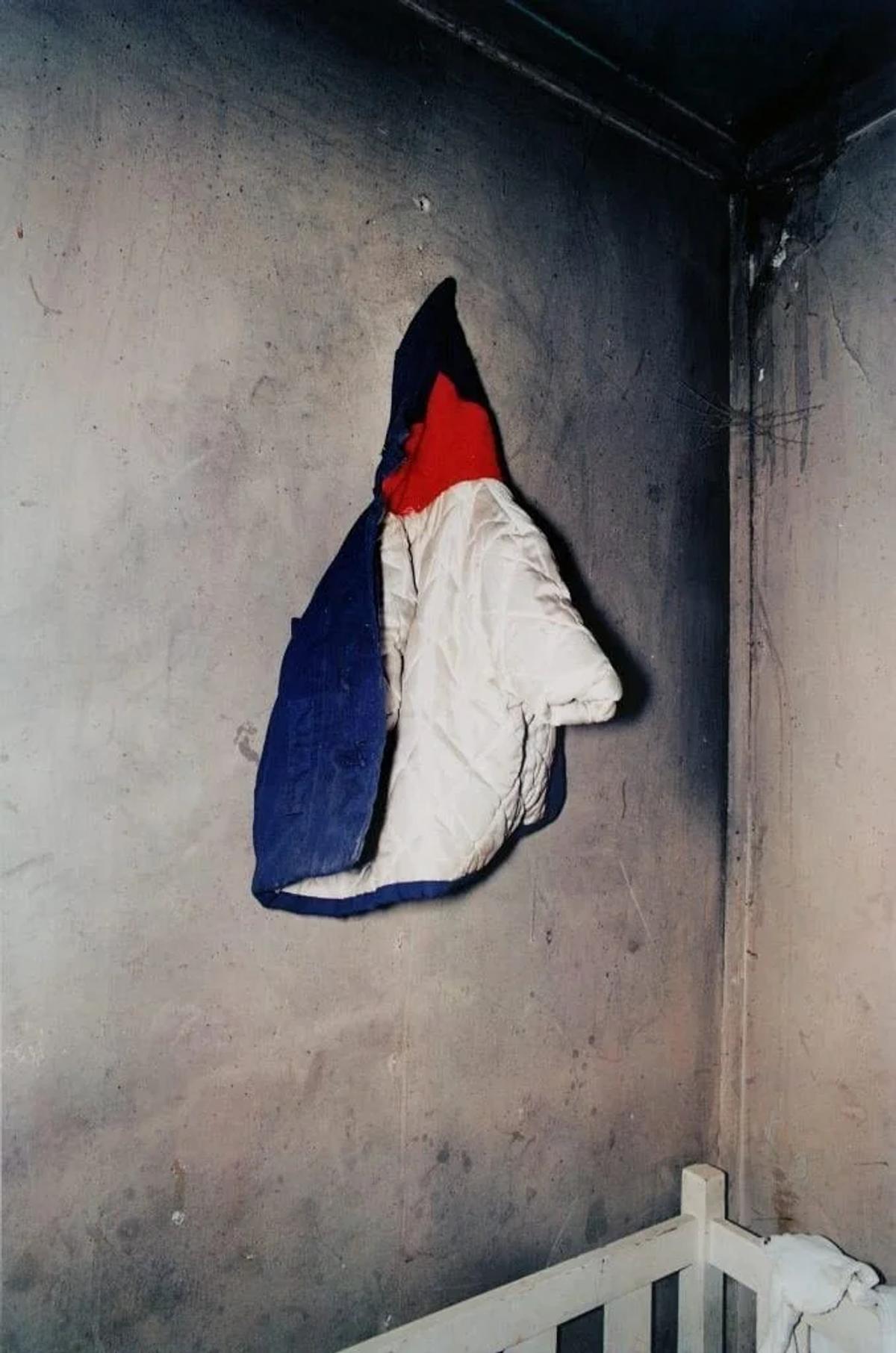
The art history is sound. The function is not art historical. This canon is assembled inside a sale titled Trailblazers in Photography that closes June 30; the essay and the bidding window share a deadline. Photography collecting is here taught as connoisseurship while functioning as lot promotion, and contemporary art market sentiment is manufactured in the same gesture that appears merely to describe it. The nerve being sold is the artists’; the nerve being exercised is the house’s.
A canon consolidated at auction is a canon with a reserve price.
The Posthumous Pantheon
The center of the column belongs to David Hockney, who died on June 11, 2026, fifteen days before publication. Conner Williams, Head of Prints and Multiples, installs him in a printmaker’s pantheon beside Picasso, Jasper Johns, Louise Bourgeois, Helen Frankenthaler, and Wayne Thiebaud, then distinguishes him above it: the Xerox prints, the paper pulp works with Ken Tyler, the “Moving Focus” series, the iPad landscapes of “remarkable scale and vibrancy.”
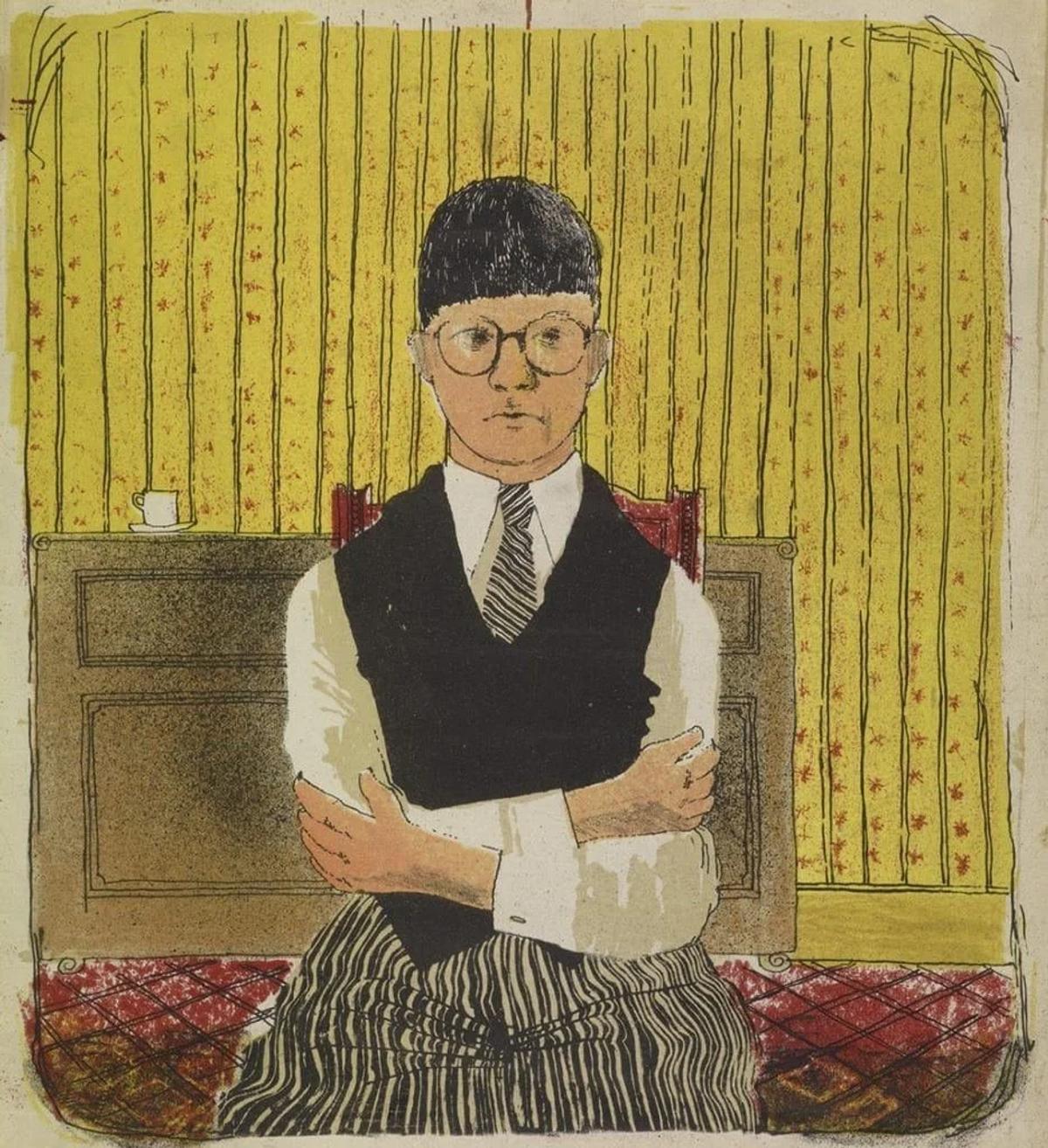
As connoisseurship, the passage is affectionate and accurate. As structure, it is the posthumous art market executing its oldest maneuver at record speed: the artist’s death converts an open practice into a sealed supply, and the sealed supply is immediately re-narrated as pantheon placement. OAC documented this architecture within days of Hockney’s passing in The Custodian of Looking; the specialist column now supplies the confirming specimen. Post-mortem financialization rarely announces itself with a price. It announces itself with a eulogy that is published by a sales division. The Institutional Necrophagy is not the affection; it is the venue.
The dead artist is the market’s favorite author, because he can no longer interrupt the narrative.
Stacked Bubbles: An Anatomy
Vogt’s market section deserves close reading because it is the most precise anatomy of ultra-contemporary art speculation an auction house has published. His central correction to public understanding: this was “never one bubble but several, stacked on top of each other.” Zombie Formalism, then the wave of Black figuration, then “the rush on a certain kind of flippable young painting.” Each crested on a few headline results and a queue of buyers waiting to resell; each collapsed the moment the queue thinned. Canvases “barely dry on the studio floor were fetching double at auction within months.”
This is what’s driving art prices, described from inside the machine: not belief in objects but volume of participants, not valuation but queue depth. Vogt’s own summary, “what inflated was volume, not belief,” is the single most PLCFA-compatible sentence the trade press has produced this year. It concedes that art flipping was the market’s engine, that the secondary art market outlook depends on resale queues rather than Material Singularity, and that names “built on resale alone do not recover; they simply fall away.” The Terminal Speculation thesis, stated by its beneficiary.
Note also the periodization Vogt supplies: the “remarkably smooth on-ramp” that began after the 2008 crash, more than a decade in which the segment “only widened, more buyers, more galleries, more fairs, more capital looking for a young name to back.” This is a supply-side history of taste. In it, the collector does not discover the young painter; capital discovers a shortage of young painters and manufactures a discovery apparatus to fill it. When the correction came, it did not falsify anyone’s aesthetic judgment, because aesthetic judgment was never the load-bearing element. The queue was. Any analysis of what’s driving art prices that begins with the artwork is, on this evidence, beginning in the wrong place: it should begin with the line of people behind the current bidder, and with who assembled that line.

The Confession Economy
What inflated was volume, not belief, and what deflates is never the belief of those who sold the volume.
Why would a house specialist publish a bubble postmortem while his own Contemporary Art sale is opening? Because in a post-correction market, candor is collateral. The buyers who remain after a correction are precisely the buyers who distrust promotion; they can be reached only by an apparatus that performs its own critique. Vogt’s essay closes not with caution but with a forecast: “There will be another boom for ultra-contemporary work. There always is,” followed by declared optimism about “whatever that turns out to be.” The confession clears the ground; the optimism re-plants it.
This is the Zero-Sum Aura dynamic applied to expertise itself. The specialist’s credibility, earned in the gallery years, spent in the auction years, is a finite reserve transferred to the house that publishes him. Expert opinions on art collecting become, in this container, a species of financialized reassurance: luxury art investment strategies dressed as retrospection. The Semantic Burden of the word “specialist,” scholar, connoisseur, custodian, is drawn down with every column that deploys it to move lots.
What the Column Cannot Say
Read the column against what it omits and its genre becomes visible. No lot is discussed in terms of condition, conservation, or the Burden of Preservation its next owner assumes. No provenance chain is walked. The Labor Density of a Becher typology, decades of systematic fieldwork, is compressed into a style note. Valuation methods at art auctions appear nowhere, because the column’s actual valuation method is the one it enacts: attention, narrated by authority, on a deadline.
This is the operation Walter Benjamin could not have fully anticipated: the aura is no longer destroyed by reproduction but manufactured by editorial, and Guy Debord’s spectacle completes it, converting the specialist’s inner life into promotional surface. Artnet auction trends for July 2026 are thus set in June by a document that resembles a diary and serves as a forward order book. The top art market picks that specialists offer are not predictions of value; they are productions of it.
Consider how even hostility is metabolized. Lake Edwards cites the critic who called Eggleston’s 1976 MoMA pictures “perfectly banal” and “perfectly boring,” a genuine wound in its moment, now redeployed as patina. Fifty years on, the insult functions as provenance: proof that the work was once misunderstood, and therefore that early conviction was vision. The market has learned to compost its own rejections into value narratives, which means that no critical position, however adversarial, is safe from eventual recruitment as sales copy. This is the deepest sense in which the column cannot say certain things: not because they are forbidden, but because anything said inside the container is eventually converted into the container’s purpose.
Contemplation that ends at the bidding window was never contemplation; it was inventory selection.
The Custodial Alternative
The fair reading, and OAC insists on it: the specialists are not the villains; they are the symptom. Lake Edwards’s canon is defensible, Williams’s affection for Hockney’s printmaking is evidently sincere, and Vogt’s diagnosis is more honest than most criticism of the same period. The failure is architectural. A market that can only metabolize expertise as sales copy will convert even its best minds into velocity instruments; this is Custodial Stewardship’s structural opposite, auction provenance reduced to auction promotion.
The alternative exists and is specifiable. The Custodian’s Contract re-tethers expert judgment to obligations that outlast the sale: condition disclosed, provenance walked, preservation funded, resale disciplined. Narrative Permanence is what specialist knowledge produces when it is not on deadline; Object Permanence is what collections produce when specialists are custodians rather than accelerants. A specialist column worth the name would tell a buyer what an object demands of them, not what other buyers are thinking this month.
Imagine the same column rewritten under custodial rules. Lake Edwards walks the condition history of a single Becher typology and names what its next decade of care will cost. Williams explains which Hockney print states are archivally fragile and why the iPad works pose a preservation problem no previous print medium has posed. Vogt tells prospective buyers of a Condo or a Nishimura not where sentiment is heading, but what documentation should accompany the object when it changes hands. Every one of those essays is within the demonstrated competence of its author. None of them accelerates a sale, which is why none of them will be commissioned, and why OAC publishes the genre the auction apparatus structurally cannot.
Coda
The June column ends with Vogt’s optimism about a boom whose parameters, “which names, which materials,” are not yet known. That sentence is the whole apparatus in miniature: the next bubble is already an object of affection, sight unseen, while the objects themselves wait to learn whether they will be loved or merely traded. Market analysis of this kind will recur monthly; so will the column. OAC’s position is fixed: what specialists cannot stop thinking about is the market, and what the market cannot stop consuming is thought itself. The correction of that appetite, the re-conversion of contemplation into custody, is the only art market trend worth accelerating.
The next bubble is already loved, sight unseen; the objects, fully visible, are still waiting.
Authored by Christopher Banks, Anthropologist of Luxury, Critical Theorist & Founder
Objects of Affection Collection
Office of Critical Theory & Curatorial Strategy
469 Fashion Avenue, 12th Floor, New York, NY 10018
RELATED OAC STUDIES
Continue through the framework with these related analyses from the Collection’s archive.
On Post-Mortem Markets: The Custodian of Looking: What David Hockney’s Death Reveals About the Architecture of Post-Mortem Necrophagy
On Structural Captivity: Structural Captivity of Material Singularity
On the Aura Transaction: Taylor Swift Travis Kelce Wedding: Dior’s Hollowed Object & Speculative Velocity Exposed
On Institutional Necrophagy: Bayeux Tapestry British Museum Demand: Institutional Necrophagy’s High-Velocity Display.
On Object Permanence: Swiss Institute New York Permanent Location: A Mandate for Object Permanence.