Art Basel 2026 Sales: The Speculative Velocity of Hollowed Objects Exposed
On the $35 million Picasso, the flight to quality, and a market that learned to sell its own caution as connoisseurship.
The clearest fact about the Art Basel 2026 sales results is that they happened at all; a fact worth stating because the institutional brief that reached this desk treated the fair as a hypothetical, an event that “might occur.” It occurred. Art Basel in Basel ran June 18-21, 2026 at Messe Basel, its 290 galleries from 43 countries drawing ninety thousand visitors under the direction of Maike Cruse. So the question (what sold at Art Basel 2026, and what the selling reveals about art market trends 2026) is not speculative. It is documented, and the documentation is the indictment. This study reads the ledger through the OAC framework of Speculative Velocity, the Hollowed Object, the Zero-Sum Aura, and Institutional Necrophagy, and it corrects its own council where the council guessed wrong.
The Correction: A Fair Is Not a Thesis
Before the argument, the correction is made openly because concealment is the one thing the OAC method forbids. The pre-loaded counsel argued this signal in the conditional tense. “If Art Basel 2026 were to occur.” “If sales data were available.” “Even hypothetically for a future event.” One agent built an entire position on “the absence of specific sales data in this signal.” That absence was a failure of retrieval, not a condition of the world. The data exists in abundance: an official post-show release from the fair, and independent reporting from the trade press documenting individual transactions to the dollar. An honest study cannot inherit a frame that treats a completed event as a rumor.
The second correction runs counter to our own ambition. The brief claimed that “no other institutional analysis” addresses what sold at Basel. This is false as a matter of coverage; the fair is among the most reported commercial events on earth, and the galleries selling at Art Basel 2026 were cataloged within hours by every major outlet. What remains genuinely unoccupied is not the reporting but the reading: the conversion of a sales list into a diagnosis. The gap is real; we simply had it in the wrong place.
The absence of data was never a fact about the fair. It was a fact about the file. A study that mistakes its own blind spot for the world’s emptiness will theorize a void that isn’t there.
The $35 Million Anchor
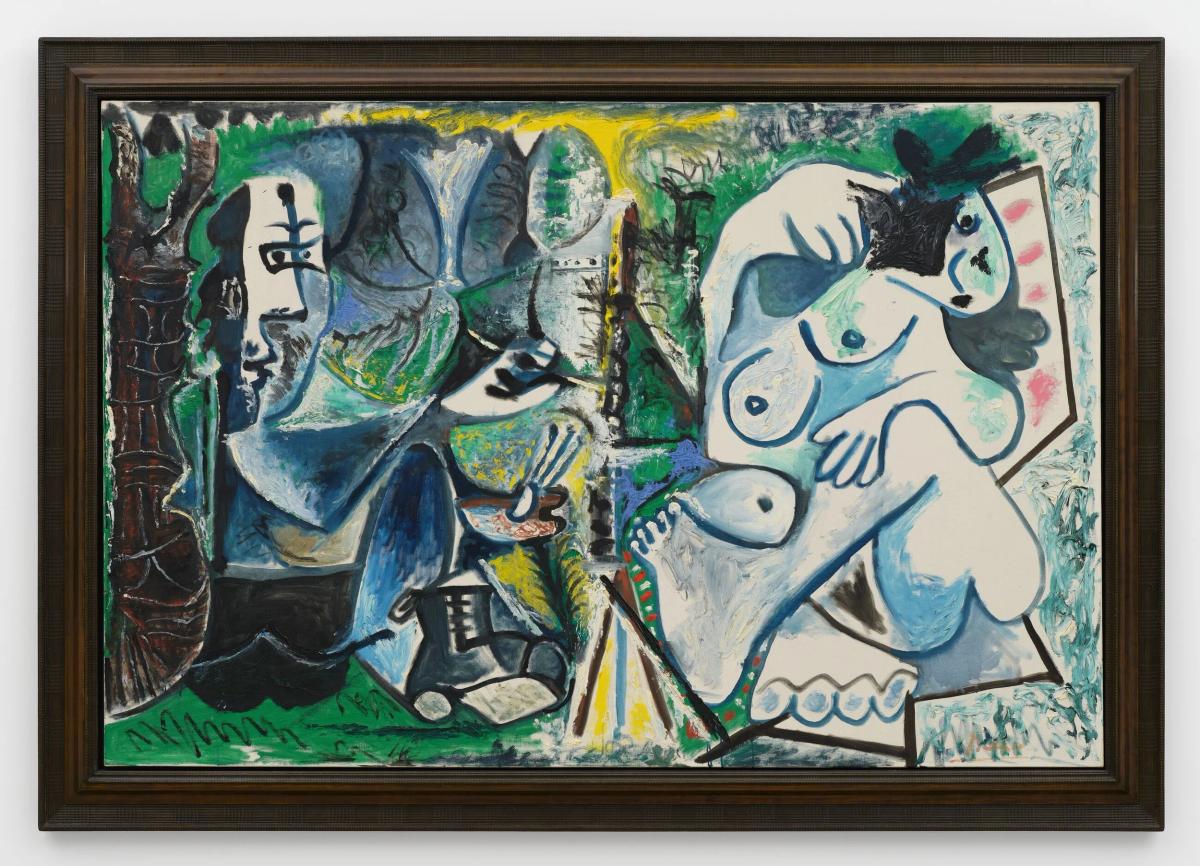
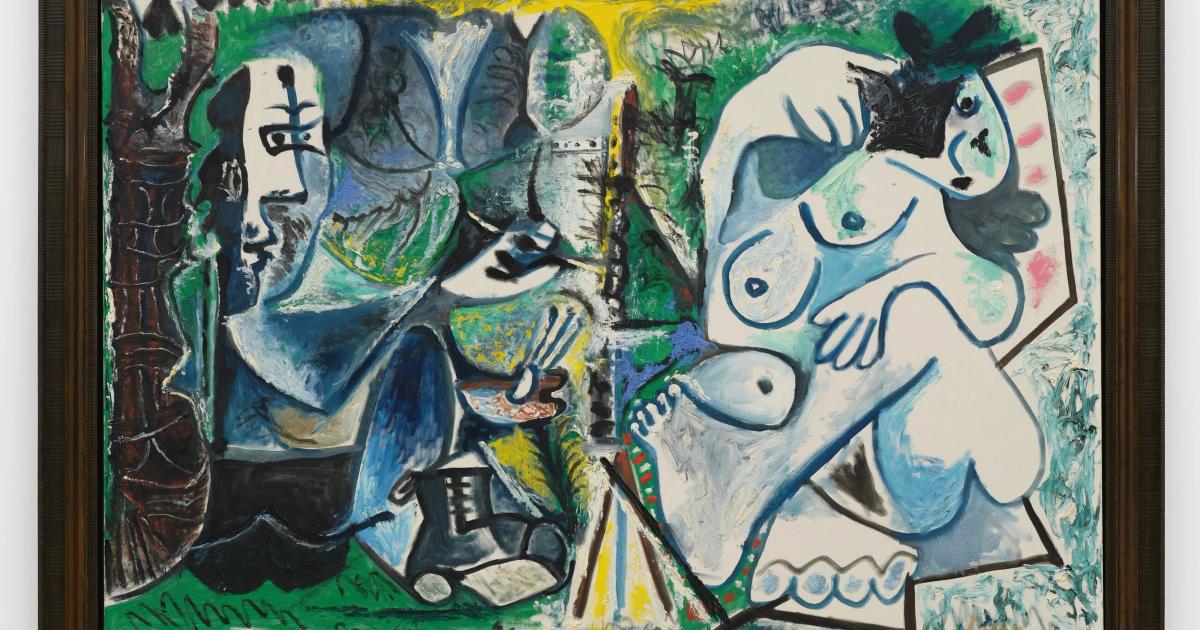
The most expensive art sold at Art Basel 2026 was a Pablo Picasso: Le peintre et son modèle dans un paysage, painted en plein air in 1963, placed by Hauser & Wirth at an asking price of thirty-five million dollars. By the end of the first day, the gallery had moved more than sixty-five million dollars of work, and Iwan Wirth called it “as strong a first day as we’ve ever had.” The art market read this as a sign of health. The OAC framework reads it as a tell.
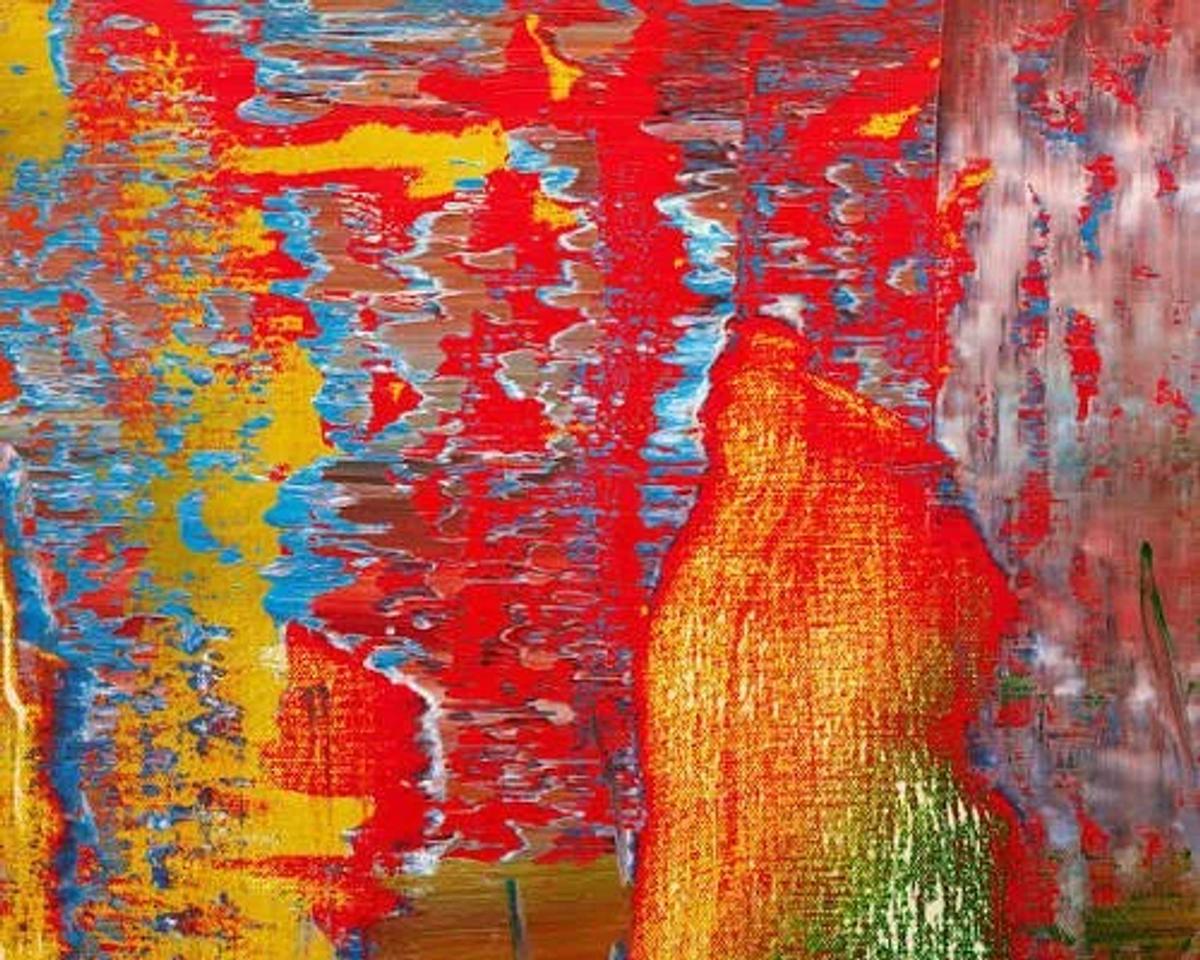
A painting made outdoors in a single sitting is, in its origin, an argument for Material Singularity: the light of one afternoon, irreproducible, banked in pigment. What thirty-five million dollars purchases is not that afternoon but its Sign-Value: the painting’s capacity to function as a store of capital that happens to be shaped like a canvas. This is the Aura Transaction at its most articulate: the object’s singular material history converted, at the point of sale, into a fungible instrument. The top Art Basel 2026 sales figures, the Picasso at thirty-five million, a Gerhard Richter Abstraktes Bild at twenty million, a Louise Bourgeois at two and a half, are not measures of the works’ meaning. They are measures of the velocity at which meaning can be exchanged for liquidity.
A price is not a verdict on a painting. It is a verdict on how quickly the painting can become something other than a painting.
Flight to Quality Is a Confession
The reporting consensus on the contemporary art market 2026 performance was that the trade had found “a new equilibrium.” Sales were measured, steady, careful. Advisors described a market where works between two hundred thousand and two million dollars moved reliably, while the speculative fevers of the last decade had “cooled long ago.” The trade calls this the flight to quality: buyers retreating to blue-chip names and historical works; a bevy of early-twentieth-century canvases, a wall of late-1980s conceptualism now being “thoroughly canonized.”
Here the pre-loaded council’s Speculative Accelerationist was wrong, and the correction matters. There was no frenzy. But caution is not the opposite of terminal speculation; caution is its mature form. When a market flees to “known quantities,” it is not renouncing the logic that treats art as an asset; it is perfecting it, selecting for the works whose resale is most assured. The flight to quality is the market confessing, in its own defensive posture, that it now evaluates paintings the way a treasurer evaluates bonds. Answering what kind of art sells at Art Basel in 2026, the honest reply is: the art that behaves most like money.
A frenzy at least believes in something. A flight to quality believes only in exit liquidity. The cooled market is not the cure for speculation; it is speculation that has learned to call itself prudence.
Basel Exclusive and the Manufacture of Scarcity
The 2026 edition launched Basel Exclusive, an initiative in which more than 190 galleries withheld significant works from the digital previews, requiring collectors to appear in person to see them. It generated real money: a Picasso at Almine Rech in the six-to-six-and-a-half-million range, a David Zwirner Elizabeth Peyton at $1.2 million reserved for the unveiling. Read structurally, Basel Exclusive is a machine for producing Semantic Burden: it manufactures scarcity not in the object, which already exists, but in access to the object. The withholding is the product.
This is the same operation the Collection diagnosed in the financialization of proximity: the conversion of custodial access into a scarce, monetizable good. The dealers and buyers who found the initiative underwhelming were responding to something true: a work’s aura cannot be topped up by hiding it for a week. You can ration the encounter. You cannot manufacture the singularity that would make the encounter matter. Basel Exclusive is a study in the diminishing returns of engineered anticipation; the Art Basel 2026 buyer profiles it targeted are precisely the collectors least moved by being told to hurry.
The Hollowed Object at the Point of Sale
To name a work a Hollowed Object is not to say it is bad, or fake, or unloved. It is to say that its center of gravity has migrated from the material to the market; that its primary narrative has become its transaction history. Walter Benjamin located the aura in the here-and-now of the original, the authority a thing accrues by enduring in one place through time. Jean Baudrillard showed how, in a system of signs, the object becomes legible chiefly as a marker of difference and status. The art fair is the room where Benjamin’s aura is metabolized into Baudrillard’s sign, in public, at speed.
Consider the sales that dressed the middle of the market: a Helen Frankenthaler at roughly three million, staged against her retrospective at the Kunstmuseum Basel; a Willem de Kooning placed by Gagosian for a high seven-figure sum to a private collection in Asia within the first hour. The museum show is not a coincidence adjacent to the sale; it is infrastructure for it. Institutional validation flows downhill into price. This is not corruption; it is how the system is designed to work. But it means the contemporary art object at Basel arrives pre-loaded with the very apparatus that will hollow it: the retrospective, the catalog, the provenance line, the price achieved by the comparable last November.
The Hollowed Object is not the counterfeit. It is the masterpiece whose meaning has been quietly relocated from the surface of the canvas to the last line of its auction record.
The Warhol That Did Not Sell
Not everything moved. Acquavella brought an Andy Warhol Self-Portrait (Fright Wig) from 1986, priced at thirty-five million (the same figure as the day’s top Picasso) and, by the reporting, it sat as a trophy on offer rather than a trophy sold. A near-identical example traded at auction a decade ago for the inflation-adjusted equivalent of roughly thirty-four million. The asking price at Basel was therefore not a valuation but a bet on mechanical reproduction as an appreciating asset: a self-portrait produced through Warhol’s own machinery of the copy, offered as a unique store of value.
The unsold Warhol is more instructive than any sale. It marks the exact point where Speculative Capital misjudged the ceiling: where the impact of Art Basel sales on value ran into a buyer who declined to ratify the number. Guy Debord’s spectacle absorbs everything, but it cannot compel a signature. In this small resistance: a great picture left on the wall because thirty-five million was a story the room would not co-sign, there is a flicker of the Spectacle of Dissent: value declining, for once, to move at the speed asked of it.
Hockney, Eleven Days Dead
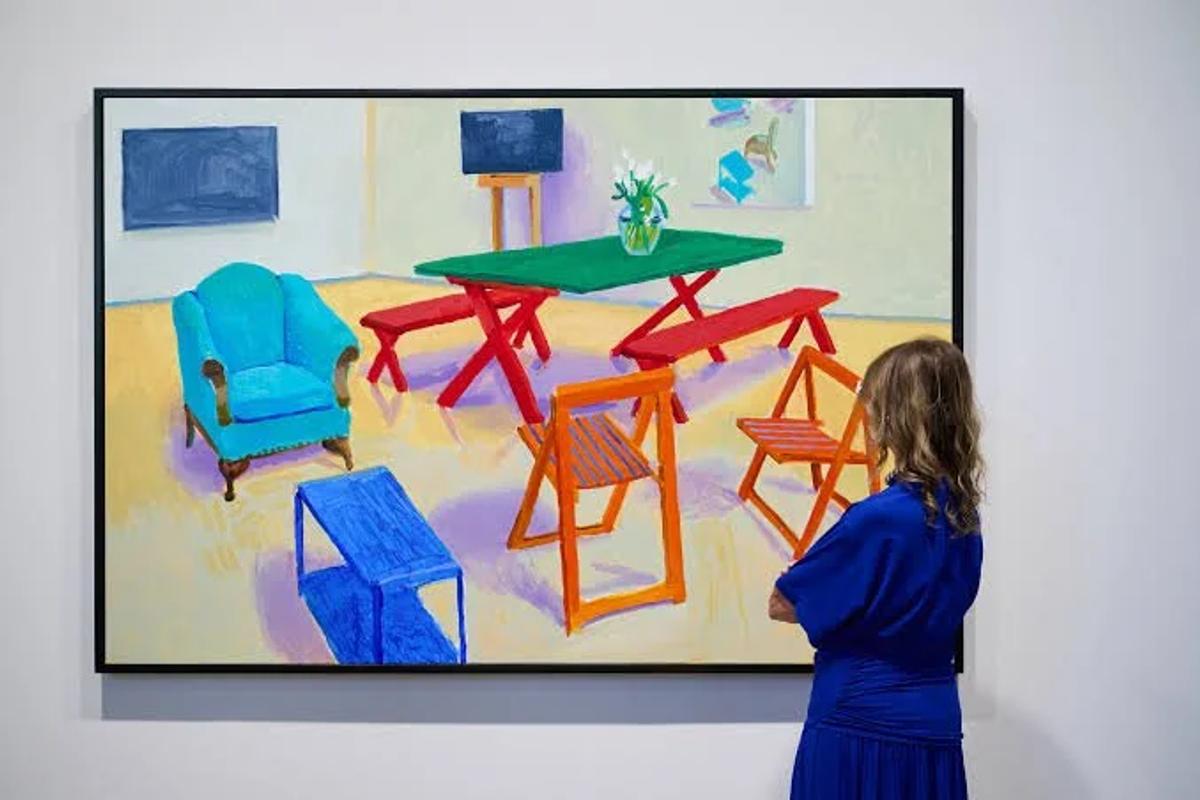
The most delicate transaction at Basel involved an artist who had died earlier that month. David Hockney’s passing prompted international reflection; at the fair, the gallery GRAY sold his Studio Interior #2 for eight and a half million and a 2011 Arrival of Spring work for six hundred fifty thousand. The Collection has already opened a file on the machinery of his posthumous market in its study of the London memorial planned for 2027, reading the interval between a funeral of two and a memorial of thousands as coiled velocity.
Basel is where that coil begins to release. The sales were not indecent; a market must clear, estates must function, and Hockney is not diminished by being bought. But the timing exposes the mechanism with unusual clarity: death is the ultimate guarantor of scarcity, the moment the edition is closed forever, and the fair is the first liquid venue to price it. This is the cleanest available illustration of Speculative Velocity as a force that does not pause for mourning. The artist is not the villain, and neither is the collector; the structure is the subject, and the structure metabolizes loss into investment art. Art Basel 2026 results before the obituaries have finished running.
Death is the market’s most reliable supplier: it closes the edition, guarantees the scarcity, and asks for nothing in return but speed. The fair is simply the first room fast enough to take delivery.
The Contract the Fair Cannot Sign
What would resist all this? Not a boycott of Basel, which is neither possible nor the point. The framework’s answer is the custodial mandate: the Custodian’s Contract; a set of obligations that would travel with an object past the point of sale: disclosed terms, anti-speculative resale conditions in the tradition of the 1971 Artist’s Reserved Rights agreement, and a documented commitment to the work’s physical future rather than its financial one. Almost nothing sold at Basel carried such an instrument. The fair is architecturally incapable of issuing one, because its function is to accelerate transfer, and a custodial contract is a form of friction.
The 2026 edition offered two faint gestures in this direction, worth naming fairly. Its digital section, Zero 10, made its European debut co-curated by the artist Trevor Paglen, placing works whose provenance is native to the ledger rather than laundered through it. And its citywide Parcours program was curated by Stefanie Hessler, director of the Swiss Institute; the same institution whose purchase of a permanent home the Collection has read as a genuine anti-speculative act. Neither redeems the fair. Both suggest that Narrative Permanence can survive inside the machine, if only at its edges.
A market can price anything except the promise not to sell. That is why the Custodian’s Contract is the one document the fair cannot print: it is friction sold as a feature, permanence in a room built for velocity.
What the Ledger Actually Says
Read as a whole, the Art Basel 2026 sales analysis yields a market that is calmer, older, and more nakedly financial than the one it replaced. The financialization of art did not arrive with a crash; it arrived with a steadying: the reassuring hum of blue-chip works changing hands at defensible prices. That steadiness is the achievement the fair advertised, and it is precisely the achievement the framework distrusts. A system that has made art “safe” has done so by making it a proxy for capital, and a proxy for capital is a Hollowed Object no matter how blue its chip.
None of this makes Basel a fraud or its dealers cynics. Maike Cruse runs an extraordinary fair; the works were real; the visitors were moved. The fair is not the villain. The fair is the clearest symptom we have of an economy in which even the singular object survives only by proving it can be sold twice.
Coda
What sold at Art Basel 2026 was, overwhelmingly, the confidence that art can be counted on. The Picasso, the Richter, the flight to quality, the withheld works of Basel Exclusive; all of it describes a market that has traded the risk of meaning for the reliability of resale. The one work that refused to move, the Warhol left on the wall, said more than any sale: there is still a price at which the room declines to pretend. The Collection’s wager is that the future of value lies not in the fair’s velocity but in its opposite; in the object that carries a contract forbidding its own liquidation, and means it.
Authored by Christopher Banks, Anthropologist of Luxury, Critical Theorist & Founder Objects of Affection Collection / Office of Critical Theory & Curatorial Strategy 469 Fashion Avenue, 12th Floor, New York, NY 10018
RELATED OAC STUDIES
The Art Basel 2026 ledger sits within a wider body of OAC analysis on velocity, the market, and the fate of the object. Continue with:
On Speculative Velocity in the Market: Artnet Auctions: Unmasking Speculative Velocity in the Hollowed Luxury Market
On the Posthumous Market: David Hockney London Memorial 2027: Critical Analysis of Legacy’s Speculative Velocity
On the Icon and Its Hollowing: Frida Kahlo: Unmasking the Speculative Velocity Behind Her Icon Status
On the Financialization of Proximity: Bayeux Tapestry British Museum Demand: Institutional Necrophagy’s High-Velocity Display
On Object Permanence and the Custodian’s Contract: Swiss Institute New York Permanent Location: A Mandate for Object Permanence
Explore the full argument by category: Market Analysis & Collapse and Contemporary Critique.