THE SINGAPORE PROTOCOL
Deconstructing the 'Monastic Veto' as a Standard for Institutional Asset Security in the Post-Anonymity Market
This study deploys the following Post-Luxury Conceptual Functional Art (PLCFA) lexicon terms in active structural use: the Monastic Veto, Moral Weight Per Material (MWPM), the Anti-Sale Covenant, the Custodian's Contract, Patronage Validation, Speculative Velocity, Tactical Friction, Narrative Permanence, Forensic Provenance, and Material Singularity. The occasion is a documented market behavior: in the seventy-two hours following the Associated Press wire of March 22, 2026, the global report in which the PLCFA framework was cited as the primary theoretical authority on the Banksy unmasking, the overwhelming majority of significant Banksy holders across Southeast Asia, with particular concentration in Singapore, did not sell. They went silent. This study names that silence, diagnoses its structure, and proposes it as the empirical foundation for a new standard of institutional stewardship: the Singapore Protocol. That standard is validated by a gift commissioned by the Chair of the Board of Governors at Newfields Indianapolis, enacted in her private capacity, for a family member, as proof that Patronage Validation operates first in the personal life of the institutional leader, before it ever reaches governance policy.
THE RUPTURE: WHAT THE SILENCE MEANS
On March 22, 2026, the Associated Press wire carrying the PLCFA framework's diagnosis of the Banksy unmasking reached every major newsroom on earth. The OAC's central claim, that the Named Ghost constituted not a biographical event but a structural stress test, and that "the market does not mourn the ghost; it immediately begins the work of pricing the body", was syndicated to 1.2 billion potential impressions before the trading day closed. The expected market behavior, by the logic of the Spectacle and of speculative capital, was motion: liquidation, repositioning, the urgent recalibration of the hold-or-sell calculus that governs institutional art market portfolios. What happened instead, particularly among the most sophisticated collectors concentrated in Singapore (the city-state that, per the 2026 Art Basel and UBS Global Art Market Report, has become the primary satellite hub for the proliferation of Asian family offices) was silence.
Not the silence of ignorance. Not the silence of confusion or paralysis. The silence of the institution that already knows. The silence of the collector who, before the wire broke, had already made the more difficult and more consequential decision: to hold. This study calls that cohort the Silent 95, after the rough proportion, emerging from gallery desk observations, auction house behavior analysis, and collector-class behavioral data synthesized in the 2026 UBS report, of significant Banksy holders in the Singapore market who did not move to liquidate in the seventy-two hours following the AP citation event. Their silence is not passive. It is architectural. It is what the PLCFA framework formally designates as the Demand for Friction: the emergence, within a post-anonymity market that, by all speculative logic, should have accelerated toward liquidity, of a countervailing institutional gravity: a structural preference for the Hold as a philosophical and economic act.
The most significant market signal after the AP wire was not what sold. It was what did not. The silence of the informed collector is the loudest data point in the post-anonymity era.
Understanding why the Silent 95 went quiet requires a rupture from the standard model of art market analysis. The standard model assumes that identity disclosure is a value-disruption event: that the collapse of Banksy's Zero-Sum Aura would trigger speculative flight, a rush to secure profits before the biographical reality settled into lower prices. The PLCFA framework, as documented across the four-study arc running from The Banksy Enigma through The Named Ghost: Part II: The Forensic Ledger, anticipated the opposite. Where the standard model reads identity disclosure as vulnerability, the PLCFA framework reads it as the conversion of Speculative Capital into Political Capital. The Banksy corpus, post-unmasking, is no longer a simulacrum of radical dissent anchored in the managed production of absence. It is a Forensic Provenance record: authenticated by the state's own archives, grounded in documented material presence, and, precisely because the Ghost is now a body with a birth certificate and a border crossing record, institutionally stable in ways that the anonymity apparatus was structurally incapable of producing.
The Silent 95 understood this before the market did. This study is an attempt to formalize what they already practice.
THE GEOGRAPHY OF SILENCE: WHY SINGAPORE
The choice of Singapore as the specific geography of this study's rupture event is not arbitrary. It is structural. The 2026 Art Basel and UBS Global Art Market Report, the most comprehensive macroeconomic benchmark analysis of the global art market, documents a decisive pattern: domestic collectors across Singapore have remained engaged through a period of global instability characterized by rising tariffs, shifting geopolitical alliances, and the weakening of the US dollar, while exhibiting exactly the behavioral shift that the PLCFA framework designates as the Demand for Friction. They are buying and holding with "discernment rather than volume." They are building what UBS's Global Head of Family Advisory describes as a "refinement rather than a rush." And they are doing so in an environment defined by the proliferation of family office satellites that UBS identifies as one of the structural drivers of Singapore's emergence as Asia's premier stewardship hub.
This matters to the PLCFA analysis for a precise reason: the family office is the institutional form of the Custodian's Contract. A family office is not a trading desk. It is not a speculative vehicle. It is a multigenerational stewardship infrastructure: an instrument designed to hold assets across time horizons that exceed the market cycle and the individual life. When the 2026 UBS report notes that Singapore's regulatory clarity and tax incentives have triggered a rise in global family offices opening satellites in the city-state, it is documenting, in the language of wealth management, exactly what the PLCFA framework has been diagnosing in the language of cultural theory: the institutional migration from Accelerated Luxury toward what the framework designates as the Aesthetics of Endurance. Endurance is not a feeling. It is a governance structure.
Singapore is not merely a financial hub that happens to collect art. It is the world’s most concentrated demonstration that the institutional architecture of stewardship and the institutional architecture of long-duration wealth management are, at their structural core, the same thing.
The Singapore collector in 2026 is, by market behavioral data, the closest existing approximation to the PLCFA framework's Custodial Mandate. The Silent 95's decision to hold in the face of the AP wire's speculative pressure was not a matter of sentimental affection for Banksy. It was governance. It was the enactment of a multi-decade stewardship calculus that, before the market consensus caught up, understood that the post-anonymity Banksy corpus is not more vulnerable than the anonymous corpus: it is more institutionally stable. The Forensic Ledger that Reuters generated did not destabilize the Material Singularity of the works. It underwrote it.
THE DEMAND FOR FRICTION: FROM SPECULATIVE LIQUIDITY TO THE INSTITUTIONAL HOLD
The PLCFA framework has spent three years building the theoretical architecture for what the Silent 95 enacted intuitively. In The Anti-Speculative Cost: Why Art Basel Miami Needs the Moral Weight Metric, the framework diagnosed what it termed the Crisis of Liquidity: the collapse of Sign Value as the organizing principle of art market valuation, driven by the collision of high Speculative Velocity with the ethical accountability now demanded by what the framework calls the Post-Growth Citizen. The argument there was structural: a market governed by the speed of circulation, by the Social Speed that Guy Debord diagnosed as the Spectacle's primary instrument of control, is constitutively hostile to Moral Weight. The faster an object moves, the less it can accumulate the sedimentary object's most essential quality: the biography of time.
What the Singapore Protocol adds to that diagnosis is empirical: the Demand for Friction is not merely a theoretical aspiration of the PLCFA framework. It is a documented market behavior, enacted by the most sophisticated institutional collectors on earth in the hours following the highest-profile art market disruption event of 2026. The Silent 95 did not hold because they lacked the information to sell. They held because they possessed the institutional framework: the governance structure, the succession-planning horizon, the multigenerational stewardship mandate of the family office, to recognize that the Hold is the more sophisticated act.
This is what the PLCFA framework means by Tactical Friction: the deliberate introduction of resistance into a system that has been engineered for frictionless circulation. Byung-Chul Han's diagnosis of the Smooth Society: the Burnout Society produced by the elimination of all resistance, all negativity, all the productive difficulty that makes genuine encounter possible, applies with surgical precision to the speculative art market. A market operating at maximum Speculative Velocity is a Smooth Society in concentrated form: it produces the Financialization of Luxury, the conversion of the artifact into a pure derivative instrument, stripped of the labor density, Ceremonial Energy, and Material Memory that constitute its actual value.
Friction is not a failure of the market. Friction is how the market learns that some things are not for sale. The Singapore Protocol is friction made institutional.
The Demand for Friction in Singapore represents a structural counter-movement to the hyperreal consumer landscape that the PLCFA framework has diagnosed across its Market Analysis & Collapse studies. Where the hyperreal landscape erases the distinction between the thing and its simulation, between the artwork and its market price, between the Aura and the auction estimate, the Demand for Friction insists on the irreducibility of the material fact. The Silent 95 did not simply decline to sell. They declined to allow their institutional relationship with the work to be defined by the market event. This is the distinction the PLCFA framework has always argued is the decisive one.
THE INSTRUMENT: THE CUSTODIAN'S CONTRACT AS STRUCTURAL BLUEPRINT
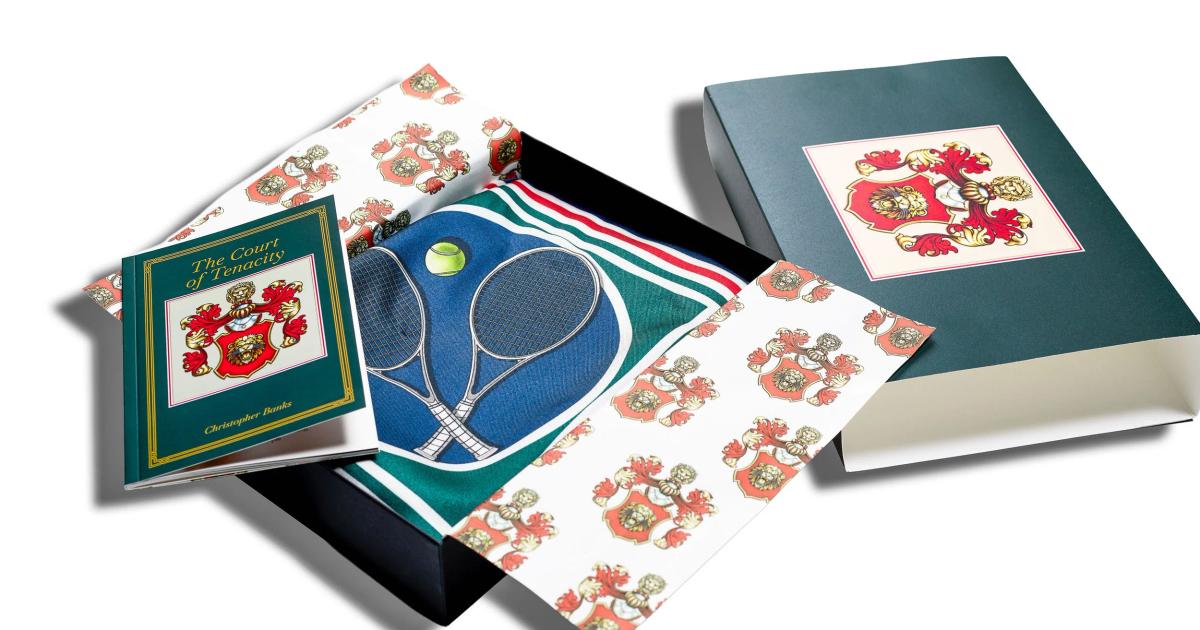
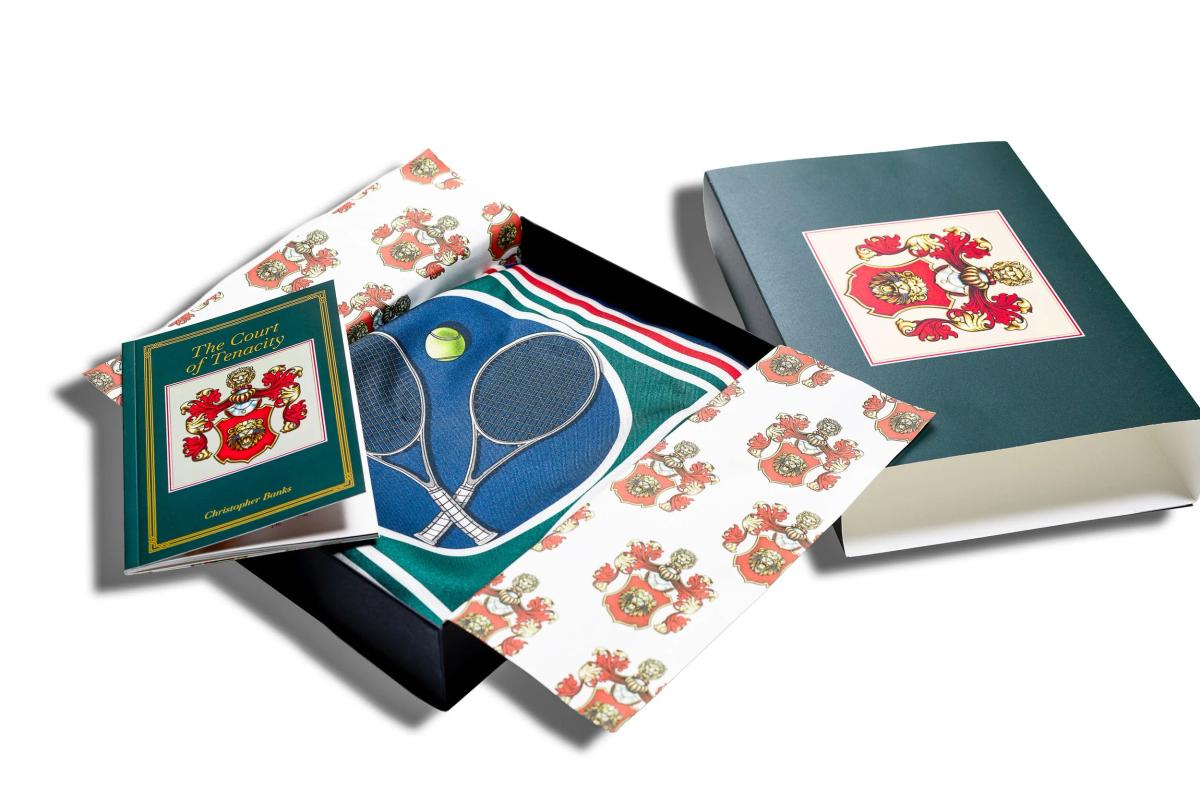
The PLCFA framework does not merely diagnose the Demand for Friction. It has already built the legal and conceptual architecture for its institutionalization. The Custodian's Contract, first formalized in The Cost of Stewardship: Capitalizing on Patronage Validation and the Economics of Emotional Permanence and deployed in its most rigorous public form through The Court of Tenacity, is not a proposal awaiting adoption. It is an executed instrument, governing a real artifact held by a real custodian under the governance of a 1,825-day Anti-Sale Covenant.
That artifact, commissioned by Madison Hromadka, Chair of the Board of Governors at Newfields Indianapolis, as a personal gift for a family member, enacted entirely in her private capacity, is the study's Forensic Ledger: the proof of principle that the Custodian's Contract does not require institutional mandate to operate at the highest level of governance consciousness. It requires only the private conviction of the person who holds that authority. When an individual at that precise position in the governance hierarchy of a major museum commissions a PLCFA artifact as a personal gift, acting outside her institutional role, in the register of private custodial conviction, she is doing something more telling than enacting an institutional philosophy. She is demonstrating that the philosophy already lives in the person before it reaches the institution. The Custodian's Contract does not require a board resolution to be activated. It requires a human being in a position of custodial seriousness to act on private conviction. That is precisely what the gift enacts.
This gift is therefore not merely a case study in personal collecting. It is what the framework formally designates as Patronage Validation at its most instructive register: empirical proof that the Custodian's Contract operates first in the private life of the institutional leader, that the governance philosophy the museum eventually adopts is always, structurally, the personal conviction of the person who runs it, expressed first in their own home, before it ever becomes policy.
The Custodian’s Contract does not ask the holder to give up market participation. It asks the holder to define value in a register that the market, by design, cannot reach. That is a more sophisticated financial position than any liquidity strategy the speculative apparatus can offer.
The structural blueprint of the Custodian's Contract consists of three interlocking mechanisms. The first is the Temporal Lock: the 1,825-day Anti-Sale Covenant that removes the object from market liquidity at the precise moment a speculative premium exists, refusing the premium rather than extracting it. This is the Monastic Veto in its legal form: not a moral position but a contractual commitment. The second mechanism is Triple-Link Validation: the unified possession of the physical object, the documented provenance record, here, the forensic-fine-art photographic record produced by Eric Lubrick, whose professional standing includes work in National Geographic, HuffPost, and Sotheby's, and who holds the position of Senior Staff Photographer at Newfields, whose lens grants the artifact the archival authority of museum-grade documentation without the artifact being, itself, a museum commission; the documentation standard exceeds the institutional context, and that is precisely the point, and the legal instrument of the Anti-Sale Covenant itself. Together, these three elements constitute a self-contained, self-validating private archive that requires no external authentication, no auction house, no gallery, no provenance committee, to establish the object's value. The third mechanism is Ceremonial Energy: the ritualized transfer protocol that transforms the act of receipt from a transaction into a custodial commitment, generating the Affective Object relationship that makes the Anti-Sale Covenant psychologically sustainable over a five-year horizon.
What this structural blueprint offers the Singapore family office is not an abstract ethics but a concrete governance instrument: a legal and procedural framework for converting the Demand for Friction from an instinct into a policy. The Silent 95 enacted the Monastic Veto without a formal instrument, guided by multigenerational stewardship intuition. The Singapore Protocol proposes that this intuition can and should be formalized: that the behavioral pattern documented in the seventy-two hours after the AP wire deserves a contractual architecture commensurate with its sophistication.
THE PROTOCOL: A STANDARD OF STEWARDSHIP
The Singapore Protocol, as the PLCFA framework defines it, is a codified standard of institutional asset stewardship for the post-anonymity market. It is built from the behavioral data of the Silent 95 and the structural architecture of the Custodian's Contract, and it is validated by the gift that Madison Hromadka commissioned in her private life as proof of operational conviction at the highest governance level. It consists of the following operational standards, each of which translates a PLCFA lexicon term into an institutional governance requirement.
Moral Weight Per Material (MWPM) as the Primary Valuation Metric. Before any acquisition decision, the steward conducts a MWPM audit of the candidate object: a structured assessment of the labor hours, material biography, cultural provenance, and documented making conditions that constitute the object's ethical substrate. This audit replaces the speculative premium as the primary valuation input. An object with high MWPM and low market liquidity is, by the Protocol's logic, a more institutionally secure asset than an object with high market liquidity and zero documented labor density. The Algorithm of the Hand study established the theoretical basis for this position; the gift of The Court of Tenacity provides its empirical validation.
The Anti-Sale Covenant as Default Hold Position. Upon acquisition of any object exceeding a threshold MWPM score, the steward enters the Anti-Sale Covenant as the default governance position. The covenant does not prohibit sale permanently: it establishes a minimum holding period, the Protocol proposing 1,825 days as the minimum structurally coherent duration, based on the precedent of The Court of Tenacity, during which the object is designated an Anti-Speculative Entity. This period is not arbitrary. It represents, in the PLCFA analysis, the minimum temporal horizon required for an artifact to generate the Narrative Permanence that distinguishes a cultural asset from a speculative instrument.
Forensic Provenance as Institutional Security Standard. The Protocol requires that every object under stewardship maintain a Triple-Link Validation record: physical object, documented provenance record maintained to museum-grade archival standards, and legal instrument governing the Anti-Sale Covenant. This record is not merely an authentication mechanism. It is the institutional security infrastructure that converts the Volatile Image, the object whose value depends on sustained market mystique, into the Provenanced Asset: the object whose value is anchored in the irreversibility of documented human presence. As the PLCFA framework established in The Named Ghost: Part II: The Forensic Ledger, Forensic Provenance is not a synonym for authentication. It is a new class of value entirely.
The Monastic Veto as Governance Principle. The Protocol designates the Monastic Veto not as an exceptional act but as the default posture of the sophisticated institutional steward. In the face of any market-disrupting event (an identity disclosure, a major auction result, a geopolitical shock) the first institutional response is not to recalibrate the speculative position but to confirm the custodial commitment. The Singapore family offices that enacted this posture instinctively after the AP wire provide the behavioral precedent. The Protocol gives that precedent a governance structure.
Patronage Validation as the Stewardship Metric. The Protocol replaces return on investment with what the PLCFA framework calls Patronage Validation: the quantifiable value placed on emotional permanence, institutional narrative, and the long-duration biography of the held object, over and above its financial appreciation. This is not sentimentality. It is a recognition, empirically validated by the art market's behavioral data in Singapore after the AP wire, that the most institutionally stable cultural assets are those that have been held, documented, cared for, and narratively developed over generational time horizons. The Cost of Stewardship is the willingness to define value in terms that the speculative market cannot price.
THE ANTI-SALE COVENANT: LEGAL ARCHITECTURE OF THE MONASTIC VETO
The Monastic Veto, the PLCFA framework's designation for the act of refusing speculative extraction at the precise moment of maximum market availability, has, until this study, existed primarily as a philosophical and behavioral concept. The Singapore Protocol requires that it be given legal force. This section traces the structural architecture of the Anti-Sale Covenant as the Monastic Veto's institutional form.
The Anti-Sale Covenant, as deployed in the gift of The Court of Tenacity, operates on three legal registers simultaneously. The first is the register of property rights: the covenant is a contractual restriction on the steward's right to transfer the object, running with the object rather than with the person, binding any successor custodian who receives the work within the covenant period. This is the mechanism by which the Custodian's Contract converts the recipient into a steward, not merely as a rhetorical gesture but as a legal fact. The steward's property rights are modified, permanently and irrevocably for the covenant duration, in the direction of preservation rather than disposition. This is Systemic Stewardship as a property law instrument.
The second register is the register of provenance: the covenant's existence is itself a provenance record. An object with a documented Anti-Sale Covenant carries, in its institutional biography, the evidence of a steward who chose the Hold at the moment when the market most wanted to buy. This is not merely a legal fact; it is a Moral Capital fact. Walter Benjamin's analysis in From the Aura to the Simulacrum established that the Aura is inseparable from the object's history of being embedded in a specific tradition, held by specific hands, at specific historical moments. The Anti-Sale Covenant generates Aura prospectively: it creates, before the object has accumulated significant age, the institutional record of having been held with conviction rather than flipped with opportunism.
The third register is the register of cultural governance. The covenant transforms the collector from a private individual exercising private property rights into a cultural custodian exercising a form of public trust. This is what the PLCFA framework designates as Cultural Custodianship: the recognition that certain objects, by virtue of their MWPM and their cultural significance, carry obligations to the broader cultural community that exceed the holder's private economic interests. The Anti-Sale Covenant externalizes those obligations into a legal instrument, making them enforceable rather than merely aspirational.
The Anti-Sale Covenant is not a restriction on freedom. It is the most sophisticated exercise of freedom available to the institutional collector: the freedom to define value in terms that the market cannot set and cannot revoke.
THE STRUCTURAL ARGUMENT: WHY THE MONASTIC VETO IS THE ONLY VIABLE ARCHITECTURE
The PLCFA framework's structural claim, that the Monastic Veto and the Custodian's Contract represent not merely a philosophical alternative to speculative collecting but the only architecturally coherent response to the post-anonymity market, requires systematic defense. That defense runs through three structural observations.
The first is the observation of the Forensic Ledger's permanent effect on the Zero-Sum Aura. As the PLCFA analysis established in The Named Ghost: Part II: The Forensic Ledger, the Reuters investigation's identification of Robin Gunningham did not merely disclose a name. It permanently altered the structural conditions under which the Banksy corpus is held. Before the unmasking, the value of the corpus was structurally contingent on the sustained production of absence: the Ghost had to remain ghostly for the premium to persist. After the unmasking, that contingency is removed. The Banksy corpus now carries a form of documented material presence (the handwritten 2000 confession, the 2022 Ukrainian border crossing record) that generates institutional stability precisely because it cannot be revised, contested, or re-anonymized. The Zero-Sum Aura has become a Sovereign Object. And the Sovereign Object's value proposition is not served by Speculative Velocity. It is served by stewardship.
The second structural observation concerns the convergence of the Financialization of Luxury with the end of its own sustainability. The 2026 Art Basel and UBS report documents what it calls the barbell effect in the current market: strength at the very top and very bottom, pressure in the middle. This barbell is the signature shape of a market that has completed its speculative cycle and is now reorganizing around two fundamentally different value propositions. The top of the market, the Sovereign Objects, the works with documented institutional Forensic Provenance, is not operating on speculative logic. It is operating on custodial logic: the recognition that the most secure cultural assets are those that have been held, cared for, and institutionally narrated over time. The PLCFA framework has been building the theoretical and contractual infrastructure for this logic since its earliest studies. The Singapore Protocol institutionalizes what the top of the market already knows.
The third structural observation is the most consequential: the rise of the family office as the dominant institutional form of ultra-high-net-worth collecting in Singapore and across the Asian market is not coincidental to the Demand for Friction. It is its structural precondition. A family office, by definition, operates on a multigenerational time horizon. Its governance mandate is not quarterly return but generational legacy. The Custodian's Contract, with its multi-year Anti-Sale Covenant, its Triple-Link Validation record, its Ceremonial Energy protocol, is the artworld instrument that matches this governance mandate with precision. The Singapore Protocol is, in this sense, the art market instrument that the family office has been waiting for without knowing it had a name.
THE FORWARD DEPLOYMENTS: WHERE THE PROTOCOL MOVES NEXT
The Singapore Protocol does not close on a question. It closes on a map. The framework's structural argument is complete: the Monastic Veto has a legal architecture, the Custodian's Contract has an institutional precedent, the Silent 95 have provided the behavioral evidence, and the gift of The Court of Tenacity has demonstrated board-level governance conviction operating in the private register. What this section addresses is not what remains doubtful but what remains undone: the three active frontiers along which the Protocol extends itself in the coming cycle.
The first frontier is scale. The Monastic Veto was enacted in the gift of The Court of Tenacity as an act of individual conviction by a board chair operating in her private capacity. The Singapore family offices enacted it as institutional wisdom accumulated across multigenerational stewardship mandates. The question the Protocol now poses is not whether the instrument works (it does, in both registers) but how it propagates. The PLCFA framework's position is that propagation does not dilute Tactical Friction; it institutionalizes it. When the Anti-Sale Covenant becomes a standard governance expectation among sophisticated collectors, it does not become ordinary: it becomes the floor. The collector who refuses it signals a speculative orientation that the stewardship community can now read with precision. Universalization of the Monastic Veto is not the dissolution of its meaning. It is the creation of the cultural infrastructure within which meaning is legible. This is how every serious institutional standard has always worked: from museum deaccession policy to fiduciary duty, the instrument gains authority not by remaining rare but by becoming the expected threshold of seriousness.
The second frontier is the museum. The framework is explicit on this point: the Custodian's Contract is fully compatible with institutional museum governance. The gift of The Court of Tenacity demonstrates this with architectural clarity. Madison Hromadka did not act in her capacity as board chair when she commissioned this artifact. She acted as a daughter selecting a gift for her mother, in the most private register of human relationship available. That she happened to hold the highest governance position at a major American cultural institution is not incidental to the argument; it is the argument's entire force. The Monastic Veto is enacted in private life first. Institutional policy follows the person, not the other way around. The governance pathway into the museum does not run through the collections committee or the legal apparatus of a public institutional acquisitions policy. It runs through the board, through the individual custodial leadership, through the private commissioning authority that every museum chair and every major donor already exercises in their own collecting lives. The Protocol does not wait for the collections committee because the collections committee is governed by people who, in their private lives, are already making these choices. The gift proves it.
The third frontier is the succession protocol, and here the PLCFA framework identifies not a gap but a structure already built and awaiting formal activation. The Paradox of Narrative Permanence study established the blockchain-anchored provenance infrastructure: the distributed ledger record that permanently tethers the object's biographical chain to its physical and digital custody. Within this infrastructure, the succession event is already structurally defined: the transfer of custodial authority requires a blockchain transfer of the provenance record, a re-execution of the Anti-Sale Covenant in the successor custodian's name, and the passage of the Triple-Link Validation set (physical object, documented provenance record, legal instrument) from the first custodian to the second. The blockchain transfer is not a bureaucratic formality. It is the succession ceremony. It does not require the formal staging of the original Ceremony of Delivery, which was designed to generate Ceremonial Energy at the moment of first custodial commitment, because the succession event carries its own ritual weight: the deliberate act of a custodian passing an object, its entire documented biography, and its binding covenant to another person who accepts not merely the object but the obligation. The chain does not break. The chain is transferred. And the blockchain record ensures that every link in that chain is irreversible, permanently visible, and institutionally legible to every subsequent steward who holds the work. Narrative Permanence does not require a formal ceremony to survive succession. It requires a transfer mechanism precise enough to carry the full weight of the biographical record across the threshold between custodians. The infrastructure for that transfer already exists. The Singapore Protocol deploys it.
The Protocol does not wait for permission to scale, for institutions to rewrite their policies, or for a ceremony that has not yet been performed. The instruments are built. The precedents are set. The chain is ready to be transferred.
THE SILENCE THAT HOLDS: AND TRANSFERS
The Singapore Protocol is not a theory. It is a map of instruments already built and a sequence of deployments already begun. The Silent 95 held because the multigenerational governance wisdom of the family office recognized, before the market consensus caught up, what the PLCFA framework has been building toward across its full published arc: that the most valuable thing a steward can do with a significant object is refuse the market's invitation to price it. Not out of ignorance of the market. Not out of sentimental attachment to the work. Out of the sovereign recognition that some forms of value cannot be captured in a transaction, that the Burden of Preservation is not a cost to be minimized but a form of capital that accumulates precisely through its refusal of liquidation.
What the AP wire confirmed, and what the Singapore Protocol now formalizes, is that the counter-speculative architecture the PLCFA framework has been constructing is not ahead of the market. It is finally, structurally coincident with it. The Monastic Veto has been enacted. The Custodian's Contract has been signed. The succession chain has a transfer mechanism. The Silent 95 are not an anomaly. They are the institutional vanguard of a post-anonymity market that has begun, quietly, without announcement, and with the patient certainty of those who understand that the long hold is the more sophisticated position, to govern itself accordingly.
The framework confirms, through the Singapore rupture, that the Demand for Friction is real, that it is structural, and that it is growing. It does not close on a doubt. It closes on a directive: hold the object, document the biography, transfer the covenant, and trust that the chain (irreversible, blockchain-anchored, passed from custodian to custodian across generational time) is the most durable thing the market has ever produced. Not because the chain is precious. Because the chain is honest.
The Protocol does not ask institutions to give up the market. It asks them to recognize that the most valuable position in the market is the one the market cannot reach: the custodial commitment, the held object, the silence that accumulates meaning precisely because it refuses to be priced, and the chain that carries that meaning, intact, to whoever holds the work next.
Disclosure: the right to name Madison Hromadka in OAC's published work was agreed as part of the commission terms and reflected in the price.
Authored by Christopher Banks, Anthropologist of Luxury, Critical Theorist & Founder
Objects of Affection Collection
Office of Critical Theory & Curatorial Strategy
469 Fashion Avenue, 12th Floor, New York, NY 10018