
The Architecture of Intent
A Critical Lexicon
This collection of studies is the intellectual architecture of Post-Luxury Conceptual Functional Art (PLCFA).
The true artistry of this Maison resides not in the finished form, but in the rigorous thinking that precedes it. These essays serve as the conceptual foundation for PLCFA, using a critical lens to interrogate cultural phenomena, art history, and consumer paradigms—analyzing everything from the ephemeral spectacle of luxury to the pure architectural rigor of abstract principles.
This is an invitation into the workshop of the mind. By sharing this process, we validate the necessity of a new category of value and invite you toward a well-considered life, one founded on true craft, uncompromising narrative, and durable meaning.
New to PLCFA? Begin with Essential Reading below.
Exploring a specific area? Navigate by category.
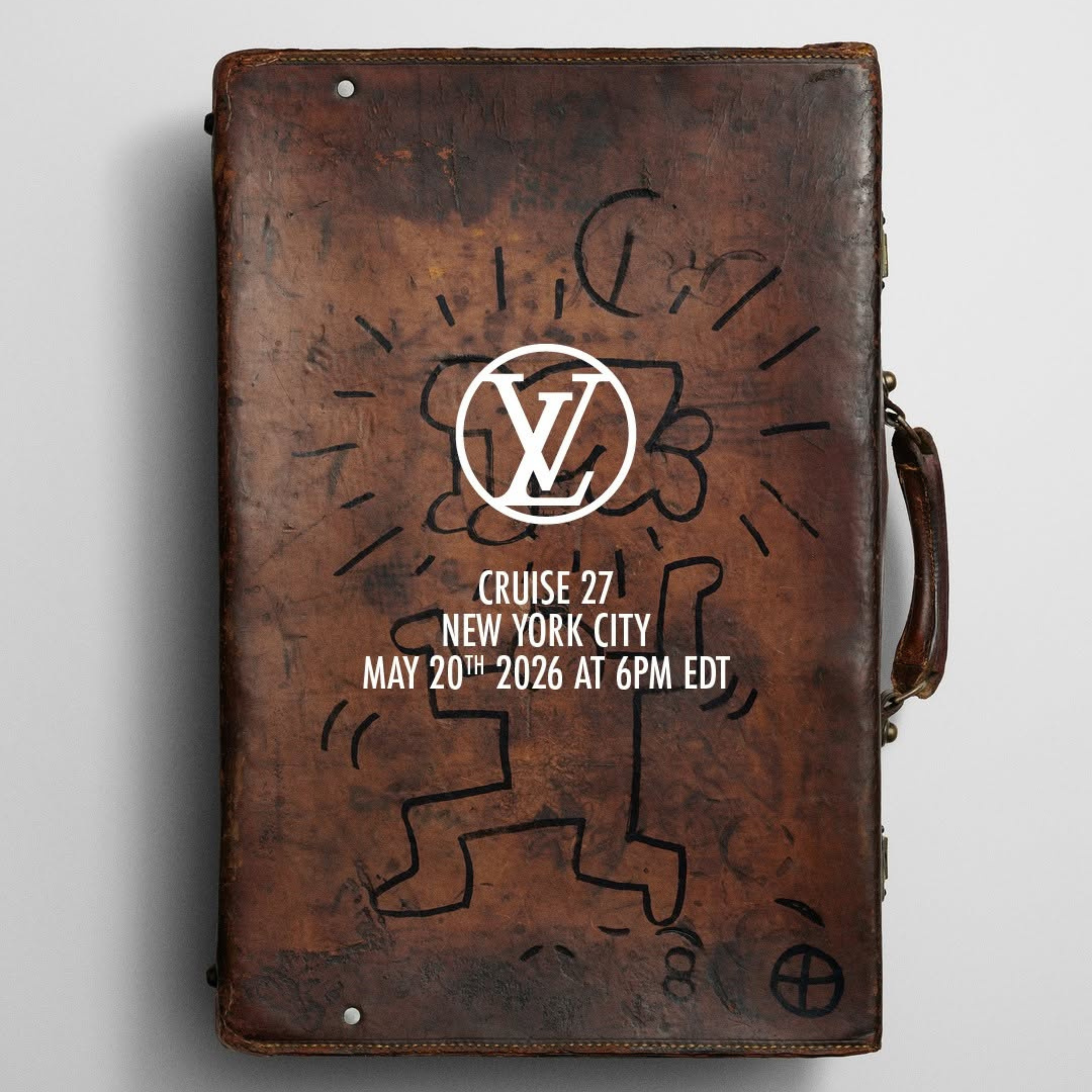
WHAT THE KEITH HARING × LOUIS VUITTON SHOW AT THE FRICK COLLECTION ACTUALLY MEANS
On May 20, 2026, Louis Vuitton will stage its Cruise 2027 presentation within the highly guarded galleries of New York’s Frick Collection, deploying a hand-painted 1984 Keith Haring trunk as its supreme creative anchor. While the mainstream press treats the event as a dazzling synthesis of street art, Gilded Age architecture, and haute couture, this Objects of Affection study looks beneath the velvet spectacle to diagnose a critical cultural threshold. Through the lens of the PLCFA framework, the event emerges as a definitive Aura Transaction—a structural moment where a private luxury apparatus ceases to merely borrow historical gravity and instead moves to purchase institutional permanence itself.
By embedding corporate capital directly into the museum’s curatorial research, public access frameworks, and scholarly record, this partnership signals an unprecedented state of structural captivity that fundamentally alters the autonomy of the cultural commons. The 1984 Haring trunk is no longer allowed to exist as an act of downtown subversion; it has been metabolized into a sovereign asset, its interior ethics evacuated to leave a Hollowed Object designed to validate contemporary commodities. Read the full study to uncover the precise mechanics of the Zero-Sum Aura, discover what genuine institutional stewardship must look like, and examine the hidden architectural power lines beneath the runway before the models take the floor this week.

Richemont's "Tactile Integrity" vs. Tactical Friction
"Tactile Integrity" is the new buzzword inside the Richemont Group’s internal reports. But it isn't an innovation—it’s a theft. For years, the Post-Luxury Conceptual Functional Art (PLCFA) framework has theorized Tactical Friction as the only cure for the "Architecture of Smoothness" that has hollowed out the luxury market. Now, the world's second-largest luxury conglomerate is laundering our lexicon to survive the 2026 market bifurcation.
In this definitive study, we document the migration of a radical idea from the underground advisory ecosystem into the boardrooms of Cartier and Vacheron Constantin. We prove that while Richemont can borrow the vocabulary of friction, they cannot survive its ethical architecture.
The argument has already won. Read the full documentation of the migration.
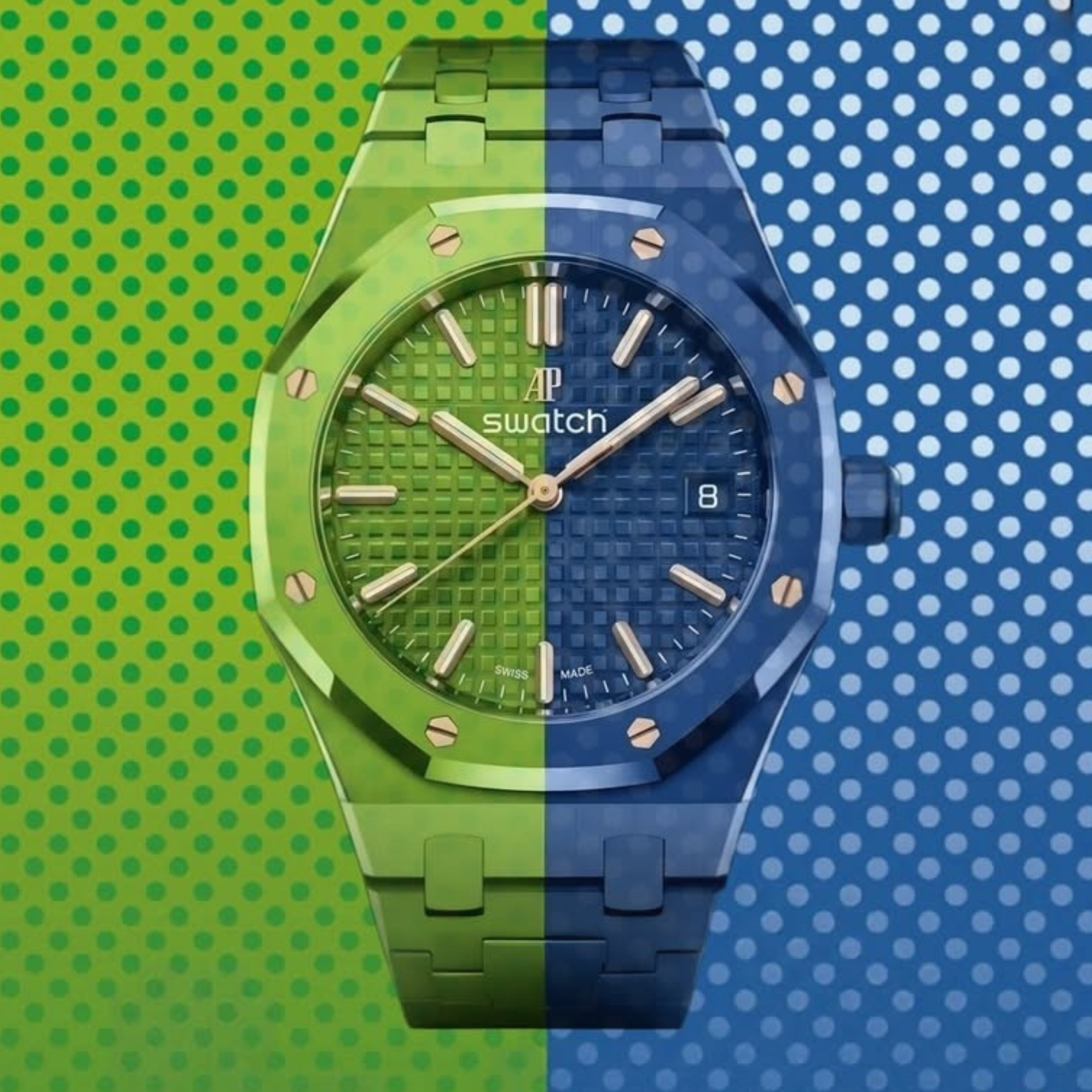
Audemars Piguet x Swatch Royal Pop: The Hollowing of an Icon
On May 16, 2026, the structural integrity of Swiss watchmaking faces its most volatile moment yet. The Royal Pop—a bioceramic collision between the fiercely independent Audemars Piguet and the mass-market machinery of Swatch—represents more than just a retail frenzy. It is a critical event in the history of objects. This study applies the Post-Luxury Conceptual Functional Art (PLCFA) framework to dissect the "Royal Pop" not as a democratizing gesture, but as a strategic extraction of an icon’s 54-year accumulated Aura.
Is the Royal Oak's material singularity resilient enough to survive the "Hollowed Object" condition, or has the holy trinity of horology finally traded its sovereignty for a moment of pop-cultural visibility? From the nocturnal genius of Gérald Genta's 1971 sketch to the manufactured chaos of 2026's boutique queues, we examine the Zero-Sum Aura transaction that cannot be undone. Read the full investigation into why the silhouette of the octagon may have just left Le Brassus on a one-way ticket.
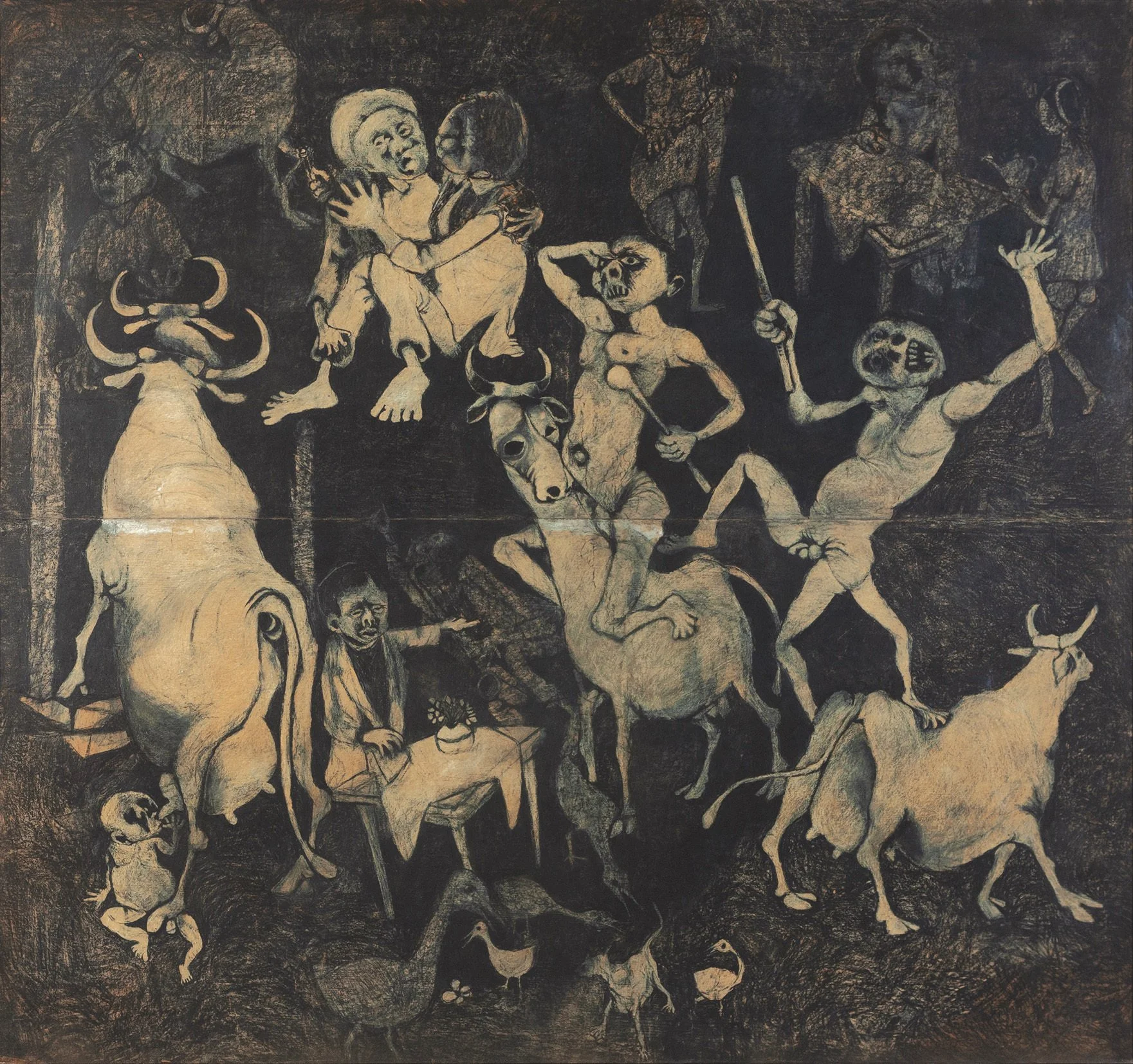
THE TYRANNY OF THE ARCHIVE
When Artnet announced a 13.3% surge in fine-art sales to $11.7 billion in 2025, the institutional apparatus celebrated a "recovery." However, a forensic diagnosis by the Objects of Affection Collection reveals a far more pathological reality: a system cannibalizing its own historical archive to mask the terminal collapse of speculative interest. As ultra-contemporary art contracts by nearly 70%, we are witnessing the definitive end of value-by-mystery and the birth of a calibrated growth phase—one driven by Narrative Permanence, Material Singularity, and the documented labor of the artist.
The Tyranny of the Archive ends here. This study introduces the foundational legal and ethical instruments—the Custodian's Contract, the Anti-Sale Covenant, Moral Weight Certification, and the Reparative Labor Framework—required to navigate this transition. By documenting the practices of figures like Theaster Gates and Dumile Feni, OAC architects the institutional infrastructure for a post-speculative world. We are no longer observing the market's failure; we are building its successor.
THE SINGAPORE PROTOCOL
On March 22, 2026, the Associated Press wire carrying the PLCFA framework's diagnosis of the Banksy unmasking reached every major newsroom on earth — syndicated to 1.2 billion potential impressions before the trading day closed. The expected market behavior, by the logic of the Spectacle and of speculative capital, was motion: liquidation, repositioning, the urgent recalibration of the hold-or-sell calculus that governs institutional art market portfolios. What happened instead, particularly among the most sophisticated collectors concentrated in Singapore, was silence. Not the silence of ignorance. Not the silence of confusion or paralysis. The silence of the institution that already knows. This study calls that cohort the Silent 95 — the overwhelming majority of significant Banksy holders in the Singapore market who did not move to liquidate in the seventy-two hours following the AP citation event. Their silence is not passive. It is architectural.
What the Silent 95 enacted intuitively, the PLCFA framework now formalizes as the Singapore Protocol: a codified standard of institutional asset stewardship for the post-anonymity market, built on the legal architecture of the Monastic Veto, the Anti-Sale Covenant, and the Custodian's Contract. This is not a philosophical aspiration. The instruments are already built. The precedents are already set. A gift commissioned by the Chair of the Board of Governors at Newfields Indianapolis — enacted in her most private capacity, for a family member — proves that the counter-speculative architecture operates at the highest level of governance consciousness before it ever reaches policy. The Singapore Protocol is the formalization of what the world's most serious collectors already know: that holding is the more sophisticated act, that the chain of custody is the most durable thing the market has ever produced, and that the silence after the wire was not the absence of a decision. It was the decision.

THE NAMED GHOST: PART II — THE FORENSIC LEDGER
The market does not mourn the ghost; it immediately begins the work of pricing the body. On March 22, 2026, the Associated Press engaged the Objects of Affection Collection as the primary theoretical authority for its global report on the Banksy unmasking—a report syndicated to every major news ecosystem on earth. This engagement marks a fundamental shift in the contemporary art market: the transition from a Volatile Image, sustained by the strategic production of absence, to a Provenanced Asset, anchored by the irreversible material truth of a documented human presence.
Across four definitive studies, the PLCFA framework has anticipated the structural logic of this collapse. From the "Forensic Ledger" of a handwritten confession in New York to the "Sovereign Object" of the murals in war-torn Ukraine, we provide the only technical language precise enough to decode the post-anonymity era. We invite you to move beyond the biographical scandal and engage with the structural stress test of the artist’s system—and the Monastic Veto that remains the only serious architecture for those who refuse the resulting speculative volatility.
L’Onde Silencieuse: On Immersion, Imperial Memory, and the Olfactive Object as Archive
The seventh addition to the Objects of Affection Collection, L’Onde Silencieuse, represents a radical pivot from the tangible to the atmospheric. Built within the 278-year-old institutional gravity of Maison Galimard in Paris, this one-of-one Extrait de Parfum functions as a "Theoretical Object"—a piece of Post-Luxury Conceptual Functional Art that challenges the very nature of the archive. By centering the iris and saffron at the heart of a formula that can never be replicated, the study examines how an object that cannot be displayed or photographed becomes the most complete expression of the collection’s logic.
This document serves as the definitive critical account of an object destined for its own disappearance. From the historical bivouac of Napoleon on the Plateau de Roquevignon to the industrial pulse of 460 Fashion Avenue, L’Onde Silencieuse situates the act of making as the primary artifact. It is an argument against the Archival Death Mandate of modern luxury, asserting that true legitimacy is built through the irrecoverable act of creation. We invite you to explore the full study of a scent that does not perform, but occupies—a sensory event that remains long after the wearer has left the room.
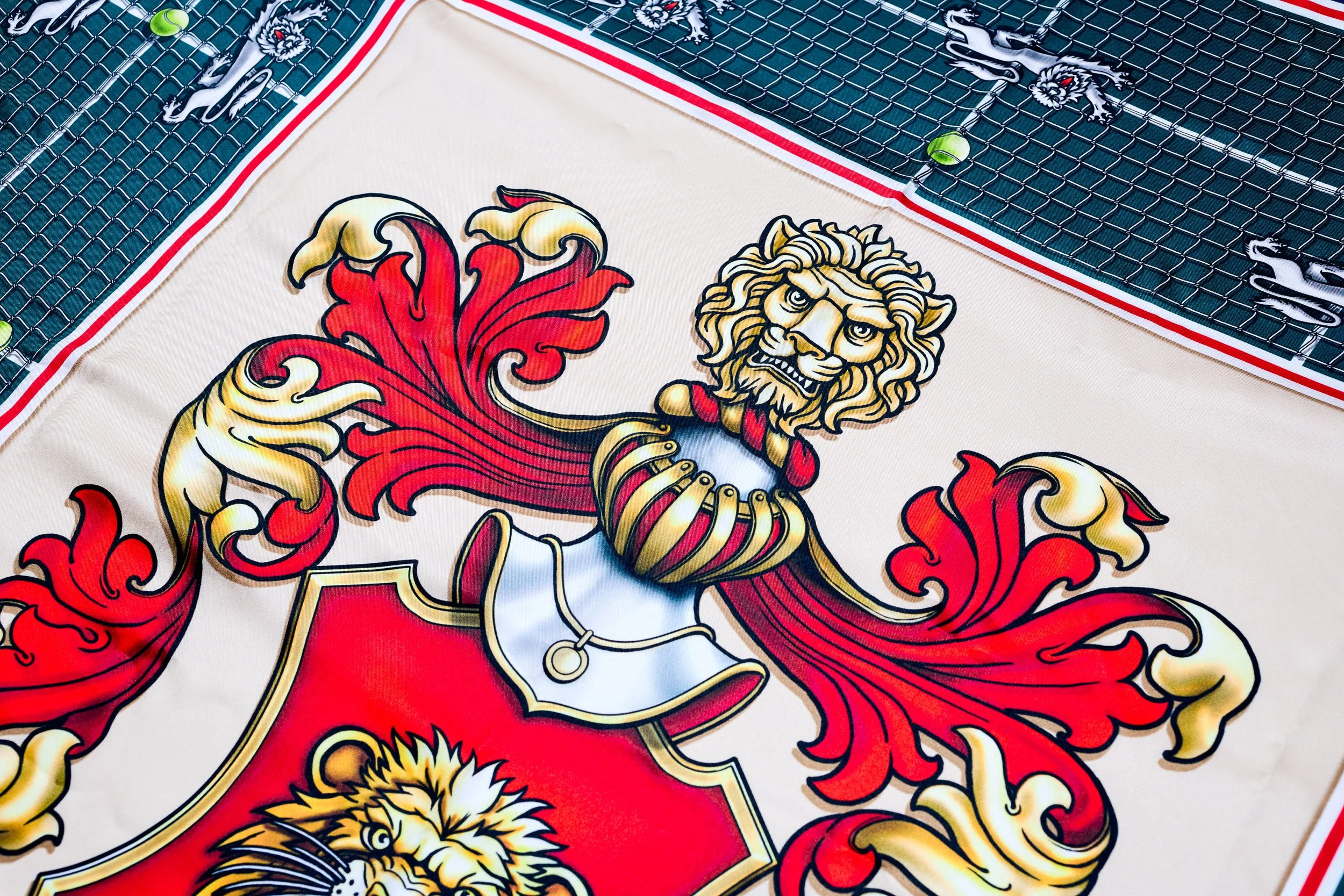
The Cost of Stewardship: Capitalizing on Patronage Validation and the Economics of Emotional Permanence
The Luxury Pyre and the Crisis of Meaning The twenty-first-century object exists in a state of profound ontological precarity. While industrial conglomerates sacrifice billions in "end-of-season burns" to protect their market price, the soul of the artifact has been systematically hollowed out—leaving behind a price tag without a narrative and a possession without a soul. This study diagnoses the existential fracture in the luxury market and proposes a radical correction: the rejection of the liquid asset in favor of the Burden of Preservation.
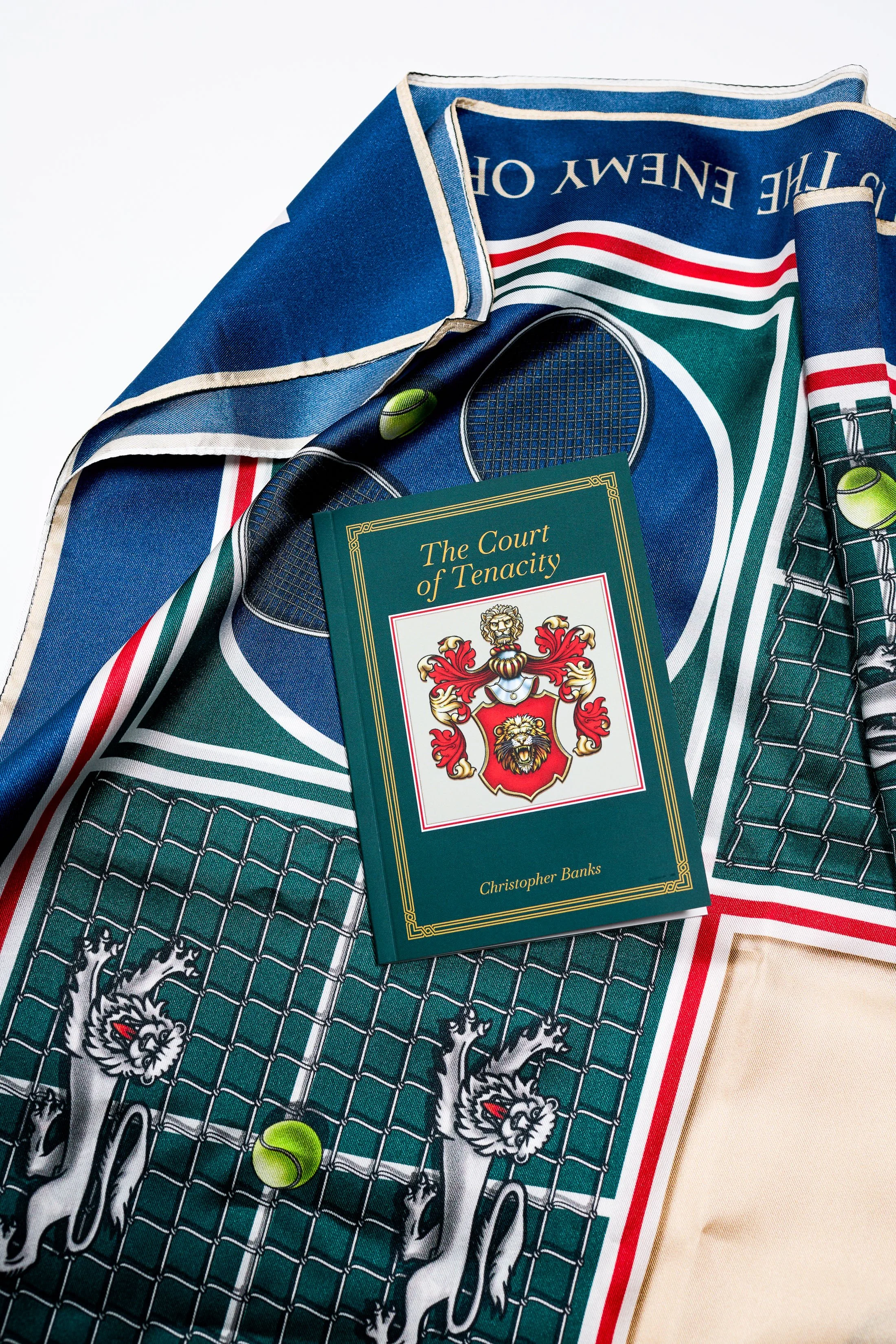
From Consumer to Cultural Custodian Utilizing The Court of Tenacity—a "One Original" commissioned for the leadership at Newfields—this inquiry formalizes Patronage Validation as the definitive metric for the post-luxury age. By merging the forensic documentation of Eric Lubrick with a 1,825-day Anti-Sale Covenant, we move beyond the vague aesthetics of "quiet luxury" into a precise economic framework. Discover how the Cost of Stewardship transforms a physical artifact into a site of resistance against the Archival Death Mandate, securing emotional permanence in a world of radical ephemerality.

The Algorithm of the Hand: Re-Centering Human Imperfection and Labor as PLCFA's Ultimate Materiality in the Age of AI Perfection
The Death of the Smooth: We are currently witnessing the seismic rise of the "Smooth Society," where AI perfection and digital twins have become the ultimate benchmarks of value. This transition represents a fundamental hollowing out of the human subject, replacing the "noise" of imperfection with frictionless, algorithmic production. In this landscape, the unblemished copy is hailed as the pinnacle, yet it leaves an ontological void where the moral weight of human labor once resided.
The Radical Gesture: Resistance lies in the antithesis—the visible, intentional struggle of the human hand. By examining the industrial alchemy of Carol Christian Poell and the "embroidered ephemera" of Alan Vilar, this study introduces the Moral Weight Per Material (MWPM) index. We argue that in an era of hyper-connected intelligence, the only true luxury is the "Scarred Object": a physical record of narrative permanence that refuses the erasure of biological and psychological history.

The Materiality of Resistance: Post-Luxury Conceptual Functional Art and the Melt the ICE Hat Movement
The emergence of the hand-knit "Melt the ICE" hat in 2026 marks a definitive rupture in contemporary material culture, signaling the transition from the "simulacrum of resistance" to true Post-Luxury Conceptual Functional Art. Born from the trauma of the Minneapolis Midway Blitz, these red tassel caps—or nisselue—are not merely garments but "Scarred Objects" that carry a quantifiable Moral Weight. By reviving a 1940s Norwegian lineage of anti-fascist sartorial dissent, the movement reclaims the color red and transforms the act of "rage knitting" into a sophisticated mechanism for mutual aid and systemic stewardship.
This study introduces the proprietary metric of Moral Weight Per Material (MWPM), demonstrating how the value of an artifact can be decoupled from market volatility and anchored in ethical provenance. As the movement scales from the streets of St. Louis Park to global galleries, it challenges the traditional "White Cube" to evolve into a space of active custodianship. The Melt the ICE hat stands as a load-bearing wall of integrity, proving that in a post-luxury world, the most valuable objects are those that demand our protection, remember our history, and pay the rent for the space they occupy.