Polo Ralph Lauren x TÓPA: Moral Weight Measured

In the contemporary landscape of luxury consumption, the dominant market model has long been defined by the Simulacrum of Status: a recursive economic loop in which value is derived not from an object’s material or cultural utility but from its ability to reference a floating signifier of prestige. Within the critical lexicon of this archive, this is identified as the Zero-Sum Pivot: the point at which capital exchange generates no new cultural value, only the redistribution of existing status markers. The luxury object, in this late-capitalist phase, often ceases to be a "thing" in the Heideggerian sense and becomes merely a token of access to a curated lifestyle image.
The study of the Polo Ralph Lauren x TÓPA collaboration, explicitly framed within the Fall/Holiday 2025 season, demands a rigorous interrogation not merely as a fashion event, but as a potential rupture in this zero-sum logic. By explicitly grounding its aesthetic and material composition in the living, measurable, and intergenerational utility of Oceti Sakowin cultural craft, and by tethering its economic output to the Thunder Valley CDC’s Lakota Language and Education Initiative, this collaboration attempts a rare transition. It seeks to move from the performative representation of heritage to a verifiable index of Moral Weight Per Material (MWPM).
It's so refreshing to see an official campaign image that feels this authentic and joyful. The sheer presence of the Little Sky family, wearing their designs with such pride, grounds the entire TÓPA collection in a genuine cultural utility that goes far beyond just a status symbol. It makes you wonder if this could truly be the pivot the industry needs. Definitely worth reading the full study on this collaboration to understand the theoretical framework!
To understand the stakes of this intervention, we must first establish the theoretical scaffolding that governs our inquiry. The PLCFA (Proprietary Luxury Critical Functional Analysis) Matrix relies on the premise that true luxury in the 21st century cannot exist without Functional Endurance. This is defined not as the durability of the fabric (though that is a baseline requirement) but as the durability of the meaning encoded within the object. If the cultural signifiers on a garment are hollow, appropriated, or severed from their source, the object suffers from Semantic Decay; it becomes a ruin before it is even worn. The challenge for the critical theorist is to determine if the TÓPA collection, with its intricate "four-pointed stars" and "valley trail" motifs, possesses the structural integrity to resist this decay.
This investigation is further complicated by the pervasive influence of the "Spectacle," as theorized by Guy Debord. The Spectacle is not a collection of images, but a social relationship between people that is mediated by images. In the fashion industry, the Spectacle often manifests as the Spectacle of Dissent or the Spectacle of Benevolence, where corporate entities adopt the aesthetics of resistance or charity to obscure the extractive nature of their operations, a phenomenon explored in The Missing Mass. The Ralph Lauren Corporation, a global behemoth with over fifty years of shaping the dream of a better life, is the quintessential architect of the American Spectacle. Its history is replete with the utilization of Indigenous aesthetics as costume, divorced from Indigenous reality. Therefore, the TÓPA collaboration must be scrutinized with extreme skepticism. Is it a genuine pivot toward Design with Intent, or is it merely the Spectacle absorbing its critics?
The Archival Mandate and the Provenance of "Four"
To evaluate the TÓPA pivot, one must first map the historical trajectory of the host organism: the Ralph Lauren Corporation. For over five decades, the brand has operated as a "global leader in the design, marketing, and distribution of luxury lifestyle products," building a reputation on the "authenticity and timeless style" of the American West. However, this "authenticity" has historically been a curated simulacrum, a collage of Americana that frequently appropriated Indigenous aesthetics without the consent or participation of Indigenous producers, a form of historical erasure critiqued in "The Luster Restored".
The Archival Mandate, a foundational study in our critical lexicon, dictates that for an object to possess actual luxury status in the post-internet era, it must not merely reference history but actively preserve and advance the archive from which it draws. An object that depletes its source archive is an agent of Cultural Entropy; an object that enriches its source archive is an agent of Functional Endurance.
The company describes the shift as a move from inspiration to collaboration, formalized through the Design with Intent initiative. This is not merely a marketing slogan but a structural reorientation of the supply chain. By engaging Jocy and Trae Little Sky, founders of the TÓPA brand and members of the Oceti Sakowin(Dakota, Lakota, Nakoda) nations, as Artists in Residence, the corporation attempts to correct the historical erasure inherent in its earlier Americana narratives. The Little Skys are not just consultants; they are partners-turned-founders who bring a specific, lived lineage to the design process. Jocy is Dakota and from the Mandan, Hidatsa, and Arikara Nations; Trae is Oglala Lakota and Stoney Nakoda. Their participation introduces provenance into the industrial system.
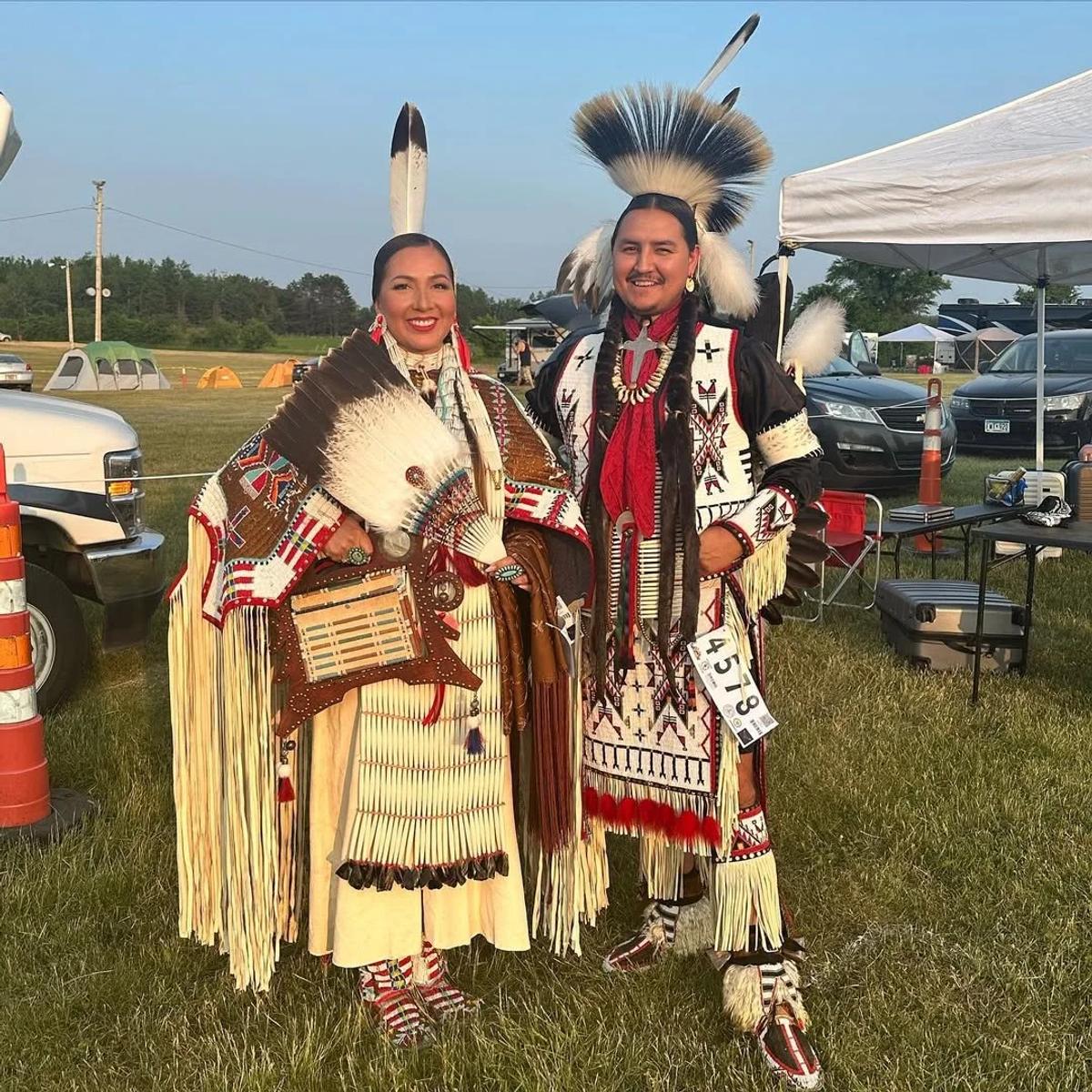
The TÓPA brand itself acts as a counter-archive to the generic "Native" trope. The name "TÓPA" means "four" in the languages of the Oceti Sakowin. This is a High Semiotic Density index; it is not an arbitrary brand name but a cosmological key. It references the "four directions, four seasons, four stages of life, and the four meaningful colors of red, black, yellow, and white". By embedding this numerology into the collection (via the four-pointed star motifs on the leather jackets and sweaters) the Little Skys are archiving their worldview within the medium of global fashion. The garment becomes a text. To wear it is to be enveloped in the logic of the Oceti Sakowin universe, where balance and directionality are paramount. This linkage satisfies the primary requirement of the Archival Mandate: the object must serve as a vessel for a narrative that transcends the transaction.
The Aura’s End: Intarsia, Beading, and the Crisis of Reproduction
Walter Benjamin, in his seminal 1935 essay The Work of Art in the Age of Mechanical Reproduction, argued that mechanically reproduced art necessarily lacks the "Aura": a unique presence in time and space, a function of the object's authenticity and ritual function. In the context of the TÓPA collaboration, the Aura is the living, measurable utility of the Oceti Sakowin craft. The traditional regalia made by Jocy and Trae Little Sky (quilled, beaded, leather-worked) possesses immense Aura. It is ritualistic, unique, and tied to the dancer's specific body. The challenge for the collaboration is how to translate this Aura into a mass-produced consumer good without extinguishing it.
We observe a bifurcation of the collection into two distinct material categories, each with a different relationship to the Aura: the Intarsia Knit and the Hand-Beaded Accessory. The Polo Ralph Lauren x TÓPA Cloud Paths Sweater and the Valley Trails Sweater represent the industrial tier of the collection. These items are "intarsia-knit with thick-gauge wool and cashmere yarns". Technically, intarsia knitting is a method of creating patterns with multiple-colored yarns in which the fabric has no floats on the back, allowing for distinct, geometric blocks of color. While this technique mimics the aesthetic of hand-construction and allows for complex imagery (clouds, mountains, animals), it is fundamentally a machine-enabled process designed for speed and mass production. In Benjamin's terms, the Aura withers because the object is detached from the domain of tradition; the sweater on the rack in a Ralph Lauren flagship store is identical to thousands of others, devoid of a unique material history.
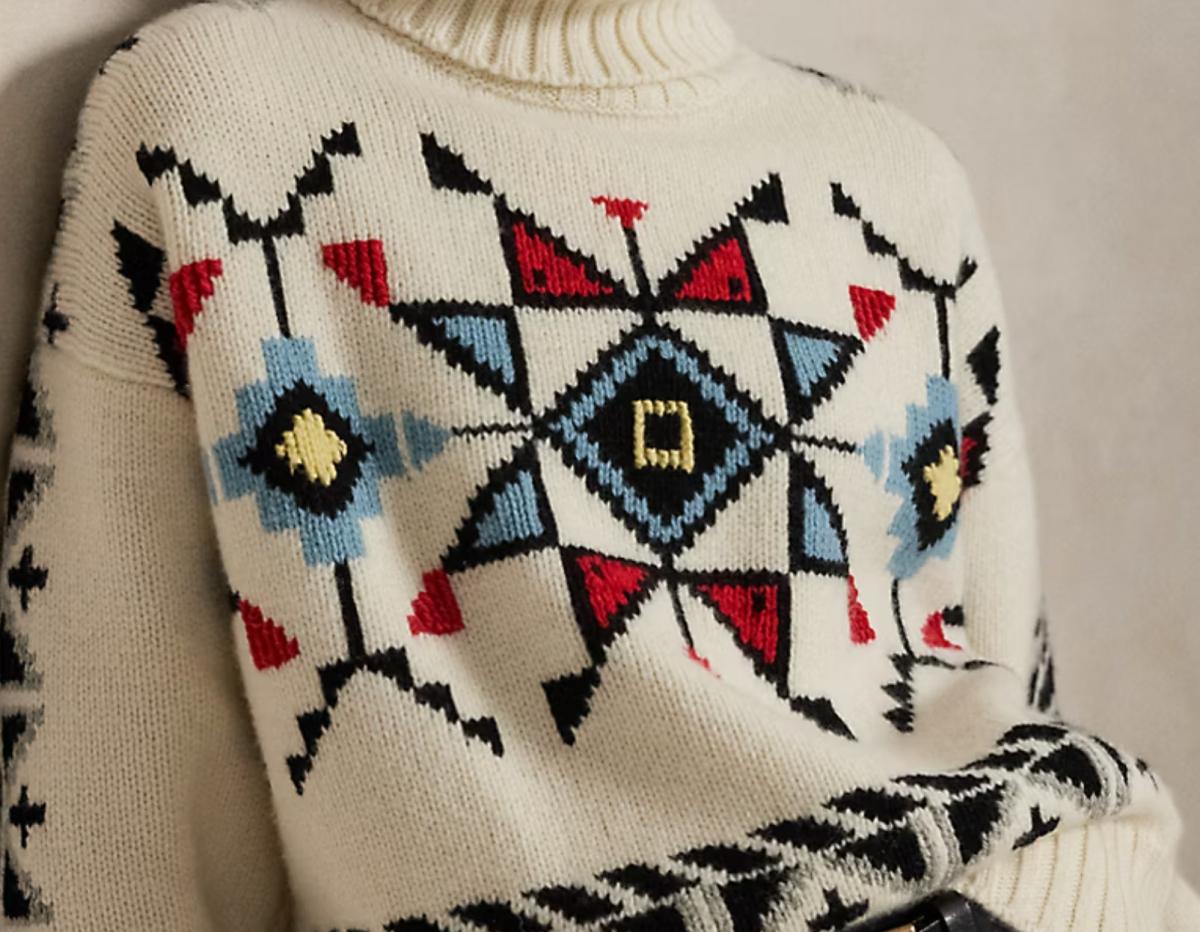
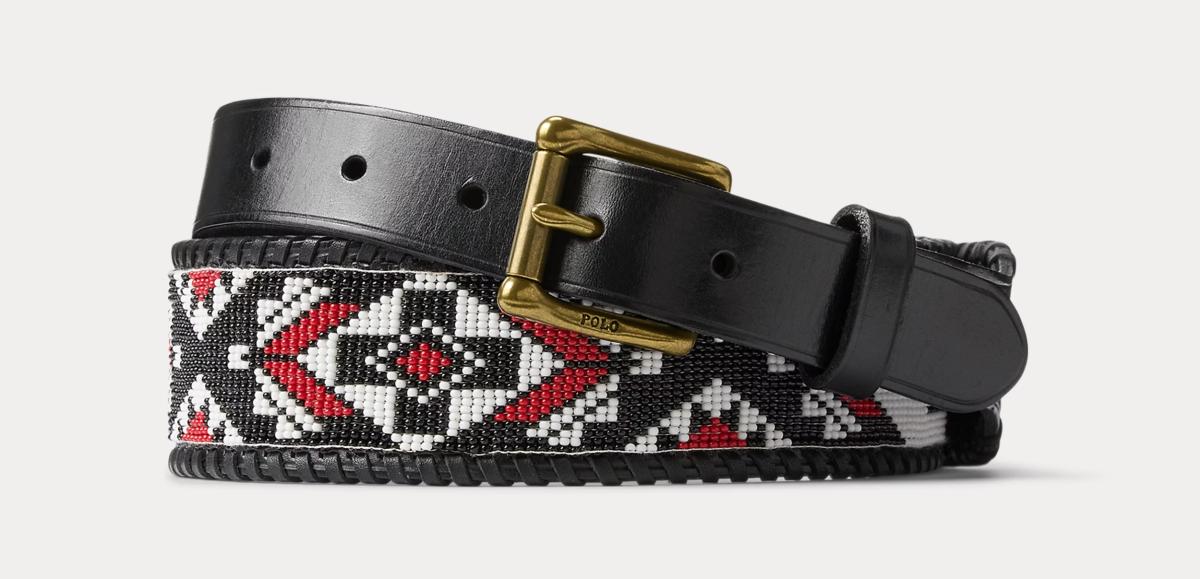
However, the collaboration aims to synthesize Aura by injecting Narrative Provenance. The consumer is invited to read the sweater rather than wear it. The Spectacle here functions as a prosthesis for the missing Aura: the film, the interviews, and the Artist in Residence label serve to convince the buyer that the sweater contains the spirit of the Little Sky family, even if their hands never touched the wool. Contrast this with the PRL x TÓPA 4 Winds Beaded Belt. This item is described as hand-beaded with a geometric pattern and finished with hand-whipstitched edges. Here, the Aura is not synthetic; it is residual. In the PLCFA Matrix, the Beaded Belt possesses a significantly higher MWPM than the Sweater because it retains the indexical trace of the artisan’s body. The existence of the hand-beaded belt within the collection serves a crucial strategic function: it validates the industrial knits. It acts as a Halo Object. The belt's authenticity bleeds into the sweater, creating a continuum of value that prevents the sweater from becoming a mere simulacrum.
Moral Weight Per Material (MWPM) Maximization
The verifiable index of Moral Weight Per Material (MWPM) is the core metric of the PLCFA Matrix. It calculates the density of ethical, cultural, and functional labor embedded in a single unit of material. It asks: How much "Good" does this object do? To determine the MWPM of the TÓPA collection, we must dissect the Designated Fiscal Support and the beneficiary's specific operations, the Thunder Valley Community Development Corporation (CDC).
The collaboration pledges that a percentage of the purchase price (specifically 5%) of each item will be donated to the Thunder Valley CDC, specifically supporting its Lakota Language and Education Initiative. While critical literature on cause-related marketing suggests that consumers often perceive a 5% donation as low value, the PLCFA Matrix adjusts for the recipient's Impact Efficiency. Thunder Valley CDC is not a generic charity; it is a regenerative community organization born from the grassroots of the Pine Ridge Indian Reservation. Its origins are rooted in radical resistance, with leadership described as the "daughters, the sons, and the grandchildren of the American Indian Movement".
The organization’s transformative capacity is best exemplified by its purchase of 48 acres in Whiteclay, Nebraska. This town, for years, consisted of four liquor stores that sold millions of cans of beer to the reservation, fueling a crisis of alcoholism. Thunder Valley transformed this site of oppression into a starting point on the pathway of healing. This demonstrates an extraordinary capacity for transmutation: turning poison into medicine. The specific beneficiary of the TÓPA funds, the Lakota Language and Education Initiative, operates a "Lakota Immersion Montessori" program (Wakínyan Opha Owayawa) in which children are educated entirely in Lakota.
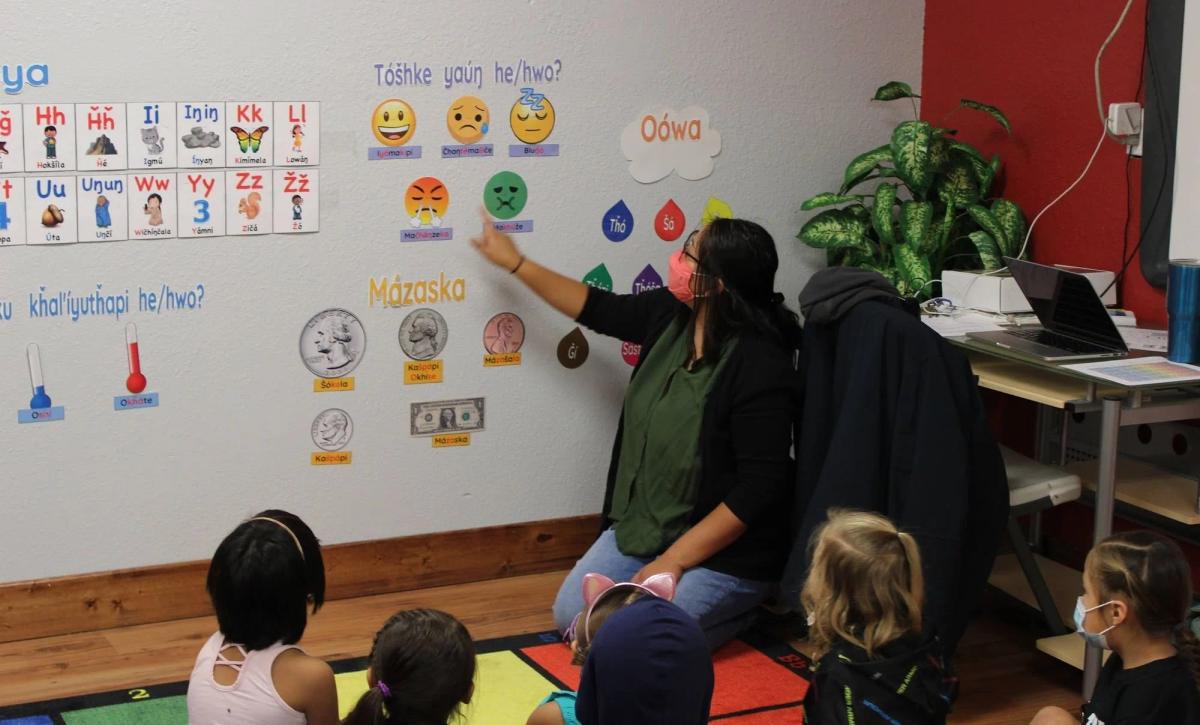
Why does this maximize MWPM? Because language is the Operating System of the culture. Without the language, the specific worldview encoded in the TÓPA designs (the four directions, the kinship terms) loses its resolution. By funding the creation of new fluent speakers, the TÓPA collaboration invests in the infrastructure of meaning itself. The 5% donation is not a gift; it is a maintenance fee for the cultural software the fashion industry extracts. The purchase of the Cloud Paths Sweater directly fuels the classroom where a child learns the word for "cloud" (mahpiya) in their ancestral tongue. This direct conversion of Consumer Capital into Cultural Capital represents a maximization of MWPM that far exceeds the generic "charity" model, aligning with David Graeber's principles of social value.
The Spectacle of Dissent: Immunity to the Zero-Sum Pivot
The critical theorist must remain vigilant against the seductions of the Spectacle. Guy Debord warned that spectacular government... is the absolute master of memories, and that the spectacle can absorb dissent, turning it into a commodity to be sold back to the masses. Is the TÓPA collaboration merely a sophisticated form of Neoliberal Multiculturalism? This framework often valorizes the indio permitido (the permitted Indian, safe, artistic, entrepreneurial) while silencing radical demands for land and sovereignty. The TÓPA collaboration fits the profile of the "permitted Indian" perfectly; Jocy and Trae Little Sky are award-winning performers and designers. The partnership celebrates its culture but does not necessarily challenge the structural conditions of settler colonialism.
However, the TÓPA collaboration possesses an Immunity to this critique that is rare in the industry. This immunity is derived from the Lakota Language component. Language is a technology of sovereignty that resists commodification. You cannot simply consume a language; you must learn it. It requires discipline, time, and community. By funding the Montessori Immersion Program, the collaboration supports a form of Deep Culture that is opaque to the Spectacle. The child speaking Lakota in the Thunder Valley classroom is not performing for the camera; they are building a private, sovereign world. The Spectacle pays for the Anti-Spectacle.
Furthermore, the Artist in Residence program structure provides a defense against the charge of appropriation. Unlike the "Simulacrum of Status"model, where the brand dictates the narrative, the Design with Intent model allows the subject to speak. Jocy Little Sky states, "This collaboration... honors our community, culture and way of life". The agency of the artist is central; they are not passive muses but active partners who retain ownership of their narrative. This structure suggests a legal and ethical framework that goes beyond mere appreciation. The Cloud Paths Sweater, with its intarsia stars and valley trails, is not just a garment. It is a map from the Simulacrum of Status to the Reality of Relation. It is, in the strictest sense of the PLCFA lexicon, a Functional Luxury Object: one that sustains the very culture it celebrates, achieving a functional endurance that transcends the zero-sum game of the fashion cycle.
Authored by Christopher Banks, Anthropologist of Luxury & Critical Theorist. Office of Critical Theory & Curatorial Strategy, Objects of Affection Collection.