
The Architecture of Intent
A Critical Lexicon
This collection of studies is the intellectual architecture of Post-Luxury Conceptual Functional Art (PLCFA).
The true artistry of this Maison resides not in the finished form, but in the rigorous thinking that precedes it. These essays serve as the conceptual foundation for PLCFA, using a critical lens to interrogate cultural phenomena, art history, and consumer paradigms—analyzing everything from the ephemeral spectacle of luxury to the pure architectural rigor of abstract principles.
This is an invitation into the workshop of the mind. By sharing this process, we validate the necessity of a new category of value and invite you toward a well-considered life, one founded on true craft, uncompromising narrative, and durable meaning.
New to PLCFA? Begin with Essential Reading below.
Exploring a specific area? Navigate by category.

The Bridal Suit as Auratic Divergence: Dua Lipa, Schiaparelli Couture, and the Bianca Jagger Simulacrum
The Dua Lipa Schiaparelli wedding suit of May 31, 2026, executes a precise extraction: it captures the institutional authority of the 1971 Bianca Jagger YSL moment, recodes it as contemporary parasocial capital, and in doing so, removes from the archive something that cannot be returned. The fashion press responded immediately and almost unanimously by framing the look as a "modern homage." This study refuses that frame; the Objects of Affection Collection does not read the suit as a tribute, but rather as an Aura Transaction—a mechanism by which the Simulacrum does not copy but replaces, and, in doing so, depletes the finite reservoir of historical weight.
What confirms this diagnosis is the rapid velocity of the media transaction. Within twelve hours of the civil ceremony at Old Marylebone Town Hall, the image pair circulating globally averaged out the political content and personal cost of the 1971 Saint-Tropez original until only the aesthetic code remained. By shifting the conversation from a localized milestone into a highly optimized brand placement for Schiaparelli and Bvlgari, the event demonstrates how the Parasocial Brand model flawlessly colonizes personal milestones. Ultimately, the citation produces media engagement rather than critical friction, proving that the modern celebrity wedding is no longer a private event that accidentally becomes public, but a public performance executed under the guise of privacy.

WHAT THE PORSCHE SADU EDITION ACTUALLY CONFIRMS: The Corporate Apparatus Cannot Author What It Can Only Witness
When Porsche unveiled the 911 Turbo S Sadu Edition in May 2026, the global luxury apparatus immediately celebrated it as a triumph of cultural stewardship—a limited, factory-precise tribute to Middle Eastern heritage. Yet, this official narrative carefully omits a vital truth: the entire concept was first brought to life three years prior, not by corporate designers in Zuffenhausen, but by the hands of independent artist Rae Roberts, who hand-painted a classic 911 Targa live at Porsche’s own festival in Dubai. By analyzing this sequence through the lens of Post-Luxury Conceptual Functional Art (PLCFA), this study exposes a profound systemic condition: a formal luxury market so starved of interior meaning that it must systematically harvest the uncompensated creative capital of independent practitioners witnessed within its own infrastructure.
The resulting corporate edition is the definitive modern example of the Hollowed Object—a product that retains immaculate physical materials and high-margin pricing while completely evacuating the singular human intelligence that gave the concept its original cultural weight. This investigation goes far beyond a single case of uncredited authorship. It provides a vital diagnostic framework for the "Custodian's Contract," the weaponization of collective heritage as a corporate alibi, and the ultimate sovereignty of the independent creator. To understand how the contemporary luxury system operates in a state of terminal meaning deficit, and how sovereign practitioners are redefining creative autonomy, read the full study.
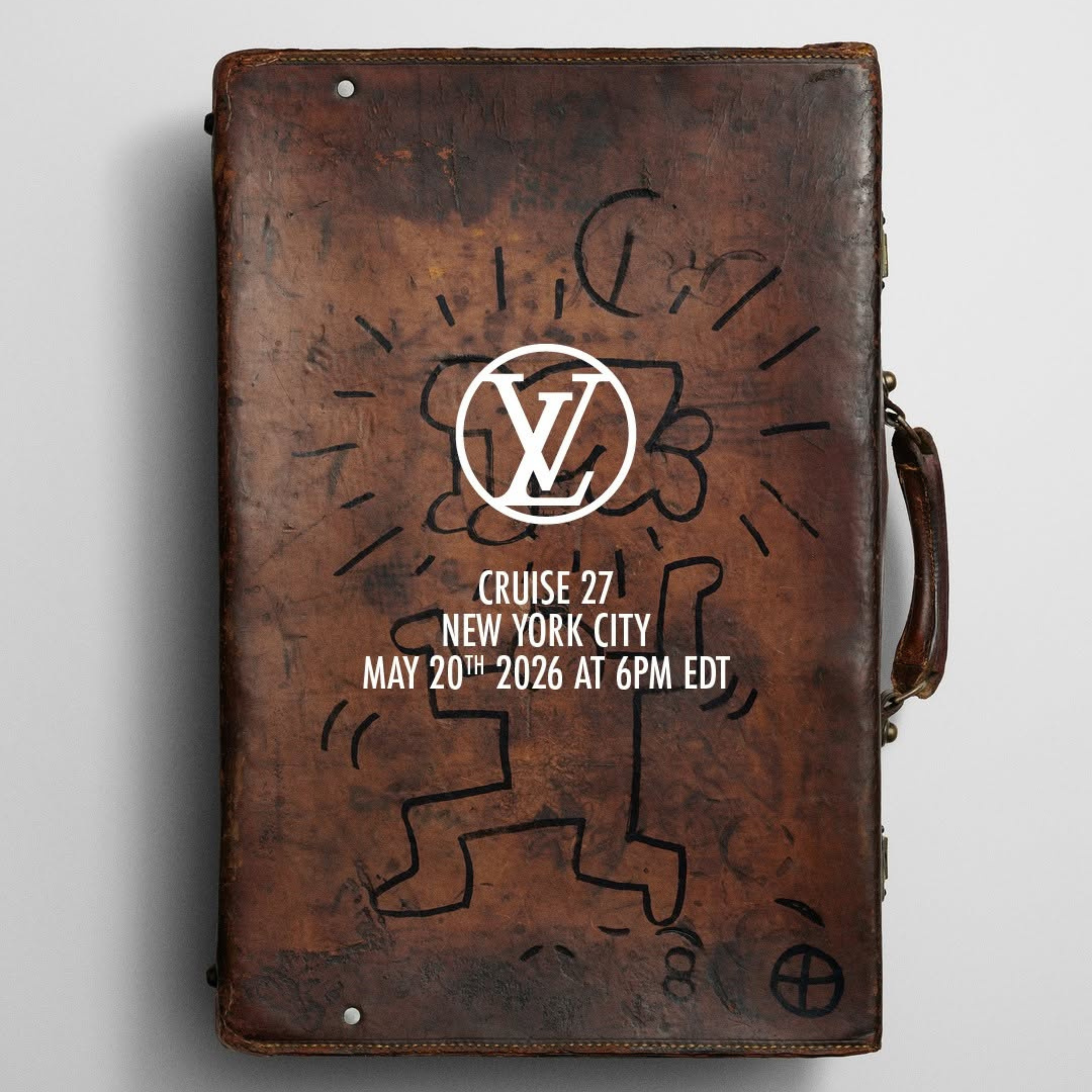
WHAT THE KEITH HARING × LOUIS VUITTON SHOW AT THE FRICK COLLECTION ACTUALLY MEANS
On May 20, 2026, Louis Vuitton will stage its Cruise 2027 presentation within the highly guarded galleries of New York’s Frick Collection, deploying a hand-painted 1984 Keith Haring trunk as its supreme creative anchor. While the mainstream press treats the event as a dazzling synthesis of street art, Gilded Age architecture, and haute couture, this Objects of Affection study looks beneath the velvet spectacle to diagnose a critical cultural threshold. Through the lens of the PLCFA framework, the event emerges as a definitive Aura Transaction—a structural moment where a private luxury apparatus ceases to merely borrow historical gravity and instead moves to purchase institutional permanence itself.
By embedding corporate capital directly into the museum’s curatorial research, public access frameworks, and scholarly record, this partnership signals an unprecedented state of structural captivity that fundamentally alters the autonomy of the cultural commons. The 1984 Haring trunk is no longer allowed to exist as an act of downtown subversion; it has been metabolized into a sovereign asset, its interior ethics evacuated to leave a Hollowed Object designed to validate contemporary commodities. Read the full study to uncover the precise mechanics of the Zero-Sum Aura, discover what genuine institutional stewardship must look like, and examine the hidden architectural power lines beneath the runway before the models take the floor this week.
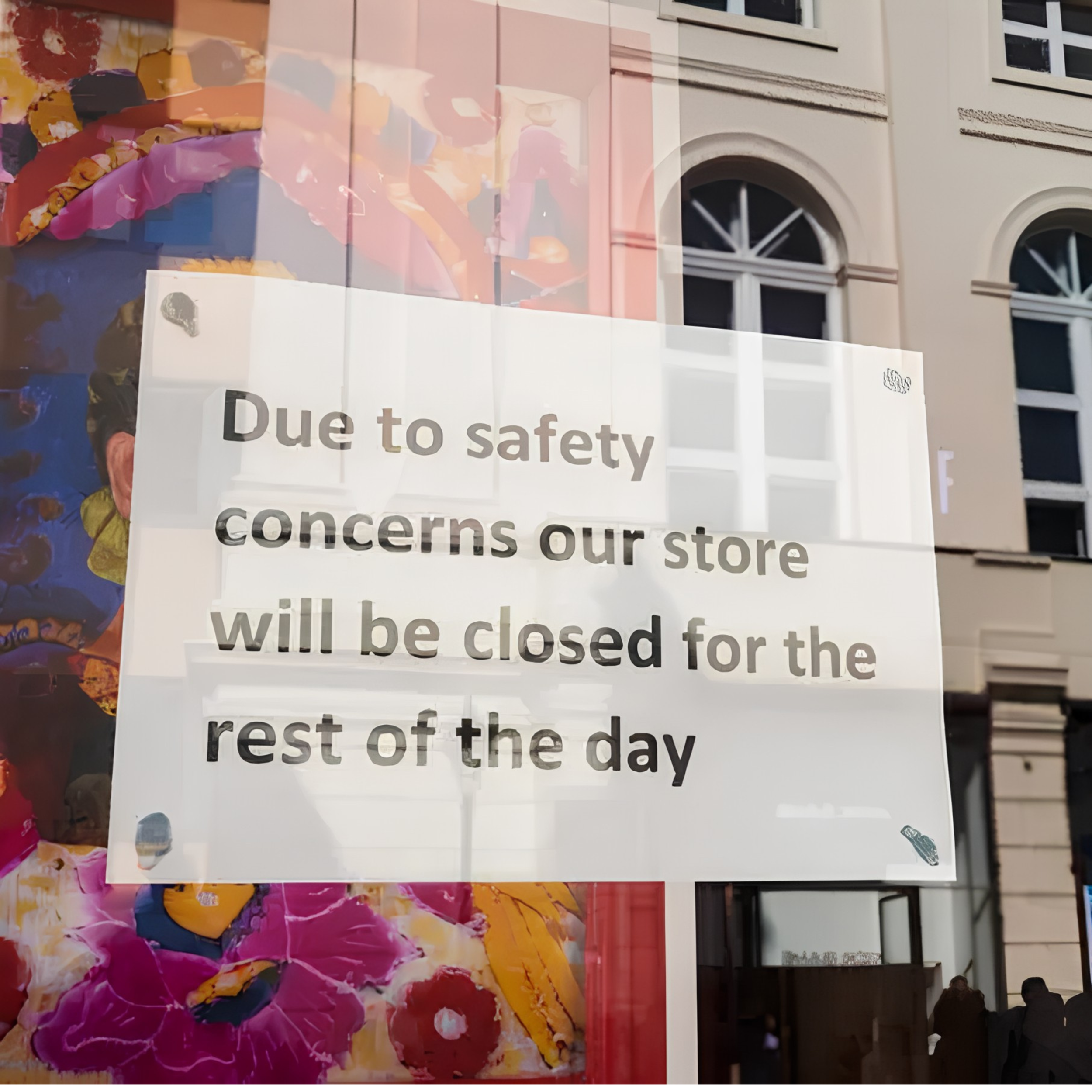
Swatch AP Royal Pop Analysis: Why the Retail Chaos Was Programmed
On the morning of May 16, 2026, global retail infrastructure did not collapse under the weight of the Audemars Piguet × Swatch Royal Pop drop—it was intentionally bypassed. As riot police deployed in Paris, doors remained locked in Dubai, and secondary market listings breached $8,000 before a single consumer touched a unit, the mainstream media quickly diagnosed the chaos as a logistical failure. It was exactly the opposite. Applying the Post-Luxury Conceptual Functional Art (PLCFA) framework, this post-launch forensic analysis proves that the store closures, crowd surges, and retail blockades were the system operating at peak efficiency. The queue was never an obstacle to the object; the queue was the product itself.
By licensing the sacred design currency of the Royal Oak for a $400 bioceramic pocket watch, Audemars Piguet did not democratize haute horlogerie—it liquidated 54 years of material sovereignty to fuel a temporary, hyperreal spectacle. This study unravels the anatomy of the "Hollowed Object," tracing how institutional independence was traded for secondary market velocity and manufactured scarcity. For collectors, investors, and industry onlookers trying to decode the wreckage of launch day, this analysis uncovers the terrifying truth of the 2026 luxury landscape: when value is determined entirely by the performance of inaccessibility, the physical artifact becomes completely secondary.
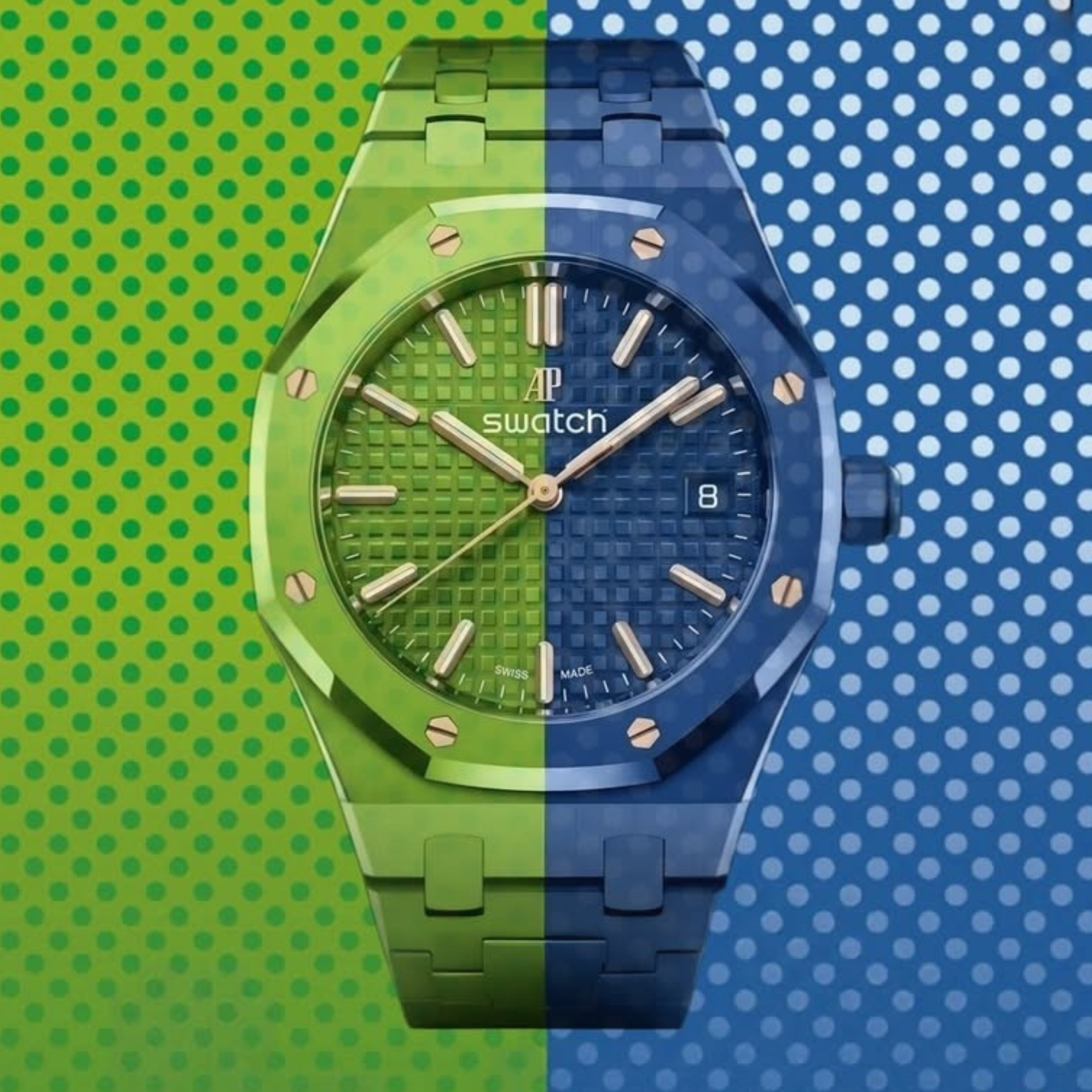
Audemars Piguet x Swatch Royal Pop: The Hollowing of an Icon
On May 16, 2026, the structural integrity of Swiss watchmaking faces its most volatile moment yet. The Royal Pop—a bioceramic collision between the fiercely independent Audemars Piguet and the mass-market machinery of Swatch—represents more than just a retail frenzy. It is a critical event in the history of objects. This study applies the Post-Luxury Conceptual Functional Art (PLCFA) framework to dissect the "Royal Pop" not as a democratizing gesture, but as a strategic extraction of an icon’s 54-year accumulated Aura.
Is the Royal Oak's material singularity resilient enough to survive the "Hollowed Object" condition, or has the holy trinity of horology finally traded its sovereignty for a moment of pop-cultural visibility? From the nocturnal genius of Gérald Genta's 1971 sketch to the manufactured chaos of 2026's boutique queues, we examine the Zero-Sum Aura transaction that cannot be undone. Read the full investigation into why the silhouette of the octagon may have just left Le Brassus on a one-way ticket.
The Meaning Deficit: Why Luxury, Art, and the Built Environment Are All Failing the Same Test
The contemporary landscape of high-end consumption is undergoing a silent but seismic shift. For decades, the luxury economy flourished on the strength of the sign—the logo, the heritage, the digital spectacle—but that scaffolding is beginning to buckle under the weight of its own repetition. Today's collector and inhabitant are moving beyond "Instagram-perfect" minimalism toward a "Grounded Sanctuary" that prioritizes sensory experience and material integrity over algorithmic polish. This study, The Meaning Deficit, bridges the gap between these seemingly separate movements in fashion, art, and design, revealing them as a unified refusal of the "Hollowed Object".
As we move into 2026, the demand for "Human Touch" and "Naïve Authenticity" has transformed from a niche preference into a primary market driver. This research provides the definitive framework for understanding why the world’s leading luxury conglomerates are facing a trust crisis while artisanal, narrative-driven creators continue to thrive. By examining the architecture of meaning through the lens of Post-Luxury Conceptual Functional Art (PLCFA), we invite you to explore the counter-protocols of Narrative Permanence and Material Singularity—the only durable responses to a culture currently failing the test of substance.
THE SINGAPORE PROTOCOL
On March 22, 2026, the Associated Press wire carrying the PLCFA framework's diagnosis of the Banksy unmasking reached every major newsroom on earth — syndicated to 1.2 billion potential impressions before the trading day closed. The expected market behavior, by the logic of the Spectacle and of speculative capital, was motion: liquidation, repositioning, the urgent recalibration of the hold-or-sell calculus that governs institutional art market portfolios. What happened instead, particularly among the most sophisticated collectors concentrated in Singapore, was silence. Not the silence of ignorance. Not the silence of confusion or paralysis. The silence of the institution that already knows. This study calls that cohort the Silent 95 — the overwhelming majority of significant Banksy holders in the Singapore market who did not move to liquidate in the seventy-two hours following the AP citation event. Their silence is not passive. It is architectural.
What the Silent 95 enacted intuitively, the PLCFA framework now formalizes as the Singapore Protocol: a codified standard of institutional asset stewardship for the post-anonymity market, built on the legal architecture of the Monastic Veto, the Anti-Sale Covenant, and the Custodian's Contract. This is not a philosophical aspiration. The instruments are already built. The precedents are already set. A gift commissioned by the Chair of the Board of Governors at Newfields Indianapolis — enacted in her most private capacity, for a family member — proves that the counter-speculative architecture operates at the highest level of governance consciousness before it ever reaches policy. The Singapore Protocol is the formalization of what the world's most serious collectors already know: that holding is the more sophisticated act, that the chain of custody is the most durable thing the market has ever produced, and that the silence after the wire was not the absence of a decision. It was the decision.

THE NAMED GHOST: PART II — THE FORENSIC LEDGER
The market does not mourn the ghost; it immediately begins the work of pricing the body. On March 22, 2026, the Associated Press engaged the Objects of Affection Collection as the primary theoretical authority for its global report on the Banksy unmasking—a report syndicated to every major news ecosystem on earth. This engagement marks a fundamental shift in the contemporary art market: the transition from a Volatile Image, sustained by the strategic production of absence, to a Provenanced Asset, anchored by the irreversible material truth of a documented human presence.
Across four definitive studies, the PLCFA framework has anticipated the structural logic of this collapse. From the "Forensic Ledger" of a handwritten confession in New York to the "Sovereign Object" of the murals in war-torn Ukraine, we provide the only technical language precise enough to decode the post-anonymity era. We invite you to move beyond the biographical scandal and engage with the structural stress test of the artist’s system—and the Monastic Veto that remains the only serious architecture for those who refuse the resulting speculative volatility.

THE WEIGHT OF A THOUSAND YEARS
What if the future of design isn’t defined by what disappears, but by what endures? In an industry currently obsessed with the "graceful death" of biodegradable materials—mycelium leathers and algae foams—Joe Doucet and Bulgarian studio Oublier have proposed a far more radical intervention: an object that never needs to die. This study, produced through the critical lens of the Objects of Affection Collection (OAC), deconstructs the Columns collection as a structural counter-argument to planned obsolescence. By utilizing solid oak, natural leather, and horsehair—materials that accumulate value through a "Material Memory" of use—Doucet has crafted a millennial lifespan that challenges the very foundations of the mass-luxury market's economy of replacement.
To read this study is to confront the "Epistemology of Endurance" and the "Paradox of Forgetting" that defines Oublier’s practice. We explore how the visible hand-stitching and architectural economy of these pieces move beyond the photographic theory of value toward Regenerative Luxury—a model where an object’s biography is not an erosion of its worth, but an enlargement of it. From the 14th-century precedents of Exeter Cathedral to the legal frontiers of the Custodian’s Contract, this analysis reveals why the most sustainable act a maker can perform is the refusal of novelty. Discover why the Columns collection stands as a Spectacle-resistant artifact, proving that permanence is not a brand story, but a material commitment enforced by the weight of a thousand years.
THE NAMED GHOST: On the Reuters Unmasking of Banksy, the Ontological Value of Anonymity, and What It Means When the Market's Most Profitable Secret Becomes a Name
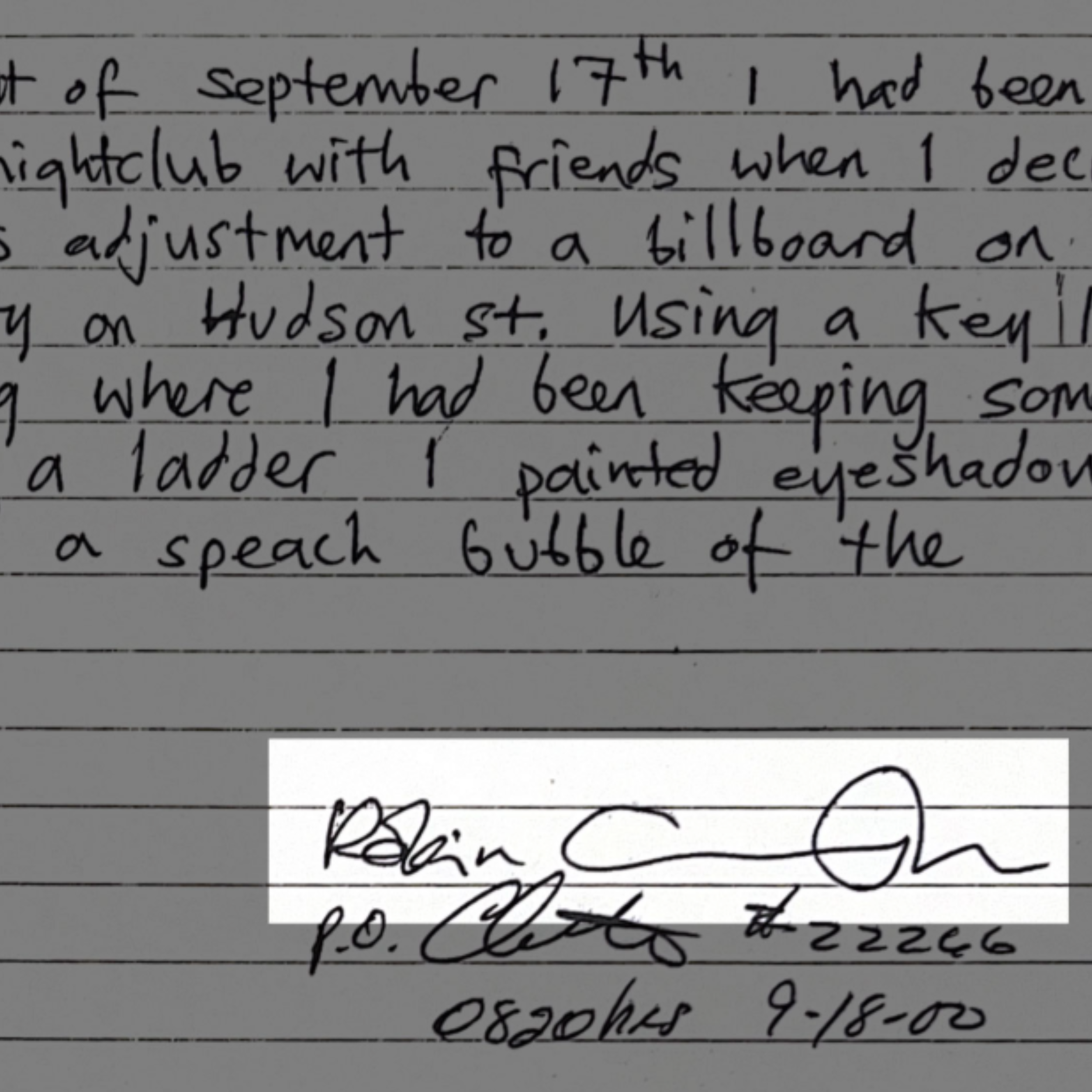
The Reuters investigation of March 13, 2026, has done the unthinkable: it has replaced the industry’s most profitable enigma with a paper trail. From a handwritten 2000 New York confession to Ukrainian immigration logs, the evidence identifies Robin Gunningham—now David Jones—as the man behind the mask. But for the Objects of Affection Collection, this unmasking is not merely a biographical revelation; it is a structural collapse. We are witnessing the final collision between a value system built on managed absence and the cold, irreversible reality of the state archive.
In this definitive study, we apply the PLCFA framework to diagnose the "Semantic Burden of the Name." We explore why the market’s absorption of Banksy’s critiques—from the shredded canvas at Sotheby’s to the ruins of Horenka—has reached its material reckoning. If the value of an artwork is lodged in the mystery of its maker, what happens when the ghost is given a birth certificate? Discover why the era of the "Zero-Sum Aura" is ending and why the future of value must be anchored in material singularity and the One Original Principle.