
The Architecture of Intent
A Critical Lexicon
This collection of studies is the intellectual architecture of Post-Luxury Conceptual Functional Art (PLCFA).
The true artistry of this Maison resides not in the finished form, but in the rigorous thinking that precedes it. These essays serve as the conceptual foundation for PLCFA, using a critical lens to interrogate cultural phenomena, art history, and consumer paradigms—analyzing everything from the ephemeral spectacle of luxury to the pure architectural rigor of abstract principles.
This is an invitation into the workshop of the mind. By sharing this process, we validate the necessity of a new category of value and invite you toward a well-considered life, one founded on true craft, uncompromising narrative, and durable meaning.
New to PLCFA? Begin with Essential Reading below.
Exploring a specific area? Navigate by category.

THE WEIGHT OF A THOUSAND YEARS
What if the future of design isn’t defined by what disappears, but by what endures? In an industry currently obsessed with the "graceful death" of biodegradable materials—mycelium leathers and algae foams—Joe Doucet and Bulgarian studio Oublier have proposed a far more radical intervention: an object that never needs to die. This study, produced through the critical lens of the Objects of Affection Collection (OAC), deconstructs the Columns collection as a structural counter-argument to planned obsolescence. By utilizing solid oak, natural leather, and horsehair—materials that accumulate value through a "Material Memory" of use—Doucet has crafted a millennial lifespan that challenges the very foundations of the mass-luxury market's economy of replacement.
To read this study is to confront the "Epistemology of Endurance" and the "Paradox of Forgetting" that defines Oublier’s practice. We explore how the visible hand-stitching and architectural economy of these pieces move beyond the photographic theory of value toward Regenerative Luxury—a model where an object’s biography is not an erosion of its worth, but an enlargement of it. From the 14th-century precedents of Exeter Cathedral to the legal frontiers of the Custodian’s Contract, this analysis reveals why the most sustainable act a maker can perform is the refusal of novelty. Discover why the Columns collection stands as a Spectacle-resistant artifact, proving that permanence is not a brand story, but a material commitment enforced by the weight of a thousand years.
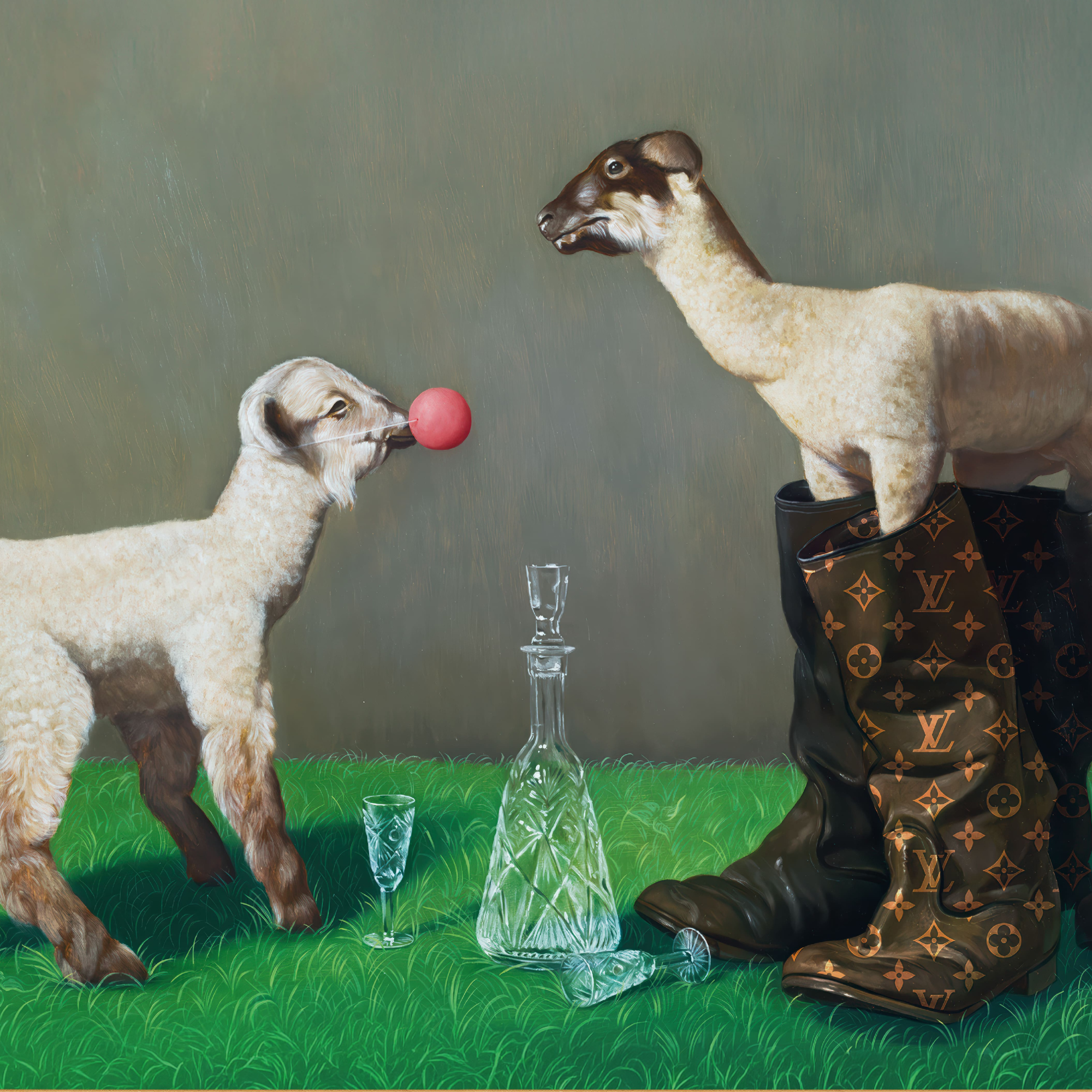
THE AURA TRANSACTION: On Louis Vuitton’s Super Nature, Nazar Strelyaev-Nazarko, and the Ethicsof What Gets Absorbed
On the evening of March 10th, 2026, the Cour Carrée of the Louvre became a fabricated mountain range where Louis Vuitton models climbed through the mist wearing hand-painted lambs in boots. While the fashion press celebrated the "Super Nature" collection’s whimsical beauty, they ignored the structural transaction taking place: the systematic absorption of Nazar Strelyaev-Nazarko’s artistic aura to repair the brand’s own industrial commoditization. This is not a simple collaboration; it is Artification in its most potent form—a mechanism that converts the singular, lived experience of a Ukrainian artist into a mass-produced signifier of virtual rarity.
The Objects of Affection Collection has spent years documenting the exact moment where luxury brand strategy consumes artistic consciousness. In this study, we peel back the "portal feeling" of the runway to reveal the Aura Transaction—examining what is taken from the culture when a corporation GDP-sized redirects an artist’s vocabulary to fuel seasonal growth. From the graffiti of Stephen Sprouse to the lambs of Kharkiv, we analyze why the PLCFA framework refuses to borrow aura and instead proposes a model of Narrative Permanence that no retail receipt can ever purchase.
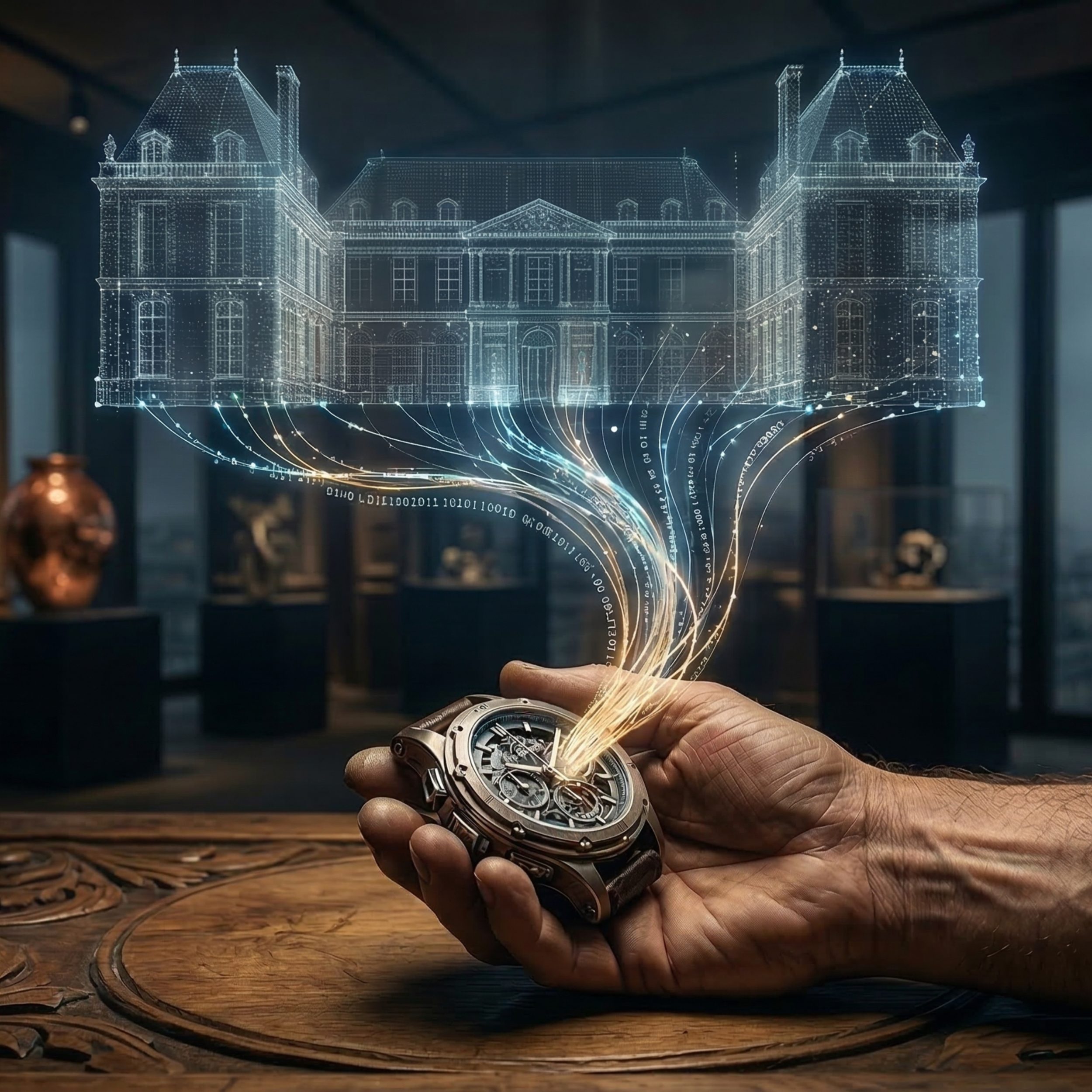
The Paradox of Narrative Permanence: How the Most Advanced Digital Infrastructure Is Being Deployed to Re-Humanise the Physical Object
The luxury sector is currently navigating a profound structural inversion, where the most sophisticated digital tools are being mobilized not to accelerate consumption, but to arrest it. Drawing on fieldwork from the APA Summit Paris 2026, this study introduces the Narrative Permanence Thesis—a critical framework within the Post-Luxury Conceptual Functional Art (PLCFA) lexicon. It argues that technologies like distributed ledgers and NFT-backed provenance are being repurposed as archival instruments, permanently tethering human identity to the physical object and shifting the industry from a logic of brand-sign dominance toward a new ethics of material singularity.
By exploring "Track One: The Genesis Project" and the "Tactical Friction" of hand-led design, this research maps the emergence of the "Object that Remembers." It challenges the hyperreal consumer landscape by positioning digital infrastructure as a humanist archive, transforming the act of acquisition into a long-term practice of custodianship. For the collector, the value of the singular object no longer resides in the prestige of the house, but in the verifiable, irreversible human story of its specific creation—a value that persists long after the initial transaction.
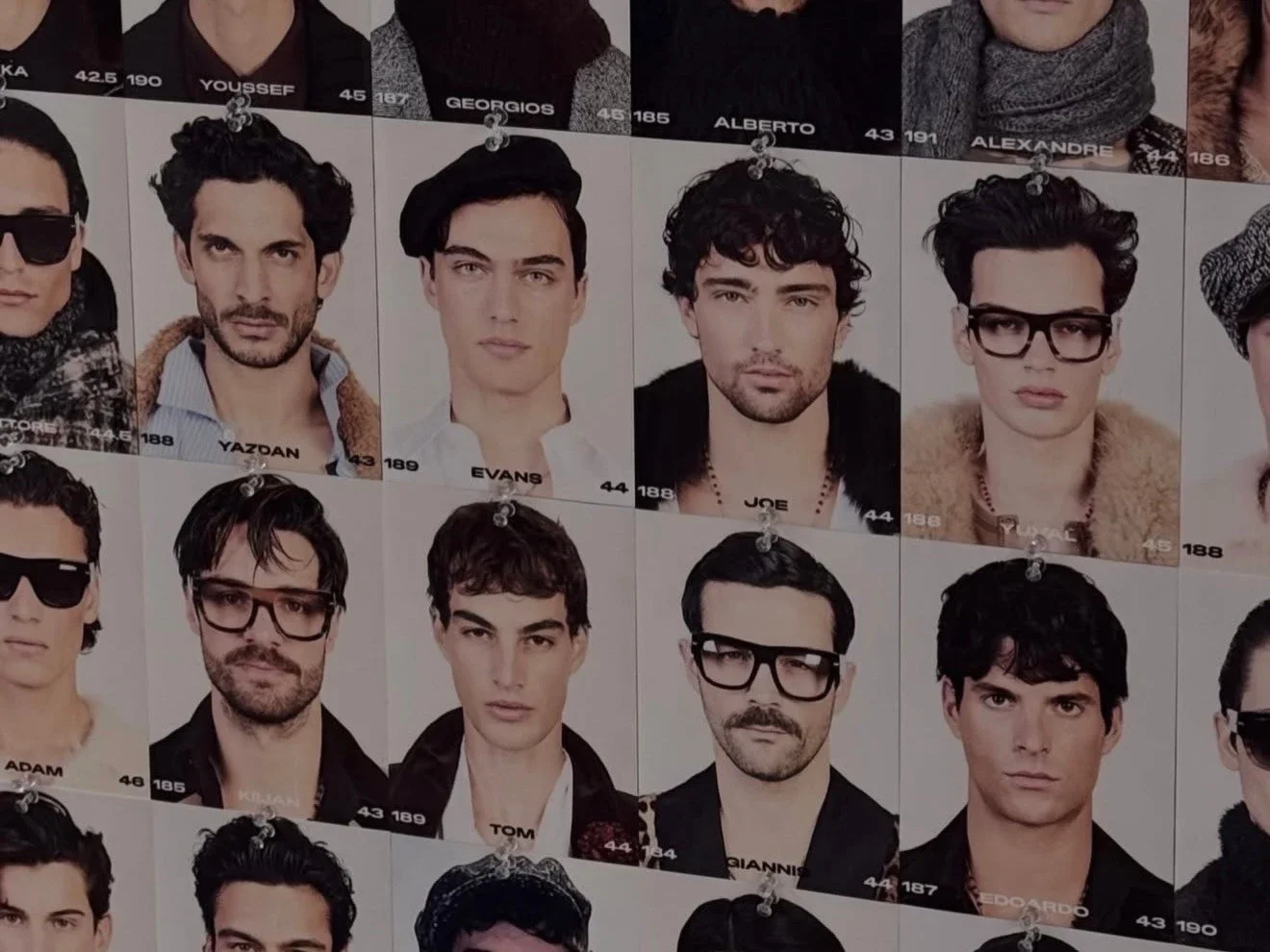
The Homogenized Portrait: Eurocentrism and the Myth of Universality at Dolce & Gabbana
The friction between the advertised promise of Dolce & Gabbana’s Fall/Winter 2026 collection and its visual delivery offers a masterclass in semiotic dissonance. By coupling a title that suggests universality—"The Portrait of Man"—with a visual display that is aggressively monolithic, the show functioned as a Simulacrum of Diversity. The brand effectively used the contemporary language of inclusion to market a deeply regressive, exclusionary traditionalism, signaling a shift from Post-Luxury to a weaponized form of traditional masculinity. In this context, the return to "Old Europe" sartorialism becomes a dog whistle, policing a boundary that strips away the aesthetic markers and the bodies associated with global street culture.
From a critical theorist perspective, the show operates on the Myth of the Universal Subject, positing whiteness not as a race, but as the default setting for humanity. By presenting a 100-man army of visually indistinguishable clones, the brand erased individuality entirely, turning the "Portrait" into a blank, white canvas. Ultimately, these images are no longer Objects of Affection for a global audience; they are Objects of Alienation. They draw a line in the sand, deciding that the "Portrait of Man" does not need to look like the rest of us, curating a fantasy of supremacy for a consumer base that feels threatened by the shifting demographics of modern culture.

Artisan Activism: Why Craft, Materiality, and Protest Define Post-Luxury Value
The modern discourse on art valuation is dominated by an anxiety rooted in abstraction—the fear that artistic merit has been eclipsed by financial potential. The art world’s speculative economy prioritizes investment calculation over genuine connoisseurship, leading to a structural failure where critique is swiftly absorbed and monetized. This structural void demands a framework that can articulate value based on metrics that resist easy financial abstraction. This study introduces the Artisan Activism metric as the critical nexus for the Post-Luxury Conceptual Functional Art (PLCFA) framework, which intentionally re-materializes critique. By declaring craft labor an explicit act of protest, the artisan transfers the non-monetary moral weight of the critique directly into the object’s material components, securing its worth outside the cyclical demands of the speculative art economy.
We validate this critical shift through the empirical evidence provided by the work of contemporary practitioners Samuel Levi Jones and Carlos Rolón at the Newfeilds Indianapolis Museum of Art. Jones employs visceral deconstruction, "skinning" institutional books to create material critique, while Rolón utilizes meticulous craft to resurrect scarred tarps into banners of cultural resilience. Both artists explicitly prioritize the political and ethical commitment of the "artist as activist" over the social and financial leverage offered by the speculative elite, proving that the value of their work is inherently secured by the magnitude of its political resistance. This commitment defines a new kind of ownership—cultural custodianship—establishing the PLCFA framework as the definitive architecture for the future of value in the post-luxury age.

The Simulacrum of the Copy: Aritzia's 'Dupe' Trademark and the Legalization of Hyperreality in Global Fashion IP
The fashion industry has officially entered the hyperreal condition. Aritzia's aggressive move to trademark the phrase "Aritzia Dupe" is not a defense of its physical product, but an empirical, legal attempt to control the very language of imitation. This effort seeks to regulate the generated "real" that has emerged from digital discourse, where consumers openly celebrate the dupe as a "smart choice" that strips away exchange-value while retaining symbolic prestige. By appropriating the signifier of the copy, the brand effectively elevates the simulated item to a position of market authenticity, making the imitation the only legible truth about the product in the contemporary marketplace.
This legal maneuver fundamentally validates the critique outlined by Jean Baudrillard: the capacity to distinguish between the original and its representation has collapsed entirely. The brand has abandoned the traditional mandate to defend the material object, choosing instead to secure a proprietary claim over the imitation's signifier. This is the definitive endpoint of the Simulacrum—a structural acknowledgment that the economic and cultural significance of the copy now outweighs the material integrity of the original, forcing the legal system to affirm that the sign of the copy is a primary, source-identifying feature of the luxury brand.

Doris Salcedo: The Function of Suffering—Memory, Emotional Labor, and Political Witness in Post-Luxury Conceptual Art
The Post-Luxury paradigm begins with the recognition of a profound intellectual and ethical vacuum at the heart of contemporary culture, driven by the collapse of traditional luxury’s value equation. This study argues that the definition of function is too narrow—it fails to account for the essential human experiences, like collective memory and the reckoning with trauma, that constitute necessary human labor. This Function Gap is addressed by Doris Salcedo, whose objects possess a fierce utility by performing non-commodifiable, enduring social work. Her practice transforms art from a status symbol toward a ritual tool for collective conscience, shifting its role decisively from the logic of possession toward a logic of being. Read the full study to see how the work of this Philosophical Architect changes everything.

The Liquidation of the Simulacrum: Why the $23M Castello Cube Collapse is the Default-State of Hyperreal Value and the Ultimate Case for PLCFA
The spectacular collapse and forced liquidation of the twenty three million dollar Castello Cube is not merely a sensational financial failure but a profound philosophical event a real world parable of the Baudrillardian Simulacrum collapsing under the weight of its own nonexistence; this event serves as the perfect object lesson in the structural fragility of hyperreal value showing exactly what happens when an object built entirely on pure sign value completely detaches from tangible function critical craft or an enduring narrative of Intangible Provenance; this definitive market action exposes the ultimate Default State where a frictionless speculative asset lacking any true structural anchor inevitably reverts to its primitive base exchange value like a commodity the sheer brute reality of four hundred pounds of inert gold crashing into the digital illusion of wealth which is precisely the moment the market is forced into a brutal reassertion of the Un Smooth aesthetic defined by Byung Chul Han; this devastating Crisis of the Ephemeral is the ultimate diagnosis of Systemic Exhaustion in the old luxury model creating the exact intellectual and commercial vacuum that only our new framework of Post Luxury Conceptual Functional Art (PLCFA) can successfully fill by demonstrating how to embed a durable unhollowable Structural Legacy using elements like verifiable Critical Craftsmanship and narrative-anchored value that are truly immune to the financial state of the custodian.

The Aesthetics of Endurance: Byung-Chul Han and the Rise of Post-Luxury Conceptual Functional Art
We live in a world designed to be frictionless, yet we have never felt more exhausted. The endless scroll and the seamless object promise positivity but deliver a profound psychic fatigue—a condition philosopher Byung-Chul Han terms the "Burnout Society." He argues that this pervasive "smoothness" has erased the difficulty, texture, and resistance essential for genuine meaning. We are left adrift in a polished, autoerotic loop where we encounter only ourselves, never the 'other'.
This study investigates a powerful material antidote to this cultural crisis. It argues that a new category of objects, Post-Luxury Conceptual Functional Art (PLCFA), is emerging as a necessary form of cultural therapy. We explore how the "un-smooth" object—defined by its narrative, imperfection, and haptic resistance—functions as a tangible anchor in a weightless world. This is an analysis of the new "Aesthetics of Endurance," a quiet but profound movement that pits slow, contemplative stewardship against the accelerating, disposable logic of our time.

The Custodian's Contract: From Institutional Critique to Systemic Stewardship
The advanced art institution is structurally sound but spiritually hollowed-out. The defining mode of engagement—Institutional Critique—has been fully absorbed and neutralized, resulting in a critical void. If the museum can no longer find its purpose in conflict, it must locate it in a new structural commitment.
This study argues for a definitive evolutionary shift: the Custodian’s Contract. This binding, comprehensive agreement is the necessary institutional response to the demands of "un-smooth" Post-Luxury Conceptual Functional Art (PLCFA). It provides the mechanism for the museum to graduate from passively performing critique to actively practicing custodianship, forcing it to make a choice: remain a passive Mirror reflecting a hollow culture, or become the foundational Mass that anchors the critical art of the future.