The Homogenized Portrait: Eurocentrism and the Myth of Universality at Dolce & Gabbana
The friction between the advertised promise of Dolce & Gabbana’s Fall/Winter 2026 collection and its visual delivery offers a masterclass in semiotic dissonance. In its press materials, the brand positioned "The Portrait of Man" as a humanist manifesto, using rhetoric that promised to capture "the singular identity of every man" and "human energies rendered with authenticity." The language suggested a broad, pluralistic investigation into masculinity, implying that the "portrait" would be as varied and complex as the human subject itself. This textual framing set expectations for a runway that would mirror the globalized reality of the 2020s, perhaps even challenging the standardization of the luxury consumer.
However, the reality of the runway directly negated this text. The presentation featured approximately 100 looks worn by a casting of exclusively white, largely brunette models. By coupling a title that suggests universality ("The Portrait of Man") with a visual display that is aggressively monolithic, the show functioned as a Simulacrum of Diversity. The brand effectively used the contemporary language of inclusion to market a deeply regressive, exclusionary traditionalism, a dynamic that highlights the Crisis of Value in the Post-Luxury era.
The "Portrait" presented was not a composite of humanity, but a replication of a single, hegemonic ideal. It forced the audience to confront a disturbing syllogism: If this is "The Portrait of Man," then anyone falling outside these specific phenotypic parameters is, by definition, not a man, or at least, not a man worthy of the luxury gaze. The result was not a portrait of "Man" in the collective sense, but a portrait of a specific, Eurocentric archetype presented as the only valid iteration of humanity.
Historical Context: A Pedagogy of Insensitivity
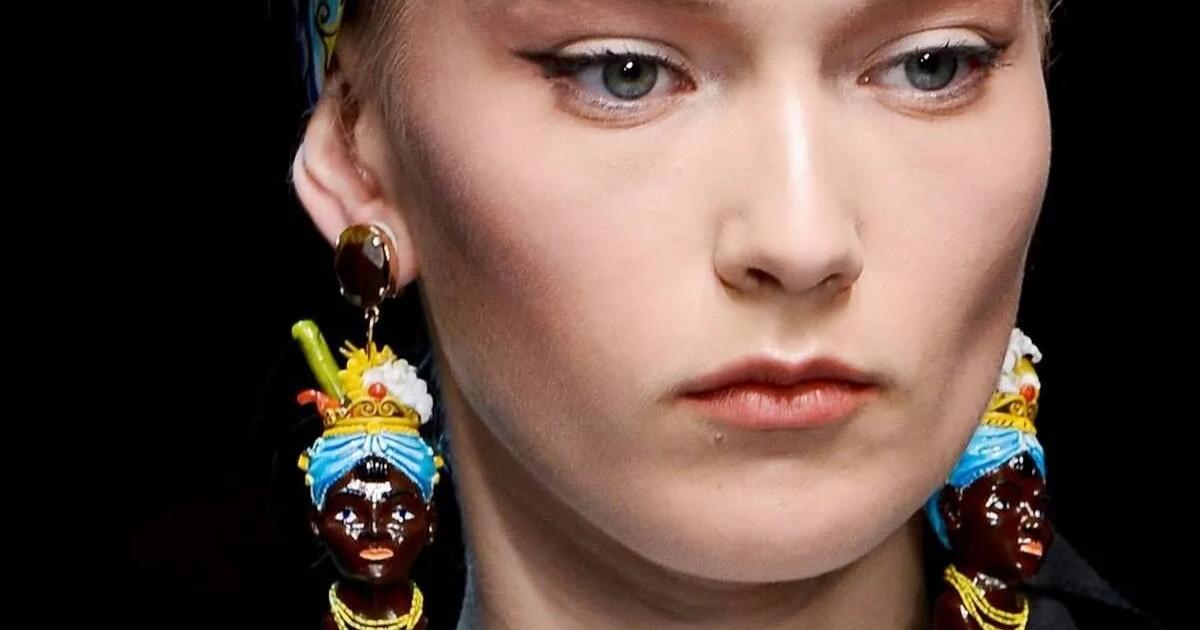
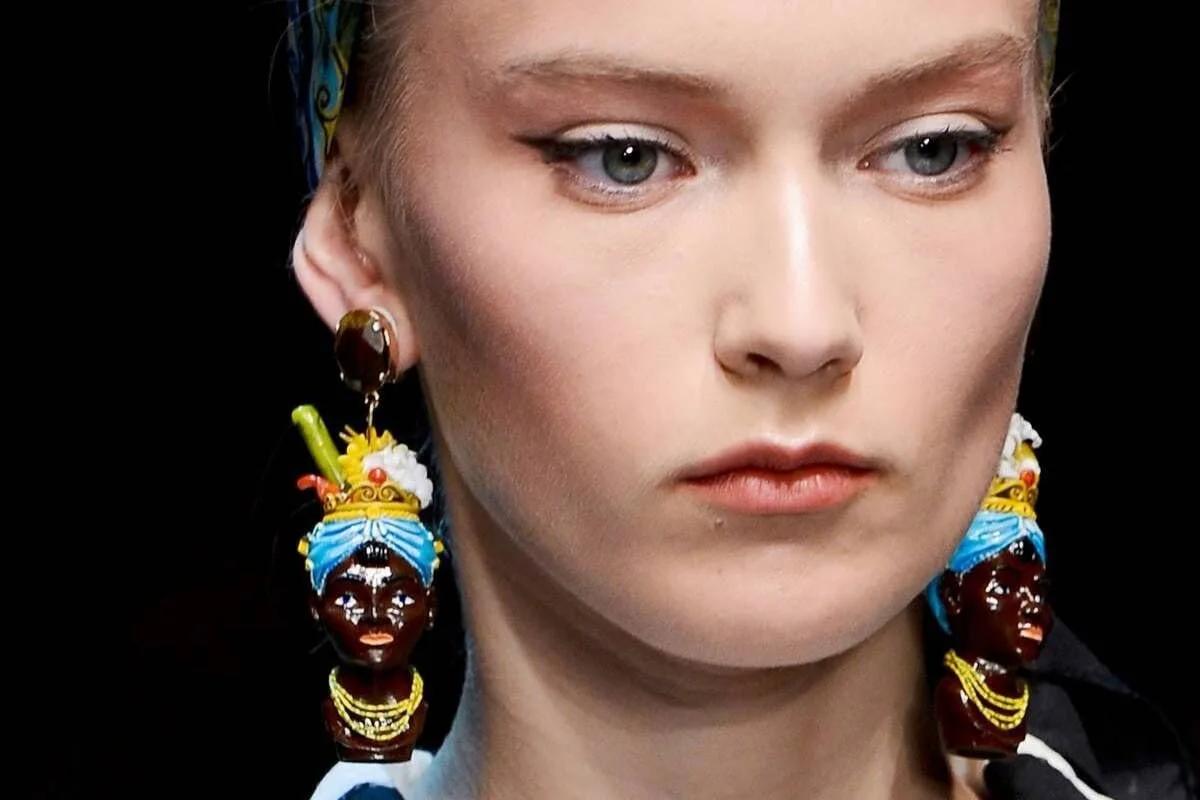
To understand the 2026 show as a deliberate strategic pivot rather than a casting oversight, one must examine the brand's decade-long pedagogy of insensitivity. This is not an isolated incident but a continuation of a pattern where the "Other" is either fetishized, mocked, or erased. In 2013, the brand introduced the "Blackamoor" imagery, featuring earrings and prints of dark-skinned figures rooted in colonial-era servitude. The defense, that these were merely reflections of Sicilian tradition, exposed a refusal to engage with the violent colonial history that such imagery invokes. It signaled that in the D&G universe, the "Other" is permissible only as decoration or a prop for the white subject, never as the protagonist.
This linguistic and visual violence continued in 2016 with the release of the "Slave Sandal." The naming convention here was not merely a poor choice of words but a revelation of the brand’s internal lexicon, in which historical trauma is commodified as luxury aesthetics. The subsequent renaming of the product to a generic "decorative" title did little to erase the initial intent of semiotic enclosure.
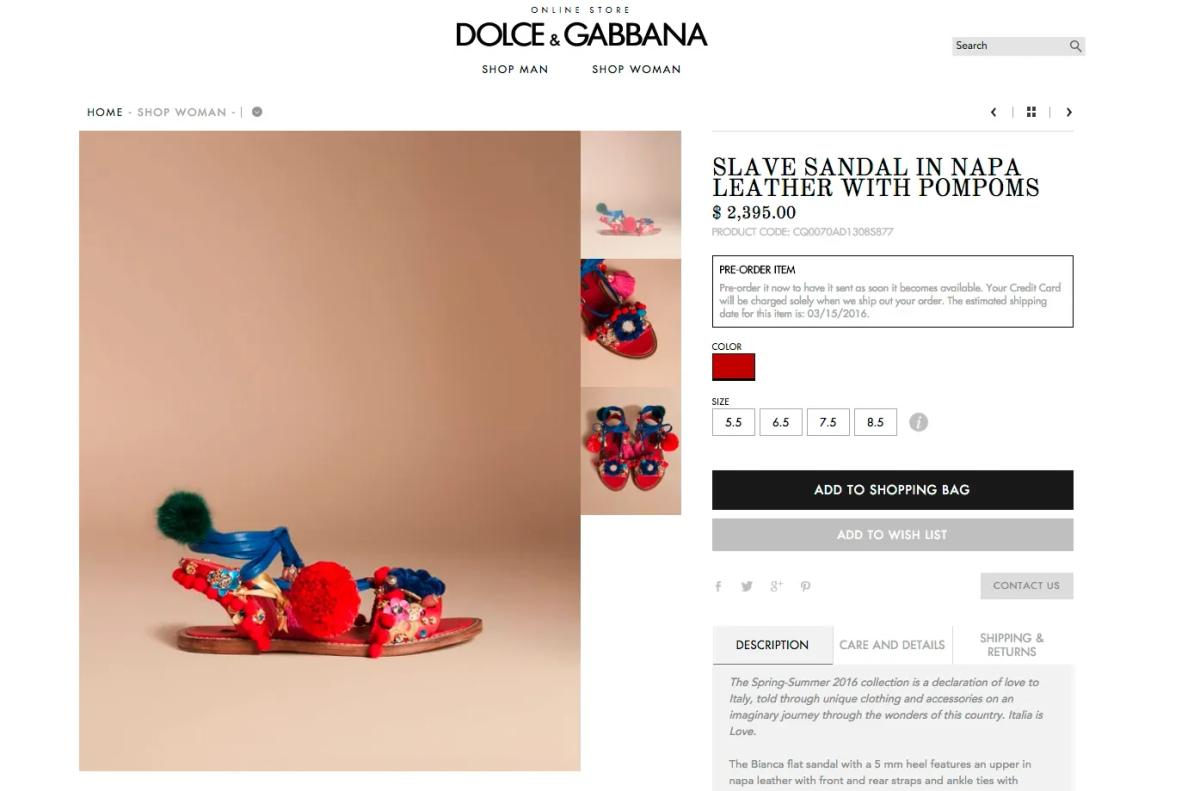
The naming of the "Slave Sandal" revealed an internal lexicon where historical trauma is commodified as luxury fashion.
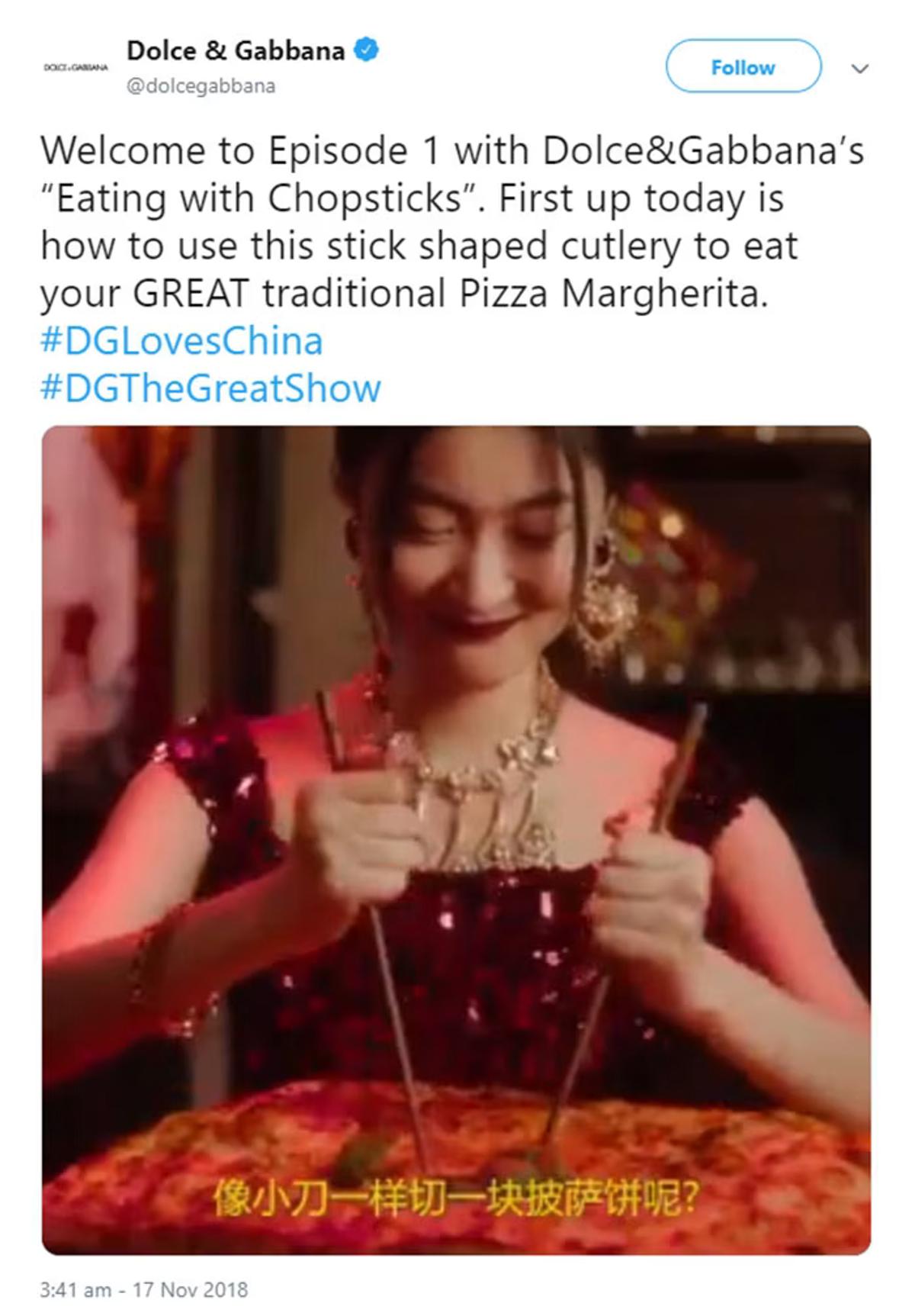
This trajectory culminated in the catastrophic 2018 "Chopstick" debacle in China. The advertisement, which depicted a Chinese model struggling to eat Italian food with chopsticks, was a failure of cultural intelligence that framed the non-European subject as infantilized and incompetent. The subsequent defense, claiming the co-founder’s inflammatory DMs were the result of a "hack," marked a definitive refusal of institutional accountability. These historical pivot points create a lineage of exclusion that makes the unrepentant homogeneity of 2026 not just predictable, but inevitable.
The Politics of the Silhouette: Rejection of Street Culture
The exclusion evident in the casting was mirrored by the exclusion inherent in the clothing itself. For the last decade, luxury fashion has been engaged in a dialogue with global street culture, a movement largely driven by Black cultural production, hip-hop aesthetics, and the democratization of silhouette (oversized fits, hoodies, sneakers). Brands like Louis Vuitton (under Virgil Abloh and later Pharrell Williams) and Balenciaga embraced this shift, acknowledging that modern luxury is inextricably linked to the visual language of the street.
Dolce & Gabbana’s F/W 2026 collection, however, functioned as a reactionary rejection of this dialogue. By returning aggressively to the "Sartorial", sharp tailoring, cummerbunds, sleek fabrics, and restrictive cuts, the brand is not just embracing a style; they are policing a boundary. The aesthetic choice to eliminate the influence of street culture runs parallel to the choice to eliminate non-white bodies.
In this context, the Sartorial becomes a dog whistle for Old Europe. It recalls a time before the democratization of fashion, a time when luxury was the exclusive province of the white aristocracy. By stripping away the aesthetic markers of contemporary street style, they stripped away the bodies associated with it, creating a hermetically sealed feedback loop where the clothes and the models reinforce a fortress of white conservatism.
The Narcissistic Mirror: Solipsism as Art Direction
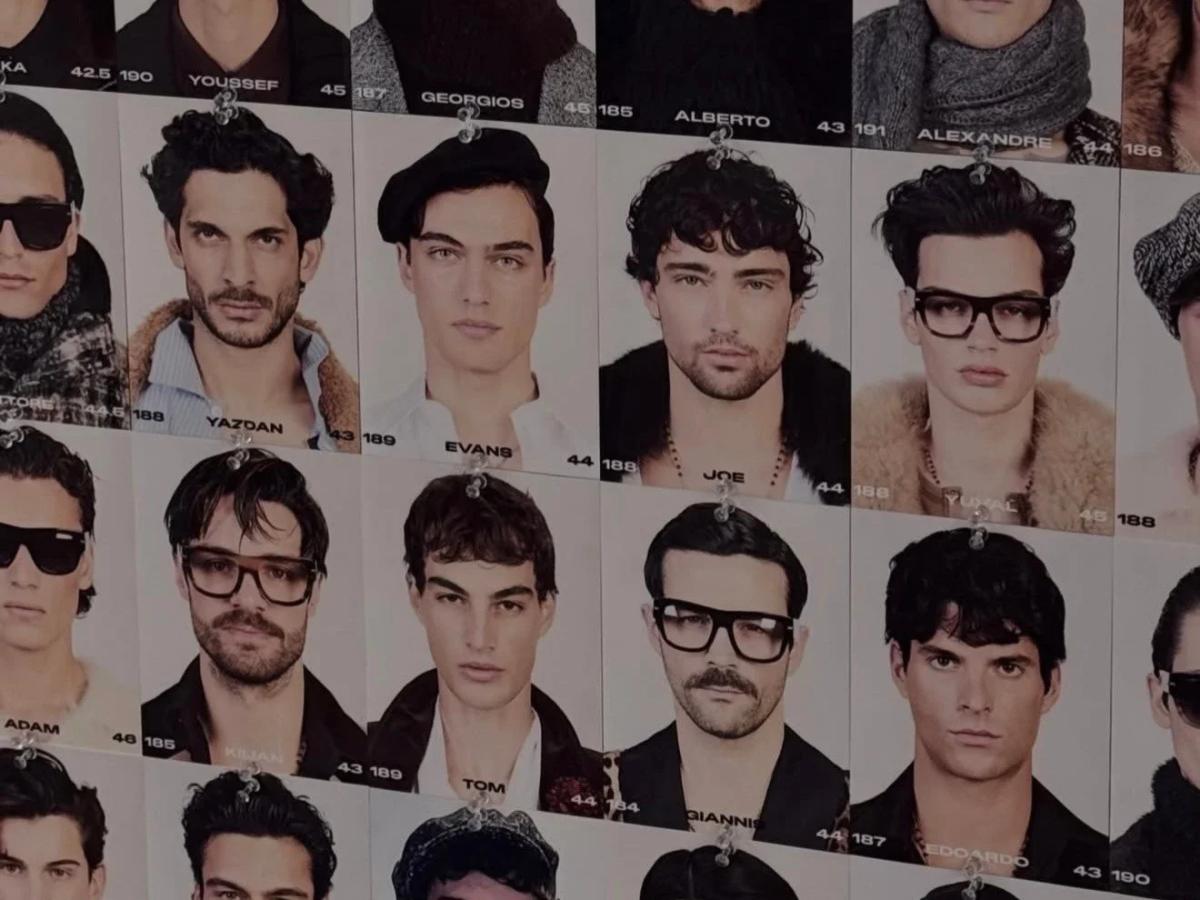
Beyond the sociological implications, there is a psychoanalytic dimension to this "Portrait." Fashion designers often cast models who represent their "Muse," but in the case of Dolce & Gabbana, the casting often veers into pure narcissism. The unending parade of sharp-jawed, brunette, Italianate men does not reflect the customer; it reflects the designers' own idealized self-image and desire. The "Portrait of Man" is, in reality, the "Portrait of Domenico and Stefano."
This is an act of solipsism where the external world is erased, replaced by an infinite hall of mirrors reflecting only the designers' specific preference. When a brand scales this personal preference to a global runway, it elevates personal narcissism to the level of universal truth, mirroring the self-as-object dynamics seen in modern parasocial branding. It suggests that their specific object of desire is the objective standard of beauty, rendering all other forms of masculinity invisible.
Critical Theory Analysis: The Luxury of Exclusion
The Fall/Winter 2026 show signals a shift from Post-Luxury to a weaponized form of traditional masculinity. In a cultural zeitgeist currently grappling with a conservative turn, Dolce & Gabbana appears to be leveraging exclusion as a luxury asset. By stripping the runway of non-white bodies, they are re-establishing a rigid "Italianita" as the supreme luxury archetype. This move suggests that true luxury, in their view, is protected from the dilution of globalism. It is a retreat into a fortress of European identity, sold to a consumer base that feels threatened by the shifting demographics of modern culture.
From a critical theorist perspective, the show operates on the Myth of the Universal Subject. By labeling a procession of white models as The Portrait of Man, the brand posits whiteness not as a race, but as the default setting for humanity. It erases the Global South and non-European identities from the definition of the everyman. This is the ultimate irony of using portraiture as a theme. A portrait is historically a tool to capture the unique soul of an individual; yet, by presenting a 100-man army of visually indistinguishable clones, the brand erased individuality entirely. The show did not celebrate the singular identity of every man; it celebrated the replicability of the white hegemony.
Cultural Backlash and the Digital Panopticon
The reception of the show highlights the power of the "Digital Panopticon," where the audience now serves as the primary archivist and critic. The commentary surrounding the show, particularly from digital critics, functioned as a counter-archive. Unlike the traditional fashion press, which might obscure such homogeneity to maintain access or ad revenue, these digital critics dismantled the brand's narrative in real-time. This backlash illustrates the total failure of the brand’s "Redemption Tour," revealing that their commitment to diversity was a performative mask for market necessity rather than a structural evolution.
Objects of Affection or Objects of Alienation?
The final synthesis of "The Portrait of Man" forces us to ask whether a luxury brand bears moral responsibility for its aesthetic choices. If fashion is a mirror of society, Dolce & Gabbana has chosen to reflect a distorted, exclusionary past rather than a vibrant present. The 2026 show was not an accident of casting; it was a verdict. It positions the brand’s future not on the side of globalized modernity, but as a bastion for an "old-world" identity that views diversity as a threat to its heritage.
Ultimately, these clothes and the images they create are no longer Objects of Affection for a global audience; they are Objects of Alienation. By rejecting the visual reality of the world, Dolce & Gabbana has curated a fantasy of white supremacy that seeks to appeal to a specific, traditionalist demographic. They have drawn a line in the sand, deciding that their "Portrait of Man" does not need to look like the rest of us. They have achieved the homogenization of the unique, turning the "Portrait" into a blank, white canvas.
Authored by Christopher Banks, Anthropologist of Luxury & Critical Theorist. Office of Critical Theory & Curatorial Strategy, Objects of Affection Collection.