
The Architecture of Intent
A Critical Lexicon
This collection of studies is the intellectual architecture of Post-Luxury Conceptual Functional Art (PLCFA).
The true artistry of this Maison resides not in the finished form, but in the rigorous thinking that precedes it. These essays serve as the conceptual foundation for PLCFA, using a critical lens to interrogate cultural phenomena, art history, and consumer paradigms—analyzing everything from the ephemeral spectacle of luxury to the pure architectural rigor of abstract principles.
This is an invitation into the workshop of the mind. By sharing this process, we validate the necessity of a new category of value and invite you toward a well-considered life, one founded on true craft, uncompromising narrative, and durable meaning.
New to PLCFA? Begin with Essential Reading below.
Exploring a specific area? Navigate by category.
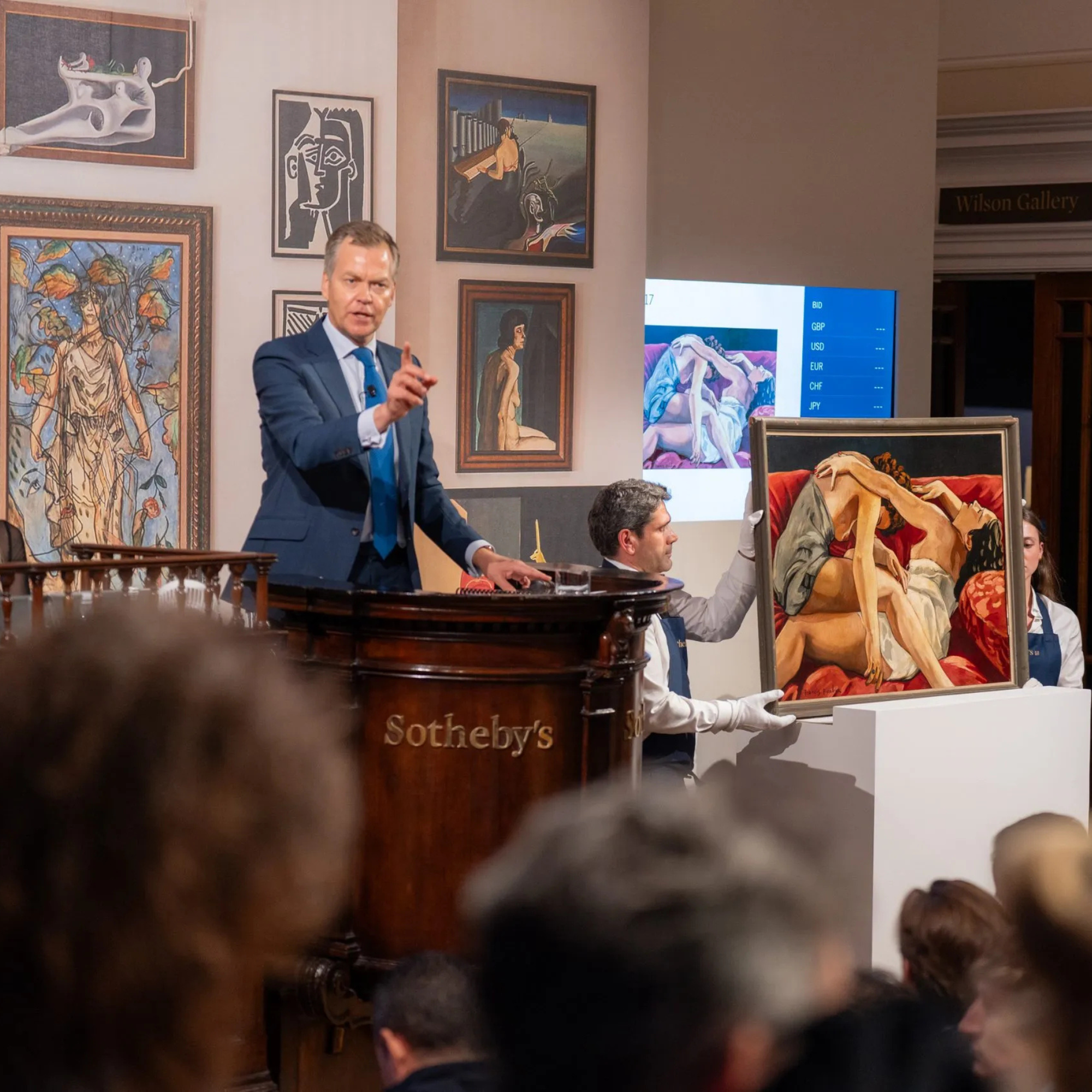
Institutional Necrophagy: How Speculative Velocity Destroys Object Permanence and What the Custodian's Contract Must Do About It
The modern secondary watch market serves as a clinical diagnostic site for the Post-Luxury Conceptual Functional Art (PLCFA) framework, illustrating the precise mechanisms of Institutional Necrophagy. When the secondary watch market surged to $16.7 billion in total transaction value in 2025—marking a 36.4% year-over-year increase—it did not reflect a collective re-evaluation of structural mastery or intrinsic custodial weight. Instead, the market rewarded speculative velocity. The Patek Philippe Nautilus 5711, for instance, appreciated by an astronomical 369% on the secondary market following its 2021 discontinuation, a hyper-accelerated trajectory driven by manufactured scarcity rather than genuine horological utility. This rapid escalation forces the object past its Velocity Threshold, where its resale value completely decouples from its embedded labor density, reducing a masterpiece of mechanical art to a mere financialized instrument.
As these objects are continuously transacted through secondary market platforms, they enter a terminal phase where their zero-sum aura is systematically depleted. Each handoff between speculative agents—none of whom enter the relationship under the ethical terms of a Custodian's Contract—extracts narrative continuity, substituting an irreplaceable record of passage through time with a sterile transaction ledger. What remains is a Hollowed Object: a dispossessed artifact stripped of its animating substance, bearing only the brand's lexical promise and a crushing semantic burden. The market is now experiencing a structural bifurcation; as luxury empires fluctuate and speculative platforms exhaust their momentum, collectors are beginning to flee these hollowed assets in search of uncompromised material singularity. True resilience against this institutional consumption belongs exclusively to objects anchored by custodial stewardship, where value is measured by the slow accumulation of time rather than the velocity of the flip.
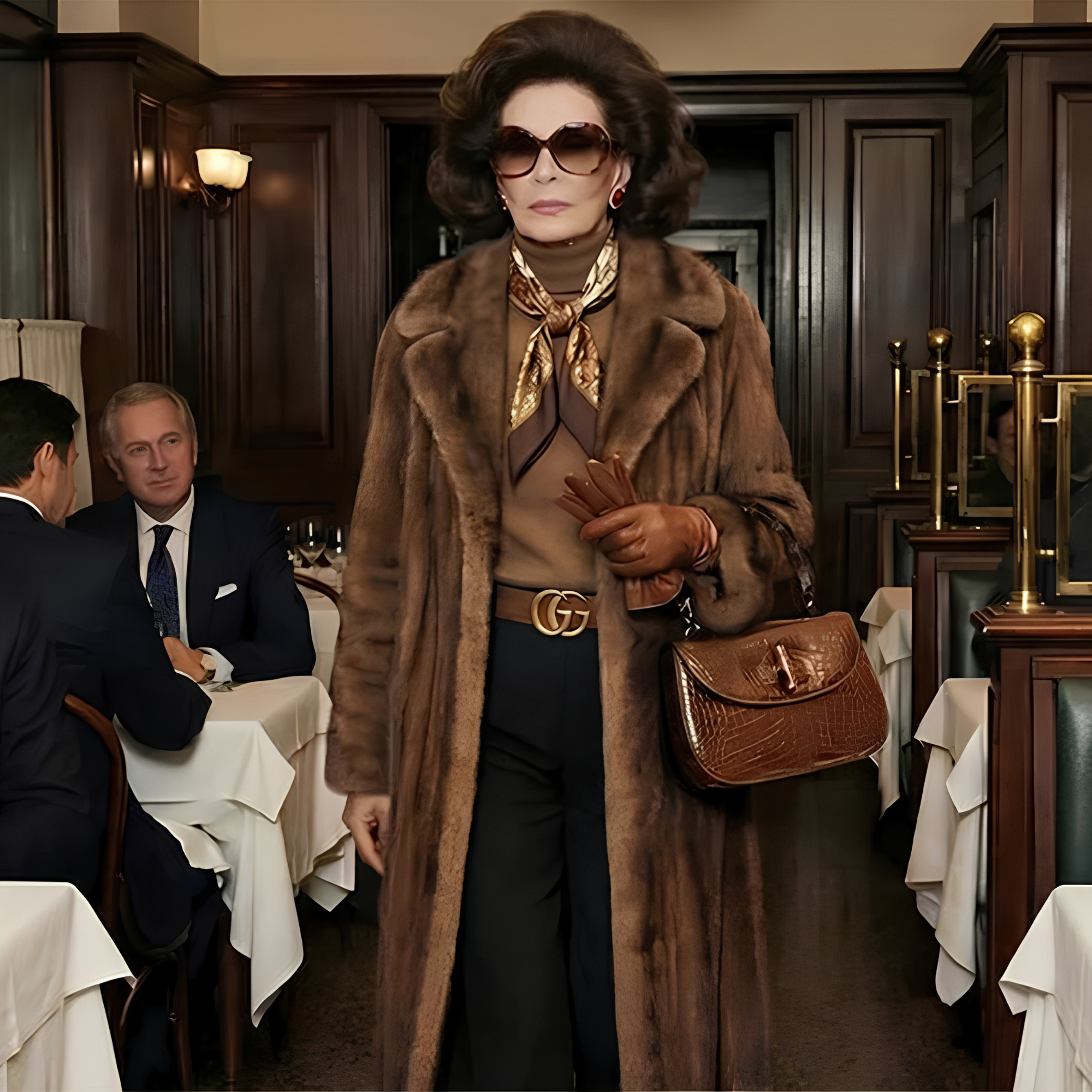
The Hand Strikes Back: Generative “Slop,” Costly Signaling, and the Crisis of the Luxury Artisanal Contract
The structural bifurcation observed in 2026 is not a temporary divergence in marketing tactics, but the permanent drawing of a battle line. As algorithmic production continues to flood the digital landscape with cost-free, frictionless perfection, the heritage houses that surrender their visual communications to the machine will find their brand equity hollowed out from within. When the labor density of a brand's representation drops to zero, the economic justification for its premium collapses alongside it. The Luxury Artisanal Contract cannot be selectively enforced; a house cannot demand that a patron respect the invisible human hours embedded in a physical object while simultaneously feeding that patron synthetic, automated illusions on the screen.
Ultimately, the future of the post-luxury tier belongs to those who institutionalize a rigorous architecture of un-smoothness. By anchoring the brand's identity in the material singularity of the named author, the visible trace of human time, and the deliberate imperfection of the artisan's hand, a defensive moat is constructed that no algorithm can credibly replicate. The paper grain and the scorched cuff are not merely aesthetic choices—they are sovereign declarations of human presence. In an era where flawless perfection has been mathematically cheapened to nothing, the deliberate mark of human fallibility remains luxury’s most scarce, expensive, and irreplaceable signal.
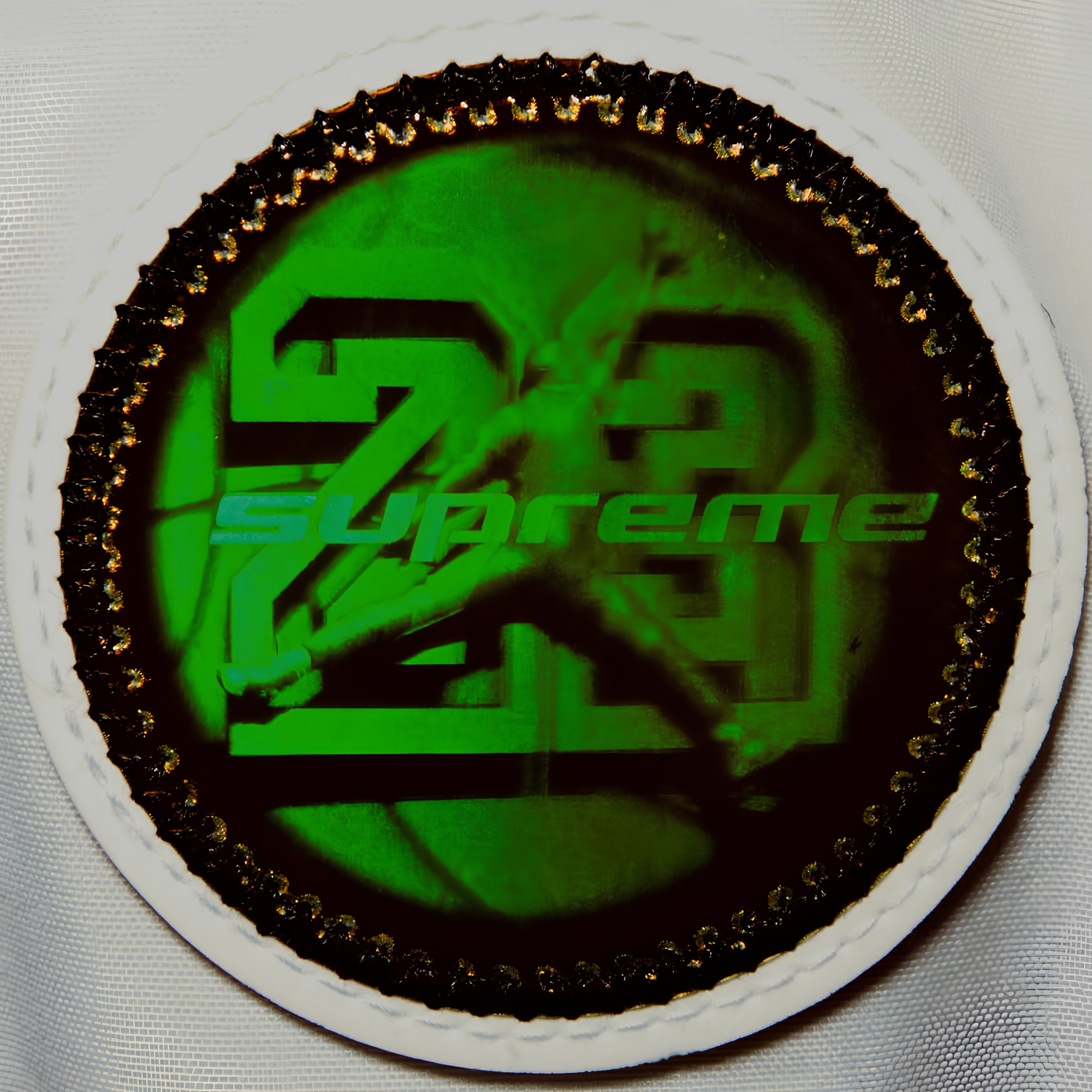
The Hype-Capital of the Court: Supreme, Jordan Brand, and the Speculative Velocity of the Streetwear Archive
The Supreme × Jordan Brand Spring/Summer 2026 apparel collection represents a pivotal moment in the contemporary streetwear archive, demonstrating how a commodity's sign-value can entirely detach from its original material utility. By presenting an array of high-ticket items—headlined by a $698 drum-dyed cowhide leather jacket—without a singular pair of performance sneakers, the drop serves as a live experiment for the Hollowed Object thesis. The portable aura of the Jumpman logo is mapped onto heavy, lifestyle garments, relying strictly on manufactured drop mechanics and structural scarcity rather than court performance to generate speculative velocity.
Through the critical lens of OAC’s PLCFA framework, this structural inversion exposes the stratigraphic record of corporate consolidation, most notably under the modern ownership of global optical titan EssilorLuxottica. Recontextualized historical details, such as Tinker Hatfield’s 1996 holographic cat-eye and medieval Old English typography, no longer function as organic signs of athletic or subcultural lineage. Instead, they operate as highly compressed visual signifiers—decorative citations that carry an immense semantic burden. The collection ultimately materializes a simulated street heritage, capturing secondary-market value through automated institutional rituals while the original subcultural conditions continue to recede into the past.
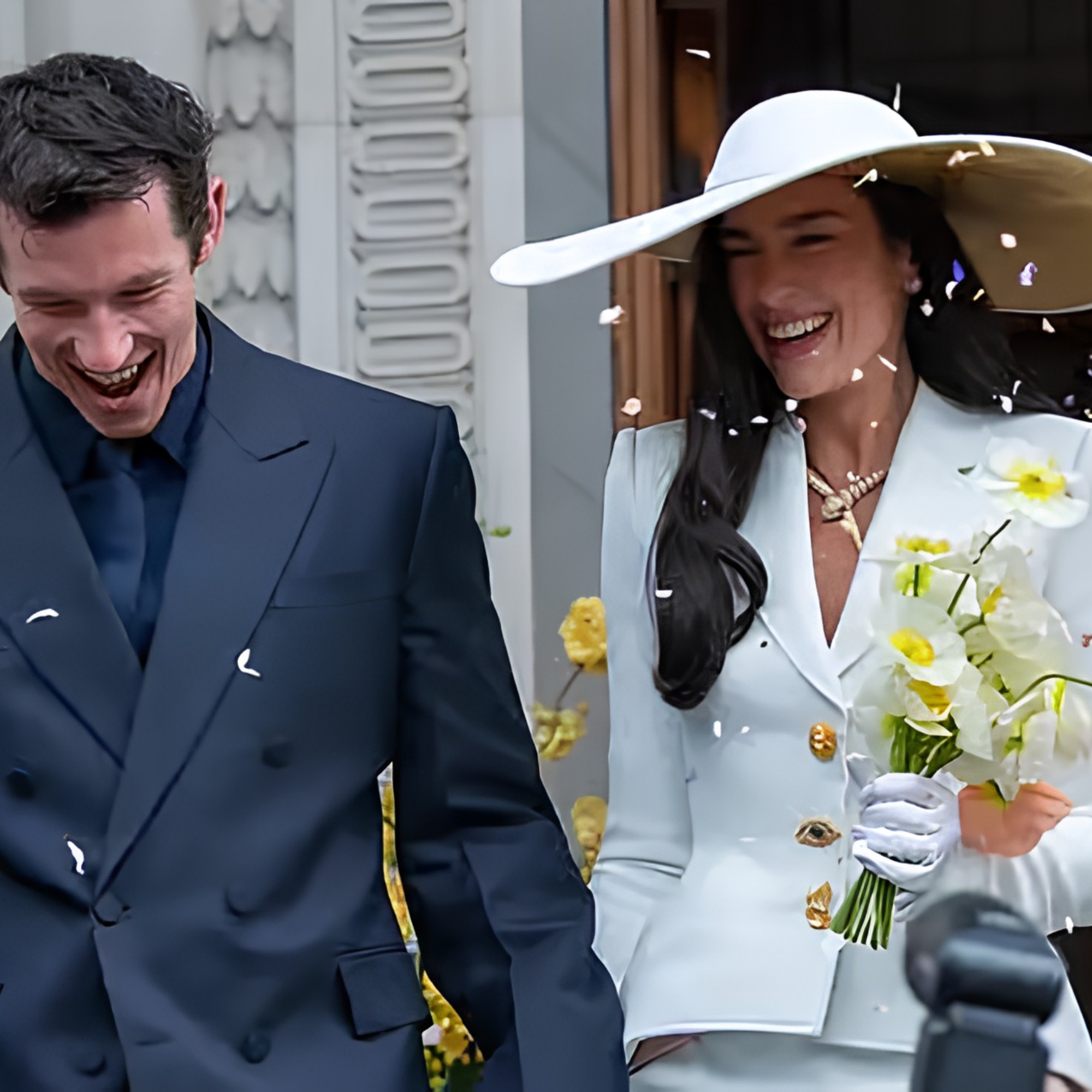
The Bridal Suit as Auratic Divergence: Dua Lipa, Schiaparelli Couture, and the Bianca Jagger Simulacrum
The Dua Lipa Schiaparelli wedding suit of May 31, 2026, executes a precise extraction: it captures the institutional authority of the 1971 Bianca Jagger YSL moment, recodes it as contemporary parasocial capital, and in doing so, removes from the archive something that cannot be returned. The fashion press responded immediately and almost unanimously by framing the look as a "modern homage." This study refuses that frame; the Objects of Affection Collection does not read the suit as a tribute, but rather as an Aura Transaction—a mechanism by which the Simulacrum does not copy but replaces, and, in doing so, depletes the finite reservoir of historical weight.
What confirms this diagnosis is the rapid velocity of the media transaction. Within twelve hours of the civil ceremony at Old Marylebone Town Hall, the image pair circulating globally averaged out the political content and personal cost of the 1971 Saint-Tropez original until only the aesthetic code remained. By shifting the conversation from a localized milestone into a highly optimized brand placement for Schiaparelli and Bvlgari, the event demonstrates how the Parasocial Brand model flawlessly colonizes personal milestones. Ultimately, the citation produces media engagement rather than critical friction, proving that the modern celebrity wedding is no longer a private event that accidentally becomes public, but a public performance executed under the guise of privacy.
The Aura Goes West: What Hermès "Chapter 2" in Los Angeles Actually Confirms About Material Permanence, Speculative Geography, and the Custodial Stakes of Mati Diop's Lens
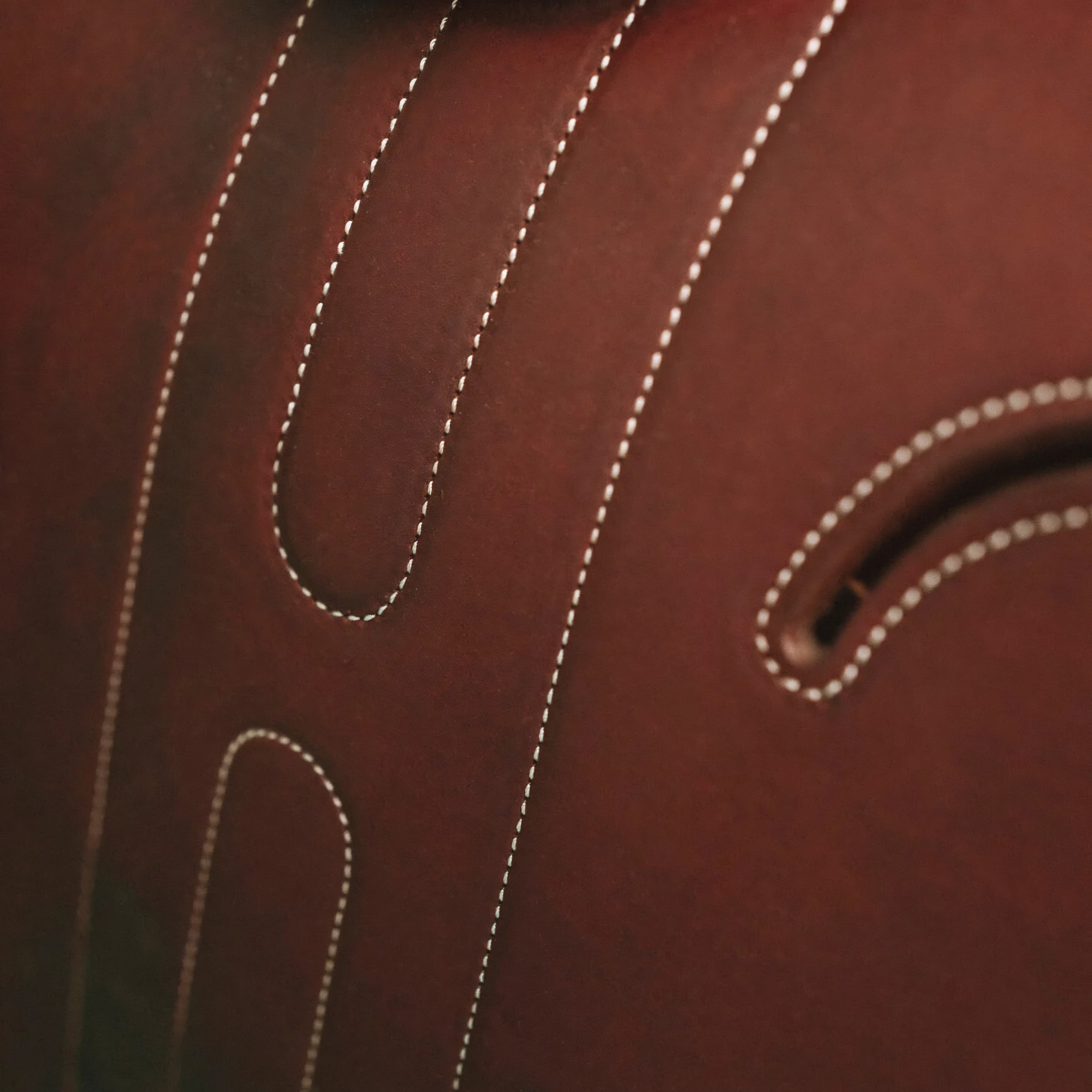
The Hermès Women’s Fall-Winter 2026 runway presentation in Los Angeles—staged as Chapter 2 of a transcontinental dialogue under the creative direction of Nadège Vanhée-Cybulski—represents far more than a high-profile marketing exercise in a global luxury capital. It serves as a profound structural stress test for the house’s core identity, deliberately transporting a deeply "Sedimentary Object" system—where value is earned through the slow compression of time, labor density, and material irreversibility—into the world's most hyperreality-saturated urban landscape. By deploying the Post-Luxury Conceptual Functional Art (PLCFA) framework, this study analyzes the friction generated when Hermès's resistant, non-interchangeable material singularity enters a West Coast sign economy engineered to metabolize physical craft into empty, high-velocity digital spectacle, threatening to convert genuine aura into zero-sum aura.
Crucially, the study diagnoses the institutional weight of appointing acclaimed filmmaker Mati Diop (Dahomey, Atlantics) as the presentation's film and photography director. Far from a conventional celebrity alignment, commissioning a director whose cinematic body of work is fundamentally dedicated to investigating the contested custody, displacement, and testimony of historical artifacts introduces a hyper-critical perspective into the heart of the event. Through this lens, the collection's demanding material vocabulary—from its structural four-pocket military leather jackets to its modernist, geometric A.M. Cassandre Perspective motifs—is forced to transcend mere styling. Ultimately, this pre-event diagnostic establishes the vital markers to watch on June 4, examining whether Hermès can successfully scale its historic "Custodian's Contract" or if the event's accumulating semantic burden will inevitably see the image triumph over the testimony of the object.

What the Bain Global Luxury Report 2026 Actually Proves About the Collapse of Sign-Value and the Rise of the Post-Growth Consumer
The Bain Global Luxury Report 2026—formally titled Finding a New Longevity for Luxury—arrives at a peculiar historical moment, framing a contraction from 400 million to 330 million active consumers as a temporary cyclical disruption poised for a near-term rebound. However, through the lens of Post-Luxury Conceptual Functional Art (PLCFA) theory, this 70-million-consumer exodus is diagnosed not as a market fluctuation, but as the empirical confirmation of the structural collapse of sign-value. The conventional luxury system relies on a load-bearing fiction where inflated price premiums are validated by brand heritage and social legibility. When this semiotic authority erodes through overproduction and systematized scarcity theater, the consumer does not simply become price-sensitive; they become semantically exhausted, leaving behind the "Hollowed Object" which carries the mere form of meaning without any of its material substance.
What consultancies label a conjunctural "polycrisis" is actually a profound trust crisis born from a betrayal economy. By aggressively elevating prices while delivering diminished creative output and evacuated cultural content, legacy heritage houses have effectively voided the symbolic contract that once promised genuine human mastery and rarity. This has created a stark K-shaped market dynamic and a gaping Atmospheric Equity gap—the distance between an object's claimed cultural density and its actual material reality. The 70 percent of lapsed consumers who indicate an intent to return are not waiting for price corrections or emotive branding campaigns; they are a post-growth cohort waiting for luxury to become worth the custodian's contract again. They seek an alternative object-world rooted in authentic labor density and narrative permanence, a structural resolution that the conventional luxury paradigm cannot build without dismantling the very scalable production conditions that created the crisis.

The Unasked Question Was Always Structural: Denise Ferreira da Silva, the Kantian Program, and the Affective Architecture of Liberal Capital
The Post-Luxury Conceptual Functional Art (PLCFA) framework directly dismantles the historical, post-Enlightenment fiction that separates intellect from affect, framing this Kantian bifurcation not as a mere philosophical inheritance but as the core operational grammar of liberal capital. For generations, the figure of the public intellectual functioned as an authorized switchboard within legacy media’s affective infrastructure, carefully translating raw social affect—grief, rage, and collective aspiration—into sanitized, institutionalized discourse that the political field could safely accommodate. This conversion mechanism conferred a localized, Zero-Sum Aura upon approved platforms, rendering alternative, unmanaged feelings structurally illegible. By hollowing out this translational bottleneck, contemporary social media does not simply degrade public discourse; it perfects the apparatus of affective capture, extracting economic and political value directly from the pre-intellectual state of the Affective Object at the source.
Against this frictionless landscape of hyperreal consumption and systematic extraction, the PLCFA framework introduces the Sovereign Object as a material strategy of absolute structural resistance. Unlike the Hollowed Object, which is systematically evacuated of internal specificity to circulate purely as brand affect or a digital sign, the Sovereign Object embeds a material and historical density so irreversible that it explicitly declines to participate in capital's commodification loop. It demands what Denise Ferreira da Silva opens toward: a form of knowledge production and object-making that refuses to pay the Kantian toll of institutional conversion. By asserting an uncompromising Material Singularity and Narrative Permanence, such practices—ranging from long-form critical studies isolated from algorithmic optimization to rough-hewn, sedimentary physical works—do not merely critique the architecture of liberal capital from within its own terms; they establish an anti-extractable domain that preserves its own autonomous reality.
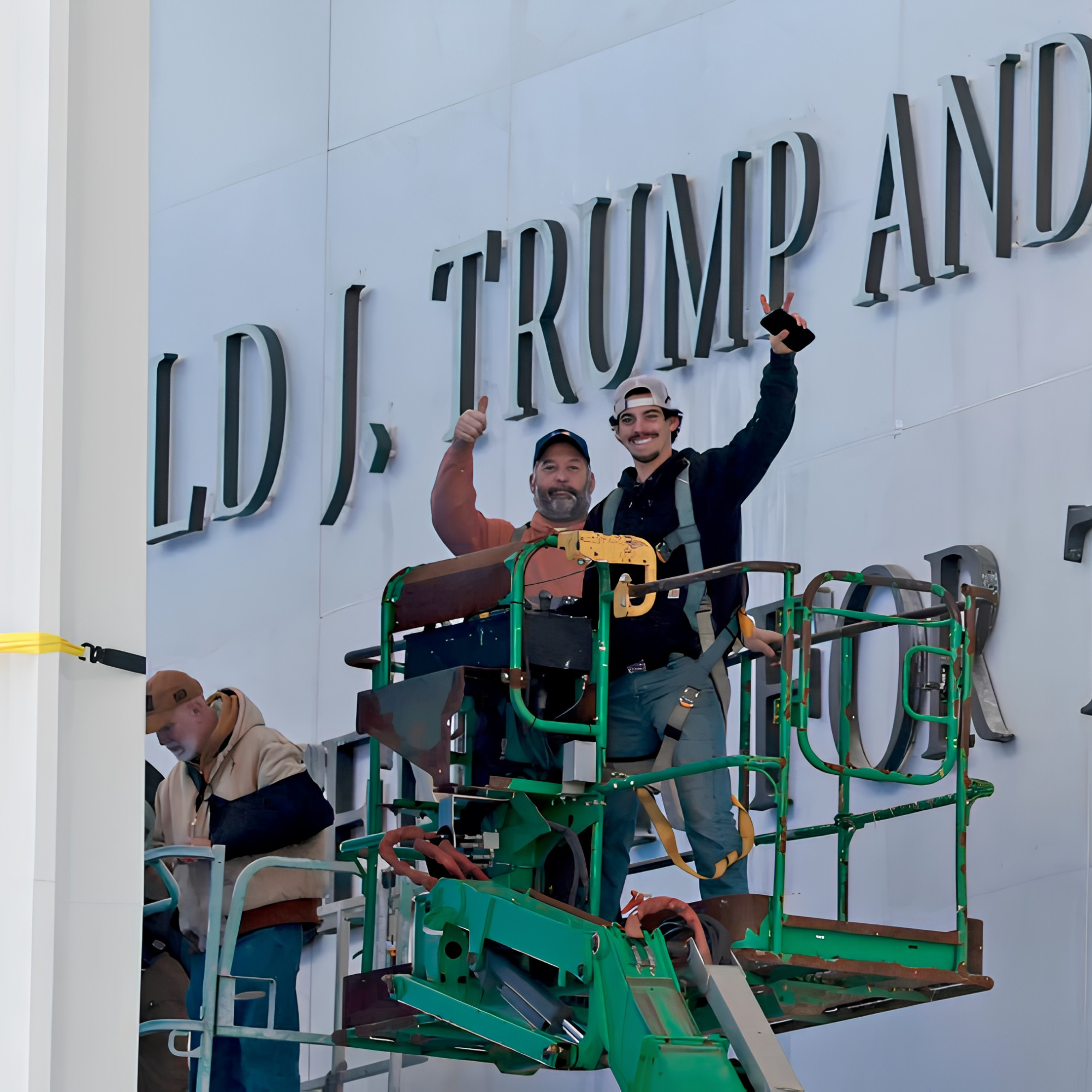
THE NAME THAT COULDN'T STICK: How Trump's Attempt to Rename the Kennedy Center Exposed the Architecture of Aura Theft.
On May 29, 2026—JFK’s birthday—the federal judiciary dismantled an unprecedented corporate-style raid on American cultural legacy, ordering the immediate stripping of Donald J. Trump’s name from the John F. Kennedy Center for the Performing Arts. This study establishes that the unilateral board coup of December 2025 was never merely a political stunt or an administrative rebranding; it was a structurally naked Aura Transaction. Utilizing the critical frameworks of Post-Luxury Conceptual Functional Art (PLCFA), we examine how this maneuver attempted to extract sixty-two years of accumulated national grief, architectural permanence, and institutional legitimacy without performing an ounce of the custodial labor required to generate such authority.
The immediate collapse of the "Trump Kennedy Center" highlights a fundamental systemic truth within the contemporary symbolic economy: institutional aura cannot be legislated or decreed into existence. By positioning this event alongside historical precedents and the acute warnings penned by Jacqueline Kennedy at the memorial's inception, this paper unpacks the concepts of Zero-Sum Aura, Structural Captivity, and the Hollowed Object. What Judge Christopher Cooper's ruling ultimately confirms is not just a point of federal statute, but a core tenet of material philosophy: true Narrative Permanence belongs exclusively to the collective Labor Density of genuine custodianship, and the deepest layers of an object's meaning will always resist political capture.
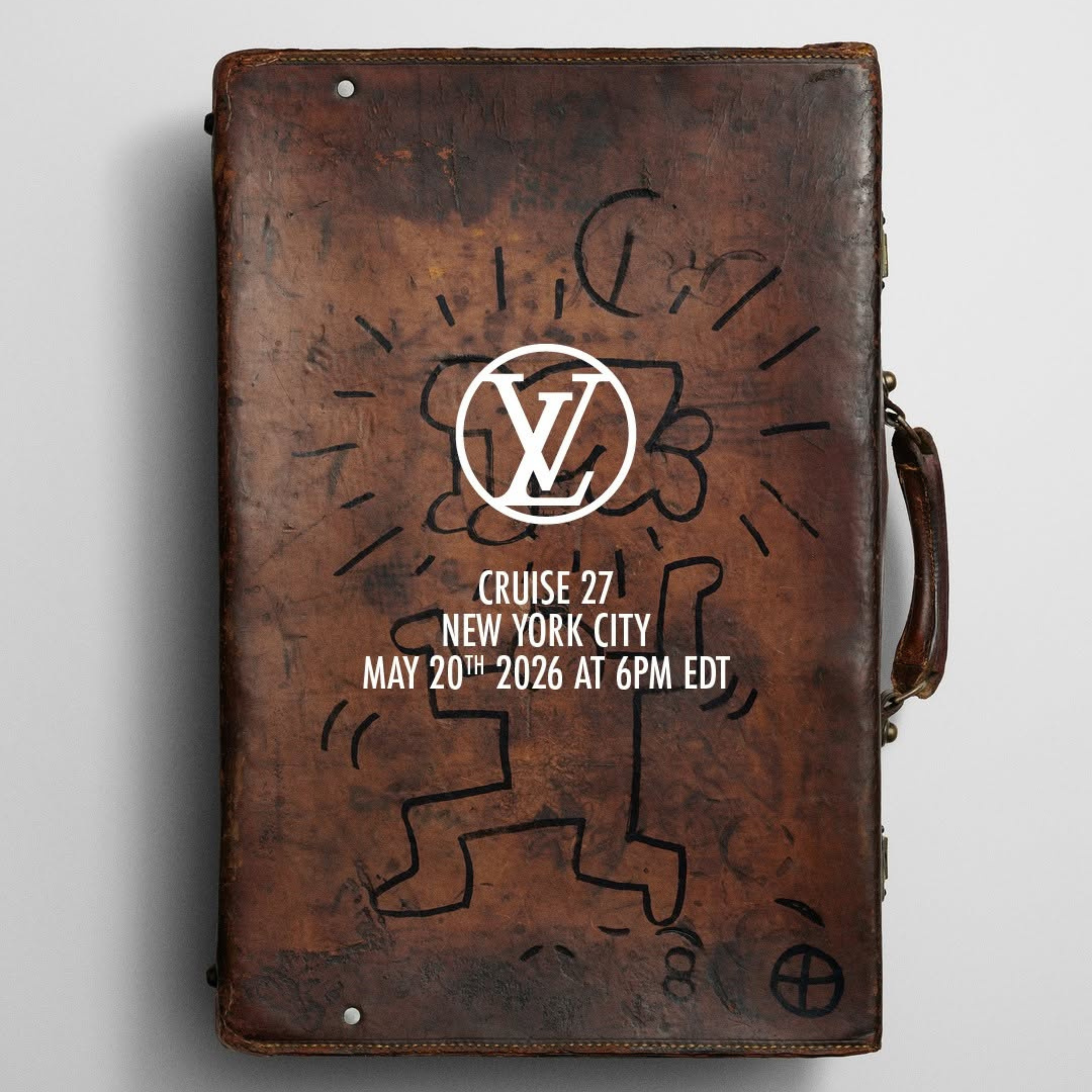
WHAT THE KEITH HARING × LOUIS VUITTON SHOW AT THE FRICK COLLECTION ACTUALLY MEANS
On May 20, 2026, Louis Vuitton will stage its Cruise 2027 presentation within the highly guarded galleries of New York’s Frick Collection, deploying a hand-painted 1984 Keith Haring trunk as its supreme creative anchor. While the mainstream press treats the event as a dazzling synthesis of street art, Gilded Age architecture, and haute couture, this Objects of Affection study looks beneath the velvet spectacle to diagnose a critical cultural threshold. Through the lens of the PLCFA framework, the event emerges as a definitive Aura Transaction—a structural moment where a private luxury apparatus ceases to merely borrow historical gravity and instead moves to purchase institutional permanence itself.
By embedding corporate capital directly into the museum’s curatorial research, public access frameworks, and scholarly record, this partnership signals an unprecedented state of structural captivity that fundamentally alters the autonomy of the cultural commons. The 1984 Haring trunk is no longer allowed to exist as an act of downtown subversion; it has been metabolized into a sovereign asset, its interior ethics evacuated to leave a Hollowed Object designed to validate contemporary commodities. Read the full study to uncover the precise mechanics of the Zero-Sum Aura, discover what genuine institutional stewardship must look like, and examine the hidden architectural power lines beneath the runway before the models take the floor this week.
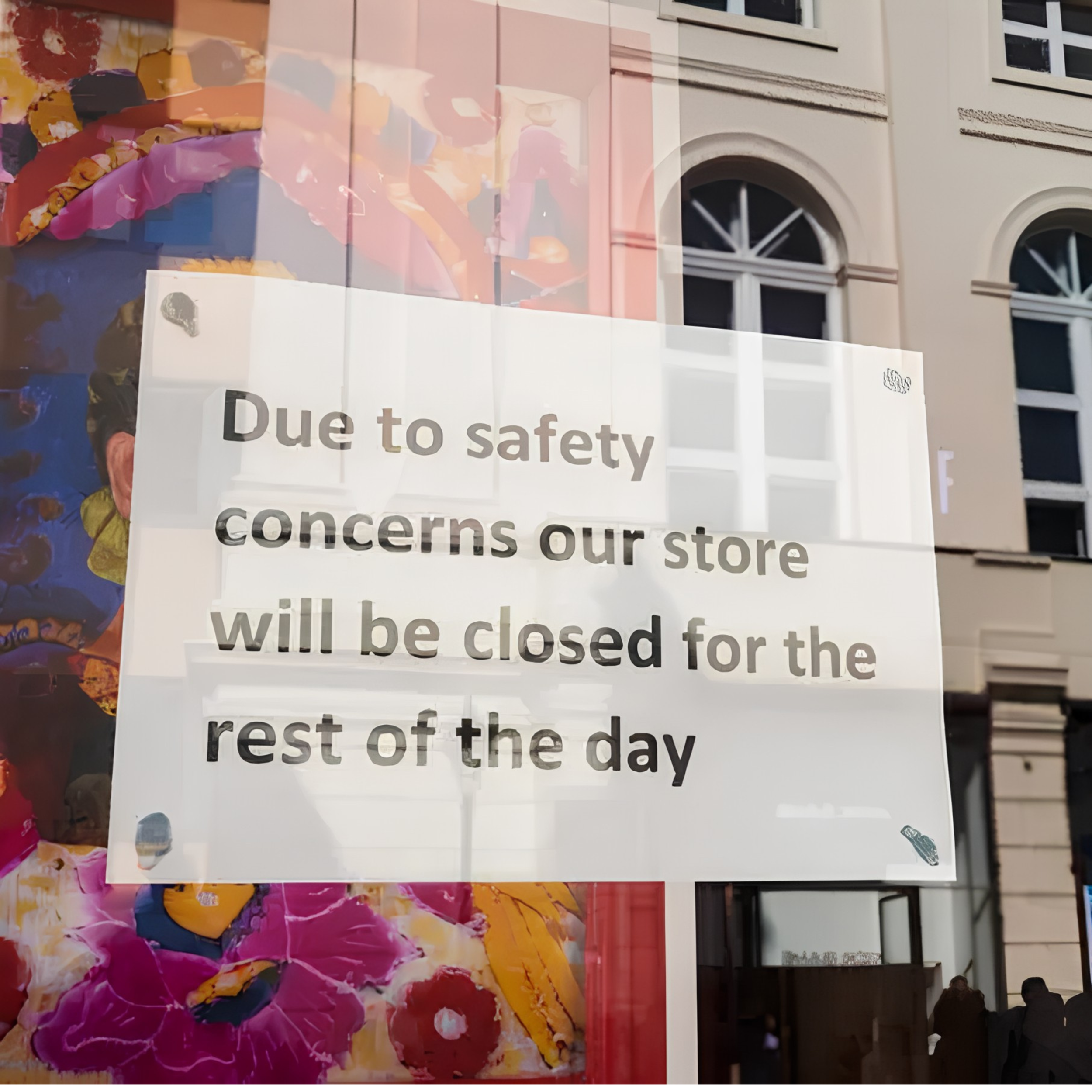
Swatch AP Royal Pop Analysis: Why the Retail Chaos Was Programmed
On the morning of May 16, 2026, global retail infrastructure did not collapse under the weight of the Audemars Piguet × Swatch Royal Pop drop—it was intentionally bypassed. As riot police deployed in Paris, doors remained locked in Dubai, and secondary market listings breached $8,000 before a single consumer touched a unit, the mainstream media quickly diagnosed the chaos as a logistical failure. It was exactly the opposite. Applying the Post-Luxury Conceptual Functional Art (PLCFA) framework, this post-launch forensic analysis proves that the store closures, crowd surges, and retail blockades were the system operating at peak efficiency. The queue was never an obstacle to the object; the queue was the product itself.
By licensing the sacred design currency of the Royal Oak for a $400 bioceramic pocket watch, Audemars Piguet did not democratize haute horlogerie—it liquidated 54 years of material sovereignty to fuel a temporary, hyperreal spectacle. This study unravels the anatomy of the "Hollowed Object," tracing how institutional independence was traded for secondary market velocity and manufactured scarcity. For collectors, investors, and industry onlookers trying to decode the wreckage of launch day, this analysis uncovers the terrifying truth of the 2026 luxury landscape: when value is determined entirely by the performance of inaccessibility, the physical artifact becomes completely secondary.