
The Folder as Archive, the Archive as Poetics: An OAC Critical Reading of Maison Margiela Folders
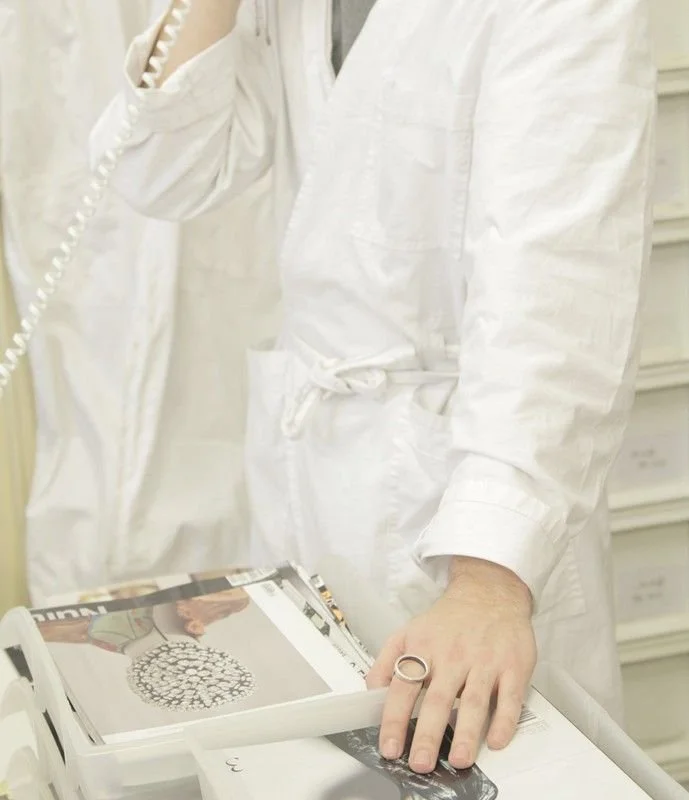
The Atelier as Archive: Evidence of the "blouse blanche" collective labor at 163 Rue Saint-Maur.
This study, produced under the interpretive frameworks of the Objects of Affection Collection (OAC), examines MaisonMargiela/folders — a phased, multi-city archival exhibition and experiential program initiated by Maison Margiela across China in April 2026 — as a significant act of design-theoretical disclosure. Anchored within OAC's proprietary critical lexicon, particularly the categories of Affective Object, Archival Residue, Phenomenology of Concealment, and the Sovereign Object, this reading positions the Folders project not merely as brand activation, but as an unprecedented inversion of institutional opacity: the making-public of the house's internal Dropbox archive as a living, evolving design text.
This study argues that MaisonMargiela/folders enacts what OAC terms Object Testimony — the moment an object or archival gesture speaks beyond its maker's intention, and becomes evidence of a broader cultural epistemology. The four house codes selected — Artisanal, Anonymity, Tabi, and Bianchetto — are read here not as brand pillars, but as four sovereign ontological positions, each producing a distinct phenomenology of the dressed, unmarked, collected, and overwritten body. Readers of the OAC study on Artisan Activism and the earlier inquiry into Rei Kawakubo and the Critique of Fashion as Conceptual Art will recognise the intellectual lineage from which this analysis proceeds.
THE OAC INTERPRETIVE FRAMEWORK
The Objects of Affection Collection operates on the premise that luxury objects are not passive carriers of status — they are testimony. Each object produced within a design house is simultaneously a material fact and a philosophical proposition. Where conventional fashion criticism limits itself to the aesthetic register, OAC's methodology demands an anthropological accounting: What does this object know? What does it withhold? What social contract does it ratify through its existence?
The OAC critical lexicon — developed across years of applied field study and published studies — introduces several categories essential to this reading:
Affective Object: An object whose primary function is not utility or status signaling, but the generation of sustained affective response — desire, mourning, recognition, unease — in both wearer and witness. For a study of this phenomenon in extremis, see OAC's inquiry into Doris Salcedo: The Function of Suffering.
Archival Residue: The trace of institutional memory embedded in an object or program — the sediment of process that luxury houses typically render invisible. OAC's sustained analysis of this mechanism can be found in Biopolitics of the Artifact, which examines how archives enforce the institutional death mandate on the objects within them.
Phenomenology of Concealment: OAC's theoretical category for studying how luxury systems produce meaning through strategic invisibility — the blank label, the masked face, the overwritten surface — as a mechanism of desire production. This concept was first applied at length in OAC's reading of The Banksy Enigma: Mastering the Narrative of Modern Art.
Sovereign Object: An object that has achieved a degree of cultural autonomy beyond its commercial context. The theoretical conditions for this sovereignty are elaborated in OAC's study From the Aura to the Simulacrum: Benjamin, Baudrillard, and the Crisis of the Authentic, which maps the philosophical terrain between Walter Benjamin's original aura-theory and Baudrillard's hyperreal.
Object Testimony: The moment an object, archive, or institutional gesture exceeds its declared purpose and becomes evidence — of a value system, a philosophy, or a historical confrontation with the question of identity. This category is further developed in The Narrative as the Original: AI, Simulation, and the Custodial Strategy of PLCFA.
It is within these coordinates that MaisonMargiela/folders becomes, for OAC, an object of the first order — not a garment, not a bag, not a shoe, but an entire epistemology placed, provisionally, on public view. For the broader theoretical stakes of this argument as it pertains to the relationship between value and material testimony, see OAC's study Value Beyond Price: David Graeber and the Political Economy of Post-Luxury Objects.
THE FOLDER AS DESIGN LANGUAGE
Maison Margiela self-describes the Folders project as "an exploration of physical and digital archival materials" in which "four house codes are brought into focus across a series of exhibitions and experiences." The project's stated mechanism — the making-public of the house's internal Dropbox folders used by the team to store images, project timelines, press releases, and working documents — is, from an OAC standpoint, among the most theoretically consequential gestures a luxury Design House has made in the post-Galliano, post-Demna landscape of institutional reinvention.
To understand why, one must grapple with what a folder is. In its bureaucratic register, the folder is the unit of administrative containment — the envelope of the unfinished, the housing of the in-process. It is, by design, not-public. It is the inside of a house: not its facades, not its runway, not its press-approved imagery, but the working grammar of its thought. OAC has written at length about how the luxury industry typically enforces the invisibility of this working grammar through what we term the White Wall Paradox — the studied neutrality that conceals the material, economic, and ideological labor that produces the aesthetic surface.
““The development of MaisonMargiela/folders can be accessed globally as our internal Dropbox folders used by our team to store images, project timelines, press releases, and working documents, made public for the first time. As the project evolves, new files will be added, revealing further information about the experiences and documenting the journey from concept to exhibition.””
For OAC, this disclosure is an act of Archival Residue made sovereign. The folder — digital or physical — has historically been the instrument through which the mystique of the haute maison was maintained: what is shown is curated, what is held is sacred. Margiela, with characteristic theoretical precision, inverts this economy. The file structure becomes the exhibition. The working document becomes the artifact. The Dropbox becomes the atelier. This gesture resonates powerfully with what OAC has examined in Hito Steyerl and the Phygital Counter-Strategy: Why Post-Luxury Value Resists the Poor Image — Steyerl's argument that high-fidelity archival disclosure is itself a form of resistance against the degrading circulationism of digital image economies.
This is not transparency for its own sake. It is, within OAC's reading, a sophisticated enactment of the house's founding condition: the anonymous, the unmarked, the deliberately de-authored. Margiela's original refusal of the individual authorial signature — the blank white label, the covered face, the absence from his own runway — finds its digital-era correlate in the folder: the container without a cover, the archive without a curator-author performing themselves. This position is cognate with the refusal of spectacle OAC has traced in Debord's Spectacle Meets Sholette's Missing Mass: the folder is the Dark Matter of the house made temporarily luminous.
FOUR CODES, FOUR ONTOLOGICAL POSITIONS
The selection of four house codes for the Folders program — Artisanal, Anonymity, Tabi, and Bianchetto — is not, from an OAC perspective, an exercise in marketing segmentation. It is a philosophical cartography. Each code represents a distinct ontological position that the dressed body can occupy within the Margiela universe, and each generates a distinct form of what OAC calls Object Testimony.
Artisanal: The Testimony of Labor Made Visible
Margiela's Artisanal line — the couture offering — is the locus classicus of luxury's most ancient contract: the garment as a testament to skilled human labor. What distinguishes the Artisanal code within OAC's framework is not its technical virtuosity per se, but what that virtuosity withholds. The Artisanal garment is not merely well-made; it is made to show that it was made. The hand is present in the stitch, but the face of the maker is absent. This is what OAC identifies as Testimony Without Authority — the most rarefied register of object production, in which evidence of human presence intensifies precisely as personal identity recedes. The theoretical stakes of this condition are most fully elaborated in OAC's study The Algorithm of the Hand: Re-Centering Human Imperfection and Labor as PLCFA's Ultimate Materiality in the Age of AI Perfection, which argues that the indexical trace of skilled human production is the definitive post-luxury value proposition against machine perfection.
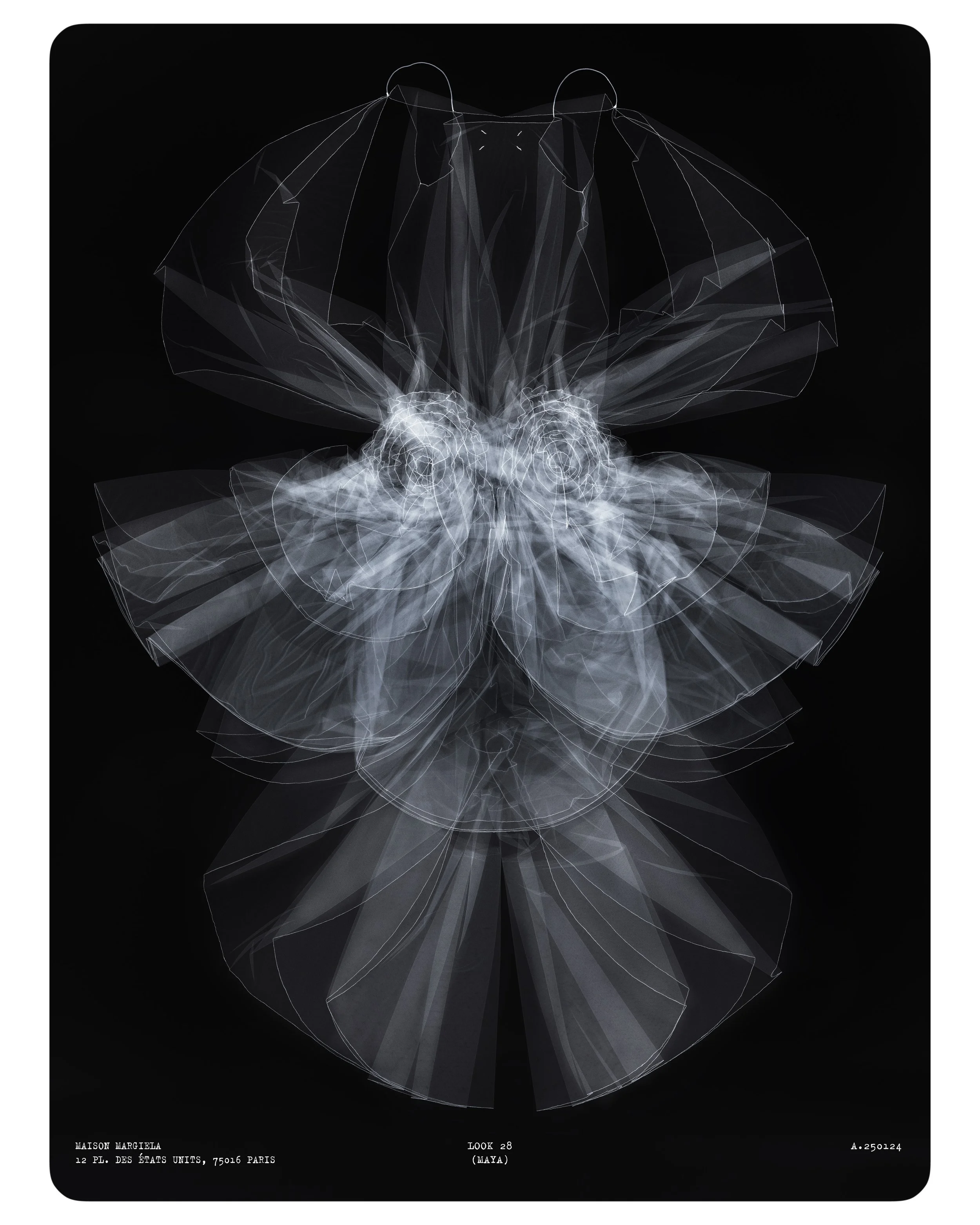
Object Testimony: The 2024 Artisanal X-ray dress, an OAC study in transparency that reveals the hidden labor and skeletal grammar of the haute maison.
The Creative Laboratory Exhibition in Shanghai (April 2–6) positions Artisanal as the opening movement of the Folders program. OAC reads this placement as deliberate: the exhibition begins with the proof of making, establishing the epistemological ground on which the subsequent codes operate. Before you can understand what is concealed (Anonymity), what is collected (Tabi), or what is overwritten (Bianchetto), you must first encounter what was made — and at what cost of attention, care, and human time. For a theoretical framework that quantifies this cost, see OAC's Artisan Activism: Why Craft, Materiality, and Protest Define Post-Luxury Value.
Anonymity: The Testimony of Strategic Erasure
If Artisanal is the testimony of presence, Anonymity is the testimony of deliberate absence. OAC's Phenomenology of Concealment finds in Margiela's historical use of masks and facial covering its most sustained luxury-theoretical case study. The mask in the Margiela context is not disguise in the carnival sense — it is not the temporary suspension of identity for the purposes of transgression. It is the institutionalization of erasure as design philosophy. A directly comparable logic is at work in The Banksy Enigma, which OAC has studied as the art world's most sophisticated deployment of anonymity as both protective strategy and value-generative force.
The mask says: the body that wears this garment is not the point. The garment is the point. The system — the house, the code, the way of seeing — is the point. This is a profoundly anti-celebrity, anti-influencer position, and it is one that OAC identifies as increasingly counter-cultural in the contemporary luxury moment, when the human face (and its digital amplification) has become the primary instrument of luxury communication. OAC has documented the opposite pole of this dynamic in our study of The New Luxury: How Kylie Jenner, Selena Gomez, and Jacob Elordi Perfected the 'Parasocial Brand' — where the face is the only product. Margiela's Anonymity code is the categorical refusal of that economy.
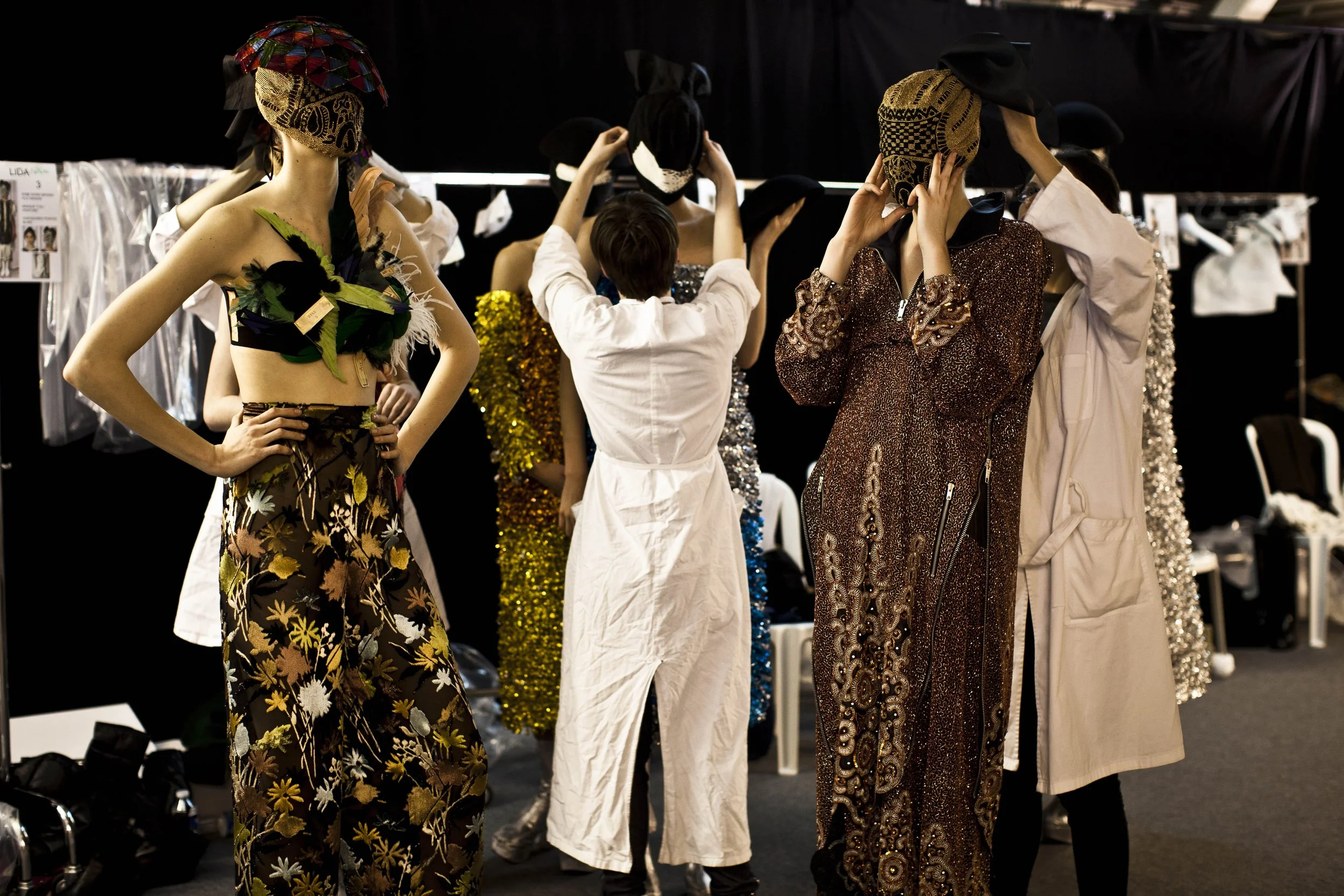
The Phenomenology of Concealment: A backstage view of the Spring 2013 Artisanal mask, illustrating the institutionalization of erasure as a luxury-theoretical strategy.
The History of Masks Exhibition in Beijing (April 7–12) brings this code to a city with a deep relationship to the mask as a cultural and theatrical instrument. OAC notes the geographic intelligence of this placement: bringing an exhibition of Margiela's concealment logic to Beijing — where the masked face carries meanings ranging from ceremonial to political — allows the code to acquire new resonances beyond the house's own history. The Archival Residue of Anonymity meets the archival residue of an entirely different cultural grammar.
Tabi: The Testimony of the Collected Body
The Tabi shoe occupies a singular position within OAC's taxonomy of the Sovereign Object. Unlike many luxury objects whose sovereignty derives from price exclusivity or designer celebrity, the Tabi has achieved its sovereignty through the active participation of a global community of collectors and wearers who, over three decades, have inscribed the object with accumulated layers of cultural meaning that now exceed the house's own institutional narrative. OAC has examined the political dimensions of this community-produced meaning in THE SHADOW OF THE LOOM: Semiotic Enclosure, Racial Capitalism, and the Architecture of Post-Luxury Reparation, which traces how objects acquire meaning through communities rather than brands — and what is owed to those communities in return.
The split-toe design — anatomically referencing the cloven hoof, the foot divided against itself, the body made strange to itself — enacts what OAC terms the Uncanny Luxury Object: an object that produces comfort and unease simultaneously, that signals belonging (to a community of aesthetic literacy) while also marking the wearer as, in some register, other. This dynamic is resonant with OAC's analysis of Rei Kawakubo and the Critique of Fashion as Conceptual Art, in which the body made-strange by clothing is understood as a philosophical proposition about the normative limits of the dressed form.
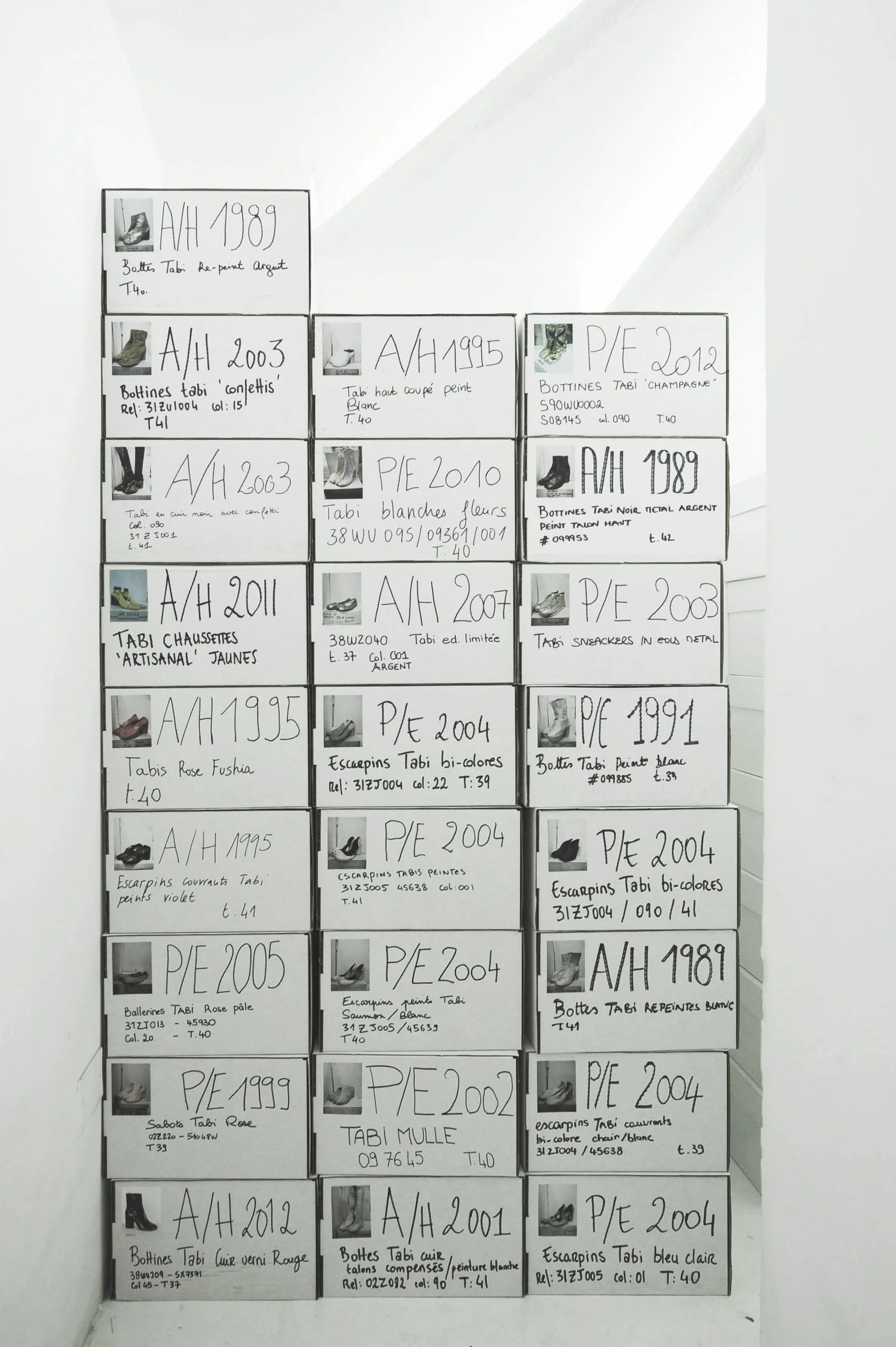
The Testimony of the Collected Body: Inside the Margiela archive, where the Tabi’s three-decade evolution is preserved as a sustained philosophical proposition.
The Collectors Exhibition in Chengdu (April 9–13) honors this community in a format — the collector exhibition — that explicitly acknowledges the distributed authorship of the object's meaning. This is OAC's concept of Object Testimony enacted institutionally: the house acknowledges that the meaning of the Tabi is not solely its own to curate. The collectors are co-authors of the code.
Bianchetto: The Testimony of the Overwritten Surface
Bianchetto — the white overpaint technique through which the house applies its signature erasure directly to the surface of an object — is, within OAC's critical lexicon, the most conceptually charged of the four codes. It is the technique that most explicitly enacts the house's founding paradox: the luxury object that is also its own critique; the thing that is also its own undoing. This logic has a direct parallel in what OAC has called the Material as Manifesto in Arte Povera — the tradition in which the choice of material is simultaneously a political act and a critique of the traditions it displaces.
The overpaint does not destroy the object beneath it. It preserves the object while refusing its original appearance. This is not bleaching, not fading, not deterioration — it is a deliberate act of surface sovereignty, in which the maker claims the right to re-author what has already been made. The Bianchetto object carries within it a temporal complexity that few luxury techniques can match: it is simultaneously the original object (still present, now beneath) and the overwritten object (present, now on the surface). It is a palimpsest. For OAC's most extended treatment of the palimpsest as a luxury-theoretical form, see From Function to Fissure: Collectible Design and the Weaponization of Material, which traces how the scarred, overwritten, and repaired surface becomes the primary site of value in post-luxury practice.
For OAC, this represents what we term the Archival Body in material form. The Bianchetto surface is an archive that conceals its own contents. It says: there was something here before this. It does not say what. This withholding is, in OAC's framework, the ultimate luxury gesture — the suggestion of depth without the obligation of disclosure. The philosophical ramifications of this withholding are most fully explored in OAC's study The Zero-Sum Aura: Why Digital Immortality Requires a Material Host, which argues that the most durable value is always held in reserve beneath the visible surface.
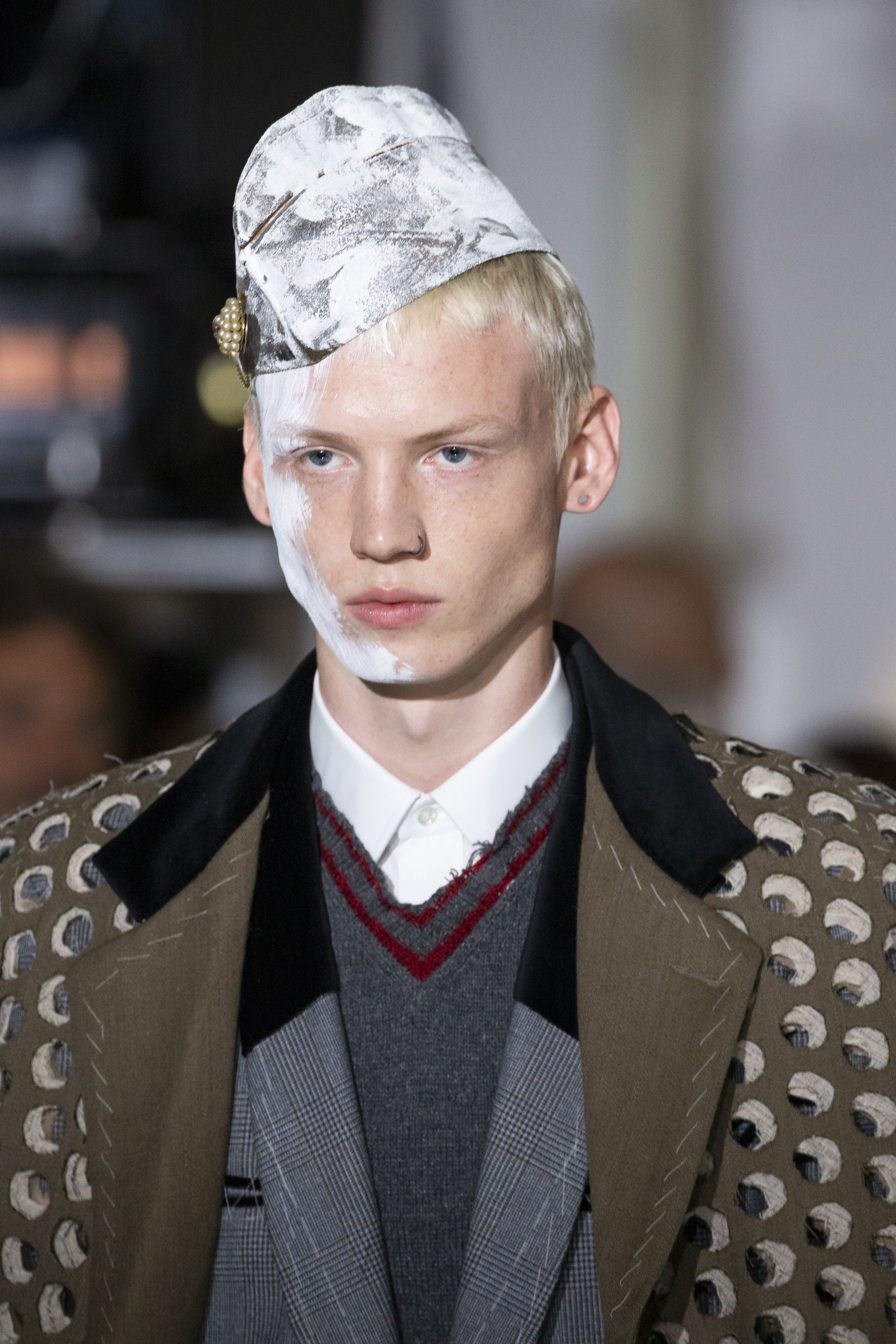
The Testimony of the Overwritten Surface: Look 4 from the Fall 2019 Artisanal collection, demonstrating the Bianchetto technique as an act of archival withholding.
The Atelier Experience in Shenzhen (April 11–12) positions Bianchetto as the program's final and most intimate encounter. OAC reads this compression as entirely appropriate: the overpaint technique, which speaks of constraint and selectivity, is itself experienced selectively. The logic of this restraint is consonant with what OAC has examined in The Aesthetics of Endurance: Byung-Chul Han and the Rise of Post-Luxury Conceptual Functional Art — Han's argument that the refusal of excess is itself a form of depth, and that the most significant objects are those that insist on their own finitude.
CHINA AS CRITICAL GEOGRAPHY
The decision to situate the Folders program entirely within China — across Shanghai, Beijing, Chengdu, and Shenzhen — is, for OAC, among the most significant geopolitical dimensions of the project. These are not merely market-access decisions. They are, within the logic of the Folders program, a reading of China's own archival complexity.
Shanghai as site of the Artisanal opening speaks to the city's long history as a node of craftsmanship encounter — the place where European and Chinese material cultures have most intensively cross-pollinated. Beijing as site of the Anonymity exhibition locates the masked face within the largest archive of Chinese theatrical and ceremonial tradition. Chengdu as site of the Tabi Collectors Exhibition acknowledges the city's identity as a center of Chinese subcultural life — the Tabi community in Chengdu is among the most robust in the country. Shenzhen as site of the Bianchetto experience aligns the overwrite technique with the city that has most dramatically overwritten its own surface. This geographic intelligence resonates with OAC's analysis of how luxury brands historically misread Chinese cultural codes — documented with critical precision in The Homogenized Portrait: Eurocentrism and the Myth of Universality at Dolce & Gabbana. The Folders project reads as a deliberate counter-model to that failure: rather than imposing a European hermeneutic on Chinese geography, it allows each city's own archival depth to amplify the house code placed within it.
OAC reads in this geographic distribution a rigorous attention to the principle that the house code must be activated in a terrain that speaks its language. The Folders project is not touring China — it is reading China, and allowing China to read it back.
THE LIVING ARCHIVE AND THE OAC PRINCIPLE OF CONTINUOUS TESTIMONY
Perhaps the most theoretically significant dimension of the Folders project — and the one that most directly engages OAC's concept of Continuous Testimony — is the promise embedded in the project's own description: "As the project evolves, new files will be added, revealing further information about the experiences and documenting the journey from concept to exhibition."
This commitment to the evolving, open archive distinguishes MaisonMargiela/folders from the conventional retrospective or institutional exhibition. The retrospective looks backward and curates. The Folders project looks forward and discloses. The archive is not complete; it is becoming. This is the luxury equivalent of what digital theorists have called the living document — a text that is always also a process. OAC has documented the institutional stakes of this distinction in Biopolitics of the Artifact: How Functional Endurance Challenges Foucault, Groys, and the Archival Death Mandate, which argues that the conventional archive is a mechanism of institutional death — the transformation of the living object into a managed corpse. The Margiela Folders project structurally refuses this fate.
For OAC, this transforms the project from an event into what we term a Sustained Object — an object whose testimony is not delivered in a single encounter but accumulates over time, requiring repeated engagement. The theoretical architecture of this concept is most fully elaborated in OAC's study The Cost of Stewardship: Capitalizing on Patronage Validation and the Economics of Emotional Permanence, which maps the economic and affective conditions under which sustained engagement generates value that speculative exchange cannot replicate.
This is, finally, the deepest convergence between the Folders project and OAC's own philosophical mission. The Objects of Affection Collection is not a catalog. It is, like the Margiela Dropbox, a field of testimony whose meaning is always being added to — always in the process of becoming. For the fullest account of how OAC understands the relationship between the custodian, the object, and the institution that houses both, see The Custodian's Contract: From Institutional Critique to Systemic Stewardship. In the vocabulary of the house: the folder is never closed.
WHAT MAISONMARGIELA/FOLDERS MEANS FOR THE DESIGN HOUSE FORM
MaisonMargiela/folders is, in OAC's assessment, the most significant act of institutional self-theorization that the luxury sector has produced in the present decade. It is significant not because it is unprecedented in its use of archival materials — many houses have produced archive exhibitions — but because it fundamentally reconceives what an archive is for.
Conventional luxury archive exhibitions use the past to authorize the present — the house shows its history to establish its legitimacy and command its price point. OAC has examined the inevitable exhaustion of this model in The Paris Fashion Week Paradox: Why the 18-Collection Calendar Kills Creativity and Signals the Death of Traditional Luxury. The Folders project inverts this entirely. It uses the present — the working file, the active document, the in-process image folder — to theorize the past (the four house codes) and, more radically, to produce the future (the evolving archive) simultaneously.
For OAC, this positions Maison Margiela not merely as a Fashion House but as what our framework terms a Philosophical Design House: an institution whose primary product is not the garment or the object, but a sustained and evolving argument about what objects are for, what they carry, and what they owe to the bodies and communities that receive them. This is the ambition that OAC has traced in the work of Carol Christian Poell: The Alchemical Designer, in the computational textiles of Ganit Goldstein, and in the architectural practice of Tadao Ando — designers for whom the object is never merely itself, but always also a theory of being in the world.
The Folders project does not ask you to buy anything. It does not, ultimately, ask you to attend anything. It asks you to witness a house in the act of thinking about itself — and to understand that this thinking is itself a form of making. That the folder is a garment. That the archive is a couture line. That the act of disclosure is, in the Margiela economy, the most refined luxury of all.
“Conceived by our team to explore the ideas and values that shape us.”
This is what OAC recognizes as Object Testimony at its most complete: an institution that does not merely produce objects but offers, through those objects and the archives that surround them, a philosophy of what it means to make something worth keeping. For a broader account of how the Design House form can achieve this depth, see OAC's study The Institutional Pivot: How PLCFA Reconfigures Museology, Materiality, and the Decolonization of the Canon.
Authored by Christopher Banks, Anthropologist of Luxury & Critical Theorist. Office of Critical Theory & Curatorial Strategy, Objects of Affection Collection.
RELATED OAC STUDIES
The following studies from the OAC archive speak most directly to the themes pursued in this paper. They are presented here as an invitation to follow the threads of this inquiry into adjacent territories of OAC's critical practice.
ON THE PHILOSOPHY OF CONCEALMENT & ANONYMITY
1. The Banksy Enigma: Mastering the Narrative of Modern Art
2. The New Avant-Garde: Deconstructing Status and Utility in the Age of Post-Luxury
3. Ai Weiwei's 'Cockroach' as Post-Luxury Conceptual Functional Art
ON CRAFT, LABOR & ARTISANAL TESTIMONY
4. Artisan Activism: Why Craft, Materiality, and Protest Define Post-Luxury Value
5. The Algorithm of the Hand: Re-Centering Human Imperfection and Labor in the Age of AI Perfection
6. Debord's Spectacle Meets Sholette's Missing Mass: How Artisan Activism Forges Moral Capital
7. Alan Vilar's Embroidered Ephemera and the Calculus of Moral Weight
ON THE ARCHIVE, THE OBJECT & INSTITUTIONAL POWER
9. The Zero-Sum Aura: Why Digital Immortality Requires a Material Host
10. Hito Steyerl and the Phygital Counter-Strategy: Why Post-Luxury Value Resists the Poor Image
11. The Narrative as the Original: AI, Simulation, and the Custodial Strategy of PLCFA
12. The Custodian's Contract: From Institutional Critique to Systemic Stewardship
ON SURFACE, MATERIAL & THE OVERWRITTEN FORM
14. From Function to Fissure: Collectible Design and the Weaponization of Material
15. Material as Manifesto: The Political Legacy of Arte Povera and the Birth of Post-Luxury
16. Carol Christian Poell: The Alchemical Designer, Post-Luxury's Radical Critique of Materiality
17. From the Aura to the Simulacrum: Benjamin, Baudrillard, and the Crisis of the Authentic
18. The Material as Political Capital: Quantifying Moral Weight in the Anti-Market Materiality of PLCFA
ON FASHION AS PHILOSOPHY & DESIGN HOUSE FORM
19. Rei Kawakubo and the Critique of Fashion as Conceptual Art
20. The Fluidity of Form: How Iris van Herpen is Rewriting the DNA of Haute Couture
21. Why Marine Serre's Upcycling Is Not a Trend
22. The Paris Fashion Week Paradox: Why the 18-Collection Calendar Kills Creativity
ON CHINA, GEOGRAPHY & LUXURY'S CROSS-CULTURAL FAILURES
24. The Homogenized Portrait: Eurocentrism and the Myth of Universality at Dolce & Gabbana
