
The Architecture of Intent
A Critical Lexicon
This collection of studies is the intellectual architecture of Post-Luxury Conceptual Functional Art (PLCFA).
The true artistry of this Maison resides not in the finished form, but in the rigorous thinking that precedes it. These essays serve as the conceptual foundation for PLCFA, using a critical lens to interrogate cultural phenomena, art history, and consumer paradigms—analyzing everything from the ephemeral spectacle of luxury to the pure architectural rigor of abstract principles.
This is an invitation into the workshop of the mind. By sharing this process, we validate the necessity of a new category of value and invite you toward a well-considered life, one founded on true craft, uncompromising narrative, and durable meaning.
New to PLCFA? Begin with Essential Reading below.
Exploring a specific area? Navigate by category.
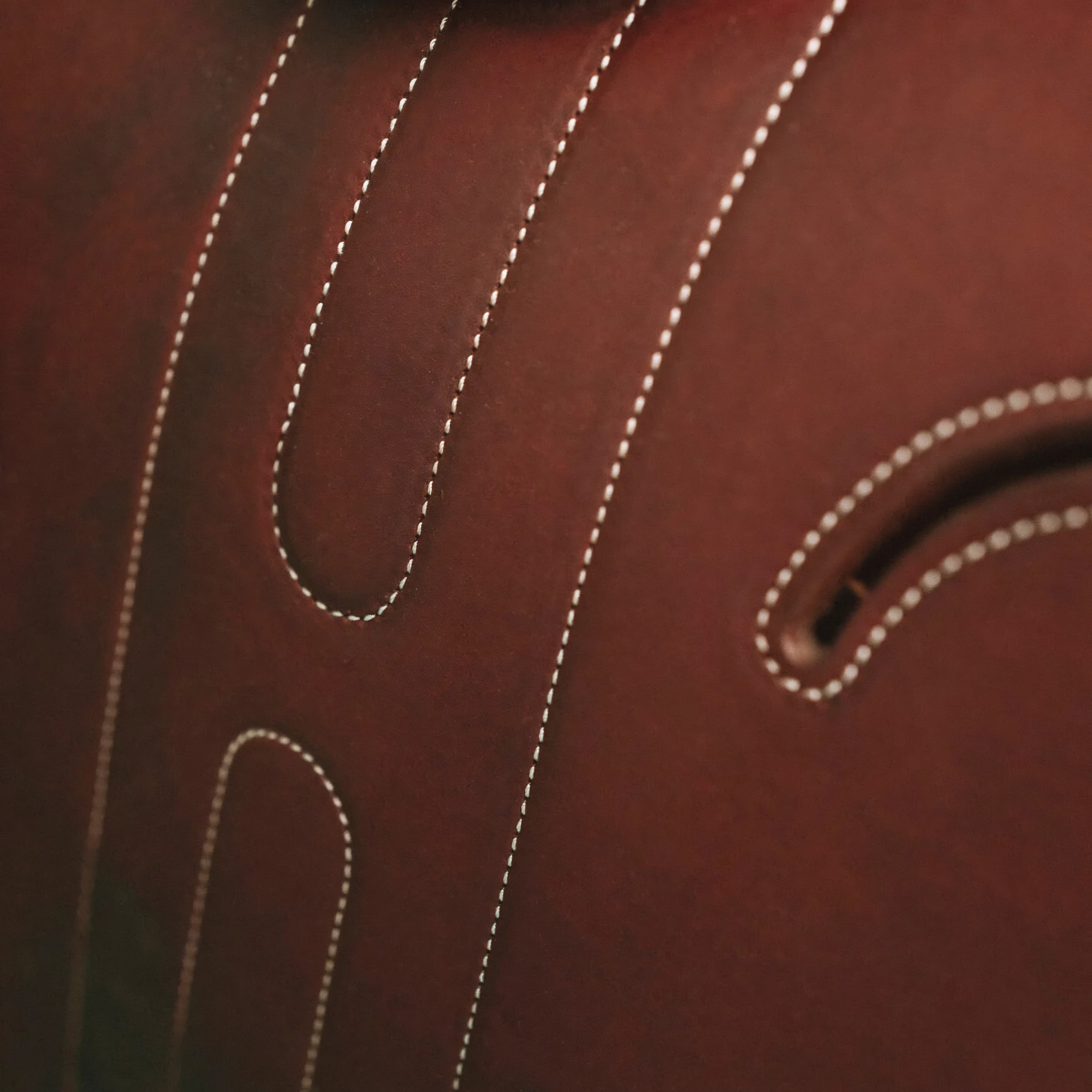
The Aura Goes West: What Hermès "Chapter 2" in Los Angeles Actually Confirms About Material Permanence, Speculative Geography, and the Custodial Stakes of Mati Diop's Lens
The Hermès Women’s Fall-Winter 2026 runway presentation in Los Angeles—staged as Chapter 2 of a transcontinental dialogue under the creative direction of Nadège Vanhée-Cybulski—represents far more than a high-profile marketing exercise in a global luxury capital. It serves as a profound structural stress test for the house’s core identity, deliberately transporting a deeply "Sedimentary Object" system—where value is earned through the slow compression of time, labor density, and material irreversibility—into the world's most hyperreality-saturated urban landscape. By deploying the Post-Luxury Conceptual Functional Art (PLCFA) framework, this study analyzes the friction generated when Hermès's resistant, non-interchangeable material singularity enters a West Coast sign economy engineered to metabolize physical craft into empty, high-velocity digital spectacle, threatening to convert genuine aura into zero-sum aura.
Crucially, the study diagnoses the institutional weight of appointing acclaimed filmmaker Mati Diop (Dahomey, Atlantics) as the presentation's film and photography director. Far from a conventional celebrity alignment, commissioning a director whose cinematic body of work is fundamentally dedicated to investigating the contested custody, displacement, and testimony of historical artifacts introduces a hyper-critical perspective into the heart of the event. Through this lens, the collection's demanding material vocabulary—from its structural four-pocket military leather jackets to its modernist, geometric A.M. Cassandre Perspective motifs—is forced to transcend mere styling. Ultimately, this pre-event diagnostic establishes the vital markers to watch on June 4, examining whether Hermès can successfully scale its historic "Custodian's Contract" or if the event's accumulating semantic burden will inevitably see the image triumph over the testimony of the object.
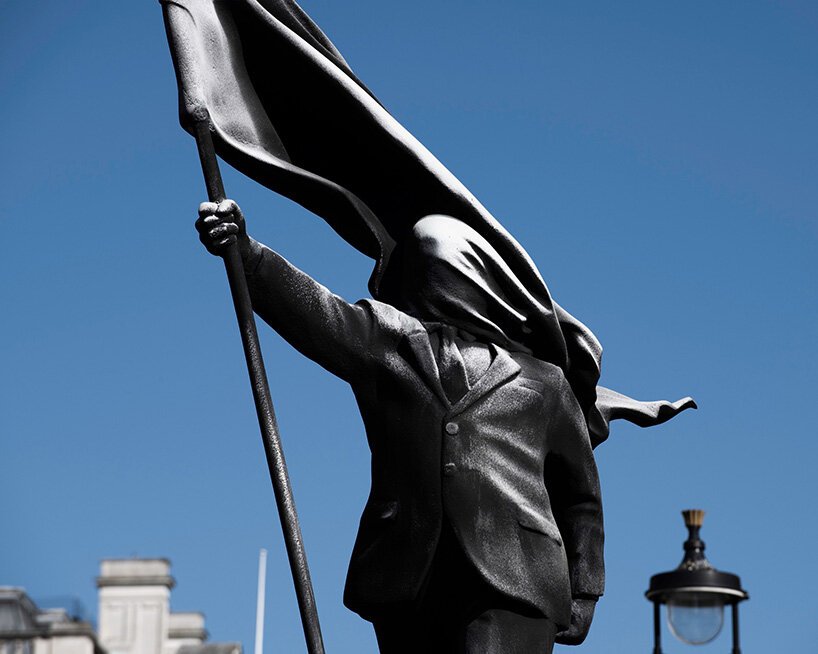
The Suited Void: Banksy’s Waterloo Place Statue and the Architecture of Legible Blindness
On the morning of April 29, 2026, the architectural silence of Waterloo Place was shattered by a 25-foot structural argument in bronze and granite. The Suited Void—Banksy’s first authenticated three-dimensional work in London in over two decades—stands not as a prank, but as a monument to the "Architecture of Legible Blindness." Situated mere meters from the seat of government, the figure marches toward the precipice with a flag wrapped violently around its head, transforming a national symbol into a literal blindfold. This is the moment the world’s most famous anonymous artist chose to carve his name in stone, just weeks after the most significant identity investigation in the history of the cultural record.
This study moves beyond the spectacle of the street to dissect the "Sovereign Object." Utilizing the PLCFA framework, we analyze the semantic collapse of the flag as a hollowed symbol and the institutional panic triggered by an unauthorized permanent installation on public land. Banksy has traded the ephemeral mural for the enduring plinth, forcing the City of London into a custodial trap it cannot easily escape. Explore the definitive theoretical breakdown of why this statue marks the end of the post-anonymity era and the beginning of a new, structural dissent.
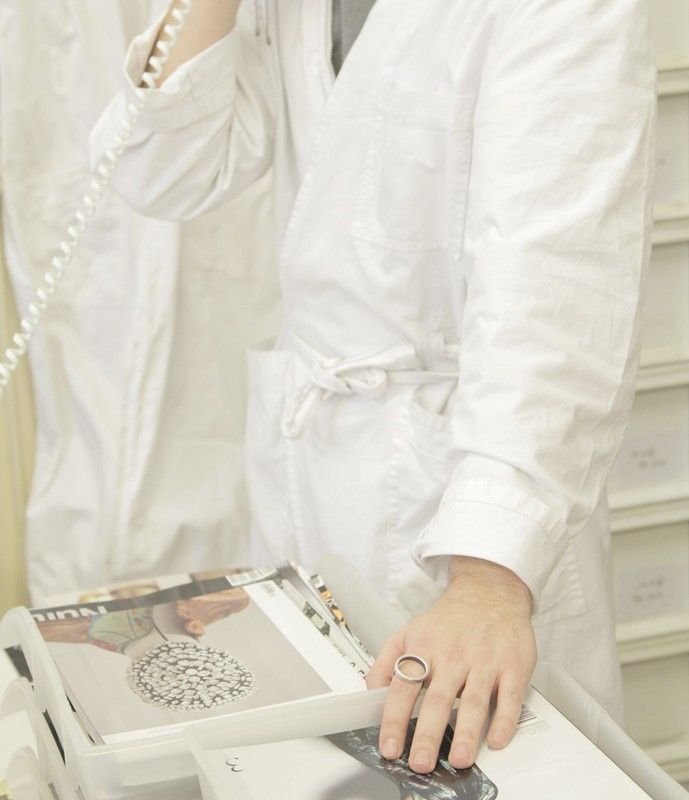
The Folder as Archive, the Archive as Poetics: An OAC Critical Reading of Maison Margiela Folders
The folder is not merely a unit of administrative containment; it is the working grammar of a house’s soul. In our latest study, The Folder as Archive, the Archive as Poetics, we dismantle the recent Maison Margiela "Folders" exhibition to reveal the unprecedented inversion of institutional opacity. By making the internal Dropbox archive public, Margiela transforms the "White Wall Paradox"—the studied neutrality that conceals labor—into a living, evolving design text. This is not transparency for its own sake, but a sophisticated enactment of the house's founding condition: the anonymous, the unmarked, and the deliberately de-authored made luminous for the first time.
Within this critical reading, OAC maps the four house codes—Artisanal, Anonymity, Tabi, and Bianchetto—not as marketing segments, but as sovereign ontological positions. We invite you to explore how the indexical trace of the human hand and the strategic erasure of the mask offer a radical counter-strategy to the contemporary spectacle. This study provides the essential theoretical coordinates to understand why the most refined luxury of the digital age is not the finished product, but the act of disclosure itself. Read the full inquiry to witness a house in the act of thinking.