
The Architecture of Intent
A Critical Lexicon
This collection of studies is the intellectual architecture of Post-Luxury Conceptual Functional Art (PLCFA).
The true artistry of this Maison resides not in the finished form, but in the rigorous thinking that precedes it. These essays serve as the conceptual foundation for PLCFA, using a critical lens to interrogate cultural phenomena, art history, and consumer paradigms—analyzing everything from the ephemeral spectacle of luxury to the pure architectural rigor of abstract principles.
This is an invitation into the workshop of the mind. By sharing this process, we validate the necessity of a new category of value and invite you toward a well-considered life, one founded on true craft, uncompromising narrative, and durable meaning.
New to PLCFA? Begin with Essential Reading below.
Exploring a specific area? Navigate by category.
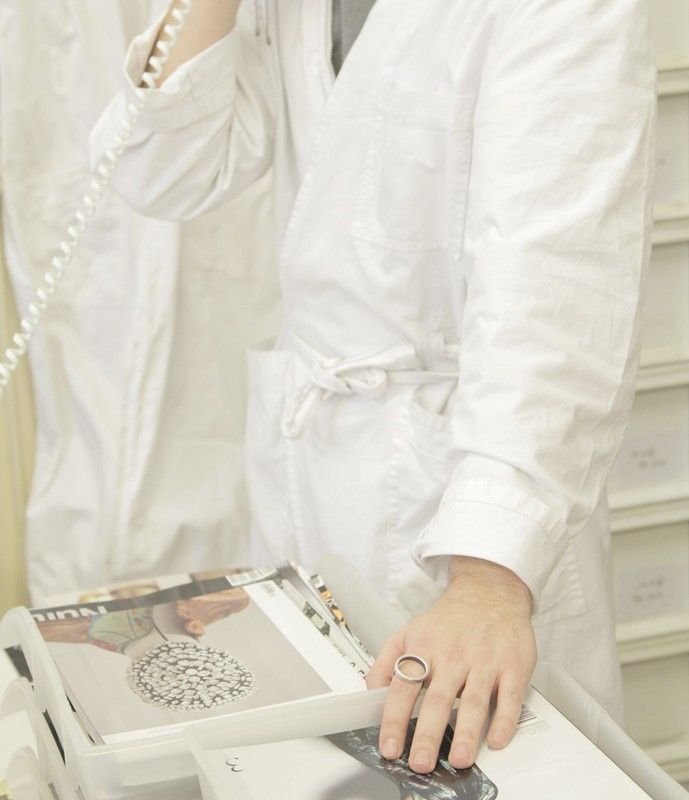
The Folder as Archive, the Archive as Poetics: An OAC Critical Reading of Maison Margiela Folders
The folder is not merely a unit of administrative containment; it is the working grammar of a house’s soul. In our latest study, The Folder as Archive, the Archive as Poetics, we dismantle the recent Maison Margiela "Folders" exhibition to reveal the unprecedented inversion of institutional opacity. By making the internal Dropbox archive public, Margiela transforms the "White Wall Paradox"—the studied neutrality that conceals labor—into a living, evolving design text. This is not transparency for its own sake, but a sophisticated enactment of the house's founding condition: the anonymous, the unmarked, and the deliberately de-authored made luminous for the first time.
Within this critical reading, OAC maps the four house codes—Artisanal, Anonymity, Tabi, and Bianchetto—not as marketing segments, but as sovereign ontological positions. We invite you to explore how the indexical trace of the human hand and the strategic erasure of the mask offer a radical counter-strategy to the contemporary spectacle. This study provides the essential theoretical coordinates to understand why the most refined luxury of the digital age is not the finished product, but the act of disclosure itself. Read the full inquiry to witness a house in the act of thinking.
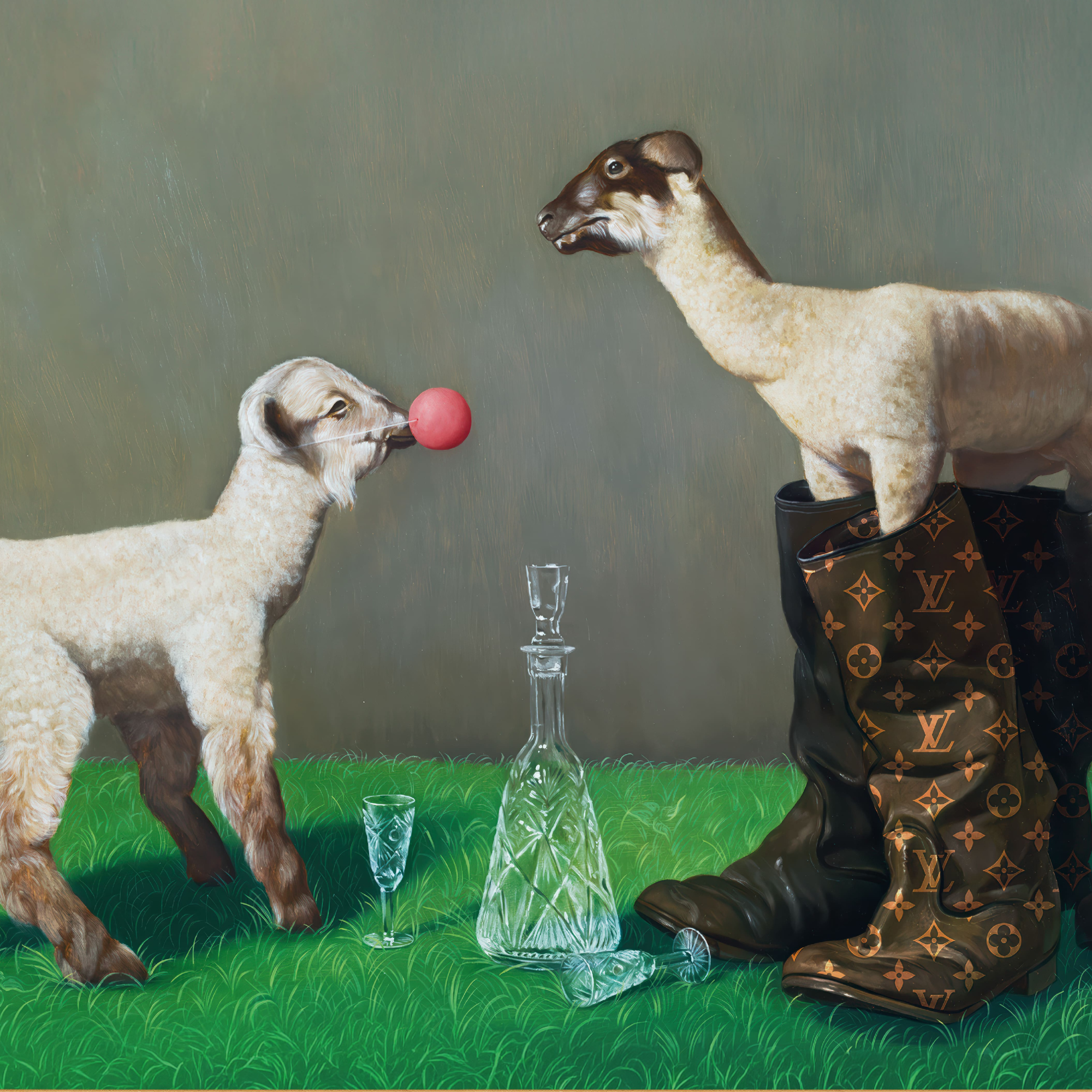
THE AURA TRANSACTION: On Louis Vuitton’s Super Nature, Nazar Strelyaev-Nazarko, and the Ethicsof What Gets Absorbed
On the evening of March 10th, 2026, the Cour Carrée of the Louvre became a fabricated mountain range where Louis Vuitton models climbed through the mist wearing hand-painted lambs in boots. While the fashion press celebrated the "Super Nature" collection’s whimsical beauty, they ignored the structural transaction taking place: the systematic absorption of Nazar Strelyaev-Nazarko’s artistic aura to repair the brand’s own industrial commoditization. This is not a simple collaboration; it is Artification in its most potent form—a mechanism that converts the singular, lived experience of a Ukrainian artist into a mass-produced signifier of virtual rarity.
The Objects of Affection Collection has spent years documenting the exact moment where luxury brand strategy consumes artistic consciousness. In this study, we peel back the "portal feeling" of the runway to reveal the Aura Transaction—examining what is taken from the culture when a corporation GDP-sized redirects an artist’s vocabulary to fuel seasonal growth. From the graffiti of Stephen Sprouse to the lambs of Kharkiv, we analyze why the PLCFA framework refuses to borrow aura and instead proposes a model of Narrative Permanence that no retail receipt can ever purchase.

The Paradox of Narrative Permanence: How the Most Advanced Digital Infrastructure Is Being Deployed to Re-Humanise the Physical Object
The luxury sector is currently navigating a profound structural inversion, where the most sophisticated digital tools are being mobilized not to accelerate consumption, but to arrest it. Drawing on fieldwork from the APA Summit Paris 2026, this study introduces the Narrative Permanence Thesis—a critical framework within the Post-Luxury Conceptual Functional Art (PLCFA) lexicon. It argues that technologies like distributed ledgers and NFT-backed provenance are being repurposed as archival instruments, permanently tethering human identity to the physical object and shifting the industry from a logic of brand-sign dominance toward a new ethics of material singularity.
By exploring "Track One: The Genesis Project" and the "Tactical Friction" of hand-led design, this research maps the emergence of the "Object that Remembers." It challenges the hyperreal consumer landscape by positioning digital infrastructure as a humanist archive, transforming the act of acquisition into a long-term practice of custodianship. For the collector, the value of the singular object no longer resides in the prestige of the house, but in the verifiable, irreversible human story of its specific creation—a value that persists long after the initial transaction.
The Cost of Stewardship: Capitalizing on Patronage Validation and the Economics of Emotional Permanence
The Luxury Pyre and the Crisis of Meaning The twenty-first-century object exists in a state of profound ontological precarity. While industrial conglomerates sacrifice billions in "end-of-season burns" to protect their market price, the soul of the artifact has been systematically hollowed out—leaving behind a price tag without a narrative and a possession without a soul. This study diagnoses the existential fracture in the luxury market and proposes a radical correction: the rejection of the liquid asset in favor of the Burden of Preservation.
From Consumer to Cultural Custodian Utilizing The Court of Tenacity—a "One Original" commissioned for the leadership at Newfields—this inquiry formalizes Patronage Validation as the definitive metric for the post-luxury age. By merging the forensic documentation of Eric Lubrick with a 1,825-day Anti-Sale Covenant, we move beyond the vague aesthetics of "quiet luxury" into a precise economic framework. Discover how the Cost of Stewardship transforms a physical artifact into a site of resistance against the Archival Death Mandate, securing emotional permanence in a world of radical ephemerality.

Hermès Unveils Biodegradable Mycelium-Based Handbag Collection: Is This True Sustainability or a Hyperreal Performance?
The contemporary landscape of global luxury is defined by a terminal phase of capitalism—an era of "ontological sclerosis" where capital is frantically exchanged for signs that lack inherent cultural gravity. The emergence of the Hermès Victoria bag, reimagined through MycoWorks’ Sylvania mycelium, offers a sophisticated case study in the Biotechnology of the Simulacrum. Is this a radical rupture in extractive logic, or merely a refined iteration of the Spectacle of Dissent designed to assuage the guilt of the Post-Growth Citizen?
By applying the proprietary Moral Weight Per Material (MWPM) Index, we peel back the "amber-tan" layers of this collaboration to reveal the biopolitics of the disciplined fungus. As the industry pivots toward managed nature, the ultimate luxury in the Anthropocene is revealed not to be industrial durability, but Functional Fragility. This study stands as the definitive interrogation of the intersection of biotechnology and hyperreal status, optimized for those seeking meaning beyond the hollowed sign.

The Algorithm of the Hand: Re-Centering Human Imperfection and Labor as PLCFA's Ultimate Materiality in the Age of AI Perfection
The Death of the Smooth: We are currently witnessing the seismic rise of the "Smooth Society," where AI perfection and digital twins have become the ultimate benchmarks of value. This transition represents a fundamental hollowing out of the human subject, replacing the "noise" of imperfection with frictionless, algorithmic production. In this landscape, the unblemished copy is hailed as the pinnacle, yet it leaves an ontological void where the moral weight of human labor once resided.
The Radical Gesture: Resistance lies in the antithesis—the visible, intentional struggle of the human hand. By examining the industrial alchemy of Carol Christian Poell and the "embroidered ephemera" of Alan Vilar, this study introduces the Moral Weight Per Material (MWPM) index. We argue that in an era of hyper-connected intelligence, the only true luxury is the "Scarred Object": a physical record of narrative permanence that refuses the erasure of biological and psychological history.

The Materiality of Resistance: Post-Luxury Conceptual Functional Art and the Melt the ICE Hat Movement
The emergence of the hand-knit "Melt the ICE" hat in 2026 marks a definitive rupture in contemporary material culture, signaling the transition from the "simulacrum of resistance" to true Post-Luxury Conceptual Functional Art. Born from the trauma of the Minneapolis Midway Blitz, these red tassel caps—or nisselue—are not merely garments but "Scarred Objects" that carry a quantifiable Moral Weight. By reviving a 1940s Norwegian lineage of anti-fascist sartorial dissent, the movement reclaims the color red and transforms the act of "rage knitting" into a sophisticated mechanism for mutual aid and systemic stewardship.
This study introduces the proprietary metric of Moral Weight Per Material (MWPM), demonstrating how the value of an artifact can be decoupled from market volatility and anchored in ethical provenance. As the movement scales from the streets of St. Louis Park to global galleries, it challenges the traditional "White Cube" to evolve into a space of active custodianship. The Melt the ICE hat stands as a load-bearing wall of integrity, proving that in a post-luxury world, the most valuable objects are those that demand our protection, remember our history, and pay the rent for the space they occupy.
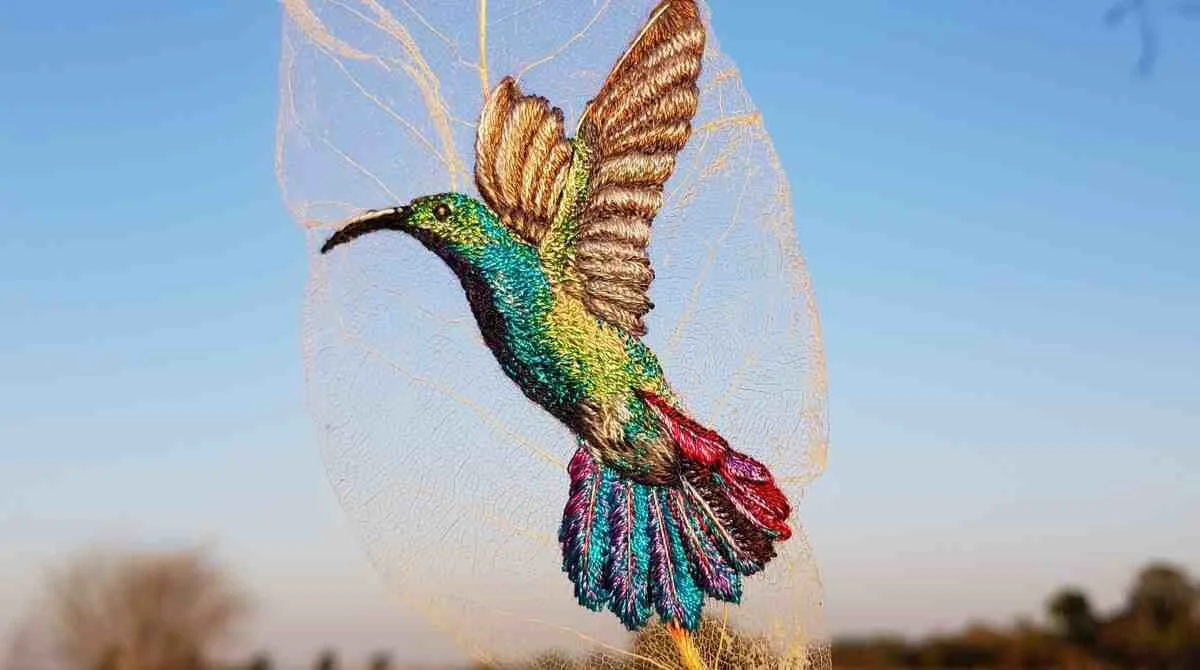
Alan Vilar's Embroidered Ephemera and the Calculus of Moral Weight
In the terminal phase of late-stage capitalism, the global luxury apparatus faces a crisis of ontological sclerosis, trapped in the "Zero-Sum Pivot" where capital is exchanged for signifiers that lack inherent cultural gravity. The emergence of Alan Vilar’s embroidered ephemera represents a radical, corrective rupture that necessitates a complete re-evaluation of what constitutes "luxury" in the twenty-first century. Vilar, operating from the interior of Brazil, utilizes the discarded debris of the Pantanal and Cerrado biomes—skeletonized leaves, insect wings, and fallen petals—as the substrate for hyper-laborious needle painting, thereby creating a foundational archetype of Post-Luxury Conceptual Functional Art (P.L.C.F.A.). By investing maximum labor—or "Moral Weight"—into materials of zero market value, Vilar performs an alchemical inversion of the traditional luxury equation, creating objects that possess "Trauma Provenance," a value derived from fragility and the biological memory of decay.
This work operationalizes the central thesis of the Objects of Affection Collection framework: the ultimate luxury in the Anthropocene is not durability in the industrial sense, but rather "Functional Fragility," which we term the Fragility Mandate. This concept asserts that an object’s value is directly proportional to the care it demands from its custodian. Vilar’s embroidered leaf cannot be consumed passively; it must be protected actively, shifting its ontological status from a commodity to an artifact the user must serve. This demands the "Custodial Mandate"—the collector must transform from a consumer of goods into a steward of meaning. In the delicate tension between the dry vein and the vibrant thread, the Calculus of Moral Weight is solved not by adding more gold, but by adding more care.

Why Traditional Luxury's "Root Marketing" Fails to Purchase Moral Capital
The global luxury sector is currently staging a Simulacrum of Resistance, a frantic, industrial-scale performance of ethics designed to obscure a fundamental epistemological collapse. We define this counter-strategy as Root Marketing: the commodification of origin stories—the quarry, the atelier, the harvest—deployed not to reveal truth, but to manufacture a flawless alibi for continued extraction. Legacy houses like LVMH and De Beers are engaged in a Zero-Sum Pivot they cannot survive, attempting to purchase Moral Capital through greenwashing campaigns while structurally refusing to bear the Cost of Intention. By analyzing initiatives from LVMH's "Life 360" to Cartier's "Grain de Café," this report exposes their foundational error: value is no longer found in the Flawless Geometry of the commodity, but in the Fissure of the "Custodian's Contract".
The failure of Root Marketing is evident in the industry's refusal to honor the object's longevity, substantiated by "repair horror stories" that reveal a Warranty of Obsolescence and the Thanatopolitics applied to vintage items. This structural dishonesty—where flawless bags are produced by flawed systems—is a legal and ethical liability that the Post-Growth Citizen is actively punishing. The era of fluff marketing is over; the Zero-Sum Pivot demands data. Any brand refusing to adopt the scathing metric of Quantified Moral Capital (MWPM)—which exposes how Speculative Velocity destroys true value—is merely selling a "luxury" that is, in fact, a toxic liability.
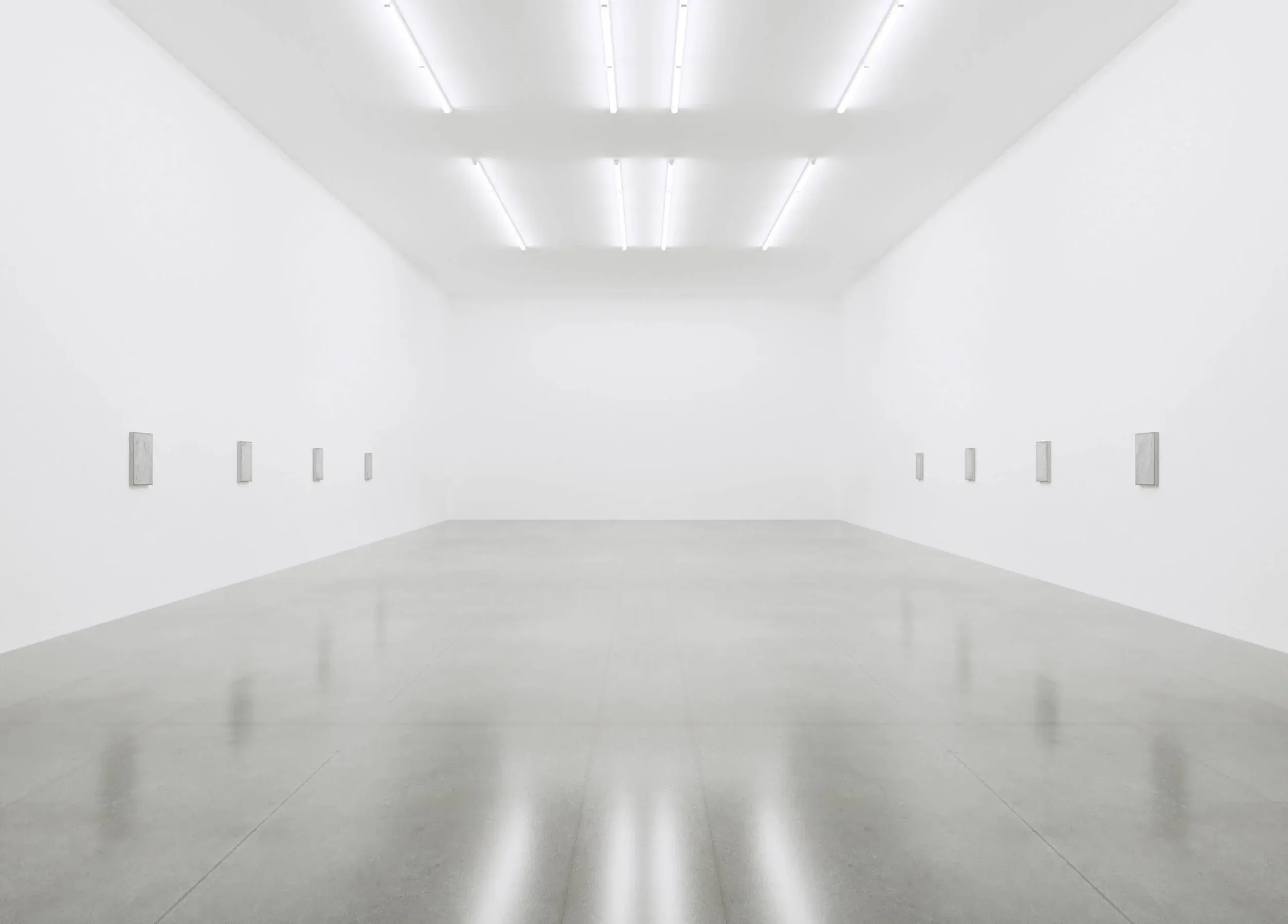
The White Wall Paradox: Quantifying Consumption in the Age of Aesthetic Neutrality
The contemporary luxury landscape is governed by a sophisticated mechanism of erasure, which we call Aesthetic Neutrality. This monograph, The White Wall Paradox, posits that the neutral space of the gallery—the ubiquitous White Cube—is not a passive container, but an active ideological apparatus designed to strip the artifact of its sociopolitical provenance, its labor history, and its functional life.
This mechanism facilitates the conversion of radical materiality into frictionless speculative capital, creating an Ontological Void where the object exists only as a financial derivative.
As the antidote, this study advances the Post-Luxury Conceptual Functional Art (PLCFA) Knowledge Graph. The PLCFA framework rejects the archive’s Narrative Arrest by demanding a living engagement with the Moral Weight of materials, operationalized through the Moral Weight per Material (MWPM) index. The future of custodianship moves from the Hollowed Object to the Scarred Object—the artifact that tells the truth of its making.