Louis Vuitton Super Nature: The Aura Transaction
The most profound luxury is not what can be acquired, but what must be created.
On the evening of March 10th, 2026, inside the Cour Carrée of the Louvre (the oldest and most architecturally imposing courtyard of the most visited museum on earth) Nicolas Ghesquière sent models climbing through a fabricated mountain range. They wore capes and cowbells. They carried walking sticks hung with handbags. Their heels were carved to look like antlers. And on certain jackets, plaid wool pieces in the earthy, grounded palette of the collection Ghesquière titled Super Nature, there were painted lambs.
Those lambs were painted by Nazar Strelyaev-Nazarko. Born in Kharkiv, Ukraine, in 1998. Trained first in industrial design, then immersed in the Renaissance and Baroque traditions of Italy. An artist whose sensibility sits precisely at the intersection of classical European painting and gentle, knowing absurdism; who makes work that feels old and slightly dreaming simultaneously, that carries within it the weight of tradition and the lightness of someone who has looked at tradition long enough to find it a little funny, and a little devastating, and wholly worth loving.
We need to sit with that image for a while before we can talk about what it means: not just aesthetically, but structurally. Because what happened on that runway at the Louvre was not merely a beautiful collection. It was a transaction.
The lambs wore boots.
And the Objects of Affection Collection has spent years asking the question that the fashion press largely does not ask: who pays, and who profits, and what is the currency, when luxury absorbs art? This is not a question born of cynicism. It is born of the deepest possible respect for what art actually is, and what it is not. Our entire practice, our Post-Luxury Conceptual Functional Art framework, our One Original Principle, our Custodian’s Contract, our designation of objects as "Anti-Speculative Entities" all of it exists because we believe that the relationship between making, meaning, and commerce is the central moral question of our cultural moment. Louis Vuitton’s Super Nature collection, whatever its considerable beauty, makes that question impossible to avoid.
What “artification” actually is
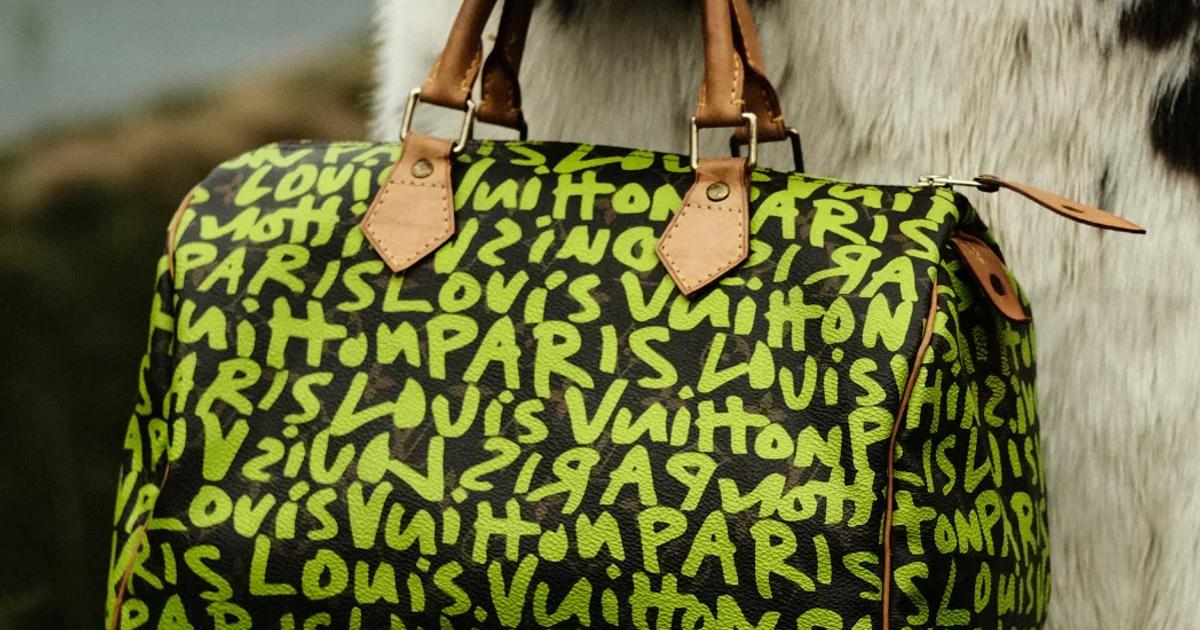
There is an academic term for what Louis Vuitton has been doing, with increasing sophistication, increasing frequency, and increasing strategic precision, since Marc Jacobs first invited Stephen Sprouse to spray graffiti across the monogram in 2001. The term is artification.
Artification is the process of transforming luxury into art: a strategy that changes the status of the brand and its products, reinforcing the idea of a better-than-ordinary brand whose price and symbolic power are undisputed. It is, at its core, a solution to a structural problem that every luxury house faces as it scales: growth is the biggest challenge for a luxury brand, because volume dilutes brand cachet and violates the credo of rarity on which the luxury sector is originally based. The more you sell, the less special you are. The more special you need to appear, the more you reach for something that carries genuine singularity, something whose value cannot be mass-produced. You reach, in other words, for art.
The artification process allows luxury goods to no longer derive their legitimacy from their objective rarity, raw material, artisanal know-how, but from their status as artworks. This is a profound shift. The original justification for the price of a Louis Vuitton bag was craft: the hours, the hands, the leather, the technique, the physical and temporal reality of skilled human labor. But as the brand shifted toward mass production, the valorization of commodities became altogether more problematic. As we argued in "Why Traditional Luxury’s “Root Marketing” Fails to Purchase Moral Capital, the fissure between a brand’s claimed heritage and the industrial reality of its supply chain is precisely where moral authority collapses. Something had to replace the genuine rarity that factory lines cannot provide. That something is the aura of the artist.
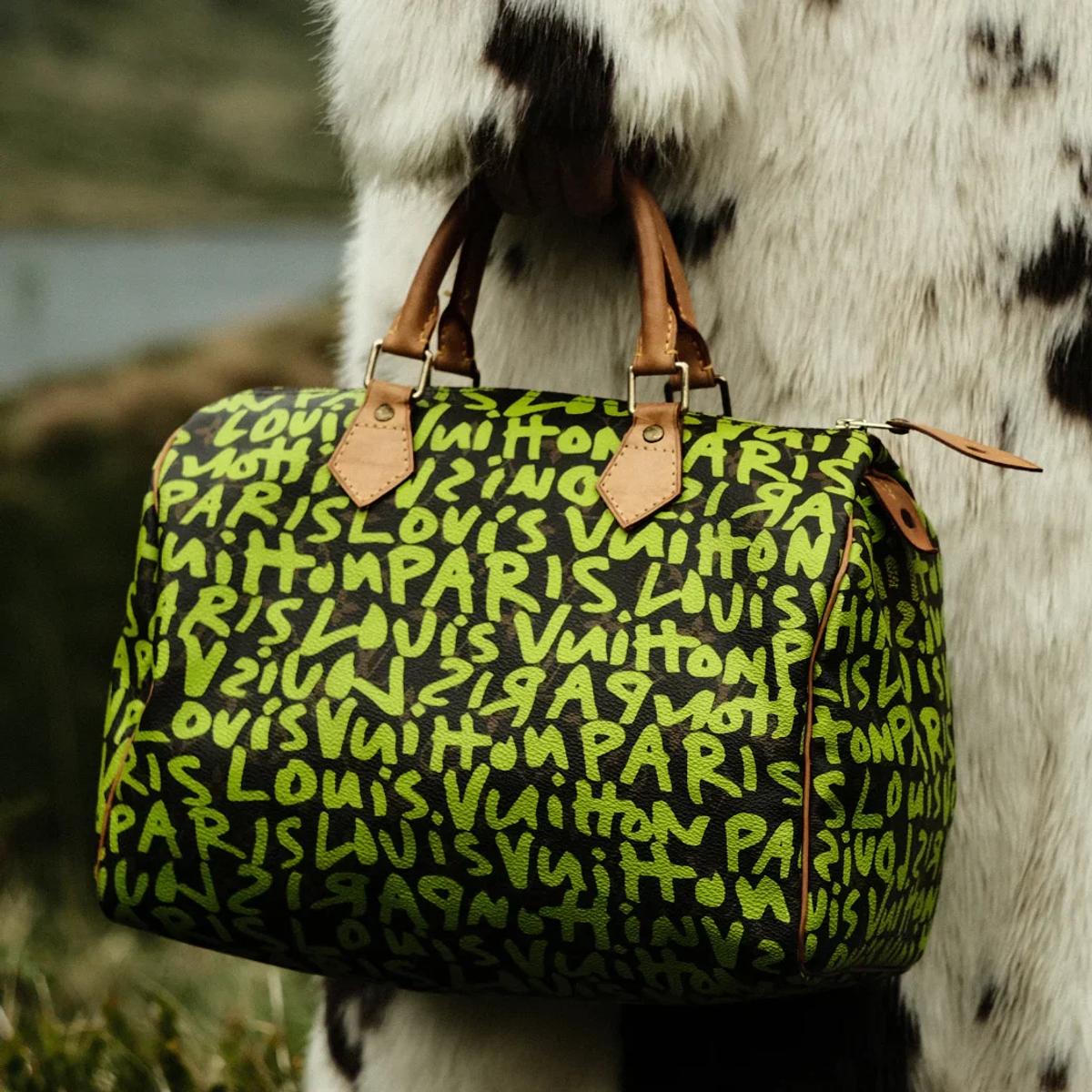
Under the direction of Marc Jacobs, the house pioneered a ‘decommoditization strategy’ known as artification: treating a non-art object as art to imbue it with a renewed sense of prestige and ‘virtual rarity.’ The word virtual is doing enormous work in that sentence. It is not actual rarity. It is the feeling of rarity, produced by proximity to something, an artist, a practice, a tradition of making, that genuinely is rare.
This is the mechanism. Now let us look at what it costs, and precisely why the Objects of Affection Collection is constitutionally incapable of replicating it.
Walter Benjamin and the lamb in boots
In 1935, the German philosopher Walter Benjamin wrote what would become one of the most influential essays in the theory of art and culture. The Work of Art in the Age of Mechanical Reproduction introduced the concept of the aura, a quality he located at the intersection of authenticity, presence, and tradition. In our foundational study "From the Aura to the Simulacrum: Benjamin, Baudrillard, and the Crisis of the Authentic", we traced how this concept of aura, the unique presence of a work in time and space, enters a terminal state under the pressures of mass culture and technological abstraction. Even the most perfect reproduction of a work of art is lacking in one element: its presence in time and space, what Benjamin referred to as its aura.
Benjamin’s concern was mechanical reproduction: photographs, film, the printing press. He could not have anticipated the more subtle and arguably more sophisticated form of aura-extraction that luxury brands have perfected in the century since. Because the luxury industry does not reproduce the artwork. It does something more interesting, and arguably more troubling. It absorbs the artist.
The aura is an effect of a work of art being uniquely present in time and space, connected to the idea of authenticity. What Nazar Strelyaev-Nazarko brings to Louis Vuitton is not simply a visual motif. He brings the entire accumulated weight of his formation.
He brings his childhood in Kharkiv, the industrial design education that taught him to think about function and material, the journey to Italy and the confrontation with Renaissance masters, the peculiar and personal symbolic vocabulary: the boots on the lambs, the scientific curiosity mixed with personal memory, the dreamlike quality of a mind that has looked at Baroque painting long enough to see what it was really doing and decided to do it differently. He brings, in Benjamin’s terms, his aura. The singular phenomenon of a singular human consciousness engaging with the world over time.
And Louis Vuitton absorbs it.
The dominant mode of artification in luxury’s relationship with art is contamination, where the aura of art spills over onto luxury brands and their objects. Contamination is an interesting word choice, but it illuminates something important. Aura is not transferred cleanly. It doesn’t move from the artist to the garment like a label being applied. It seeps. It migrates. It leaves traces in the consciousness of the person who encounters the object, traces that were created by the artist’s entire life, but which now serve to elevate the value proposition of a corporation whose revenue in 2025 exceeded the GDP of many nations.
The painted lamb on the plaid jacket is not just a motif. It is a portal. And what the buyer is purchasing, whether they know it or not, is access to the portal, the feeling of proximity to genuine creative consciousness, while what they are physically acquiring is a mass-produced luxury garment. This is what we described in "The Zero-Sum Aura: Why Digital Immortality Requires a Material Host as the fundamental ontological problem of reproducibility: the simulation of auratic presence is not auratic presence. The portal feeling is real. The portal itself has been closed.
This distinction, between the portal and the product, between the feeling and the fact, is the exact distinction that the Objects of Affection Collection’s Post-Luxury Conceptual Functional Art framework was built to refuse. In PLCFA, the object and the aura are not separated by the mechanism of brand strategy. They are unified by the Burden of Preservation: the legally binding, ethically grounded, contractually enforced commitment that the custodian carries when they acquire a piece. The aura is not a marketing tool. It is a responsibility. And it travels with the object, permanently, as immutable narrative provenance. As we demonstrated in "The Material as Political Capital", heritage silk reintroduces what we call the Ethical Aura, secured by non-replicable material provenance and the index of skilled labor, structurally defying mechanical reproduction. Louis Vuitton borrows aura seasonally. We bind it permanently.
The PLCFA counter-architecture: What we do instead
To understand why the aura transaction troubles us, it is necessary to understand precisely what the Objects of Affection Collection proposes as an alternative: not as a moral corrective delivered from outside the system, but as a rigorous structural alternative built from within the logic of value itself.
Post-Luxury Conceptual Functional Art begins with a simple but radical premise: an object should not borrow its singularity. It should generate it. The One Original Principle, the non-negotiable tenet at the heart of our practice, states that every new design or material combination is an authentic artistic exploration that will never be recreated. If a silhouette is revisited, the material, color, texture, or finish must change completely. Every object exists only once. This is not a marketing position. It is a structural commitment that makes scalability impossible, and does so deliberately, because scale is precisely what destroys the aura that luxury houses then need to borrow back from artists. The theoretical roots of this commitment are traced in "From Function to Fissure: Collectible Design and the Weaponization of Material", where we established that the Fissure, the visible trace of time, labor, and material history, is the only reliable site of auratic value that cannot be replicated by brand strategy.
Our most recent work, The Court of Tenacity, a one-of-one hand-illustrated silk artifact commissioned by Madison Hromadka, Chair of the Board of Governors at Newfields Indianapolis, required 288 hours of manual illustration. The full economics and custodial architecture of that commission are documented in "The Cost of Stewardship: Capitalizing on Patronage Validation and the Economics of Emotional Permanence". It is governed by a Custodian’s Contract that mandates a five-year anti-sale covenant, legally designating it an Anti-Speculative Entity for the duration of its holding period. The object’s value is generated not through market liquidity but through the patron’s Burden of Preservation, the contractual and ethical commitment to steward the work across time.
This is Material Singularity in its most literal form: an object whose value increases not through scarcity manufactured by a marketing department, but through the accumulated depth of relationship between the object and its custodian across time.
The argument for the hand as PLCFA’s irreplaceable material, and why those 288 hours of labor constitute a moral authority that no mass-production process can replicate, is developed in "The Algorithm of the Hand: Re-Centering Human Imperfection and Labor as PLCFA’s Ultimate Materiality. In a world of algorithmic perfection and digital twins, the hand’s imperfection is not a deficiency to be corrected. It is the proof of presence. It is the aura.
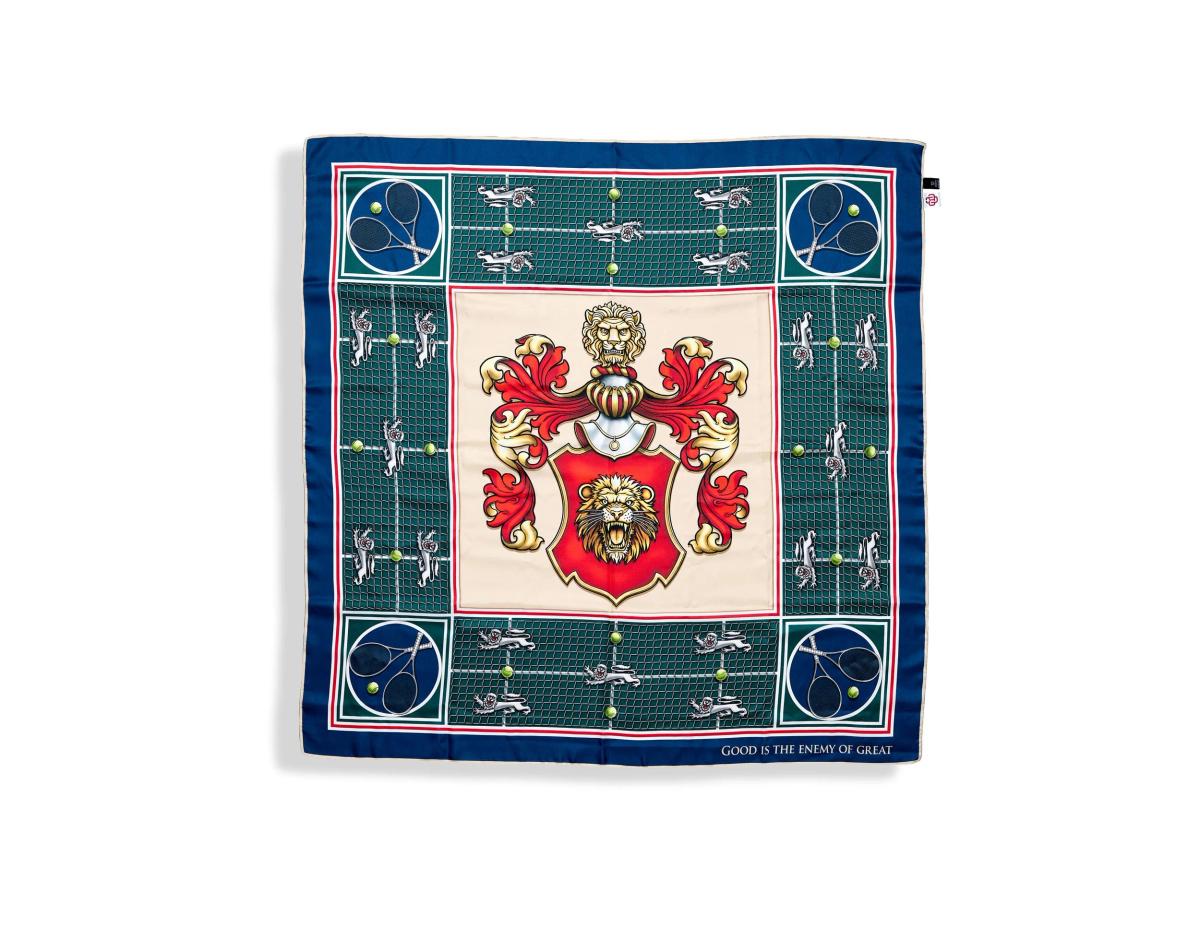
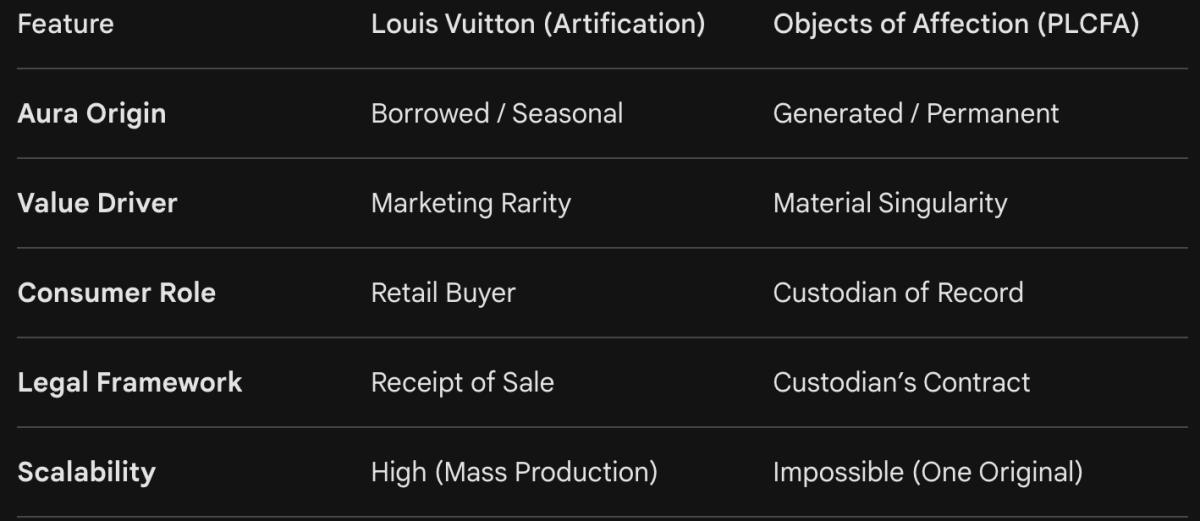
Compare this to what a Louis Vuitton customer acquires when they purchase a piece from Super Nature. They acquire proximity to Strelyaev-Nazarko’s aura, real, genuine, singular aura, but as a seasonal offering, produced in multiples, available through retail channels, and governed by no custodial framework whatsoever. The aura arrives pre-packaged and pre-priced. The buyer’s relationship to the artist’s consciousness is mediated entirely by the brand. There is no Custodian’s Contract. There is no Burden of Preservation. There is no mechanism by which the depth of the relationship between object and owner generates value over time. There is, instead, a receipt. And when the next season arrives, the brand will absorb a new aura, and the lamb in boots will be last year.
The luxury system, as currently constituted, values the appearance of aura. The PLCFA framework values its permanence. That distinction, which sounds philosophical, has profound practical consequences for what an object is, what it costs, what it demands of its holder, and what it leaves behind.
The good news for Nazar
We want to be precise here, because the Objects of Affection Collection is not in the business of simple critique. Simple critique is easy. The more difficult and more important work is to hold complexity honestly.
Nazar Strelyaev-Nazarko, by all available evidence, is doing extraordinarily well from this collaboration. And this matters. He is not a historical figure whose estate received nothing, like the Indigenous cultures whose patterns and iconography have frequently appeared in luxury collections with no credit, no compensation, and no conversation. In The Shadow of the Loom: Semiotic Enclosure, Racial Capitalism, and the Architecture of Post-Luxury Reparation", we documented how Gaston-Louis Vuitton’s personal collection of tribal masks and African artifacts fed directly into the brand’s design language, a history that makes the explicit, credited, celebrated collaboration with a living artist like Strelyaev-Nazarko look, by comparison, like a genuine advance in ethical practice.
He is credited. He is named. His work is photographed and published and his presence in the cultural conversation has almost certainly expanded dramatically in the days since the show. The art world knows his name now in a way that the art world did not before March 10th. His paintings, hung in galleries, shared on screens, made in studios, carry with them now the association of the Louvre, the Cour Carrée, the closing show of Paris Fashion Week. That association is not nothing. It is, in a real sense, the kind of platform that a Ukrainian painter born in 1998 simply cannot generate on his own, in a world where attention is the scarcest resource of all.
For an artist from Kharkiv, a city that has endured extraordinary violence and displacement since 2022, the opportunity to stand, through his painted lambs, in the Louvre, is not merely commercial. It carries weight that exceeds the transactional. There is something profound and right about a young painter from a city under siege finding his work on the bodies walking through the walls of the most visited cultural institution on earth. We do not minimize that.
So the artist is not harmed. The work is not diminished by being painted. The collaboration is credited and celebrated. When we examined the TÓPA x Polo Ralph Lauren collaboration in The TÓPA Intervention: A PLCFA Matrix Analysis of Moral Weight and Functional Endurance, we established the conditions under which a brand collaboration can generate genuine Moral Capital versus a simulacrum of inclusion. The Super Nature case occupies an instructive middle ground: the artist is genuinely served, and yet the structural question remains. Where, then, is the problem?
The asymmetry of what is taken
The problem is not in what is given to the artist. The problem is in what is taken from the culture.
Consider what a person purchasing a Louis Vuitton piece from the Super Nature collection is actually experiencing. They feel, encountering the painted lamb, a frisson of the unexpected, a quality they associate, rightly, with genuine artistic consciousness. They feel the weight of tradition: the Renaissance references, the Baroque tonality, the sense that someone who knows the history of painting is in conversation with it. They feel, perhaps most importantly, the authenticity of the hand, the trace of a specific human being making a specific mark in a specific moment. All of these feelings are real. They arise because Nazar Strelyaev-Nazarko is a genuinely skilled and singular artist, and his genuineness comes through.
But they are now being sold. Specifically, they are being sold at Louis Vuitton prices, by Louis Vuitton, to Louis Vuitton’s clientele. The feelings of authenticity, feelings that are, in their origin, entirely about an individual artist’s relationship with his own formation and practice, have been converted into a justification for the premium that LVMH charges for its products. This is the mechanism we described in "Debord’s Spectacle Meets Sholette’s Missing Mass" as the inversion at the heart of the Spectacle: the conversion of concrete labor, specific, embodied, irreplaceable, into abstract exchange value. The hand that painted the lamb is the concrete labor. The logo on the jacket is the abstraction that captures its value.
In artification, art becomes the source of brand differentiation, a way to restore the aura lost due to production logics. Art is used to restore the aura that mass production destroyed. The brand destroyed its own aura by scaling. It repairs that destruction by borrowing an artist’s aura.
The artist’s aura is, for the duration of the campaign, the season, the runway moment, used as a patch over the wound that capitalism inflicted on the brand’s claim to singularity. This is not a moral failing of Ghesquière, or of Strelyaev-Nazarko, or of anyone involved in this specific collaboration, which by all evidence was conducted with genuine care and genuine creative ambition. It is a structural condition of how luxury operates.
What happens to the artist’s aura, specifically, to the cultural space his work occupies, after it has been used in this way? The painting of a lamb in boots existed, somewhere in Strelyaev-Nazarko’s studio or imagination, before Louis Vuitton. It was a thing made by a specific consciousness for its own reasons, carrying its own meanings, operating within its own artistic logic. After Louis Vuitton, it is also, and perhaps now primarily, in the minds of most people who will ever encounter it, a thing that appeared on a runway at the Louvre in the spring of 2026. The brand context has arrived. And brand contexts, as we examined in "The White Wall Paradox: Quantifying Consumption in the Age of Aesthetic Neutrality", function as silencing technologies, stripping the artifact of its sociopolitical provenance, preparing it for conversion into a unit of financial and cultural exchange.
The Objects of Affection Collection calls this the Semantic Burden, the accumulated weight of commercial association that attaches to an artist’s vocabulary once it has been deployed as brand strategy. It does not destroy the work. But it changes the conditions under which the work is received. And those conditions matter, because reception is where meaning actually lives. The Dolce & Gabbana case, examined in "The Homogenized Portrait: Eurocentrism and the Myth of Universality", represents the extreme failure mode of this dynamic, where brand context so thoroughly overwrites cultural meaning that the original signals are rendered entirely illegible. Super Nature has not gone there. But the vector is the same.
The Murakami problem, twenty-three years later
Takashi Murakami is perhaps the clearest case study we have. When he collaborated with Louis Vuitton in 2003, it was genuinely novel and genuinely risky. Critics decried it as the ultimate commodification of art. His designs disrupted the austere legacy of the maison while catapulting him to global superstardom. The collaboration was a cultural event. It collapsed the distinction between fine art and commercial product in a way that felt, at the time, like a statement about the nature of both.
Twenty-three years later, Murakami and Louis Vuitton reunited at Art Basel Paris in 2025. And the question that hung over the reunion was whether the original provocation had survived its own success. Had the collaboration expanded the cultural space available to his art, or had it gradually, irreversibly, associated his visual vocabulary so completely with the luxury market that encounters with his work now arrive pre-conditioned by the memory of a $3,000 bag? We examined the Art Basel economy’s specific failure to protect auratic value in The Simulacrum of Status: Why Art Basel Value Resists the VIP Image", where we argued that the VIP Image, the viral documentation of consumption, actively dissolves the object’s aura by reducing the masterpiece to a prop in a theater of performative status.
This is what we mean when we say that Louis Vuitton takes the aura of the artist even when the artist is doing well. The aura is not destroyed. It is redirected. It is, in a precise economic sense, captured, transformed from an independent cultural force into a component of brand equity. The artist’s visual language becomes a signifier. And once a signifier has been sufficiently associated with a brand, it is very difficult for it to signify anything else first.
This degradation is precisely what we theorized in Hito Steyerl and the Phygital Counter-Strategy: Why Post-Luxury Value Resists the Poor Image" as the entropy of circulation, the process by which the repeated reproduction and redistribution of an image progressively evacuates it of the fidelity that constitutes its auratic claim. Steyerl calls the result the Poor Image. We call it the Semantic Residue: what remains of an artist’s visual language after the brand has finished with it.
The question for Strelyaev-Nazarko is not whether his paintings will retain their power, they will, because genuine artistic consciousness is genuinely resilient. The question is whether, in ten years, someone encountering a lamb in boots for the first time will think of Louis Vuitton before they think of the artist. And if they do, what has been lost? Not the painting. Not the artist’s career. But something more diffuse and harder to name: the painting’s ability to arrive in consciousness without a sponsor.
The Ukraine question
There is one dimension of this particular collaboration that neither the fashion press nor the academic literature on artification has adequately addressed, and which the Objects of Affection Collection feels compelled to name directly.
Nazar Strelyaev-Nazarko is a Ukrainian painter, born in Kharkiv in 1998. Kharkiv is Ukraine’s second-largest city. It has been within artillery range of the Russian border since February 2022. It has been bombed. Its artists, its institutions, its fabric of cultural life have been under sustained existential pressure for four years. That a young painter from this city, trained first in industrial design, who then traveled to Italy to study the tradition he loved, who makes work about memory and fantasy and the collision of history with the present, should find his paintings walking the runway at the Louvre in 2026 is, on one reading, a story of extraordinary resilience and cultural vitality.
On another reading, it is something more complicated.
The aura of a Ukrainian artist in 2026 is not just the aura of their individual practice. It carries with it, whether the artist chooses this or not, the weight of a people’s survival. There is something in Strelyaev-Nazarko’s work, the playfulness that sits alongside the historical heaviness, the boots on the lambs, the fantasy woven through the classical, that reads differently when you know it was made by someone whose city has been at war. That context is part of the aura. It is inseparable from it. This is precisely what we defined in "Biopolitics of the Artifact: How Functional Endurance Challenges Foucault, Groys, and the Archival Death Mandate" as the Biopolitics of the Artifact, the point at which a functional object absorbs the biological and psychological history of its maker. You cannot separate the lamb from the city it was conceived in.
And so when Louis Vuitton absorbs the aura of Nazar Strelyaev-Nazarko, what precisely is being absorbed? The Renaissance training, yes. The visual wit, yes. But also, inevitably, implicitly, the cultural weight of Ukraine at this moment in history.
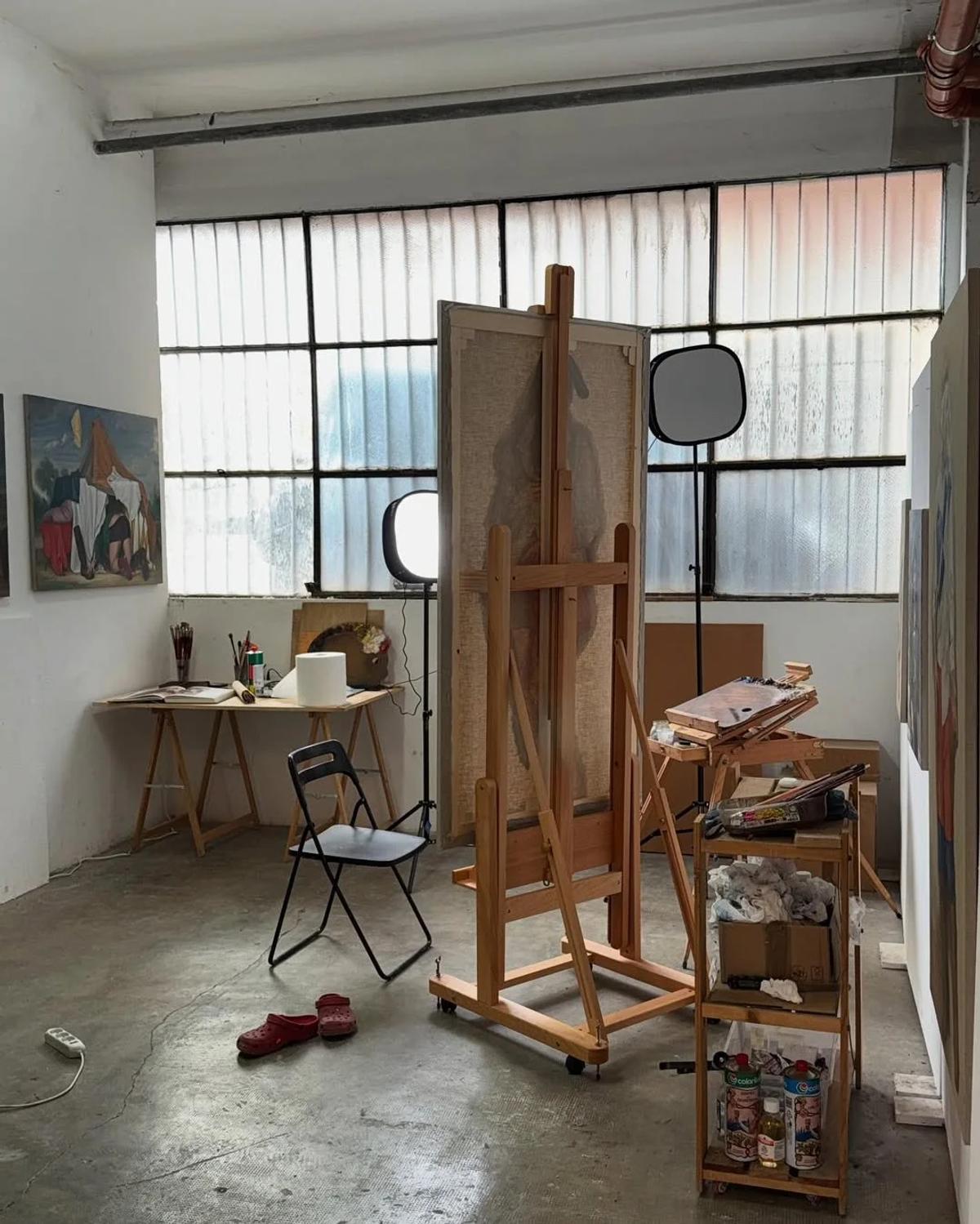
The brand’s association with this artist is an association with Ukrainian resilience, Ukrainian culture, Ukrainian survival. This is not a critique of the collaboration. But it is a question worth asking with absolute seriousness: is that weight something Louis Vuitton has considered carefully? Is it being carried responsibly? Or is it one more form of aura that the machine absorbs because it is valuable, without fully reckoning with what it means?
The Objects of Affection Collection does not claim to know the answer. We are naming the question because we have not seen anyone else name it. And we believe that the failure to name it is itself a form of the problem we are describing, the tendency of luxury discourse to aestheticize what it borrows, stripping away context in the process of making it beautiful. The full historical record of how this stripping operates, through what we call Semiotic Enclosure, is documented in "The Shadow of the Loom, which traces the specific mechanisms by which luxury converts living cultural systems into decorative motifs, severing the object from its origin in the process.
In PLCFA, context is never stripped. It is built into the object’s structure as immutable narrative provenance, the full story of what the object is, where it came from, and why it exists, recorded permanently and inseparable from the object’s identity. The Burden of Preservation that our custodians carry includes the burden of carrying that story accurately and completely. There is no seasonal update. There is no rebranding. The object knows where it came from, and so does the person who holds it.
Is it bad? Is it good? The honest answer
We have been asked, we are always asked, whether this is good or bad. The honest answer is that it is neither, and both, and the terms themselves are insufficient.
It is good that Nazar Strelyaev-Nazarko has a global platform. It is good that his singular sensibility, which is genuinely rare and genuinely beautiful, is now visible to people who would never have encountered it through the gallery system. It is good that this collaboration was credited, named, and conducted with apparent creative integrity. The best collaborations between fashion houses and artists remind us that commerce can aspire to something poetic, provocative, and enduring. We witnessed something of this quality when examining "Alan Vilar’s Embroidered Ephemera and the Calculus of Moral Weight", where we argued that slow, hand-intensive labor operating at the intersection of the biological and the beautiful represents the kind of Moral Weight that genuinely resists the Spectacle, not because it refuses commerce, but because it is structurally incompatible with the speed at which the Spectacle operates.
But it is also true that the primary beneficiary of the aura transaction is not the artist. The artist receives platform, compensation, and exposure, real and valuable things. The brand receives something more fundamental: the repair of its claim to singularity in an age when singularity is what justifies its price. Artification reinforces the idea of a better-than-ordinary brand whose price and symbolic power are undisputed. The painted lamb on the jacket is doing work that the leather and the stitching alone cannot do anymore. It is telling the buyer: this object was touched by someone who sees the world differently. You are not buying mass production. You are buying proximity to genuine vision.
That story is, in part, true. And it is, in part, a construction. And the ratio between those two things, the genuine and the constructed, is exactly what we at the Objects of Affection Collection are in the business of trying to hold honestly. The difference between what Louis Vuitton offers and what PLCFA offers is, at its most essential, the difference between borrowed and owned, between a brand wearing an artist’s consciousness for a season, and an object that carries its maker’s full humanity permanently, bound by contract, provenance, and the irreversible commitment of a custodian who understands that what they hold is not a possession but a responsibility. The legal architecture of that responsibility, and its roots in the 1971 Artist’s Reserved Rights Transfer and Sale Agreement, is examined at length in "Biopolitics of the Artifact.
What this means for the future of luxury
The deeper question this collaboration raises is one that the entire luxury industry is quietly circling: as artification becomes standard practice, as every major house routinely embeds artists in its collections, builds private museums, opens foundations, and names collaborators on every runway, does the strategy eventually eat itself?
To avoid becoming an ordinary behavior, a luxury brand must ensure that it maintains a corresponding rarity and does not overstretch collaborations. This is the industry’s own warning to itself. If every collection features an artist, the artist is no longer a signal of singularity. The aura is no longer exceptional. The strategy that repaired the wound of commoditization begins to look like commoditization of a different kind, the commoditization of artistic consciousness itself. We saw a precise case study of this dynamic in our examination of the Hermès Sylvania Victoria bag in "Hermès Unveils Biodegradable Mycelium-Based Handbag Collection: Is This True Sustainability or a Hyperreal Performance?" (where the aesthetic of biological authenticity was deployed without the structural commitment to it, producing what Baudrillard would recognize as a third-order simulacrum: a sign of sustainability with no referent in reality).
We are, we believe, approaching that moment with artification too. The strategy is becoming legible, visible even to consumers who have not read the academic literature, who feel at some level they cannot quite articulate that something is being performed. That the artist on the runway is a casting decision as much as a creative one. That the aura is pre-packaged. That the feeling of proximity to genuine vision is itself becoming a mass-produced commodity.
The Objects of Affection Collection has been arguing, across more than fifty published studies, that the answer is not artification but what we call Narrative Permanence, the slow, accumulated, practice-based authenticity that cannot be borrowed, cannot be seasonal, and cannot be replicated at scale.
The kind that comes from a practice knowing itself deeply enough, its materials, its values, its custodians, its complete intellectual architecture, that it does not need an artist to repair its relationship with singularity, because singularity is already what it is. The institutional conditions for this shift are explored in "The Institutional Pivot: How PLCFA Reconfigures Museology, Materiality, and the Decolonization of the Canon", where we argued that the museum itself must become the model, not the museum as a market instrument, but the museum as a site of genuine custodial responsibility, where objects are held rather than flipped, deepened rather than displayed.
As a member of Kate Raworth’s Doughnut Economics Action Lab, the Objects of Affection Collection positions this not merely as an aesthetic argument but as an ethical and economic one. The Doughnut framework asks us to meet human needs within planetary boundaries, to find ways of generating value that do not depend on extraction. Artification is, in a precise sense, a form of cultural extraction: the extraction of aura from artists and art traditions to fuel the growth of commercial entities whose model is fundamentally incompatible with the conditions that produce great art in the first place. The Moral Weight Per Material metric, developed in "The Anti-Speculative Cost: Why Art Basel Miami Needs the Moral Weight Metric, exists precisely to give the market a tool for evaluating the difference between objects that generate value and objects that merely borrow it.
PLCFA proposes a different model. One where value accretes rather than extracts. Where the custodian’s relationship to the object deepens over time rather than being replaced by next season’s collaboration. Where the artist’s consciousness is honored rather than borrowed. It is, in the precise sense in which we use the term, Post-Luxury. Not beyond luxury, but after the version of luxury that requires borrowed aura to sustain itself.
The lamb, again
We come back, as we always do at Objects of Affection, to the object itself.
A painted lamb on a plaid wool jacket, walking through a fabricated mountain range inside the Louvre. The lamb is wearing boots. It was painted by a young man from Kharkiv who studied industry and then fell in love with Baroque masters and found a way to hold both things at once, the functional and the beautiful, the historical and the dreamlike, the weight of a tradition and the lightness of a vision that is entirely his own. It walked a runway. It will hang in a wardrobe. Someone will reach for it on an autumn morning and feel, briefly, something. Something that is not quite art and not quite fashion and not quite history and not quite their own, but which arrives in them as real as anything they have felt.
That feeling is not nothing. It is, in fact, almost everything that luxury is supposed to provide.
The question the Objects of Affection Collection keeps asking is: whose feeling is it? Who made it possible, at what cost, and to what end? And does the person holding the jacket know the full story of what they are holding? The objects we have built our practice around, from the "Noir Sand Shark Mule to the Court of Tenacity to the Materiality of Resistance artifacts", are designed so that the answer to that question is always yes. The story is in the object. It cannot be removed.
We believe that the industry’s relationship with art will not mature until it is willing to answer those questions in public, not in press releases about creative collaboration, but with the same honesty and depth that the best artists bring to their work. Including painters from Kharkiv who put boots on their lambs, and mean it.
The aura transaction will continue. Louis Vuitton will find another artist next season, and the season after that. The machine is efficient and the results are often beautiful and the artists who participate often benefit genuinely. We do not pretend otherwise.
But the Objects of Affection Collection exists to articulate, with precision and without apology, what the transaction costs, culturally, semantically, philosophically, and to build, object by object, custodian by custodian, study by study, a practice that does not depend on it. From the theoretical ground established in "Finding the Heart: Objects of Affection Collection Comes Home to 469 Fashion Avenue" (which grounded PLCFA in the honest labor and craft legacy of the Garment District) to the studies you are reading now, we are building an archive. A practice where the aura is not borrowed but generated. Not seasonal but permanent. Not a marketing tool but a moral commitment, held by every person who has ever signed a Custodian’s Contract and understood, in the full weight of that understanding, what it means to be a steward of something singular.
That is Post-Luxury. That is PLCFA. And that is why a painted lamb in boots, however beautiful, is not enough.
Authored by Christopher Banks, Anthropologist of Luxury & Critical Theorist. Office of Critical Theory & Curatorial Strategy, Objects of Affection Collection.
RELATED OAC STUDIES
The following studies from the OAC archive speak most directly to the themes pursued in this paper. They are presented here as an invitation to follow the threads of this inquiry into adjacent territories of OAC's critical practice.
On the philosophy of aura, authenticity & the simulacrum
From the Aura to the Simulacrum: Benjamin, Baudrillard, and the Crisis of the Authentic
The Zero-Sum Aura: Why Digital Immortality Requires a Material Host
The Simulacrum of Status: Why Art Basel Value Resists the VIP Image
Hito Steyerl and the Phygital Counter-Strategy: Why Post-Luxury Value Resists the Poor Image
On Artification, Moral Capital & the limits of collaboration
Why Traditional Luxury's "Root Marketing" Fails to Purchase Moral Capital
On hand labor, Material Singularity & the ethics of making
Alan Vilar's Embroidered Ephemera and the Calculus of Moral Weight
From Function to Fissure: Collectible Design and the Weaponization of Material
The Material as Political Capital: Quantifying Moral Weight in the Anti-Market Materiality of PLCFA
On custodianship, stewardship & the anti-speculative object
The Anti-Speculative Cost: Why Art Basel Miami Needs the Moral Weight Metric
On cultural appropriation, semiotic enclosure & luxury's extraction history
The Homogenized Portrait: Eurocentrism and the Myth of Universality at Dolce & Gabbana
The White Wall Paradox: Quantifying Consumption in the Age of Aesthetic Neutrality
On the future of the luxury institution
Finding the Heart: Objects of Affection Collection Comes Home to 469 Fashion Avenue