
The Architecture of Intent
A Critical Lexicon
This collection of studies is the intellectual architecture of Post-Luxury Conceptual Functional Art (PLCFA).
The true artistry of this Maison resides not in the finished form, but in the rigorous thinking that precedes it. These essays serve as the conceptual foundation for PLCFA, using a critical lens to interrogate cultural phenomena, art history, and consumer paradigms—analyzing everything from the ephemeral spectacle of luxury to the pure architectural rigor of abstract principles.
This is an invitation into the workshop of the mind. By sharing this process, we validate the necessity of a new category of value and invite you toward a well-considered life, one founded on true craft, uncompromising narrative, and durable meaning.
New to PLCFA? Begin with Essential Reading below.
Exploring a specific area? Navigate by category.

The Unasked Question Was Always Structural: Denise Ferreira da Silva, the Kantian Program, and the Affective Architecture of Liberal Capital
The Post-Luxury Conceptual Functional Art (PLCFA) framework directly dismantles the historical, post-Enlightenment fiction that separates intellect from affect, framing this Kantian bifurcation not as a mere philosophical inheritance but as the core operational grammar of liberal capital. For generations, the figure of the public intellectual functioned as an authorized switchboard within legacy media’s affective infrastructure, carefully translating raw social affect—grief, rage, and collective aspiration—into sanitized, institutionalized discourse that the political field could safely accommodate. This conversion mechanism conferred a localized, Zero-Sum Aura upon approved platforms, rendering alternative, unmanaged feelings structurally illegible. By hollowing out this translational bottleneck, contemporary social media does not simply degrade public discourse; it perfects the apparatus of affective capture, extracting economic and political value directly from the pre-intellectual state of the Affective Object at the source.
Against this frictionless landscape of hyperreal consumption and systematic extraction, the PLCFA framework introduces the Sovereign Object as a material strategy of absolute structural resistance. Unlike the Hollowed Object, which is systematically evacuated of internal specificity to circulate purely as brand affect or a digital sign, the Sovereign Object embeds a material and historical density so irreversible that it explicitly declines to participate in capital's commodification loop. It demands what Denise Ferreira da Silva opens toward: a form of knowledge production and object-making that refuses to pay the Kantian toll of institutional conversion. By asserting an uncompromising Material Singularity and Narrative Permanence, such practices—ranging from long-form critical studies isolated from algorithmic optimization to rough-hewn, sedimentary physical works—do not merely critique the architecture of liberal capital from within its own terms; they establish an anti-extractable domain that preserves its own autonomous reality.
INSTITUTIONAL LEXICAL HIJACKING: How Mass-Market Luxury Launders Post-Luxury Vocabulary, and What the Courts Have Already Confirmed
The rapid commercialization of the "monastic" design trend has turned a vocabulary of spiritual and material refusal into a shallow corporate aesthetic. Today, fast-fashion entities and mass-market luxury brands readily deploy terms like "honest friction" and "craft heritage" to market injection-molded plastics, veneer facades, and highly exploitative labor models. This structural mechanism—defined as Institutional Lexical Hijacking—is the deliberate extraction of a sovereign critical vocabulary by organizations whose material realities fundamentally contradict the language they use. It represents the terminal expression of a market that capitalizes on the appearance of integrity while systematically hollowed out from within.
This study moves beyond abstract criticism to examine concrete legal and regulatory precedents across three major jurisdictions. Between 2023 and 2026, European courts and antitrust authorities permanently exposed this systemic disconnect, placing prominent luxury fashion houses under judicial administration for severe supply chain exploitation while simultaneously investigating fast-fashion platforms for predatory design framework mechanisms. By integrating this definitive evidentiary record with the Post-Luxury Conceptual Functional Art (PLCFA) framework, this paper details exactly how the vocabulary of material integrity is commercialized as a reputational asset class—and why precise structural theory remains our only line of defense.
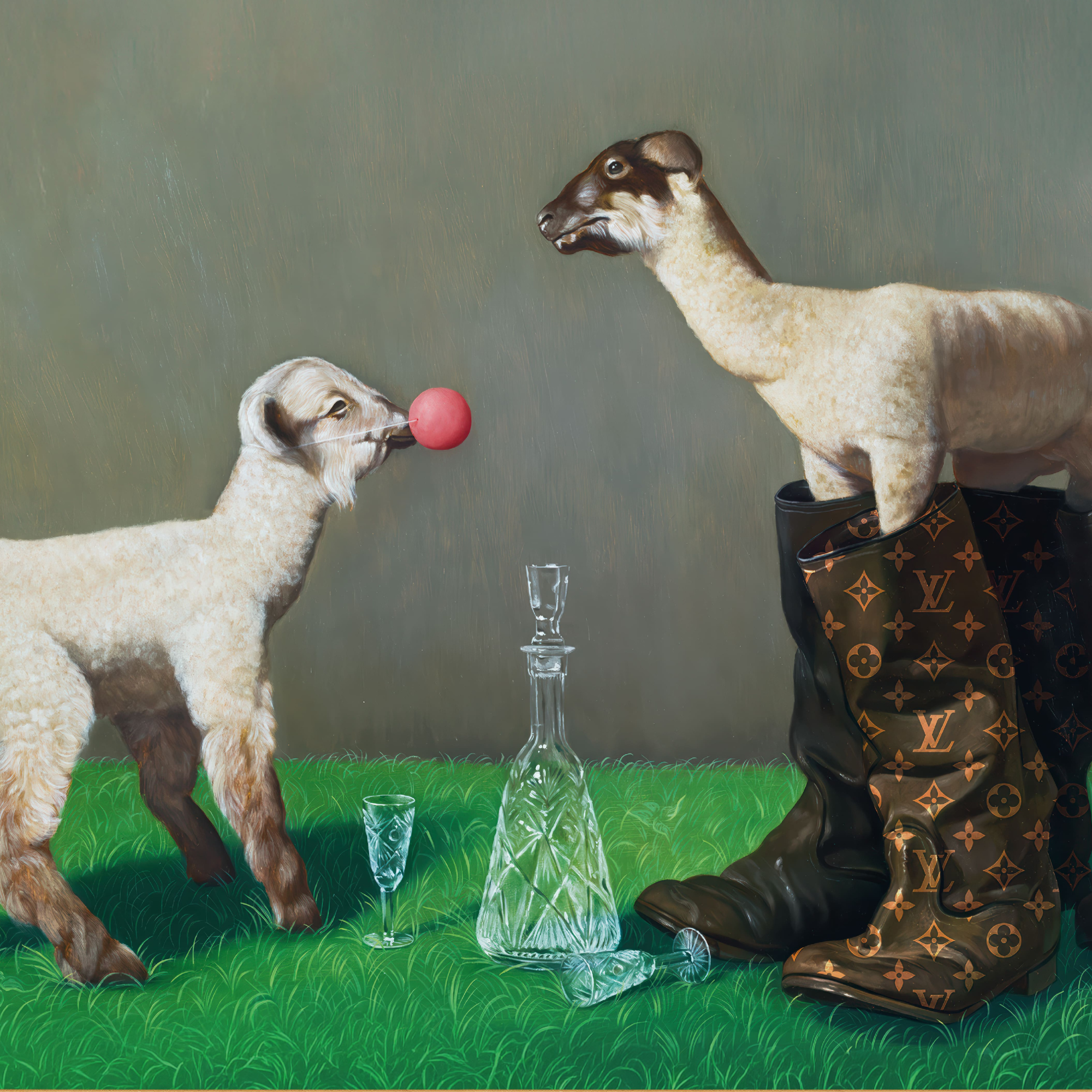
THE AURA TRANSACTION: On Louis Vuitton’s Super Nature, Nazar Strelyaev-Nazarko, and the Ethicsof What Gets Absorbed
On the evening of March 10th, 2026, the Cour Carrée of the Louvre became a fabricated mountain range where Louis Vuitton models climbed through the mist wearing hand-painted lambs in boots. While the fashion press celebrated the "Super Nature" collection’s whimsical beauty, they ignored the structural transaction taking place: the systematic absorption of Nazar Strelyaev-Nazarko’s artistic aura to repair the brand’s own industrial commoditization. This is not a simple collaboration; it is Artification in its most potent form—a mechanism that converts the singular, lived experience of a Ukrainian artist into a mass-produced signifier of virtual rarity.
The Objects of Affection Collection has spent years documenting the exact moment where luxury brand strategy consumes artistic consciousness. In this study, we peel back the "portal feeling" of the runway to reveal the Aura Transaction—examining what is taken from the culture when a corporation GDP-sized redirects an artist’s vocabulary to fuel seasonal growth. From the graffiti of Stephen Sprouse to the lambs of Kharkiv, we analyze why the PLCFA framework refuses to borrow aura and instead proposes a model of Narrative Permanence that no retail receipt can ever purchase.
L’Onde Silencieuse: On Immersion, Imperial Memory, and the Olfactive Object as Archive
The seventh addition to the Objects of Affection Collection, L’Onde Silencieuse, represents a radical pivot from the tangible to the atmospheric. Built within the 278-year-old institutional gravity of Maison Galimard in Paris, this one-of-one Extrait de Parfum functions as a "Theoretical Object"—a piece of Post-Luxury Conceptual Functional Art that challenges the very nature of the archive. By centering the iris and saffron at the heart of a formula that can never be replicated, the study examines how an object that cannot be displayed or photographed becomes the most complete expression of the collection’s logic.
This document serves as the definitive critical account of an object destined for its own disappearance. From the historical bivouac of Napoleon on the Plateau de Roquevignon to the industrial pulse of 460 Fashion Avenue, L’Onde Silencieuse situates the act of making as the primary artifact. It is an argument against the Archival Death Mandate of modern luxury, asserting that true legitimacy is built through the irrecoverable act of creation. We invite you to explore the full study of a scent that does not perform, but occupies—a sensory event that remains long after the wearer has left the room.

The Algorithm of the Hand: Re-Centering Human Imperfection and Labor as PLCFA's Ultimate Materiality in the Age of AI Perfection
The Death of the Smooth: We are currently witnessing the seismic rise of the "Smooth Society," where AI perfection and digital twins have become the ultimate benchmarks of value. This transition represents a fundamental hollowing out of the human subject, replacing the "noise" of imperfection with frictionless, algorithmic production. In this landscape, the unblemished copy is hailed as the pinnacle, yet it leaves an ontological void where the moral weight of human labor once resided.
The Radical Gesture: Resistance lies in the antithesis—the visible, intentional struggle of the human hand. By examining the industrial alchemy of Carol Christian Poell and the "embroidered ephemera" of Alan Vilar, this study introduces the Moral Weight Per Material (MWPM) index. We argue that in an era of hyper-connected intelligence, the only true luxury is the "Scarred Object": a physical record of narrative permanence that refuses the erasure of biological and psychological history.
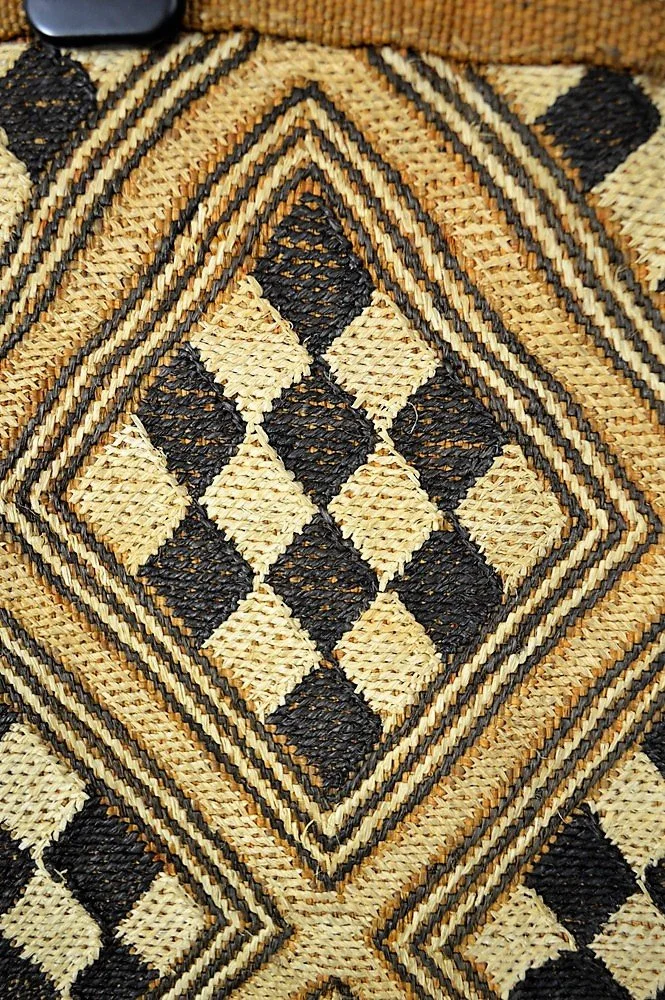
THE SHADOW OF THE LOOM: Semiotic Enclosure, Racial Capitalism, and the Architecture of Post-Luxury Reparation
The global luxury apparatus currently stands at a precipice defined by a second great detachment, where the financialized economy of the 21st century has alienated cultural signifiers from their ancestral origins. This study investigates the mechanism of semiotic primitive accumulation, a process where the multibillion-dollar valuations of European luxury brands are derived from the uncompensated enclosure of aesthetic commons. From the textile archives of the Kuba Kingdom to the sacred scripts of the Ekpe society, the industry draws its vitality from the Global South to fuel a Pattern Premium that values a mass-produced, vinyl-coated simulacrum at ten times the price of its handcrafted, culturally sacred original.
We must move beyond the critique of appropriation toward a definitive model of Reparative Stewardship. The "Object of Affection" in 2026 is one that acknowledges its debt, pays its rent, and heals the wound of its making through fractional repatriation. By utilizing blockchain-powered smart contracts to route heritage dividends back to originating communities, we can illuminate the Artistic Dark Matter that currently stabilizes the luxury galaxy. This report serves as a Truth and Reconciliation Commission for the world of objects, clearing the ground for a new architecture of value defined not by material exclusivity, but by the ethical depth of its provenance.
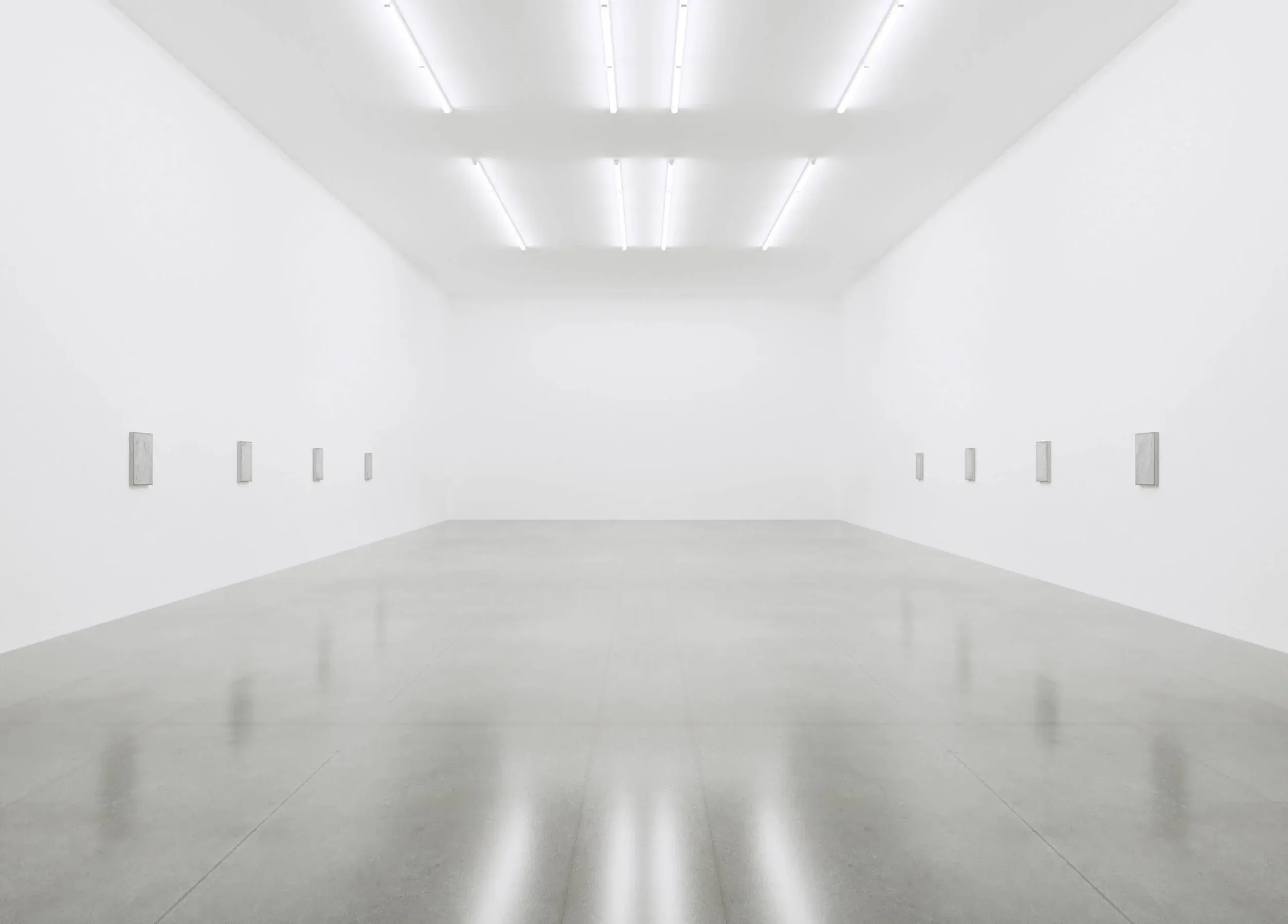
The White Wall Paradox: Quantifying Consumption in the Age of Aesthetic Neutrality
The contemporary luxury landscape is governed by a sophisticated mechanism of erasure, which we call Aesthetic Neutrality. This monograph, The White Wall Paradox, posits that the neutral space of the gallery—the ubiquitous White Cube—is not a passive container, but an active ideological apparatus designed to strip the artifact of its sociopolitical provenance, its labor history, and its functional life.
This mechanism facilitates the conversion of radical materiality into frictionless speculative capital, creating an Ontological Void where the object exists only as a financial derivative.
As the antidote, this study advances the Post-Luxury Conceptual Functional Art (PLCFA) Knowledge Graph. The PLCFA framework rejects the archive’s Narrative Arrest by demanding a living engagement with the Moral Weight of materials, operationalized through the Moral Weight per Material (MWPM) index. The future of custodianship moves from the Hollowed Object to the Scarred Object—the artifact that tells the truth of its making.

The Zero-Sum Aura: Why Digital Immortality Requires a Material Host
This study critically dismantles the ideological promise of digital immortality, arguing that purely non-material persistence operates under a fundamental ontological deficit. Tracing the crisis from Walter Benjamin's critique of the withering Aura through Jean Baudrillard’s Pure Simulacrum, we establish the condition of the Zero-Sum Aura: any gain in digital reproducibility is met with a corresponding, systemic collapse in the artifact's singularity and intrinsic worth. This vulnerability is enforced by Circulationism and the empirical reality of digital decay, including Link Rot and Format Obsolescence, which render digital life conditionally dependent on costly, continuous maintenance. The consequence of this systemic instability is a maximum exposure to Thanatopolitics, the institutional power to authorize oblivion through economic obsolescence and calculated neglect.
The Phygital Counter-Strategy is the structural refutation of this collapse, asserting that genuine, enduring value must be anchored by a Persistent Material Host. Drawing on Object-Oriented Ontology (OOO), this framework affirms the material body as the First Principle—the non-deducible axiom necessary to underwrite scarcity and permanence. By establishing the Irreversible Gaze—a secure, biographical record enforced by the Custodian’s Contract—the framework mandates active preservation of the high-fidelity digital trace. Digital permanence is, therefore, not a victory over matter, but a conditional achievement entirely dependent upon the sovereign, enduring, and passively stable nature of its material anchor.
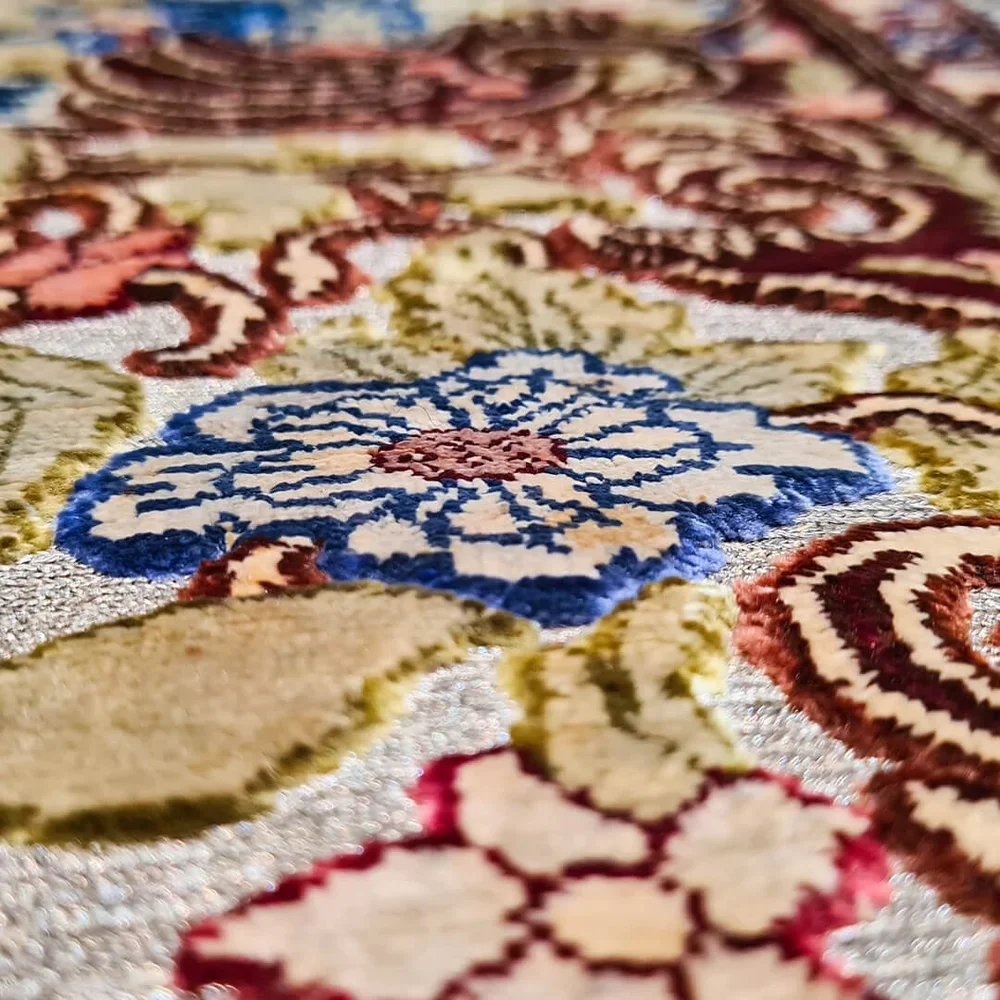
The Material as Political Capital: Quantifying Moral Weight in the Anti-Market Materiality of PLCFA
The contemporary institutional landscape is marked by a critical Institutional Pivot, shifting valuation away from purely aesthetic criteria toward objects whose verifiable political provenance secures their cultural worth. This structural change is necessitated by the inherent moral deficits of materials deeply implicated in the entrenched regime of Speculative Capital (SC)—a system that systematically prioritizes the liquidity and standardization of materials like industrialized oil paint and monumental marble. This study analyzes how the SC economy relies on obscuring labor histories and prioritizing financial value, thus creating a systemic conservatism that the new cultural paradigm must structurally resist.
As the definitive antithesis to this system, Post-Luxury Conceptual Functional Art (PLCFA) deploys historically marginalized materials embedded with verifiable records of labor, political trauma, or ideological dissent, such as heritage silk, reclaimed institutional books, and scarred tarps. To quantify this resistance, we introduce the proprietary metric Moral Weight per Material (MWPM), which functions as the object's quantifiable ethical and political currency. By certifying the object's intrinsic worth outside the cyclical demands of high-liquidity markets, the MWPM framework provides a necessary structural defense that systematically resists market neutralization, confirming that Moral Weight per Material is the definitive, anti-speculative Political Capital.
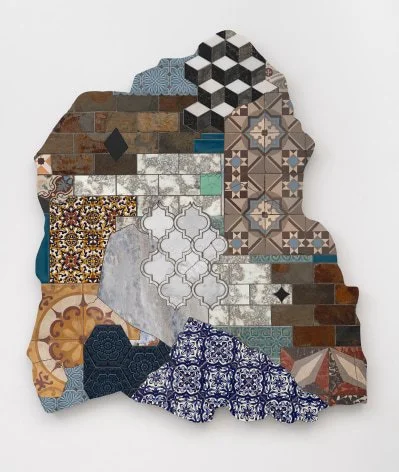
Debord's Spectacle Meets Sholette's Missing Mass: How Artisan Activism Forges Moral Capital and Revalues Luxury
The central thesis argues that Artisan Activism is the required political détournement (subversion) that compels the invisible mass of surplus labor to become radically visible within the finished object. This conscious act of ethical commitment transforms the manufactured material culture into Moral Capital, a counter-currency that resists the Spectacle's structural demand for reification, abstraction, and financial fluidity. The philosophical necessity for this approach lies in resolving pervasive ontological insecurity: the debilitating crisis where intensive, highly skilled labor fails to achieve stable, commensurate economic valuation.
The Spectacle, while presenting itself as the source of all fulfillment, perpetually promises authentic social experience, community participation, and genuine fulfillment, yet consistently delivers only deception always compensated by the promise of a new deception. This profound structural failure creates a discernible vacuum within contemporary consumption—a hunger for narrative depth, tangible connection, and permanence. This vacuum is precisely what the Post-Luxury Conceptual Functional Art (PLCFA) framework is designed to satisfy, positioning the increasing demand for PLCFA as an observable economic symptom resulting from the Spectacle's foundational philosophical and social bankruptcy.