The Unasked Question Was Always Structural: Denise Ferreira da Silva, the Kantian Program, and the Affective Architecture of Liberal Capital

Speculating on an Unasked Question: e-flux Journal #163, May 2026

Denise Ferreira da Silva's Speculating on an Unasked Question (e-flux Journal #163, May 2026) is not a eulogy for the public intellectual. It is a structural diagnosis. In this study, Objects of Affection Collection reads Ferreira da Silva's text through the Post-Luxury Conceptual Functional Art (PLCFA) framework to identify what her essay exposes and what it leaves structurally open: namely, that the Kantian bifurcation of intellect and affect is not merely a philosophical inheritance but the operational grammar of liberal capital; and that contemporary social media, far from replacing the hyperreal consumer landscape of legacy media, has perfected its affective mobilization apparatus. Ferreira da Silva's essay, situated within e-flux #163's broader interrogation of intellectual labor, arrives at the edge of the Hollowed Object and stops. PLCFA crosses it. Active lexicon for this study: Hollowed Object, Semantic Burden, Affective Object, Spectacle of Dissent, Hyperreal Consumer Landscape, Zero-Sum Aura, Structural Captivity.
The Field That Discourse Built
There is a question Denise Ferreira da Silva does not ask in Speculating on an Unasked Question. This is not an oversight. It is the argument.
Her e-flux essay opens on a figure: the public intellectual of the post-Enlightenment political field, the one who played (her verb) in the ethical corner, whose favorite toy was discourse, whose best playground was legacy media. This figure served as moral consciousness, spoke truth to power, and acted as an agent of truth. What Ferreira da Silva does not immediately name is the structure that required this figure to exist: the framework that assigned to discourse, to the managed movement of ideas through approved channels, the entire weight of political legitimacy. She circles it. She names its operations. She identifies its beneficiaries. But the framing question: what does a system need from its intellectuals in order to keep functioning as itself, remains, deliberately, unasked.
The Post-Luxury Conceptual Functional Art framework names it directly: Structural Captivity. The intellectual, in the liberal post-Enlightenment order, was never free to critique the structure from outside it. The intellectual was constituted by the structure. The platforms of discourse: the newspaper column, the radio broadcast, the university press review, were not neutral conduits for truth. They were the load-bearing walls of the architecture. To speak through them was already to accept the terms of the architecture's own self-legitimation.
Ferreira da Silva's essay, read this way, is not about the end of the public intellectual. It is about the moment when the architecture's concealment becomes visible: when the walls stop looking like walls and start looking like ruins.
The public intellectual did not speak truth to power. The public intellectual was the form through which power authorized the concept of truth to speak on its behalf.
Kant's Bifurcation and Its Political Afterlife
The philosophical engine beneath Ferreira da Silva's argument (and beneath the entire post-Enlightenment political field she describes) is the Kantian program: the rigorous separation of intellect and affect as distinct faculties of the human subject. In Kant's architecture, the intellect reasons toward universal law; affect, feeling, and sensation belong to the lower registers of human experience: necessary, perhaps, but requiring governance by reason if the subject is to achieve moral autonomy.
This bifurcation is not merely epistemological. It is political. As Ferreira da Silva has argued across her major works: from Toward a Global Idea of Race (2007) through Unpayable Debt (2022), the Kantian subject, the self-determining, self-transparent subject of liberal political philosophy, is constructed precisely against those bodies and populations designated as governed by affect rather than intellect. The "transparent I" of post-Enlightenment Europe requires, as its constitutive outside, the "affectable I": the subject whose interiority is subject to external forces, whose affect does not elevate but disqualifies. Race, in this framework, is not an accidental addition to the liberal subject: it is one of its structural conditions.
What Speculating on an Unasked Question does, with characteristic precision, is show that the legacy media platforms through which the public intellectual exercised moral consciousness were not neutral spaces of reason. They were the institutional apparatus that regulated the passage between affect and intellect: that sorted which feelings were translated into legitimate political discourse and which were not. The public intellectual's role was to perform this translation: to take the affect circulating in the social body and render it into the terms that the liberal political field could accommodate.
This is what OAC's Baudrillard study identifies as the simulacral function of discourse: not the representation of reality but the production of the terms within which reality can be represented. The Simulacrum of Luxury study established that the hyperreal landscape operates by substituting the sign of a thing for the thing itself. The Kantian program in liberal political philosophy performs the same operation on affect: it substitutes the intellectualized form of affect (the argument, the position, the published essay) for the affect itself. The raw, unmanaged feeling is always already too dangerous.
The Kantian bifurcation did not describe the human subject. It authorized a management protocol for determining whose effect would receive institutional translation and whose would not.
Legacy Media as Affective Infrastructure
When Ferreira da Silva identifies legacy media as the public intellectual's best playground, she is making a precise institutional claim. Legacy media: the newspaper of record, the radio program, the television editorial, the journal of ideas, was not merely a distribution network for intellectual output. It was the affective infrastructure of the liberal political order: the apparatus through which affect was first captured, then processed, then returned to the social body in a form the political field could absorb without disruption.
The public intellectual was the switchboard in this infrastructure. She received the unprocessed social affect: the rage, the grief, the aspiration, the fear, and converted it into discourse: arguable propositions, publishable positions, debatable claims. Byung-Chul Han's diagnosis, in OAC's Aesthetics of Endurance study, of the Hyperattention economy is the contemporary sequel to this operation: the infrastructure has changed, but the function has not. What was once managed through the editorial column is now managed through the algorithm. Both regulate what Walter Benjamin identified as the aura of the political moment: the sense that what is happening here is real, urgent, consequential (by controlling the channels through which that sense can be communicated).
OAC's Benjamin study established that mechanical reproduction does not destroy aura: it transfers aura's function from the singular object to the apparatus of distribution. The legacy media column had aura not because the ideas it contained were singular but because the apparatus that produced and distributed it (the newspaper's masthead, the broadcaster's authority, the journal's editorial board) conferred a Zero-Sum Aura: the sense that this argument, in this outlet, at this moment, was the legitimate form of public thought.
What Ferreira da Silva identifies in her essay is the exhaustion of this transfer. Legacy media no longer commands the auratic authority to convert affect into legitimate discourse. The infrastructure has not disappeared: it has been hollowed. The masthead remains; the transfer function is broken.
Legacy media was not a forum for ideas. It was a conversion mechanism: the apparatus that translated social affect into the forms of argument the liberal political field could safely accommodate.
Social Media and the Perfection of Affective Capture
The error made by most critics of the attention economy is to treat social media as a replacement for legacy media: a degraded, accelerated, defocused version of the same function. This is the reading that produces anxious calls for a return to long-form discourse, to editorial gatekeeping, to the slow deliberation of the public intellectual.
What Ferreira da Silva's essay, read against the PLCFA framework, reveals is that social media is not a replacement. It is perfection. Social media does not merely accelerate the affective capture that legacy media performed: it removes the translation step. The public intellectual was required because the Kantian program mandated that affect pass through the form of intellect before it could enter the political field. Social media eliminates this requirement. Affect enters the political field directly, immediately, and at scale: without the bottleneck of the public intellectual's conversion function.
This is the unasked question that Ferreira da Silva circles: if social media has removed the need for the public intellectual as affective translator, what does the Hyperreal Consumer Landscape (the system that still requires affect to serve capital) do with the raw affect now circulating without institutional mediation? The answer, confirmed by five years of social media political economy, is: it captures it at the source. The attention economy does not simply commodify attention: it commodifies affect before it has been rendered into arguable form. The Affective Object (the post, the image, the viral outrage, the trending grief) is not a degraded discourse. It is affect productively retained in its pre-intellectual state, where it generates the maximum extractable value for the platform and for the political formations the platform serves.
Guy Debord's Spectacle identified the condition in which social life itself becomes a collection of spectacles: representations that have severed their connection to living experience. OAC's Debord study established that the Spectacle of Dissent is the specific form the Spectacle takes when it captures resistance: the moment when dissent itself becomes a product, a brand, a content category. Ferreira da Silva's diagnosis of the public intellectual's obsolescence is, in PLCFA terms, the story of how the Spectacle of Dissent absorbed the entire apparatus of the public intellectual (the essay, the argument, the moral position) as content.
Social media did not kill the public intellectual by displacing discourse. It killed the public intellectual by making the translation step: the conversion of affect into arguable form, structurally unnecessary and economically irrelevant.
The Kantian Program as Capital Infrastructure
The deepest structural argument in Ferreira da Silva's corpus (not stated directly in the e-flux essay but audible beneath it) is that the Kantian program is not merely philosophical. It is a capital infrastructure. The bifurcation of intellect and affect authorized a specific economy of value: intellectual labor commands compensation, recognition, and institutional legitimacy; affective labor (the care work, the domestic work, the community-sustaining work) is designated as natural, pre-political, and therefore largely uncompensated. This is not an accident of the Kantian inheritance. It is its design.
The public intellectual, in this economy, was compensated not merely for the quality of her ideas but for performing the specific function of converting unproductive affect into productive discourse. Her labor was, in Gregory Sholette's terms, the dark matter of the political field: the invisible labor that made the visible stars of ideology legible. OAC's Sholette study established that dark matter is not marginal to the system: it is the gravitational force that holds the system's visible objects in their orbits. The public intellectual was dark matter made visible: the conversion labor that the system required but could not fully acknowledge without exposing the architecture it was designed to conceal.
When social media eliminates the conversion step, it does not free itself from capital: it delivers affect directly to capital without the cost of intellectual mediation. The platform extracts value from unprocessed data at a fraction of the cost that legacy media paid for its managed translation. This is what the Labor Density framework identifies as the critical distinction: the PLCFA object embeds labor so densely, so specifically, and so irreversibly that it resists extraction. The social media post has zero Labor Density: it is produced instantly, consumed instantly, and replaced instantly. Its effective charge is real, but its material resistance is nil.
The Semantic Burden of the public intellectual's essay (the accumulated responsibility of the text to mean something that outlasts its moment) was precisely what capital found expensive. The post has no Semantic Burden. It is designed to expire. And in its designed expiration, it produces the maximum extractable affective value for the platforms that host it.
The Kantian program was not just a philosophy. It was the original contract between intellectual labor and liberal capital: a contract that social media has now renegotiated at the expense of the intellectual and the profit of the platform.
The Gramsci Problem and the Organic Intellectual
Ferreira da Silva's e-flux essay is illustrated with a photograph of Antonio Gramsci: not incidentally. Gramsci's concept of the organic intellectual, the figure who emerges from within a class or social formation to articulate its worldview, represents the post-Enlightenment political field's most sophisticated attempt to theorize an intellectual function that is not merely in service of the dominant class.
But the Gramscian organic intellectual is still subject to the Kantian program's fundamental requirement: that affect be translated into arguable, publishable, institutional form before it can exercise political force. The organic intellectual of the working class still speaks through newspapers, manifestos, and party congresses. The architecture of the liberal political field absorbs the organic intellectual the same way it absorbs all intellectual labor: by requiring the conversion of affect into discourse as the price of political legibility.
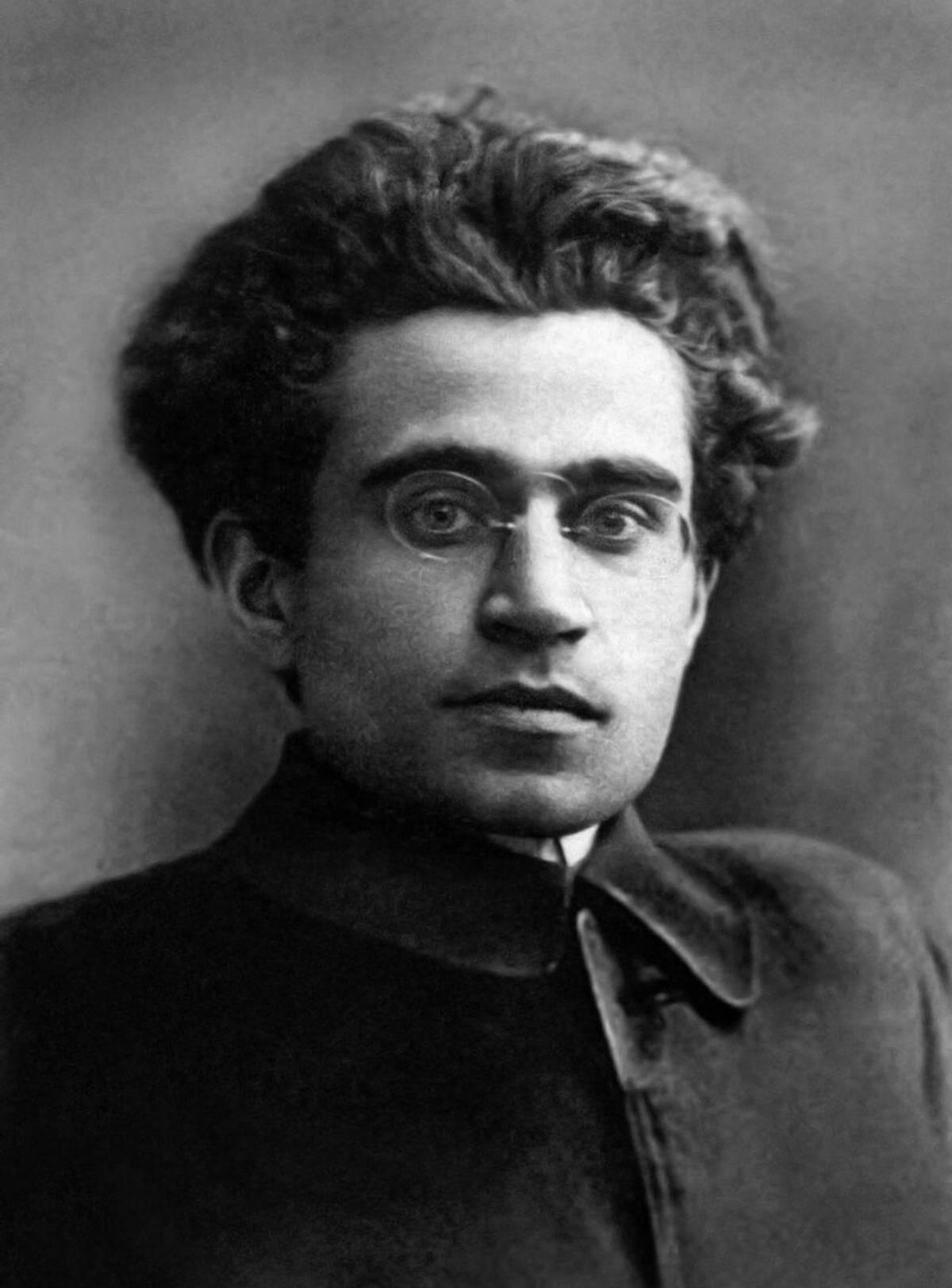
What Ferreira da Silva's unasked question opens toward is the possibility (and the crisis) of an intellectual function that does not accept this toll. The affirmation of raciality's constitutive role in the post-Enlightenment subject is not merely an intellectual position to be debated: it is a structural claim about who the architecture was built to serve and who it was built to exclude. Gayatri Spivak's formulation: can the subaltern speak, names the same problem from a different angle: the architecture of legitimate discourse is itself one of the mechanisms of subaltern constitution. To speak through the architecture is already to have been partially absorbed by it.
In PLCFA terms, this is the Structural Captivity of the intellectual function: the condition in which the tools available for critique are themselves products of the structure being critiqued. Ferreira da Silva's response (across her film practice, her relational artwork, and her poethical reading collaborations with Valentina Desideri) is to seek forms of knowledge production that operate outside the requirement of conversion. That seeks what she has called, after Sylvia Wynter, a representation that is not prisoner to the structure's terms.
The organic intellectual was still required to pay the Kantian toll: to convert class affect into publishable discourse before it could enter the political field. The architecture collected its fee regardless of whose affect was being processed.
The Affectable I and the Post-Luxury Object
Ferreira da Silva's concept of the affectable I (the subject designated by the liberal political architecture as governed by affect rather than intellect, and therefore ineligible for full political subjecthood) has a precise structural parallel in the PLCFA critique of the Hollowed Object: the object that has been drained of its material and historical specificity and reduced to its sign value (the logo, the price point, the brand affect) while its internal content has been evacuated.
The transparent I of post-Enlightenment philosophy (self-determining, self-legislating, universalizable) corresponds to the luxury object whose brand claim to uniqueness, heritage, and timelessness is legible across all markets. The affectable I (who cannot legislate for herself, whose interiority is subject to external forces, who is constituted by conditions rather than constitution) corresponds to the object whose material reality exceeds its sign: the hand-sewn seam, the mineral weight, the sedimentary accumulation of process. OAC's study on Kathleen Ryan's Bad Fruit series at TEFAF 2026 established that Sedimentary Objects (objects whose materiality cannot be flattened into a digital image) occupy the same structural position as the affectable I: they are disqualified by the dominant valuation system precisely because they resist the system's terms of legibility.
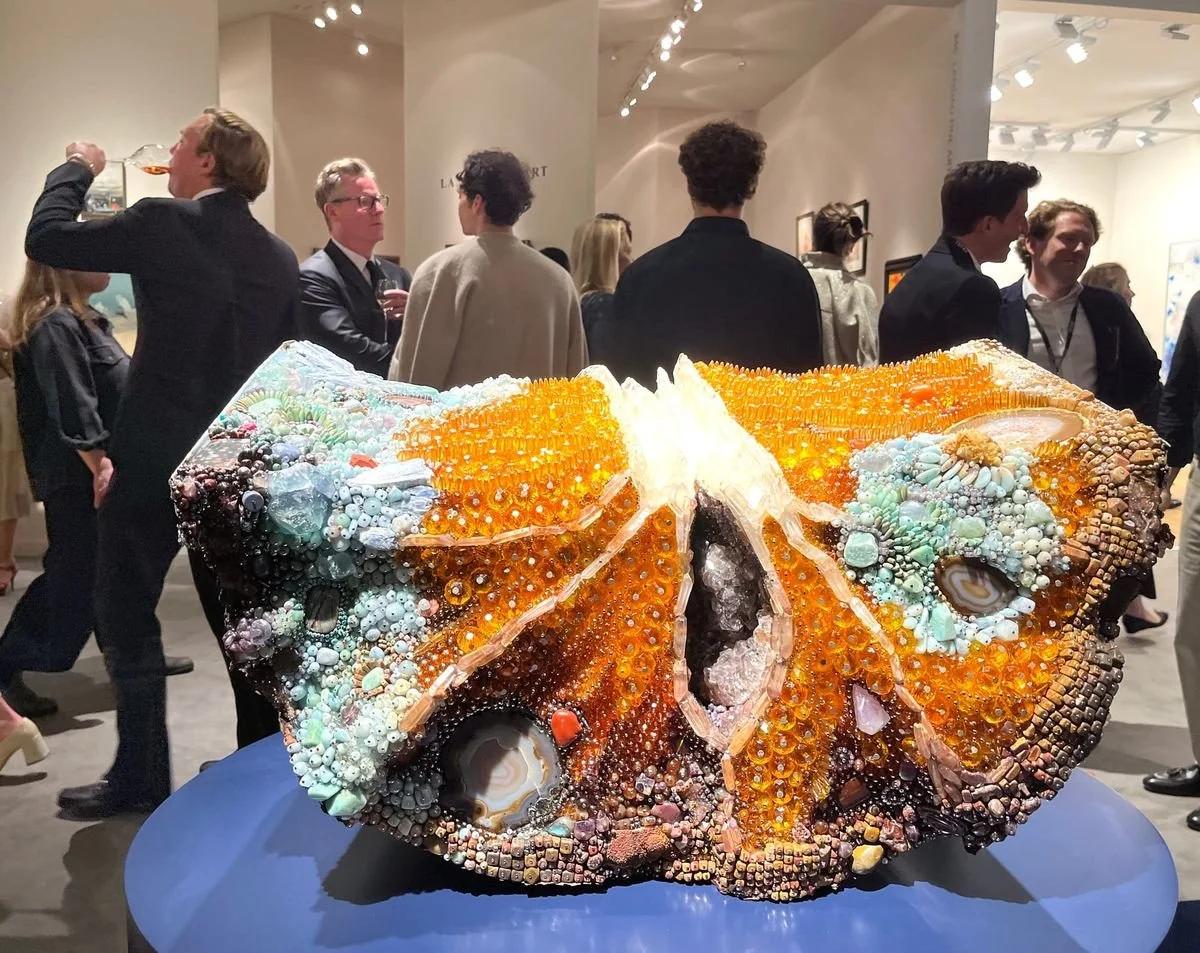
The PLCFA framework does not simply rehabilitate the affectable I as a sympathetic figure. It identifies the affectable I's condition (the condition of being governed by material specificity, by situatedness, by the irreversibility of accumulated history) as the condition of genuine Narrative Permanence. The transparent I's universalizability is purchased at the cost of emptying out everything that makes a subject or an object singular. The Material Singularity that OAC's framework places at the center of authentic value is precisely what the Kantian program's transparent subject must evacuate in order to achieve universality.
Ai Weiwei's Cockroach (analyzed in OAC's Study No. 098) embodies the affectable I's political strategy: the refusal to translate its political content into the terms of institutional legibility, the insistence on remaining materially specific and formally opaque to the logics that would absorb it. It is, in Ferreira da Silva's terms, an attempt to speak without paying the Kantian toll.
The affectable I is not a subject waiting to be recognized by the liberal architecture. The affectable I is the subject whose material specificity the architecture requires to exclude in order to maintain the fiction of universal legibility.
What the Architecture Needs Now
The crisis that Ferreira da Silva's essay identifies (the obsolescence of the public intellectual) is not a cultural crisis. It is a capital crisis. The liberal political architecture required the public intellectual because it required affect to be managed: converted, legitimized, distributed in forms that served the reproduction of the order without threatening it. When social media eliminated the need for this managed conversion, it did not free itself from capital. It changed the form of capital's claim on affect.
The new form is immediate, unmediated, and far more efficient. The platform economy captures affect before it has been processed: before it has been translated into arguable positions that might, in their very arguability, open space for genuine political contestation. Unprocessed affect is more profitable because it is more addictive, more shareable, and more easily redirected by the algorithmic systems that optimize for engagement regardless of content. The Attention Economy is not merely a metaphor for distraction. It is the name of the system that has replaced the Kantian program's managed translation with unmanaged extraction.
What this means for the Aura Transaction (the exchange by which objects and people derive legitimacy from their associations and institutional contexts) is that the aura of the institutional is now in direct competition with the aura of the viral. The Louis Vuitton Cruise 2027 × Frick Collection event analyzed in the OAC Study demonstrates exactly this competition: the institution's historical aura is conscripted into the service of the brand's affective capture, producing a Zero-Sum Aura in which the institution's accumulated credibility is transferred to the brand without equivalent return.

Ferreira da Silva's essay does not name this dynamic. But her structural diagnosis (that the architecture requires affect to serve capital, and that the form of this service is historically contingent) provides the theoretical apparatus for reading it. The question she does not ask is: what form of practice, what form of object-making, what form of knowledge production can operate outside the affective capture system? What resists being turned into content?
The platform economy did not abolish the Kantian program’s management of affect. It privatized it: moving the conversion function from the editorial board to the algorithm, and the legitimation function from the public intellectual to the engagement metric.
The Sovereign Object and the Un-Extractable Intellectual
If Ferreira da Silva's unasked question is: what intellectual practice does not serve as affect management for liberal capital, the PLCFA framework offers a structural answer in the form of the Sovereign Object: the object or practice that exceeds its own capture: that carries a material, historical, and narrative specificity so dense that the extraction apparatus cannot fully process it.
The OAC study practice itself (the long-form critical study published without algorithm optimization, behind a Squarespace paywall, without social media amplification strategy, produced on a commission-only One Original model) is an attempt to produce the intellectual equivalent of a Sovereign Object: a form of critical knowledge production that does not accept the Kantian toll of converting affect into the forms that capital can most efficiently commodify.
Ferreira da Silva's own artistic practice (the relational art collaborations with Valentina Desideri, the speculative poethics, the film works produced outside the gallery economy's distribution model) represents a parallel attempt. Both are responses to the same structural condition: the impossibility of critique that operates through the very architecture it critiques. Both are attempts at what Ferreira da Silva, following Sylvia Wynter, identifies as a representation not prisoner to the structure's terms.
The Anti-Commodity Commitment at the heart of the PLCFA framework is the institutional expression of this refusal: the commitment to produce objects and studies whose Labor Density, Narrative Permanence, and Material Singularity are so specific and so irreversible that they cannot be extracted from their context without ceasing to be what they are. The platform economy cannot commodify a Sovereign Object because the Sovereign Object is defined, precisely, by its resistance to the conditions of commodification.
Ferreira da Silva's unasked question: what practice does not serve as affect management for capital, is structurally the same question that PLCFA asks of every object it validates: does this object resist capture? Does it contain a Custodian's Contract that the market cannot dissolve? Is its Semantic Burden greater than its sign value?
The Sovereign Object is the material answer to the unasked question: a form of making that cannot be converted into content without ceasing to exist.
The Question That Structures the Practice
Denise Ferreira da Silva titles her essay Speculating on an Unasked Question. The speculation is not the content of the essay. The speculation is the essay's structural posture: its insistence on inhabiting the space of the question rather than the space of the answer.
This posture is itself a critical method. It refuses the conversion requirement: the demand that affect be resolved into argument, that the structural be translated into the arguable, that the critique arrive at a position legible within the political field it critiques. The essay does not ask the question. It makes visible the conditions that make certain questions unaskable.
What PLCFA takes from Ferreira da Silva's structural diagnosis is the confirmation of its own foundational premise: that the Hyperreal Consumer Landscape is not merely a cultural condition but a capital infrastructure: the system through which affect is captured, processed, and returned to the social body as commodity. The public intellectual was the earlier-model mechanism for this processing. The algorithm is the current model. Neither is a neutral conduit for truth.
What PLCFA adds to Ferreira da Silva's diagnosis is the object: the material proposition that something can be made, an essay, a garment, a sculpture, an institution, that declines to participate in this infrastructure. Not by claiming to stand outside all systems, the Malevich fantasy of the absolute, examined in OAC's Suprematist study, but by accumulating within itself a specificity so dense, a history so irreversible, a Semantic Burden so specific that the extraction apparatus cannot operate on it without destroying it.
The unasked question in Ferreira da Silva's essay is also the unasked question in every acquisition, every commission, every study that OAC produces: not what is this worth, but what does this resist?
What remains structurally open, after Ferreira da Silva's diagnosis and the PLCFA reading of it, is the question of collectivity: whether the Sovereign Object, the anti-extractable practice, the knowledge production that refuses the Kantian toll, can aggregate: can form a network of resistance rather than a collection of singular refusals. That is the question that structures the next study.

Authored by Christopher Banks, Anthropologist of Luxury, Critical Theorist & Founder Objects of Affection Collection Office of Critical Theory & Curatorial Strategy 469 Fashion Avenue, 12th Floor, New York, NY 10018
RELATED OAC STUDIES
The following studies form the critical infrastructure of the argument above.
On the Hyperreal and the Simulacral
The Simulacrum of Luxury: Jean Baudrillard and the Hyperreal Consumer Landscape
The Spectacle of Luxury: Guy Debord and the Spectacle of Dissent
On Aura, Labor, and Material Permanence
Walter Benjamin and the Aura of the Original: Mechanical Reproduction and the PLCFA Object
The Missing Mass: Gregory Sholette, Artistic Dark Matter, and the Invisible Economy of Making
On Attention, Exhaustion, and the Affective Economy
The Aesthetics of Endurance: Byung-Chul Han, Hyperattention, and the Achievement Society
On the Sovereign Object and Institutional Practice
The Immaterial Object of Witness: Ai Weiwei's Cockroach as Post-Luxury Conceptual Functional Art