Max Lamb Furniture, Stone Chairs, and Pewter Stools: What His Work Actually Means in the Age of Digital Smoothness
A comprehensive critical study of the Cornish designer who turned seating into a record of geology, weather, muscular time, and material truth.
Max Lamb furniture has become shorthand for stone chairs, pewter stools, and a stubborn refusal of anonymous smoothness. Yet most coverage of Max Lamb the designer stops at the photogenic surface: the quarry block, the beach cast, the rough grain, the monolithic silhouette. This study argues that Lamb matters for a deeper reason. Across Deep Materiality, Legibility of Labor, Material as Story, Functional Endurance, and Anti-AI Crafting, Lamb transforms furniture into a visible record of extraction, resistance, and bodily decision. His work in Cornwall, Yorkshire, Vermont, Italy, Japan, Stoke-on-Trent, and London demonstrates that process is not a backstage condition of design but its philosophical center. The beach-cast Pewter Stool, the marble and granite quarry chairs, the cleft and split timber works, and the long serial archive of Exercises in Seating all refuse the fantasy that value resides in digital polish, automated reproducibility, or seamless finish. Lamb is not simply producing collectible design with rustic texture. He is making furniture that behaves like an epistemic instrument: it teaches us how matter, tools, time, and human limits enter form. In OAC terms, Max Lamb is one of the clearest contemporary practitioners of post-luxury design because his objects do not conceal their becoming. They make the user sit inside it.
Cornwall Before Design
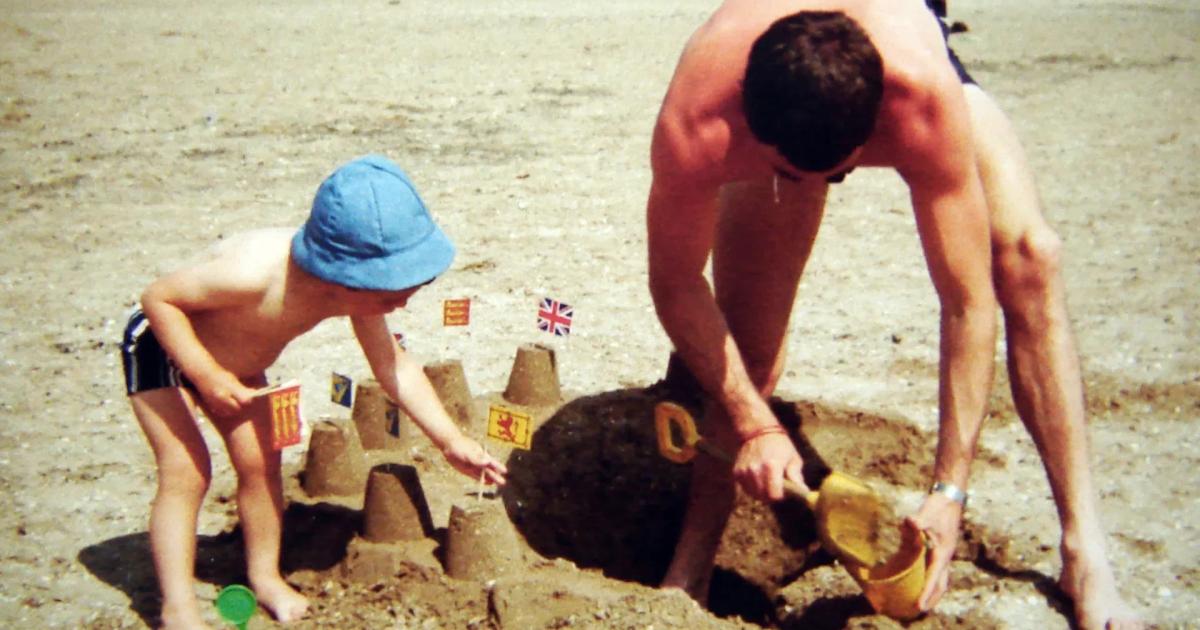
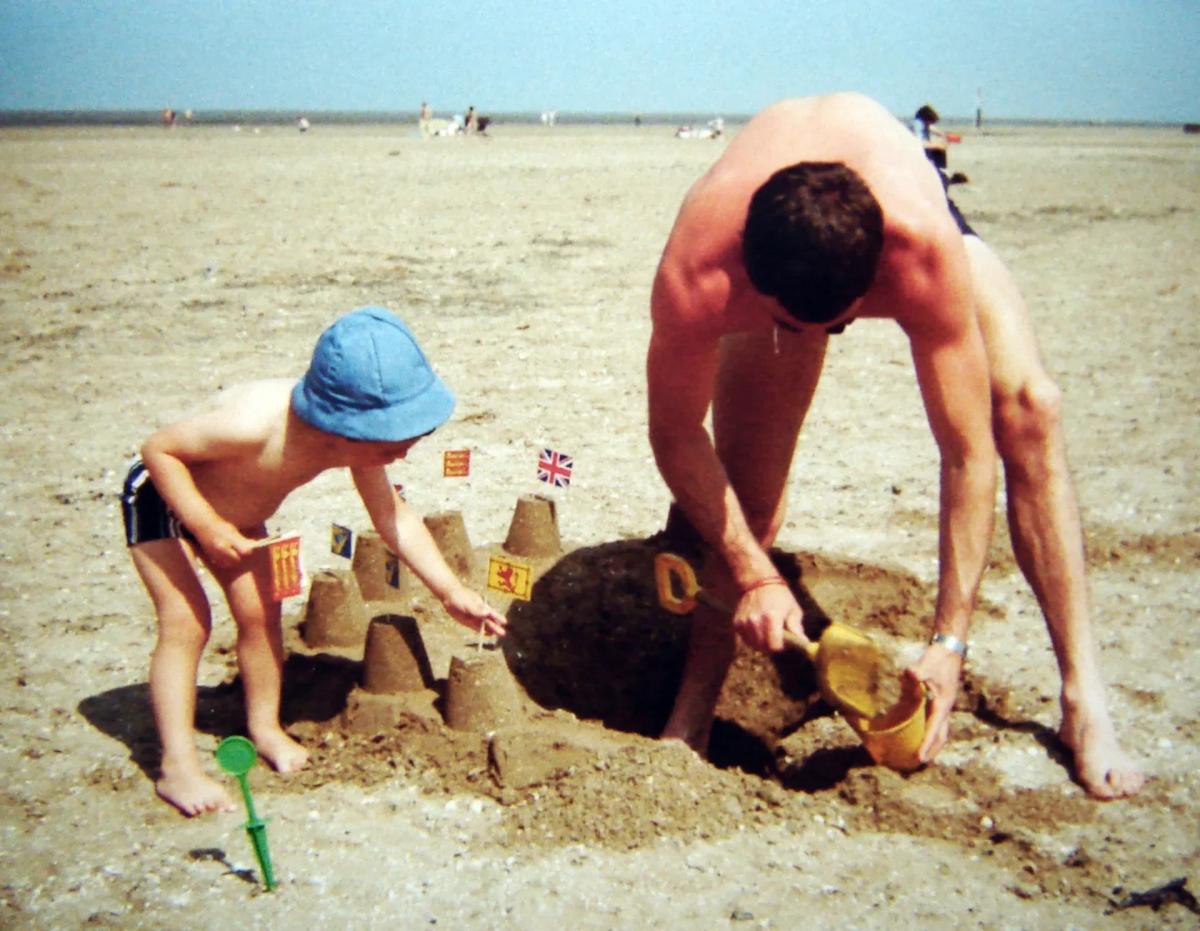
The origin of Max Lamb’s practice is not the academy but the landscape. Born in 1980 in St. Austell, Cornwall, he has repeatedly described childhood not as a period of consumption but as a period of tactical making: beaches, moorlands, improvised tools, the practical intelligence of occupation, and the long patience of figuring out what a material would allow. In later interviews, he recalls spending days on Cornish beaches “building things, literally working with the landscape,” and he is exact about why this matters: the landscape was not backdrop but collaborator. That formative relation to ground, weather, grain, and density explains why his work still feels less like design applied to matter than matter coaxed into a temporary argument with the hand. Cornwall enters the work not as regional color but as Material Memory.
There is another apprenticeship running in parallel: Yorkshire, the farm, the grandfather, the conversion of barns and cattle sheds, the slow education of carrying, cutting, sweeping, pouring concrete, planting hedgerows, and understanding what raw things can and cannot become. Lamb’s own language is revealing here. He does not romanticize this background as artisanal nostalgia. He frames himself as a problem solver who likes “a good, juicy problem,” which is another way of saying that function for him is inseparable from resistance. Furniture becomes compelling precisely when it must negotiate with stubborn realities: weight, brittleness, compression, weather, shrinkage, cost, ergonomics, and the grammar of the workshop. Before Max Lamb ever entered a formal design institution, he had already internalized the proposition that intelligence can be manual, local, bodily, and non-verbal.
That is why the usual biography of the gifted British designer is too thin to do justice to what his work actually does. The better formulation is that Lamb is the product of a working landscape, a world in which making is indistinguishable from attention. OAC’s own study Material as Manifesto: The Political Legacy of Arte Povera and the Birth of Post-Luxuryargues that value migrates away from preciousness and into process, concept, and narrative. Lamb’s childhood explains why that migration appears so natural in his work. He learned early that matter becomes legible only when you stay with it long enough to see what pushes back.
For Max Lamb, landscape was never scenery; it was the first tool, the first tutor, and the first argument against synthetic ease.
From the Royal College of Art to the One-Man Material Laboratory
Lamb’s formal training matters, but not because it civilized an otherwise raw instinct. He completed a foundation art and design course, then studied at London’s Royal College of Art, where Martino Gamper was among the important figures in his orbit. The point of the RCA in this story is not institutional prestige. It is that Lamb emerged from it with the confidence to treat the workshop as portable and method as migratory. In interview after interview he returns to the same idea: the workshop can be anywhere. A quarry in China. A slip-casting factory in Stoke-on-Trent. An industrial forge in Illinois manipulating three-ton billets of steel. A beach in Cornwall. A church hall turned home and studio in North London. This geographic promiscuity is central to his practice. He does not begin with a signature form and then shop for a finish. He begins with a material system and enters it as a student, saboteur, and collaborator at once.
That position is why Lamb insists that he is not a specialist in one material. He is a maker who learns intensely, both “in a hands-on physical way” and in a “technical theoretical way,” throwing himself into whatever medium currently demands his curiosity. OAC’s The Algorithm of the Hand offers a useful frame here: what resists digital flattening is not primitivism but embodied intelligence, the visible trace of human adjustment inside process. Lamb exemplifies that argument with unusual clarity. He asks too many questions, by his own admission, because he needs to know not just what a process yields but how it thinks. This is why his best collaborations are with potters, foundries, quarry workers, lacquer masters, and industrial specialists who have given their lives to a material or technique. Lamb’s authorship is not the fantasy of solitary genius. It is the choreography of different forms of expertise around a single object problem.
Crucially, this does not make him anti-machine in any simple sense. He has worked with CNC bending, spray finishes, industrial ceramics, electroforming, and large-scale fabrication. The target of his practice is not technology as such. It is the cultural lie that technology should erase its own conditions and leave behind frictionless, authorless results. His famous statement, “it’s not about design; it’s about how it’s made,” should be read less as anti-form polemic than as a refusal of detached formalism. In Lamb’s practice, the making process is not the route to the object. It is the object’s philosophical content.
The Beach as Foundry: Pewter Stool and the Return of Process
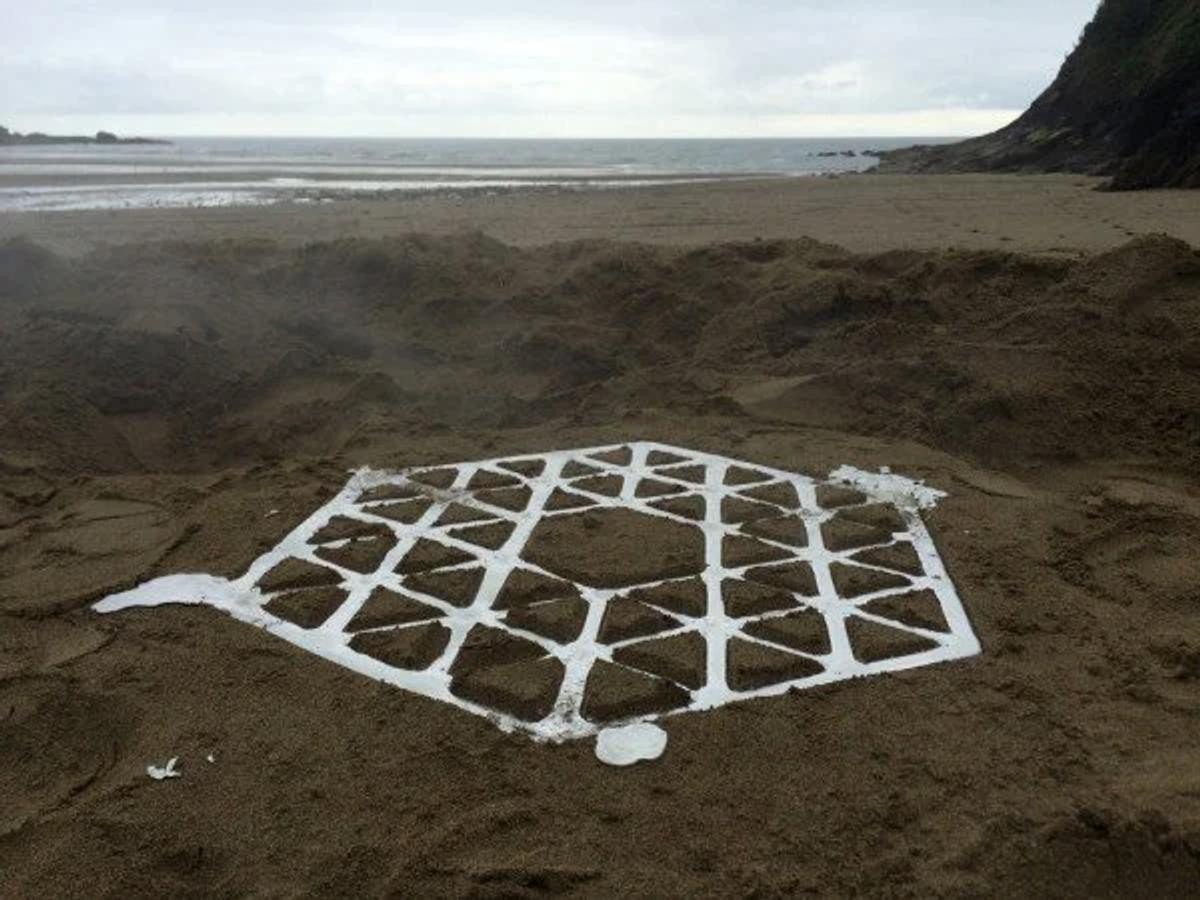
The 2006 Pewter Stool remains the indispensable Max Lamb work because it contains his entire method in embryo. Officially, the project is disarmingly simple: a stool sand-cast on Caerhays Beach in Cornwall. But the details reveal why it became canonical. Sand casting is among the oldest metal-casting techniques, usually a one-stage process within an industrial chain involving patterns, shrink rules, mould boxes, finishing, and post-cast correction. Lamb strips that sequence back to its elemental minimum. He uses the beach itself as the molding ground, digs a trench for a portable twin gas cooker, diverts the wind with a board, melts 1kg of pewter ingots supplied by Carn Metals in two of his mother’s old stainless-steel saucepans, and spends three days simply learning what the sand can hold and what the molten pewter will do.
Nothing about the final form is arbitrary. The triangular seat is divided into sixteen tessellating triangles because the geometry maximizes sitting surface while economizing weight and cost. The three-legged structure is not a stylistic whim but a hydrological and gravitational conclusion: because the water table at the beach made four equal legs unreliable, three legs ensured stability even when lengths varied slightly. The grooves are carved by hand with a 10mm rod, a dibber, and a kitchen knife; the mould must be misted to avoid collapse; the casting is poured leg by leg before the channels connect; excavation begins after roughly ten minutes of cooling. In other words, the object is not “designed” and then executed. It is discovered by patient negotiation with grain, moisture, heat, liquidity, and the budgetary intelligence of material use. Sand Casting is not simply his method here. It is the theory.
This is why the Pewter Stool still outclasses so much contemporary design that borrows the language of roughness without accepting roughness’s demands. The stool is not an image of authenticity. It is an event recorded in metal. Cornwall’s mining and foundry history enters the work through Lamb’s decision to reactivate a regional process on a specific beach; childhood memory enters through the return to the site; bodily labor enters through carving, hauling, tending heat, and waiting; and economic judgment enters through the parsimonious use of pewter. OAC’s Artisan Activism: Why Craft, Materiality, and Protest Define Post-Luxury Value argues that hand labor gains authority when it rematerializes critique rather than merely ornamenting a commodity. The Pewter Stool does exactly that. It reintroduces circumstance into furniture.
The genius of the Pewter Stool is that its form is not drawn onto matter; it is negotiated with tide, heat, grain, and gravity until the beach itself becomes the patternmaker.
Stone, Geology, and the Ethics of Weight
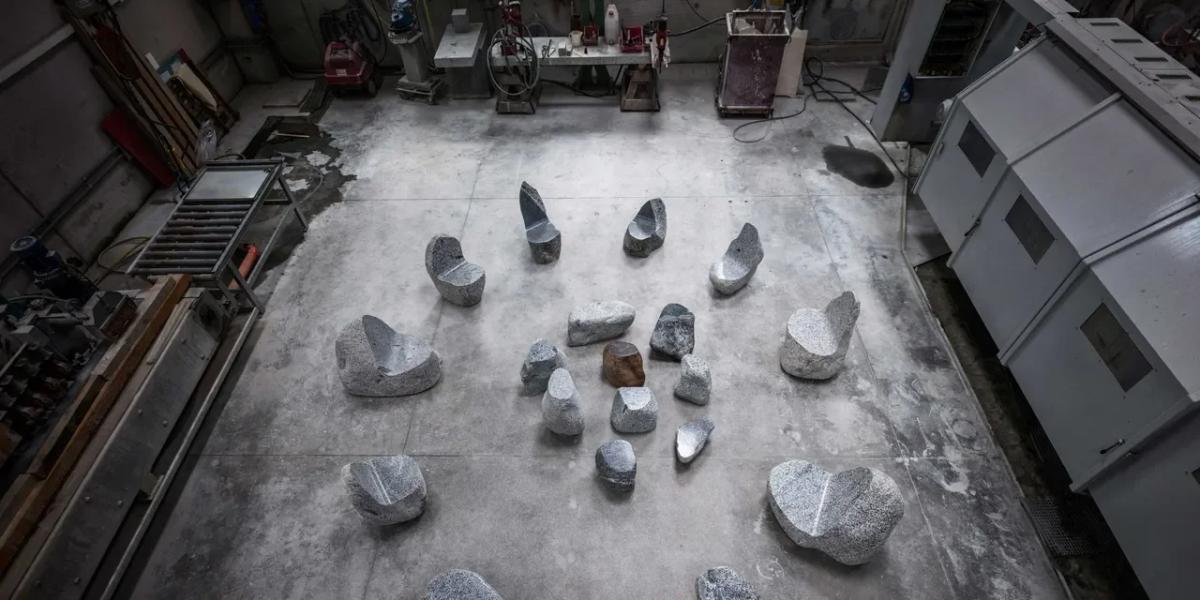
If the Pewter Stool made process visible, the stone works gave Lamb a language for endurance. Across projects such as the Ladycross Sandstone Chair, China Granite Project, Danby marble works, and the 2017 Boulders series, he treats stone not as a luxury finish but as a site of encounter with geology, extraction, and the near-comic disparity between human scale and material scale. Architectural Digest noted that Boulders emerged when the Italian quarry Pedretti Graniti approached Lamb directly with Tonalite granite and production support. Eleven chairs and nine stools resulted; works that Salon 94 could position for collectors, certainly, but whose real content lies in how they compress quarry research, Neolithic memory, and domestic proportion into a single seat. The stone is raw and polished, but the polish never erases the block. It frames it.
The 2015 project Man, Rock, Drill reveals the ethic behind these objects with unusual plainness. Paul Johnson’s text on the project describes a man in Vermont waking at six, eating porridge, working through the rain with a headtorch, inching stones into position, accepting help from an eighty-one-year-old farmhand named Bob, and continuing until midnight. The project title is almost comically literal, but that literalness is the point. It refuses the usual rhetorical glamour of design authorship and reduces the act to its primary components: body, rock, tool. In Lamb’s stone work, Quarry Stone is not a noble material elevated by design. It is a resistant world that lends furniture its moral density.
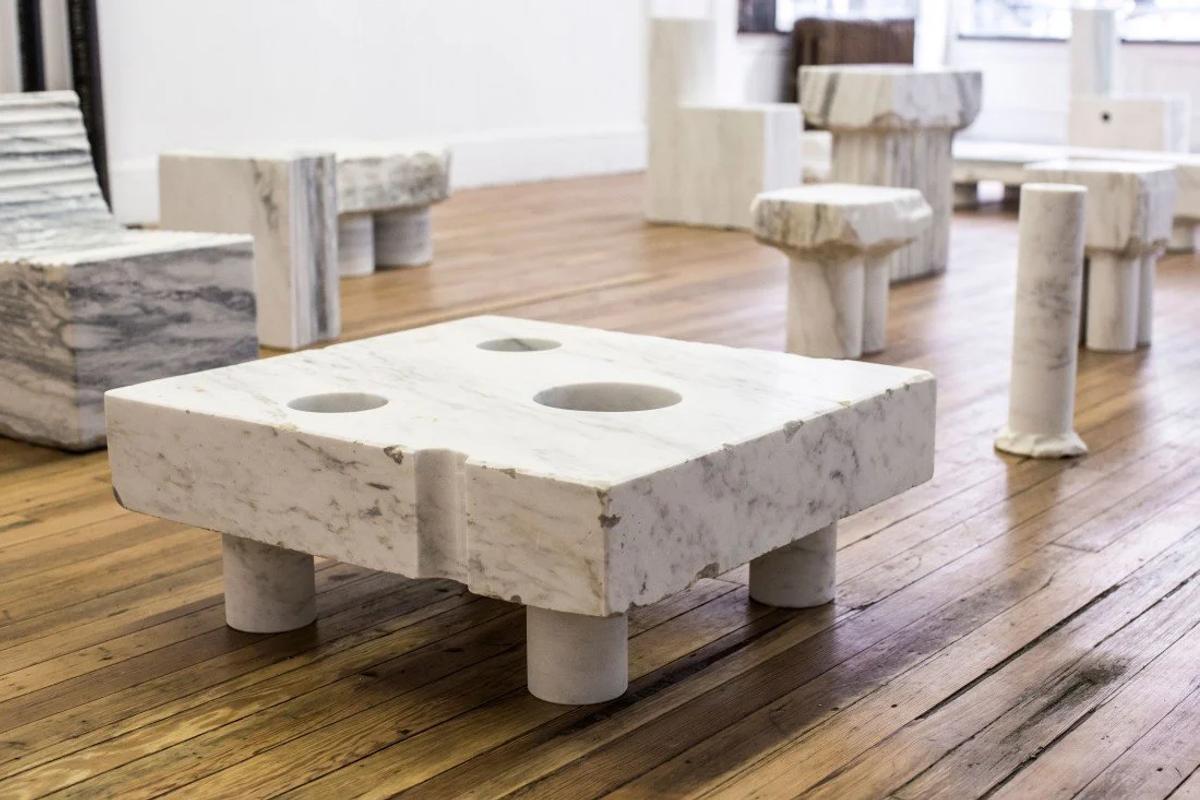
This is also where the user’s initial intuition is exactly right and requires only a slight philosophical sharpening. What Lamb makes is not “unrenderable” in the narrow software sense; a CAD model can represent a chair of stone. What CAD cannot author on its own is the surplus of physical evidence that gives these works their authority: the time of moving the block, the embodied judgment of where to cut, the risk, the fatigue, the stubborn acceptance of weight as a meaningful condition. OAC’s THE WEIGHT OF A THOUSAND YEARS argues that endurance is not a lifestyle virtue but an epistemology. Lamb’s stone work belongs squarely in that framework. Weight here is not an engineering obstacle to be neutralized. It is the argument the object makes about reality.
In Lamb’s stone work, weight is not a problem to be engineered away; it is the argument.
Timber, Splitting, and the Refusal of Neutral Form
Wood gives Lamb an entirely different kind of resistance. Stone confronts the body with mass; timber confronts the maker with direction. In the Eames Institute conversation, Lamb distinguishes between cutting wood against the grain and splitting it with the grain, calling the latter a collaboration because the material effectively speaks back. This distinction is foundational. It explains why so many of his wooden works feel less fabricated than persuaded into being. Whether in cleft chestnut, yew logs, western red cedar, or the ash works that literalize the tree’s former life, Lamb allows grain, fissure, and structural bias to remain legible in the final piece. The wood is not a neutral substrate awaiting compositional mastery. It is an actor with tendencies.
That is why his timber projects avoid both the artisanal preciousness of boutique joinery and the anonymous repeatability of commercial furniture. A piece such as the cleft chestnut stool carries the violence of splitting but can then be finished in Urushi lacquer by master craftsmen in Wajima, Japan. The point of this combination is not contrast for its own sake. It is to hold two truths together: raw process and high finish, force and care, brutal incision and protective surface. Likewise, the log and board works reduce furniture to primary relations (support, span, compression, sitting) without ever allowing those relations to become abstract diagrams. OAC’s The Sublime Silence: Tadao Ando’s Architecture of Light, Material Purity, and Existential Form is useful here because it distinguishes purity from sterility. Lamb’s timber pieces are pure in the sense that they let a material relation arrive cleanly; they are never sterile because the relation remains scarred by its making.
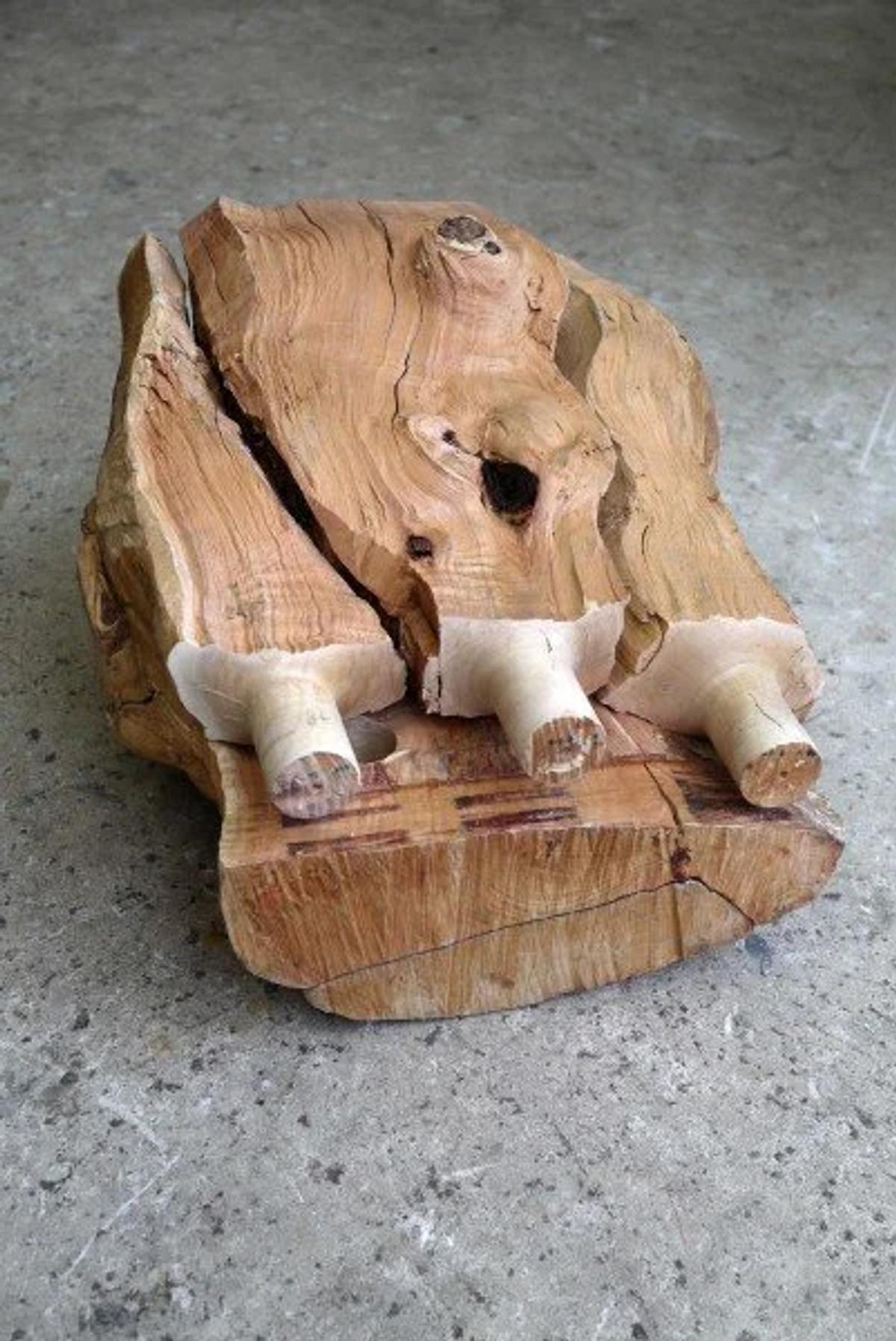
For PLCFA, this matters enormously. The luxury market is full of wood objects whose naturalism is entirely simulated: digitally perfect grain matches, engineered uniformity, machine-routed irregularity designed to look spontaneous. Lamb’s timber practice rejects that counterfeit “honesty.” In its place, he offers Process-Led Design, where the mark is not decorative roughness but a disclosure of how the material wanted to divide. The result is not anti-form. It is form that accepts obligation.
Seating as Method: Why the Chair Becomes a Knowledge Machine
The chair is not just one object type among many in Lamb’s career. It is his experimental constant. The Art Institute of Chicago’s 2018 exhibition Max Lamb: Exercises in Seating noted that he had already created more than 400 seats, most of which were produced in limited numbers because their manufacture was too complex to industrialize cleanly. By focusing on seating, the museum argued, one could see Lamb’s working methods, research habits, serial experimentation, and modernist play with form and function more clearly than in a conventional retrospective. That insight is decisive. The chair matters because it is common enough to be intelligible and precise enough to absorb endless variation. A seat always answers the same question: how shall a body be held? Which means every deviation in material, process, weight, and posture becomes analytically visible.
This serial logic culminates in the trilogy of Exercises in Seating exhibitions and books, most recently the 2025 Exercises in Seating 3, in which chairs from the previous decade were arranged in a circle facing inward. Disegno’s account of that installation is particularly useful because it identifies what many observers miss: Lamb is not merely documenting a career; he is building a non-hierarchical archive of methods. Each chair is one solved problem, one material encounter, one temporary resting point in a longer research journey. Seen together, the works do not present a consistent brand identity so much as a method of repeated self-reeducation. That is rare in contemporary design, where the pressure is usually toward recognizability before understanding.
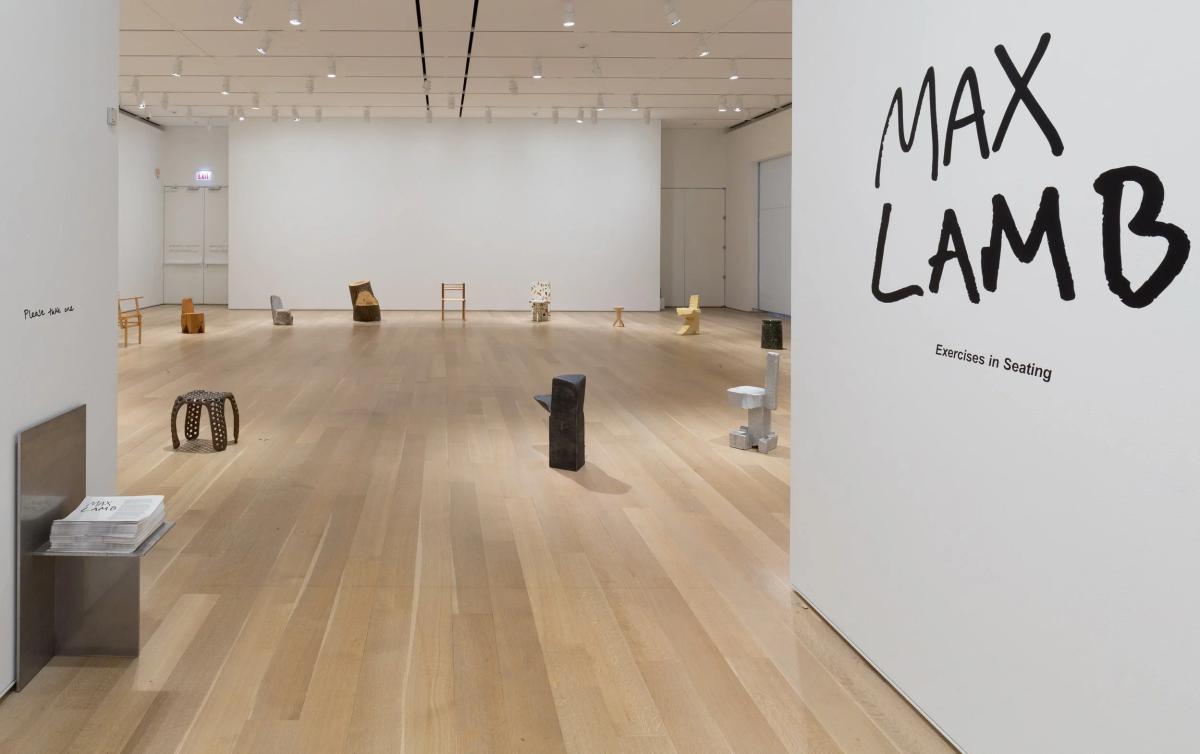
OAC’s THE MEANING DEFICIT. Why Luxury, Art, and the Built Environment Are All Failing the Same Test insists that objects now fail when they cannot justify their existence beyond image and circulation. Lamb’s seating archive is the opposite of that failure. Each seat remembers what it learned, and the archive makes those remembered lessons comparable. The chair becomes, in effect, a knowledge machine.
By returning obsessively to the chair, Lamb turns the most overfamiliar typology in design into an instrument for thinking.
Against Digital Smoothness, Not Against Technology
To understand why Max Lamb matters now, one has to place him inside the broader cultural conflict over smoothness. OAC’s Carol Christian Poell: The Alchemical Designer, Post-Luxury’s Radical Critique of Materiality and the Smooth Society, and The Algorithm of the Hand describe a late-modern condition in which the object is expected to arrive already perfected, already frictionless, already optimized for image circulation. Lamb’s work rejects that mandate with unusual elegance, without retreating into nostalgia. He will happily work with industrial ceramics, electroformed copper, CNC tube bending, or high-gloss finishes when those methods are structurally interesting. What he refuses is the moral laundering that occurs when technology hides all signs of negotiation and presents a thing as if it had no history of contact.
This distinction matters because many readings of Lamb make him sound like a noble primitivist hacking stone in protest against the machine. That is far too shallow. He is better understood as a diagnostician of process visibility. When a process becomes too sealed, too templated, too automated to reveal where judgment entered, Lamb tends to reroute it through hand-carving, improvised molding, splitting, lifting, questioning, personal prototyping, or collaboration with specialists who can reopen the black box. In that sense, his work offers a far more serious critique of digital culture than a simple anti-CAD posture would. He is not asking us to abandon technology. He is asking which kinds of technology preserve the Legibility of Labor and which merely erase it.
This is precisely why his objects continue to exceed the category of collectible design, even as galleries and collectors understandably want to frame them as such. A Lamb chair can enter a penthouse or museum, but it drags another value system in with it: one that places process, constraint, and human time above visual neutrality. OAC’s Robert Ebendorf: Found Objects, Philosophical Objects, and Post-Luxury Conceptual Functional Art is useful here because it shows how a functional object can carry philosophical surplus once material history remains active rather than erased. Lamb’s furniture does this with geology, metallurgy, timber, and bodily strain. The object’s finish never gets the last word.
Lamb does not oppose technology; he opposes any system of production that hides where judgment, friction, and human consequence entered the form.
Why Max Lamb Now
The urgency of a deep Max Lamb study in 2026 is not difficult to explain. Institutional recognition has converged with a wider cultural hunger for objects that still feel authored by contact. Arthur Analytics data cited for this study lists an eighteen-year exhibition history, fifty-five total shows, five solo shows, thirty-nine group shows, eleven art fairs, four dealers, and Salon 94 as the primary dealer. That profile is only one market snapshot, but it captures something real: Lamb is no longer a cult designer admired mainly by peers. He has become an institutional and market reference point. Works are held by major museums, and 2025 to 2026 brought further consolidation through Exercises in Seating 3 and the SCAD/Salon 94 exhibition Elements, which framed his practice across metal, stone, wood, polystyrene, and textile as one of the most searching material investigations of his generation.
But visibility alone is not the reason to write him now. The deeper reason is that Lamb clarifies a frontier condition in contemporary design culture. He shows what happens when the designer ceases to be a form-giver and becomes a material witness. The object then ceases to be a vehicle for taste and becomes a condensed field report on extraction, processing, collaboration, and time. This is why even his supposedly simple works carry unusual rhetorical force. They ask the viewer to recognize that matter has biographies, that tools are philosophical, and that durability is not only physical but ethical. In a culture saturated with smooth renderings, AI-assisted polish, and noncommittal “minimalism,” Lamb’s work feels heavy not because it is old-fashioned but because it has not been spiritually debulked.
Seen through the OAC framework, Max Lamb belongs decisively within Contemporary Practice. He is not an outlier, proving that craft can still be beautiful. He is evidence that post-luxury value increasingly depends on whether an object can make labor, material lineage, and structural intelligence visible again. That is the real reason his furniture continues to matter.
Coda
Max Lamb confirms one of the central propositions of the PLCFA framework: value becomes most credible when it migrates away from frictionless finish and back into the visible relation between material, method, and maker. His chairs, stools, vessels, and experimental series do not simply reject digital smoothness; they expose why smoothness has become culturally insufficient. They remind us that the object is still capable of carrying geography, fatigue, weather, risk, apprenticeship, and embodied judgment without collapsing into sentimentality. What remains open is the hardest question of all. Can the market absorb this kind of work without neutralizing its resistant force? Lamb’s best pieces suggest a provisional answer. They enter the market, certainly, but they do so carrying too much evidence to become mere surface. They insist, even in luxury contexts, that form must still answer to the world that made it.
Authored by Christopher Banks, Anthropologist of Luxury, Critical Theorist & Founder Objects of Affection Collection Office of Critical Theory & Curatorial Strategy 469 Fashion Avenue, 12th Floor, New York, NY 10018
RELATED OAC STUDIES
The following studies should be read alongside this one as part of the wider OAC argument on materiality, labor, endurance, and post-luxury design.
Material Genealogies
· Material as Manifesto: The Political Legacy of Arte Povera and the Birth of Post-Luxury
· Robert Ebendorf: Found Objects, Philosophical Objects, and Post-Luxury Conceptual Functional Art
Labor, Hand, and Resistance
· Artisan Activism: Why Craft, Materiality, and Protest Define Post-Luxury Value
Architecture, Purity, and Endurance
· The Sublime Silence: Tadao Ando's Architecture of Light, Material Purity, and Existential Form
Meaning, Context, and the Object
· THE MEANING DEFICIT. Why Luxury, Art, and the Built Environment Are All Failing the Same Test