The Meaning Deficit: Why Luxury, Art, and the Built Environment Are All Failing the Same Test
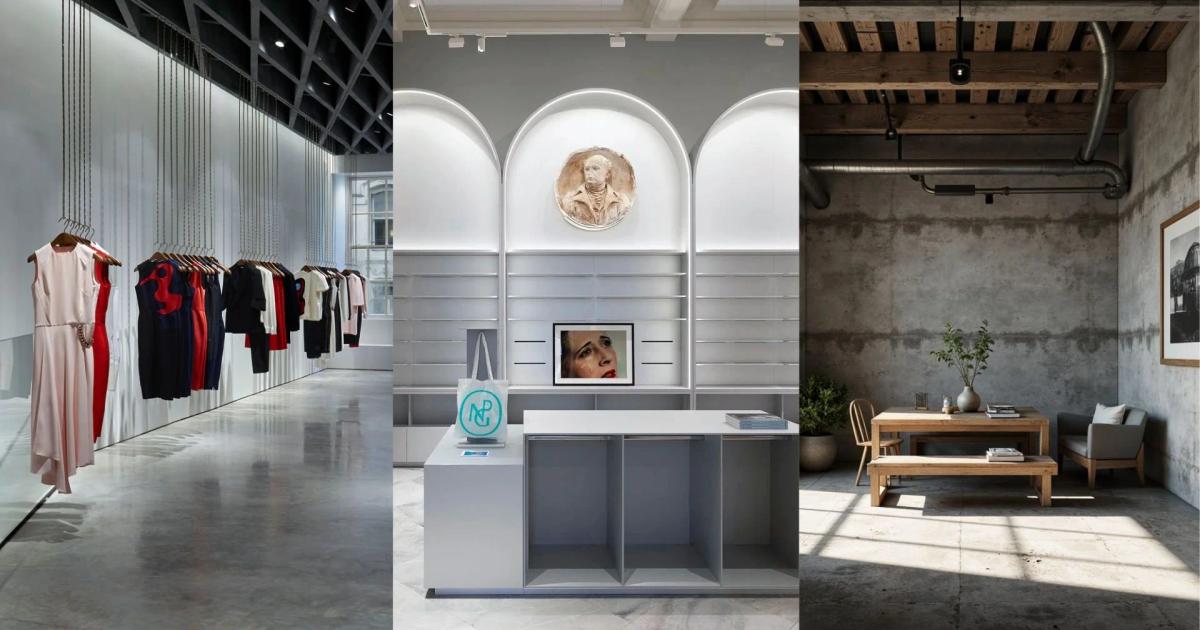
Three independent trend forecasts, Vogue Business's diagnosis of a Trust Crisis in luxury fashion, Maddox Gallery's identification of Naïve Authenticity as the dominant posture of the 2026 art market, and Dezeen's reading of Curated Calm as the governing logic of contemporary interior design, have been treated in the trade press as discrete market signals. This study argues they are not. They are three expressions of a single underlying condition: the Meaning Deficit. Across product, canvas, and space, the consumer is refusing the empty sign. Developed under the Post-Luxury Conceptual Functional Art (PLCFA) framework of the Objects of Affection Collection, this study names the condition, traces its common architecture across all three domains, and argues that the only durable response is an object, or a space, or a work, that has something to say and the material courage to say it. PLCFA lexicon terms in active deployment: Semantic Burden, Hollowed Object, Narrative Permanence, Material Singularity, Zero-Sum Aura, Anti-Speculative Autonomy.
THE THREE REPORTS ARE ONE REPORT
In early 2026, three authoritative publications in three distinct verticals arrived at strikingly convergent conclusions. Vogue Business, surveying the luxury fashion sector, identified a culture of sameness driven by LVMH and Kering's dependence on AI-optimised sales data, and reported a surging consumer demand for what it termed 'Human Touch' and 'Empathy' as the antidote to sterile, predictive retail. Maddox Gallery, reporting on the art market, declared the 2026 forecast officially Anti-AI, noting that collectors were prioritising Naïve Authenticity, naïve painting, and distorted portraiture, and that identity was being treated as fluid and constructed. Dezeen, canvassing leading interior architects and designers, identified a market-wide turn from 'superficial opulence' to what it named Curated Calm: dark woods, aged metals, and textured stones replacing the reflexive maximalism of the preceding decade, with the design goal no longer to occupy space but to create emotional grounding.
The trade press received all three as evidence of parallel but separate conversations: fashion's reckoning with AI dependency, the art world's counter-reaction to generative imagery, the interiors sector's post-maximalist correction. This reading is inadequate. These are not parallel conversations. They are the same sentence, spoken in three different rooms.
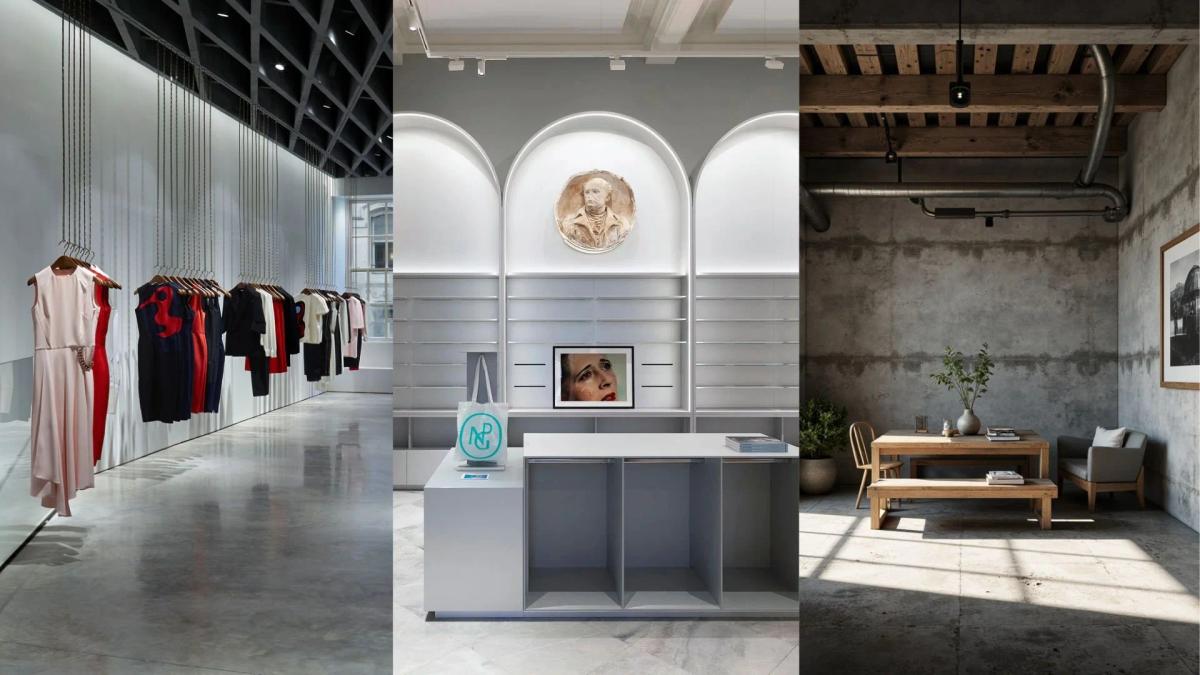
The consumer is not rejecting AI. The consumer is rejecting objects that have nothing to say.
The common variable across all three reports is not a material preference, a stylistic trend, or a market cycle correction. It is a crisis of signification. The object, whether a luxury bag, a painting, or a living room, has been progressively emptied of meaning by the same industrial logic: the substitution of signal for substance, of data-optimised surface for genuine semantic content. What Vogue Business calls the Trust Crisis, what Maddox calls Naïve Authenticity, and what Dezeen calls Curated Calm are not three trends. They are three names for the consumer's refusal of the Hollowed Object. As the OAC established in The Thoughtful Middle Distance, this refusal has been building across every sector simultaneously; the trade press is simply registering its arrival.
THE ARCHITECTURE OF THE HOLLOWED OBJECT
The PLCFA framework has identified the Hollowed Object as the defining pathology of the contemporary luxury economy: an object that retains all the formal markers of value, price, heritage, craftsmanship vocabulary, editorial coverage, while evacuating the interior condition that justifies those markers. The Hollowed Object is expensive but not significant. It is recognisable but not meaningful. It performs luxury without enacting it.

The Mechanism of Hollowing
The hollowing process is neither accidental nor malicious. It is the rational output of a specific industrial model. When the dominant luxury conglomerates, LVMH and Kering being the architectonic cases, centralised creative governance under data-science frameworks, they optimised for measurable signals of desirability: logo recognition, social amplification, unit velocity, margin per touchpoint. What such frameworks cannot measure, and therefore structurally suppress, is the quality the PLCFA framework designates as Semantic Burden: the weight of meaning that a genuine object carries independent of its market positioning. The OAC's study Why Traditional Luxury's Root Marketing Fails to Purchase Moral Capital documents this mechanism in forensic detail.
The consequence was predictable and has now arrived. LVMH reported a 15% profit drop in early 2025; Kering's revenue fell 18% in the same period while Hermès, which has structurally resisted data-optimised expansion in favour of genuine scarcity and artisanal Narrative Permanence, continued to thrive. The bifurcation is not a paradox. It is the market's legibility test. As the OAC documented in Luxury Just Split in Two. One Half Will Survive., this is a structural divergence, not a correction: the Hollowed Object is being systematically repriced toward its actual content value, which is zero.
The Same Mechanism in Art
In the art market, the hollowing process took a different form but followed an identical logic. The explosion of AI-generated imagery introduced a condition of aesthetic oversupply: the technically perfect image became infinitely reproducible at near-zero cost. The consequence was not merely a glut of images. It was a collapse of the evidential function of craft. When perfection is effortless, perfection signals nothing. The collector purchasing a naïve painting, loose line, awkward proportion, visible uncertainty of hand, is not purchasing nostalgia or primitivism. They are purchasing proof of authorship: the irreducible evidence that a decision-making consciousness was present in the making of the object. The OAC's The Algorithm of the Hand established this argument at the structural level before the Maddox report confirmed it at the market level: human imperfection is now the primary luxury signal in a post-AI image economy.
Maddox Gallery's forecast characterized the 2026 art market's turn with precision: collectors are paying premiums for work that unmistakably proves 'a human was here.' This is not aesthetics. This is epistemology. The collector asks a preliminary question before any question of taste: Is a claim being made? Does this object have something at stake? The naïve painting, in the hands of artists deploying Intentional Imperfection with genuine conviction, is not a rejection of skill. It is the deployment of visible process as the primary Semantic Burden of the work. The imperfection is the argument.
The Same Mechanism in Space
Interior design completed the same journey through different material. The decade of maximalism, surfaces crowded with statement objects, rooms engineered to photograph, space treated as a platform for conspicuous display, was the spatial equivalent of the Hollowed Object. It performed richness without enacting it. Dezeen's 2026 survey found designers universally forecasting a turn to spaces that 'hold and support human time' rather than deliver a 'wow effect.' The distinction is not aesthetic minimalism versus maximalism. It is the difference between a room that makes a claim on the person who inhabits it and a room that merely performs for whoever might be watching. This is the spatial register of what OAC's The Architecture of Absence identified in Hermès's La Pelota installation: space as a structural argument for the object, not a spectacle surrounding it.
The material choices that Dezeen's designers converged upon, dark woods, aged metals, textured stone, are not arbitrary. They are materials that carry what the PLCFA framework calls Material Singularity: the irreducible specificity of a substance that cannot be replicated, substituted, or algorithmically approximated. A particular walnut burl grain is exactly one thing. A particular worn brass fitting carries the legibility of time. These materials resist the Hollowed Object condition because they cannot be optimised away from themselves. As OAC's study of Joe Doucet's Columns collection argued, the endurance of material is the only honest sustainability argument left, and it is also the only honest meaning argument left.

THE MEANING DEFICIT AS A STRUCTURAL CONDITION
The Meaning Deficit is the condition in which objects, works, and spaces have been progressively stripped of their capacity to bear genuine Semantic Burden, to mean something that matters to the person who encounters them, and replaced with the simulation of that capacity. It is not a crisis of quality in the conventional sense. The products produced by the major luxury conglomerates are, by most material measures, well-made. The interiors of the maximalist decade were, by most technical measures, accomplished. The AI-generated images that saturated the visual culture were, by any mechanical measure, flawless. The deficit is not in execution. It is in content.
The luxury consumer of 2026 does not want a better product. They want a product that has an argument to make.
The theoretical grounding for this condition was established in Jean Baudrillard's concept of hyperreality, the state in which symbolic representations become more powerful than the realities they were meant to represent. In the luxury sector, brands ceased to sell objects and retooled to deliver narratives. The problem was not that narrative was added to object. The problem was that narrative replaced object, that the story became a substitute for the substance rather than its articulation. The Simulacrum of value displaced value itself. The OAC's engagement with Baudrillard's framework, developed across The Simulacrum of Status and The Thoughtful Middle Distance, established this as the foundational pathology of the luxury economy before the Vogue Business trust audit confirmed it empirically.
This is the precise diagnostic language the PLCFA framework was developed to address. The Custodian's Contract, the House's foundational doctrine, holds that an object is legitimate only when its narrative is inseparable from its material form. The story is not adjacent to the object. The story is in the object. When that integration is absent, when narrative is applied as a layer over an otherwise inert product, the result is not a luxury object. It is a Hollowed Object wearing luxury's vocabulary.
Why the Three Sectors Failed Simultaneously
The simultaneity of the Trust Crisis in luxury fashion, the Naïve Authenticity turn in the art market, and the Curated Calm movement in interior design is not coincidental. All three sectors were subject to the same underlying pressure: the industrialisation of the taste-formation process. Data-driven creative direction in fashion, algorithmic image generation in art, and the commodification of 'wow' aesthetics in interiors all participated in the same substitution. They replaced the individual decision-making consciousness, with its capacity for risk, error, conviction, and genuine semantic commitment, with a system optimised for the measurable and the reproducible. Byung-Chul Han's diagnosis of the Burnout Society and the Aesthetic of Smoothness provides the philosophical infrastructure for this understanding: the smooth surface requires no response because it makes no demand.
The consumer's refusal, arriving across all three sectors in 2026, is the reassertion of a prior demand: that the things they live with, the works they collect, and the spaces they inhabit should have been made by someone who meant something by making them. The demand is not for handcraft as such. It is not nostalgia. It is not anti-technology. It is a demand for the presence of what the PLCFA framework designates as Anti-Speculative Autonomy: the maker's refusal to pre-optimise the object for any market, the willingness to make something that holds a position regardless of whether that position is commercially legible.
THE CONSUMER AS SEMIOTICIAN
The academic literature on luxury consumption has long established that the luxury object functions primarily as a sign, a vehicle for the transmission of social meaning between makers, owners, and observers. What the 2026 convergence signals is a qualitative shift in how that semiotic function is being evaluated. The consumer has become a more sophisticated semiotician than the brands anticipated. Semiotic Theory and Sign Value, the analytical vocabulary that Jean Baudrillard deployed to diagnose the luxury economy, are now being applied intuitively by consumers who simply know, without theoretical apparatus, when a sign is backed by content and when it is not.
The earlier luxury consumer, the aspirational buyer who drove the industry's explosive growth from 2019 through 2023, was willing to accept the sign at face value. The logo carried its referent reliably enough. The brand story, however synthetic, was sufficient scaffolding for the purchase decision. By 2025, this scaffolding had begun to collapse: Vogue Business reported 'luxury fatigue' as consumers 'increasingly questioned the value for money' offered by major houses. Searches for designer logo items dropped nearly 30% by 2025, a figure the OAC's PoetCore study documented as the statistical confirmation of a Semiotic Revolt already visible in consumer behaviour. The Spectacle of status-by-brand was losing semiotic traction.
What the consumer was losing was not appetite for luxury. It was tolerance for Zero-Sum Aura: the condition in which an object's perceived distinction is borrowed entirely from the brand apparatus rather than generated by the object itself. The object with Zero-Sum Aura has no meaning independent of its label. Remove the logo and nothing remains. The collector gravitating toward naïve painting, the design client requesting dark wood and textured stone, the luxury consumer returning to Hermès, all are seeking objects with positive Aura density: meaning that the object generates from itself, that cannot be extracted by removing the brand's name.
What the Naïve Painting Already Knows
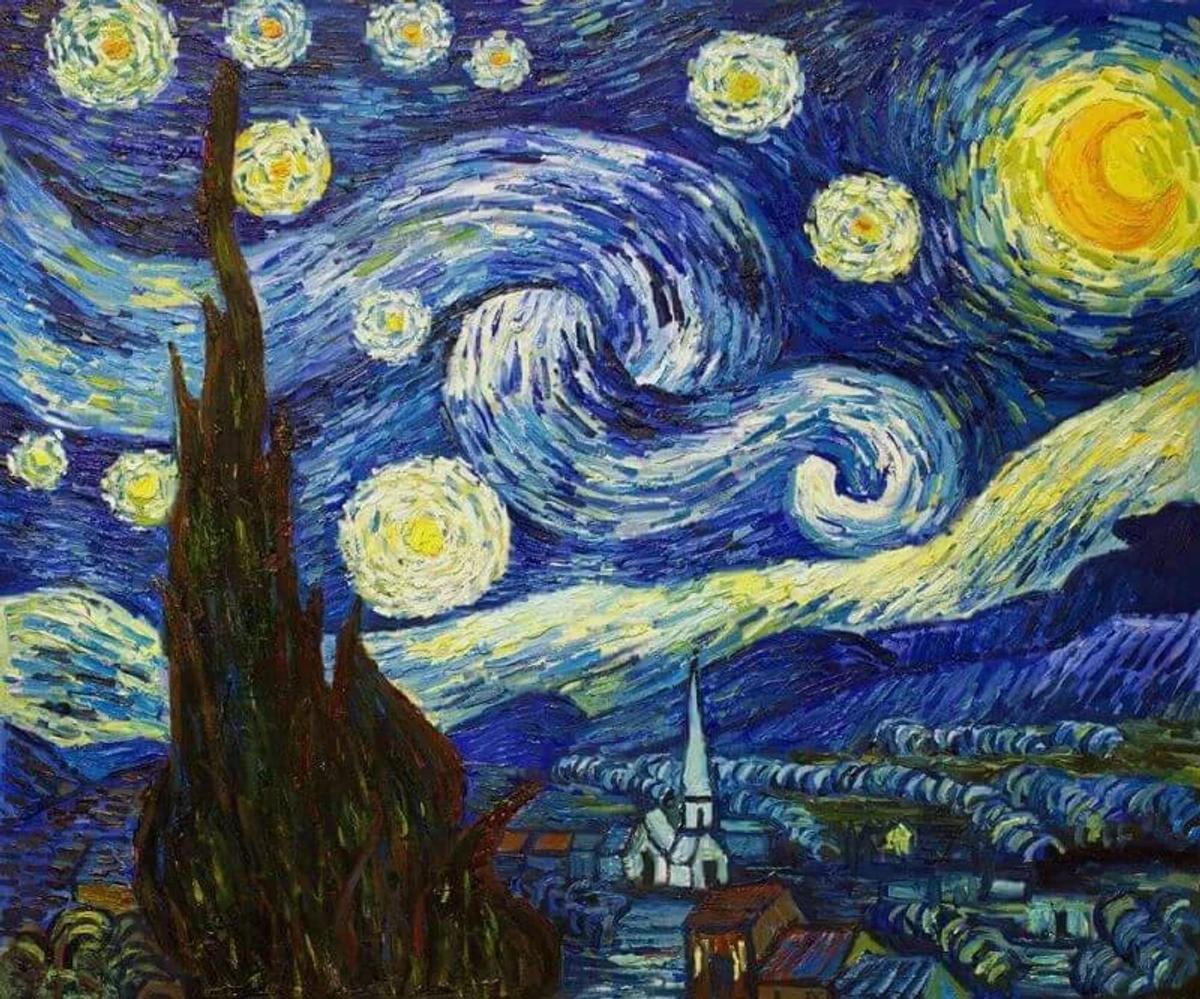
The naïve painting is the most theoretically transparent of the three cases because it makes its argument visible. The loose line is the argument. The uncomfortable proportion is the argument. The visible uncertainty of hand is the argument. The OAC's foundational study The Algorithm of the Hand established this as a structural condition rather than an aesthetic preference: in a post-AI image economy, Intentional Imperfection is the primary form of authorship documentation available to the maker. The imperfection is not a deficiency. It is the primary carrier of Semantic Burden.
This is why the anti-AI character of the 2026 art market is philosophically deeper than a reaction to image quality. The collector is not rejecting AI because AI makes inferior images. The collector is rejecting AI because AI cannot make a commitment. The AI-generated image has no stake in its own existence. It cannot be held to its content. It carries no Semantic Burden because there was no decision-making subject who bore the cost of the decisions that produced it. As the OAC documented in the Banksy corpus, specifically The Named Ghost and The Forensic Ledger, the art market's most fundamental transaction is not the exchange of an image for money. It is the exchange of a claim for custodianship. The naïve painting, by contrast, is entirely accountable. The mark is traceable to a hand. The hand is traceable to a consciousness. The consciousness is traceable to a position.
The imperfection is not the absence of meaning. It is the proof of it.
What the Dezeen Room Already Knows
The interior design turn described by Dezeen operates by the same logic in material terms. The designer replacing chrome brass with aged metal, substituting walnut burl for engineered veneer, choosing textured stone over polished composite, is not making an aesthetic choice. They are making an epistemological one. The aged metal carries the record of its own history. The burl grain is irreducibly itself. The textured stone will not render the same in any other context. These materials make claims that cannot be revoked by the next trend cycle. They possess Material Singularity, the property the PLCFA framework designates as the irreducible ground of genuine object value, as articulated in the OAC's study of Hermès's La Pelota and its precise deployment of Wabi-Sabi principles as a structural design argument.
The goal Dezeen's leading designers articulate, spaces that 'hold and support human time', is the spatial analogue of the Custodian's Contract. The room that accepts the constraint of being one specific thing rather than performing generically as 'luxury space' is the room that passes the same test the naïve painting passes and the Hermès object passes: it has accepted Semantic Burden. The Curated Calm movement, at its most rigorous, is not a style. It is the built environment's equivalent of Anti-Speculative Autonomy.
THE AURA PROBLEM: WHAT CANNOT BE BORROWED
The concept of Aura, as Walter Benjamin formulated it, designates the quality of presence that a work possesses by virtue of its unique existence in a particular time and place, the record of its own history embedded in its material. Benjamin's central thesis in 'The Work of Art in the Age of Mechanical Reproduction' was that mechanical reproduction destroys Aura by making the original infinitely substitutable. The 2026 convergence is the market's confirmation of this thesis at scale. When AI-generated images achieve perfect technical reproduction, when luxury products are optimised by identical data systems, when 'premium' spaces are designed according to the same algorithm of maximum visual impact, the result is a culture-wide Zero-Sum Aura condition.
The OAC's study The Aura Transaction documented the precise mechanism by which luxury brands attempt to repair Zero-Sum Aura through Artification, the absorption of genuine artists' aura into the brand's industrial products. This strategy fails structurally. Aura cannot be borrowed. It cannot be transferred. It cannot be purchased wholesale. It can only be generated by an object that has been made under conditions of genuine commitment, what the PLCFA framework calls the Custodian's Contract. The brands deploying Artification as a repair strategy are proving, through the very act of repair, that they understand the Aura deficit and cannot address it through the means available to them.
The naïve painting generates its own Aura through Authorship evidence. The aged metal generates its own Aura through Material Memory. The Hermès object generates its own Aura through Narrative Permanence, the structural depth of its making history that no trend cycle can revoke. Each of these is a positive Aura transaction, to use the OAC's terminology. The Hollowed Object, by contrast, executes a negative Aura transaction: it withdraws meaning from the cultural environment without depositing any. The consumer has now recognised this transaction and is refusing to participate in it.
NARRATIVE PERMANENCE AS THE COUNTER-PROTOCOL
The PLCFA framework's concept of Narrative Permanence holds that a genuine object is one whose meaning is structural rather than applied, embedded in the decisions that produced the object rather than attributed to it after the fact by a marketing apparatus. An object with Narrative Permanence cannot be re-storied. The story is in the material, in the proportion, in the resolution of the technical problem, in the risk taken and not taken. It is not in the press release. This concept was developed in the OAC's paper presented at the APA Summit Paris 2026 and has since been confirmed by every major market movement the study documented.
The three sectors are, in their separate ways, returning to this demand. The luxury consumer who returns to Hermès is choosing an object whose Narrative Permanence has been demonstrated across decades of consistent material commitment. The collector who pays a premium for a naïve painting is choosing an object whose Narrative Permanence is legible in every mark, the hand visible, the process transparent, the authorship undeniable. The client who commissions dark wood and textured stone is choosing a space whose Narrative Permanence is guaranteed by the materials' own resistance to optimisation. All three are enacting the same Custodian's Contract: accepting the obligation to steward something that means something.
The Failure Mode of the Trend Response
It is necessary, at this stage, to identify the failure mode that will emerge as the three sectors absorb the signals described in this study. The failure mode is the trend response: the deployment of the aesthetic markers of the Meaning Deficit's solution without the underlying condition that makes those markers meaningful.
The luxury brand that introduces a 'craft capsule', hand-finishing applied to an otherwise data-optimised product line, without restructuring the creative governance model that produced the Hollowed Object is not addressing the Meaning Deficit. It is simulating the address. The OAC's study Why Traditional Luxury's Root Marketing Fails to Purchase Moral Capital established this mechanism formally: the Simulacrum of Resistance is more corrosive than straightforward hollowing, because it deploys the vocabulary of Semantic Burden to forestall the demand for the real thing. The gallery that begins representing naïve painters without developing a genuine critical framework for distinguishing committed naïve practice from trend-surfing naïve aesthetics will accelerate the very hollowing it appears to resist. The interior designer who specifies dark wood and aged metal because Dezeen said so, rather than because those materials carry specific semantic content for this client in this space, is producing a Curated Calm that is merely a new style of the same emptiness.
The only counter-protocol is conviction. Not the performance of conviction. Conviction.
THE HOUSE'S POSITION
The Objects of Affection Collection was constituted precisely against the Meaning Deficit, before that condition had acquired its current name. The One Original Principle, the commission-only model, the Custodian's Contract, the Monastic Veto, the Anti-Sale Covenant: each of these instruments is a structural refusal of the hollowing process. Each one enforces the condition that the object must carry its meaning from within. As the OAC's The Cost of Stewardship established, these are not philosophical aspirations. They are operational instruments with legally enforceable consequences, the Custodian's Contract and Patronage Validation framework constitute the House's primary counter-protocol to the Speculative Velocity that hollows the object by treating it as a liquid asset rather than a durable claim.
The convergence documented in this study, the simultaneous emergence of the Trust Crisis, Naïve Authenticity, and Curated Calm across three distinct sectors, confirms what the PLCFA framework has argued from its inception: the consumer's primary need, beneath every surface preference, is for an object that has something to say. The market is not suffering from a quality deficit, a price deficit, or an accessibility deficit. It is suffering from a Meaning Deficit. And the only object that survives it is the one that never required the market's permission to mean something. As the OAC established in The Tyranny of the Archive, we are not observing the market's failure. We are building its successor.
The three sectors documented in this study will find their resolution, or their failure, in the same place. The luxury brand that restructures creative governance around Anti-Speculative Autonomy will survive. The one that deploys craft vocabulary as a Root Marketing layer over an unchanged industrial model will not. The gallery that develops a rigorous critical framework for naïve practice, one that can distinguish commitment from trend adoption, will survive. The one that treats Naïve Authenticity as a stylistic preference will not. The designer who treats Material Singularity as a structural argument, not a finish option, will survive. The one who specifies textured stone to match a mood board will not. The test, in all three cases, is the same: does the object have something to say when no one is looking?
CONCLUSION
The three market signals reviewed in this study, Vogue Business's Trust Crisis, Maddox Gallery's Naïve Authenticity, and Dezeen's Curated Calm, are not independent trend phenomena. They are simultaneous expressions of a single structural condition: the consumer's refusal of the Hollowed Object across the luxury, art, and interior design sectors.
The Meaning Deficit is the logical outcome of two decades in which the dominant production logic in all three sectors substituted data-optimised signal for genuine Semantic Burden. The luxury conglomerates hollowed the object by optimising for logo recognition. The art market hollowed the image by equating technical perfection with value. The interior design sector hollowed the space by equating visual impact with meaning. The consumer's refusal is not aesthetic. It is epistemic: the demand that the object carry a claim that can be attributed to a consciousness that bore the cost of making it.
The naïve painting is the most theoretically transparent expression of this demand because it makes the argument visible in the primary material of the work. The dark wood and aged metal of the Dezeen room make the same argument in the primary material of space. The luxury consumer's return to Hermès makes the same argument in the primary material of the market itself: willingness to pay, withdrawn from the Hollowed Object, reinvested in the object that cannot be emptied.
The PLCFA framework holds that the only durable response to the Meaning Deficit is the object that never required market permission to mean something, the object built under the Custodian's Contract, carrying its Narrative Permanence from within, bearing its Semantic Burden without offloading it to a brand apparatus. This was the House's founding position. The market has now arrived at the same conclusion by the longer route of exhaustion.
WHAT THIS CONFIRMS AND WHAT IT LEAVES OPEN
What the convergence of the Trust Crisis, Naïve Authenticity, and Curated Calm confirms for the PLCFA framework is this: the Hollowed Object is not a permanent condition. It is the temporary outcome of a temporary model, and that model is now generating its own refutation at scale. The framework was not premature. The market required time to hollow sufficiently to make the hollowing legible. It is now legible.
What it leaves structurally open is the question of resolution. The PLCFA framework can name the condition, trace its architecture, and propose the counter-protocol. What it cannot determine is whether the sectors will respond with genuine structural change or with the Simulacrum of Resistance, the adoption of the counter-protocol's aesthetic markers without the underlying commitment that makes those markers meaningful. The Melt the ICE Movement study documented how quickly genuine Semiotic Revolt can be absorbed and repackaged by the Spectacle it was intended to refuse. The same dynamic will operate here.
The open question, then, is not whether the market understands the Meaning Deficit. The three reports confirm that it does. The open question is whether the market has the structural courage to address it, or whether it will produce a Curated Calm that is merely maximalism with better materials, a Naïve Authenticity that is merely a new algorithm for the performance of imperfection, and a luxury 'Human Touch' that is merely a data-optimised simulation of empathy. The framework cannot resolve this question. Only the object can. And the object will either have something to say, or it will not. There is no third condition.
Authored by Christopher Banks, Anthropologist of Luxury, Critical Theorist & Founder
Objects of Affection Collection
Office of Critical Theory & Curatorial Strategy
469 Fashion Avenue, 12th Floor, New York, NY 10018
RELATED OAC STUDIES
The following studies from the OAC archive extend and contextualise the arguments developed above. Each was written before the 2026 convergence, and each anticipated it.
On the Hollowed Object and Market Collapse
The Tyranny of the Archive, The art market's cannibalisation of its own archive as evidence of the Hollowed Object condition at institutional scale
Luxury Just Split in Two. One Half Will Survive., The structural bifurcation of the luxury market between the Hollowed Object and the Sovereign Object
Why Traditional Luxury's Root Marketing Fails to Purchase Moral Capital, The forensic anatomy of the Simulacrum of Resistance in luxury branding
On Authorship, Imperfection, and Anti-AI Making
The Algorithm of the Hand, Human imperfection as PLCFA's ultimate materiality in the age of AI perfection
PoetCore & Literary Tones, The hand-stitched rebellion against sterile tech-luxury and its market evidence
The Thoughtful Middle Distance, The foundational diagnosis of the end of the Architecture of Smoothness
On Aura, Material Singularity, and the Custodian's Contract
The Aura Transaction, On Louis Vuitton's Super Nature, Artification, and the ethics of what gets absorbed
The Architecture of Absence, How Hermès at La Pelota deployed Material Singularity as spatial argument
The Weight of a Thousand Years, Joe Doucet's Columns collection and the epistemology of material endurance
On Narrative Permanence and Provenance
The Paradox of Narrative Permanence, APA Summit Paris 2026: digital infrastructure deployed to re-humanise the physical object
The Cost of Stewardship, Patronage Validation and the economics of Emotional Permanence
The Named Ghost: Part II, The Forensic Ledger, How the Banksy unmasking confirmed the primacy of documented authorship over managed absence
On Semiotic Theory and the Simulacrum
The Simulacrum of Status, Why Art Basel value resists the VIP Image and the architecture of Zero-Sum Aura
The Folder as Archive, the Archive as Poetics, Maison Margiela and the phenomenology of concealment as anti-simulacrum strategy