Luxury Just Split in Two. One Half Will Survive.

The Fissure Point: A PLCFA Diagnosis of the Great Luxury Bifurcation at Milan Design Week 2026
For months, OAC’s intelligence architecture has monitored a structural fracture forming beneath the surface of the global luxury market. This morning, as Milan Design Week 2026 closes its final day, the fracture has become a chasm. The market has not slowed. It has not been corrected. It has bifurcated: decisively and, OAC argues, irreversibly within the current economic cycle.
The language used in mainstream coverage is “recovery,” “selective growth,” “resilient demand.” These are the vocabularies of comfort. They miss the deeper structural reality: a K-shaped luxury world in which capital is fleeing volume, spectacle, and algorithmic aspiration, and migrating toward weight, permanence, and what OAC has long theorized as Material Singularity.
The bifurcation is not a trend. It is a Fissure Point. And the market is now living on one side or the other.
Retail is heading toward a dramatic bifurcation, not by price point, but by what is allowed to be automated.
SEARCH LANDSCAPE: WHAT THE MARKET IS ACTUALLY ASKING
The following signals are in active growth across Google Search in April 2026. They are not theoretical constructs. They are the consumer’s own vocabulary for the Fissure Point, and the precise terrain OAC’s PLCFA framework was built to navigate.
Search Signal: Rising: luxury value vs. AI efficiency
Active Query: “Why is luxury becoming more exclusive 2026?”
OAC Alignment: Anti-Speculative Autonomy / Zero-Sum Aura
Search Signal: Rising: human-made scarcity premium
Active Query: “handmade luxury worth it 2026.”
OAC Alignment: Material Singularity / Custodian’s Contract
Search Signal: Rising: quiet luxury vs. algorithmic discovery
Active Query: “the row anti-social media luxury”
OAC Alignment: Hollowed Object / Zero-Sum Aura
Search Signal: High volume: post-Milan 2026 design analysis
Active Query: “Milan Design Week 2026 best collections.”
OAC Alignment: Deep Materiality / Atmospheric Equity
Search Signal: Rising: DPP skepticism
Active Query: “DPP sustainability greenwashing 2026.”
OAC Alignment: Transparency Gap / Forensic Ledger
Search Signal: Rising: art market consolidation
Active Query: “art market collapse speculative 2026.”
OAC Alignment: Narrative Permanence / Canonical Safety
What the search data reveals is not market confusion. It is market literacy. Consumers, collectors, and institutional buyers are asking the same questions OAC has been answering since its founding: is this object worth holding? Is this brand making meaning or manufacturing atmosphere? Is “transparency” a forensic instrument or a marketing slide?
Four Gaps the Market Cannot Name: But OAC Can
OAC identified three persistent theoretical gaps in how the luxury and design industries are interpreting the current moment. These gaps are not accidental oversights. They are structural failures: the market is reaching for OAC’s conceptual infrastructure without having built it. Each gap represents a Fissure between where the discourse has arrived and where it needs to go.
Theoretical Gap I: The Transparency Gap
Market Symptom: Digital Product Passports sold as provenance proof
PLCFA Diagnosis: Compliance Transparency masquerading as Material Singularity: a shipping manifest mistaken for a Forensic Ledger
Theoretical Gap II: The Ma Gap
Market Symptom: Google and Samsung fill space with multi-sensory AI-generated data environments
PLCFA Diagnosis: Spectacle simulating Ceremonial Energy; the Sensory High performing the role of lived absence
Theoretical Gap III: The Modernity Gap
Market Symptom: Warm Minimalism coded as a 60/30/10 styling formula
PLCFA Diagnosis: Aesthetic restraint without Semantic Burden or Tactical Friction: calm without being earned
Theoretical Gap IV: The Bifurcation Blind Spot
Market Symptom: The industry celebrates AI efficiency and calls it growth
PLCFA Diagnosis: Capital flees to canonical safety while the Hollowed Object expands into the vacuum
Gap I, The Transparency Illusion: DPP vs. the Forensic Ledger
Brands across every category (fashion, furniture, fine goods) are adopting Digital Product Passports as the infrastructure of accountability. The European Union’s regulatory architecture is accelerating this adoption, and by 2026, DPPs have graduated from pilot programs to institutional expectation. A digital record traces supply chain, material origin, and carbon footprint. The consumer, at last, has a form of object knowledge.
OAC’s PLCFA framework identifies this as Compliance Transparency, and refuses to equate it with Material Singularity. A DPP is a ledger of logistics. It records where cotton traveled. It does not record the decision the artisan made when the thread broke on the third pass. It does not hold the weight of the maker’s hand. It is, in the PLCFA vocabulary, a shipping manifest mistaken for a Forensic Ledger.
The search cluster “DPP sustainability greenwashing 2026” is growing precisely because consumers are arriving at this conclusion independently. They sense that something is missing from the record. What is missing is the Custodian’s Contract: the moral commitment between maker and material that no passport can encode. For OAC’s full treatment of provenance as institutional practice, see On Provenance: 469 Fashion Avenue and the History of a Practice.
Whatever it is, the way you tell your story online can make all the difference.
Gap II, The Ma Problem: Multi-Sensory Experience vs. Architecture of Absence
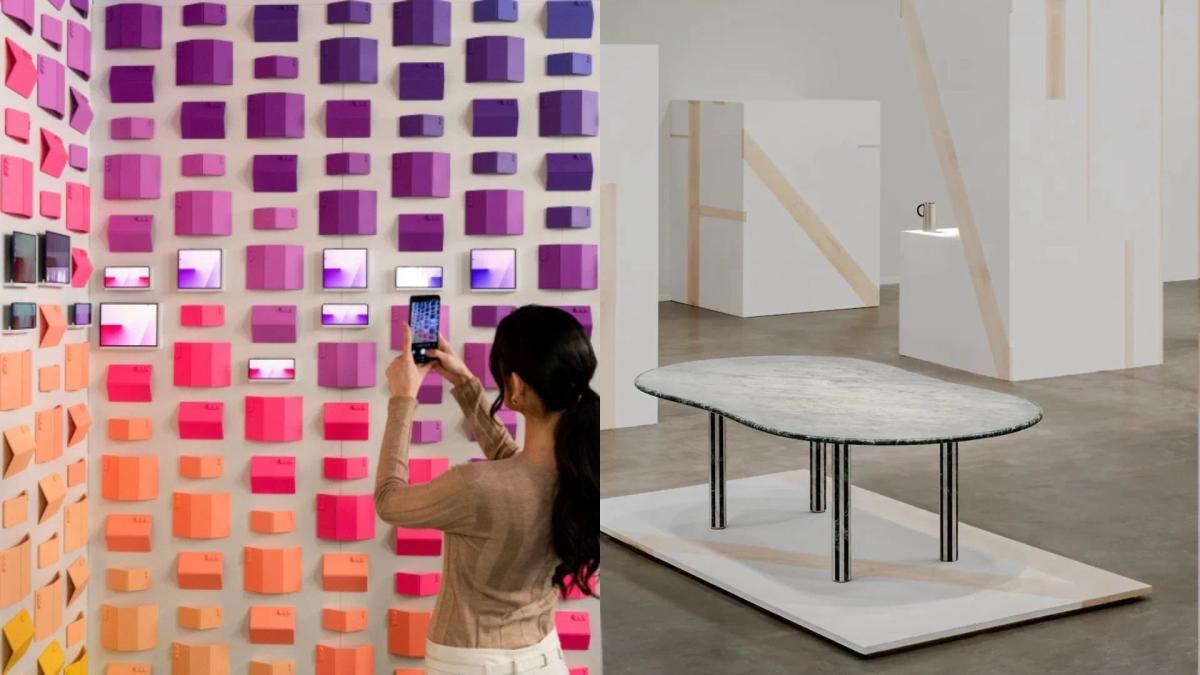
The dominant experiential strategy at Milan 2026 was immersion. Samsung and Google deployed AI-generated multi-sensory environments. Luxury houses built branded universes. The operative logic: if the consumer cannot hold the object, give them the atmosphere.
Dezeen’s festival coverage has theorized this direction as Atmospheric Equity. OAC’s Milan Design Week study assigned the same term, but with a critical distinction. Atmospheric Equity, in the PLCFA framework, is not the production of sensory density. It is the ethical distribution of experiential weight: the commitment that an environment respects the intelligence of the body moving through it. What Samsung delivered at Milan was not Atmospheric Equity. It was a Sensory High: data masquerading as depth, stimulation performing as meaning.
The Japanese concept of ma, the meaningful interval, the structural gap, the productive absence, is what the market is actually searching for when it gravitates toward “quiet luxury” and The Row’s deliberate refusal of social media visibility. Ma cannot be engineered by an algorithm. It can only be protected by a maker with the courage to leave space unfilled.
This is the second Fissure. On one side: brands filling the void with data. On the other: objects that activate the void through absence. Hermès’ hammered palladium collection at Milan, hand-struck, horsehair-finished, rooted in equestrian heritage, was not performing ma. It was practicing it. The difference is everything.
Gap III, The Modernity Formula: Warm Minimalism vs. Tactical Friction

Warm Minimalism has been the dominant visual code of the 2024 to 2026 interior design cycle. The formula (roughly 60% neutral ground, 30% material texture, 10% tonal accent) has colonized every price point from mass-market retail to collectible design. At Salone del Mobile 2026, it appeared on floors, walls, furniture systems, and fashion house activations simultaneously.
OAC’s PLCFA framework does not oppose restraint. It opposes restraint as styling. The difference is the presence or absence of Semantic Burden: the capacity of an object to carry a weight of meaning that exceeds its function. Warm Minimalism, as practiced by the vast majority of its current adopters, produces objects without Semantic Burden. They are calm without being earned. They are quiet, with nothing to say.
The master’s OAC archives practice what the PLCFA framework calls Tactical Friction: the deliberate introduction of resistance, imperfection, or structural complexity that prevents the object from sliding past the viewer without demanding engagement. Warm Minimalism, at its worst, is the abolition of Tactical Friction dressed as sophistication. The search signal “handmade luxury worth it 2026” is the consumer’s instinctive question about this gap. They have been sold the aesthetic of Tactical Friction without the underlying material contract. OAC’s function is to name that betrayal.
Gap IV, The Bifurcation Blind Spot: Celebrating the Mechanism That Is Hollowing You Out
The most dangerous gap is the one the industry cannot see because it is standing inside it. Across Milan 2026, across the luxury earnings reports for Q1, across the trade press coverage of AI-integrated retail and "smart" supply chains, the dominant posture has been one of optimism. Brands are celebrating efficiency. Consultancies are publishing roadmaps. The industry has looked at the Fissure and called it a feature.
This is the Bifurcation Blind Spot: the structural inability of a market to recognize that the mechanism it is adopting for growth is the same mechanism accelerating its hollowing. When LVMH invests in AI-driven personalization while simultaneously watching its aspiration-tier brands stall, it is not solving a distribution problem. It is deepening a meaningful problem. The algorithm can surface the object. It cannot supply the weight that makes the object worth holding.
OAC's PLCFA framework identifies this as Active Liquidation: the conversion of accumulated aura into operational efficiency, at the cost of the very singularity that justified the brand's premium in the first place. It is not a slow leak. It is a structural trade, and the brands making it are trading from a position they do not yet know they are losing.
This is the gap that the PLCFA framework was designed to diagnose most precisely. Not as a provocation. As a warning. The market that cannot name the Bifurcation Blind Spot is the market that will be named by it.
What the Numbers Confirm
The Fissure Point is not an aesthetic argument. It is a capital argument. The data from Q1 2026 confirms a structural migration of value toward objects with provenance density and away from objects with only volume.
Auction market consolidation. Artnet’s 2025 data reported a 13% rise in total auction sales against a 20% decline in lot volume. This is not recovery. It is compression: capital concentrating into fewer, higher-verifiable objects. The speculative ultra-contemporary segment contracted nearly 70% from its 2021 peak. Collectors are not fleeing the market. They are fleeing the Hollowed Object.
The K-shaped luxury world. IMD’s luxury analysis confirmed what OAC’s PLCFA framework has theorized: LVMH returned to 1% growth. Kering dropped 10%. Richemont’s jewelry houses, anchored in material permanence, gained share over unbranded competitors. The brands winning are those whose objects carry a Custodian’s Contract that the market can feel, even if it cannot name it.
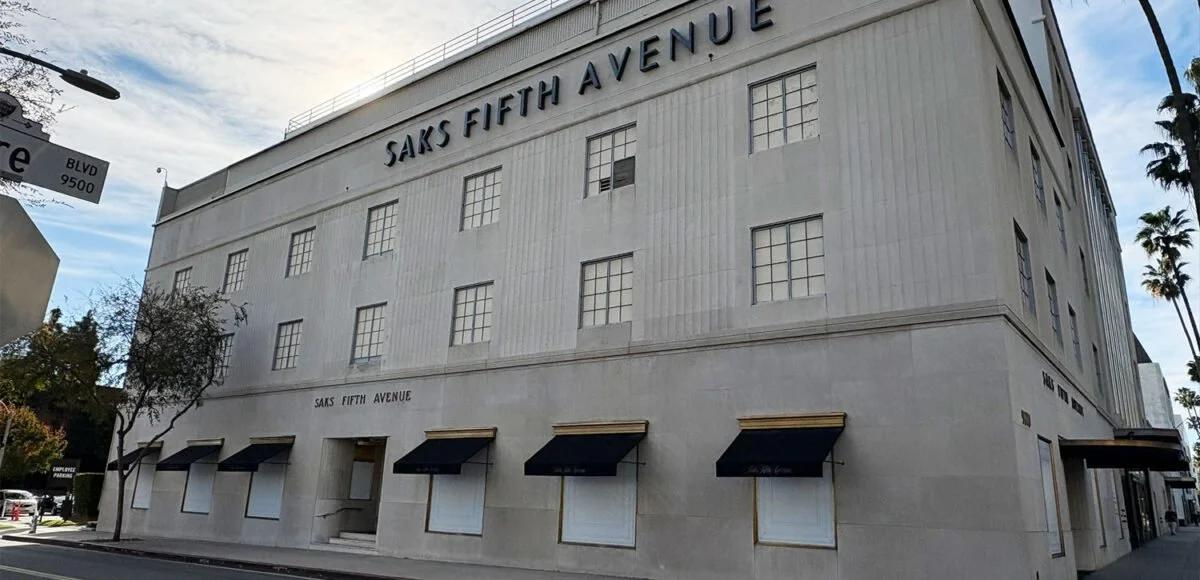
Retail bifurcation. Saks Global filed for Chapter 11 in January 2026. Bloomingdale’s posted 10% comparable sales growth in the same holiday cycle. The middle ground (brands that automated aspiration while relying on atmosphere to justify price) did not survive the Fissure. Machine logic rewards clarity and comparability. The Hollowed Object, optimized for algorithmic visibility, has no defense when the algorithm exposes it.
Milan’s intellectual turn. Monocle’s closing review of Milan 2026 reported that the most popular exhibitions were those offering an intellectual narrative. Visitors queued for hours to see Polish Modernism and the legacy of Jorge Zalszupin. Prada Frames interrogated the image as a political and material force. The market’s appetite for depth, for objects and ideas that carry Semantic Burden, is not subcultural. It is the dominant appetite. The spectacular failed to convert it.
The 2026 Field Registry: Makers at the Fissure Line
OAC identifies four practitioners whose work operates precisely at the Fissure Point: makers whose practice is a living argument for the PLCFA framework and whose institutional recognition confirms that the market is beginning to price what OAC has been advocating.
Saskia Colwell, Narrative Permanence in Charcoal

Colwell’s drawings achieve what OAC’s framework identifies as Narrative Permanence: the capacity of an object to resist temporal displacement. Her charcoal works carry Old Master weight not through stylistic imitation but through material commitment; the carbon on the surface bears witness to the maker’s sustained attention. Collectors are using her work to ground contemporary interiors precisely because it cannot be algorithmically generated. It holds memory that data cannot simulate.
Heidi Lau, Material Memory in Mythic Ceramics
Lau’s ceramics use clay as a conduit for what PLCFA calls Material Memory: the capacity of a worked material to carry the temporal record of its formation. Her mythological vocabulary is not decorative. It is structural; the mythic register is the framework through which the object’s relationship to time is made legible. In a market saturated with ceramic objects that perform material intelligence without possessing it, Lau’s work is a Forensic Ledger.
Benni Allan (EBBA), Atmospheric Equity in Raw Basalt
Allan’s hands-on approach to minimalist raw-basalt home extensions constitutes an architectural practice of Atmospheric Equity. The material’s geological weight, its refusal to be neutral, introduces Tactical Friction into domestic space. As a judge for the 2026 Dezeen Awards, Allan’s institutional position signals that the critical infrastructure is beginning to formalize what PLCFA has been theorizing: that material is never merely surface.
Ming Wong, Eastern Structural Inheritance
Wong’s forthcoming exhibition at London’s National Gallery arrives at a moment OAC has identified as critical for the Eastern Structural Inheritance that runs through the PLCFA framework’s engagement with ma, ceremonial energy, and the architecture of absence. The market’s designation of this as a transformative year for Asian art, in the OAC reading, is an institutional acknowledgment of what the framework has argued for years: that the structural logic underlying the most durable luxury objects has never been exclusively Western.
The PLCFA Verdict: Which Half Survives
OAC does not issue market predictions. The institution issues diagnoses. The diagnosis for Q2 2026, informed by the morning intelligence brief, the Milan Design Week field record, and the active search signals the market is generating in real time, is as follows:
The Hollowed Object does not survive the Fissure Point. An object without Material Singularity, without a legible Custodian’s Contract, without the capacity to hold Narrative Permanence, has no defense when capital contracts. The algorithm will surface its comparables. The archive will not hold it.
The Anti-Speculative Object gains value at the Fissure. Objects made under the Custodian’s Contract, where the maker’s commitment to material is so total that the object resists commodification, are not merely surviving market contraction. They are becoming the canonical safety that the collector class is fleeing toward. OAC has been archiving them.
The industry’s celebration of AI efficiency is the final symptom of Zero-Sum Aura. When a market turns to automation to generate what it cannot produce organically (desirability, meaning, cultural weight) it is liquidating its aura to fund its operations. This is Active Liquidation dressed as innovation. OAC’s Study No. 032 documented this mechanism in the private auction market. The design market is now exhibiting the same structure.
Deep Materiality is not a countertrend. It is the structure that remains when the spectacle burns through its inventory. Milan 2026’s most visited exhibitions were intellectual, not immersive. The queue at Torre Velasca was for Polish Modernism. The Hermès activation was for hammered palladium and horsehair. The market is already voting with its attention.
The value is migrating toward the deep, labor-intensive practices archived at 469 Fashion Avenue.
The Fissure Point is not a crisis for OAC. It is a confirmation. The PLCFA framework was built to name precisely this structural moment: when a market that has spent a decade manufacturing aspiration hits the wall of its own emptiness. The wall is visible now. The brands that were not building objects with Material Singularity, Semantic Burden, and Narrative Permanence are discovering, in real time, that they were not building luxury at all.
They were building Hollowed Objects. And the Fissure has exposed them.
ABOUT THIS STUDY
OAC Study No. 034 is produced under the Post-Luxury Conceptual Functional Art (PLCFA) framework by the Objects of Affection Collection, an independent critical research and design house headquartered at 469 Fashion Avenue, 12th Floor, New York, NY 10018. The study is informed by live intelligence scanning, field research, search signal analysis, and the OAC proprietary lexicon. OAC studies are not market reports. They are critical diagnoses.
Authored by Christopher Banks, Anthropologist of Luxury, Critical Theorist & Founder
Objects of Affection Collection
Office of Critical Theory & Curatorial Strategy
469 Fashion Avenue, 12th Floor, New York, NY 10018