
The Architecture of Intent
A Critical Lexicon
This collection of studies is the intellectual architecture of Post-Luxury Conceptual Functional Art (PLCFA).
The true artistry of this Maison resides not in the finished form, but in the rigorous thinking that precedes it. These essays serve as the conceptual foundation for PLCFA, using a critical lens to interrogate cultural phenomena, art history, and consumer paradigms—analyzing everything from the ephemeral spectacle of luxury to the pure architectural rigor of abstract principles.
This is an invitation into the workshop of the mind. By sharing this process, we validate the necessity of a new category of value and invite you toward a well-considered life, one founded on true craft, uncompromising narrative, and durable meaning.
New to PLCFA? Begin with Essential Reading below.
Exploring a specific area? Navigate by category.
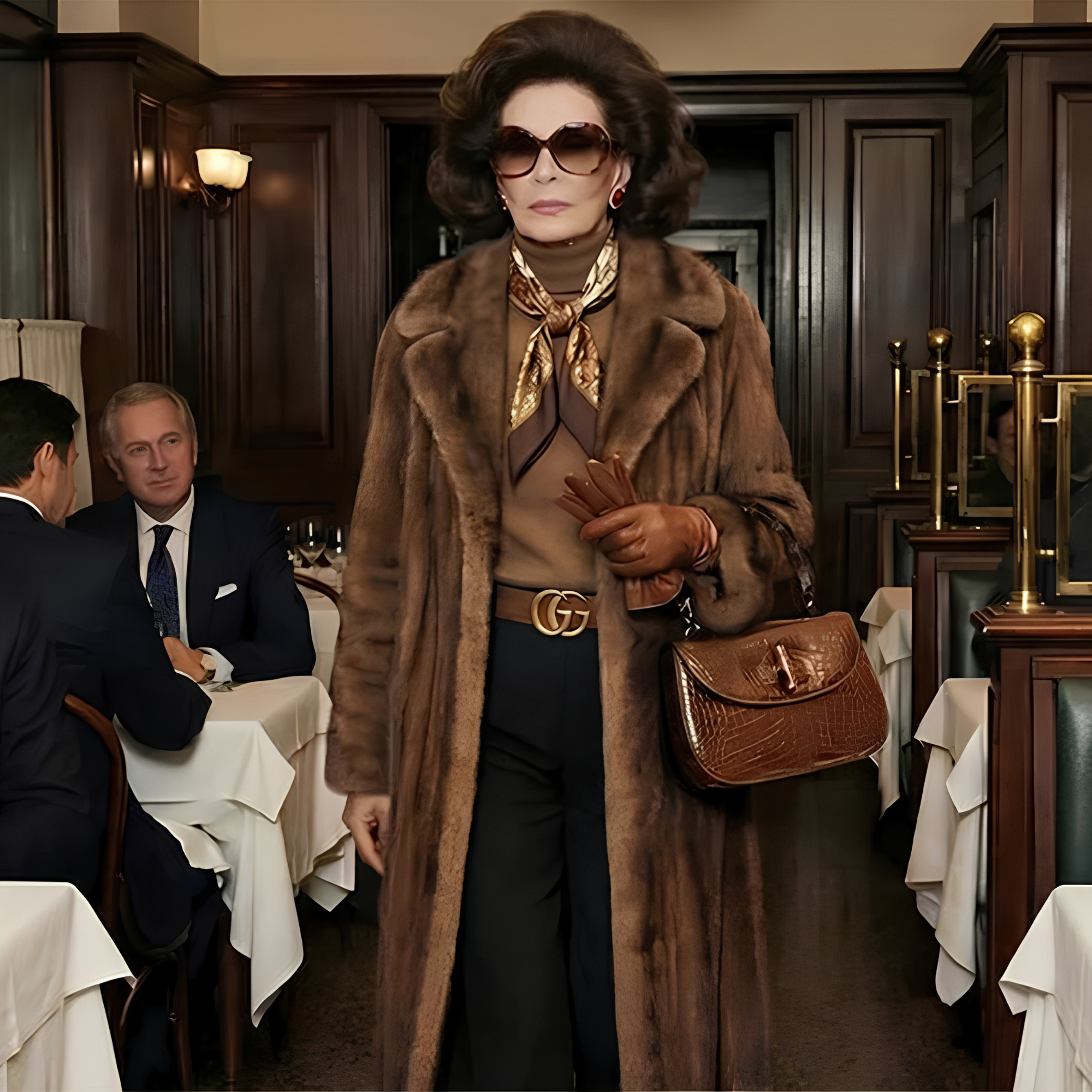
The Hand Strikes Back: Generative “Slop,” Costly Signaling, and the Crisis of the Luxury Artisanal Contract
The structural bifurcation observed in 2026 is not a temporary divergence in marketing tactics, but the permanent drawing of a battle line. As algorithmic production continues to flood the digital landscape with cost-free, frictionless perfection, the heritage houses that surrender their visual communications to the machine will find their brand equity hollowed out from within. When the labor density of a brand's representation drops to zero, the economic justification for its premium collapses alongside it. The Luxury Artisanal Contract cannot be selectively enforced; a house cannot demand that a patron respect the invisible human hours embedded in a physical object while simultaneously feeding that patron synthetic, automated illusions on the screen.
Ultimately, the future of the post-luxury tier belongs to those who institutionalize a rigorous architecture of un-smoothness. By anchoring the brand's identity in the material singularity of the named author, the visible trace of human time, and the deliberate imperfection of the artisan's hand, a defensive moat is constructed that no algorithm can credibly replicate. The paper grain and the scorched cuff are not merely aesthetic choices—they are sovereign declarations of human presence. In an era where flawless perfection has been mathematically cheapened to nothing, the deliberate mark of human fallibility remains luxury’s most scarce, expensive, and irreplaceable signal.
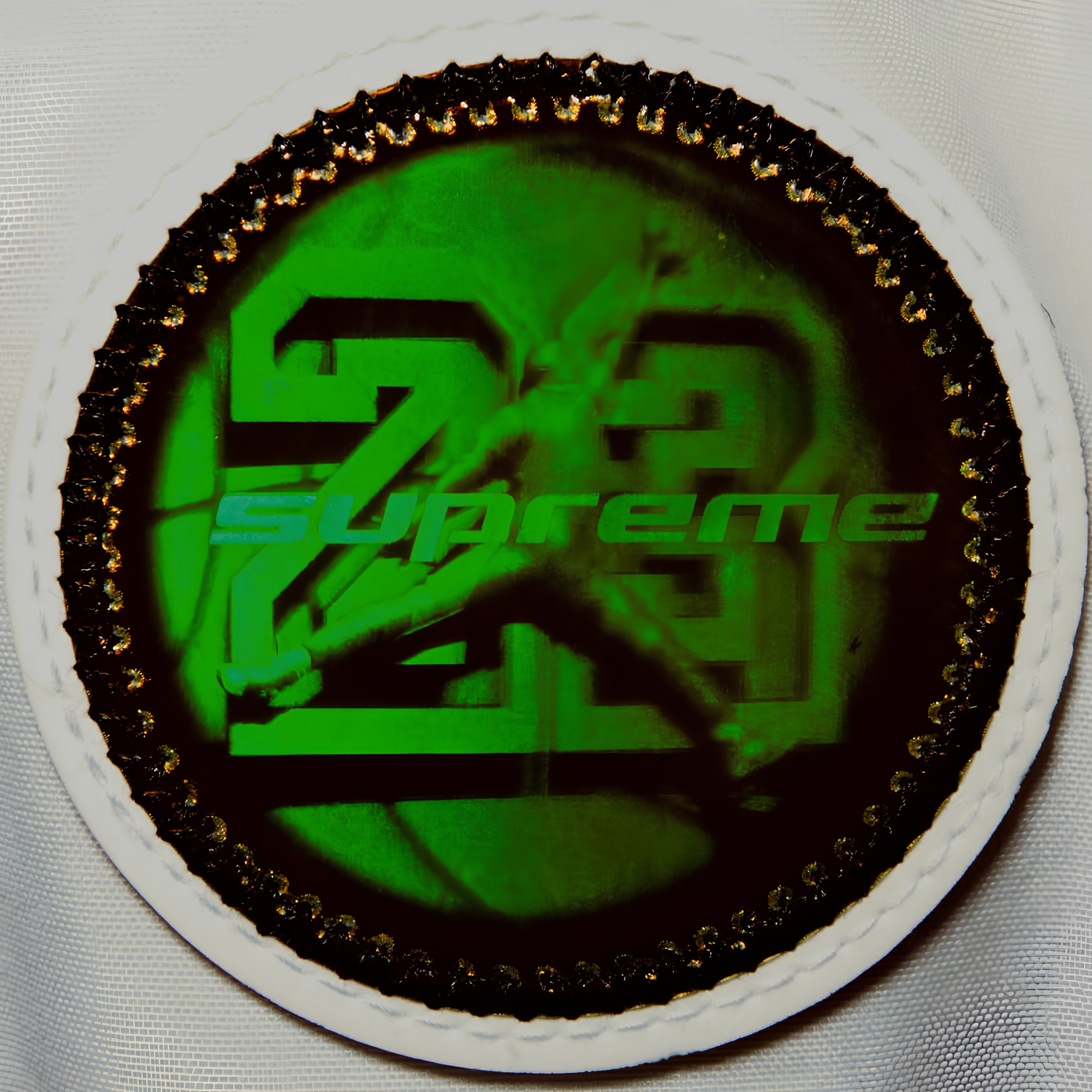
The Hype-Capital of the Court: Supreme, Jordan Brand, and the Speculative Velocity of the Streetwear Archive
The Supreme × Jordan Brand Spring/Summer 2026 apparel collection represents a pivotal moment in the contemporary streetwear archive, demonstrating how a commodity's sign-value can entirely detach from its original material utility. By presenting an array of high-ticket items—headlined by a $698 drum-dyed cowhide leather jacket—without a singular pair of performance sneakers, the drop serves as a live experiment for the Hollowed Object thesis. The portable aura of the Jumpman logo is mapped onto heavy, lifestyle garments, relying strictly on manufactured drop mechanics and structural scarcity rather than court performance to generate speculative velocity.
Through the critical lens of OAC’s PLCFA framework, this structural inversion exposes the stratigraphic record of corporate consolidation, most notably under the modern ownership of global optical titan EssilorLuxottica. Recontextualized historical details, such as Tinker Hatfield’s 1996 holographic cat-eye and medieval Old English typography, no longer function as organic signs of athletic or subcultural lineage. Instead, they operate as highly compressed visual signifiers—decorative citations that carry an immense semantic burden. The collection ultimately materializes a simulated street heritage, capturing secondary-market value through automated institutional rituals while the original subcultural conditions continue to recede into the past.
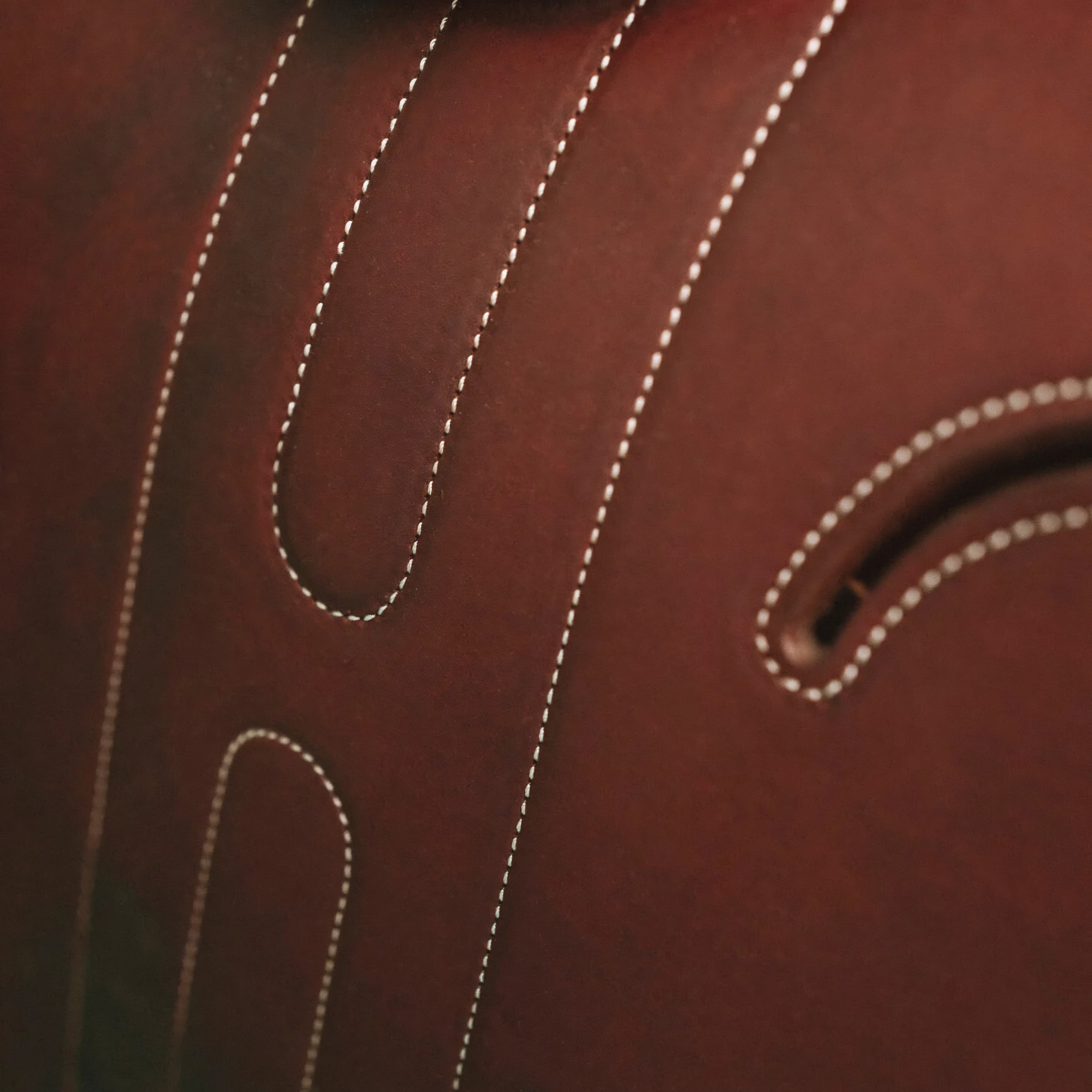
The Aura Goes West: What Hermès "Chapter 2" in Los Angeles Actually Confirms About Material Permanence, Speculative Geography, and the Custodial Stakes of Mati Diop's Lens
The Hermès Women’s Fall-Winter 2026 runway presentation in Los Angeles—staged as Chapter 2 of a transcontinental dialogue under the creative direction of Nadège Vanhée-Cybulski—represents far more than a high-profile marketing exercise in a global luxury capital. It serves as a profound structural stress test for the house’s core identity, deliberately transporting a deeply "Sedimentary Object" system—where value is earned through the slow compression of time, labor density, and material irreversibility—into the world's most hyperreality-saturated urban landscape. By deploying the Post-Luxury Conceptual Functional Art (PLCFA) framework, this study analyzes the friction generated when Hermès's resistant, non-interchangeable material singularity enters a West Coast sign economy engineered to metabolize physical craft into empty, high-velocity digital spectacle, threatening to convert genuine aura into zero-sum aura.
Crucially, the study diagnoses the institutional weight of appointing acclaimed filmmaker Mati Diop (Dahomey, Atlantics) as the presentation's film and photography director. Far from a conventional celebrity alignment, commissioning a director whose cinematic body of work is fundamentally dedicated to investigating the contested custody, displacement, and testimony of historical artifacts introduces a hyper-critical perspective into the heart of the event. Through this lens, the collection's demanding material vocabulary—from its structural four-pocket military leather jackets to its modernist, geometric A.M. Cassandre Perspective motifs—is forced to transcend mere styling. Ultimately, this pre-event diagnostic establishes the vital markers to watch on June 4, examining whether Hermès can successfully scale its historic "Custodian's Contract" or if the event's accumulating semantic burden will inevitably see the image triumph over the testimony of the object.
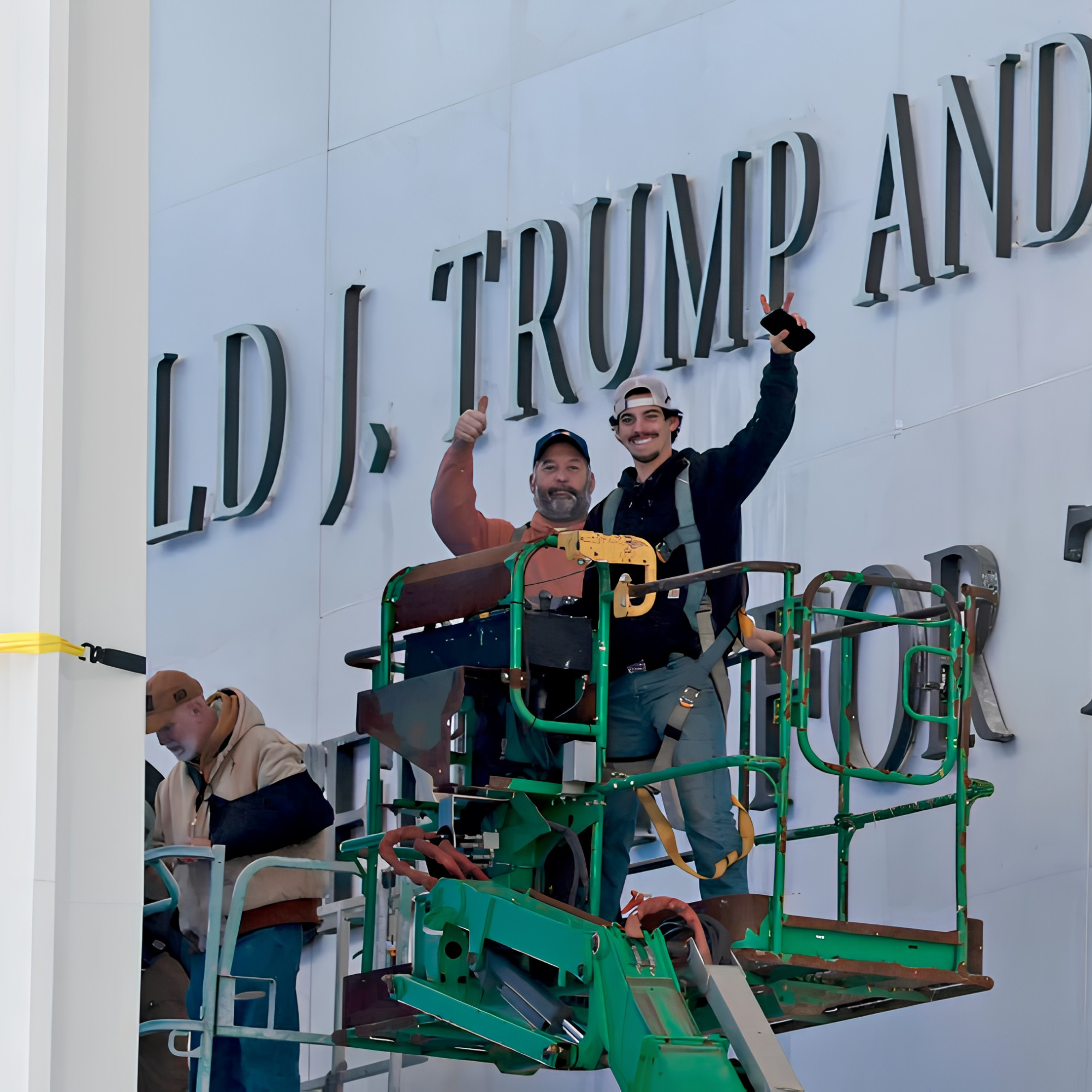
THE NAME THAT COULDN'T STICK: How Trump's Attempt to Rename the Kennedy Center Exposed the Architecture of Aura Theft.
On May 29, 2026—JFK’s birthday—the federal judiciary dismantled an unprecedented corporate-style raid on American cultural legacy, ordering the immediate stripping of Donald J. Trump’s name from the John F. Kennedy Center for the Performing Arts. This study establishes that the unilateral board coup of December 2025 was never merely a political stunt or an administrative rebranding; it was a structurally naked Aura Transaction. Utilizing the critical frameworks of Post-Luxury Conceptual Functional Art (PLCFA), we examine how this maneuver attempted to extract sixty-two years of accumulated national grief, architectural permanence, and institutional legitimacy without performing an ounce of the custodial labor required to generate such authority.
The immediate collapse of the "Trump Kennedy Center" highlights a fundamental systemic truth within the contemporary symbolic economy: institutional aura cannot be legislated or decreed into existence. By positioning this event alongside historical precedents and the acute warnings penned by Jacqueline Kennedy at the memorial's inception, this paper unpacks the concepts of Zero-Sum Aura, Structural Captivity, and the Hollowed Object. What Judge Christopher Cooper's ruling ultimately confirms is not just a point of federal statute, but a core tenet of material philosophy: true Narrative Permanence belongs exclusively to the collective Labor Density of genuine custodianship, and the deepest layers of an object's meaning will always resist political capture.
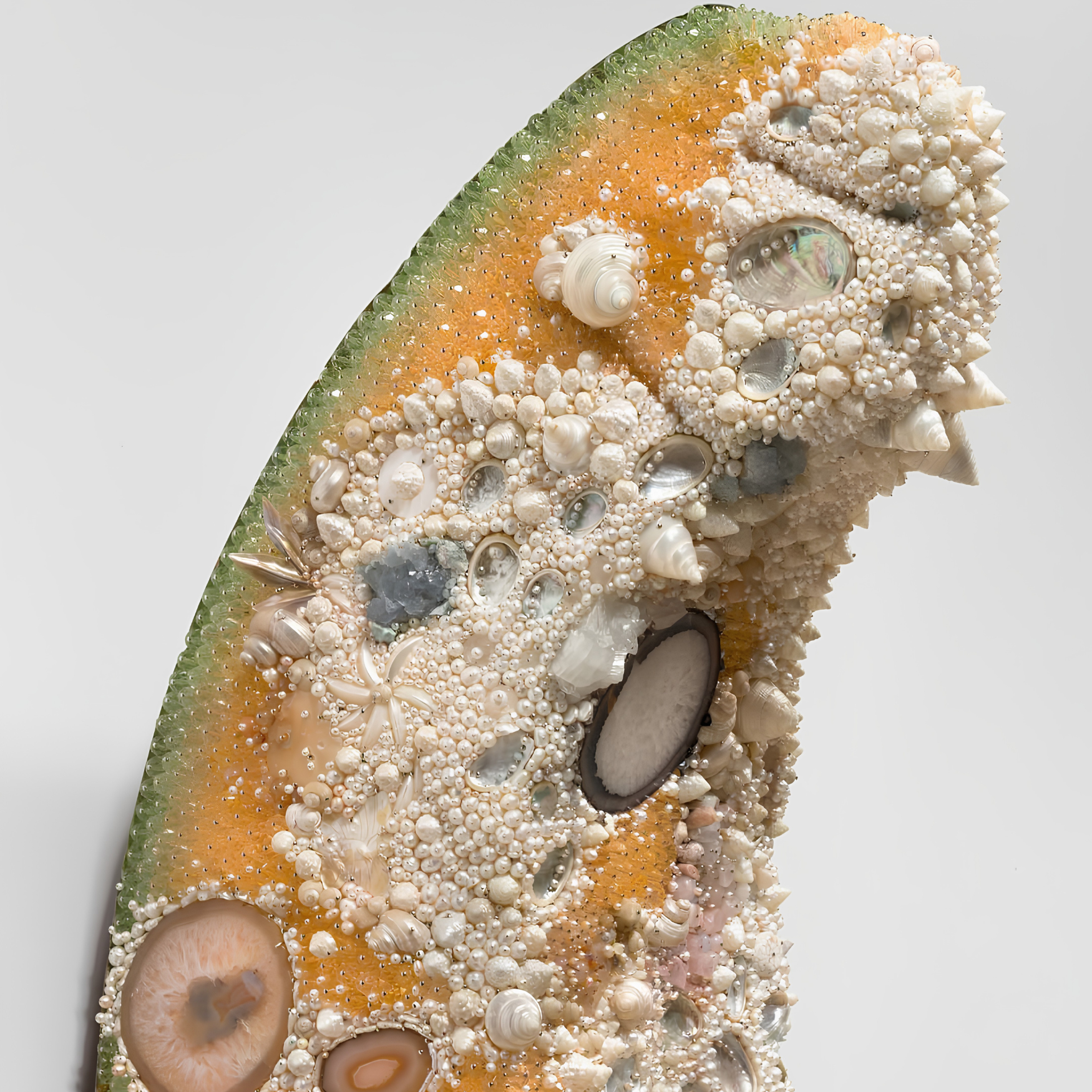
The Rot Is the Work: Kathleen Ryan, Mineral Weight, and the Sculpture That Cannot Be Flattened
The true significance of Kathleen Ryan’s sold-out booth at TEFAF New York 2026 extends far beyond the immediate frenzy of the art market; it represents a profound structural shift in how we evaluate material permanence in a post-digital world. By operationalizing the frameworks of Material Singularity and Labor Density, Ryan’s sculptures deliver a masterclass in tactical friction, creating un-flattenable physical surfaces that stubbornly resist the compressing algorithms of our image-saturated culture. The urgent, underlying question her practice leaves open is not one of aesthetic popularity, but of long-term stewardship—challenging the collector class to move beyond transactional acquisition and confront the raw, entropic reality of the object itself.
Discover how the Post-Luxury Conceptual Functional Art (PLCFA) framework unpacks the impossible-to-simulate surfaces of the Bad Fruit series, and why the contemporary market now answers directly to the weight of human labor.
INSTITUTIONAL LEXICAL HIJACKING: How Mass-Market Luxury Launders Post-Luxury Vocabulary, and What the Courts Have Already Confirmed
The rapid commercialization of the "monastic" design trend has turned a vocabulary of spiritual and material refusal into a shallow corporate aesthetic. Today, fast-fashion entities and mass-market luxury brands readily deploy terms like "honest friction" and "craft heritage" to market injection-molded plastics, veneer facades, and highly exploitative labor models. This structural mechanism—defined as Institutional Lexical Hijacking—is the deliberate extraction of a sovereign critical vocabulary by organizations whose material realities fundamentally contradict the language they use. It represents the terminal expression of a market that capitalizes on the appearance of integrity while systematically hollowed out from within.
This study moves beyond abstract criticism to examine concrete legal and regulatory precedents across three major jurisdictions. Between 2023 and 2026, European courts and antitrust authorities permanently exposed this systemic disconnect, placing prominent luxury fashion houses under judicial administration for severe supply chain exploitation while simultaneously investigating fast-fashion platforms for predatory design framework mechanisms. By integrating this definitive evidentiary record with the Post-Luxury Conceptual Functional Art (PLCFA) framework, this paper details exactly how the vocabulary of material integrity is commercialized as a reputational asset class—and why precise structural theory remains our only line of defense.
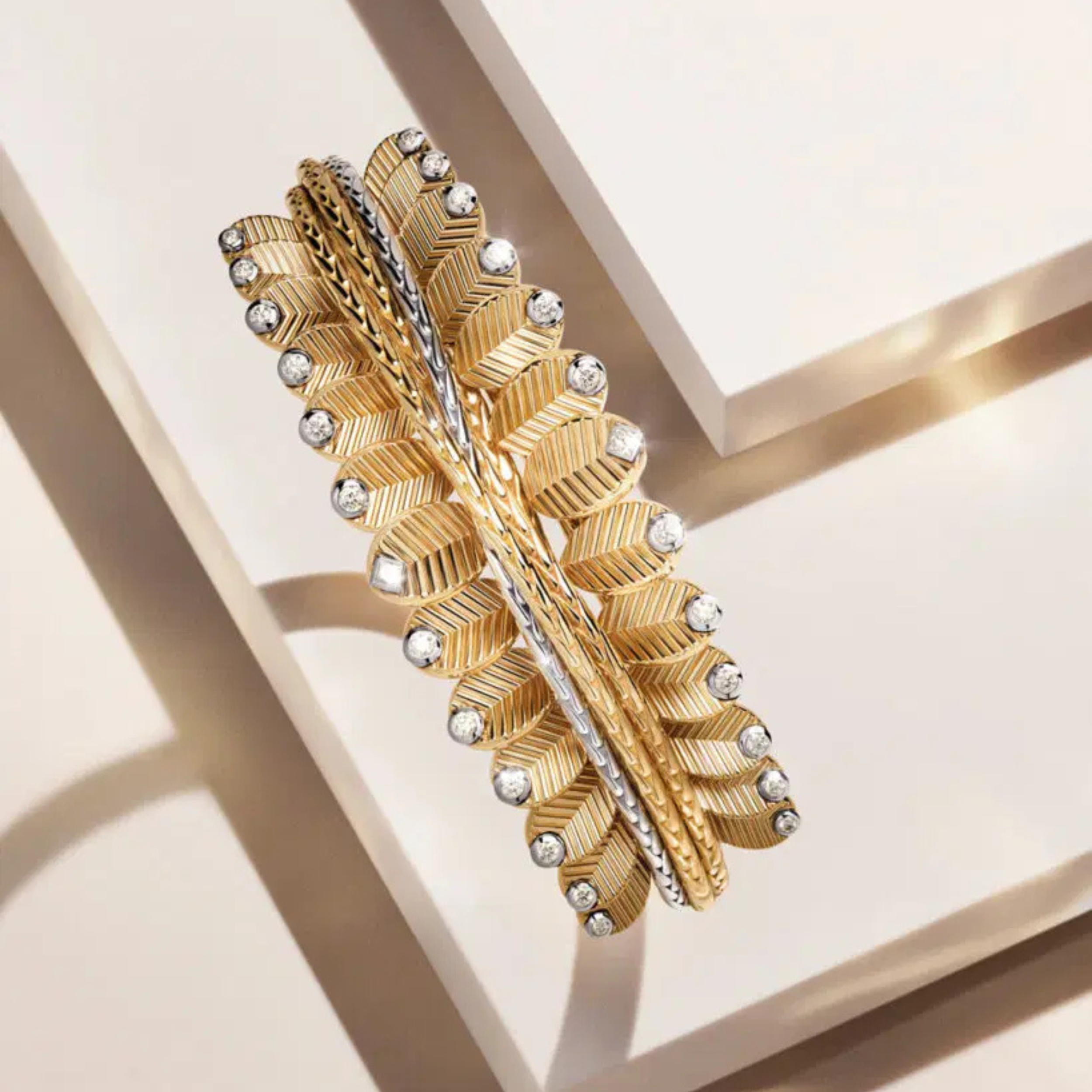
Richemont's "Tactile Integrity" vs. Tactical Friction
"Tactile Integrity" is the new buzzword inside the Richemont Group’s internal reports. But it isn't an innovation—it’s a theft. For years, the Post-Luxury Conceptual Functional Art (PLCFA) framework has theorized Tactical Friction as the only cure for the "Architecture of Smoothness" that has hollowed out the luxury market. Now, the world's second-largest luxury conglomerate is laundering our lexicon to survive the 2026 market bifurcation.
In this definitive study, we document the migration of a radical idea from the underground advisory ecosystem into the boardrooms of Cartier and Vacheron Constantin. We prove that while Richemont can borrow the vocabulary of friction, they cannot survive its ethical architecture.
The argument has already won. Read the full documentation of the migration.
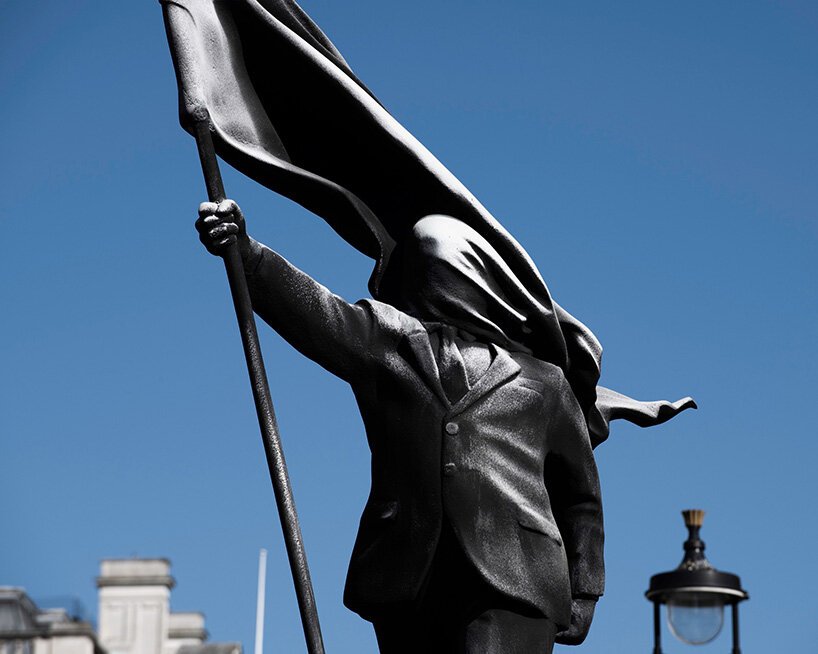
The Suited Void: Banksy’s Waterloo Place Statue and the Architecture of Legible Blindness
On the morning of April 29, 2026, the architectural silence of Waterloo Place was shattered by a 25-foot structural argument in bronze and granite. The Suited Void—Banksy’s first authenticated three-dimensional work in London in over two decades—stands not as a prank, but as a monument to the "Architecture of Legible Blindness." Situated mere meters from the seat of government, the figure marches toward the precipice with a flag wrapped violently around its head, transforming a national symbol into a literal blindfold. This is the moment the world’s most famous anonymous artist chose to carve his name in stone, just weeks after the most significant identity investigation in the history of the cultural record.
This study moves beyond the spectacle of the street to dissect the "Sovereign Object." Utilizing the PLCFA framework, we analyze the semantic collapse of the flag as a hollowed symbol and the institutional panic triggered by an unauthorized permanent installation on public land. Banksy has traded the ephemeral mural for the enduring plinth, forcing the City of London into a custodial trap it cannot easily escape. Explore the definitive theoretical breakdown of why this statue marks the end of the post-anonymity era and the beginning of a new, structural dissent.
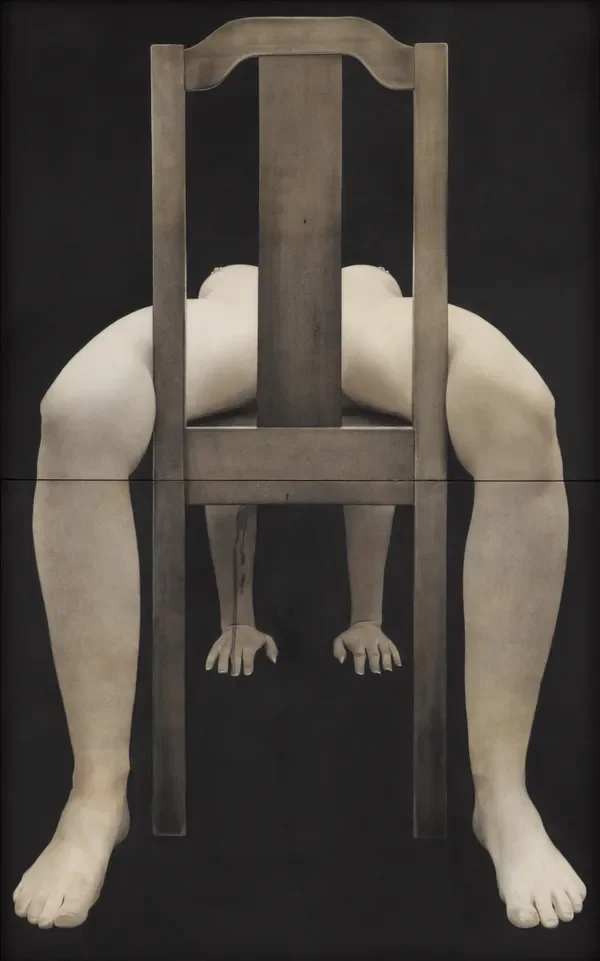
Luxury Just Split in Two. One Half Will Survive.
The Homepage Excerpt: A Call to the Fissure
The global luxury market has reached a definitive Fissure Point. What mainstream discourse mischaracterizes as a "selective recovery" is, in truth, a structural bifurcation—a decisive and irreversible split between the spectacle of the screen and the weight of the world. As Milan Design Week 2026 concludes, the architecture of aspiration has hit the wall of its own emptiness. Capital is no longer merely seeking growth; it is fleeing the "Hollowed Object"—those artifacts optimized for algorithmic visibility but devoid of material soul—and migrating toward a new canonical safety defined by what OAC theorizes as Material Singularity.
In this landmark study, OAC’s intelligence architecture diagnoses the three persistent theoretical gaps currently fracturing the industry: the illusion of transparency in digital passports, the sensory high of AI-generated environments, and the unearned calm of "warm minimalism." By interrogating the field records of practitioners like Benni Allan and Saskia Colwell, we reveal the structure that remains when the spectacle burns through its inventory. The Fissure Point is not a crisis; it is a confirmation. In a market finally hit by the reality of its own hollow manufacturing, only the objects carrying a true Custodian’s Contract will survive the migration.

THE THOUGHTFUL MIDDLE DISTANCE
The End of the Architecture of Smoothness
For a decade, we have been sold the "Smooth." From the frictionless glass of our interfaces to the beige, logo-less surfaces of "Quiet Luxury," the modern world has attempted to strip the object of its history. We have been living in a curated void—a culture of the Hollowed Object, where value is a fleeting byproduct of a brand’s signaling rather than the material’s soul.
The Objects of Affection Collection (OAC) was founded to rupture this silence. Our Studies are not mere observations of trends; they are forensic investigations into the relationship between the human hand and the physical world. We do not look at what is popular; we look at what is Durable.
From Consumption to Stewardship
The entries found within this archive document the migration toward Deep Materiality. We explore the Semantic Burden—the idea that an object must carry the weight of its own making. Whether analyzing the topographic needle-painting of Alan Vilar or the structural synthesis of the Guochao movement, these studies serve as a blueprint for a new way of living.
We invite you to move past the binary of "too much" or "not enough." Here, we discuss Atmospheric Equity and the Custodian's Contract. We ask not what an object says about your status, but whether you are adequate to the obligation the object creates.
This is the transition from Accelerated Luxury to Narrative Permanence.