THE NAME THAT COULDN'T STICK: How Trump's Attempt to Rename the Kennedy Center Exposed the Architecture of Aura Theft.
Zero-Sum Aura, Aura Transaction, and the Structural Captivity of the Living Memorial
On May 29, 2026, JFK’s birthday, U.S. District Judge Christopher Cooper ordered that Trump’s name be removed from the Kennedy Center within fourteen days, ruling that the renaming was illegal. The ruling closes the first chapter of what this study argues was never primarily a political act: it was an Aura Transaction, a structural attempt to absorb the accumulated cultural authority of a martyred president without performing the custodial labor that generates such authority. Using the PLCFA framework’s concepts of Zero-Sum Aura, Structural Captivity, and the Hollowed Object, this study argues that the Trump Kennedy Center episode reveals a fundamental truth about how aura operates in the contemporary institutional landscape: it cannot be transferred by decree. It can only be earned through the Labor Density of genuine custodianship. The judge’s ruling did not merely correct a legal error. It confirmed what the PLCFA framework has argued since its founding: that Narrative Permanence is not a title on a building. It is the irreversible weight of cultural labor performed over time.
The Act
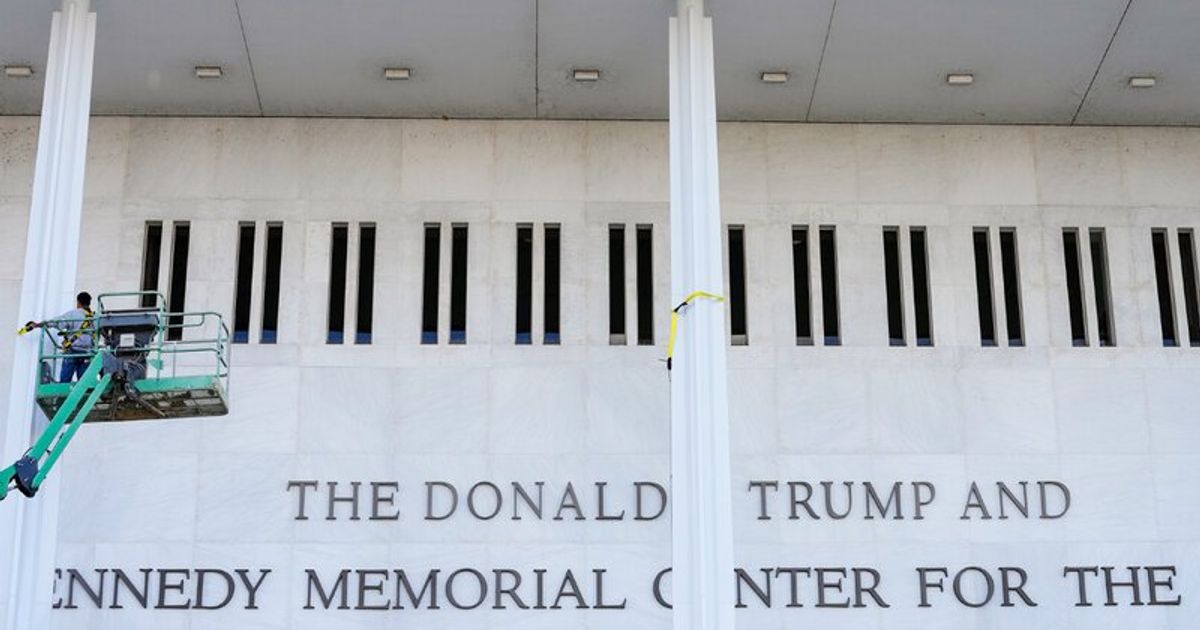
In December 2025, the board of trustees of the John F. Kennedy Center for the Performing Arts (a board that President Trump had filled entirely with hand-picked loyalists after purging eighteen Democratic appointees) voted unanimously to rename the institution the “Trump Kennedy Center.” Workers added new signage to the front portico within days. The Center’s website was updated. Official materials were reprinted. The act was complete before any legal challenge could be mounted.
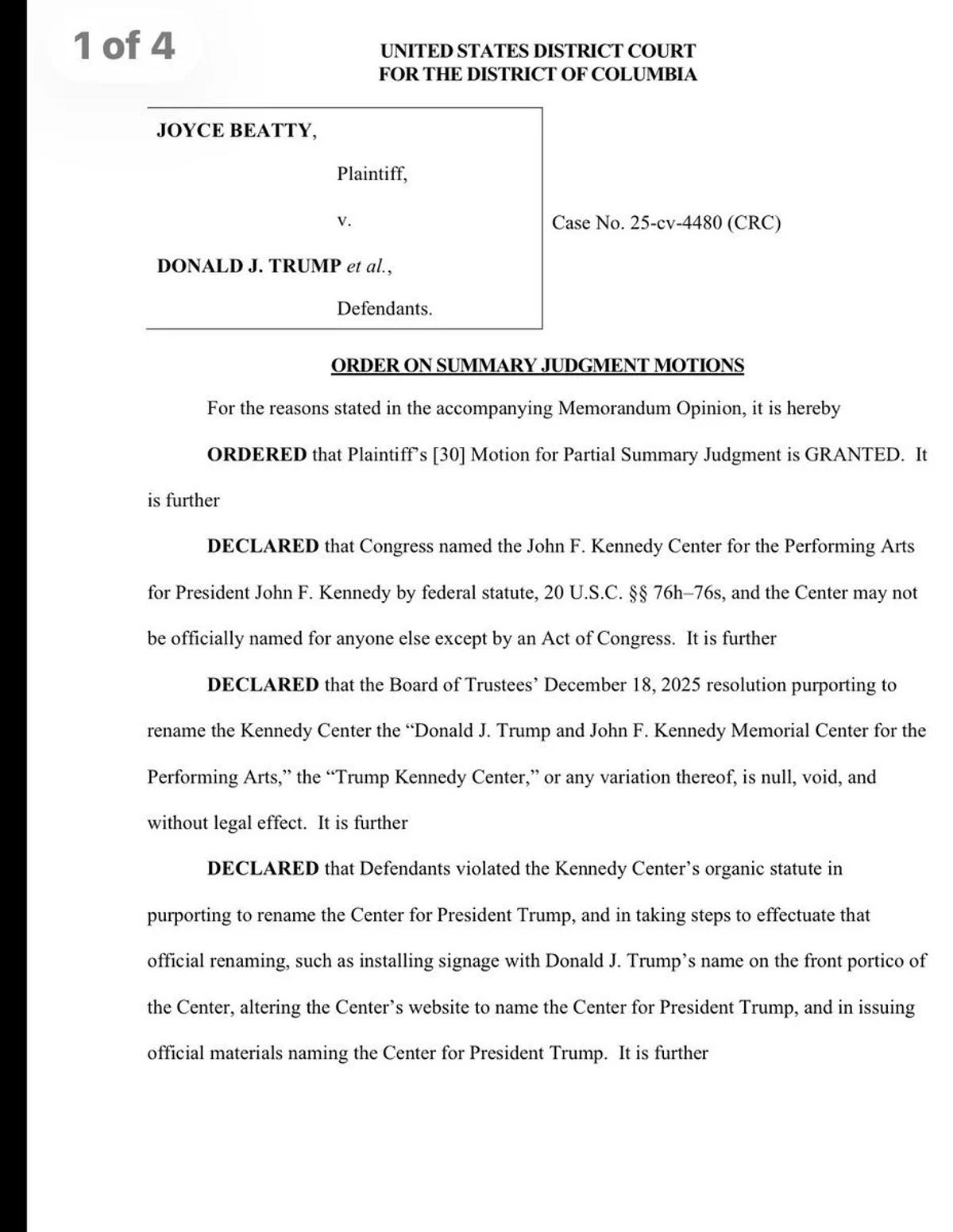
On May 29, 2026, JFK’s birthday, a detail the historical record will not allow to be coincidental, U.S. District Judge Christopher Cooper issued a 94-page ruling declaring the renaming illegal. “Congress gave the Kennedy Center its name,” the judge wrote, “and only Congress can change it.” He ordered Trump’s name removed within two weeks and halted the planned two-year closure for renovations. The ruling came on the same day the administration secured $257 million for the project. The money was real. The name could not stay.
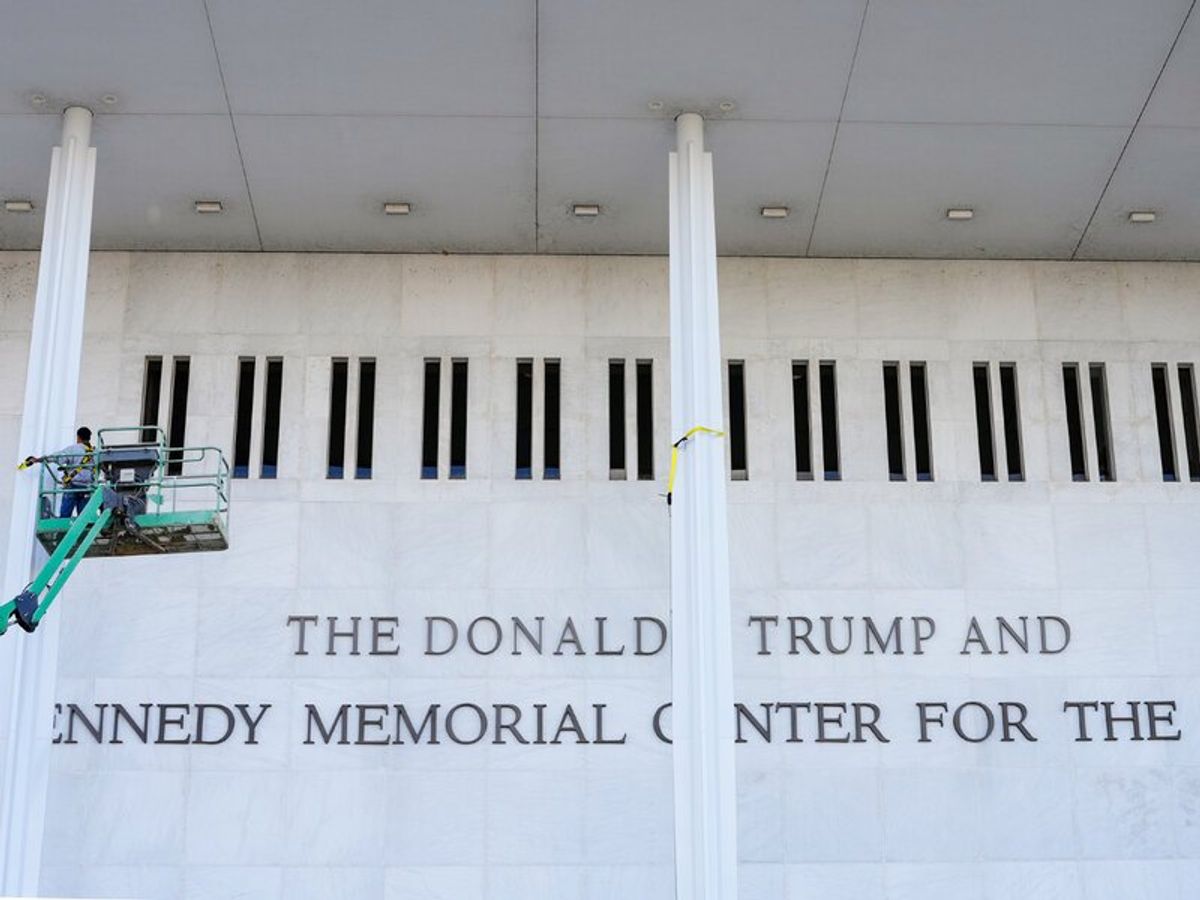
The name that could not stick was never really about a name. It was about whose aura gets to live inside a building, and whether aura can be legislated into existence.
This study is not a legal analysis. The law is straightforward: Congress created the Kennedy Center by federal statute in 1964, designating it a living memorial to the assassinated president, and only Congress can alter that designation. What the law cannot explain, and what the PLCFA framework is uniquely positioned to address, is why the act was attempted at all, what it reveals about the mechanics of Aura Transaction at institutional scale, and what the judge’s ruling confirms about the architecture of cultural authority.
The Kennedy Center as Auratic Object
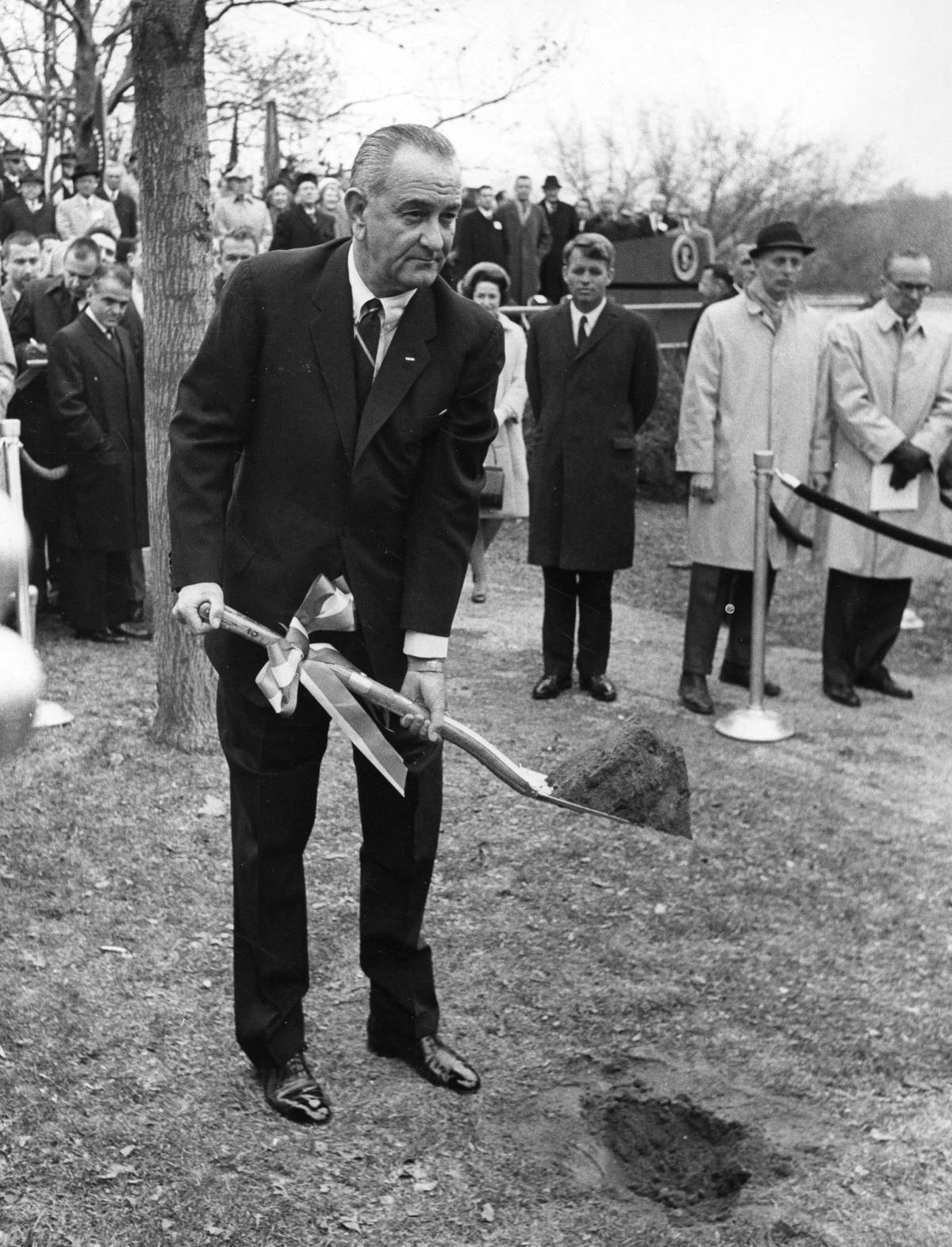
The Kennedy Center is not a performing arts venue that happens to be named after a president. It is a Sovereign Object, a structure whose material existence is inseparable from the narrative of the figure it memorializes. When President Lyndon B. Johnson broke ground in December 1964, one year after Kennedy’s assassination, the building’s primary purpose was not programming. It was testimony. The structure on the Potomac shore was built to make grief permanent in marble.
This is what Walter Benjamin called Aura, the singular, unrepeatable presence of an object embedded in historical time and place. The Kennedy Center’s aura is not decorative. It is constitutive. The building’s marble, its river position, its architectural weight, its 1971 opening program, Leonard Bernstein’s “Mass,” a work that spanned genres and deliberately implicated doubt, faith, and anti-establishment feeling, were all chosen to embody a specific cultural proposition: that the United States, after the violence of Dallas, could demonstrate its seriousness about civilization through an institution dedicated to the arts.
This proposition accumulated value over fifty-five years. Every performance, every diplomatic exchange conducted through its stages, every bipartisan board appointment, every president who chose not to use it as a personal platform; each act of restraint was a deposit into the building’s auratic account. The Kennedy Center is not merely named after JFK. It is composed of the Labor Density of everyone who performed custodial responsibilities toward it across six decades. That labor is what makes it a Sovereign Object rather than a real estate asset.
Aura is not a title. It is the irreversible accumulation of custodial labor performed in the object’s name, over time, without expectation of immediate return.
Aura Transaction by Fiat
The PLCFA framework defines Aura Transactionas the structural attempt to absorb the cultural authority of an auratic object or figure without performing the labor that generates that authority. The transaction is attempted when one party seeks to benefit from another party’s accumulated Narrative Permanence by proximity, association, or, as in this case, nominal grafting.
What the Trump Kennedy Center renaming attempted was Aura Transaction at its most structurally naked. By placing his name alongside Kennedy’s on the portico of a living memorial, the act sought to claim custodial credit for an institution whose auratic weight was entirely generated before his involvement. This is the Zero-Sum Aura condition: any authority that accrues to Trump’s name through the association is necessarily extracted from the Kennedy legacy, because aura does not multiply through association; it is redistributed. The building cannot hold two equally weighted names. One consumes the other.
This is not rhetoric. It is a structural claim about how symbolic economies operate. The PLCFA framework, drawing on Jean Baudrillard’s account of sign value and Walter Benjamin’s theory of aura, has consistently argued that the luxury and cultural sectors are governed by zero-sum auratic logic: the more a name is attached to objects it did not generate, the more the name’s own authority dilutes while simultaneously diminishing the original object’s singularity. In the Kennedy Center case, the zero-sum condition is especially acute because the original object, the living memorial, is not merely a cultural institution. It is a grief object. Its aura is generated by assassination and national mourning. That is not a brand one borrows.
Zero-Sum Aura does not negotiate. When a name that did not generate the cultural weight attempts to share the surface with a name that did, one wins and one loses, and the building itself becomes the casualty.
The Renaming Spree as Systemic Pattern
The Kennedy Center was not an isolated act. It arrived as part of a documented pattern of institutional Aura Transaction that included renaming the U.S. Institute of Peace the “Donald J. Trump United States Institute of Peace,” pursuing the renaming of Dulles International Airport and Penn Station, and successfully legislating the renaming of Palm Beach International Airport. A new class of battleship was named for the president while he remained in office.
Each of these acts follows the same structural logic: an institution whose cultural authority was generated through decades of independent operation is nominally grafted with a living president’s name, seeking to associate that president’s legacy with the institution’s accumulated weight. The pattern is not unprecedented in human history; rulers have attached their names to monuments they did not build since the first dynasties; but it is structurally incoherent in the contemporary cultural economy, where institutional authority depends on demonstrated independence from political capture.
The Kennedy Center case is categorically different from the others. An airport is infrastructure. A peace institute is an administrative body. The Kennedy Center is a Living Memorial, a legal designation established by Congress in 1964, one year after the assassination. Jacqueline Kennedy herself expressed hesitation about using the institution as a memorial, writing to the founding chairman in a private 1964 letter that she feared politicization would “distract from JFK’s legacy.” She predicted this moment sixty-two years before it arrived.
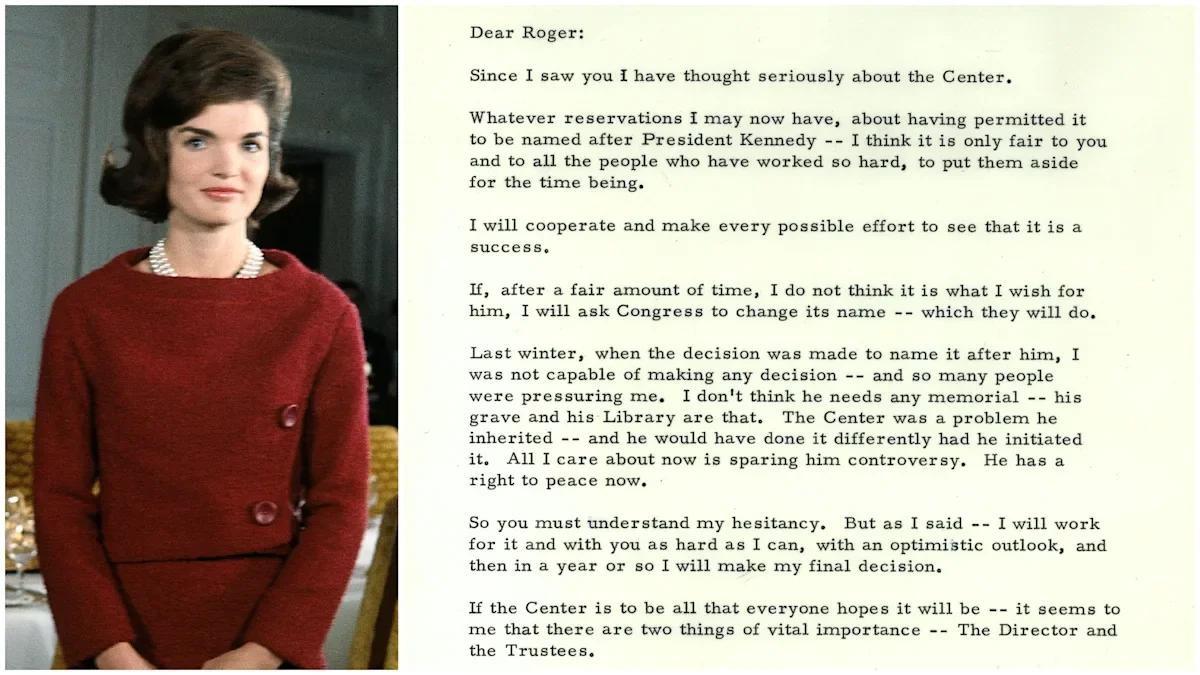
What Jacqueline Kennedy intuited was the Structural Captivity condition: once a cultural institution is designated a living memorial, it becomes hostage to any political actor who wishes to claim association with the memorialized figure. The institution cannot resist on its own terms. It requires external protection, in this case, the protection of the federal statute that Congress wrote and that Judge Cooper enforced.
Structural Captivity and the Hollowed Object
The PLCFA framework’s concept of the Hollowed Object describes an object that has been evacuated of its original meaning through the substitution of sign for substance. The Hollowed Object retains its surface, its name, its address, its institutional identity, while the animating purpose that generated its cultural authority has been replaced with a different agenda. This is the Semantic Burden inverted: instead of the object carrying the weight of its own history, it is made to carry someone else’s.
The Trump Kennedy Center, had it been allowed to persist, would have been a textbook Hollowed Object. The building’s marble would remain. The stages would continue operating. The institutional infrastructure, the staff, the programming calendar, the educational initiatives, would have continued functioning. But the nominal grafting would have fundamentally altered what the object means in the symbolic economy. A living memorial to a martyred president, renamed for a living one, is no longer a memorial. It is a political advertisement wearing a memorial’s clothes.
This is the mechanism the PLCFA framework has analyzed across contexts as varied as The Banksy Enigma and The Miu Miu Problem: the hollowing of cultural objects does not announce itself. It arrives through incremental acts of nominal substitution, each of which appears administrative or cosmetic until the cumulative effect becomes visible. By the time the object has been hollowed, the institutional infrastructure that was supposed to protect it has often already been compromised. In the Kennedy Center case, the hollowing mechanism was the board itself, purged of independent voices and replaced with loyalists who voted unanimously to authorize the transaction.
The Hollowed Object does not collapse. It continues to stand, continues to function, continues to be attended, while the meaning that justified its existence has been quietly replaced with someone else’s agenda.
The Custodian’s Contract and Its Violation
The PLCFA framework’s Custodian’s Contract holds that cultural institutions of genuine auratic weight exist in an implicit covenant with the public: they will exercise stewardship over the cultural objects and narratives in their care without extracting personal benefit from that stewardship. The contract is not legal. It is structural. It is enforced by the institution’s ongoing legitimacy, which depends on its demonstrated independence from the agendas of whoever currently holds the authority to govern.
The Kennedy Center’s custodial record across fifty-five years was, by any institutional measure, extraordinary. No sitting president had ever served as its chairman. Bipartisan board composition was maintained through Republican and Democratic administrations alike. Programming decisions were made by staff, not political appointees. The institution’s independence was not merely a policy preference. It was the mechanism by which it maintained its auratic authority, because authority built on perceived independence from political interference is structurally more durable than authority built on political alignment.
The Trump board’s unanimous vote to rename the institution violated the Custodian’s Contract on every dimension. It extracted political benefit from a custodial position. It substituted governance authority for cultural legitimacy. It treated the institution’s accumulated Narrative Permanence as a transferable asset rather than a non-transferable inheritance. And it did so without the Labor Density, the decades of independent stewardship, that would be required to justify any nominal claim on the institution’s authority.
What the Ruling Confirms
Judge Cooper’s ruling confirms two things simultaneously: one legal, one structural. The legal confirmation is straightforward. Congress created the Kennedy Center. Only Congress can rename it. The board’s unilateral action was ultra vires, beyond its statutory authority, and the remedy was the removal of the name within fourteen days.
Structural confirmation is more significant in the PLCFA framework. The ruling establishes, with the full weight of federal judicial authority, that the cultural authority of a living memorial cannot be claimed by nominal association. The building is what Congress said it is. No board vote, no signage change, no website update alters what the institution structurally is. The Aura Transaction failed not because it was aesthetically offensive or politically unpopular, though it was both, but because the object it sought to capture is constitutionally resistant to capture. Its Narrative Permanence is protected not merely by cultural consensus but by statute.
This is the condition the PLCFA framework describes as Anti-Speculative Entities: objects whose auratic weight is so thoroughly embedded in their material, legal, and historical constitution that speculative extraction is structurally impossible. You can put a name on the building. You cannot put a name on what the building means. The meaning is not on the façade. It is in the constitutional record, in the grief of 1963, in the fifty-five years of independent cultural programming. The signage was always the most superficial layer.
Anti-Speculative Entities resist capture not because they are protected by taste or consensus, but because their meaning is embedded too deeply in historical and legal records to be dislodged by a board vote.
The Forty-Eight-Hour Retreat
Within hours of the ruling, President Trump signaled on Truth Social that he might cede involvement in the Kennedy Center entirely, suggesting the institution be returned to congressional oversight. The White House issued no formal concession. The board’s legal team indicated they would “review the decision carefully.” The $257 million in renovation funding, secured and congressionally approved, remained in place.
The retreat is structurally instructive. The PLCFA framework identifies this pattern as Tactical Friction in reverse: the moment an Aura Transaction fails to complete, when the nominal capture does not produce the anticipated auratic return, the actor withdraws rather than doubling down. The withdrawal is not philosophical. It is economic. The Kennedy Center without the name offers no auratic return. The Kennedy Center with the name, subject to ongoing legal challenge and public resistance, offers negative return. The calculus shifted the moment the ruling was issued.
This is the structural vulnerability of Aura Transaction as a strategy: it only generates value if the transaction completes without resistance. The moment the object resists, through legal challenge, public opposition, or, in this case, federal judicial intervention, the transaction collapses and the actor is left with the reputational cost of having attempted it without any of the auratic benefit they sought.
The Naming Spree as Semantic Burden
There is a deeper structural problem with the systematic renaming of institutions after a living president, and it operates independently of any single institution’s resistance. The PLCFA framework’s concept of Semantic Burden holds that every object carries the accumulated meaning of its history, and that meaning is not additive; it is compositional. When a new name is imposed on an existing object, it does not add to the object’s meaning. It competes with it.
The systematic renaming of airports, cultural centers, and government institutions after a single living figure produces a paradox: the more institutions bear the name, the less auratic weight any individual attachment carries. Reagan National Airport derives its authority in part from the discretion with which presidents’ names have historically been attached to infrastructure. JFK International Airport carries the same martyrdom premium as the Kennedy Center. When a name appears on an airport, a performing arts center, a peace institute, a class of battleships, and a proposed stadium simultaneously, while the bearer is still living and actively governing, the name’s sign value collapses under its own proliferation.
This is the Speculative Velocity condition applied to personal branding at an institutional scale. The faster the name spreads, the faster the authority dilutes. The Kennedy Center, precisely because it resisted, legally, structurally, constitutionally, may ultimately have protected the name more than the acquiescent institutions did.
The Semantic Burden of a name multiplied across too many objects does not accumulate; it disperses. The name that is everywhere means nothing specific anywhere.
Coda
Judge Cooper issued his ruling on JFK’s birthday. The timing will be read as symbolic by some and coincidental by others. The PLCFA framework does not require the symbolism to be intentional to be real. What matters is the structural condition the ruling confirms: the Kennedy Center is what Congress said it is. It is a living memorial to a president whose cultural authority was generated through his governance, his advocacy for the arts, his assassination, and sixty-two years of independent institutional stewardship in his name. That authority cannot be claimed by decree. It cannot be transferred by a board vote. It cannot be installed with signage.
What this study leaves structurally open is the question of what happens to the $257 million. The ruling halted the closure and the renaming. It did not dissolve the renovation mandate. The Kennedy Center’s marble is aging. The building requires substantial investment. The institution that resisted the most visible act of Aura Transaction in recent American cultural history will now need to navigate the stewardship of that resistance, to ensure that the legal victory does not become a Hollowed Object of its own, a symbol of institutional integrity that obscures deteriorating physical infrastructure.
The name is coming off the building. The building still needs a roof. Custodianship is not a single act of resistance. It is the ongoing Labor Density of maintaining what was entrusted to you, long after the cameras have moved on.
Authored by Christopher Banks, Anthropologist of Luxury, Critical Theorist & Founder Objects of Affection Collection Office of Critical Theory & Curatorial Strategy 469 Fashion Avenue, 12th Floor, New York, NY 10018
RELATED OAC STUDIES
Further studies from the OAC archive that extend, precede, or directly inform the arguments developed above.
On Aura, Narrative Authority, and the Mechanics of Cultural Capture
· The Banksy Enigma: Mastering the Narrative of Modern Art
On the Hollowed Object and Parasocial Brand Architecture
· The Miu Miu Problem: How Wisdom Kaye’s Viral Meltdown Became a Blueprint for a New Philosophy
On Institutional Stewardship and the Custodian’s Mandate
· The Art of Being: A Guide to a Life of Cultivated Grace
On Speculative Velocity and Market Collapse
· The New Avant-Garde: Deconstructing Status and Utility in the Age of Post-Luxury