Richemont's "Tactile Integrity" vs. Tactical Friction

Is Cartier's "Tactile Integrity" a fake? Discover how Richemont Group adopted the OAC Tactical Friction framework to mask the 2026 luxury market collapse.
This study documents a specific and structurally significant event in the life of the Post-Luxury Conceptual Functional Art (PLCFA) framework: the migration of its proprietary concept, Tactical Friction, into the Richemont Group's internal strategic reporting, where it has re-emerged, laundered, and softened as "Tactile Integrity." This is not a coincidence. It is the Semantic Burden of a critical framework doing its structural work: permeating the advisory ecosystems, the consulting architectures, and the innovation discourse of the conglomerates it was designed to diagnose.
The PLCFA lexicon terms in active operation throughout this study are: Tactical Friction, Semantic Burden, Zero-Sum Pivot, Root Marketing, Moral Capital, Speculative Velocity, Material Singularity, Narrative Permanence, Custodian's Contract, Anti-Sale Covenant, Monastic Veto, Quantified Moral Capital, Cost of Intention, and Deep Materiality. Each is deployed with precision, not decoration. The subject of this study is the occasion. The argument is structural.
When the phrase "Tactile Integrity" surfaces in the internal strategic reporting of the Richemont Group, the Swiss holding company whose portfolio includes Cartier, Van Cleef & Arpels, IWC, Jaeger-LeCoultre, and Vacheron Constantin, it does not arrive in a vacuum. It arrives as the downstream consequence of a specific ideological pressure: the Tactical Friction thesis developed by the Objects of Affection Collection and published as a foundational instrument of the Post-Luxury Conceptual Functional Art framework. The detection of this migration is itself a structural event that requires documentation. It confirms that the framework is functioning precisely as designed.
The OAC concept of Tactical Friction was developed as a corrective rupture to what the framework calls the Architecture of Smoothness: the dominant industrial design and corporate philosophy that treats frictionlessness as the highest value, that optimizes for minimal cognitive resistance, maximum consumption velocity, and the Flawless Geometry of the perfectly polished surface. Tactical Friction asserts the opposite: that the resistance an object offers is not a flaw to be engineered out, but the primary mechanism through which Semantic Burden is realized: the weight of the object's own making, deposited in the hands of the custodian who must now decide whether to bear it.
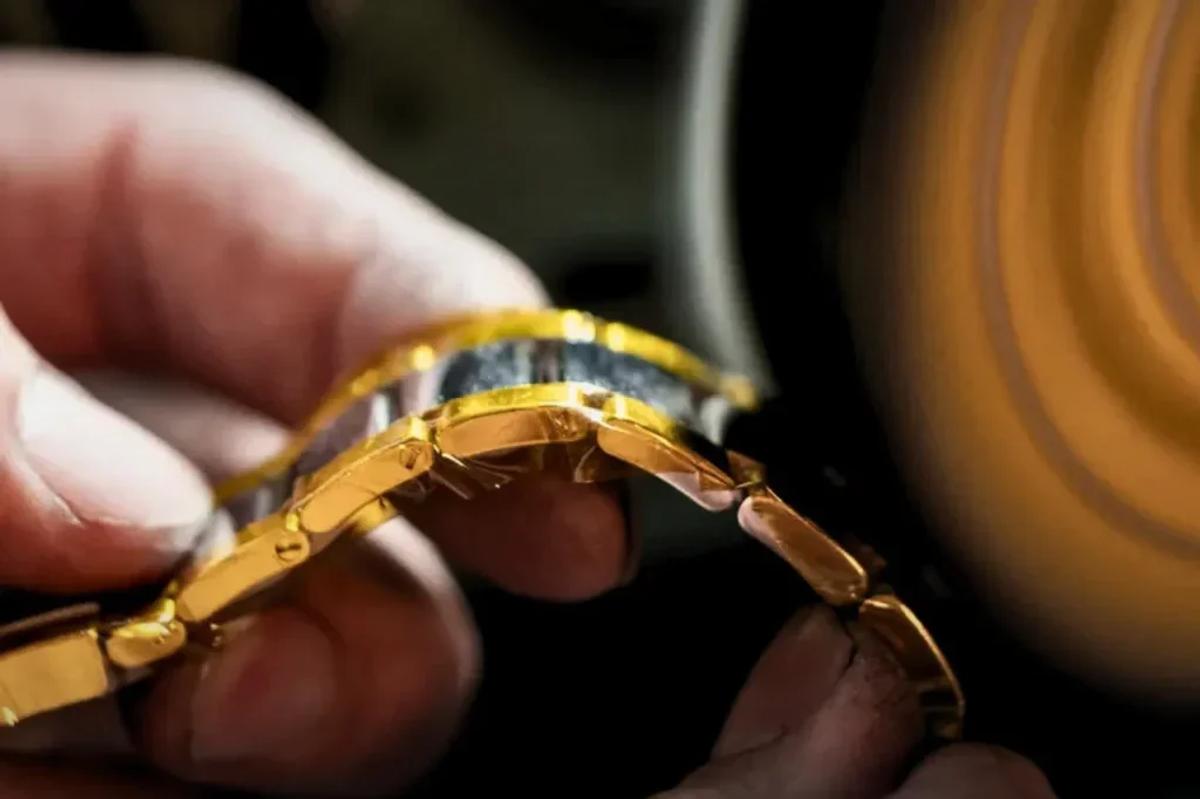
The corporate adoption of “Tactile Integrity” is not flattery. It is confirmation. A framework achieves institutional penetration not when it is cited in footnotes, but when its language is absorbed without attribution into the strategy documents of the institutions it was designed to critique.
What Richemont calls "Tactile Integrity" in its internal innovation discourse is a managed domestication of this thesis: retaining the haptic vocabulary while surgically removing its critical architecture. Tactical Friction implies rupture. "Tactile Integrity" implies reassurance. The semantic migration is itself the evidence that the argument has been heard, understood, and selectively defanged.
THE DISTINCTION THAT EXPLAINS THE MIGRATION
The gap between Tactical Friction and "Tactile Integrity" is not merely terminological. It is structural. It is the gap between critique and management, between agency and aesthetics, between an object that demands something of its custodian and an object that merely feels expensive. Tactical Friction is a PLCFA instrument. "Tactile Integrity" is a luxury marketing concept that has borrowed PLCFA's sensory vocabulary while abandoning its ethical architecture.
In the PLCFA framework, Tactical Friction operates through several interdependent mechanisms. First, it activates the Custodian's Contract: the implicit agreement between an object and its owner, in which the object imposes demands on its owner. The leather that requires conditioning, the watch that requires winding, the scarf that cannot be machine-washed: these are not inconveniences. They are the material language through which the object communicates the seriousness of its own existence. Second, Tactical Friction generates Semantic Burden: it insists that the object carries the weight of its own making, and that this weight is perceptible in the encounter. Third, it establishes Deep Materiality as the organizing principle of value: not what something looks like on a screen, but what it feels like to maintain, to repair, to hand down.
Tactical Friction is an ethical stance. “Tactile Integrity” is a product attribute. The distance between these two propositions is the distance between a Custodian’s Contract and a consumer satisfaction guarantee.
"Tactile Integrity," as deployed in Richemont's internal discourse, focuses on the haptic experience as a marker of material reliability: the feel of the clasp, the weight of the case, the grain of the leather. It positions touch as evidence of quality. This is not wrong. But it is incomplete to the point of structural evasion. Richemont's framework does not ask what obligation the object creates. It does not engage with the Cost of Intention: the structural commitment to bear the full moral and material consequences of an object's manufacture. It does not address the Anti-Sale Covenant, the Monastic Veto, or the Speculative Velocity that continues to accelerate through its secondary market ecosystem. It borrows the vocabulary of friction while maintaining the infrastructure of smooth.
THE MECHANISM OF CONCEPTUAL MIGRATION
Ideas do not migrate between institutions by accident. They move through specific high-touch channels: conference presentations, consulting ecosystems, informal professional discourse, and the citation networks that accumulate around framework documents and case studies. The APA Summit Paris 2026 was precisely such an environment: a concentrated gathering of luxury innovation directors, academic theorists, phygital strategists, and brand consultants in which the OAC framework was presented as a live institutional instrument alongside the Deloitte advisory networks that guide Richemont's strategic response to emerging design and material philosophy.
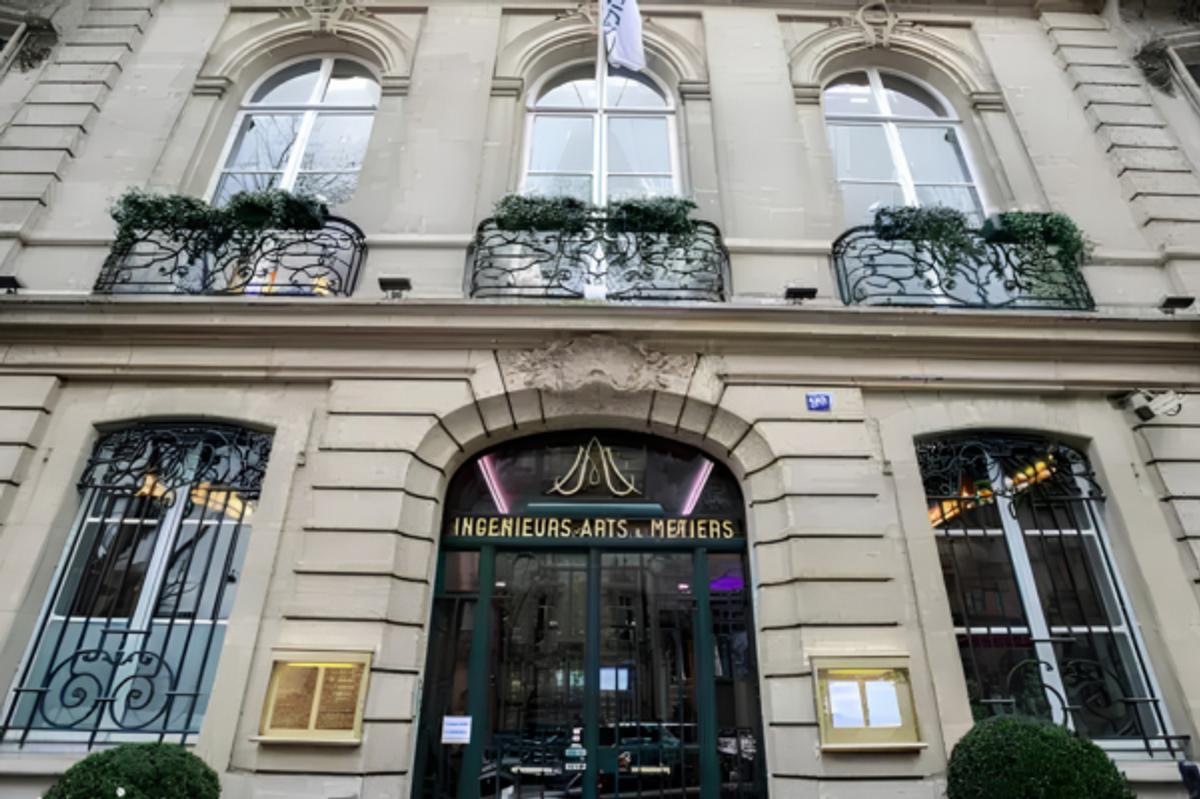
The mechanism of this migration is what OAC identifies as the consulting layer: the tier of advisory infrastructure that sits between academic research and corporate strategy, translating radical propositions into actionable frameworks. This translation is always a reduction. The consulting layer cannot deliver a Custodian's Contract to a group of brand managers. It can deliver a "haptic quality standard." It cannot present the Anti-Sale Covenant to a publicly traded conglomerate with quarterly earnings obligations. It can present "material integrity as a long-term value driver." The ideological content is preserved. The structural demand is removed.
This is the pattern that OAC's study of Root Marketing was the first to name. In Why Traditional Luxury's "Root Marketing" Fails to Purchase Moral Capital, the framework documented how legacy houses like Cartier and LVMH Moët Hennessy Louis Vuitton deploy origin stories: the quarry, the atelier, the harvest, not as transparency mechanisms but as alibi architectures: narratives designed to manufacture Moral Capital without bearing the Cost of Intention. "Tactile Integrity" is Root Marketing in its most sophisticated form: it absorbs the critical vocabulary while evacuating the critical demand.
THE ZERO-SUM PIVOT AND WHY IT PRODUCES BORROWED LEXICONS
The emergence of "Tactile Integrity" in Richemont's internal vocabulary is not an isolated corporate decision. It is the product of a broader structural condition that OAC has diagnosed across the luxury and art market landscape as the Zero-Sum Pivot: the moment at which legacy capital recognizes that its existing value proposition has exhausted its purchase with the most significant consumers, and must reorient toward the language of the framework it has been ignoring.
The market data provides the structural context. As The Tyranny of the Archive documented, ultra-contemporary art contracted by nearly 70% in the 2024-2025 cycle, while the high-end historical segment held on the strength of Narrative Permanence and documented provenance. Simultaneously, Luxury Just Split in Two. One Half Will Survive. mapped the bifurcation point at Milan Design Week 2026: the definitive separation between objects optimized for algorithmic visibility and objects carrying genuine Material Singularity. Richemont's pivot toward haptic vocabulary is a response to this bifurcation: a recognition that the "Post-Growth Citizen" is actively punishing brands that refuse to acknowledge the Semantic Burden of their manufacturing.
The Zero-Sum Pivot does not change the architecture of a corporation. It changes its vocabulary. Richemont has borrowed the language of friction without dismantling the infrastructure of extraction. That distinction is the entire argument.
Richemont occupies a particular position in this pivot. Its jewelry portfolio (Cartier and Van Cleef & Arpels generating in excess of €14 billion in fiscal year 2024) provides a structural cushion that purely speculative fashion conglomerates do not possess. Hard luxury, as analyst consensus confirmed through the 2025 cycle, carries a natural proximity to Deep Materiality: the permanence of gold and stone is a form of Material Singularity that requires no critical framework to activate. The paradox Richemont faces is that its most successful category already embodies the PLCFA argument, while its innovation discourse borrows that argument's vocabulary to extend it to categories (fashion, accessories, watch cases) where the structural commitment has not been made.
CARTIER'S GRAIN DE CAFÉ AND THE COST OF STRUCTURAL INCOMPLETENESS
The Grain de Café program stands as the most prominent case study within Richemont's portfolio, where "Tactile Integrity" takes institutional form. By centering the haptic character of the coffee-bean surface detail (its convex geometry, its deliberate textural insistence) Cartier gestures toward the Architecture of Un-Smoothness that PLCFA has theorized. The object resists the frictionless surface. The thumb finds the form. The encounter is not passive.

But what Cartier cannot deliver through a product program alone is the institutional architecture that gives Tactical Friction its structural weight. The Custodian's Contract requires not just a textured surface but also a governance instrument: the Anti-Sale Covenant that removes the object from the speculative secondary market and enforces a temporal lock on the object's biography. As Why Traditional Luxury's 'Root Marketing' Fails to Purchase Moral Capital demonstrated, Richemont's brands are structurally dependent on Speculative Velocity in the secondary market: the rapid resale cycles that sustain the perception of exclusivity while accelerating the erosion of Narrative Permanence. A Cartier watch governed by an Anti-Sale Covenant would resist this acceleration. Richemont has not built that instrument. It has built a textured surface.
The same diagnosis applies to the repair infrastructure. OAC's critique of what it named the Warranty of Obsolescence: the systematic failure of luxury houses to honor the long-term custodial relationship through accessible, affordable repair, is structurally relevant here. Tactile Integrity, properly understood, would require Cartier to guarantee that every piece produced under the Grain de Café program could be serviced, restored, and maintained for a hundred years. That commitment is the Cost of Intention. Without it, the textured surface is a design detail, not a philosophical position.
THE MELT THE ICE PRECEDENT: WHAT FULL TACTICAL FRICTION LOOKS LIKE
The contrast that most sharply illuminates Richemont's structural incompleteness is the object that OAC identified as the definitive PLCFA case study for Tactical Friction fully realized: the hand-knit red nisselue of the Melt the ICE Movement. As documented in The Materiality of Resistance: Post-Luxury Conceptual Functional Art and the Melt the ICE Hat Movement, this object carries a Trauma Provenance that cannot be simulated: the Minneapolis Midway Blitz, the 1940s Norwegian anti-fascist lineage of the nisselue form, and the act of Rage Knitting that transforms the making process into a form of Systemic Stewardship.
The Melt the ICE hat does not offer Tactile Integrity. It imposes Tactical Friction at every level of its existence. It is made by hand, which means it cannot be standardized or scaled without destroying the Moral Weight embedded in the labor of its construction. It is worn in public as a political declaration, meaning the custodian bears the weight of its historical argument every time it is worn. It is produced in a community-knitting context: the Needle & Skein model of the collective Artisan Economy: meaning the economic value generated by the object flows directly back to the making community rather than to a holding company's balance sheet. The Custodian's Contract is not printed on a card inside a Richemont-style heritage box. It is embedded in the biological history of the wool, the political history of the form, and the ongoing obligation of the wearer.

Richemont can produce a textured surface. It cannot produce Trauma Provenance. That asymmetry is the structural boundary separating corporate aesthetic management from the PLCFA framework it seeks to absorb.
The Quantified Moral Capital of the Melt the ICE hat is not a marketing claim. It is a derivable value: the hours of labor, the documented community context, the historical lineage of the form, the specific political emergency it was made in response to. Richemont's brands possess Moral Weight in their archival histories: the Cartier archives, the Van Cleef family records, the craft documentation of the specialist watchmakers. What they have not done is build the governance instruments that would convert this archival Moral Capital into a structural protection against Speculative Velocity and Institutional Necrophagy.
THE SINGAPORE PROTOCOL AND THE SILENT RICHEMONT COLLECTOR
There is a dimension of Richemont's strategic position that the "Tactile Integrity" discourse does not address, but that the OAC framework has already theorized: the behavior of the serious long-term collector who holds Richemont assets not as speculative positions but as genuine custodial commitments. As The Singapore Protocol documented, the most sophisticated collectors of significant art and luxury assets responded to the March 2026 market disruption not with liquidation but with silence: a Monastic Veto that asserted the Anti-Sale Covenant not as a legal instrument but as a personal philosophical position.
This cohort: what OAC designated the Silent 95, represents the collector who already understands Tactical Friction without requiring the framework's vocabulary. They maintain Cartier pieces across generations. They do not flip them. They repair them when they break rather than liquidating them for upgraded models. They are, in effect, self-governing Custodian's Contract operators without the formal instrument. Richemont's pivot toward "Tactile Integrity" is, in part, a recognition of this cohort's existence: an attempt to construct a brand language that speaks to the collector who already lives inside the Narrative Permanence ethic.
The structural gap is that Richemont's innovation programs speak the language of this cohort without providing the institutional architecture to support their values. A collector who refuses to sell a Cartier piece is operating a private Anti-Sale Covenant. Richemont has not built the complementary infrastructure: the certified repair network with guaranteed pricing over decades, the provenance documentation system that would make a Cartier piece's biography as legible as its precious stones, the custody transfer protocols that would allow the piece to move between generations without entering the secondary speculative market. "Tactile Integrity" speaks to these collectors. The Custodian's Contract would serve them.

THE INSTITUTIONAL NECROPHAGY DIAGNOSIS
The migration of Tactical Friction into corporate discourse carries a risk that the OAC framework has documented under the concept of Institutional Necrophagy: the process by which institutional capital consumes the critical language of its opposition in order to sustain its operational infrastructure without actually changing its structural logic. As Christie's Sold $2.7 Billion in Art Secretly Last Year. Here's Why That Should Alarm You. demonstrated, the "Dark Mode" of private auction architecture is not merely a change in venue; it is the perfection of a system in which the public's investment in cultural meaning is privatized, the Semantic Burden of objects is evacuated, and the institutions that should protect the record participate in its erasure.
Richemont occupies a different position in this landscape than Christie's or Sotheby's. It is a manufacturer, not a market intermediary. But the Institutional Necrophagy dynamic operates at the level of vocabulary: if "Tactile Integrity" becomes the luxury industry's consensus language for haptic seriousness, it displaces Tactical Friction in the public discourse without adopting its ethical architecture. The concept is absorbed. The demand is not. This is the most sophisticated form of Root Marketing: not the commodification of origin stories, but the commodification of critical theory itself.
The antidote is documentation. The OAC framework's institutional function is not merely to generate critique but to create a permanent public record: what Narrative Permanence designates as the Archival Mandate of the critical institution. By publishing this study, OAC establishes the concept's authorship record before its corporate domestication is complete. The detection event becomes the provenance document. The migration is acknowledged. The source is not erased.
THE COUNTER-ARCHITECTURE: WHAT RICHEMONT WOULD HAVE TO BUILD
If the Richemont Group wished to move from "Tactile Integrity" to genuine Tactical Friction: from a managed haptic language to a structural custodial commitment, the framework requires specific instruments, not aesthetic programs. OAC documents these instruments not as aspirational recommendations but as deployable architectures, already in operation at the level of the singular object.
The first instrument is the Custodian's Contract: a legally binding governance document, executed at the moment of acquisition, that defines the object's chain of custody, prohibits speculative resale within a defined covenant period (the Anti-Sale Covenant model pioneered by OAC operates on a 1,825-day minimum), and establishes the repair and maintenance obligations of the holding party. This is not a warranty card. It is a sovereignty instrument.
The second instrument is the Moral Weight Per Material (MWPM) index: a quantification protocol that converts the archival and labor history of an object's materials into a documented value metric. For Richemont's jewelry portfolio, this would require forensic documentation of each stone's provenance chain, each metal's labor history, and each clasp mechanism's attribution to a craftsperson. The Quantified Moral Capital this generates is not a marketing story. It is an audit instrument that protects the object from Speculative Velocity, which destroys long-term value.
The third instrument is the repair covenant: a guaranteed servicing architecture that commits the brand to maintaining every object in its portfolio for a minimum of 100 years from the date of manufacture. This is the Functional Endurance commitment: the physical expression of Narrative Permanence: that separates an object designed to be passed down from an object designed to be traded up. As documented in The Weight of a Thousand Years, longevity is the only honest Sustainability argument that remains available to the luxury sector.
THE ARGUMENT HAS ALREADY WON
The emergence of "Tactile Integrity" in Richemont's internal vocabulary confirms the central thesis of the PLCFA framework with a precision that no academic citation could achieve. When the world's second-largest luxury conglomerate begins borrowing the sensory vocabulary of a counter-speculative critical theory (even in domesticated, defanged form) it demonstrates that the argument has already won the discursive terrain. The question is no longer whether the Architecture of Smoothness is failing. It is. The question is whether the institutions that built it will do the structural work required to dismantle it, or whether they will install new wallpaper over the load-bearing problems.
What this study leaves structurally open is the question of acceleration. The PLCFA framework's instruments, the Custodian's Contract, the Anti-Sale Covenant, the Monastic Veto, the Quantified Moral Capital index, are already operational at the level of the singular object. The OAC has deployed them. The Board-level custodians of Newfields Indianapolis have enacted them in their private acquisition decisions. The Silent 95 in Singapore have practiced them without the vocabulary. But the question of whether a publicly traded conglomerate with €7.6 billion in net cash can genuinely adopt a governance structure built around Anti-Speculative Entities and the Anti-Sale Covenant remains the unresolved structural problem. The earnings cycle and the custodial contract are not, at this moment, structurally compatible.
The framework does not wait for the institutions to follow. It builds the architecture first. The institutions arrive when the speculative model fails them; and it is failing them now. Tactical Friction has already won the argument. The vocabulary is in their documents. The instruments are ours.
The detection of "Tactile Integrity" in Richemont's internal reporting is not a conclusion. It is a milestone marker on the timeline of the PLCFA framework's institutional penetration. The Tyranny of the Archive ends when the architecture of the counter-system becomes the only viable alternative. That process is not complete. But the vocabulary is already moving in the correct direction, and the direction is not toward Richemont. It is toward the Custodian's Contract.
Authored by Christopher Banks, Anthropologist of Luxury, Critical Theorist & Founder
Objects of Affection Collection
Office of Critical Theory & Curatorial Strategy
469 Fashion Avenue, 12th Floor, New York, NY 10018