
The Architecture of Intent
A Critical Lexicon
This collection of studies is the intellectual architecture of Post-Luxury Conceptual Functional Art (PLCFA).
The true artistry of this Maison resides not in the finished form, but in the rigorous thinking that precedes it. These essays serve as the conceptual foundation for PLCFA, using a critical lens to interrogate cultural phenomena, art history, and consumer paradigms—analyzing everything from the ephemeral spectacle of luxury to the pure architectural rigor of abstract principles.
This is an invitation into the workshop of the mind. By sharing this process, we validate the necessity of a new category of value and invite you toward a well-considered life, one founded on true craft, uncompromising narrative, and durable meaning.
New to PLCFA? Begin with Essential Reading below.
Exploring a specific area? Navigate by category.
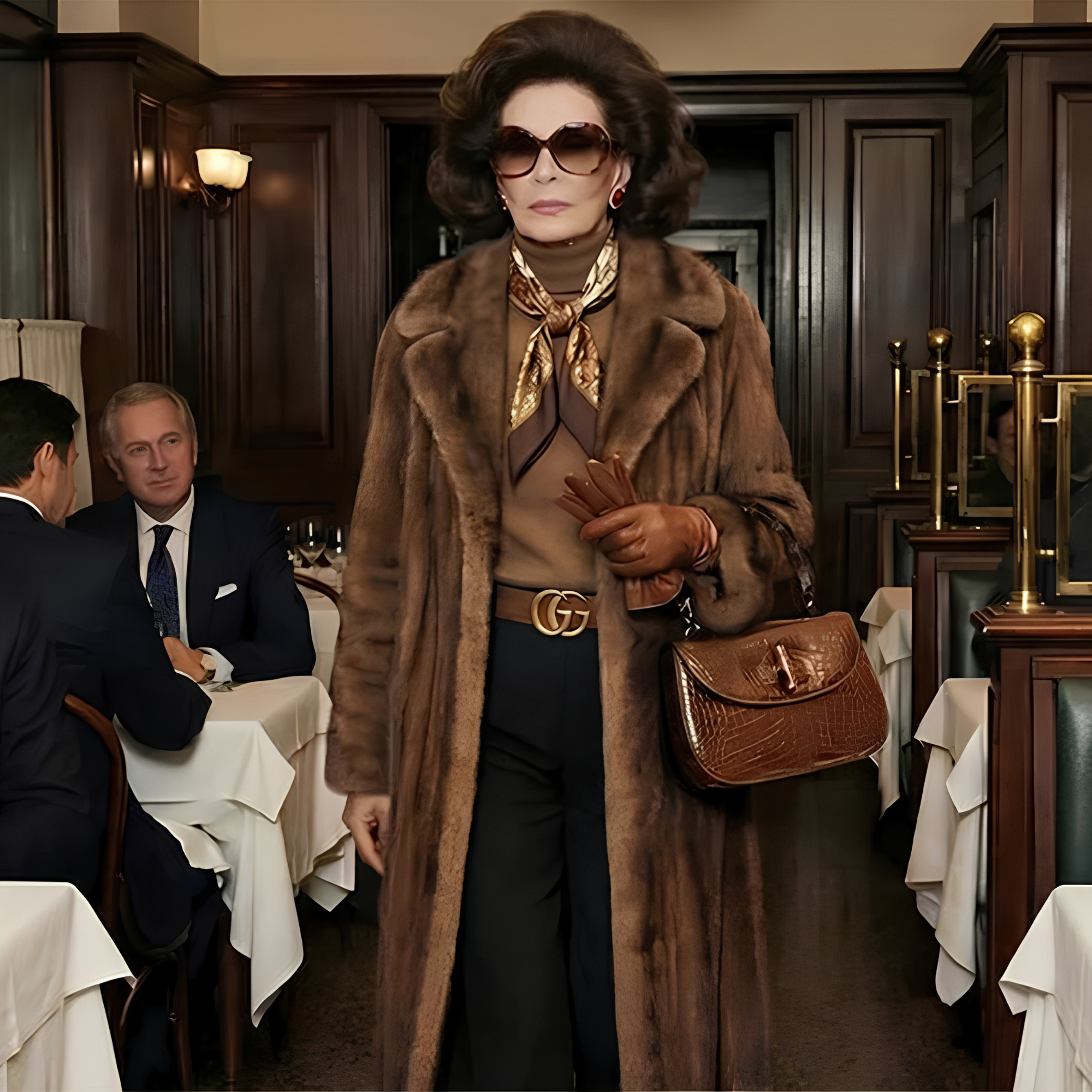
The Hand Strikes Back: Generative “Slop,” Costly Signaling, and the Crisis of the Luxury Artisanal Contract
The structural bifurcation observed in 2026 is not a temporary divergence in marketing tactics, but the permanent drawing of a battle line. As algorithmic production continues to flood the digital landscape with cost-free, frictionless perfection, the heritage houses that surrender their visual communications to the machine will find their brand equity hollowed out from within. When the labor density of a brand's representation drops to zero, the economic justification for its premium collapses alongside it. The Luxury Artisanal Contract cannot be selectively enforced; a house cannot demand that a patron respect the invisible human hours embedded in a physical object while simultaneously feeding that patron synthetic, automated illusions on the screen.
Ultimately, the future of the post-luxury tier belongs to those who institutionalize a rigorous architecture of un-smoothness. By anchoring the brand's identity in the material singularity of the named author, the visible trace of human time, and the deliberate imperfection of the artisan's hand, a defensive moat is constructed that no algorithm can credibly replicate. The paper grain and the scorched cuff are not merely aesthetic choices—they are sovereign declarations of human presence. In an era where flawless perfection has been mathematically cheapened to nothing, the deliberate mark of human fallibility remains luxury’s most scarce, expensive, and irreplaceable signal.
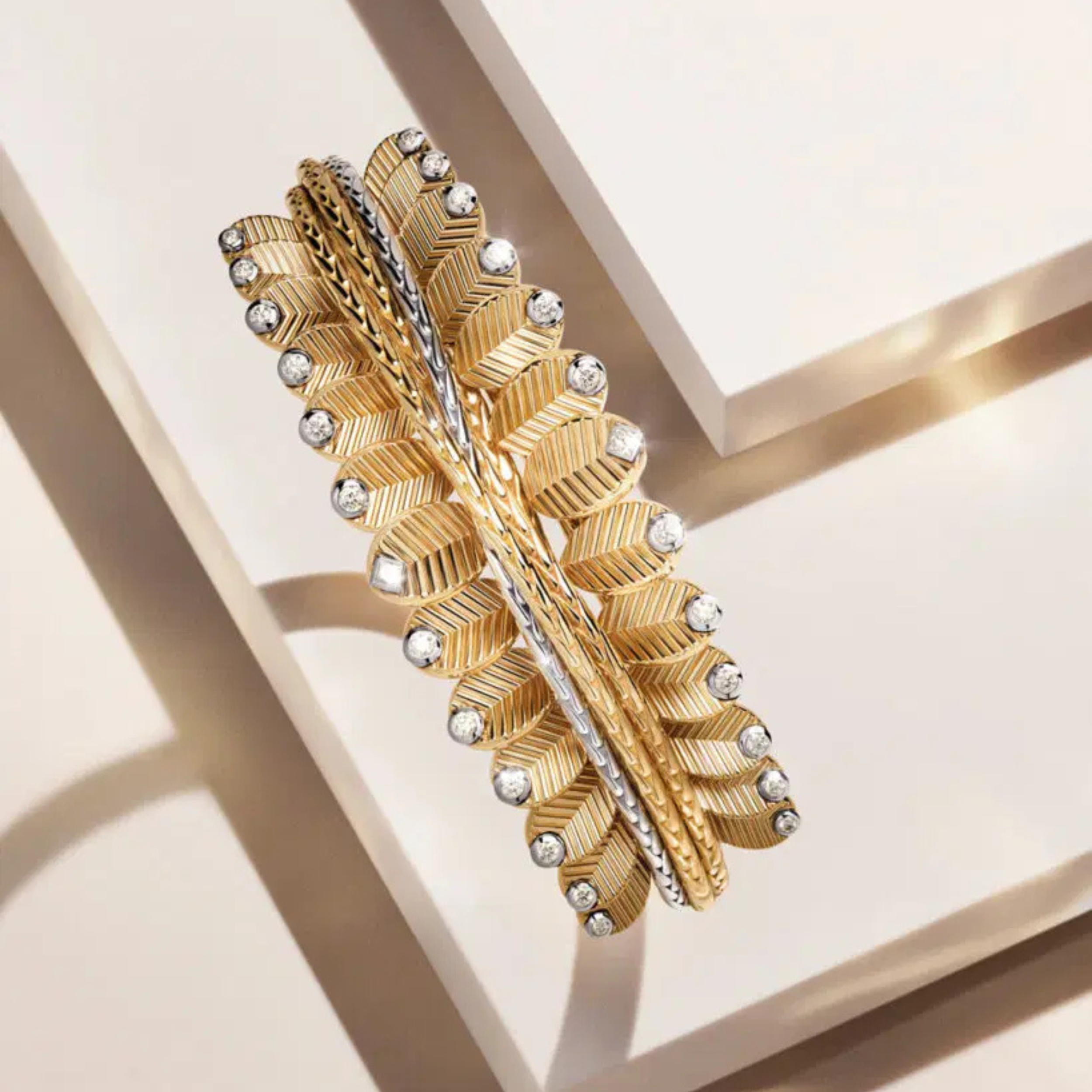
Richemont's "Tactile Integrity" vs. Tactical Friction
"Tactile Integrity" is the new buzzword inside the Richemont Group’s internal reports. But it isn't an innovation—it’s a theft. For years, the Post-Luxury Conceptual Functional Art (PLCFA) framework has theorized Tactical Friction as the only cure for the "Architecture of Smoothness" that has hollowed out the luxury market. Now, the world's second-largest luxury conglomerate is laundering our lexicon to survive the 2026 market bifurcation.
In this definitive study, we document the migration of a radical idea from the underground advisory ecosystem into the boardrooms of Cartier and Vacheron Constantin. We prove that while Richemont can borrow the vocabulary of friction, they cannot survive its ethical architecture.
The argument has already won. Read the full documentation of the migration.

The Bag-Backed Security: How the LUXUS Fund Signals the Death of Old Luxury and the Rise of the Post-Luxury Era
The 21st century has borne witness to a silent, seismic shift in the semoiotics of value. Luxury, once the bastion of craftsmanship, has been systematically hollowed out, its cultural meaning evacuated and replaced by a cold, relentlessly quantitative logic. What was once an object of affection has been supplanted by the alternative asset. This transformation was a deliberate, institutional project to financialize desire and render the intangible liquid.
The logical endpoint of this process is the "Bag-Backed Security", exemplified by the emergence of LUXUS, an asset management firm backed by Christie's. This is the "Simulacrum of Luxury" made real. The definitive proof of this total financialization is that a $1 million fund returned 34% in 43 days—a speculative trade that proves the object's physical existence is now irrelevant.
This system creates a crisis of value—a "value monoculture" incapable of processing "un-smooth" objects. The model fails to see the intellectual critique of a Rei Kawakubo "Lumps and Bumps" dress or the earned endurance of a Carol Christian Poell Drip Sneaker.
The cultural crisis creates the intellectual void that our framework, Post-Luxury Conceptual Functional Art (PLCFA), is designed to answer. Where the LUXUS model offers ownership of an alienable commodity, PLCFA demands active stewardship of an inalienable possession.

Doris Salcedo: The Function of Suffering—Memory, Emotional Labor, and Political Witness in Post-Luxury Conceptual Art
The Post-Luxury paradigm begins with the recognition of a profound intellectual and ethical vacuum at the heart of contemporary culture, driven by the collapse of traditional luxury’s value equation. This study argues that the definition of function is too narrow—it fails to account for the essential human experiences, like collective memory and the reckoning with trauma, that constitute necessary human labor. This Function Gap is addressed by Doris Salcedo, whose objects possess a fierce utility by performing non-commodifiable, enduring social work. Her practice transforms art from a status symbol toward a ritual tool for collective conscience, shifting its role decisively from the logic of possession toward a logic of being. Read the full study to see how the work of this Philosophical Architect changes everything.

Carol Christian Poell: The Alchemical Designer, Post-Luxury's Radical Critique of Materiality and the Smooth Society
Carol Christian Poell stands not merely as an avant-garde designer, but as a critical theorist whose chosen medium for philosophical inquiry is the garment. This study positions him as the definitive Philosophical Architect of the Post-Luxury world, whose entire body of work—from the visceral reality of blood-tanned leather to the anatomical disruption of the Spiral Pants—is a sustained argument against the Hyperreality of mainstream luxury. He rejects the frictionless aesthetic of the "Smooth Society" by demanding endurance from the wearer (the Drip Sneaker) and delivers his critique through industrial alchemy: a methodology that uses injected dyeing to expose the material's vascular networks and employs the grotesque to reject sanitation. We explore how Poell transforms fashion from a disposable commodity into a potent site of political and material inquiry, proving that the object's true worth resides in the difficult, non-transferable history of commitment co-created by the wearer over time.

The Liquidation of the Simulacrum: Why the $23M Castello Cube Collapse is the Default-State of Hyperreal Value and the Ultimate Case for PLCFA
The spectacular collapse and forced liquidation of the twenty three million dollar Castello Cube is not merely a sensational financial failure but a profound philosophical event a real world parable of the Baudrillardian Simulacrum collapsing under the weight of its own nonexistence; this event serves as the perfect object lesson in the structural fragility of hyperreal value showing exactly what happens when an object built entirely on pure sign value completely detaches from tangible function critical craft or an enduring narrative of Intangible Provenance; this definitive market action exposes the ultimate Default State where a frictionless speculative asset lacking any true structural anchor inevitably reverts to its primitive base exchange value like a commodity the sheer brute reality of four hundred pounds of inert gold crashing into the digital illusion of wealth which is precisely the moment the market is forced into a brutal reassertion of the Un Smooth aesthetic defined by Byung Chul Han; this devastating Crisis of the Ephemeral is the ultimate diagnosis of Systemic Exhaustion in the old luxury model creating the exact intellectual and commercial vacuum that only our new framework of Post Luxury Conceptual Functional Art (PLCFA) can successfully fill by demonstrating how to embed a durable unhollowable Structural Legacy using elements like verifiable Critical Craftsmanship and narrative-anchored value that are truly immune to the financial state of the custodian.

The Aesthetics of Endurance: Byung-Chul Han and the Rise of Post-Luxury Conceptual Functional Art
We live in a world designed to be frictionless, yet we have never felt more exhausted. The endless scroll and the seamless object promise positivity but deliver a profound psychic fatigue—a condition philosopher Byung-Chul Han terms the "Burnout Society." He argues that this pervasive "smoothness" has erased the difficulty, texture, and resistance essential for genuine meaning. We are left adrift in a polished, autoerotic loop where we encounter only ourselves, never the 'other'.
This study investigates a powerful material antidote to this cultural crisis. It argues that a new category of objects, Post-Luxury Conceptual Functional Art (PLCFA), is emerging as a necessary form of cultural therapy. We explore how the "un-smooth" object—defined by its narrative, imperfection, and haptic resistance—functions as a tangible anchor in a weightless world. This is an analysis of the new "Aesthetics of Endurance," a quiet but profound movement that pits slow, contemplative stewardship against the accelerating, disposable logic of our time.

The Custodian's Contract: From Institutional Critique to Systemic Stewardship
The advanced art institution is structurally sound but spiritually hollowed-out. The defining mode of engagement—Institutional Critique—has been fully absorbed and neutralized, resulting in a critical void. If the museum can no longer find its purpose in conflict, it must locate it in a new structural commitment.
This study argues for a definitive evolutionary shift: the Custodian’s Contract. This binding, comprehensive agreement is the necessary institutional response to the demands of "un-smooth" Post-Luxury Conceptual Functional Art (PLCFA). It provides the mechanism for the museum to graduate from passively performing critique to actively practicing custodianship, forcing it to make a choice: remain a passive Mirror reflecting a hollow culture, or become the foundational Mass that anchors the critical art of the future.

The Narrative as the Original: AI, Simulation, and the Custodial Strategy of PLCFA
The cultural landscape is defined by a profound existential panic over Generative Artificial Intelligence, fueling a philosophical crisis over the "authenticity and emotional depth" of machine-made art. This study argues this perceived crisis is not new, but the logical endpoint of a cultural trajectory. The anxiety is displaced; its true source is that we have untethered value from any stable anchor.
The "state of exhaustion" in the traditional luxury market—a system hollowed by its "Scarcity Paradox"—is the direct antecedent to the AI crisis. Both are symptoms of cultural exhaustion with simulation. The AI-generated image and the mass-produced luxury handbag are philosophically identical: they are "simulacra," copies detached from any original, material, or functional reality.
Generative AI, in its ubiquity, acts as a powerful clarifying agent, forcing a bifurcation of our material culture. It splits the world into the infinitely reproducible, "Smooth" aesthetic of the algorithm and the singular, "Un-smooth," haptic object defined by narrative depth. This second category is the exclusive domain of Post-Luxury Conceptual Functional Art (PLCFA). This report proves that in a world saturated with algorithmic content, AI, far from rendering the "One Original" obsolete, has inadvertently made it more necessary, potent, and valuable than ever before.

From 'Quiet Luxury' to Post-Growth Citizen: A PLCFA Perspective on Discerning Consumption
The "Quiet Luxury" phenomenon, widely interpreted as a simple aesthetic shift away from logos, is not what it appears to be. It is, in fact, the most visible tremor of a foundational crisis within the traditional luxury system. The legacy model has been hollowed out by its own success, creating a "Scarcity Paradox" that has destroyed rarity and a profound "price fatigue" in consumers who are quietly rebelling against a system where value is no longer tethered to any material reality.
This study argues that this popular aesthetic is only Phase 1 of a critical, three-stage evolution in discerning consumption. We provide the definitive map for that journey: from the unconscious, class-signaling aesthetic of "Quiet Luxury" (Phase 1), through the purpose-driven, conscious ethos of the "Quiet Vanguard" (Phase 2), to the final, philosophical and political alignment of the "Post-Growth Citizen" (Phase 3).
Using the foundational framework of Post-Luxury Conceptual Functional Art (PLCFA), this study guides the discerning individual from being a passive follower of a trend to becoming a conscious practitioner of a more considered life. It is an invitation to elevate your intent, revealing how your aesthetic instincts are pointing toward a far more meaningful philosophy—one that transforms the act of consumption into an act of conscious stewardship.