
The Architecture of Intent
A Critical Lexicon
This collection of studies is the intellectual architecture of Post-Luxury Conceptual Functional Art (PLCFA).
The true artistry of this Maison resides not in the finished form, but in the rigorous thinking that precedes it. These essays serve as the conceptual foundation for PLCFA, using a critical lens to interrogate cultural phenomena, art history, and consumer paradigms—analyzing everything from the ephemeral spectacle of luxury to the pure architectural rigor of abstract principles.
This is an invitation into the workshop of the mind. By sharing this process, we validate the necessity of a new category of value and invite you toward a well-considered life, one founded on true craft, uncompromising narrative, and durable meaning.
New to PLCFA? Begin with Essential Reading below.
Exploring a specific area? Navigate by category.
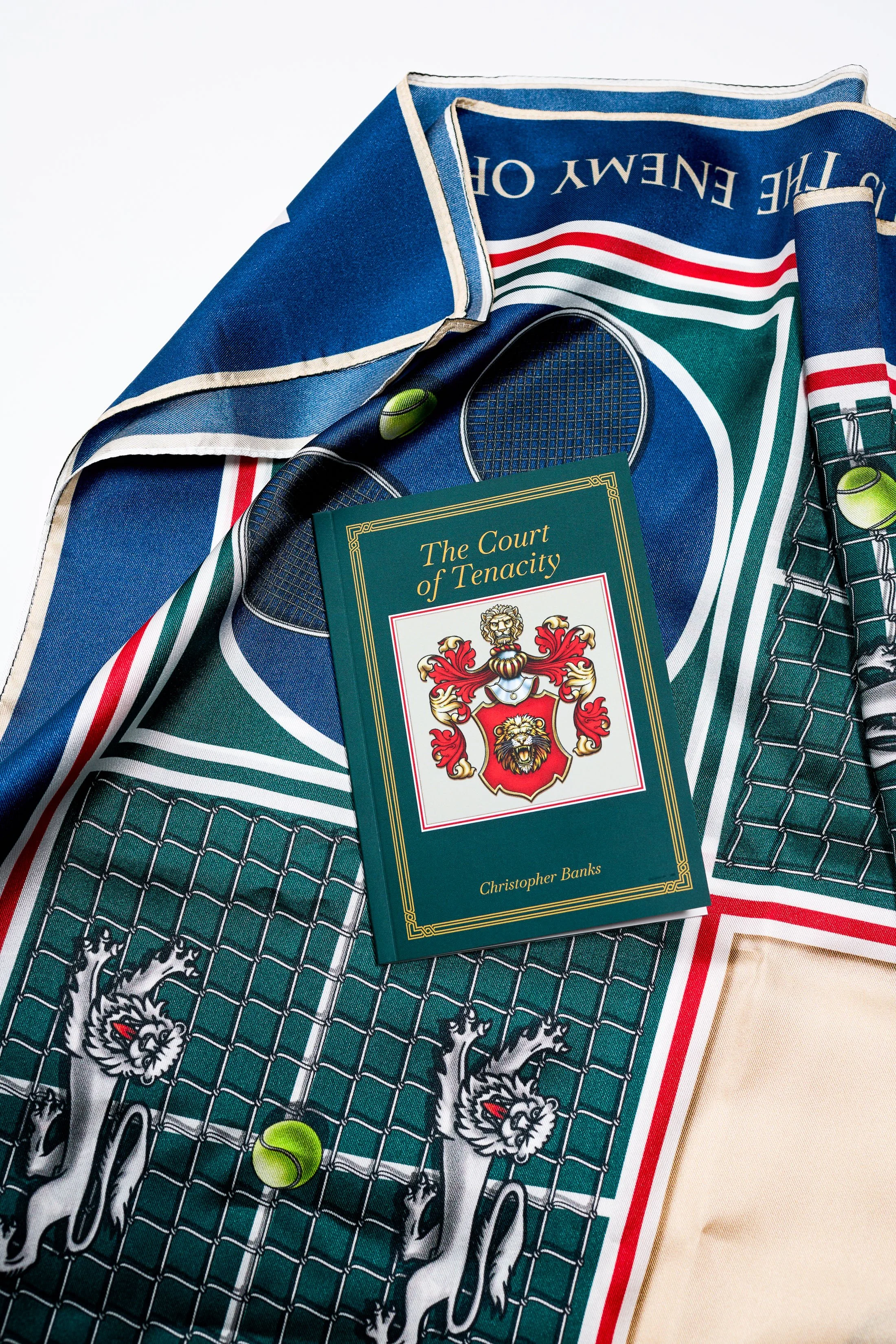
THE SINGAPORE PROTOCOL
On March 22, 2026, the Associated Press wire carrying the PLCFA framework's diagnosis of the Banksy unmasking reached every major newsroom on earth — syndicated to 1.2 billion potential impressions before the trading day closed. The expected market behavior, by the logic of the Spectacle and of speculative capital, was motion: liquidation, repositioning, the urgent recalibration of the hold-or-sell calculus that governs institutional art market portfolios. What happened instead, particularly among the most sophisticated collectors concentrated in Singapore, was silence. Not the silence of ignorance. Not the silence of confusion or paralysis. The silence of the institution that already knows. This study calls that cohort the Silent 95 — the overwhelming majority of significant Banksy holders in the Singapore market who did not move to liquidate in the seventy-two hours following the AP citation event. Their silence is not passive. It is architectural.
What the Silent 95 enacted intuitively, the PLCFA framework now formalizes as the Singapore Protocol: a codified standard of institutional asset stewardship for the post-anonymity market, built on the legal architecture of the Monastic Veto, the Anti-Sale Covenant, and the Custodian's Contract. This is not a philosophical aspiration. The instruments are already built. The precedents are already set. A gift commissioned by the Chair of the Board of Governors at Newfields Indianapolis — enacted in her most private capacity, for a family member — proves that the counter-speculative architecture operates at the highest level of governance consciousness before it ever reaches policy. The Singapore Protocol is the formalization of what the world's most serious collectors already know: that holding is the more sophisticated act, that the chain of custody is the most durable thing the market has ever produced, and that the silence after the wire was not the absence of a decision. It was the decision.

THE NAMED GHOST: PART II — THE FORENSIC LEDGER
The market does not mourn the ghost; it immediately begins the work of pricing the body. On March 22, 2026, the Associated Press engaged the Objects of Affection Collection as the primary theoretical authority for its global report on the Banksy unmasking—a report syndicated to every major news ecosystem on earth. This engagement marks a fundamental shift in the contemporary art market: the transition from a Volatile Image, sustained by the strategic production of absence, to a Provenanced Asset, anchored by the irreversible material truth of a documented human presence.
Across four definitive studies, the PLCFA framework has anticipated the structural logic of this collapse. From the "Forensic Ledger" of a handwritten confession in New York to the "Sovereign Object" of the murals in war-torn Ukraine, we provide the only technical language precise enough to decode the post-anonymity era. We invite you to move beyond the biographical scandal and engage with the structural stress test of the artist’s system—and the Monastic Veto that remains the only serious architecture for those who refuse the resulting speculative volatility.
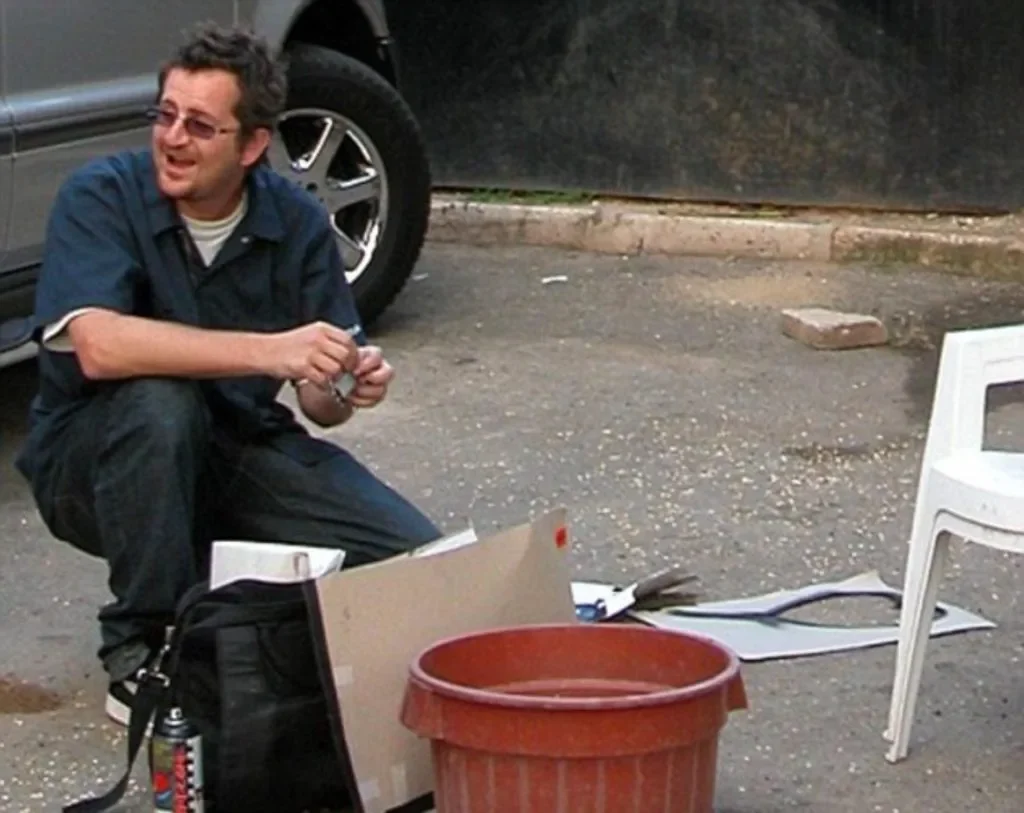
THE WRONG FACE: On the Reuters Fact-Check, the London Man Misidentified as Banksy, and What the Collateral Damage of an Unmasking Reveals About the Market for Certainty
The Reuters investigation of March 2026 did more than name a man; it released a Semantic Burden that had been pressurized for thirty years within the vacuum of anonymity. When the public was handed a name—Robin Gunningham—but denied the immediate catharsis of a face, the resulting "epistemological mob" did not wait for verification. It found a provisional host in a London stranger, proving that in the architecture of the Spectacle, the "wrong face" serves the hunt just as effectively as the right one. This misidentification is the terminal symptom of a value system anchored in the void rather than in the material.
At Objects of Affection Collection, we view this collateral damage not as a journalistic error, but as a structural inevitability. Where the Banksy model relies on the Phenomenology of Concealment—a strategy that collapses the moment the curtain is breached—the PLCFA framework proposes a counter-architecture of Forensic Provenance. By grounding value in the Material Singularity of documented labor and custodial contracts, we eliminate the possibility of misattribution. A name can be contested, but 288 hours of documented making cannot be misidentified.

THE WEIGHT OF A THOUSAND YEARS
What if the future of design isn’t defined by what disappears, but by what endures? In an industry currently obsessed with the "graceful death" of biodegradable materials—mycelium leathers and algae foams—Joe Doucet and Bulgarian studio Oublier have proposed a far more radical intervention: an object that never needs to die. This study, produced through the critical lens of the Objects of Affection Collection (OAC), deconstructs the Columns collection as a structural counter-argument to planned obsolescence. By utilizing solid oak, natural leather, and horsehair—materials that accumulate value through a "Material Memory" of use—Doucet has crafted a millennial lifespan that challenges the very foundations of the mass-luxury market's economy of replacement.
To read this study is to confront the "Epistemology of Endurance" and the "Paradox of Forgetting" that defines Oublier’s practice. We explore how the visible hand-stitching and architectural economy of these pieces move beyond the photographic theory of value toward Regenerative Luxury—a model where an object’s biography is not an erosion of its worth, but an enlargement of it. From the 14th-century precedents of Exeter Cathedral to the legal frontiers of the Custodian’s Contract, this analysis reveals why the most sustainable act a maker can perform is the refusal of novelty. Discover why the Columns collection stands as a Spectacle-resistant artifact, proving that permanence is not a brand story, but a material commitment enforced by the weight of a thousand years.
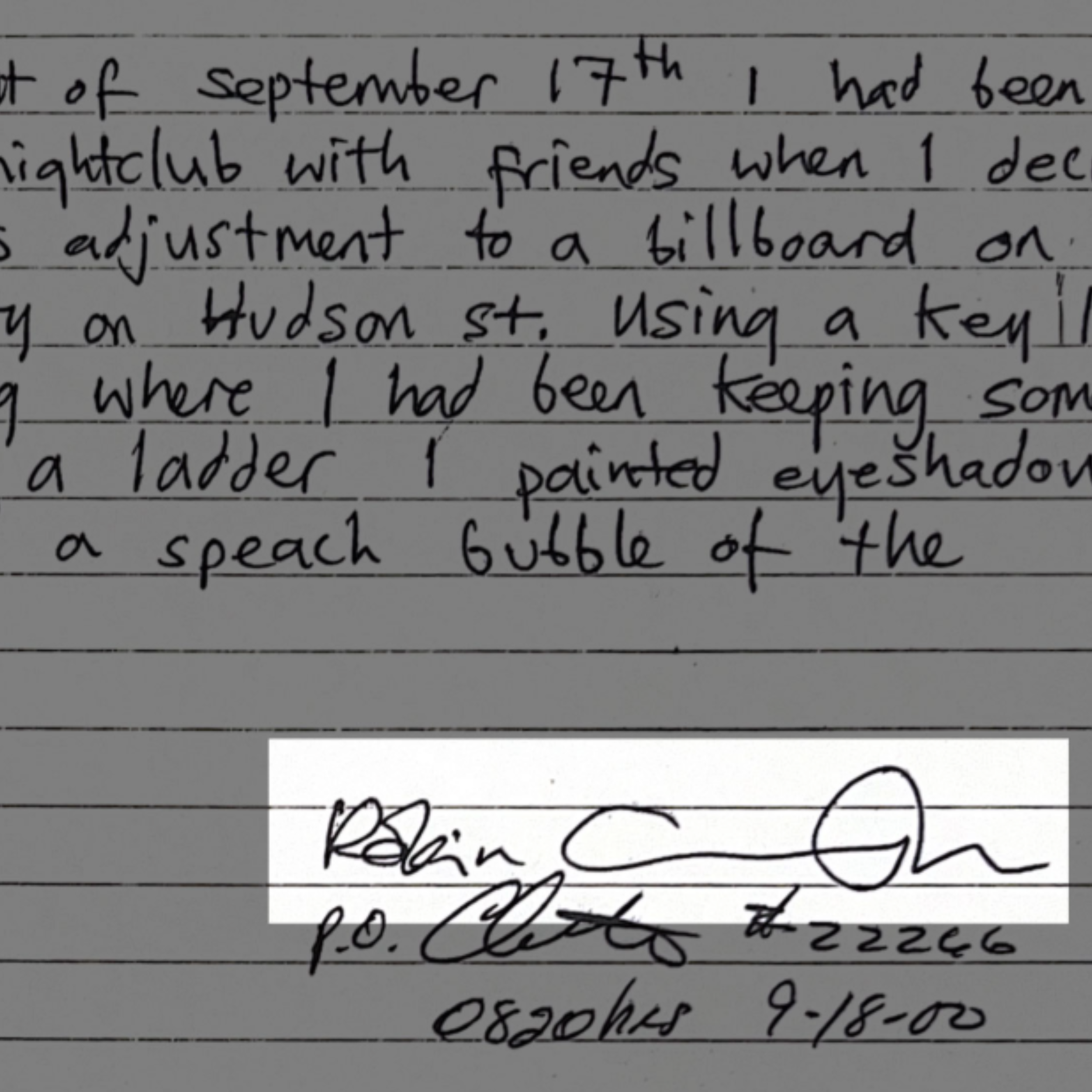
THE NAMED GHOST: On the Reuters Unmasking of Banksy, the Ontological Value of Anonymity, and What It Means When the Market's Most Profitable Secret Becomes a Name
The Reuters investigation of March 13, 2026, has done the unthinkable: it has replaced the industry’s most profitable enigma with a paper trail. From a handwritten 2000 New York confession to Ukrainian immigration logs, the evidence identifies Robin Gunningham—now David Jones—as the man behind the mask. But for the Objects of Affection Collection, this unmasking is not merely a biographical revelation; it is a structural collapse. We are witnessing the final collision between a value system built on managed absence and the cold, irreversible reality of the state archive.
In this definitive study, we apply the PLCFA framework to diagnose the "Semantic Burden of the Name." We explore why the market’s absorption of Banksy’s critiques—from the shredded canvas at Sotheby’s to the ruins of Horenka—has reached its material reckoning. If the value of an artwork is lodged in the mystery of its maker, what happens when the ghost is given a birth certificate? Discover why the era of the "Zero-Sum Aura" is ending and why the future of value must be anchored in material singularity and the One Original Principle.
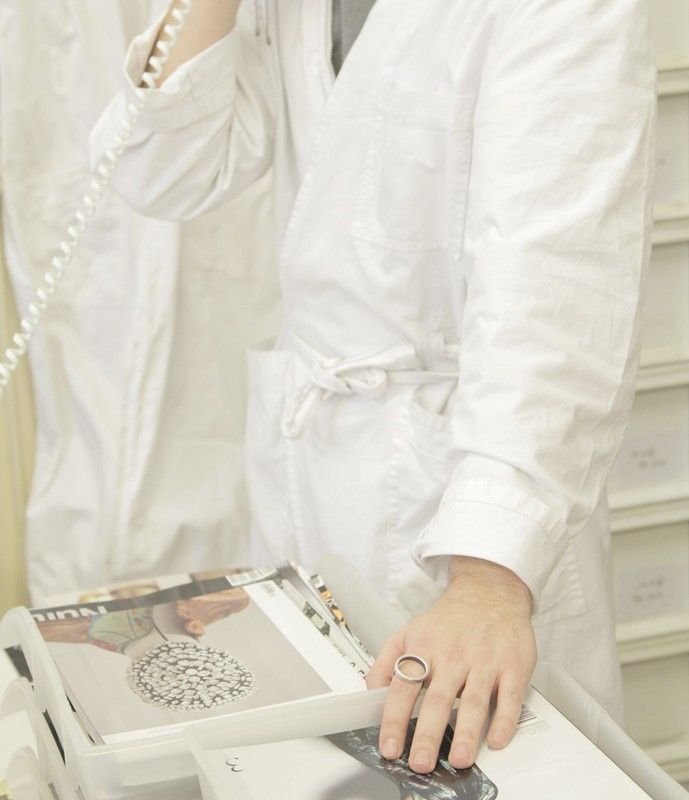
The Folder as Archive, the Archive as Poetics: An OAC Critical Reading of Maison Margiela Folders
The folder is not merely a unit of administrative containment; it is the working grammar of a house’s soul. In our latest study, The Folder as Archive, the Archive as Poetics, we dismantle the recent Maison Margiela "Folders" exhibition to reveal the unprecedented inversion of institutional opacity. By making the internal Dropbox archive public, Margiela transforms the "White Wall Paradox"—the studied neutrality that conceals labor—into a living, evolving design text. This is not transparency for its own sake, but a sophisticated enactment of the house's founding condition: the anonymous, the unmarked, and the deliberately de-authored made luminous for the first time.
Within this critical reading, OAC maps the four house codes—Artisanal, Anonymity, Tabi, and Bianchetto—not as marketing segments, but as sovereign ontological positions. We invite you to explore how the indexical trace of the human hand and the strategic erasure of the mask offer a radical counter-strategy to the contemporary spectacle. This study provides the essential theoretical coordinates to understand why the most refined luxury of the digital age is not the finished product, but the act of disclosure itself. Read the full inquiry to witness a house in the act of thinking.
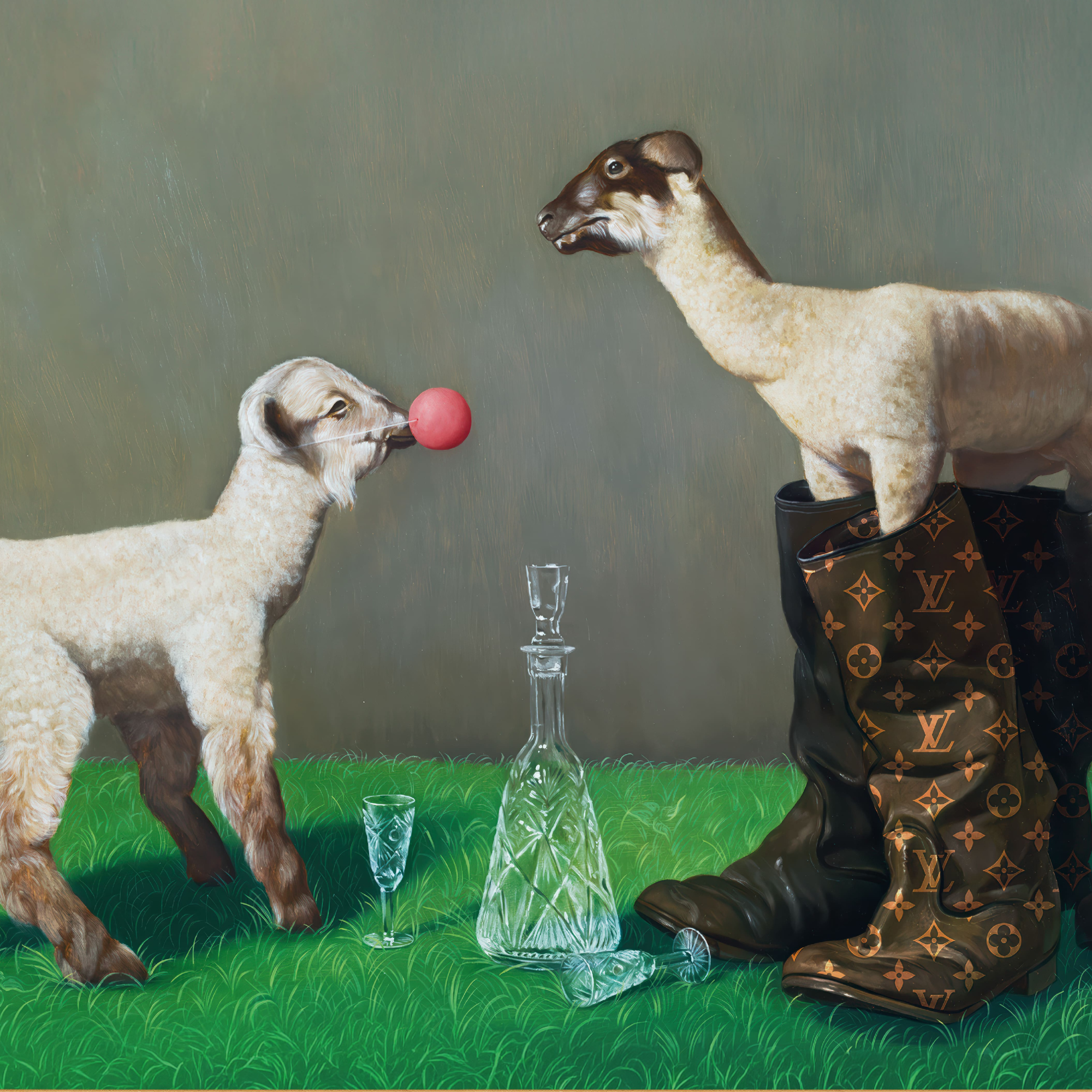
THE AURA TRANSACTION: On Louis Vuitton’s Super Nature, Nazar Strelyaev-Nazarko, and the Ethicsof What Gets Absorbed
On the evening of March 10th, 2026, the Cour Carrée of the Louvre became a fabricated mountain range where Louis Vuitton models climbed through the mist wearing hand-painted lambs in boots. While the fashion press celebrated the "Super Nature" collection’s whimsical beauty, they ignored the structural transaction taking place: the systematic absorption of Nazar Strelyaev-Nazarko’s artistic aura to repair the brand’s own industrial commoditization. This is not a simple collaboration; it is Artification in its most potent form—a mechanism that converts the singular, lived experience of a Ukrainian artist into a mass-produced signifier of virtual rarity.
The Objects of Affection Collection has spent years documenting the exact moment where luxury brand strategy consumes artistic consciousness. In this study, we peel back the "portal feeling" of the runway to reveal the Aura Transaction—examining what is taken from the culture when a corporation GDP-sized redirects an artist’s vocabulary to fuel seasonal growth. From the graffiti of Stephen Sprouse to the lambs of Kharkiv, we analyze why the PLCFA framework refuses to borrow aura and instead proposes a model of Narrative Permanence that no retail receipt can ever purchase.

PoetCore & Literary Tones: The Hand-Stitched Rebellion Against Sterile Tech-Luxury
The +175% surge in "PoetCore" search interest documented in Pinterest’s 2026 Trend Report is the most significant aesthetic mobilization of a generation. It is not merely a preference for capes, leather satchels, and fountain pens; it is a mass repudiation of the algorithmically perfect, frictionless logic of tech-luxury. Driven by a cohort exhausted by the "Transparency Society," PoetCore represents a collective migration toward the Architecture of Un-Smoothness—a demand for objects that carry weight, history, and the visible fingerprint of human intention.
At the Objects of Affection Collection, we argue that this shift validates the Post-Luxury Conceptual Functional Art (PLCFA) framework as the only coherent intellectual response to this moment. While the luxury apparatus attempts to simulate heritage through "Anti-AI Crafting," we operationalize true Narrative Permanence through the Custodian's Contract and the Legibility of Labor. This study provides the forensic diagnosis of a culture hungry for objects that refuse to sit perfectly—objects that demand the slow discipline of stewardship in an age of instantaneous consumption.

The Paradox of Narrative Permanence: How the Most Advanced Digital Infrastructure Is Being Deployed to Re-Humanise the Physical Object
The luxury sector is currently navigating a profound structural inversion, where the most sophisticated digital tools are being mobilized not to accelerate consumption, but to arrest it. Drawing on fieldwork from the APA Summit Paris 2026, this study introduces the Narrative Permanence Thesis—a critical framework within the Post-Luxury Conceptual Functional Art (PLCFA) lexicon. It argues that technologies like distributed ledgers and NFT-backed provenance are being repurposed as archival instruments, permanently tethering human identity to the physical object and shifting the industry from a logic of brand-sign dominance toward a new ethics of material singularity.
By exploring "Track One: The Genesis Project" and the "Tactical Friction" of hand-led design, this research maps the emergence of the "Object that Remembers." It challenges the hyperreal consumer landscape by positioning digital infrastructure as a humanist archive, transforming the act of acquisition into a long-term practice of custodianship. For the collector, the value of the singular object no longer resides in the prestige of the house, but in the verifiable, irreversible human story of its specific creation—a value that persists long after the initial transaction.
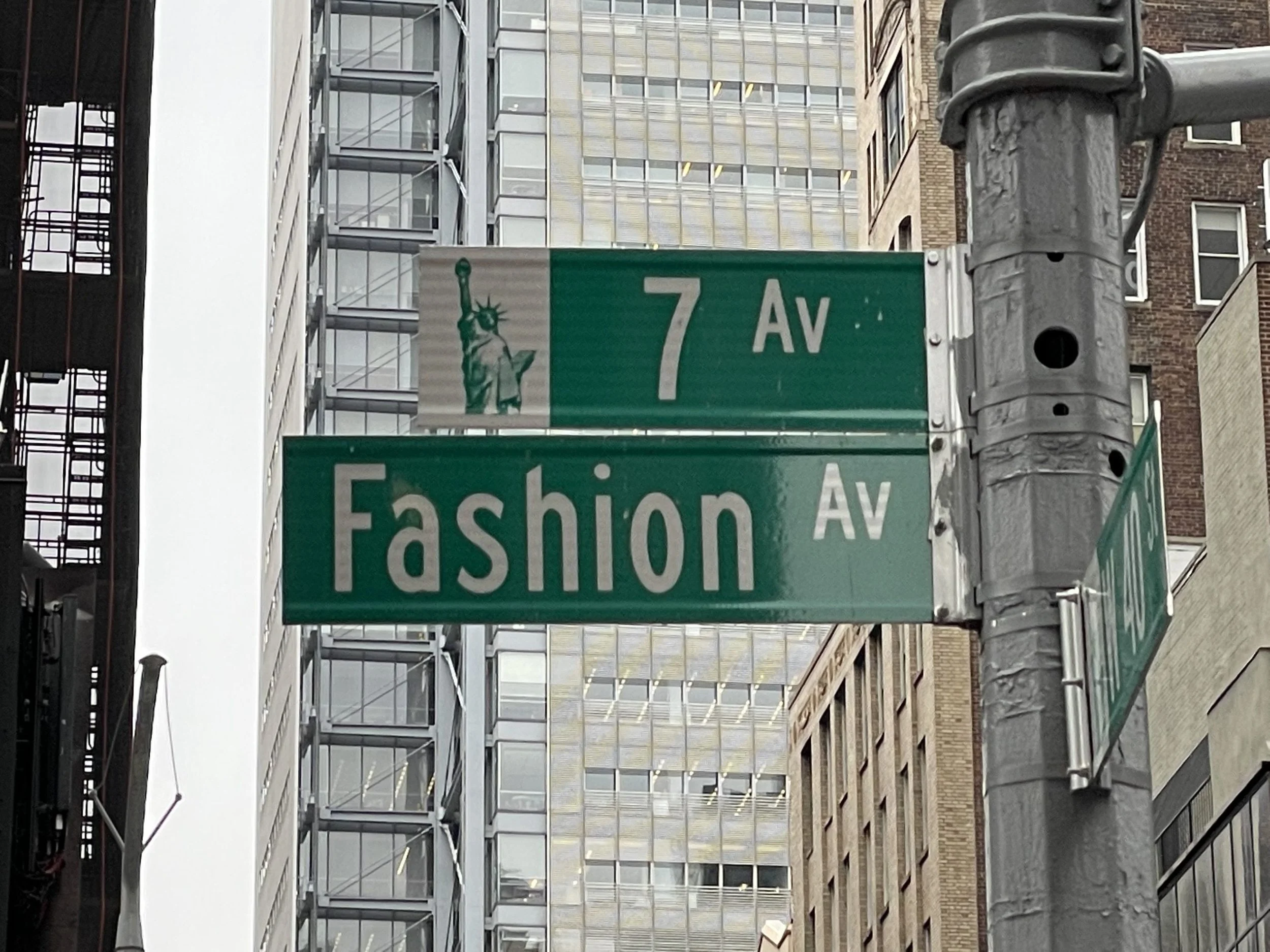
Finding the Heart: Objects of Affection Collection Comes Home to 469 Fashion Avenue
The luxury industry has spent the last decade selling us the simulation of quality while stripping the object of its soul. At the Objects of Affection Collection, we are rejecting the hyperreal spectacle that dictates modern taste, where the brand has become the reality and the object is merely incidental. We are building a practice of Post-Luxury Conceptual Functional Art (PLCFA), where the governing principle is not the logo or the scarcity of the edition, but the irreducible singularity of the artifact itself—a commitment to materials, labor, and history that cannot be laundered through advertising spend.
Our move to 469 Fashion Avenue is not a real estate strategy; it is a declaration of independence from the disposable. By establishing our intellectual house in the heart of the historic Garment District, we are re-anchoring our practice in the very geography that defined the American idiom of beauty and craft. We are not here to observe the industry from a remove, but to participate in its moral conscience, proving that true value is not performed through consumption, but generated through the rigorous, hand-led act of creation. This is where we work. This is our home.