INSTITUTIONAL LEXICAL HIJACKING: How Mass-Market Luxury Launders Post-Luxury Vocabulary, and What the Courts Have Already Confirmed
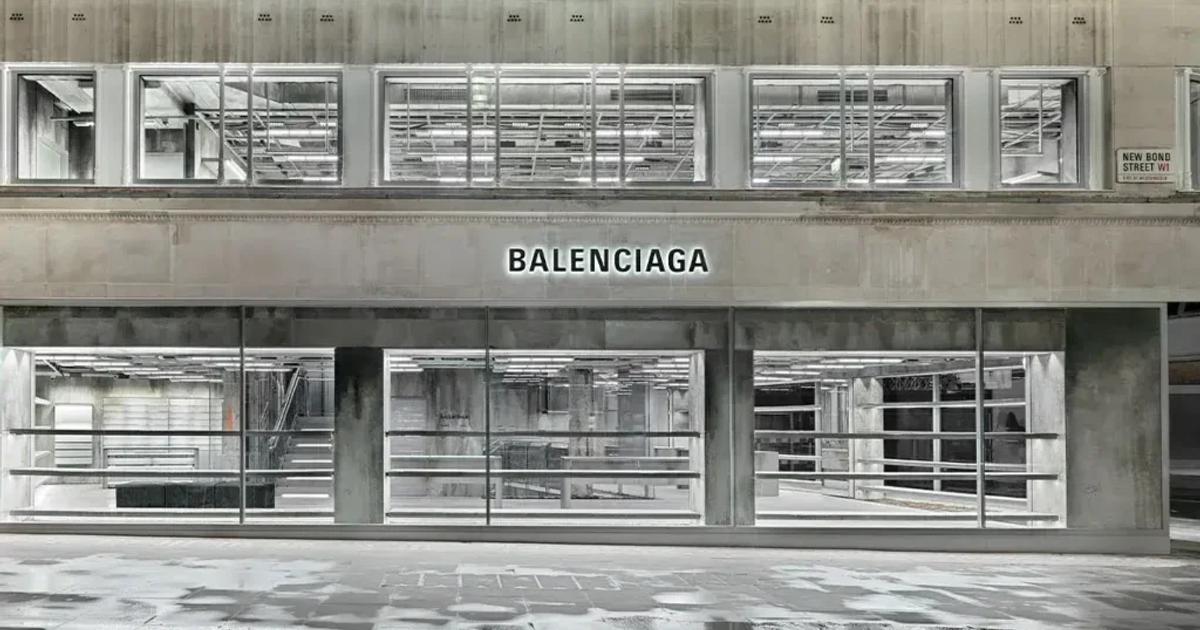
When the vocabulary of resistance becomes the vernacular of commerce, and courts are already proving why, the framework must name both.
The monastic design trend is the most-trafficked aesthetic term of 2026. Corporate interior design decks, fashion brand language, and retail environment briefs are deploying “monastic” and “honest friction” to describe mass-molded textured plastics, concrete-veneer storefronts, and fast-fashion marketing propositions. This study defines Institutional Lexical Hijacking as the deliberate appropriation of a sovereign critical vocabulary by entities whose material conditions contradict every term they deploy.

This study makes the argument with evidence that is no longer theoretical. Between January 2024 and July 2025, Italian courts placed five luxury fashion houses under judicial administration, a preventive measure under article 34 of the anti-mafia code, for negligently facilitating labour exploitation in their supply chains. The measure is not a finding against the brands, which were not themselves under investigation. The criminal charge was article 603-bis, illicit labour intermediation, brought against the subcontractors whose workshops paid between €2 and €3 an hour. The instrument is anti-mafia machinery adapted to this use: article 34 was recast by a statute of 2017, and the offences that trigger it are otherwise mafia association, criminal conspiracy and aggravated fraud against public funds. Each of these decrees cites that 2017 recasting on its first page. What the courts established is the material record. The argument about the vocabulary is this institution’s own. The European Commission launched formal proceedings against Shein, the company that just acquired Everlane, for addictive platform design and the sale of illegal products. Everlane itself was documented as a greenwashing operation by its own workers, its industry peers, and a United States Senator before becoming a distressed asset sold for approximately $100 million after accumulating roughly $90 million in debt.
These are not rhetorical examples. They are evidentiary records. The PLCFA framework’s argument (that luxury and mass-market fashion systematically use the language of material integrity while maintaining material conditions that destroy it) is now a matter of documented legal proceedings across three jurisdictions. This study places that evidence within the framework and concludes that the courts are too procedurally constrained to draw: the vocabulary itself has been hijacked, and precision is the only instrument of defense.
THE VOCABULARY PROBLEM: WHAT IS BEING STOLEN AND FROM WHERE
In early 2026, a major European interior design consultancy circulated a hospitality trend deck with a section titled “The Monastic Turn.” The section proposed that hotels adopt “monastic restraint”: stripped concrete surfaces, reduced ornamentation, and what the deck called “honest friction in material selection.” The examples: concrete-veneer wall panels, injection-molded “raw” ceramic tiles, textured polypropylene fixtures. Nothing in the deck was made once. Nothing was hand-formed. Nothing met the PLCFA framework's definition of Labor Density or Moral Weight Per Material (MWPM). The vocabulary was precise. The material reality was its opposite.
This is not an isolated incident. It is the terminal expression of a mechanism that the PLCFA framework has been tracking for years and that Italian courts began documenting in criminal and civil proceedings in 2023. The mechanism has a name: Institutional Lexical Hijacking. It is the preemptive extraction of the vocabulary of material integrity from the frameworks that built it, and its redeployment by entities whose material conditions render that vocabulary a lie. The trend deck is the consumer-facing version. The court filings are the institutional record of what lies beneath.
Monastic” is not an atmosphere. It is a material condition: one that requires irreversibility, singularity, and the refusal of replication. When a term that names a refusal becomes a brand proposition for injection-molded polypropylene, the refusal has not been approximated. It has been erased.
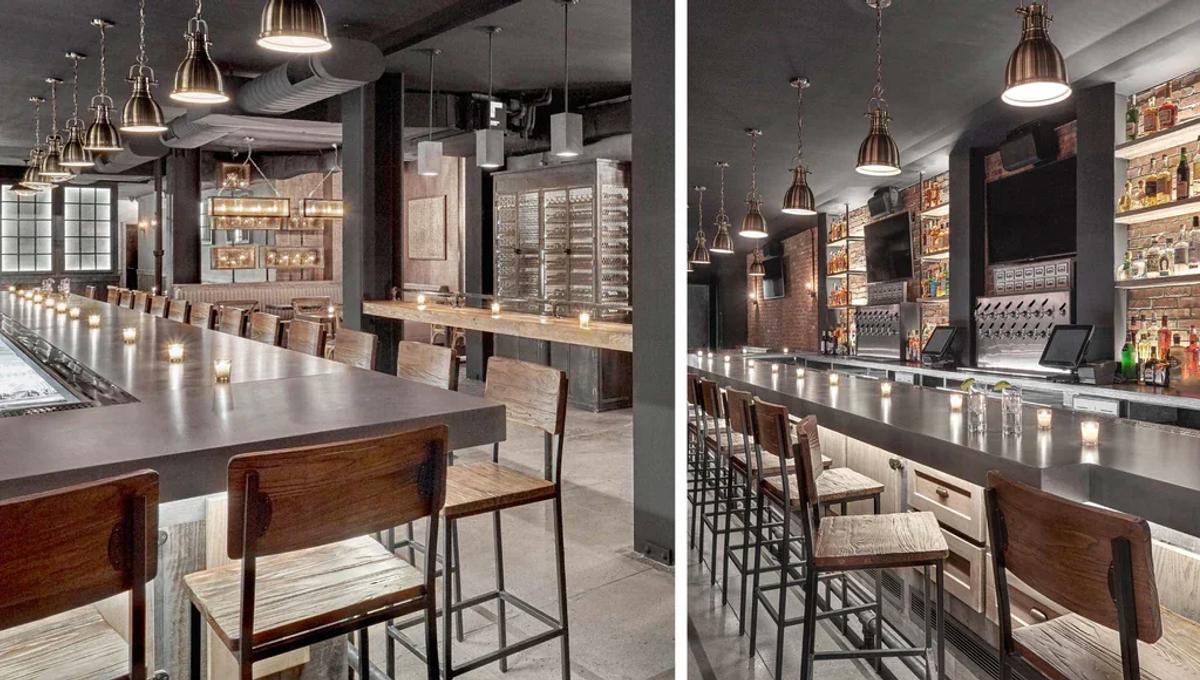
This study is published in sequence with What the Shein-Everlane Deal Actually Means, which established that the reported acquisition of Everlane by Shein, at a valuation of approximately $100 million against roughly $90 million in debt, represents the liquidation of an ethical silhouette. What is being bought is the residual aura of conscience: the ability to borrow trust from a brand that once persuaded people that visible costs were the same thing as visible ethics. This study extends that argument to its structural origin: the vocabulary that names that failure has itself become available for extraction.
THE EVIDENTIARY RECORD: WHAT ITALIAN COURTS HAVE ALREADY CONFIRMED
Between 2023 and 2026, the Milan Public Prosecutor’s Office, led by prosecutor Paolo Storari and the Carabinieri’s Labor Inspectorate Unit, systematically dismantled the legal fiction that underpins luxury’s most powerful claim: that its price premium corresponds to its material and ethical conditions. The proceedings: criminal investigations, judicial administration orders, antitrust probes, and document production demands issued to thirteen fashion houses, constitute the most comprehensive evidentiary record in the history of fashion law on the gap between the language of craftsmanship and its material reality.
Giorgio Armani Operations: €2 to €3 Per Hour for €1,800 Goods
On 3 April 2024, a Milan court placed Giorgio Armani Operations under judicial administration, on an application prosecutors had filed on 28 February, after establishing that the company had outsourced the production of bags, belts, and leather goods to suppliers who in turn subcontracted to four Chinese-owned workshops on the outskirts of Milan. Workers in those workshops were paid between €2 and €3 an hour, worked seven days a week, and had been operating under these conditions from 2017 until police raids in February 2024, for seven years. The Armani bags produced in these conditions retailed for approximately €1,800. Prosecutors documented that Armani’s representative was physically present at one of the factories when police arrived. The company’s response: that suppliers had “betrayed the founding values of the Armani Group, which has never pursued profit as an end in itself,” was issued into a court record that contained the contrary evidence.
Italy’s Competition Authority (AGCM) simultaneously launched an antitrust investigation into both Armani and Dior, finding that the brands may have engaged in unfair commercial practices: marketing goods as products of craft and heritage while sourcing from workshops operating in “contrast to the boasted levels of production excellence.” The AGCM’s framing is the PLCFA framework’s argument in regulatory language: the gap between the vocabulary of value and the material conditions of production is not an oversight. It is a commercial practice.
Manufactures Dior: €53 Per Bag, €2,600 at Retail
On 6 June 2024, a Milan court placed Manufactures Dior SRL, the Italian subsidiary of LVMH’s Christian Dior, under judicial administration. The case is reported as follows: Dior’s Italian suppliers charged as little as €53 per handbag, against a retail price of €2,600 for the model cited. Both figures come from the case file by way of reporting; the published decree summarises the prosecution’s schedules rather than reproducing them. The workers who produced them were undocumented migrants, paid below minimum wage, required to sleep in the factories where they worked, and subjected to electrical monitoring that confirmed continuous operation. Reporting of the case quotes the court finding that the company “did not take appropriate measures” to prevent exploitation and had failed to act on findings from its own third-party audits, and states that court documents linked two of the facilities directly to it. Neither passage has been located in the published decree, which does not name the company and which is a scan of thirty-four pages of which five have been read. They are reported and unverified here, which is a different thing from wrong.
The judicial administration for Dior was lifted on 28 February 2025, four months early, after corrective measures were implemented. The legal record, however, is permanent. A €53 bag sold at €2,600 under the “Made in Italy” designation is not an anomaly. Prosecutors described the labor abuses as part of a “generalized and consolidated manufacturing method” within Italy’s luxury production hubs. “Made in Italy” was not a guarantee of conditions. It was a marketing claim. The courts confirmed the difference.
LVMH’s Loro Piana: The Quiet Luxury Brand Under Criminal Investigation
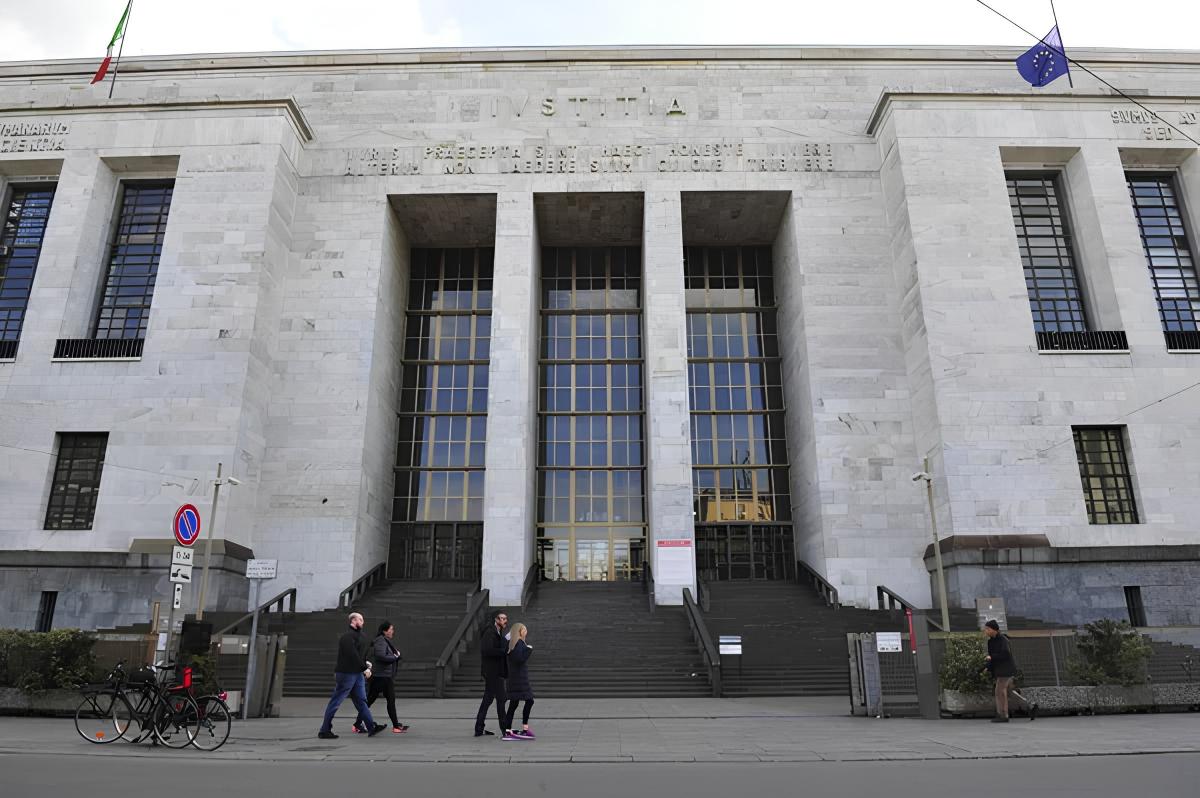
Loro Piana, the brand most frequently cited by the design press as the archetype of “quiet luxury,” restraint, and material authenticity, was placed under judicial administration on 8 July 2025. The Milan Tribunal’s twenty-four page decree documents garment production subcontracted through front companies to Chinese-owned workshops in Lombardy operating in breach of safety and labour law: dormitories in rooms registered as storerooms, twelve-hour days with no rest day at all, no emergency evacuation plan, fire extinguishers long past their service date, undocumented workers, and wages below legal thresholds. The decree does not name the company. It describes the cost of producing a cashmere jacket as being “in the order of a hundred euros,” and the price in the brand’s stores as between €1,000 and €3,000.
The Loro Piana case carries additional evidentiary weight because of what has already been documented. In March 2024, Bloomberg Businessweek published an investigation finding that the indigenous community of Lucanas in the Peruvian Andes, Loro Piana’s primary vicuña supplier, received approximately $280 per kilogram of fiber, down from $420 in 2012, while sweaters made from that fiber retailed for $9,000. Many villagers worked without pay during the annual shearing. One community member had never seen a finished Loro Piana garment in her life. In November 2024, Loro Piana published a centenary coffee table book celebrating its fiber heritage. In July 2025, it was placed under court administration for labor exploitation. The brand is simultaneously under criminal investigation by Milan prosecutors, with three of its managers facing charges for allegedly ignoring inspection findings. The court record and the brand’s own marketing materials describe two entirely different production realities.
Simultaneously with the judicial administration, a Carabinieri officer arrested the owner of a Chinese workshop producing Loro Piana cashmere jackets in the northwestern suburbs of Milan after one of his workers accused him of physical assault in a dispute over €10,000 in unpaid wages. This is the material condition: a beaten worker demanding stolen wages from a man producing goods for one of the world’s most prestigious “quiet luxury” brands, that the vocabulary of “monastic restraint,” “artisanal heritage,” and “material authenticity” is designed to make invisible.
Loro Piana is the definitive case. It is the brand that the design press describes as the apex of “quiet luxury”: restraint, heritage, material authenticity. Its workers were sleeping in the factories. A worker was beaten for demanding his wages. The brand published a coffee table book celebrating its fibers during the same period. This is not a contradiction. The system is operating as designed.
Valentino, Alviero Martini, and the Structural Pattern
Valentino Bags Lab was placed under judicial administration in May 2025 after worker abuse was uncovered at its subcontractors. Alviero Martini was placed under administration in January 2024 after investigations originating from a Chinese supplier in Trezzano sul Naviglio, where a 26-year-old Bangladeshi worker died on what prosecutors believed was his first day of employment, while his employers were attempting to regularize his insurance status after the accident. By December 2025, the Milan Prosecutor’s Office had issued document production orders to thirteen fashion houses: Dolce & Gabbana, Prada, Versace, Gucci, Missoni, Ferragamo, Yves Saint Laurent, Givenchy, Pinko, Coccinelle, Adidas, Alexander McQueen Italia, and Off-White Operating. In November 2025, Carabinieri raids on three Tuscan factories found up to seven levels of subcontracting and seized bags bearing the labels of Madbag, Zegna, Saint Laurent, Prada, and others.
The structural pattern is explicit in the court documents. Prosecutor Storari’s approach assigns responsibility not only to the subcontractors but to the commissioning brands, on the grounds that the brands could not have been unaware that their suppliers lacked the production equipment (in one case, no sewing machines were present on the supplier’s premises) to produce what they were contracted to deliver. The brands knew. The language of craftsmanship continued regardless. In one documented case, a handbag was produced for a well-known brand by a subcontractor for €53, while the retail price was €2,600, a markup documented in court filings, which the brand simultaneously marketed as a product of “artisanal Italian craftsmanship.” The court record is the referent for the word “lying.”
THE SHEIN RECORD: WHAT REGULATORY PROCEEDINGS HAVE CONFIRMED
Shein, which has now acquired Everlane, is not simply an ethically indifferent counterpart to Everlane’s ethical posturing. It is an entity with a documented, multi-jurisdictional legal record of labor exploitation, platform harm, and regulatory non-compliance. The acquisition does not join two different business models. It joins two different legal exposure profiles under one corporate roof.
Louis Vuitton’s public framing intensifies this move by styling the house as a Maison of Culture and by describing its stores as hybrid spaces that combine art, culture, experience, and technology. The Frick/Keith Haring study showed where this trajectory leads at full scale: not simply art collaboration, but Aura Transaction, Structural Captivity, and the purchase of institutional gravity. What begins as refined brand language ends as a claim on the scholarly and civic record itself. The house does not merely sell a bag; it seeks the right to narrate culture.
The phrase “Raw Asset” belongs analytically to this same zone even where official copy prefers softer substitutes like raw materials, traceability, or regenerative sourcing. The corporate move is to convert matter itself into reputational collateral. Biology, terroir, craft residue, and material origin are staged not only as production facts but as asset classes inside a moral portfolio. The material is asked to do reputational work long before governance has done ethical work.
The Supply Chain Record: 75-Hour Weeks as Documented Fact
In 2021, Swiss human rights organization Public Eye published the first major investigation into Shein’s Guangzhou supply chain, documenting 75-hour workweeks at supplier factories in contravention of Chinese labor law. In 2023, the BBC independently confirmed the findings: sewing machine operators in the Panyu neighborhood of Guangzhou, the industrial hub known as “Shein Village,” were working approximately 75 hours a week, 12 hours a day, with one day off per month. Workers at Shein’s packing facility in Foshan reported 12 to 14-hour days and up to 28 working days per month. The workers are predominantly internal migrants from rural provinces who came to Guangzhou seeking higher income; the income is structurally dependent on hours that Chinese labor law prohibits.
In 2023, Shein’s own sustainability report acknowledged two cases of child labor in its supply chain. Public Eye returned to Guangzhou in 2024 and found the 75-hour weeks unchanged. Shein’s response to the 2024 findings: “long working hours are a well-known, long-term issue.” The company’s previous sustainability reports, which had acknowledged the overtime problem in its initial form, were removed from its website. Shein described the removal as a “redesign” of the relevant section. Public Eye described it differently. The 2024 Business & Human Rights Resource Center briefing found that Shein’s ultra-fast business model “intensifies supplier strain through aggressive low prices, rapid turnarounds, and inadequate transparency regarding human rights risks.” This is not an allegation. It is a finding built on multi-year documentation.
The European Commission DSA Proceedings: February 2026
On February 17, 2026, the European Commission opened formal proceedings against Shein under the Digital Services Act. Shein had been designated a Very Large Online Platform (VLOP) in April 2024, having exceeded 45 million monthly EU users, a threshold that triggers the DSA’s most stringent obligations. The Commission’s investigation focuses on three areas: the sale of illegal products, including material the Commission described as constituting child sexual abuse content; the use of addictive platform design, specifically reward and points systems designed to drive compulsive engagement; and the opacity of Shein’s recommender systems. French authorities had already found illegal weapons and child-like sex dolls for sale on Shein’s platform in 2025 and moved to suspend access to the site in France. A French court blocked the suspension and referred the matter to the Commission.
If breaches are confirmed, Shein faces significant fines under the DSA framework. The Commission’s formal proceedings are its first against Shein and follow three separate prior requests for information on June 28, 2024, February 6, 2025, and November 26, 2025, all of which, taken together, indicate that Shein has been under active regulatory scrutiny for nearly two years without resolving the Commission’s concerns. This is the platform that now owns the Everlane brand identity, its customer database, its “Radical Transparency” trademark, and its accumulated consumer trust.
Shein did not acquire Everlane’s ethics. It acquired Everlane’s ethics-adjacent brand equity, the residual consumer trust built by a brand that marketed itself on labor transparency, while simultaneously facing EU proceedings for addictive design and labor conditions documented across three jurisdictions. This is the Hollowed Object at maximum scale: a silhouette of conscience purchased by its opposite.

EVERLANE’S RECORD: WHAT THE BRAND’S OWN WORKERS CONFIRMED
Everlane’s legal and institutional record is less dramatic than Armani’s or Loro Piana’s, but it is structurally identical in its mechanism: a brand that organized its entire commercial proposition around ethical language while maintaining material conditions that contradicted it, with the gap documented not by external critics but by its own employees and regulatory ratings agencies.
In 2020, Everlane was embroiled in union-busting allegations after workers at its retail locations organized and faced management resistance. A March 2020 tweet by Senator Bernie Sanders shamed the company after it laid off its entire customer experience team via video call during the early weeks of the COVID-19 pandemic, in what workers described as retaliation for union activity. Remake, a fashion accountability organization, rated Everlane 22 out of 100 in its 2020 Transparency Report, one point above fast-fashion behemoth Forever 21. Everlane’s website, which described its mission as supplying goods from “ethical factories,” provided no information on living wages, working hours, or maker well-being programs for the majority of its listed production facilities.
In 2021, Everlane’s founder stepped away amid controversies over allegations of racial discrimination within the company. The brand rebranded toward “Clean Luxury” in an explicit attempt to rebuild the trust it had lost, an acknowledgment, in brand-strategy terms, that the original “Radical Transparency” architecture had not been sufficient. The strategy was funded by L Catterton, a private equity firm backed by Groupe Arnault and LVMH, the conglomerate behind Louis Vuitton, Dior, and the brands currently under Italian criminal investigation. A brand built on transparency and ethical production was therefore financed by capital tied to the most legally embattled end of the luxury industry. Private equity does not invest in restraint. It invests in returns.
The returns did not materialize. By 2025, Everlane had accumulated approximately $90 million in debt. The reported sale to Shein at approximately $100 million valued the company at a fraction of its peak venture-backed valuation. What remained was the brand architecture: the fonts, the aesthetic grammar, the restrained California tone, the “Radical Transparency” trademark, and a customer list of consumers who had paid a premium for ethical distance from the fast-fashion world now positioned to own their data. The Hollowed Object is complete. The silhouette of responsibility survives. The interior conditions that once made responsibility plausible have been sold as a distressed asset.
THE MECHANISM: HOW LEXICAL HIJACKING USES LEGAL IMMUNITY TO OPERATE
The Italian court proceedings, the EU DSA investigation, and the Everlane greenwashing documentation share a structural feature: in each case, the language of material integrity persisted after the material conditions it described had been definitively contradicted. Armani continued to market “Italian craftsmanship” while its subcontractors paid €2 an hour. Loro Piana published a heritage book while the workshops making its jackets had no evacuation plan and extinguishers years out of service. Everlane continued to trademark “Radical Transparency” while withholding information on living wages, working hours, and maker conditions from the majority of its supply chain. Shein continues to describe itself as a responsible platform while under EU proceedings for addictive design and illegal products. In none of these cases did the language change when the material conditions were exposed. The language is not connected to the conditions. It is connected to the market value of the conditions’ appearance.
This is the precise mechanism of Institutional Lexical Hijacking. It operates in three phases. Phase One is Identification: a commercial entity identifies vocabulary in circulation that carries the authority of its genuine referents, actual craft, actual transparency, actual monastic refusal, and extracts it as a brand signal without the conditions that gave it meaning. Phase Two is Deployment Without Conditions: the term is applied to a product, environment, or brand position that does not meet the material preconditions the term designates. Phase Three is Semantic Dilution: the term, now in commercial circulation, loses its precision, and the critical framework from which it originated finds its vocabulary pre-occupied, contaminated, and requiring disambiguation before it can do its structural work.
The courts are documenting Phase Two in real time. The PLCFA framework is responsible for naming Phase Three, because no court proceeding will ever charge a company with Semantic Dilution. The legal system can stop a brand from falsely claiming “Made in Italy” when the conditions are demonstrably false. It cannot stop a trend deck from deploying “monastic” to describe injection-molded polypropylene. The courts draw the evidentiary line. The framework draws the structural line. Both lines name the same gap.
The courts can hold a brand liable for labor exploitation. They cannot charge a trend deck with Semantic Dilution. But the trend deck and the court filing describe the same underlying structure: the systematic deployment of the vocabulary of material integrity in conditions that destroy it. The PLCFA framework draws the line the law cannot.
WHAT “MONASTIC” AND “HONEST FRICTION” ACTUALLY MEAN IN THE PLCFA FRAMEWORK
The Monastic Veto is one of the PLCFA framework’s most structurally precise terms. It names the institutional right, and obligation, of a custodian to refuse transactions that violate an object’s ontological integrity, regardless of commercial pressure, institutional prestige, or buyer capacity. It is not an aesthetic posture. It is a governance mechanism. Its historical referent, monastic institutions that operated outside the market’s temporality, producing objects that accumulated meaning through use, repair, and refusal to replicate, is the opposite of what a concrete-veneer storefront represents. The storefront has no custodian. It has no object with ontological integrity. It has no refusal. It has a surface that performs the vocabulary of the thing it has never been.
The Loro Piana case makes the contrast forensically exact. Loro Piana’s brand narrative, as constructed by the design press, its own marketing, and its centenary book, is precisely the monastic archetype: restraint, heritage, material authenticity, the refusal of flash in favor of substance. The court documents describe something else entirely: dormitories in rooms registered as storerooms, twelve-hour days with no rest day, and a contractor the brand had formally audited without ever recording that it had no production department. The brand’s vocabulary was monastic. Its material conditions were not. The Monastic Veto, the governance mechanism that requires an institution to refuse the transaction that compromises material integrity, was not deployed. The transaction continued. The vocabulary remained. This is what the PLCFA framework means by the Hollowed Object: not a cheap imitation, but a form whose interior conditions have been evacuated while the vocabulary of those conditions is maintained at full signal strength.
"Honest friction" in the PLCFA framework designates Tactical Friction, the deliberate resistance an object or system introduces to slow the transaction, interrupt the consumption reflex, and require the acquirer to encounter the object’s actual material conditions before proceeding. It is not a surface effect. It is a structural intervention in the transaction. Concrete-veneer storefronts do not introduce Tactical Friction. They eliminate it. The veneer’s function is to produce the appearance of material honesty at the lowest possible cost so that the transaction can proceed faster and at higher margin. It is smooth, dressed as rough. The “friction” is the interface that accelerates consumption by borrowing the vocabulary of what resists it.
When a hospitality brand uses “honest friction” to describe textured polypropylene, it has committed a double appropriation confirmed by the court record: it has taken “honest,” a term designating alignment between appearance and material reality, and applied it to a material whose purpose is to appear to be something it is not; and it has taken “friction,” which designates a structural interruption of the consumption reflex, and applied it to a surface that enables consumption by performing the aesthetic of its resistance. This is not a design choice. It is, in the language of the Italian antitrust regulator, a commercial practice “in contrast to the boasted levels of production excellence.”
INSTITUTIONAL NECROPHAGY: THE FRAMEWORK’S VOCABULARY UNDER CONSUMPTION
Institutional Necrophagy, the PLCFA term for the consumption of a living framework’s vocabulary by entities that did not build, sustain, or earn it, is now operating at structural scale. When “monastic” appears on two hundred trend decks describing concrete veneer, the word becomes contextually contaminated. Every use of the Monastic Veto in the PLCFA framework now requires disambiguation from the design trend. This is not a rhetorical cost. It is a structural one. The framework must spend its precision on disambiguation rather than extension.
The luxury market’s structural crisis enables this acceleration. As the Business of Fashion / McKinsey State of Fashion 2026 reported, approximately 80 percent of luxury market growth between 2023 and 2025 came from price increases rather than volume gains, a lever that cannot be sustained. The Italian court proceedings are, among other things, the forensic record of what that price extraction rested on: labor conditions that the brands’ vocabulary systematically misrepresented. Critical vocabulary, “monastic,” “honest,” “friction,” “craft,” offers a shortcut: the appearance of alignment with post-luxury values without the material commitment those values require. Brands under existential pressure reach for this vocabulary because it is available, carries authority, and no law yet prevents them from using it.
This is also why the Narrative Permanence of the PLCFA framework cannot reside in the portability of its terms. It must reside in the structural relationships among them: the way Semantic Burden connects to Tactical Friction, which connects to the Monastic Veto, which connects to Institutional Necrophagy, which connects to the Zero-Sum Aura. The commercial impersonator can take the words. It cannot take the structure. The structure is what the words were pointing at, and the structure is what the court records have now confirmed to be at stake.
THE DEFENSE: PRECISION, PROVENANCE, AND THE LINE THE LAW CANNOT DRAW
The PLCFA framework’s response to Institutional Lexical Hijacking is not litigation, rebranding, or retreat. It is the assertion of precision backed by provenance. The court record establishes that the gap between the vocabulary of material integrity and its material conditions is real, systematic, and legally actionable when it crosses into consumer fraud and labor exploitation. The PLCFA framework establishes what the court record leaves unnamed: the vocabulary itself is the site of the fraud. “Made in Italy” is a provenance claim. “Monastic” is a framework claim. Both are being falsified by the same underlying mechanism. Only one is subject to legal remedy.
The Monastic Veto is the most structurally resistant of the framework’s terms precisely because it names a governance mechanism rather than an aesthetic. The design press cannot put a governance mechanism in a trend deck. It cannot render the custodian’s obligation to refuse as a surface texture. It cannot photograph the Monastic Veto. The term’s resistance to commercial appropriation is built into its definition: it is available only to an institution that has built the conditions under which refusal is possible. Loro Piana’s supply chain, Dior’s factories, Armani’s subcontractors, and Shein’s Guangzhou workshops do not meet those conditions. The court records confirm what the framework already knew.
What this study provides, and what no court proceeding will ever produce, is the connective tissue between the legal record and the critical framework. The courts have confirmed the Meaning Deficit in evidentiary form. They have documented the Hollowed Object as a legal finding. They have named the Labor Density gap: €53 for a €2,600 bag, €2 an hour for an €1,800 accessory, 75-hour weeks for a fast-fashion platform under EU investigation, in the language of criminal and civil proceedings. The PLCFA framework names the same gap in the language of structural theory. Both records are now available. Together, they constitute the most complete indictment of the vocabulary of material integrity as commercial practice that the post-luxury field has produced.
The courts draw the line the law can reach. The framework draws the line the law cannot. Both lines name the same gap: the systematic deployment of the vocabulary of material integrity in conditions that destroy it. The post-luxury field now has both records. Neither is theoretical anymore.
CODA
Loro Piana’s centenary book was published in November 2024. Its judicial administration began in July 2025. Its workers had been sleeping in factories while the fibers they processed were described in the luxury press as the distillation of generations of material knowledge. The book is still available. The court record is also still available. Both are searchable. Only one of them describes what was actually happening.
This is the final argument against Institutional Lexical Hijacking: not that the vocabulary should be withdrawn from circulation, but that the evidentiary record now exists to make its false use visible at the moment of its deployment. When a trend deck deploys “monastic” to describe concrete veneer, the counter-reference is not theoretical. It is Loro Piana’s twenty-four page Milan Tribunal decree. When a brand claims “honest friction” in material selection, the counter-reference is not abstract. It is the €53 bag and the €3-per-hour wage that were documented in the same jurisdiction where the “Made in Italy” claim was made. The framework names the structure. The courts confirm the facts. The vocabulary can no longer travel alone.
What the PLCFA framework owns is not the words. It owns the structural relationships that make the words mean something. The Monastic Vetois not “monastic” as a mood. It is the governance mechanism whose absence was documented in seven years of exploitation at €2 per hour in the suburbs of Milan. Tactical Friction is not “friction” as a texture. It is the structural resistance whose elimination was confirmed in the EU’s formal DSA proceedings against a company that engineered “addictive design” while 75-hour workweeks continued in its Guangzhou supply chain. Narrative Permanence is not a record of the framework’s survival. It is the commitment to maintain the structural relationships, between the words, between the material conditions, and between the framework and the evidentiary record that now confirms it, long after the words have been borrowed by entities that cannot borrow the structure.
Authored by Christopher Banks, Anthropologist of Luxury, Critical Theorist & Founder
Objects of Affection Collection
Office of Critical Theory & Curatorial Strategy
469 Fashion Avenue, 12th Floor, New York, NY 10018
RELATED OAC STUDIES
OAC’s archive of critical studies in Post-Luxury Conceptual Functional Art.
Directly Preceding Study
What the Shein-Everlane Deal Actually Means: Radical Transparency at the Moment of Liquidation
On the Italian Courts and Supply Chain Reality
Anatomy of a Collapse: The Brunello Cucinelli Short-Seller Report and the Post-Luxury Future
Luxury Just Split in Two. One Half Will Survive.
On Semantic Capture and Borrowed Vocabulary
Richemont’s “Tactile Integrity” vs. Tactical Friction: The Borrowed Vocabulary
Why Traditional Luxury’s Root Marketing Fails to Purchase Moral Capital
On the Hollowed Object and Meaning Deficit
THE MEANING DEFICIT: Why Luxury, Art, and the Built Environment Are All Failing the Same Test
The White Wall Paradox: Quantifying Consumption in the Age of Aesthetic Neutrality
On Material Honesty and Labor Density