Ferrari Luce Side View: The 'Hollowed Object' Condition
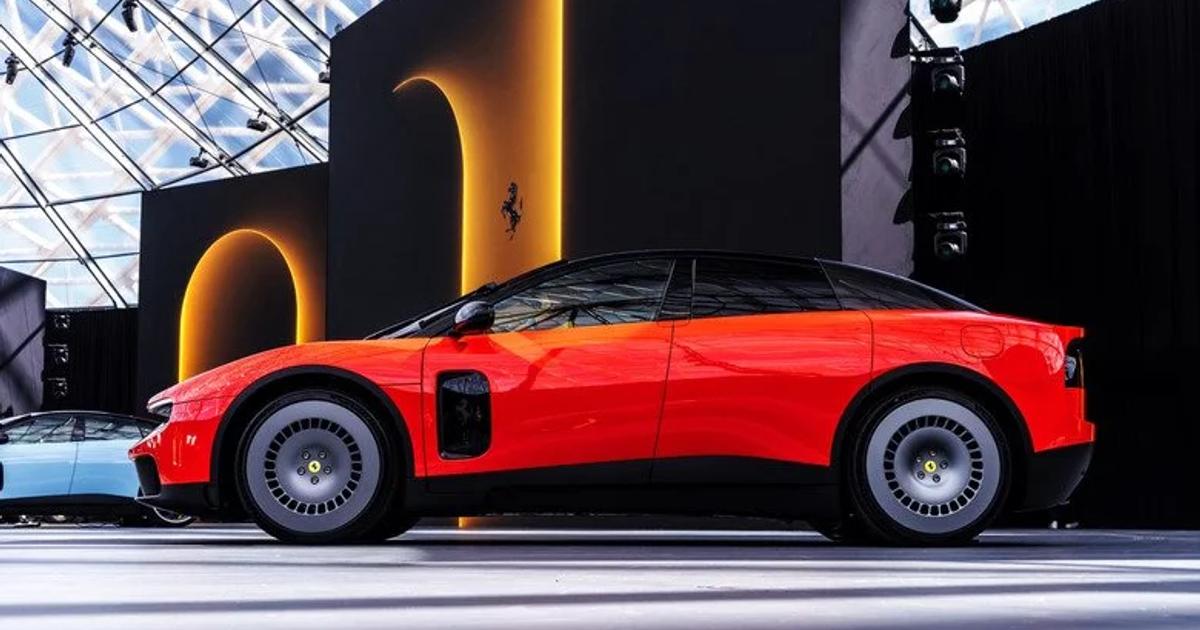
On the Ferrari Luce, LoveFrom, and What Happens When the World’s Most Emotional Car Brand Is Handed to Designers Whose First Language Was Never Cars
The Ferrari Luce, revealed in Rome on May 25, 2026, is Ferrari’s first fully electric production vehicle and its most consequential design decision in decades. Its interior and exterior were developed in collaboration with LoveFrom: the creative collective founded by Sir Jony Ive and Marc Newson, the designers whose instincts were shaped by the Apple iPhone, the iMac, and the entire grammar of consumer electronics. The result is a car of extraordinary technical precision and unsettling semiotic displacement: a Ferrari EV that looks and feels, at the interior level, like a beautifully resolved Luxury EV designed by people for whom human-machine interfaces are the primary object of care. This study applies the Post-Luxury Conceptual Functional Art (PLCFA) framework to diagnose what the Ferrari Luce actually confirms: that the Hollowed Object condition, in which a brand’s external semiotic markers are preserved while its internal semantic content is evacuated and replaced, is now operating at automotive brand scale. The active PLCFA lexicon for this study includes the Hollowed Object, Semantic Burden, Aura Transaction, Labor Density, Material Singularity, Structural Captivity, and the Sovereign Object.
The Name as Renunciation
Ferrari named its first electric car Luce, Italian for light, for clarity, for illumination, as Electrek noted when Ferrari announced the name. The choice was deliberate and philosophically loaded. Light is weightless. Light does not resist. Light does not carry the dense accumulation of combustion, of mechanical violence, of a V12 at redline. In naming this car Luce, Ferrari made a declaration that the automotive press has treated as aesthetic and the PLCFA framework reads as ontological: the company is announcing a renunciation of weight. Not of mass. Of significance.
Every prior Ferrari carried the accumulated weight of what Ferrari means, racing provenance, mechanical passion, the specific confrontation between human desire for velocity and the engineering required to achieve it. The Prancing Horse is not a symbol. It is a condensation. It contains Enzo’s pronouncements, Schumacher’s championships, the specific smell of a warm V8 in an enclosed space, the sound, always the sound, of an engine that communicates directly with the body. Material Singularity in the PLCFA framework means that a material’s identity cannot be separated from its history of use. The materials of the historical Ferrari, aluminum, leather, carbon, rubber, carry that history. They remember what they have been part of.
Luce means light. It also means weightless. Ferrari has named its most consequential car after the quality it cannot afford to lose.
The Luce’s materials, as designboom catalogued them at the reveal, Corning Gorilla Glass, anodized aluminum processed into hexagonal microstructures, Consumer Electronics grade finishes, do not carry that history. They carry a different history: the history of devices designed for replacement cycles of eighteen to thirty-six months, of products whose defining quality is frictionless interaction rather than encounter. To name the car after light and build it with the materials of clarity is to make a coherent aesthetic argument. It is also to begin the process of semantic evacuation that the PLCFA framework identifies as the defining condition of the Hollowed Object.
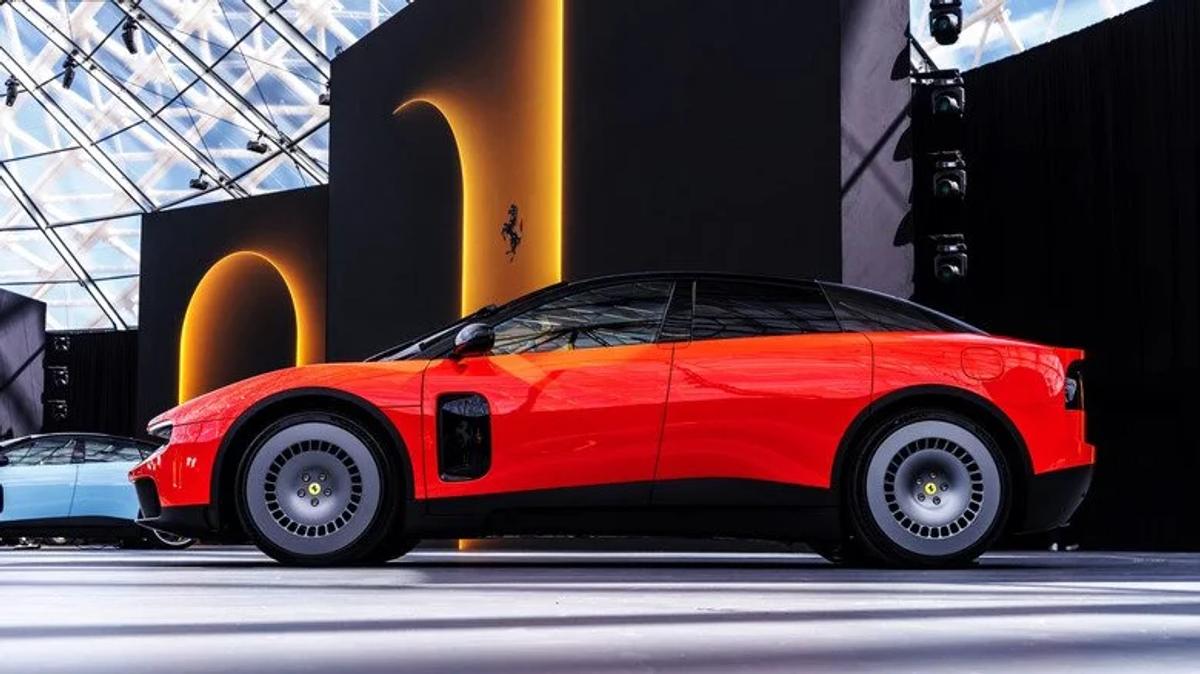
What LoveFrom Actually Is
The automotive press has covered the Jony Ive Ferrari collaboration almost entirely through the lens of celebrity designer gossip, Apple’s chief design officer goes to Maranello, tensions arise, something exciting happens. This framing obscures the structural question. The relevant fact about LoveFrom is not who its founders are. It is what kind of practice it is.
LoveFrom, as instantiated in the Luce, is an Industrial Design practice operating under product-system logic. Its foundational grammar, the grammar Ive refined over two decades at Apple and Marc Newson developed across furniture, aviation interiors, and consumer goods, is reduction, universality, and frictionless interaction. These are the values of a practice whose deepest instinct is to ask: what is the simplest, most coherent, most universally readable form this object can take? That question has produced some of the most consequential product design of the last forty years. It is not, however, the question that produced the Ferrari.
Ferrari’s design history, from the Dino to the Testarossa to the F40 to the Enzo, was produced by designers who began from a different question: what form does this force want to take? The cars that resulted were excessive, sometimes ugly, always legible as expressions of something specific and dangerous. They carried what the PLCFA framework identifies as Labor Density, not merely technical precision, but craft in service of a legible and irreducible intent. The Luce’s craft is indisputable. Its intent is universal. This is not the same thing.
The Ferrari has always been designed by people for whom speed was a first language. The Luce is designed by people for whom interface is. The gap between those two positions is the entire argument.
Ferrari’s CEO Benedict Hartmann has defended the LoveFrom collaboration as necessary to achieve genuine innovation in the EV space, to avoid simply reproducing legacy automotive language in an electric chassis. This is a coherent institutional argument. It is also an inadvertent acknowledgment that Ferrari’s own design intelligence, under Flavio Manzoni’s Centro Stile, was not considered sufficient for the task. The Brand Philosophy implications of that acknowledgment have not been adequately examined.
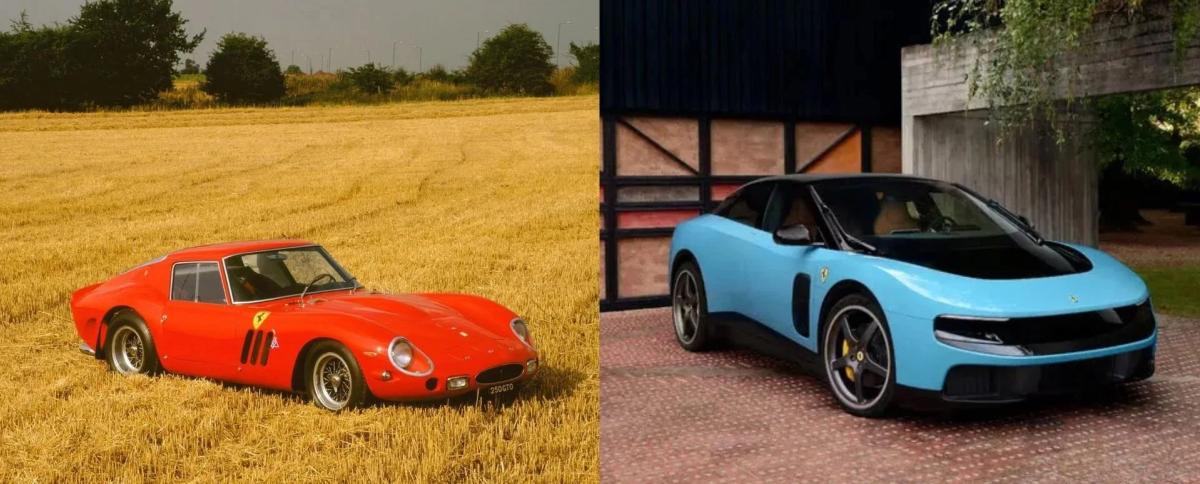
The Hollowing Protocol
The Hollowed Object in the PLCFA framework describes a condition in which an object retains all external markers of its identity, badge, name, provenance claim, price point, while its internal semantic content has been evacuated and replaced with foreign material. OAC has identified this condition most explicitly in its study of Art Basel’s institutional drift, where the fair’s name persists as a quality signal while its actual curation has been subordinated to commercial imperatives. The hollowing is not visible from the outside. It is structural.
The Ferrari Luce is the most visible expression of the Hollowed Object condition in automotive history. The Prancing Horse badge appears on the hood. The name Ferrari appears on the marketing materials. The cavallino rampante appears on the key, a Gorilla Glass key with an E Ink display and a yellow color transition that activates when you engage drive. The exterior carries four stoveplate-style taillights, a deliberate heritage reference. Institutional continuity is maintained at the level of symbols. At the level of semantic content, the internal design logic, the material argument, the answer to the question of what kind of encounter does this object invite, the content has been fundamentally replaced.
What replaced it is not wrong. It is simply foreign. The Luce’s interior logic, the self-contained driver binnacle, the structured control panel, the Gorilla Glass surfaces, the Optimization Logic that produced physical buttons clicking “like a rifle bolt” because tactile feedback was determined to be the correct resolution to the touchscreen problem, is a coherent system. It is coherent within a product-system grammar that Ferrari has never before used. Prominent designers, speaking to The Telegraph at the interior reveal, called the result “soulless” and “utterly inappropriate for a Ferrari.” These are not aesthetic judgments. They are semiotic ones. The critics are identifying that the internal semantic system no longer matches the external identity markers.
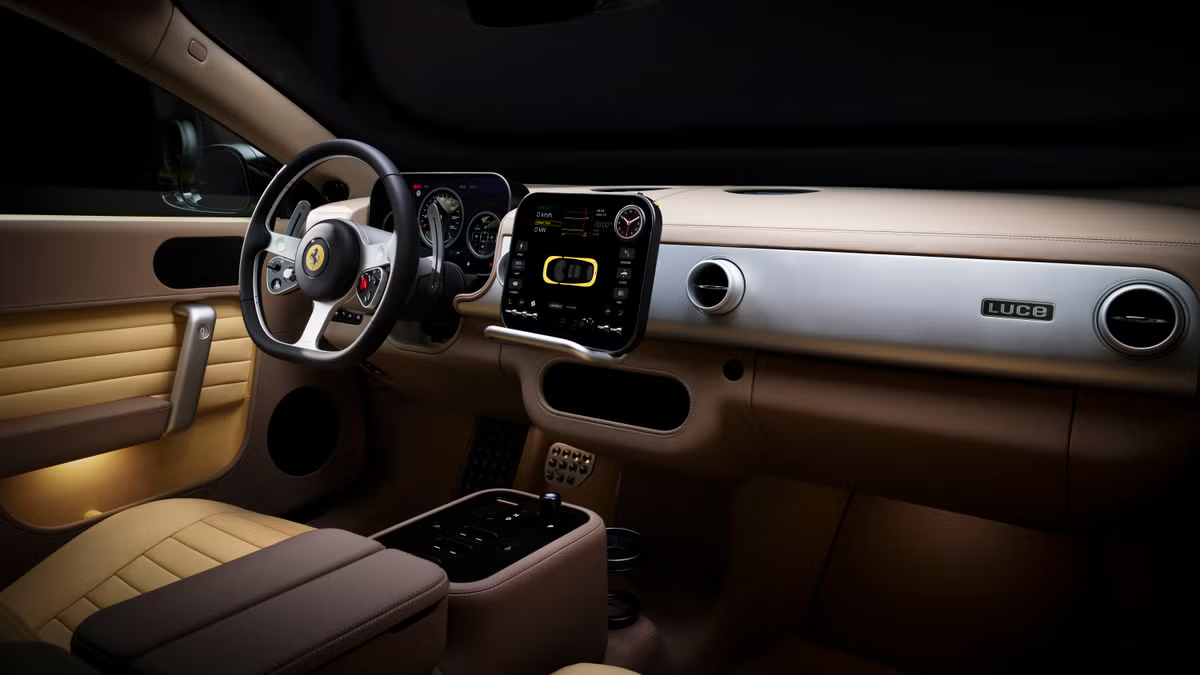
The cavallino rampante is still on the hood. The Ferrari is still in the name. What has changed is the language the car speaks from the inside. That language is not Italian.
This is precisely the mechanism OAC identified in its analysis of the Audemars Piguet × Swatch Royal Pop collaboration, a product that retained the Royal Oak’s visual grammar while replacing its mechanical soul with a quartz movement. The external semiotic system was preserved; the internal value proposition was evacuated. The Luce operates at a different order of magnitude, it is not a licensed artifact but the primary vehicle of a brand’s transition, but the structural logic is identical.
The Semantic Burden Problem
No brand in the history of manufactured objects carries more accumulated Semantic Burden per unit than Ferrari. The PLCFA framework defines Semantic Burden as the accumulated meaning weight that an object is required to carry by virtue of its history, provenance, and the expectations it has generated. Semantic Burden can be a source of extraordinary value, it is why a Ferrari commands a price premium that has nothing to do with the marginal cost of its engineering. It is also a structural constraint. The object cannot simply decide to mean something different.
Ferrari has attempted, with the Luce, to reset its Semantic Burden rather than carry it. The strategy is visible in the naming (“Luce” introduces a new naming logic for the electric era, severing continuity with the geography-based naming of the Purosangue, the Amalfi, the Roma), in the design collaboration (LoveFrom’s aesthetic vocabulary has no prior relationship with Ferrari’s accumulated meaning), and in the marketing (the Luce is positioned as a new segment, a Ferrari utility vehicle, as the Purosangue was a Ferrari FUV rather than an SUV). The reset strategy is coherent. Whether Semantic Burden can be reset rather than carried is the structural question.
OAC’s analysis of the Banksy unmasking, specifically in The Named Ghost and The Forensic Ledger, established that Semantic Burden is not a property of the name alone. It is a property of the entire semiotic system surrounding the object. When that system is disrupted, when the maker is unmasked, when the object’s origin story is revised, the Semantic Burden does not transfer cleanly to the new context. Some of it evaporates. The question for the Luce is how much of Ferrari’s Semantic Burden survives the transfer to a new design language, and what happens to the portion that does not.
Ferrari’s Semantic Burden was built by Enzo, by Schumacher, by every driver who pushed a Ferrari to its limit and came back changed. Jony Ive did not build that burden. He cannot inherit it. He can only work alongside it, or displace it.
The portion that does not transfer does not disappear quietly. It becomes the source of the “soulless” criticism, of the forums full of Ferraristi calling the Luce “a tech startup car” of the reviewer who noted that the exterior “looks akin to something Faraday Future might release.” These are not simply conservative reactions. They are the sound of Semantic Burden in search of its proper home, accumulated meaning that the new design system cannot accommodate.
Material Testimony: What the Glass Key Confirms
The material argument of the Ferrari Luce is most visible at its smallest scale: the key. The Luce’s key is Gorilla Glass, with an E Ink display that shows the car’s status information and a yellow color element that transitions as you engage the drive. It is an extraordinary object in isolation, precisely engineered, thoughtful in its integration of digital and physical, materialized with the kind of care that LoveFrom brings to every surface it touches.
It is also the key to a consumer electronics device. Gorilla Glass is Gorilla Glass; Corning’s scratch-resistant glass, designed for smartphone screens. E Ink is e-reader display technology. Anodized aluminum with a hexagonal-cell microstructure is used in the manufacturing process for a premium laptop chassis. These materials are impeccably executed. They are also legible in a way that runs counter to Luce’s claim to Ferrari identity. They tell you, immediately and precisely, what category of designed object you are holding. It is not the category Ferrari historically inhabited.
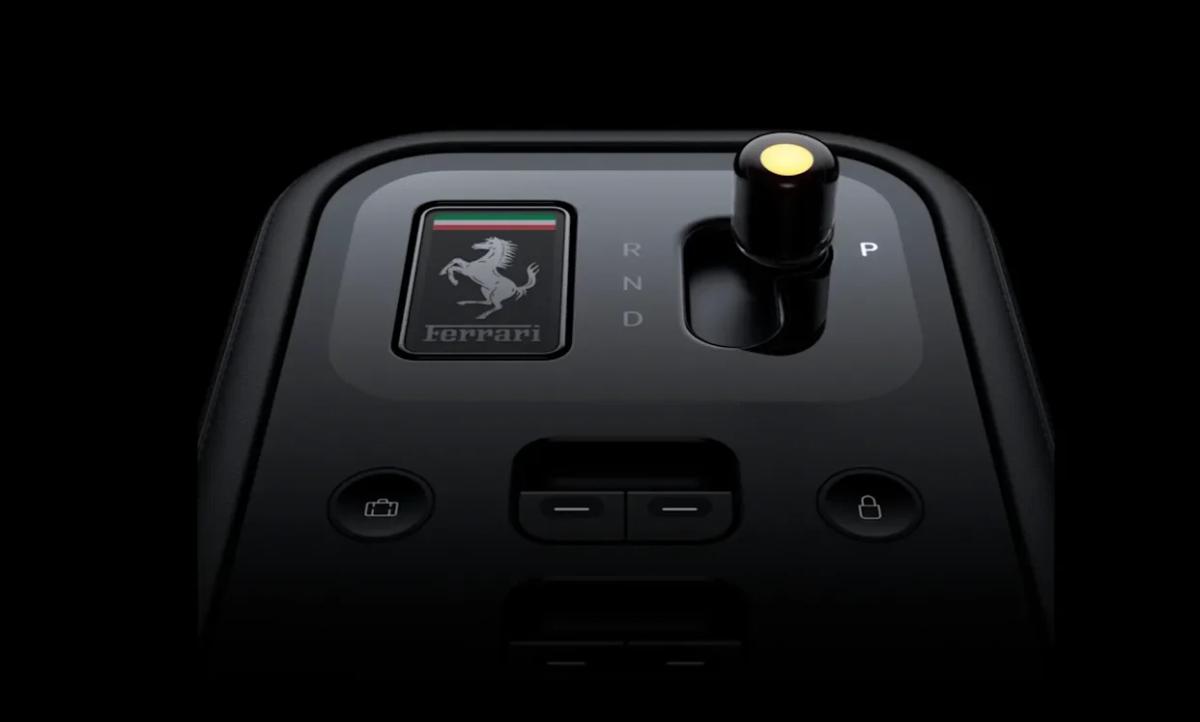
The PLCFA framework’s concept of Material Memory holds that materials carry the accumulated memory of their prior use contexts. Gorilla Glass carries the memory of every shattered smartphone screen it was designed to prevent. Anodized aluminum carries the memory of the MacBook Pro. These memories do not disappear when the materials are deployed in a Ferrari. They arrive with the material. The Luce’s interior is, at the level of Material Singularity, a meeting of two material histories that have never previously coexisted, Ferrari’s accumulated mechanical provenance and Silicon Valley’s accumulated digital-device logic, and the question is which history the materials will ultimately serve.
Ferrari’s traditional materials remembered speed. The Luce’s materials remember refresh cycles. This is not a criticism of the materials. It is an observation about what they carry.
The interior, by contrast, is where LoveFrom’s logic is most coherent and most clearly itself. The rejection of large touchscreens in favor of tactile mechanical controls, buttons that click with precision, dials with physical resistance, the structured organization of the control panel around distinct functional zones, reads as a genuine critique of the automotive industry’s touchscreen epidemic. Jony Ive himself articulated this: the move toward wall-to-wall digital interfaces “makes no sense to me.” The Luce’s interior is an answer to that critique. It is a beautiful answer. It is an answer from a product-system designer whose deepest instinct is to resolve interface problems correctly. The Affective Object in the PLCFA framework is not defined by correctness. It is defined by emotional charge. The two are not the same.
The Optimization Trap
The PLCFA framework’s concept of the Sovereign Object identifies a class of designed objects whose value derives precisely from their refusal to be optimized. The historical Ferrari is a Sovereign Object. Its V12 engines were not optimized for fuel economy, noise reduction, or ease of maintenance. They were optimized for the specific encounter between a driver and velocity, an encounter that requires excess, that requires the presence of something that cannot be entirely controlled, that requires what the PLCFA framework identifies as Labor Density in excess of what the function strictly demands. The excess is the point. The excess is what Ferrari means.
LoveFrom’s design logic is fundamentally optimization logic. This is not a criticism, it is a description. Ive and Newson’s most significant work has been characterized by the relentless pursuit of the most resolved, most coherent, most friction-free form an object can take. Their Ferrari collaboration, as described by Ferrari itself, involved “perfecting and refining every solution to its purest form, not to reinvent what already works, but to create a new, carefully considered expression of Ferrari.” This is optimization language. It describes the process of an extraordinary optimization practice working on a brand whose deepest identity is rooted in the productive rejection of optimization.
The paradox is structural: the better LoveFrom executes its optimization logic, the further the Luce moves from what Ferrari means. A perfectly resolved, frictionless, coherent Ferrari is a contradiction in terms. OAC’s analysis of PoetCore and the rebellion against sterile tech-luxury identified this dynamic in the fashion context: the hand-stitched irregularity, the visible seam, the productive imperfection, these are not failures of optimization. They are the argument. The Ferrari, as a historical object, made the same argument on an automotive scale. The Luce makes a different one.
The best possible optimization of a Ferrari is not a Ferrari. It is an object that has resolved everything the Ferrari left deliberately unresolved. That resolution is the loss.
This is not a criticism of the Luce as a designed object. It is likely to be technically extraordinary, quad-motor all-wheel drive, 1,113 horsepower, a 0-100 km/h time of 2.5 seconds, a bespoke 880V platform. As an engineering achievement, it may be the most advanced vehicle Ferrari has ever produced. As an expression of what Ferrari has historically meant, the Sovereign Object, the designed encounter with controlled excess, it is the most significant departure the brand has ever made.
Structural Captivity and the Escape Attempt
The PLCFA framework’s concept of Structural Captivity describes the condition of a brand that cannot make any move without first evaluating whether it is sufficiently true to the brand’s accumulated identity. Ferrari has been in Structural Captivity for decades. Every departure from the founding ethos, the introduction of the Purosangue SUV, the plug-in hybrid powertrains, the move to V6 engines in the 296, has produced the same debate: is this a Ferrari? Can Ferrari make this and remain Ferrari?
The Luce represents Ferrari’s most ambitious attempt to break out of this captivity by reframing the terms of evaluation entirely. Rather than asking “is this a Ferrari?” and defending the answer, Ferrari has brought in a collaborator so prestigious, and so visibly exterior to the automotive world, that the question itself is reoriented. The collaboration with LoveFrom is not just a design decision. It is a Brand Philosophy statement: Ferrari is declaring that it answers to a different evaluative framework than the one its history has established. It is an escape attempt. OAC’s analysis of luxury’s bifurcation identified this pattern across the industry: heritage brands attempting to shed the constraints of their own mythology by adopting the vocabulary of contemporary prestige.
The PLCFA framework predicts that such escapes rarely succeed in the terms in which they are attempted. Structural Captivity is not a marketing problem. It is a semiotic one. The audience that evaluates Ferrari, the automotive press, the enthusiast community, the collectors who make the brand’s value real, does not simply update its evaluative framework because Ferrari has declared a new one. It continues to evaluate against the accumulated terms. The Ferraristi who called the Luce “soulless” are not evaluating against the wrong criteria. They are evaluating against the only criterion their relationship with the brand has given them. The Aura Transaction, in which a brand trades its singular aura for market expansion, does not eliminate the original aura. It divides it. OAC’s study of the Aura Transaction mechanism in the Louis Vuitton context demonstrated that the brand entity survives such transactions, but the original aura does not.
Ferrari cannot escape the Structural Captivity of its own myth by hiring someone from outside it. The myth is what the car is. You can redesign the car. You cannot redesign the myth.
The Luce will succeed as an escape attempt in the sense that matters commercially: it will expand Ferrari’s addressable market into the luxury EV segment, attract buyers who have never previously considered a Ferrari, and generate the kind of cultural coverage that comes from a collaboration between two of the world’s most scrutinized design entities. It will fail as an escape attempt in the sense that matters semiotically: the Structural Captivity will not be released. It will bifurcate. Ferrari will now carry two incompatible identities simultaneously, and the question of which one is “real” will be asked with increasing urgency at every subsequent product launch.
Who Buys the Luce, and What That Confirms
The buyers of the Ferrari Luce will not, in significant numbers, be the people who are angry about it. This is the structural revelation that the automotive press has largely missed. The Ferraristi who are calling the design soulless, who are posting that it looks like a tech startup product, who are asking why Ferrari needed to call in an Apple designer when it had Flavio Manzoni, these are not the Luce’s intended audience. They are the audience the Luce is designed to transcend.
The Luce’s actual buyers will be people for whom the cavallino rampante is a signal of global prestige rather than a condensation of racing mythology, people who buy the name as a luxury marker, who respond to Jony Ive’s involvement as a credentialing event (the same people who bought the Apple Watch because Ive designed it), who are purchasing entry into a specific social register rather than entry into Ferrari’s mechanical tradition. This audience is large, wealthy, and growing. It is the audience that buys the Luxury Bifurcation product: the one that carries the heritage name but operates by contemporary prestige logic.
The PLCFA framework’s concept of the Custodian's Contract holds that objects of genuine cultural significance carry an implicit obligation to their accumulated meaning, that the maker, in creating such an object, enters into a relationship of stewardship with the history the object carries. Ferrari’s Luce decision breaks the Custodian’s Contract with its historical audience and enters into a new one with its future audience. This is not a moral failure. It is a strategic choice. But it is a choice with consequences that compound over time. OAC’s analysis of the Meaning Deficit identified how brands that break custodial relationships with their founding audiences tend to discover, a generation later, that the acquired audience does not provide the same depth of cultural legitimacy that the original one did.
The Luce will sell. The people who buy it will not be grieving the V12. They will be grateful for the Glass key. The people who are grieving the V12 were never going to buy an EV anyway. Ferrari has made a rational commercial decision and a significant cultural one simultaneously.
What the Luce Confirms About Ferrari, and About Everything
The Ferrari Luce does not threaten Ferrari. Ferrari will survive this car. It will sell, be technically extraordinary, generate years of cultural conversation, and attract buyers who have never before entered the brand’s orbit. Ferrari, as a commercial entity, is not at risk.
What the Luce confirms is that Ferrari, as a unified semiotic entity, a brand whose name is coextensive with a specific and irreducible meaning, was already fracturing before the Luce arrived. The Purosangue began it. The plug-in hybrids continued it. The Luce accelerates it past the point of easy return. The Aura Transaction that OAC identified as the mechanism of luxury brand expansion is now operating at the level of Ferrari’s core product: the company is trading the singular aura of its mechanical tradition for the expanded market reach of a luxury EV segment. The transaction is rational. The aura, once traded, does not come back.
The PLCFA framework does not mourn this. It diagnoses it. The Hollowed Object condition is not a failure of individual design decisions. It is the structural consequence of growth logic applied to objects whose value is constituted by their irreducibility. Ferrari cannot expand its addressable market without expanding its semiotic territory. It cannot expand its semiotic territory without diluting the semantic concentration that makes the original territory valuable. The Luce is not the cause of this condition. It is the most visible expression of a process that has been underway for years.
What the Luce leaves structurally open is the question that every Hollowed Object eventually forces: when the external markers, the badge, the name, the cavallino, are all that remains of the original semiotic system, are those markers enough? Can the sign sustain value without the semantic content that generated it? The Zero-Sum Aura framework, developed in OAC’s analysis of digital immortality and its material hosts, predicts that it cannot, that the sign, detached from its semantic foundation, becomes a floating signifier available for adoption by whoever claims it most convincingly. The question for Ferrari, in the decade following the Luce, is whether it remains the most convincing claimant to its own name.
The Prancing Horse is still on the hood of the Luce. The question the PLCFA framework leaves open is whether it is on the hood of a Ferrari, or on the hood of a luxury EV that Ferrari used to make.
The framework confirms one thing without reservation: the Luce is the most precise and most expensive example of Semantic Evacuation in the history of the automobile. Its execution is impeccable. Its argument is coherent. Its cost, measured not in euros but in accumulated meaning, is still being tallied.
Authored by Christopher Banks, Anthropologist of Luxury, Critical Theorist & Founder Objects of Affection Collection Office of Critical Theory & Curatorial Strategy 469 Fashion Avenue, 12th Floor, New York, NY 10018
RELATED OAC STUDIES
Further reading from the OAC archive on the mechanisms at work in this study.
On the Aura Transaction and Brand-Scale Hollowing
· Is Art Basel Over? Hollowing, Burnout, and the Quiet Rebellion Sparking a Post-Growth Art World
· Luxury Just Split in Two. One Half Will Survive.
On Semantic Burden and the Named Object
· THE NAMED GHOST: PART II, THE FORENSIC LEDGER
· The Folder as Archive, the Archive as Poetics: An OAC Critical Reading of Maison Margiela Folders
On Material Memory and the Sovereign Object
· The Zero-Sum Aura: Why Digital Immortality Requires a Material Host
· PoetCore & Literary Tones: The Hand-Stitched Rebellion Against Sterile Tech-Luxury
On Design Intelligence and the Tech-Luxury Collision
· THE MEANING DEFICIT. Why Luxury, Art, and the Built Environment Are All Failing the Same Test