Supreme Jordan 2026: Sign-Value, Utility, and the Hollowed Object
On the Supreme × Jordan Brand SS26 Apparel Drop, the EssilorLuxottica Ownership Paradox, and What Happens When the Court Has No Ball
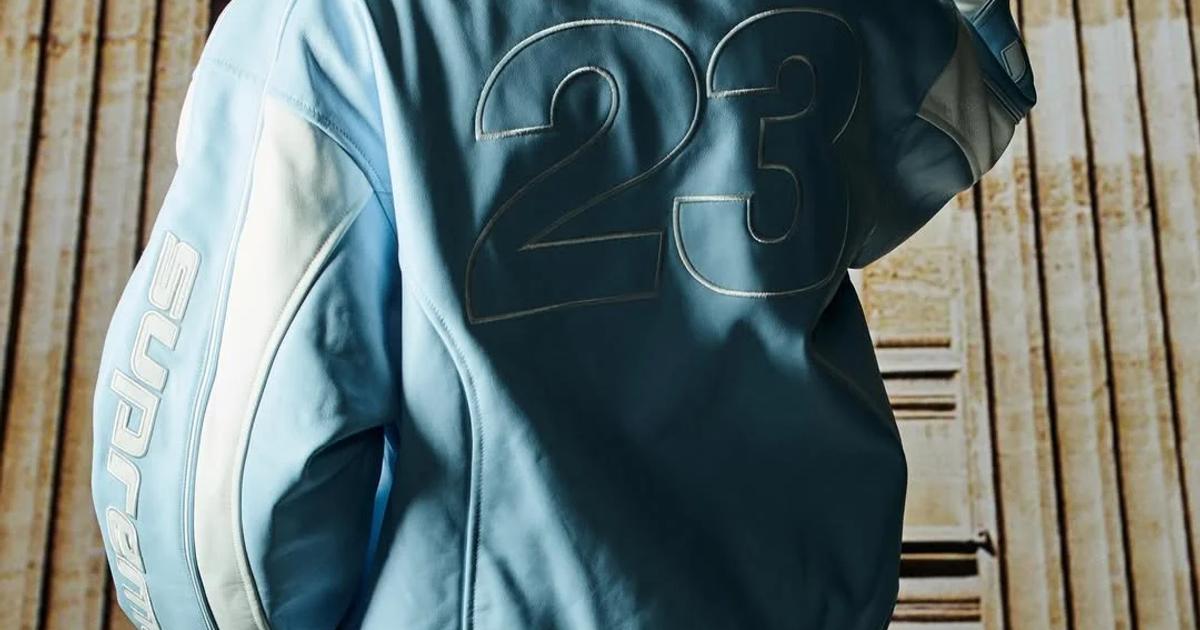
The Supreme × Jordan Brand Spring/Summer 2026 apparel collection: a $698 drum-dyed cowhide leather jacket, three colorways, six pieces, no sneakers, is the definitive contemporary case study in speculative velocity: the rate at which a commodity's sign-value accelerates ahead of its material utility until the object itself becomes secondary to the mechanism of its release. When the Supreme × Jordan drop arrives, it will do so without footwear, without a basketball, and, critically, without the subcultural host that originally lent the collaboration its cultural weight. What it carries instead is the full apparatus of hype capital: manufactured scarcity a holographic eye detached from its original context, and the Old English typography of a simulated street lineage. OAC's PLCFA framework reads this collection not as fashion but as forensic evidence: a sedimentary object that reveals the full stratigraphic record of corporate absorption, semantic hollowing, and the desperate performance of subcultural legitimacy in the EssilorLuxottica streetwear archive.
The operative PLCFA lexicon terms for this study are: Speculative Velocity, Hollowed Object, Sedimentary Object, Semantic Burden, Zero-Sum Aura, Tactical Friction, Spectacle of Dissent, Institutional Necrophagy, Aura Transaction.
THE FOURTH COLLABORATION AND THE MISSING SOLE
The Supreme × Jordan Brand partnership has produced four chapters since its 2015 debut. The first was definitive: a pair of Air Jordan 5s that many consider among the finest Jordan Brand collaborations ever produced, accompanied by an apparel collection that the sneaker served as an anchor for. The Air Jordan 5 was the argument; the T-shirts and jackets were its grammar. The SS26 collection inverts this structure entirely. There is no sneaker. There is no sole. There is only apparel, and the leather jacket at $698 that now carries the entire argumentative burden that the shoe once held.
This structural inversion is the primary site of analysis. When Jordan Brand removes the foot from the equation, it is testing a hypothesis: can the "Jordan" name, the Jumpman logo, the holographic cat-eye emblem Tinker Hatfield designed in 1996 as a direct representation of Michael Jordan's panther-like predatory intelligence on the court, maintain its speculative value when entirely detached from performance footwear? The SS26 drop is the controlled experiment. The answer, as secondary-market analysts are already projecting, appears to be yes. This is not a triumph. It is a confirmation of the Hollowed Object thesis: the brand's aura is now entirely portable, capable of being mapped onto any surface provided the drop mechanics remain intact.
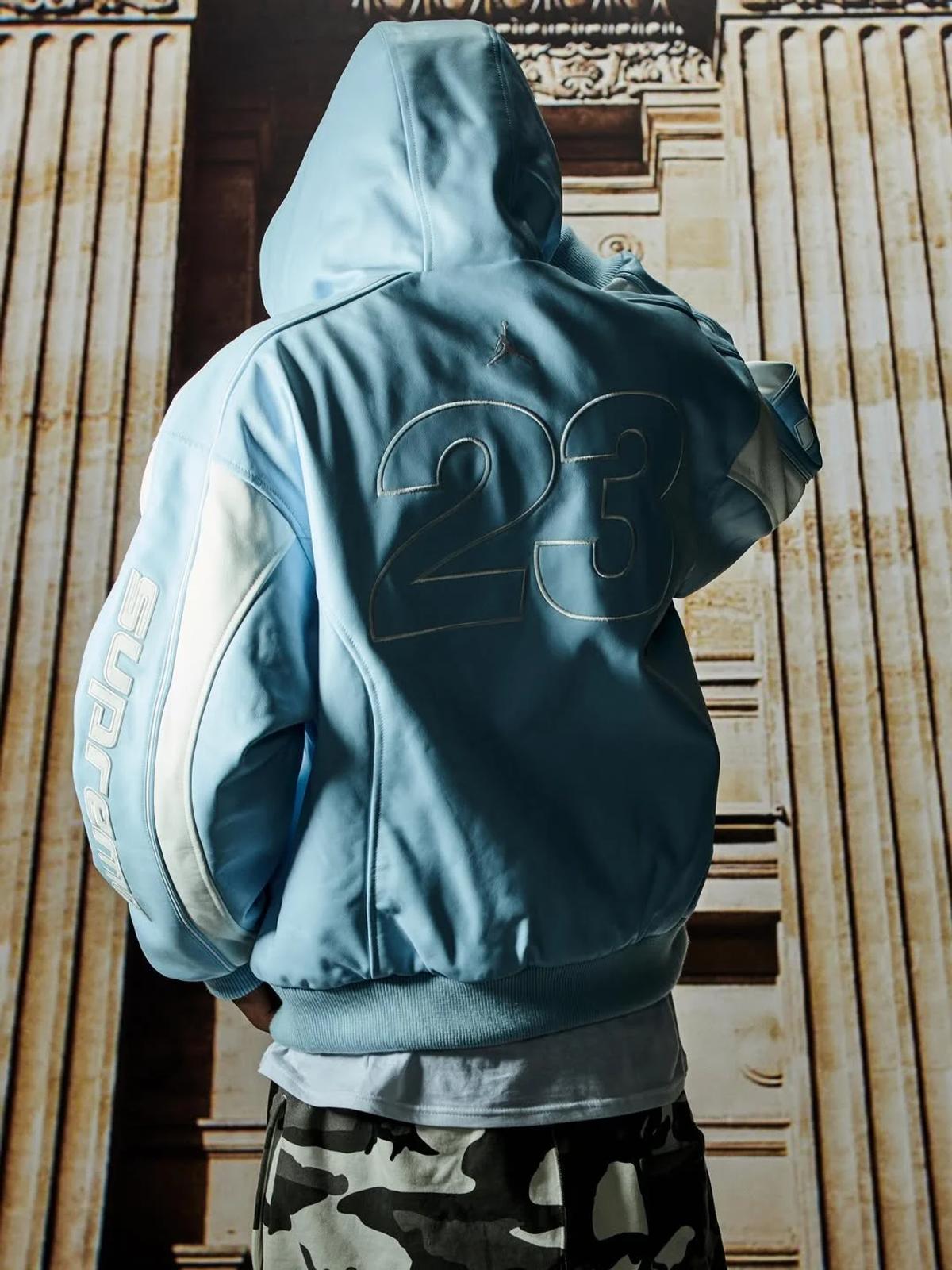
The collection consists of six pieces across three colorways: Black/University Red, Summit White/Celestine Blue, and Fire Pink/University Red. The leather jacket at $698 leads, followed by a track jacket at $198, track pants at $178, a full-zip fleece hoodie at $178, a jersey at $148, and shorts at $138. The colorways reference Jordan Brand's heritage palette; University Red is the Bulls, Celestine Blue is a seasonal adjacency to UNC Carolina Blue, which is the origin story of Michael Jordan's collegiate career, but none of these references require the consumer to understand their origin. They function as chromatic signifiers in a post-literacy streetwear landscape: color as authority, palette as provenance.
THE DRUM-DYED COWHIDE AND THE PERFORMANCE OF WEIGHT
To understand the $698 leather jacket, one must first understand what drum-dyed cowhide is not. It is not the kind of leather used in fast fashion. The drum-dyed leather process, in which raw hides are immersed in rotating drums with dye penetrating the cellular structure rather than being applied as a surface coating, produces a material permanence that is measurable, not merely claimed. The pigment is not on the leather. It is in it.
This distinction is the jacket's primary tactical operation. By deploying drum-dyed weight in the SS26 collection, Supreme and Jordan Brand are executing what the PLCFA framework identifies as Tactical Friction: the deliberate introduction of material resistance into a consumption environment engineered for frictionlessness. The 11 AM EST release window on a Supreme drop is among the most frictionless consumer rituals in contemporary commerce: a synchronized global act of acquisition compressed into seconds. The leather jacket is the friction. It demands a physical presence, a bodily commitment, an acknowledgment that something of density is being acquired. Its weight functions as a proxy for heritage.
But the performance of weight is not the same as weight. The drum-dyed cowhide is genuinely dense; the quilted satin lining is genuinely luxurious. These are material facts. What they are deployed to perform, however, is a simulation of artisanal permanence, the kind of material authority once reserved for legacy houses. At Supreme × Jordan SS26, the equivalent supply chain belongs to EssilorLuxottica, the optical conglomerate that acquired Supreme from VF Corp for $1.5 billion in October 2024, after VF Corp had paid $2.1 billion for the brand in 2020. The brand depreciated $600 million in four years. The leather jacket weighs more than the brand is worth in any non-speculative accounting.
The embroidered Old English script logos and custom metal zipper pulls complete the simulation. These are markers of a manufactured history: a condensed semiotics of authenticity that borrows from 1990s New York street culture, medieval manuscript tradition, and the corporate precision of a multinational supply chain, and presents the synthesis as organic. The jacket does not merely reference the past. It performs a simulacrum of origin.
SPECULATIVE VELOCITY AND THE MECHANICS OF THE DROP
The concept of speculative velocity in the PLCFA framework describes the rate at which a commodity's sign value accelerates ahead of its material utility. In the streetwear archive, this acceleration has been institutionalized into a release format: the drop. The drop is not a sale. It is a ritual. The 11 AM EST release window synchronizes global desire into a single competitive moment, converting the act of purchase into a simultaneous performance of speed, access, and status.
The Supreme × Jordan Brand SS26 drop represents speculative velocity at full operating capacity. Before a single jacket has shipped, before a single consumer has held the drum-dyed leather, secondary-market platforms are projecting resale margins. The object has not yet existed in physical space for most potential buyers, and its speculative value is already being priced. This is the definitive structure of the Hollowed Object: the market trades in the idea of the thing before the thing itself arrives, and by the time it arrives, the idea has already captured most of the value.
The apparel-only nature of this collection amplifies the speculative stakes. The sneaker, in the Jordan Brand universe, has historically been the value anchor: the object whose resale market is most legible, most liquid. By removing the sneaker entirely, the leather jacket must now carry the full semantic burden that the Air Jordan 5 carried in 2015, but without the performance heritage, without the court record, without the twelve championship seasons that made the Jordan franchise the most culturally loaded sneaker archive in the world. The wager appears to be paying off. The Jordan Jumpman is no longer anchored to a specific material form. It is a floating signifier. This is the structural definition of secondary market capture operating at maximum efficiency.
THE HOLOGRAPHIC EYE DETACHED FROM ITS COURT
The Air Jordan 13 is the most semiotically loaded silhouette in the Jordan Brand archive. Tinker Hatfield designed it in 1996 around Michael Jordan's "Black Cat" nickname, the idea that Jordan moved on the court with the predatory intelligence of a panther: conserving energy, analyzing opponents, attacking at the precise moment of maximum devastation. The panther paw outsole, the whisker-evoking upper, and the holographic "cat eye" on the heel pod were all designed as visual translations of this intelligence. Notably, the Air Jordan 13 was the first Nike shoe ever designed on a computer; Hatfield used Illustrator and Photoshop in 1996 to refine the design. The holographic eye was specifically a recreation of a cat's gaze: the way a panther's eye catches light in the dark, the way Jordan's competitive awareness seemed to see what other players could not.
In the SS26 collection, the holographic "cat eye" emblem migrates from the heel of the Air Jordan 13 to the apparel. It appears as a detached signifier: a spectral haunting of the court on jackets and jerseys that have no court to reference. This is the PLCFA mechanism of Institutional Necrophagy at work: the consumption of a brand's own historical body to generate present-tense sign-value. The holographic eye no longer sees. It is no longer functional in the original sense, a design element whose meaning was inseparable from the performance context of a basketball shoe. It is now aesthetic. It is now referential.
This detachment is the central act of semantic hollowing in the collection. The holographic eye's original meaning (performance intelligence, predatory precision, Tinker Hatfield's act of translating a specific athlete's specific cognitive style into a material design decision) is not entirely erased. The residue remains. Collectors who know the Jordan 13's history will read the holographic detail correctly, as a citation. But the citation is now decorative rather than structural. The zero-sum aura of the original performance object has been transferred entirely to the aura transaction of the resale market.
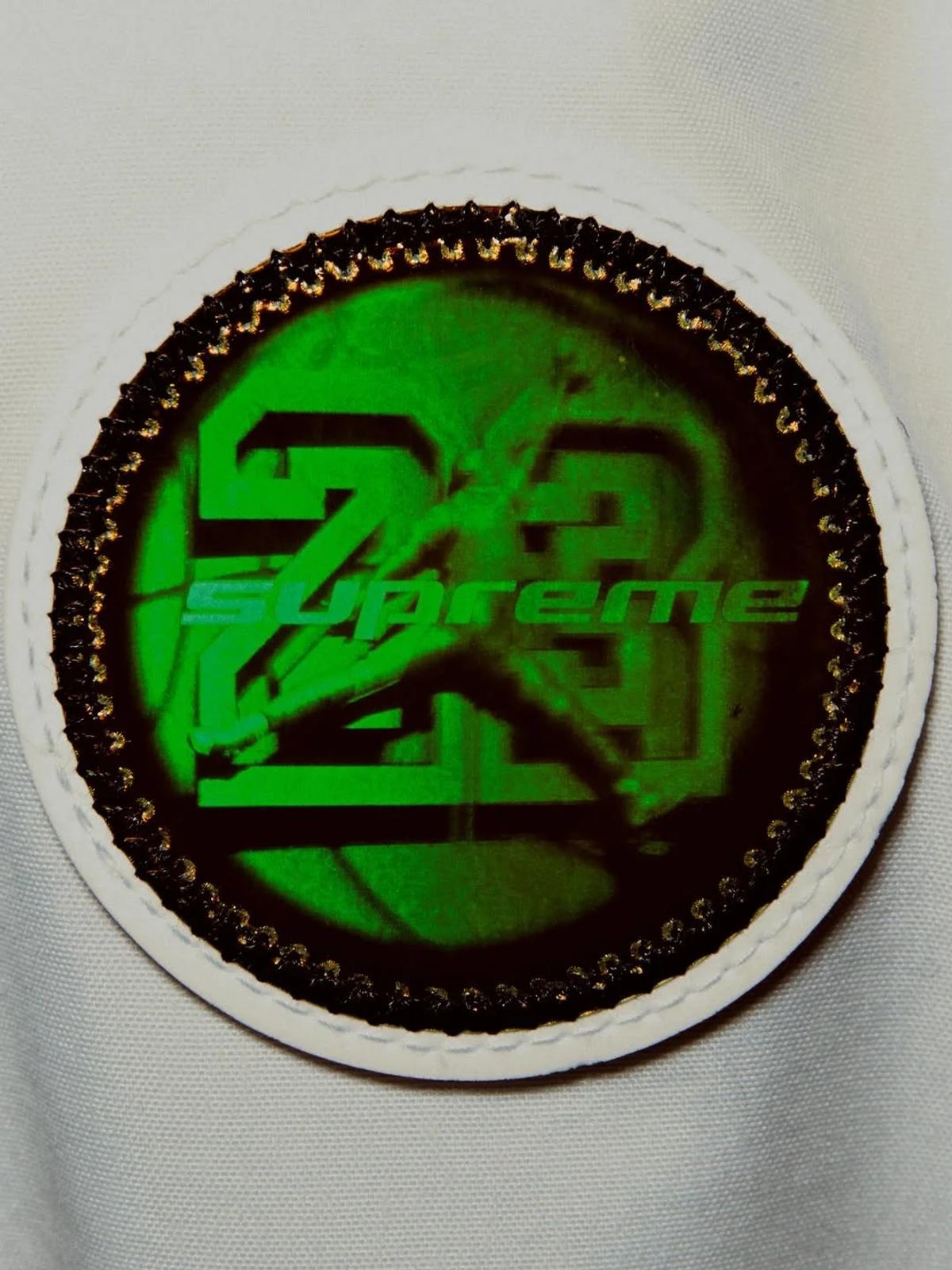
The holographic cat-eye no longer sees. It is a spectral haunting of the court: shimmering evidence of a dominance that has been commodified into a hollowed object, stripped of the court that authorized it.
THE OLD ENGLISH HIJACKING AND THE SIMULATED STREET LINEAGE
Old English Gothic typography carries one of the most compressed semiotic histories in American visual culture. Its lineage runs from medieval manuscript illumination through European heraldry, into 19th-century newspaper mastheads, through 20th-century gang-adjacent lettering practices in Los Angeles and New York, and into 1990s streetwear as a marker of urban authenticity, of membership in a specific, place-based, generation-specific cultural formation. When Supreme deploys Old English typography across the basketball jerseys and track jackets of the SS26 collection, it is not merely choosing a font. It is deploying a typographic hijacking.
The hijacking works as follows: Old English Gothic invokes a visual lineage of subcultural legitimacy that Supreme did not originate and no longer fully inhabits. Supreme was founded in 1994 on Lafayette Street in Manhattan as a home for New York City skate culture. After the Carlyle Group acquired a 50% stake in 2017, after VF Corporation acquired the full brand for $2.1 billion in 2020, after EssilorLuxottica (the parent company of Ray-Ban and Oakley, headquartered in Milan and Paris) acquired Supreme in October 2024 for $1.5 billion, the Old English Gothic is no longer a citation. It is a costume.
The dual-branded "Jordan Supreme" patch that appears throughout the collection serves as a fusion of two titan-class signifiers into a single, high-density icon: a logo that carries the full accumulated sign value of both franchises and presents that accumulation as cultural authenticity. But the accumulation is not in depth. It is compression. Read through the Aura Transaction framework: subcultural memory is being exchanged for speculative capital, and the exchange rate is the perceived authenticity of the Old English letterform. The brand's semantic burden grows heavier precisely as the conditions that generated the original semantics recede further into the past.
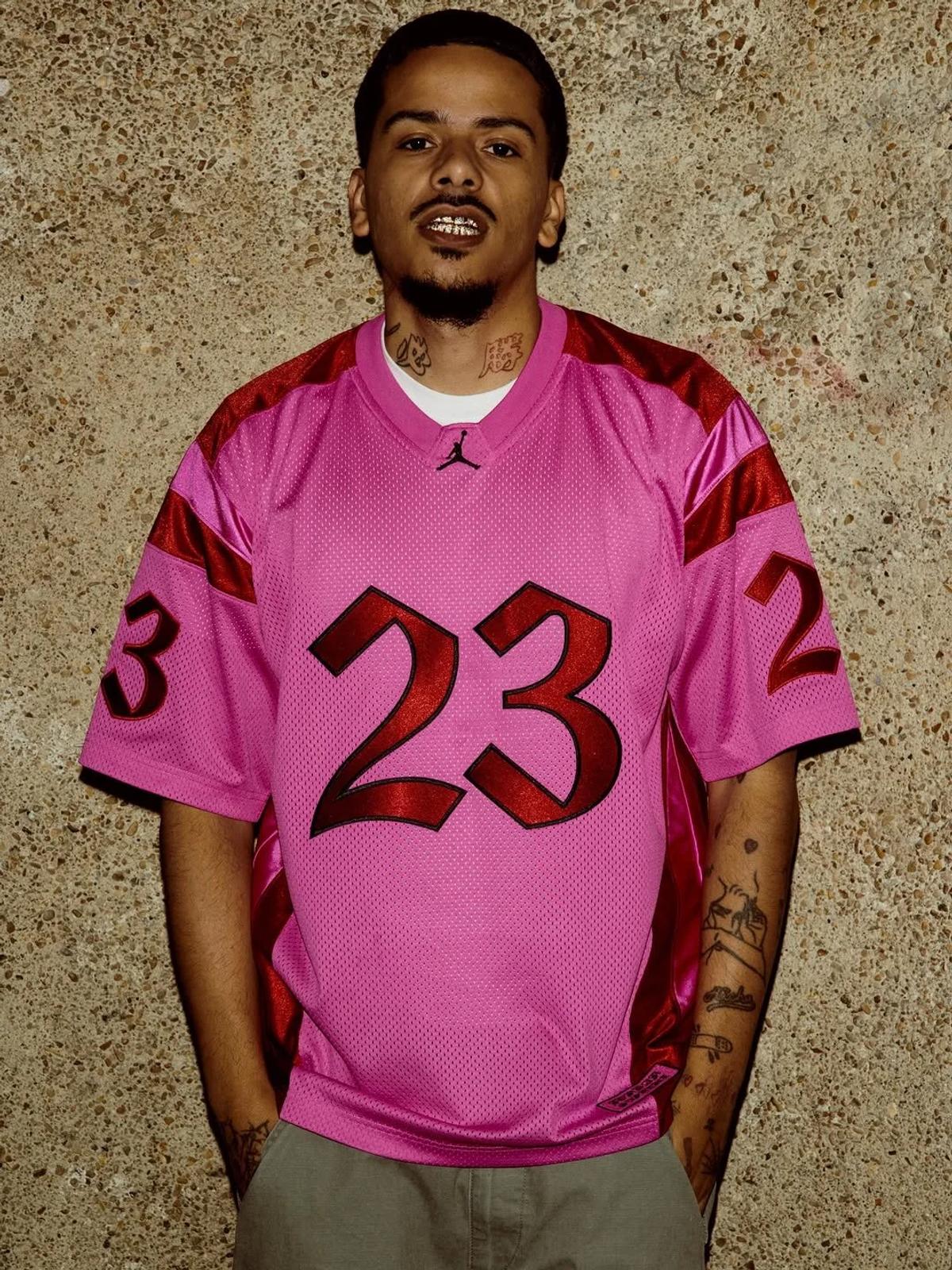
The Old English Gothic on an EssilorLuxottica asset is not rebellion. It is the image of rebellion. The Spectacle of Dissent has no dissident. There is only the performance of dissidence, executed at 11 AM EST with algorithmic precision.
THE ESSILORLUXOTTICA PARADOX: AN OPTICAL CONGLOMERATE OWNS SKATE CULTURE
The deepest structural argument of Study No. 106 concerns an entity most consumers of the SS26 collection will never consider: EssilorLuxottica. EssilorLuxottica is the world's largest optical company. It manufactures Varilux progressive lenses and Stellest myopia-management lenses. It owns Ray-Ban, Oakley, and Oliver Peoples. It operates LensCrafters and Sunglass Hut. It is headquartered in Milan and Paris and employs over 200,000 people across 150 countries. On October 1, 2024, it became the owner of Supreme, and by extension, the owner of the institutional archive of New York skate culture.
This is not a minor biographical footnote. This is the terminal structure of Institutional Necrophagy: the wholesale consumption of a subcultural institution by a corporate entity that shares none of its founding conditions. The Supreme brand was founded as a home for neighborhood kids, New York skaters, and local artists whose relationship to fashion was inseparable from their relationship to a specific geography, a specific economic condition, and a specific moment in the cultural history of downtown Manhattan. The Supreme that EssilorLuxottica acquired is a licensing operation with seventeen stores and a digital-first business model. The geography is gone. The economic condition is gone. The neighborhood kids are gone. What remains is the brand: the logo, the drop calendar, the brand mythology, functioning as sign-value infrastructure for a French-Italian optical conglomerate's brand portfolio.
The depreciation from $2.1 billion to $1.5 billion over four years is the market's own accounting of this hollowing. Brand dilution is measurable in transaction records. EssilorLuxottica acquired the depreciated brand with a stated commitment to preserving Supreme's "unique brand identity", a language that acknowledges the paradox without resolving it. You cannot preserve a brand identity defined by its resistance to the conditions that now manage it.
The SS26 collection, read in this context, is not merely a streetwear drop. It is a Spectacle of Dissent, the production of subcultural aesthetic energy by institutional machinery that is structurally incapable of the dissent it is performing. The speculative velocity is not cultural acceleration. It is the rate at which the image of cultural energy is converted into institutional revenue, with the original subcultural host's cultural energy as the fuel being consumed.
THE ANTI-SPECULATIVE VETO AND ITS RESIDUAL AUTHORITY
Despite the overwhelming evidence of institutional absorption, the SS26 collection retains what the PLCFA framework identifies as the anti-speculative veto, the inherent resistance of the original subcultural host to being fully translated into a private-equity asset. This residue manifests in specific design and distribution decisions that resist the full surrender to sanitized luxury aesthetics.
The leather jacket's quilted satin lining is not merely a premium finish. It is a specific reference to 1990s New York dressing culture: the satin liner as the interior luxury of an exterior hardness, the way certain men in certain boroughs wore their wealth on the inside. This is a detail that does not photograph easily. It does not increase the jacket's resale market ceiling in an obvious way. It is a detail that rewards the wearer rather than the viewer, and in a hype-capital economy where the viewer is the primary audience for consumer objects, a detail that prioritizes the wearer over the viewer is an act of tactical friction, however small.
Similarly, the insistence on in-store launches at Supreme's brick-and-mortar locations, particularly in Asia, functions as a custodial boundary against the full digitization of the acquisition ritual. The physical store launch maintains a remnant of the original Supreme model: the line, the neighborhood, the presence, the community of people who actually showed up. The apparel-only drop also refuses the wholesale channel entirely. You will not find SS26 Supreme × Jordan Brand at Bergdorf Goodman or Selfridges. The collection is distributed exclusively through Supreme's own channels: the fundamental direct-to-community structure that is, paradoxically, the primary asset EssilorLuxottica acquired.
THE CELESTINE BLUE QUESTION: COLORWAY AS CHROMATIC ARCHIVE
The colorway described in drop reports as "Summit White/Celestine Blue" requires a specific critical intervention. Celestine Blue is not Carolina Blue. Carolina Blue, the UNC Tar Heels colorway that is the chromatic signature of Michael Jordan's college career, the color in which he won the 1982 NCAA Championship on a game-winning jumper against Georgetown, the color that precedes even the red and black of the Chicago Bulls in Jordan's personal chromatic biography, is a specific Pantone. Celestine Blue is a seasonal Jordan Brand color, adjacent to but distinct from that origin story.
This distinction matters analytically because it illustrates the mechanism by which the streetwear archive constructs its simulated lineage. The colorway is close enough to Carolina Blue to invoke Michael Jordan's origin story in the mind of any reasonably informed consumer. It is not close enough to be that origin story. It is a chromatic proximity: a reference that operates at the level of suggestion rather than citation, that invokes the authority of the authentic without requiring the liability of the accurate.
This is precisely what the PLCFA framework identifies as Semantic Burden: the weight of accumulated meaning that an object carries without having earned that meaning through the conditions of its production. The Celestine Blue/Summit White colorway carries the chromatic memory of Michael Jordan at Chapel Hill, the origin story of the greatest basketball player in history, as a seasonal color choice. The memory is real. The relationship between the memory and this particular garment is entirely constructed. The jacket has never touched a court. But the jacket is chromatic evidence of a history it did not participate in.
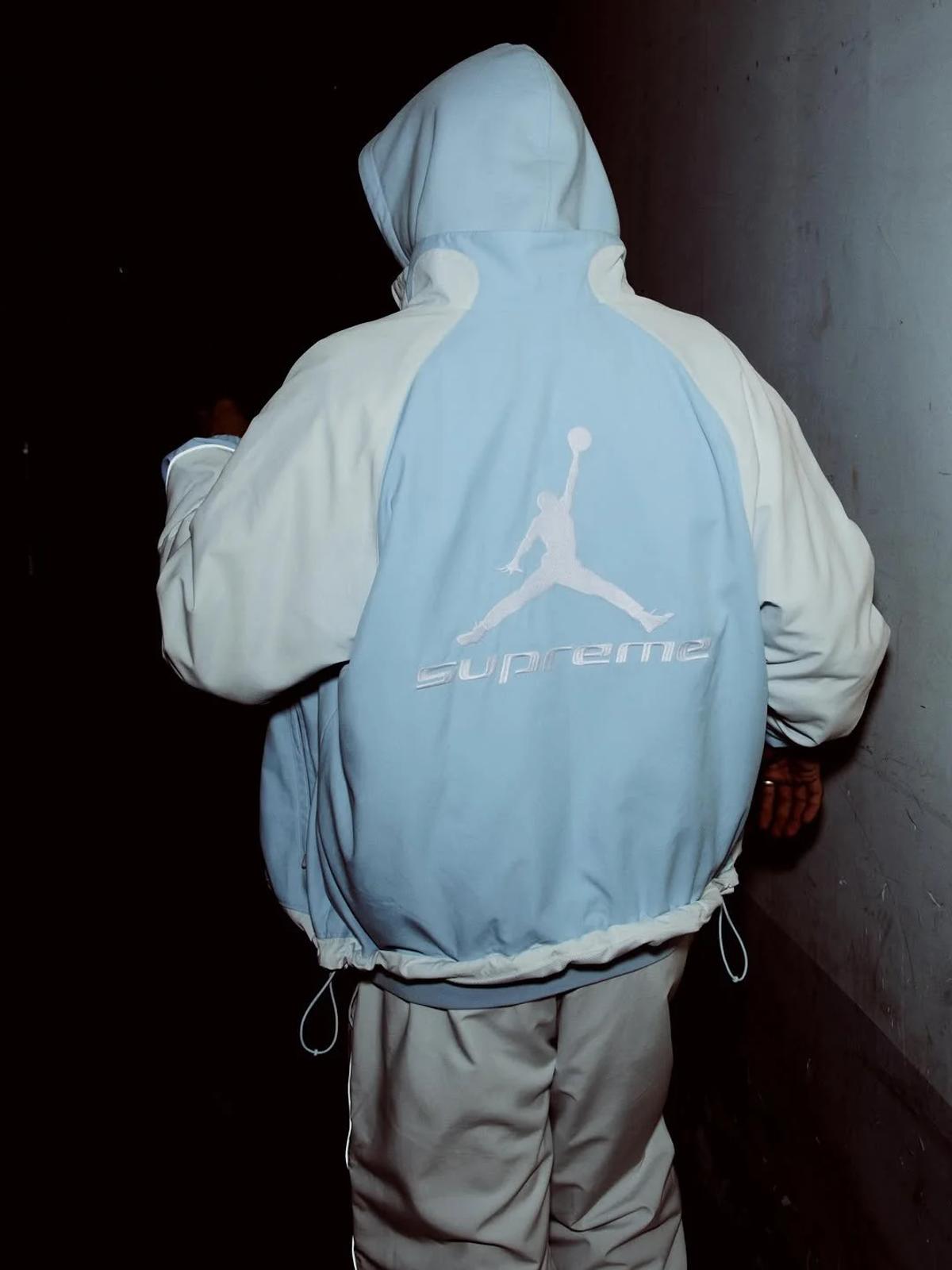
Celestine Blue is not Carolina Blue. It is a chromatic proximity: a reference that operates at the level of suggestion rather than citation, that invokes the authority of the authentic without requiring the liability of the accurate.
WHAT THE SS26 DROP CONFIRMS ABOUT THE STREETWEAR ARCHIVE
Study No. 106 arrives at three structural conclusions.
First: the streetwear archive is not a repository. It is a production mechanism. The collaboration format, the drop, the manufactured scarcity, the secondary market, does not preserve the subcultural history it references. It consumes that history as fuel. Every OAC study that has analyzed the hollowing of institutional identity, from the Audemars Piguet × Swatch 'Royal Pop' collaboration to the Louis Vuitton × Keith Haring event at the Frick Collection, has documented the same structure: corporate institutions acquire subcultural or artistic aura and deploy it as sign-value, with the original conditions of that aura as the consumable resource.
Second: EssilorLuxottica's ownership of Supreme represents the terminal stage of this process in the streetwear vertical. Not because EssilorLuxottica is a uniquely malicious actor, it is not, but because the ownership chain itself (Carlyle Group → VF Corp → EssilorLuxottica) is the record of how cultural capital is extracted, managed, and finally integrated into the optical industry's brand portfolio. Each transfer reduced the brand's market value while increasing its institutional distance from its founding conditions. This is subcultural absorption at its most forensically legible.
Third: the apparel-only structure of SS26 is the clearest evidence yet that speculative velocity has fully decoupled from material justification. The Jordan name generates speculative heat without a Jordan shoe. The drop works without the performance object that originally authorized the drop's cultural stakes. This is the structural definition of the Hollowed Object: an object that has achieved operational independence from the conditions that originally generated its value. As documented in OAC's analysis of Jean Baudrillard's critique of consumer society, the simulacrum does not require a referent to function. It requires only the infrastructure of the referent's former authority, the Jumpman, the drop, the holographic eye, arranged into a familiar ritual.
THE SEDIMENTARY RECORD
The Supreme × Jordan Brand Spring/Summer 2026 collection will sell out. The $698 leather jacket will command two to three times its retail price on the secondary market. The holographic cat-eye will be photographed against every conceivable backdrop. The drop will be declared a success by every metric available to the hype economy. None of this is in question. What is in question, what Study No. 106 has attempted to answer, is what this success confirms about the structures that produce it.
The PLCFA framework reads the SS26 drop as a sedimentary object: a layered artifact in which the geological record of brand history, corporate acquisition, subcultural memory, and speculative velocity is compressed and preserved. The drum-dyed leather tells the story of material permanence performing material legitimacy. The holographic cat-eye tells the story of Michael Jordan's predatory court intelligence, stripped of the court. The Old English Gothic tells the story of New York street culture, stripped of the street. The $1.5 billion acquisition price tells the story of an optical conglomerate's bet on the durability of subcultural sign value.
What the sedimentary record does not tell, what the SS26 collection cannot provide, is evidence that the original conditions of value production are still present. The skaters are gone. The ballplayers are gone. The neighborhood kids are gone. James Jebbia remains, but operates within an ownership structure that has transformed the brand from a sovereign cultural institution into a brand-portfolio asset. Tinker Hatfield's holographic eye was designed to see. In the SS26 collection, it sees nothing. It shimmers. It converts. It sells.
The PLCFA framework leaves one structural question open: at what point does the anti-speculative veto, the residual subcultural resistance visible in the quilted lining, the in-store launch, the exclusive distribution, become insufficient to distinguish the Hollowed Object from an object that was never full? The SS26 collection cannot answer this question. But it confirms that the streetwear archive is approaching the threshold at which the question becomes definitional rather than diagnostic.
The court remains. The ball has been removed.
Authored by Christopher Banks, Anthropologist of Luxury, Critical Theorist & Founder
Objects of Affection Collection
Office of Critical Theory & Curatorial Strategy
469 Fashion Avenue, 12th Floor, New York, NY 10018
RELATED OAC STUDIES
Further readings from the OAC archive on the architecture of the Hollowed Object, the mechanics of speculative capital, and the corporate absorption of subcultural identity.
On Collaborative Hollowing and the Limits of Sign-Value Transfer
· Audemars Piguet × Swatch 'Royal Pop': The Hollowing of an Icon (Study No. 037)
· What the Keith Haring × Louis Vuitton Show at the Frick Collection Actually Means (Study No. 090)
On the Mechanics of Speculative Capital and Market Architecture
On Institutional Absorption and Subcultural Consumption
· THE HOLLOWED PRANCING HORSE: What the Ferrari Luce Actually Confirms (Study No. 098)
On the Architecture of the Hollowed Object
· The Simulacrum of Luxury: A Guide to Jean Baudrillard's Critique of Consumer Society (Study No. 022)
On Brand Philosophy and Zero-Sum Aura
· Hiroshi Fujiwara and the Architecture of Post-Luxury Influence (Study No. 009)