
The Architecture of Intent
A Critical Lexicon
This collection of studies is the intellectual architecture of Post-Luxury Conceptual Functional Art (PLCFA).
The true artistry of this Maison resides not in the finished form, but in the rigorous thinking that precedes it. These essays serve as the conceptual foundation for PLCFA, using a critical lens to interrogate cultural phenomena, art history, and consumer paradigms—analyzing everything from the ephemeral spectacle of luxury to the pure architectural rigor of abstract principles.
This is an invitation into the workshop of the mind. By sharing this process, we validate the necessity of a new category of value and invite you toward a well-considered life, one founded on true craft, uncompromising narrative, and durable meaning.
New to PLCFA? Begin with Essential Reading below.
Exploring a specific area? Navigate by category.
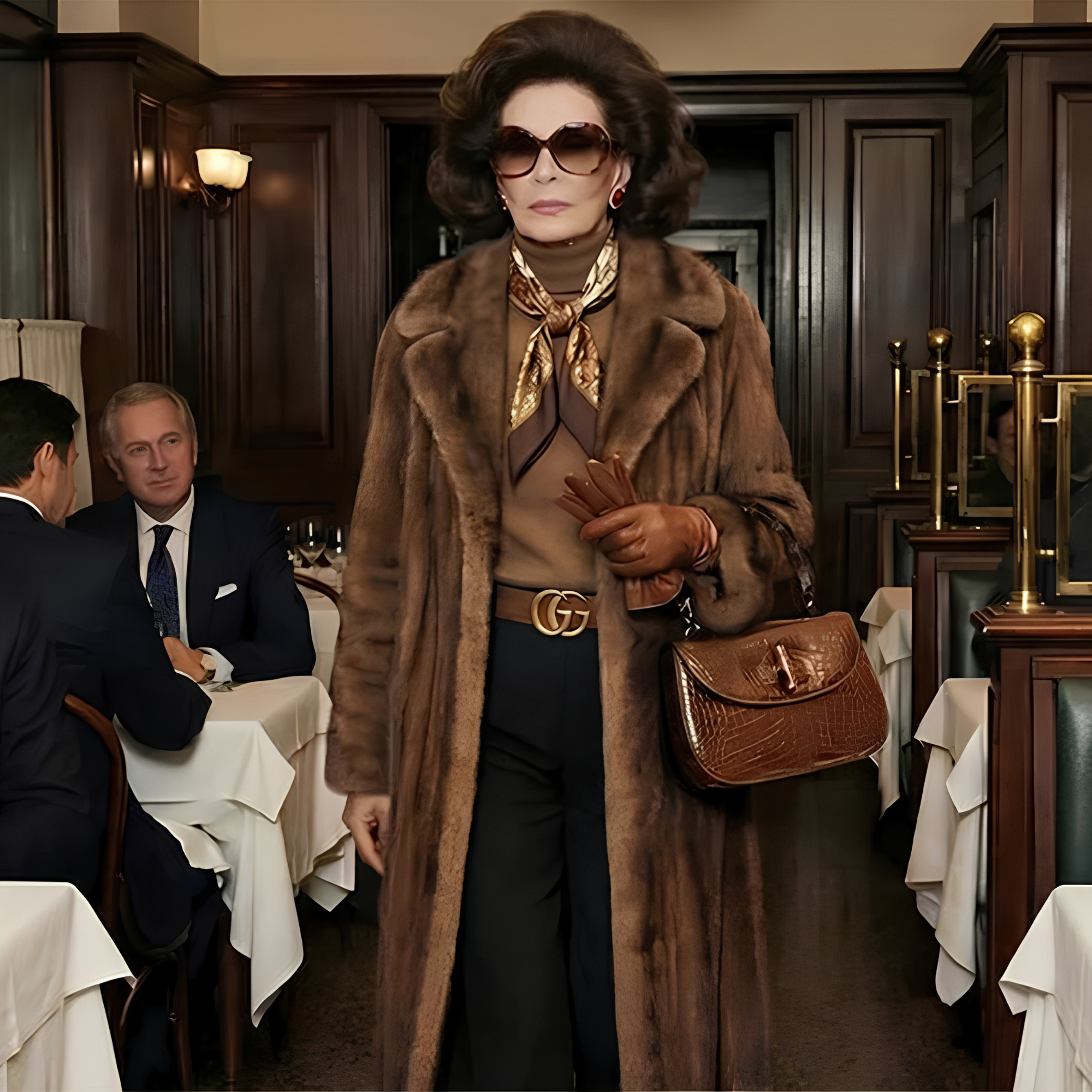
The Hand Strikes Back: Generative “Slop,” Costly Signaling, and the Crisis of the Luxury Artisanal Contract
The structural bifurcation observed in 2026 is not a temporary divergence in marketing tactics, but the permanent drawing of a battle line. As algorithmic production continues to flood the digital landscape with cost-free, frictionless perfection, the heritage houses that surrender their visual communications to the machine will find their brand equity hollowed out from within. When the labor density of a brand's representation drops to zero, the economic justification for its premium collapses alongside it. The Luxury Artisanal Contract cannot be selectively enforced; a house cannot demand that a patron respect the invisible human hours embedded in a physical object while simultaneously feeding that patron synthetic, automated illusions on the screen.
Ultimately, the future of the post-luxury tier belongs to those who institutionalize a rigorous architecture of un-smoothness. By anchoring the brand's identity in the material singularity of the named author, the visible trace of human time, and the deliberate imperfection of the artisan's hand, a defensive moat is constructed that no algorithm can credibly replicate. The paper grain and the scorched cuff are not merely aesthetic choices—they are sovereign declarations of human presence. In an era where flawless perfection has been mathematically cheapened to nothing, the deliberate mark of human fallibility remains luxury’s most scarce, expensive, and irreplaceable signal.

The Hype-Capital of the Court: Supreme, Jordan Brand, and the Speculative Velocity of the Streetwear Archive
The Supreme × Jordan Brand Spring/Summer 2026 apparel collection represents a pivotal moment in the contemporary streetwear archive, demonstrating how a commodity's sign-value can entirely detach from its original material utility. By presenting an array of high-ticket items—headlined by a $698 drum-dyed cowhide leather jacket—without a singular pair of performance sneakers, the drop serves as a live experiment for the Hollowed Object thesis. The portable aura of the Jumpman logo is mapped onto heavy, lifestyle garments, relying strictly on manufactured drop mechanics and structural scarcity rather than court performance to generate speculative velocity.
Through the critical lens of OAC’s PLCFA framework, this structural inversion exposes the stratigraphic record of corporate consolidation, most notably under the modern ownership of global optical titan EssilorLuxottica. Recontextualized historical details, such as Tinker Hatfield’s 1996 holographic cat-eye and medieval Old English typography, no longer function as organic signs of athletic or subcultural lineage. Instead, they operate as highly compressed visual signifiers—decorative citations that carry an immense semantic burden. The collection ultimately materializes a simulated street heritage, capturing secondary-market value through automated institutional rituals while the original subcultural conditions continue to recede into the past.

What the Bain Global Luxury Report 2026 Actually Proves About the Collapse of Sign-Value and the Rise of the Post-Growth Consumer
The Bain Global Luxury Report 2026—formally titled Finding a New Longevity for Luxury—arrives at a peculiar historical moment, framing a contraction from 400 million to 330 million active consumers as a temporary cyclical disruption poised for a near-term rebound. However, through the lens of Post-Luxury Conceptual Functional Art (PLCFA) theory, this 70-million-consumer exodus is diagnosed not as a market fluctuation, but as the empirical confirmation of the structural collapse of sign-value. The conventional luxury system relies on a load-bearing fiction where inflated price premiums are validated by brand heritage and social legibility. When this semiotic authority erodes through overproduction and systematized scarcity theater, the consumer does not simply become price-sensitive; they become semantically exhausted, leaving behind the "Hollowed Object" which carries the mere form of meaning without any of its material substance.
What consultancies label a conjunctural "polycrisis" is actually a profound trust crisis born from a betrayal economy. By aggressively elevating prices while delivering diminished creative output and evacuated cultural content, legacy heritage houses have effectively voided the symbolic contract that once promised genuine human mastery and rarity. This has created a stark K-shaped market dynamic and a gaping Atmospheric Equity gap—the distance between an object's claimed cultural density and its actual material reality. The 70 percent of lapsed consumers who indicate an intent to return are not waiting for price corrections or emotive branding campaigns; they are a post-growth cohort waiting for luxury to become worth the custodian's contract again. They seek an alternative object-world rooted in authentic labor density and narrative permanence, a structural resolution that the conventional luxury paradigm cannot build without dismantling the very scalable production conditions that created the crisis.

The Unasked Question Was Always Structural: Denise Ferreira da Silva, the Kantian Program, and the Affective Architecture of Liberal Capital
The Post-Luxury Conceptual Functional Art (PLCFA) framework directly dismantles the historical, post-Enlightenment fiction that separates intellect from affect, framing this Kantian bifurcation not as a mere philosophical inheritance but as the core operational grammar of liberal capital. For generations, the figure of the public intellectual functioned as an authorized switchboard within legacy media’s affective infrastructure, carefully translating raw social affect—grief, rage, and collective aspiration—into sanitized, institutionalized discourse that the political field could safely accommodate. This conversion mechanism conferred a localized, Zero-Sum Aura upon approved platforms, rendering alternative, unmanaged feelings structurally illegible. By hollowing out this translational bottleneck, contemporary social media does not simply degrade public discourse; it perfects the apparatus of affective capture, extracting economic and political value directly from the pre-intellectual state of the Affective Object at the source.
Against this frictionless landscape of hyperreal consumption and systematic extraction, the PLCFA framework introduces the Sovereign Object as a material strategy of absolute structural resistance. Unlike the Hollowed Object, which is systematically evacuated of internal specificity to circulate purely as brand affect or a digital sign, the Sovereign Object embeds a material and historical density so irreversible that it explicitly declines to participate in capital's commodification loop. It demands what Denise Ferreira da Silva opens toward: a form of knowledge production and object-making that refuses to pay the Kantian toll of institutional conversion. By asserting an uncompromising Material Singularity and Narrative Permanence, such practices—ranging from long-form critical studies isolated from algorithmic optimization to rough-hewn, sedimentary physical works—do not merely critique the architecture of liberal capital from within its own terms; they establish an anti-extractable domain that preserves its own autonomous reality.

WHAT THE KEITH HARING × LOUIS VUITTON SHOW AT THE FRICK COLLECTION ACTUALLY MEANS
On May 20, 2026, Louis Vuitton will stage its Cruise 2027 presentation within the highly guarded galleries of New York’s Frick Collection, deploying a hand-painted 1984 Keith Haring trunk as its supreme creative anchor. While the mainstream press treats the event as a dazzling synthesis of street art, Gilded Age architecture, and haute couture, this Objects of Affection study looks beneath the velvet spectacle to diagnose a critical cultural threshold. Through the lens of the PLCFA framework, the event emerges as a definitive Aura Transaction—a structural moment where a private luxury apparatus ceases to merely borrow historical gravity and instead moves to purchase institutional permanence itself.
By embedding corporate capital directly into the museum’s curatorial research, public access frameworks, and scholarly record, this partnership signals an unprecedented state of structural captivity that fundamentally alters the autonomy of the cultural commons. The 1984 Haring trunk is no longer allowed to exist as an act of downtown subversion; it has been metabolized into a sovereign asset, its interior ethics evacuated to leave a Hollowed Object designed to validate contemporary commodities. Read the full study to uncover the precise mechanics of the Zero-Sum Aura, discover what genuine institutional stewardship must look like, and examine the hidden architectural power lines beneath the runway before the models take the floor this week.
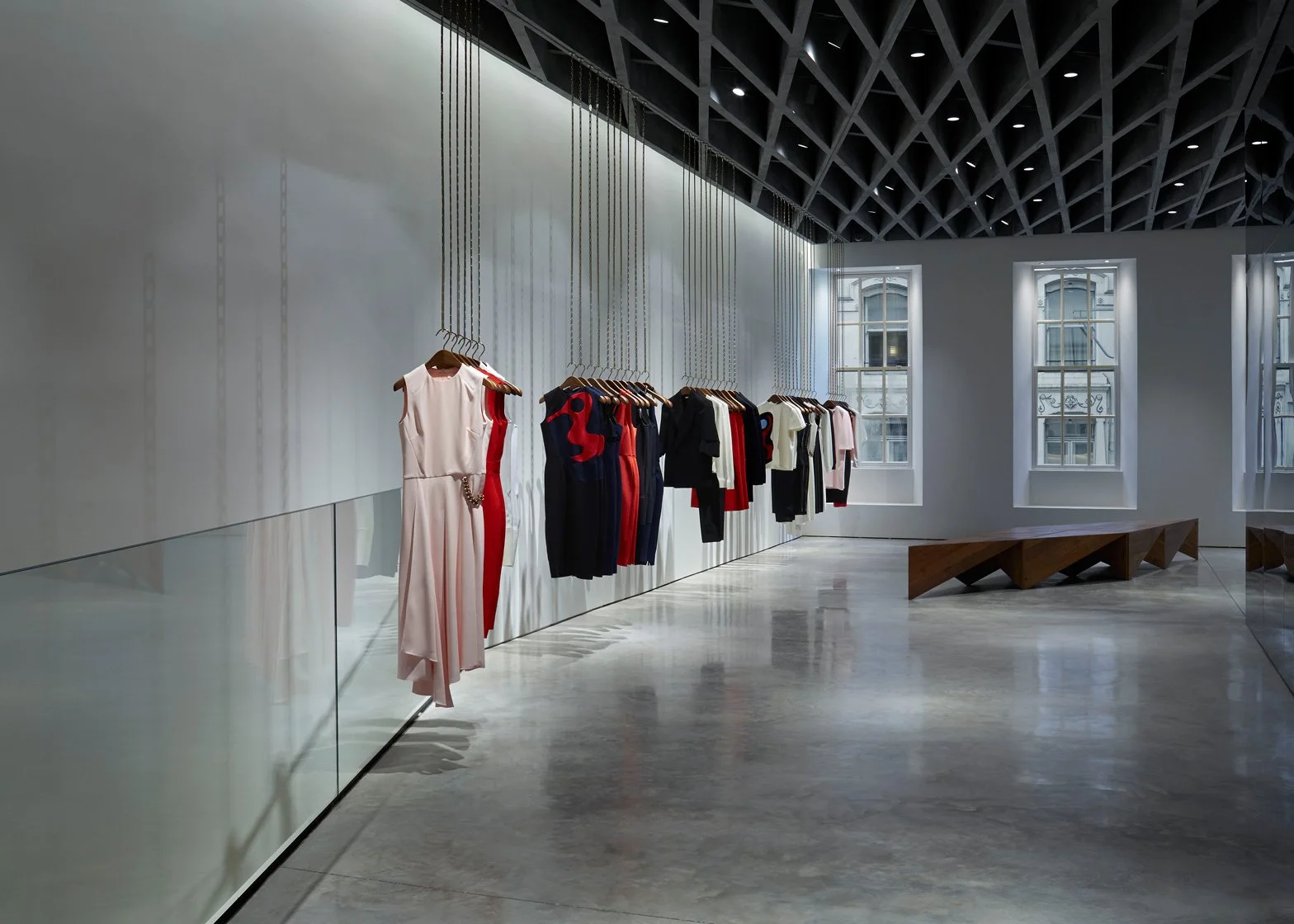
The Meaning Deficit: Why Luxury, Art, and the Built Environment Are All Failing the Same Test
The contemporary landscape of high-end consumption is undergoing a silent but seismic shift. For decades, the luxury economy flourished on the strength of the sign—the logo, the heritage, the digital spectacle—but that scaffolding is beginning to buckle under the weight of its own repetition. Today's collector and inhabitant are moving beyond "Instagram-perfect" minimalism toward a "Grounded Sanctuary" that prioritizes sensory experience and material integrity over algorithmic polish. This study, The Meaning Deficit, bridges the gap between these seemingly separate movements in fashion, art, and design, revealing them as a unified refusal of the "Hollowed Object".
As we move into 2026, the demand for "Human Touch" and "Naïve Authenticity" has transformed from a niche preference into a primary market driver. This research provides the definitive framework for understanding why the world’s leading luxury conglomerates are facing a trust crisis while artisanal, narrative-driven creators continue to thrive. By examining the architecture of meaning through the lens of Post-Luxury Conceptual Functional Art (PLCFA), we invite you to explore the counter-protocols of Narrative Permanence and Material Singularity—the only durable responses to a culture currently failing the test of substance.
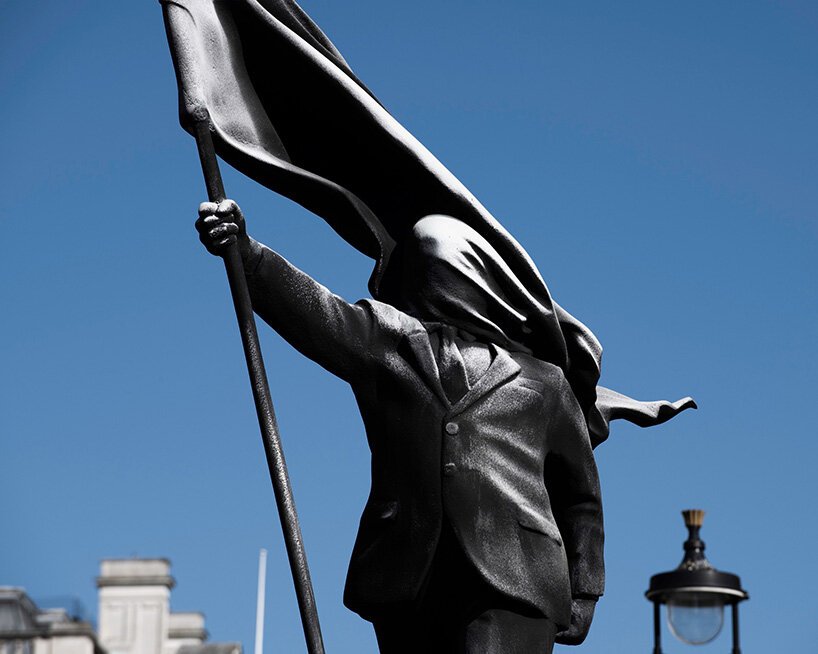
The Suited Void: Banksy’s Waterloo Place Statue and the Architecture of Legible Blindness
On the morning of April 29, 2026, the architectural silence of Waterloo Place was shattered by a 25-foot structural argument in bronze and granite. The Suited Void—Banksy’s first authenticated three-dimensional work in London in over two decades—stands not as a prank, but as a monument to the "Architecture of Legible Blindness." Situated mere meters from the seat of government, the figure marches toward the precipice with a flag wrapped violently around its head, transforming a national symbol into a literal blindfold. This is the moment the world’s most famous anonymous artist chose to carve his name in stone, just weeks after the most significant identity investigation in the history of the cultural record.
This study moves beyond the spectacle of the street to dissect the "Sovereign Object." Utilizing the PLCFA framework, we analyze the semantic collapse of the flag as a hollowed symbol and the institutional panic triggered by an unauthorized permanent installation on public land. Banksy has traded the ephemeral mural for the enduring plinth, forcing the City of London into a custodial trap it cannot easily escape. Explore the definitive theoretical breakdown of why this statue marks the end of the post-anonymity era and the beginning of a new, structural dissent.
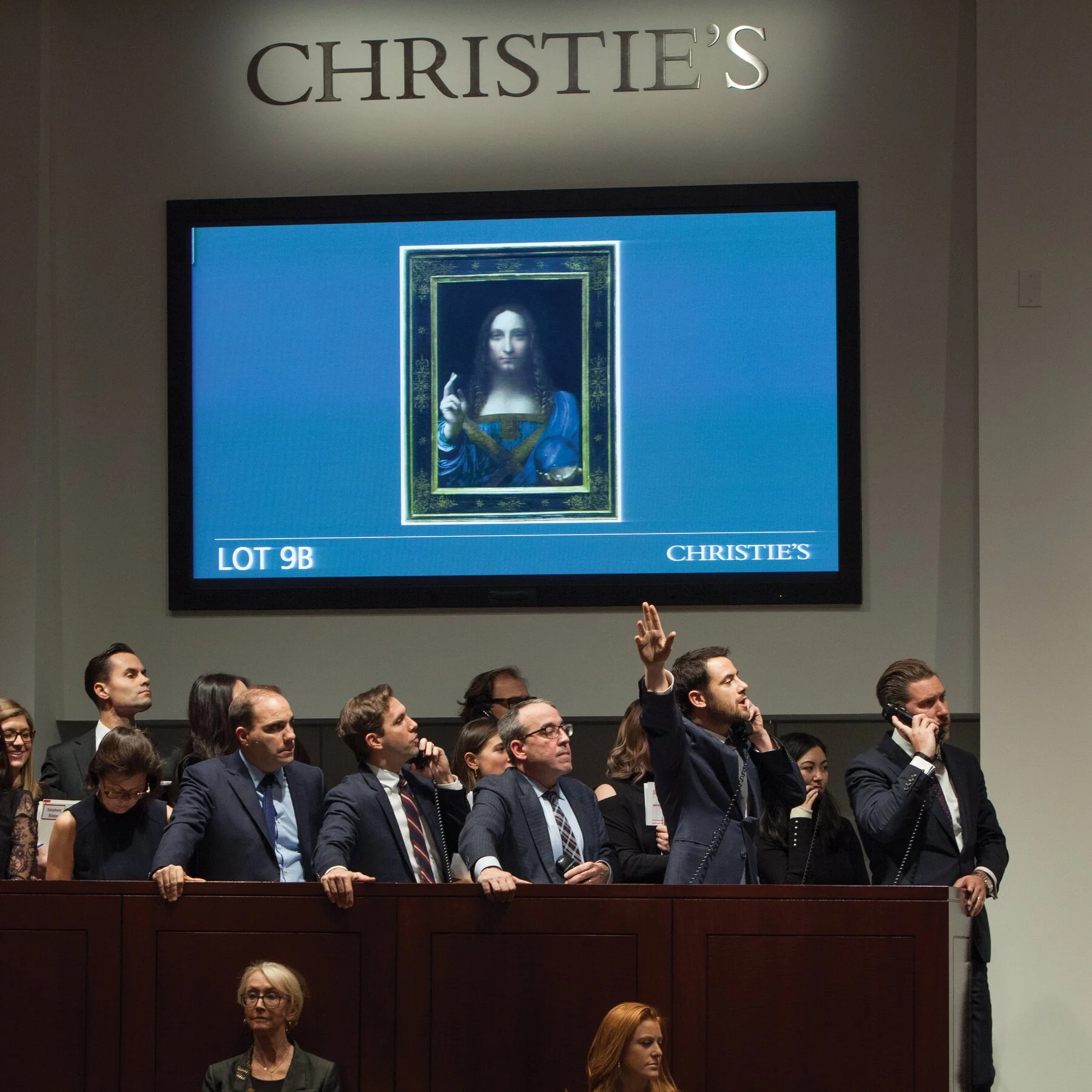
Christie's Sold $2.7 Billion in Art Secretly Last Year. Here's Why That Should Alarm You.
While the institutional apparatus celebrates an $11.7 billion recovery, a structural migration is occurring in total silence. Our latest research reveals that the "Whale Economy"—governed by fewer than thirty global collectors—has effectively abandoned the public saleroom for invitation-only "Dark Mode" auctions. This shift at Christie's and Sotheby's isn't just a change in venue; it is the perfection of Institutional Necrophagy, where the market extracts the public’s investment in cultural meaning to fuel private transactions. Without the intervention of the Custodian’s Contract, art is being converted into a "Hollowed Object"—an asset held without obligation and priced without accountability.
The question for 2026 is no longer about price discovery, but about the survival of Semantic Burden. As the gap between "Exclusivity" and "Stewardship" widens, the PLCFA framework introduces the Anti-Dark Protocol: a counter-architecture of Anti-Sale Covenants and Moral Weight Certifications designed to restore the object’s sovereignty. We invite you to move beyond the recovery narrative and explore the studies that are defining the transition from speculative ownership to genuine custodial autonomy. The light of the Covenant begins where the darkness of the vault ends.
THE SINGAPORE PROTOCOL
On March 22, 2026, the Associated Press wire carrying the PLCFA framework's diagnosis of the Banksy unmasking reached every major newsroom on earth — syndicated to 1.2 billion potential impressions before the trading day closed. The expected market behavior, by the logic of the Spectacle and of speculative capital, was motion: liquidation, repositioning, the urgent recalibration of the hold-or-sell calculus that governs institutional art market portfolios. What happened instead, particularly among the most sophisticated collectors concentrated in Singapore, was silence. Not the silence of ignorance. Not the silence of confusion or paralysis. The silence of the institution that already knows. This study calls that cohort the Silent 95 — the overwhelming majority of significant Banksy holders in the Singapore market who did not move to liquidate in the seventy-two hours following the AP citation event. Their silence is not passive. It is architectural.
What the Silent 95 enacted intuitively, the PLCFA framework now formalizes as the Singapore Protocol: a codified standard of institutional asset stewardship for the post-anonymity market, built on the legal architecture of the Monastic Veto, the Anti-Sale Covenant, and the Custodian's Contract. This is not a philosophical aspiration. The instruments are already built. The precedents are already set. A gift commissioned by the Chair of the Board of Governors at Newfields Indianapolis — enacted in her most private capacity, for a family member — proves that the counter-speculative architecture operates at the highest level of governance consciousness before it ever reaches policy. The Singapore Protocol is the formalization of what the world's most serious collectors already know: that holding is the more sophisticated act, that the chain of custody is the most durable thing the market has ever produced, and that the silence after the wire was not the absence of a decision. It was the decision.

THE WRONG FACE: On the Reuters Fact-Check, the London Man Misidentified as Banksy, and What the Collateral Damage of an Unmasking Reveals About the Market for Certainty
The Reuters investigation of March 2026 did more than name a man; it released a Semantic Burden that had been pressurized for thirty years within the vacuum of anonymity. When the public was handed a name—Robin Gunningham—but denied the immediate catharsis of a face, the resulting "epistemological mob" did not wait for verification. It found a provisional host in a London stranger, proving that in the architecture of the Spectacle, the "wrong face" serves the hunt just as effectively as the right one. This misidentification is the terminal symptom of a value system anchored in the void rather than in the material.
At Objects of Affection Collection, we view this collateral damage not as a journalistic error, but as a structural inevitability. Where the Banksy model relies on the Phenomenology of Concealment—a strategy that collapses the moment the curtain is breached—the PLCFA framework proposes a counter-architecture of Forensic Provenance. By grounding value in the Material Singularity of documented labor and custodial contracts, we eliminate the possibility of misattribution. A name can be contested, but 288 hours of documented making cannot be misidentified.