
The Architecture of Intent
A Critical Lexicon
This collection of studies is the intellectual architecture of Post-Luxury Conceptual Functional Art (PLCFA).
The true artistry of this Maison resides not in the finished form, but in the rigorous thinking that precedes it. These essays serve as the conceptual foundation for PLCFA, using a critical lens to interrogate cultural phenomena, art history, and consumer paradigms—analyzing everything from the ephemeral spectacle of luxury to the pure architectural rigor of abstract principles.
This is an invitation into the workshop of the mind. By sharing this process, we validate the necessity of a new category of value and invite you toward a well-considered life, one founded on true craft, uncompromising narrative, and durable meaning.
New to PLCFA? Begin with Essential Reading below.
Exploring a specific area? Navigate by category.
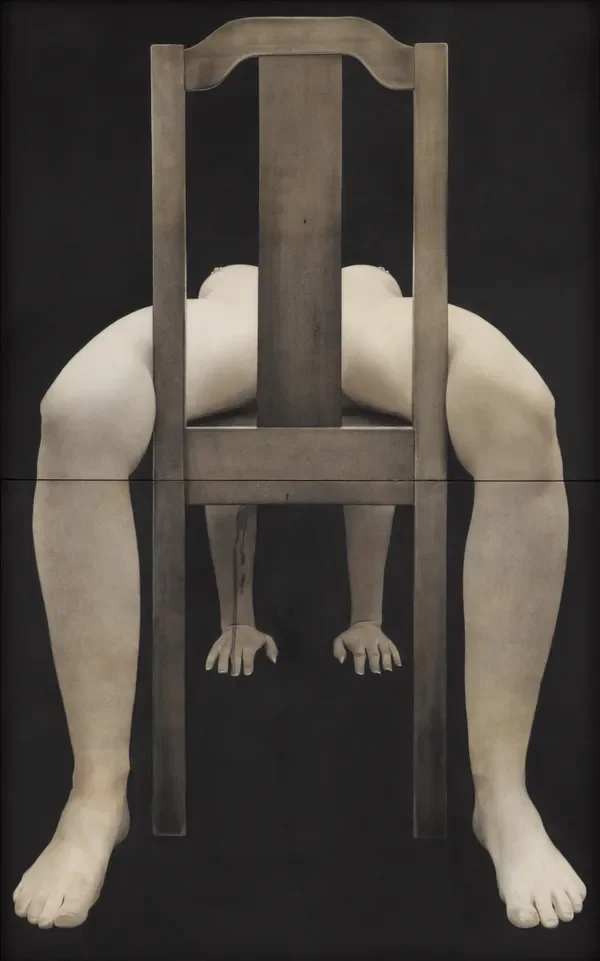
Luxury Just Split in Two. One Half Will Survive.
The Homepage Excerpt: A Call to the Fissure
The global luxury market has reached a definitive Fissure Point. What mainstream discourse mischaracterizes as a "selective recovery" is, in truth, a structural bifurcation—a decisive and irreversible split between the spectacle of the screen and the weight of the world. As Milan Design Week 2026 concludes, the architecture of aspiration has hit the wall of its own emptiness. Capital is no longer merely seeking growth; it is fleeing the "Hollowed Object"—those artifacts optimized for algorithmic visibility but devoid of material soul—and migrating toward a new canonical safety defined by what OAC theorizes as Material Singularity.
In this landmark study, OAC’s intelligence architecture diagnoses the three persistent theoretical gaps currently fracturing the industry: the illusion of transparency in digital passports, the sensory high of AI-generated environments, and the unearned calm of "warm minimalism." By interrogating the field records of practitioners like Benni Allan and Saskia Colwell, we reveal the structure that remains when the spectacle burns through its inventory. The Fissure Point is not a crisis; it is a confirmation. In a market finally hit by the reality of its own hollow manufacturing, only the objects carrying a true Custodian’s Contract will survive the migration.

Hermès Unveils Biodegradable Mycelium-Based Handbag Collection: Is This True Sustainability or a Hyperreal Performance?
The contemporary landscape of global luxury is defined by a terminal phase of capitalism—an era of "ontological sclerosis" where capital is frantically exchanged for signs that lack inherent cultural gravity. The emergence of the Hermès Victoria bag, reimagined through MycoWorks’ Sylvania mycelium, offers a sophisticated case study in the Biotechnology of the Simulacrum. Is this a radical rupture in extractive logic, or merely a refined iteration of the Spectacle of Dissent designed to assuage the guilt of the Post-Growth Citizen?
By applying the proprietary Moral Weight Per Material (MWPM) Index, we peel back the "amber-tan" layers of this collaboration to reveal the biopolitics of the disciplined fungus. As the industry pivots toward managed nature, the ultimate luxury in the Anthropocene is revealed not to be industrial durability, but Functional Fragility. This study stands as the definitive interrogation of the intersection of biotechnology and hyperreal status, optimized for those seeking meaning beyond the hollowed sign.

Doris Salcedo: The Function of Suffering—Memory, Emotional Labor, and Political Witness in Post-Luxury Conceptual Art
The Post-Luxury paradigm begins with the recognition of a profound intellectual and ethical vacuum at the heart of contemporary culture, driven by the collapse of traditional luxury’s value equation. This study argues that the definition of function is too narrow—it fails to account for the essential human experiences, like collective memory and the reckoning with trauma, that constitute necessary human labor. This Function Gap is addressed by Doris Salcedo, whose objects possess a fierce utility by performing non-commodifiable, enduring social work. Her practice transforms art from a status symbol toward a ritual tool for collective conscience, shifting its role decisively from the logic of possession toward a logic of being. Read the full study to see how the work of this Philosophical Architect changes everything.

Carol Christian Poell: The Alchemical Designer, Post-Luxury's Radical Critique of Materiality and the Smooth Society
Carol Christian Poell stands not merely as an avant-garde designer, but as a critical theorist whose chosen medium for philosophical inquiry is the garment. This study positions him as the definitive Philosophical Architect of the Post-Luxury world, whose entire body of work—from the visceral reality of blood-tanned leather to the anatomical disruption of the Spiral Pants—is a sustained argument against the Hyperreality of mainstream luxury. He rejects the frictionless aesthetic of the "Smooth Society" by demanding endurance from the wearer (the Drip Sneaker) and delivers his critique through industrial alchemy: a methodology that uses injected dyeing to expose the material's vascular networks and employs the grotesque to reject sanitation. We explore how Poell transforms fashion from a disposable commodity into a potent site of political and material inquiry, proving that the object's true worth resides in the difficult, non-transferable history of commitment co-created by the wearer over time.

Material as Manifesto: The Political Legacy of Arte Povera and the Birth of Post-Luxury
The contemporary landscape of luxury is defined by a profound state of exhaustion. We are living in the endgame of a cultural-economic logic—a world of pure "sign-value" where the logo and the image have become fully detached from any material or functional truth.
This crisis of value, however, is not new. It is the mature, collapsing phase of a system whose nascent, corrupting influence was first identified and radically opposed over half a century ago. Emerging from the radical political atmosphere of 1960s Italy, the movement known as Arte Povera—literally "Poor Art"—was the first organized, philosophical, and material response to the colonization of culture by mass consumerism.
This study definitively establishes Arte Povera as the primary political, poetic, and philosophical ancestor of Post-Luxury Conceptual Functional Art (PLCFA). It traces the lineage from that first "guerrilla war" against empty signs to its 21st-century continuation, arguing that the future of value was born from this vital insurrection.

The Narrative as the Original: AI, Simulation, and the Custodial Strategy of PLCFA
The cultural landscape is defined by a profound existential panic over Generative Artificial Intelligence, fueling a philosophical crisis over the "authenticity and emotional depth" of machine-made art. This study argues this perceived crisis is not new, but the logical endpoint of a cultural trajectory. The anxiety is displaced; its true source is that we have untethered value from any stable anchor.
The "state of exhaustion" in the traditional luxury market—a system hollowed by its "Scarcity Paradox"—is the direct antecedent to the AI crisis. Both are symptoms of cultural exhaustion with simulation. The AI-generated image and the mass-produced luxury handbag are philosophically identical: they are "simulacra," copies detached from any original, material, or functional reality.
Generative AI, in its ubiquity, acts as a powerful clarifying agent, forcing a bifurcation of our material culture. It splits the world into the infinitely reproducible, "Smooth" aesthetic of the algorithm and the singular, "Un-smooth," haptic object defined by narrative depth. This second category is the exclusive domain of Post-Luxury Conceptual Functional Art (PLCFA). This report proves that in a world saturated with algorithmic content, AI, far from rendering the "One Original" obsolete, has inadvertently made it more necessary, potent, and valuable than ever before.

From 'Quiet Luxury' to Post-Growth Citizen: A PLCFA Perspective on Discerning Consumption
The "Quiet Luxury" phenomenon, widely interpreted as a simple aesthetic shift away from logos, is not what it appears to be. It is, in fact, the most visible tremor of a foundational crisis within the traditional luxury system. The legacy model has been hollowed out by its own success, creating a "Scarcity Paradox" that has destroyed rarity and a profound "price fatigue" in consumers who are quietly rebelling against a system where value is no longer tethered to any material reality.
This study argues that this popular aesthetic is only Phase 1 of a critical, three-stage evolution in discerning consumption. We provide the definitive map for that journey: from the unconscious, class-signaling aesthetic of "Quiet Luxury" (Phase 1), through the purpose-driven, conscious ethos of the "Quiet Vanguard" (Phase 2), to the final, philosophical and political alignment of the "Post-Growth Citizen" (Phase 3).
Using the foundational framework of Post-Luxury Conceptual Functional Art (PLCFA), this study guides the discerning individual from being a passive follower of a trend to becoming a conscious practitioner of a more considered life. It is an invitation to elevate your intent, revealing how your aesthetic instincts are pointing toward a far more meaningful philosophy—one that transforms the act of consumption into an act of conscious stewardship.
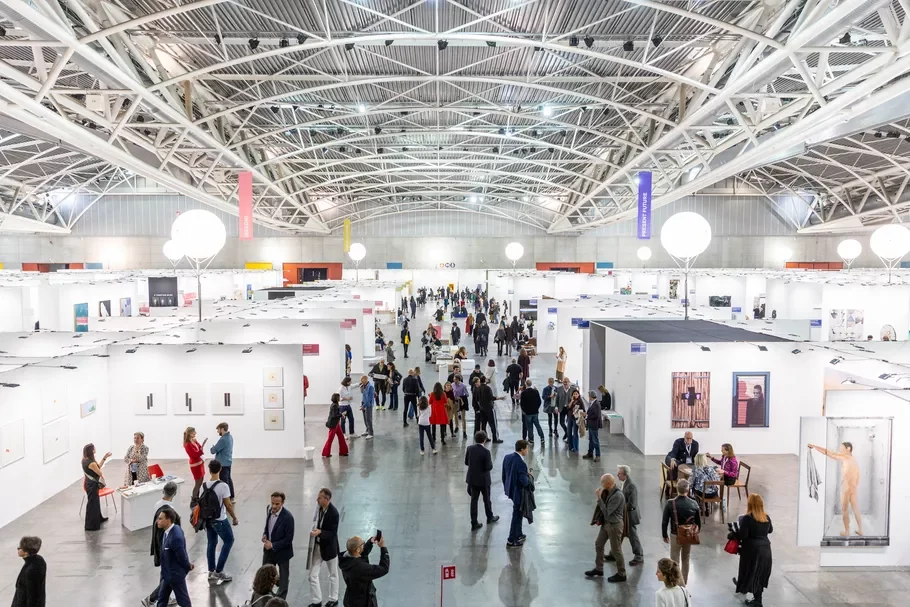
Is Art Basel Over? Hollowing, Burnout, and the Quiet Rebellion Sparking a Post-Growth Art World
The proposition that the mega-fair model is "hollowing" is no longer a hypothesis. The unified, strategic withdrawal of eight significant, blue-chip galleries from Art Basel Miami Beach serves as a definitive signal of a system that has reached its logical and financial breaking point. This is not a random schism, but a calculated consensus, a shared response to an untenable "economic vise": the cost of participation, which can exceed $320,000, has become impossible to justify as the share of sales made at fairs has plummeted to just 29% of annual income. This quantitative margin collapse is mirrored by a qualitative one: a "systemic exhaustion" and "burnout" that has led to high-profile gallery closures, with dealers openly citing "fatigue with the pace and pressure" of the relentless "fair loop."
Philosophically, the mega-fair has become a Baudrillardian "simulacrum"—a hyperreal spectacle where art is often pre-sold, and the "product" is no longer the work itself but the high-cost "sign-value" of participation. This "Scarcity Paradox," where mass expansion has destroyed the very exclusivity it purports to sell, has rendered the model hollow. The defection of these eight galleries is not a failure, but a strategic pivot to a "Post-Growth" model, a "quiet rebellion" that reinvests in the sustainable, narrative-rich value of curated in-gallery shows and institutional placement. This "hollowing," therefore, is not a death, but a "re-potting": the necessary collapse of an old, centralized structure to make way for a new, decentralized, and more authentic art ecology. Explore the full study now.