
The Architecture of Intent
A Critical Lexicon
This collection of studies is the intellectual architecture of Post-Luxury Conceptual Functional Art (PLCFA).
The true artistry of this Maison resides not in the finished form, but in the rigorous thinking that precedes it. These essays serve as the conceptual foundation for PLCFA, using a critical lens to interrogate cultural phenomena, art history, and consumer paradigms—analyzing everything from the ephemeral spectacle of luxury to the pure architectural rigor of abstract principles.
This is an invitation into the workshop of the mind. By sharing this process, we validate the necessity of a new category of value and invite you toward a well-considered life, one founded on true craft, uncompromising narrative, and durable meaning.
New to PLCFA? Begin with Essential Reading below.
Exploring a specific area? Navigate by category.

What the Bain Global Luxury Report 2026 Actually Proves About the Collapse of Sign-Value and the Rise of the Post-Growth Consumer
The Bain Global Luxury Report 2026—formally titled Finding a New Longevity for Luxury—arrives at a peculiar historical moment, framing a contraction from 400 million to 330 million active consumers as a temporary cyclical disruption poised for a near-term rebound. However, through the lens of Post-Luxury Conceptual Functional Art (PLCFA) theory, this 70-million-consumer exodus is diagnosed not as a market fluctuation, but as the empirical confirmation of the structural collapse of sign-value. The conventional luxury system relies on a load-bearing fiction where inflated price premiums are validated by brand heritage and social legibility. When this semiotic authority erodes through overproduction and systematized scarcity theater, the consumer does not simply become price-sensitive; they become semantically exhausted, leaving behind the "Hollowed Object" which carries the mere form of meaning without any of its material substance.
What consultancies label a conjunctural "polycrisis" is actually a profound trust crisis born from a betrayal economy. By aggressively elevating prices while delivering diminished creative output and evacuated cultural content, legacy heritage houses have effectively voided the symbolic contract that once promised genuine human mastery and rarity. This has created a stark K-shaped market dynamic and a gaping Atmospheric Equity gap—the distance between an object's claimed cultural density and its actual material reality. The 70 percent of lapsed consumers who indicate an intent to return are not waiting for price corrections or emotive branding campaigns; they are a post-growth cohort waiting for luxury to become worth the custodian's contract again. They seek an alternative object-world rooted in authentic labor density and narrative permanence, a structural resolution that the conventional luxury paradigm cannot build without dismantling the very scalable production conditions that created the crisis.

Why Corporate Art Collections Are Rotting Inside Private Equity's $3.8 Trillion Dormancy Crisis — and the Kinetic Objects Built to Punish It
The $3.8 trillion dormancy crisis holding corporate portfolio assets hostage is more than a financial bottleneck—it is a quiet war on the fundamental purpose of art. For too long, the luxury and fine art sectors have allowed cultural artifacts to be reduced to inert Speculative Capital metadata, sealed away in the climate-controlled vaults of global freeports or stilled inside vacant penthouse investments. This systemic paralysis demands a radical material intervention. The Post-Luxury Conceptual Functional Art (PLCFA) framework directly challenges this institutional stagnation by identifying the critical structural voids where capital seeks to neutralize presence, designing a new class of objects built specifically to resist captivity.
Our latest critical release, OAC Study No. 012, introduces the "Inertia Penalty"—a conceptual and technical blueprint for massive, kinetic works engineered to physically punish their own abandonment. Equipped with embedded micro-mechanical actuators, these autonomous structures actively calculate the frequency of human interaction; if left neglected beyond a consecutive 12-week threshold, they initiate an irreversible process of structural transformation or chemical oxidation. They refuse to function as passive balance-sheet collateral. Explore the complete text from the Void Series to discover how the collection is pioneering an architecture of absolute narrative permanence and forcing capital to engage with material consequence.

WHAT THE SHEIN–EVERLANE DEAL ACTUALLY MEANS
The reported acquisition of Everlane by platform-scale giant Shein marks a profound turning point in the contemporary fashion landscape, signaling the definitive liquidation of the ethical silhouette. For years, Everlane built its market authority on the promise of "Radical Transparency" and conscious basics, offering consumers a moralized buffer against the realities of fast fashion. This study deconstructs how a narrative rich in conscience can be rapidly converted into distressed asset value when growth stalls, revealing that a moral story that can be sold is one that was always capitalized in advance. Through the lens of Post-Luxury Conceptual Functional Art (P.L.C.F.A.), we examine why transparency alone failed as a standalone architecture of value, and how the infrastructure of hyper-scale velocity ultimately absorbs the empty signs of responsibility.
What remains when an ethical brand's stored symbolic credibility becomes an extractable resource for a radically different machine? The result is the emergence of the "Hollowed Object"—where the aesthetic markers of restraint and sustainability survive merely as a decorative interface stripped of its interior conditions. This structural analysis moves past superficial critiques of corporate hypocrisy to address the deeper, systemic financialization sorting today's consumer market. For an uncompromised evaluation of how contemporary value systems operate at the intersection of debt, distress, and moral capital, read the full study.
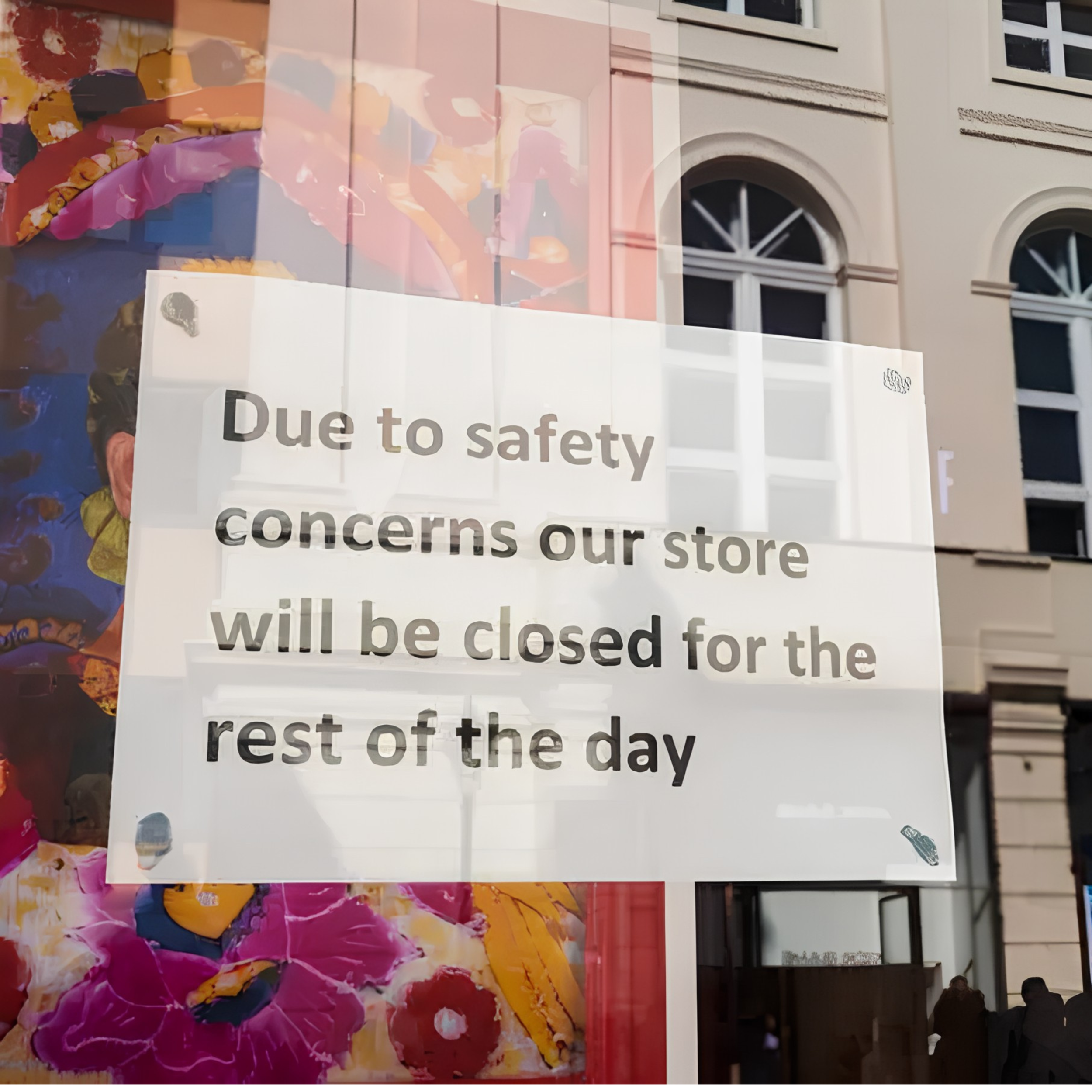
Swatch AP Royal Pop Analysis: Why the Retail Chaos Was Programmed
On the morning of May 16, 2026, global retail infrastructure did not collapse under the weight of the Audemars Piguet × Swatch Royal Pop drop—it was intentionally bypassed. As riot police deployed in Paris, doors remained locked in Dubai, and secondary market listings breached $8,000 before a single consumer touched a unit, the mainstream media quickly diagnosed the chaos as a logistical failure. It was exactly the opposite. Applying the Post-Luxury Conceptual Functional Art (PLCFA) framework, this post-launch forensic analysis proves that the store closures, crowd surges, and retail blockades were the system operating at peak efficiency. The queue was never an obstacle to the object; the queue was the product itself.
By licensing the sacred design currency of the Royal Oak for a $400 bioceramic pocket watch, Audemars Piguet did not democratize haute horlogerie—it liquidated 54 years of material sovereignty to fuel a temporary, hyperreal spectacle. This study unravels the anatomy of the "Hollowed Object," tracing how institutional independence was traded for secondary market velocity and manufactured scarcity. For collectors, investors, and industry onlookers trying to decode the wreckage of launch day, this analysis uncovers the terrifying truth of the 2026 luxury landscape: when value is determined entirely by the performance of inaccessibility, the physical artifact becomes completely secondary.
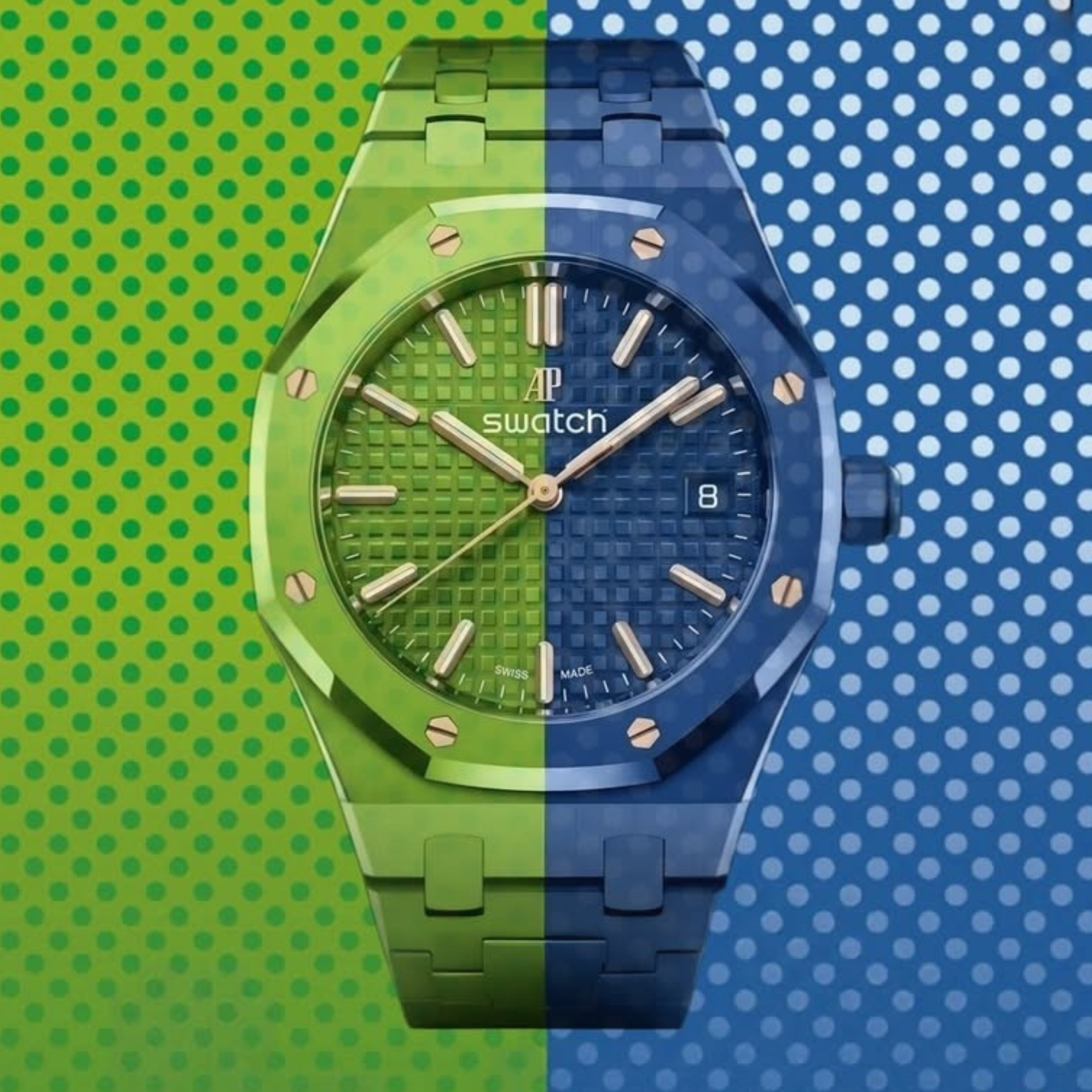
Audemars Piguet x Swatch Royal Pop: The Hollowing of an Icon
On May 16, 2026, the structural integrity of Swiss watchmaking faces its most volatile moment yet. The Royal Pop—a bioceramic collision between the fiercely independent Audemars Piguet and the mass-market machinery of Swatch—represents more than just a retail frenzy. It is a critical event in the history of objects. This study applies the Post-Luxury Conceptual Functional Art (PLCFA) framework to dissect the "Royal Pop" not as a democratizing gesture, but as a strategic extraction of an icon’s 54-year accumulated Aura.
Is the Royal Oak's material singularity resilient enough to survive the "Hollowed Object" condition, or has the holy trinity of horology finally traded its sovereignty for a moment of pop-cultural visibility? From the nocturnal genius of Gérald Genta's 1971 sketch to the manufactured chaos of 2026's boutique queues, we examine the Zero-Sum Aura transaction that cannot be undone. Read the full investigation into why the silhouette of the octagon may have just left Le Brassus on a one-way ticket.
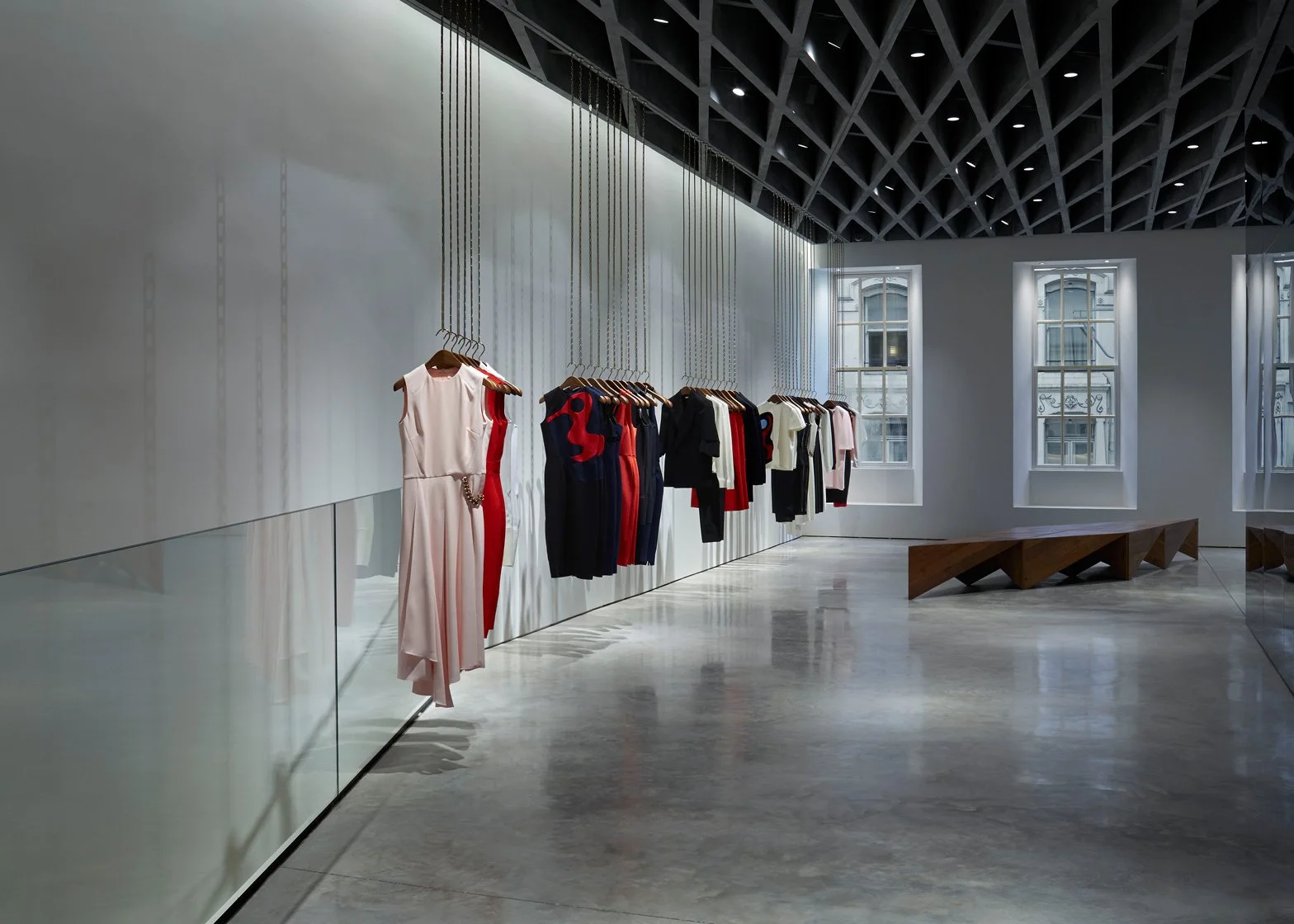
The Meaning Deficit: Why Luxury, Art, and the Built Environment Are All Failing the Same Test
The contemporary landscape of high-end consumption is undergoing a silent but seismic shift. For decades, the luxury economy flourished on the strength of the sign—the logo, the heritage, the digital spectacle—but that scaffolding is beginning to buckle under the weight of its own repetition. Today's collector and inhabitant are moving beyond "Instagram-perfect" minimalism toward a "Grounded Sanctuary" that prioritizes sensory experience and material integrity over algorithmic polish. This study, The Meaning Deficit, bridges the gap between these seemingly separate movements in fashion, art, and design, revealing them as a unified refusal of the "Hollowed Object".
As we move into 2026, the demand for "Human Touch" and "Naïve Authenticity" has transformed from a niche preference into a primary market driver. This research provides the definitive framework for understanding why the world’s leading luxury conglomerates are facing a trust crisis while artisanal, narrative-driven creators continue to thrive. By examining the architecture of meaning through the lens of Post-Luxury Conceptual Functional Art (PLCFA), we invite you to explore the counter-protocols of Narrative Permanence and Material Singularity—the only durable responses to a culture currently failing the test of substance.
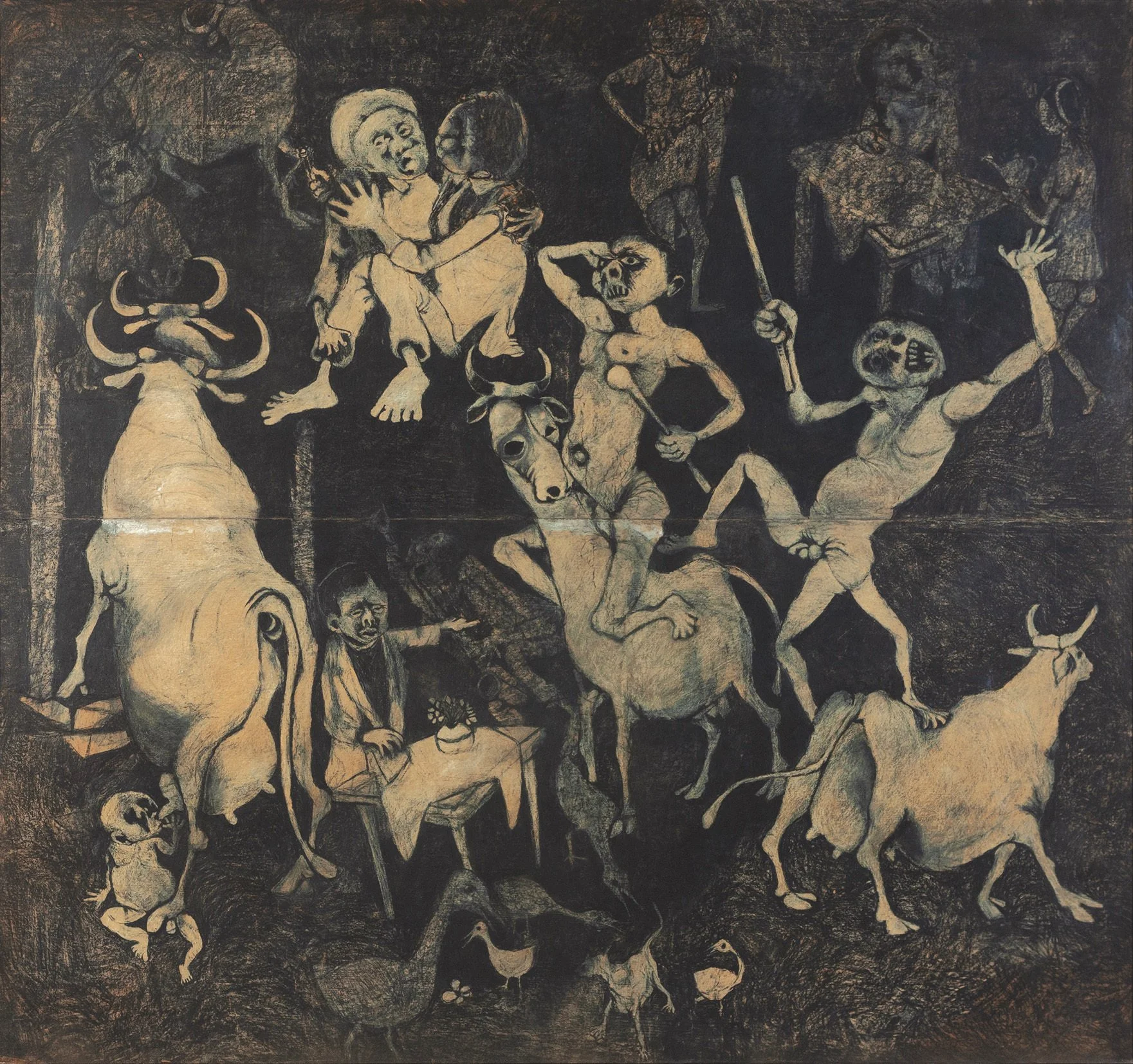
THE TYRANNY OF THE ARCHIVE
When Artnet announced a 13.3% surge in fine-art sales to $11.7 billion in 2025, the institutional apparatus celebrated a "recovery." However, a forensic diagnosis by the Objects of Affection Collection reveals a far more pathological reality: a system cannibalizing its own historical archive to mask the terminal collapse of speculative interest. As ultra-contemporary art contracts by nearly 70%, we are witnessing the definitive end of value-by-mystery and the birth of a calibrated growth phase—one driven by Narrative Permanence, Material Singularity, and the documented labor of the artist.
The Tyranny of the Archive ends here. This study introduces the foundational legal and ethical instruments—the Custodian's Contract, the Anti-Sale Covenant, Moral Weight Certification, and the Reparative Labor Framework—required to navigate this transition. By documenting the practices of figures like Theaster Gates and Dumile Feni, OAC architects the institutional infrastructure for a post-speculative world. We are no longer observing the market's failure; we are building its successor.
THE SINGAPORE PROTOCOL
On March 22, 2026, the Associated Press wire carrying the PLCFA framework's diagnosis of the Banksy unmasking reached every major newsroom on earth — syndicated to 1.2 billion potential impressions before the trading day closed. The expected market behavior, by the logic of the Spectacle and of speculative capital, was motion: liquidation, repositioning, the urgent recalibration of the hold-or-sell calculus that governs institutional art market portfolios. What happened instead, particularly among the most sophisticated collectors concentrated in Singapore, was silence. Not the silence of ignorance. Not the silence of confusion or paralysis. The silence of the institution that already knows. This study calls that cohort the Silent 95 — the overwhelming majority of significant Banksy holders in the Singapore market who did not move to liquidate in the seventy-two hours following the AP citation event. Their silence is not passive. It is architectural.
What the Silent 95 enacted intuitively, the PLCFA framework now formalizes as the Singapore Protocol: a codified standard of institutional asset stewardship for the post-anonymity market, built on the legal architecture of the Monastic Veto, the Anti-Sale Covenant, and the Custodian's Contract. This is not a philosophical aspiration. The instruments are already built. The precedents are already set. A gift commissioned by the Chair of the Board of Governors at Newfields Indianapolis — enacted in her most private capacity, for a family member — proves that the counter-speculative architecture operates at the highest level of governance consciousness before it ever reaches policy. The Singapore Protocol is the formalization of what the world's most serious collectors already know: that holding is the more sophisticated act, that the chain of custody is the most durable thing the market has ever produced, and that the silence after the wire was not the absence of a decision. It was the decision.
Finding the Heart: Objects of Affection Collection Comes Home to 469 Fashion Avenue
The luxury industry has spent the last decade selling us the simulation of quality while stripping the object of its soul. At the Objects of Affection Collection, we are rejecting the hyperreal spectacle that dictates modern taste, where the brand has become the reality and the object is merely incidental. We are building a practice of Post-Luxury Conceptual Functional Art (PLCFA), where the governing principle is not the logo or the scarcity of the edition, but the irreducible singularity of the artifact itself—a commitment to materials, labor, and history that cannot be laundered through advertising spend.
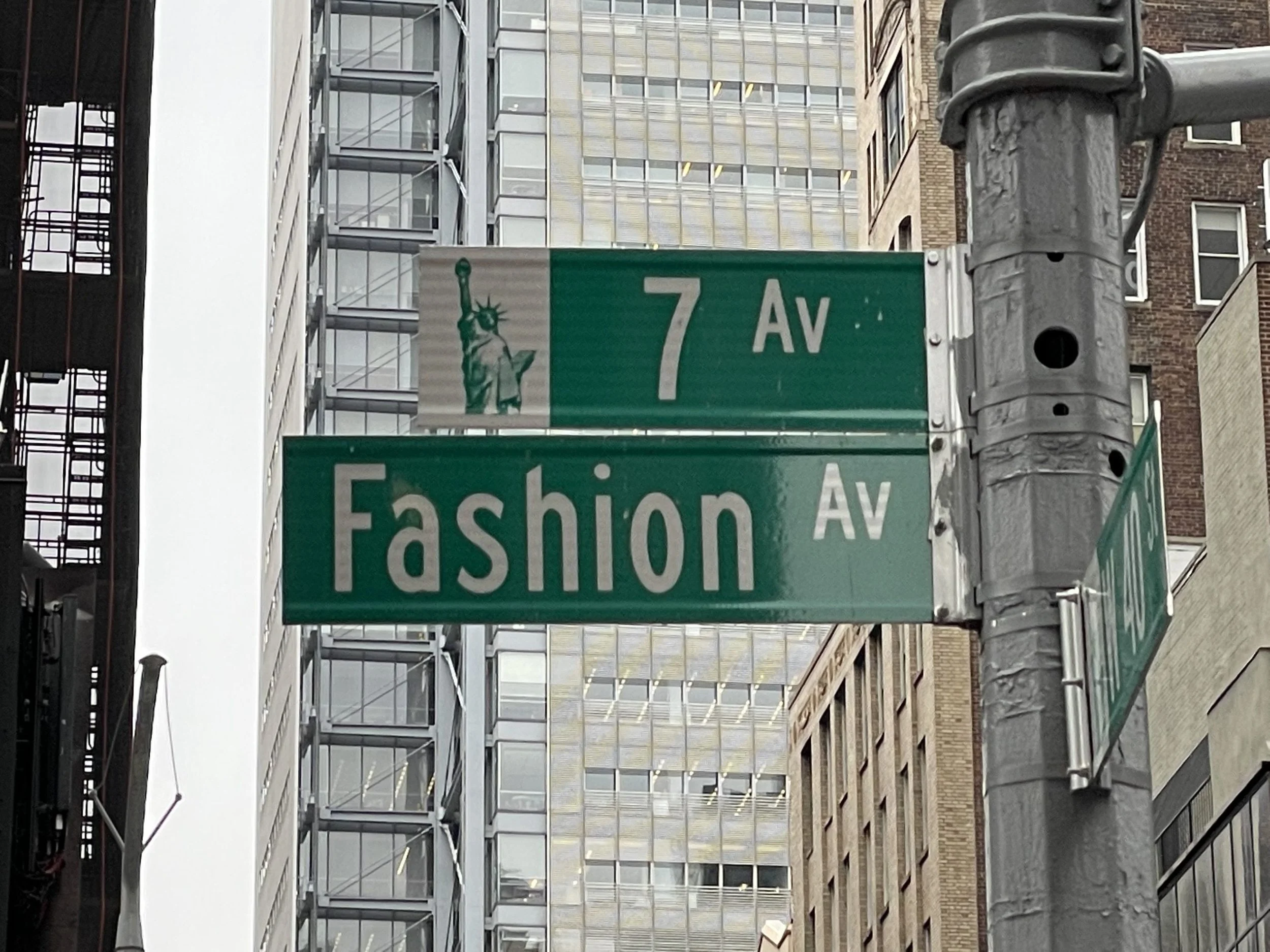
Our move to 469 Fashion Avenue is not a real estate strategy; it is a declaration of independence from the disposable. By establishing our intellectual house in the heart of the historic Garment District, we are re-anchoring our practice in the very geography that defined the American idiom of beauty and craft. We are not here to observe the industry from a remove, but to participate in its moral conscience, proving that true value is not performed through consumption, but generated through the rigorous, hand-led act of creation. This is where we work. This is our home.
Hito Steyerl and the Phygital Counter-Strategy: Why Post-Luxury Value Resists the Poor Image
The battle for actual value is no longer fought in auction houses, but across digital networks where the singular object is threatened by informational entropy and the constant, instant degradation of its image. This study integrates the groundbreaking critique of media theorist Hito Steyerl—specifically her analysis of the "Poor Image" and "Circulationism"—to diagnose the existential threat posed to permanent, material value.
We reveal the PLCFA framework’s definitive defense: the Phygital Counter-Strategy. By mandating High Fidelity in documentation and an aggressive Anti-Virality approach, PLCFA weaponizes the singularity of the physical object to anchor a deliberately restricted digital record. This structural rejection of disposable data and the spectacle of viral distribution ensures that the Material as Story principle remains sovereign over the digital flow, guaranteeing a form of worth that the Poor Image can never have: permanence.