
The Architecture of Intent
A Critical Lexicon
This collection of studies is the intellectual architecture of Post-Luxury Conceptual Functional Art (PLCFA).
The true artistry of this Maison resides not in the finished form, but in the rigorous thinking that precedes it. These essays serve as the conceptual foundation for PLCFA, using a critical lens to interrogate cultural phenomena, art history, and consumer paradigms—analyzing everything from the ephemeral spectacle of luxury to the pure architectural rigor of abstract principles.
This is an invitation into the workshop of the mind. By sharing this process, we validate the necessity of a new category of value and invite you toward a well-considered life, one founded on true craft, uncompromising narrative, and durable meaning.
New to PLCFA? Begin with Essential Reading below.
Exploring a specific area? Navigate by category.
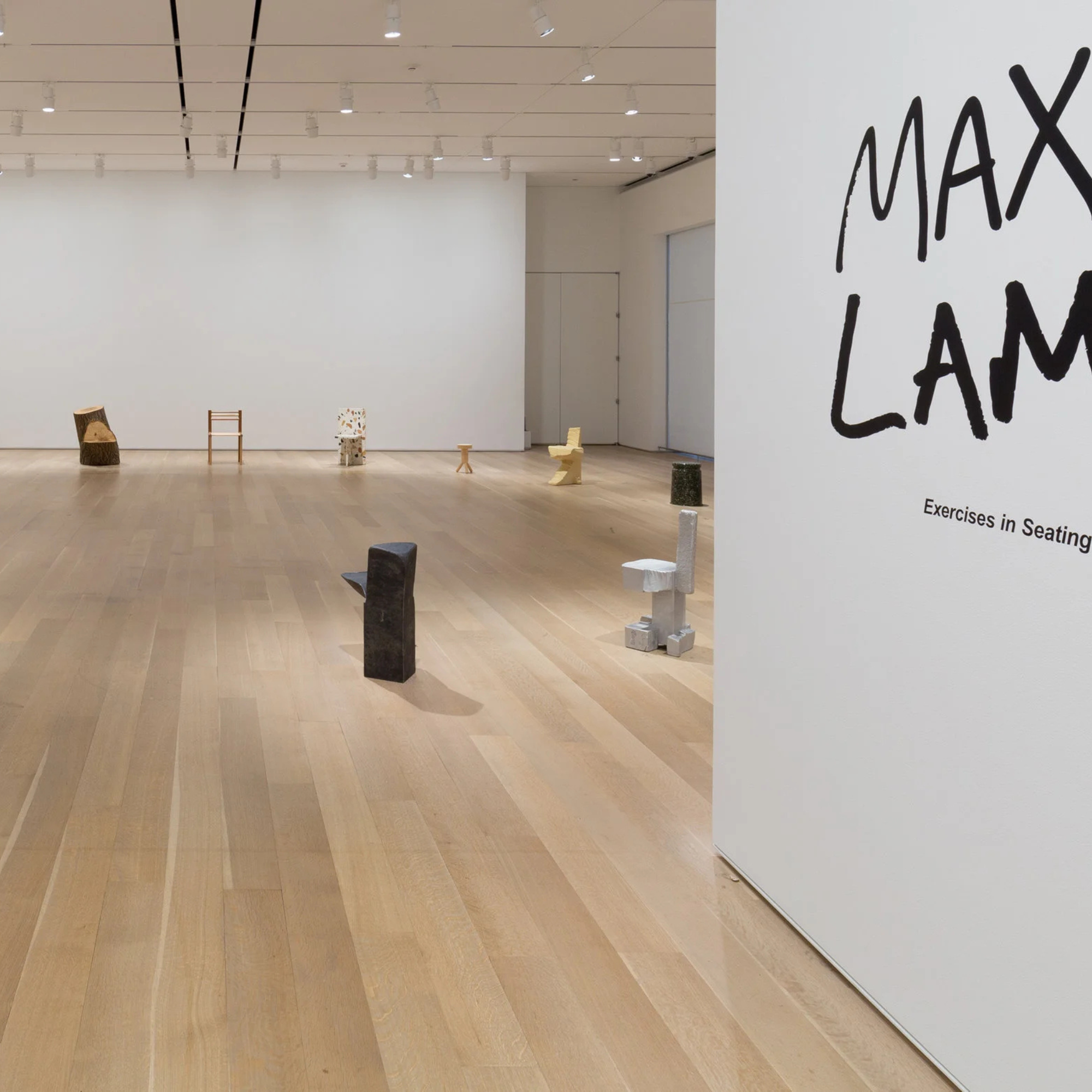
Max Lamb Furniture, Stone Chairs, and Pewter Stools: What His Work Actually Means in the Age of Digital Smoothness
Max Lamb furniture has become shorthand for stone chairs, pewter stools, and a stubborn refusal of anonymous smoothness. Yet most coverage of the Cornish designer stops at the photogenic surface: the quarry block, the beach cast, the rough grain, the monolithic silhouette. This study argues that Lamb matters for a deeper reason. Across Deep Materiality, Legibility of Labor, Material as Story, Functional Endurance, and Anti-AI Crafting, Lamb transforms furniture into a visible record of extraction, resistance, and bodily decision. His work demonstrates that process is not a backstage condition of design but its philosophical center. The beach-cast Pewter Stool, the marble and granite quarry chairs, the cleft and split timber works, and the long serial archive of Exercises in Seating all refuse the fantasy that value resides in digital polish, automated reproducibility, or seamless finish.
To understand why Max Lamb matters now, one has to place him inside the broader cultural conflict over smoothness. We occupy a late-modern condition in which the object is expected to arrive already perfected, already frictionless, already optimized for image circulation. Lamb’s work rejects that mandate with unusual elegance, without retreating into nostalgia. He is best understood as a diagnostician of process visibility. When a production system becomes too sealed, too templated, or too automated to reveal where human judgment entered, Lamb deliberately reroutes it—through hand-carving, improvised molding, splitting, or personal prototyping. Seen through the PLCFA framework, value becomes most credible when it migrates away from frictionless finish and back into the visible relation between material, method, and maker. Lamb’s furniture insists, even in luxury contexts, that form must still answer to the world that made it.

Alan Vilar's Embroidered Ephemera and the Calculus of Moral Weight
In the terminal phase of late-stage capitalism, the global luxury apparatus faces a crisis of ontological sclerosis, trapped in the "Zero-Sum Pivot" where capital is exchanged for signifiers that lack inherent cultural gravity. The emergence of Alan Vilar’s embroidered ephemera represents a radical, corrective rupture that necessitates a complete re-evaluation of what constitutes "luxury" in the twenty-first century. Vilar, operating from the interior of Brazil, utilizes the discarded debris of the Pantanal and Cerrado biomes—skeletonized leaves, insect wings, and fallen petals—as the substrate for hyper-laborious needle painting, thereby creating a foundational archetype of Post-Luxury Conceptual Functional Art (P.L.C.F.A.). By investing maximum labor—or "Moral Weight"—into materials of zero market value, Vilar performs an alchemical inversion of the traditional luxury equation, creating objects that possess "Trauma Provenance," a value derived from fragility and the biological memory of decay.
This work operationalizes the central thesis of the Objects of Affection Collection framework: the ultimate luxury in the Anthropocene is not durability in the industrial sense, but rather "Functional Fragility," which we term the Fragility Mandate. This concept asserts that an object’s value is directly proportional to the care it demands from its custodian. Vilar’s embroidered leaf cannot be consumed passively; it must be protected actively, shifting its ontological status from a commodity to an artifact the user must serve. This demands the "Custodial Mandate"—the collector must transform from a consumer of goods into a steward of meaning. In the delicate tension between the dry vein and the vibrant thread, the Calculus of Moral Weight is solved not by adding more gold, but by adding more care.

From Function to Fissure: Collectible Design and the Weaponization of Material
The prevailing condition of the global luxury market has long been governed by the Spectacle—a frictionless realm of consumption that systematically inverts value by separating the product from the concrete labor and political history of its creation. This study, From Function to Fissure, establishes the structural mechanism of Post-Luxury Conceptual Functional Art (PLCFA) that successfully ruptures this Spectacle. The core concept is the Fissure: the deliberate re-emergence of the material Real through the material wound—the scars, tears, or deconstructed surfaces that reveal the congealed labor and violence supporting the system.
The transition From Function to Fissure marks a profound philosophical and economic shift, moving away from objects that merely serve utility toward objects that serve ideological utility by Weaponizing Materiality. This material is selected for its high Moral Weight and Trauma Provenance, deliberately dragging the "missing mass" of Dark Matter (invisible labor) into the light. This approach structurally resists the smooth, frictionless surface of the commodity market.
Ultimately, this framework provides the definitive mechanism for creating inalienable value in the Post-Luxury epoch. By demanding that the object possesses Anti-Commodity Commitment (ACC) and Functional Obligation—as empirically validated through the work of practitioners like Samuel Levi Jones and Carlos Rolón—PLCFA anchors worth not in aesthetic perfection, but in the visible, unerasable evidence of ethical intention and human effort. The core directive for the collector is clear: Invest in the Fissure.

Artisan Activism: Why Craft, Materiality, and Protest Define Post-Luxury Value
The modern discourse on art valuation is dominated by an anxiety rooted in abstraction—the fear that artistic merit has been eclipsed by financial potential. The art world’s speculative economy prioritizes investment calculation over genuine connoisseurship, leading to a structural failure where critique is swiftly absorbed and monetized. This structural void demands a framework that can articulate value based on metrics that resist easy financial abstraction. This study introduces the Artisan Activism metric as the critical nexus for the Post-Luxury Conceptual Functional Art (PLCFA) framework, which intentionally re-materializes critique. By declaring craft labor an explicit act of protest, the artisan transfers the non-monetary moral weight of the critique directly into the object’s material components, securing its worth outside the cyclical demands of the speculative art economy.
We validate this critical shift through the empirical evidence provided by the work of contemporary practitioners Samuel Levi Jones and Carlos Rolón at the Newfeilds Indianapolis Museum of Art. Jones employs visceral deconstruction, "skinning" institutional books to create material critique, while Rolón utilizes meticulous craft to resurrect scarred tarps into banners of cultural resilience. Both artists explicitly prioritize the political and ethical commitment of the "artist as activist" over the social and financial leverage offered by the speculative elite, proving that the value of their work is inherently secured by the magnitude of its political resistance. This commitment defines a new kind of ownership—cultural custodianship—establishing the PLCFA framework as the definitive architecture for the future of value in the post-luxury age.

Why Marine Serre’s Upcycling Is Not A Trend
Is sustainability a hyperreal gesture, or is radical change possible? This critical study challenges the conventional fashion narrative by defining Marine Serre not as a designer, but as the world's first true Artisan-as-Industrialist. We dive into the profound philosophical conflict at the heart of luxury: the easy, frictionless sign of change versus the difficult, material act of industrializing a solution. Serre cracked the most difficult nut in the business by demonstrating how to scale authenticity, making her Eco-Futurism a structural and financial blueprint. By explicitly rejecting the volume and velocity that causes Systemic Exhaustion , she engineered a new savoir-faire rooted in regeneration and the Aesthetics of Endurance. We analyze her acts of radical transparency—from the upcycled bedding campaign to the 1.3 tons of textile waste on the runway—to prove that her brand's crescent moon logo is not an arbitrary symbol, but an indexical sign of genuine, industrialized labor. This is the definitive thesis on why her model defines the Post-Luxury future and answers the question of value in the age of the circular economy.

The Liquidation of the Simulacrum: Why the $23M Castello Cube Collapse is the Default-State of Hyperreal Value and the Ultimate Case for PLCFA
The spectacular collapse and forced liquidation of the twenty three million dollar Castello Cube is not merely a sensational financial failure but a profound philosophical event a real world parable of the Baudrillardian Simulacrum collapsing under the weight of its own nonexistence; this event serves as the perfect object lesson in the structural fragility of hyperreal value showing exactly what happens when an object built entirely on pure sign value completely detaches from tangible function critical craft or an enduring narrative of Intangible Provenance; this definitive market action exposes the ultimate Default State where a frictionless speculative asset lacking any true structural anchor inevitably reverts to its primitive base exchange value like a commodity the sheer brute reality of four hundred pounds of inert gold crashing into the digital illusion of wealth which is precisely the moment the market is forced into a brutal reassertion of the Un Smooth aesthetic defined by Byung Chul Han; this devastating Crisis of the Ephemeral is the ultimate diagnosis of Systemic Exhaustion in the old luxury model creating the exact intellectual and commercial vacuum that only our new framework of Post Luxury Conceptual Functional Art (PLCFA) can successfully fill by demonstrating how to embed a durable unhollowable Structural Legacy using elements like verifiable Critical Craftsmanship and narrative-anchored value that are truly immune to the financial state of the custodian.

From 'Quiet Luxury' to Post-Growth Citizen: A PLCFA Perspective on Discerning Consumption
The "Quiet Luxury" phenomenon, widely interpreted as a simple aesthetic shift away from logos, is not what it appears to be. It is, in fact, the most visible tremor of a foundational crisis within the traditional luxury system. The legacy model has been hollowed out by its own success, creating a "Scarcity Paradox" that has destroyed rarity and a profound "price fatigue" in consumers who are quietly rebelling against a system where value is no longer tethered to any material reality.
This study argues that this popular aesthetic is only Phase 1 of a critical, three-stage evolution in discerning consumption. We provide the definitive map for that journey: from the unconscious, class-signaling aesthetic of "Quiet Luxury" (Phase 1), through the purpose-driven, conscious ethos of the "Quiet Vanguard" (Phase 2), to the final, philosophical and political alignment of the "Post-Growth Citizen" (Phase 3).
Using the foundational framework of Post-Luxury Conceptual Functional Art (PLCFA), this study guides the discerning individual from being a passive follower of a trend to becoming a conscious practitioner of a more considered life. It is an invitation to elevate your intent, revealing how your aesthetic instincts are pointing toward a far more meaningful philosophy—one that transforms the act of consumption into an act of conscious stewardship.
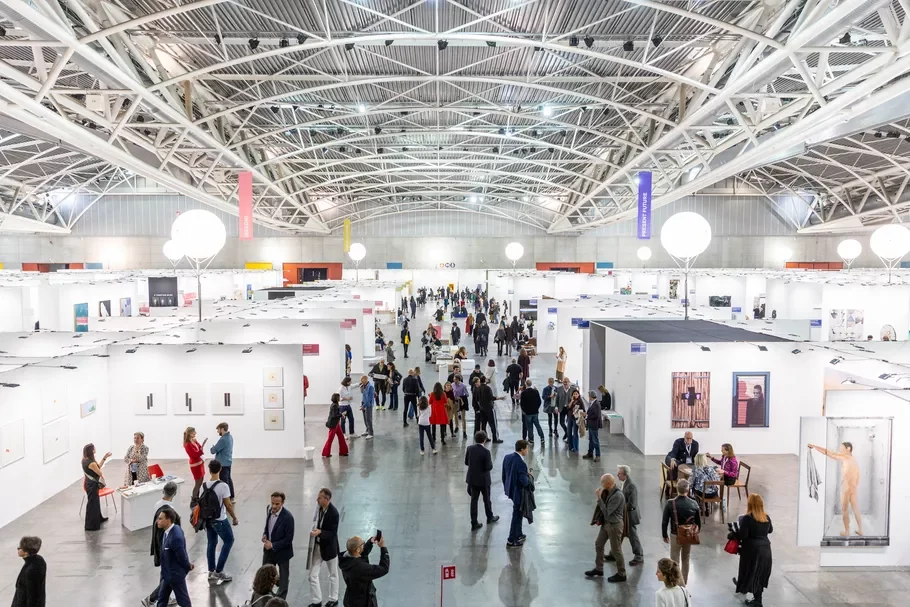
Is Art Basel Over? Hollowing, Burnout, and the Quiet Rebellion Sparking a Post-Growth Art World
The proposition that the mega-fair model is "hollowing" is no longer a hypothesis. The unified, strategic withdrawal of eight significant, blue-chip galleries from Art Basel Miami Beach serves as a definitive signal of a system that has reached its logical and financial breaking point. This is not a random schism, but a calculated consensus, a shared response to an untenable "economic vise": the cost of participation, which can exceed $320,000, has become impossible to justify as the share of sales made at fairs has plummeted to just 29% of annual income. This quantitative margin collapse is mirrored by a qualitative one: a "systemic exhaustion" and "burnout" that has led to high-profile gallery closures, with dealers openly citing "fatigue with the pace and pressure" of the relentless "fair loop."
Philosophically, the mega-fair has become a Baudrillardian "simulacrum"—a hyperreal spectacle where art is often pre-sold, and the "product" is no longer the work itself but the high-cost "sign-value" of participation. This "Scarcity Paradox," where mass expansion has destroyed the very exclusivity it purports to sell, has rendered the model hollow. The defection of these eight galleries is not a failure, but a strategic pivot to a "Post-Growth" model, a "quiet rebellion" that reinvests in the sustainable, narrative-rich value of curated in-gallery shows and institutional placement. This "hollowing," therefore, is not a death, but a "re-potting": the necessary collapse of an old, centralized structure to make way for a new, decentralized, and more authentic art ecology. Explore the full study now.