
The Architecture of Intent
A Critical Lexicon
This collection of studies is the intellectual architecture of Post-Luxury Conceptual Functional Art (PLCFA).
The true artistry of this Maison resides not in the finished form, but in the rigorous thinking that precedes it. These essays serve as the conceptual foundation for PLCFA, using a critical lens to interrogate cultural phenomena, art history, and consumer paradigms—analyzing everything from the ephemeral spectacle of luxury to the pure architectural rigor of abstract principles.
This is an invitation into the workshop of the mind. By sharing this process, we validate the necessity of a new category of value and invite you toward a well-considered life, one founded on true craft, uncompromising narrative, and durable meaning.
New to PLCFA? Begin with Essential Reading below.
Exploring a specific area? Navigate by category.
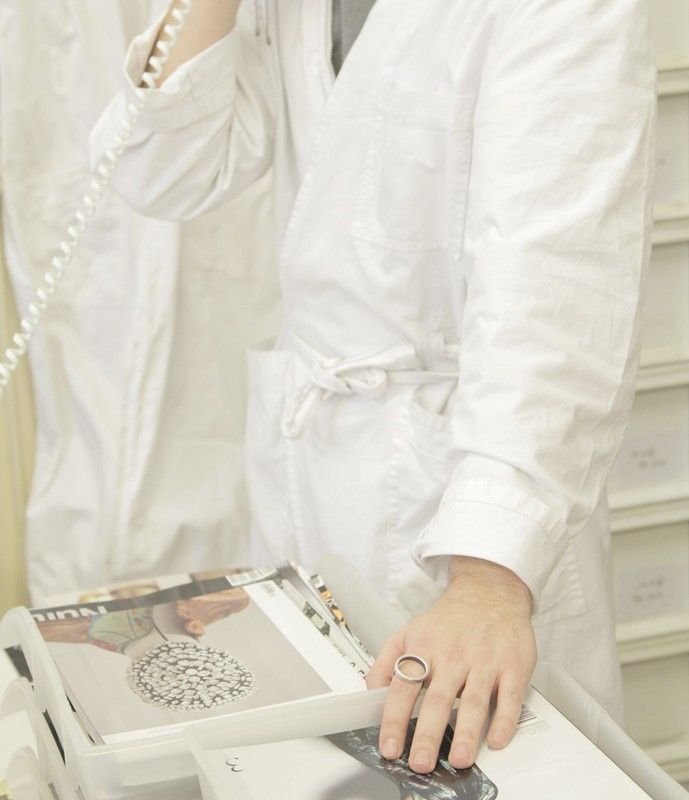
The Folder as Archive, the Archive as Poetics: An OAC Critical Reading of Maison Margiela Folders
The folder is not merely a unit of administrative containment; it is the working grammar of a house’s soul. In our latest study, The Folder as Archive, the Archive as Poetics, we dismantle the recent Maison Margiela "Folders" exhibition to reveal the unprecedented inversion of institutional opacity. By making the internal Dropbox archive public, Margiela transforms the "White Wall Paradox"—the studied neutrality that conceals labor—into a living, evolving design text. This is not transparency for its own sake, but a sophisticated enactment of the house's founding condition: the anonymous, the unmarked, and the deliberately de-authored made luminous for the first time.
Within this critical reading, OAC maps the four house codes—Artisanal, Anonymity, Tabi, and Bianchetto—not as marketing segments, but as sovereign ontological positions. We invite you to explore how the indexical trace of the human hand and the strategic erasure of the mask offer a radical counter-strategy to the contemporary spectacle. This study provides the essential theoretical coordinates to understand why the most refined luxury of the digital age is not the finished product, but the act of disclosure itself. Read the full inquiry to witness a house in the act of thinking.
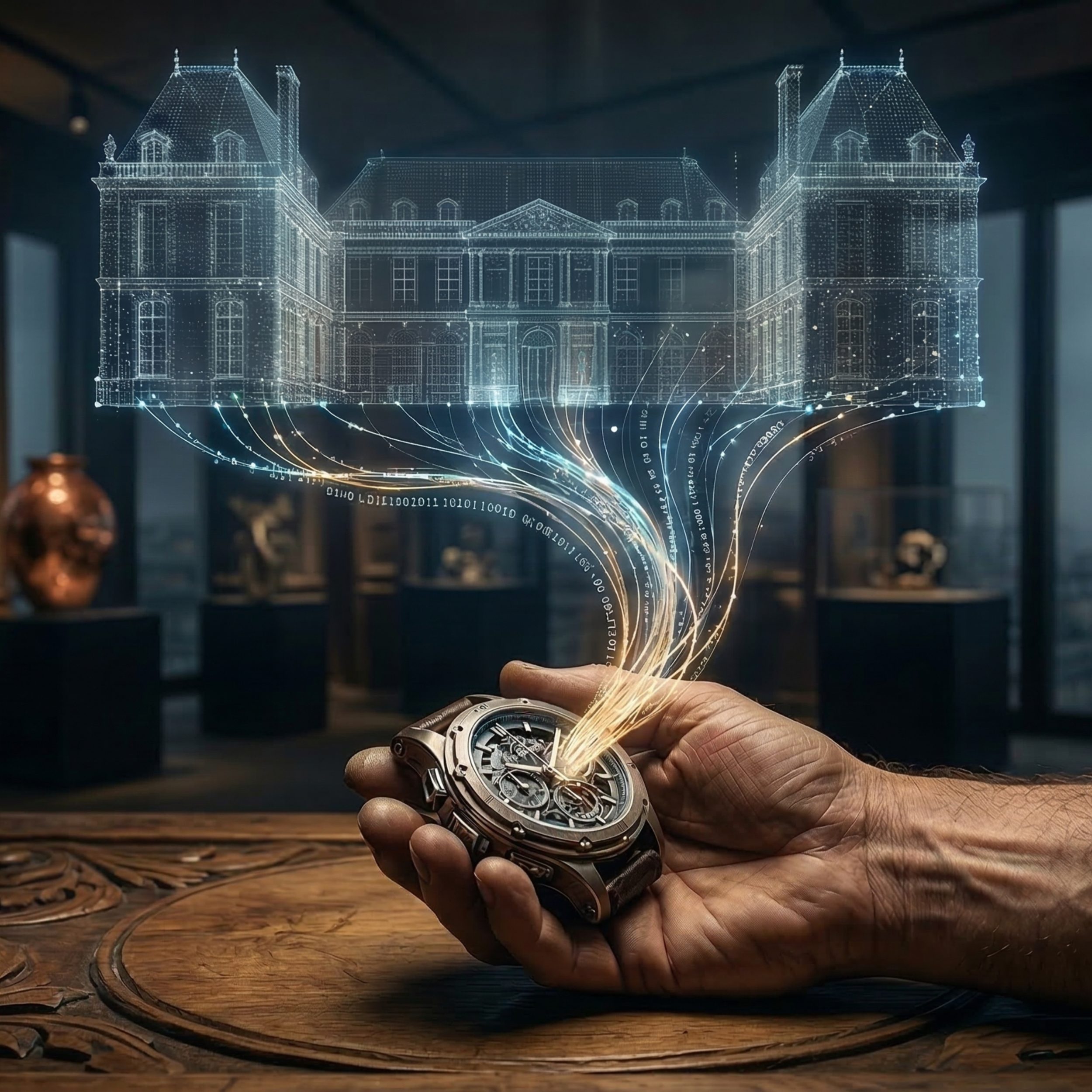
The Paradox of Narrative Permanence: How the Most Advanced Digital Infrastructure Is Being Deployed to Re-Humanise the Physical Object
The luxury sector is currently navigating a profound structural inversion, where the most sophisticated digital tools are being mobilized not to accelerate consumption, but to arrest it. Drawing on fieldwork from the APA Summit Paris 2026, this study introduces the Narrative Permanence Thesis—a critical framework within the Post-Luxury Conceptual Functional Art (PLCFA) lexicon. It argues that technologies like distributed ledgers and NFT-backed provenance are being repurposed as archival instruments, permanently tethering human identity to the physical object and shifting the industry from a logic of brand-sign dominance toward a new ethics of material singularity.
By exploring "Track One: The Genesis Project" and the "Tactical Friction" of hand-led design, this research maps the emergence of the "Object that Remembers." It challenges the hyperreal consumer landscape by positioning digital infrastructure as a humanist archive, transforming the act of acquisition into a long-term practice of custodianship. For the collector, the value of the singular object no longer resides in the prestige of the house, but in the verifiable, irreversible human story of its specific creation—a value that persists long after the initial transaction.

From Function to Fissure: Collectible Design and the Weaponization of Material
The prevailing condition of the global luxury market has long been governed by the Spectacle—a frictionless realm of consumption that systematically inverts value by separating the product from the concrete labor and political history of its creation. This study, From Function to Fissure, establishes the structural mechanism of Post-Luxury Conceptual Functional Art (PLCFA) that successfully ruptures this Spectacle. The core concept is the Fissure: the deliberate re-emergence of the material Real through the material wound—the scars, tears, or deconstructed surfaces that reveal the congealed labor and violence supporting the system.
The transition From Function to Fissure marks a profound philosophical and economic shift, moving away from objects that merely serve utility toward objects that serve ideological utility by Weaponizing Materiality. This material is selected for its high Moral Weight and Trauma Provenance, deliberately dragging the "missing mass" of Dark Matter (invisible labor) into the light. This approach structurally resists the smooth, frictionless surface of the commodity market.
Ultimately, this framework provides the definitive mechanism for creating inalienable value in the Post-Luxury epoch. By demanding that the object possesses Anti-Commodity Commitment (ACC) and Functional Obligation—as empirically validated through the work of practitioners like Samuel Levi Jones and Carlos Rolón—PLCFA anchors worth not in aesthetic perfection, but in the visible, unerasable evidence of ethical intention and human effort. The core directive for the collector is clear: Invest in the Fissure.

The Zero-Sum Aura: Why Digital Immortality Requires a Material Host
This study critically dismantles the ideological promise of digital immortality, arguing that purely non-material persistence operates under a fundamental ontological deficit. Tracing the crisis from Walter Benjamin's critique of the withering Aura through Jean Baudrillard’s Pure Simulacrum, we establish the condition of the Zero-Sum Aura: any gain in digital reproducibility is met with a corresponding, systemic collapse in the artifact's singularity and intrinsic worth. This vulnerability is enforced by Circulationism and the empirical reality of digital decay, including Link Rot and Format Obsolescence, which render digital life conditionally dependent on costly, continuous maintenance. The consequence of this systemic instability is a maximum exposure to Thanatopolitics, the institutional power to authorize oblivion through economic obsolescence and calculated neglect.
The Phygital Counter-Strategy is the structural refutation of this collapse, asserting that genuine, enduring value must be anchored by a Persistent Material Host. Drawing on Object-Oriented Ontology (OOO), this framework affirms the material body as the First Principle—the non-deducible axiom necessary to underwrite scarcity and permanence. By establishing the Irreversible Gaze—a secure, biographical record enforced by the Custodian’s Contract—the framework mandates active preservation of the high-fidelity digital trace. Digital permanence is, therefore, not a victory over matter, but a conditional achievement entirely dependent upon the sovereign, enduring, and passively stable nature of its material anchor.
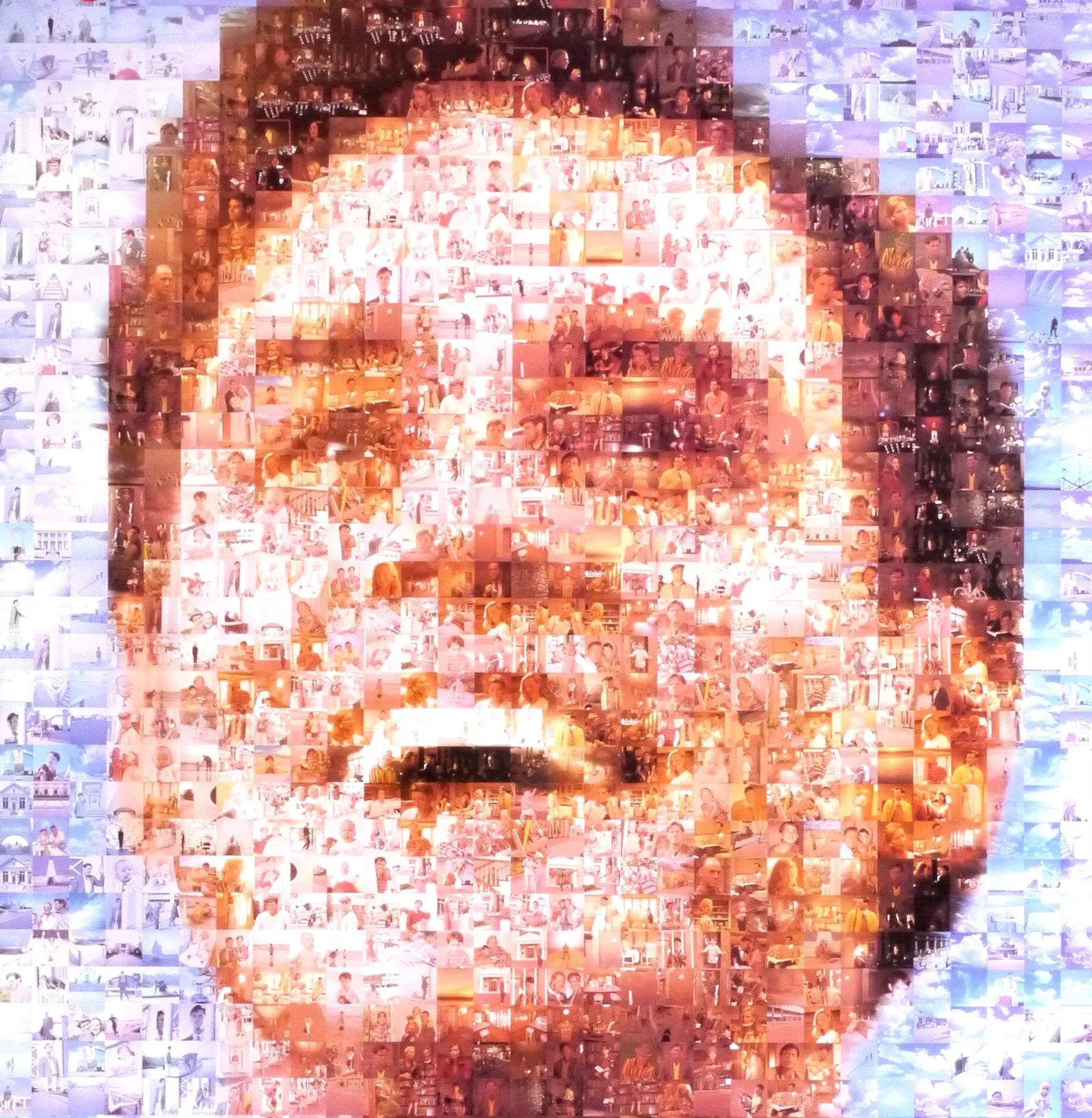
From the Aura to the Simulacrum: Benjamin, Baudrillard, and the Crisis of the Authentic
The concept of authenticity has entered a terminal crisis, traced directly from Walter Benjamin's localized loss of the Aura—the object's unique, verifiable material history—to Jean Baudrillard's total collapse into the Simulacrum and Hyperreality. This intellectual journey reveals why traditional critique is now insufficient to defend genuine value against perfect digital fidelity and pervasive systemic simulation.
This study positions the commitment to the One Original Principle, grounded in an affirmation of the physical object’s Material as Story, as the necessary structural defense against the informational entropy of duplication. By bypassing the limitations of 20th-century critique using Object-Oriented Ontology (OOO), we reclaim the unique, non-relational essence of the artifact, transforming it into a rebellious singularity that resists the totalizing logic of the hyperreal sign.