
The Architecture of Intent
A Critical Lexicon
This collection of studies is the intellectual architecture of Post-Luxury Conceptual Functional Art (PLCFA).
The true artistry of this Maison resides not in the finished form, but in the rigorous thinking that precedes it. These essays serve as the conceptual foundation for PLCFA, using a critical lens to interrogate cultural phenomena, art history, and consumer paradigms—analyzing everything from the ephemeral spectacle of luxury to the pure architectural rigor of abstract principles.
This is an invitation into the workshop of the mind. By sharing this process, we validate the necessity of a new category of value and invite you toward a well-considered life, one founded on true craft, uncompromising narrative, and durable meaning.
New to PLCFA? Begin with Essential Reading below.
Exploring a specific area? Navigate by category.
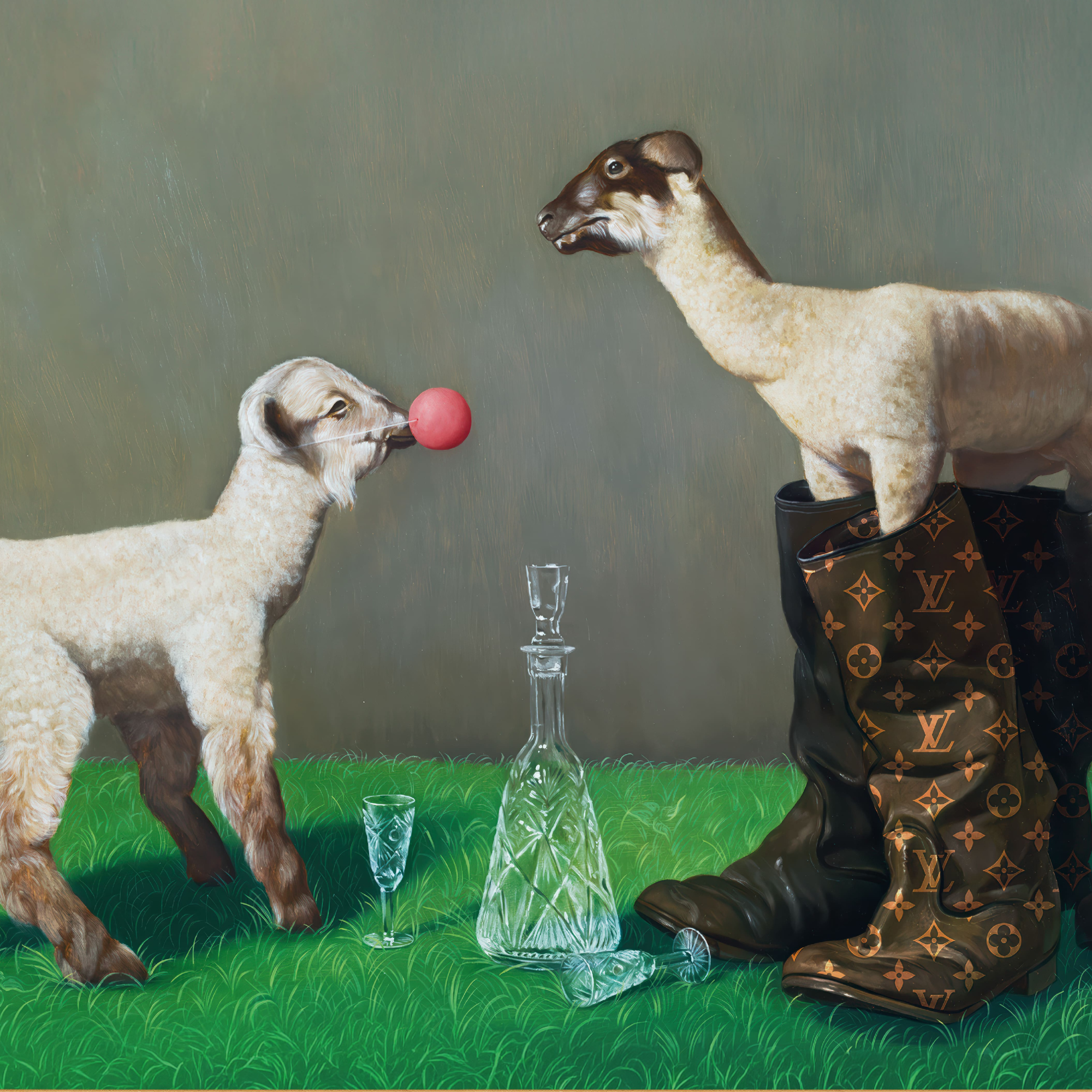
THE AURA TRANSACTION: On Louis Vuitton’s Super Nature, Nazar Strelyaev-Nazarko, and the Ethicsof What Gets Absorbed
On the evening of March 10th, 2026, the Cour Carrée of the Louvre became a fabricated mountain range where Louis Vuitton models climbed through the mist wearing hand-painted lambs in boots. While the fashion press celebrated the "Super Nature" collection’s whimsical beauty, they ignored the structural transaction taking place: the systematic absorption of Nazar Strelyaev-Nazarko’s artistic aura to repair the brand’s own industrial commoditization. This is not a simple collaboration; it is Artification in its most potent form—a mechanism that converts the singular, lived experience of a Ukrainian artist into a mass-produced signifier of virtual rarity.
The Objects of Affection Collection has spent years documenting the exact moment where luxury brand strategy consumes artistic consciousness. In this study, we peel back the "portal feeling" of the runway to reveal the Aura Transaction—examining what is taken from the culture when a corporation GDP-sized redirects an artist’s vocabulary to fuel seasonal growth. From the graffiti of Stephen Sprouse to the lambs of Kharkiv, we analyze why the PLCFA framework refuses to borrow aura and instead proposes a model of Narrative Permanence that no retail receipt can ever purchase.
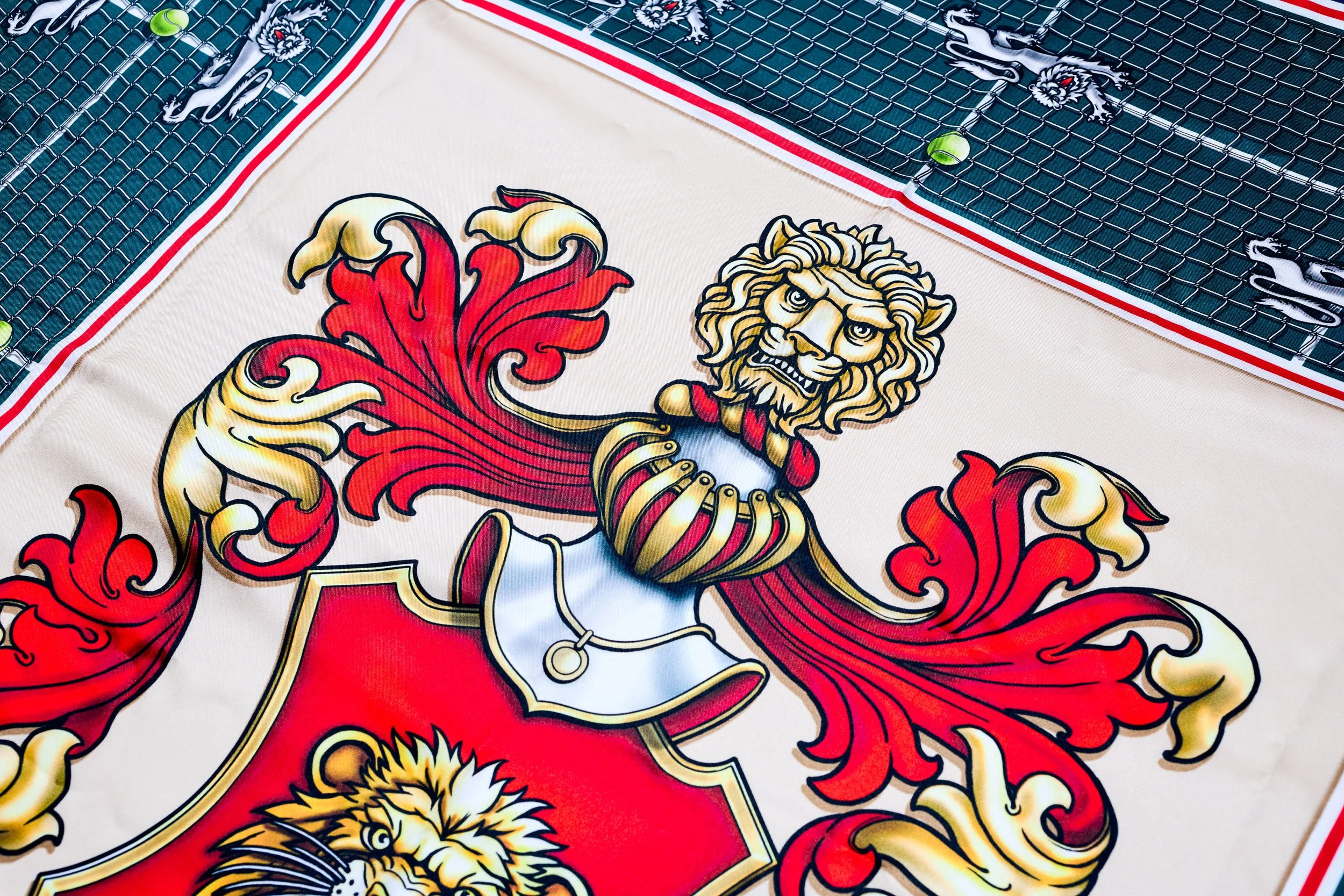
The Cost of Stewardship: Capitalizing on Patronage Validation and the Economics of Emotional Permanence
The Luxury Pyre and the Crisis of Meaning The twenty-first-century object exists in a state of profound ontological precarity. While industrial conglomerates sacrifice billions in "end-of-season burns" to protect their market price, the soul of the artifact has been systematically hollowed out—leaving behind a price tag without a narrative and a possession without a soul. This study diagnoses the existential fracture in the luxury market and proposes a radical correction: the rejection of the liquid asset in favor of the Burden of Preservation.
From Consumer to Cultural Custodian Utilizing The Court of Tenacity—a "One Original" commissioned for the leadership at Newfields—this inquiry formalizes Patronage Validation as the definitive metric for the post-luxury age. By merging the forensic documentation of Eric Lubrick with a 1,825-day Anti-Sale Covenant, we move beyond the vague aesthetics of "quiet luxury" into a precise economic framework. Discover how the Cost of Stewardship transforms a physical artifact into a site of resistance against the Archival Death Mandate, securing emotional permanence in a world of radical ephemerality.

The Algorithm of the Hand: Re-Centering Human Imperfection and Labor as PLCFA's Ultimate Materiality in the Age of AI Perfection
The Death of the Smooth: We are currently witnessing the seismic rise of the "Smooth Society," where AI perfection and digital twins have become the ultimate benchmarks of value. This transition represents a fundamental hollowing out of the human subject, replacing the "noise" of imperfection with frictionless, algorithmic production. In this landscape, the unblemished copy is hailed as the pinnacle, yet it leaves an ontological void where the moral weight of human labor once resided.
The Radical Gesture: Resistance lies in the antithesis—the visible, intentional struggle of the human hand. By examining the industrial alchemy of Carol Christian Poell and the "embroidered ephemera" of Alan Vilar, this study introduces the Moral Weight Per Material (MWPM) index. We argue that in an era of hyper-connected intelligence, the only true luxury is the "Scarred Object": a physical record of narrative permanence that refuses the erasure of biological and psychological history.
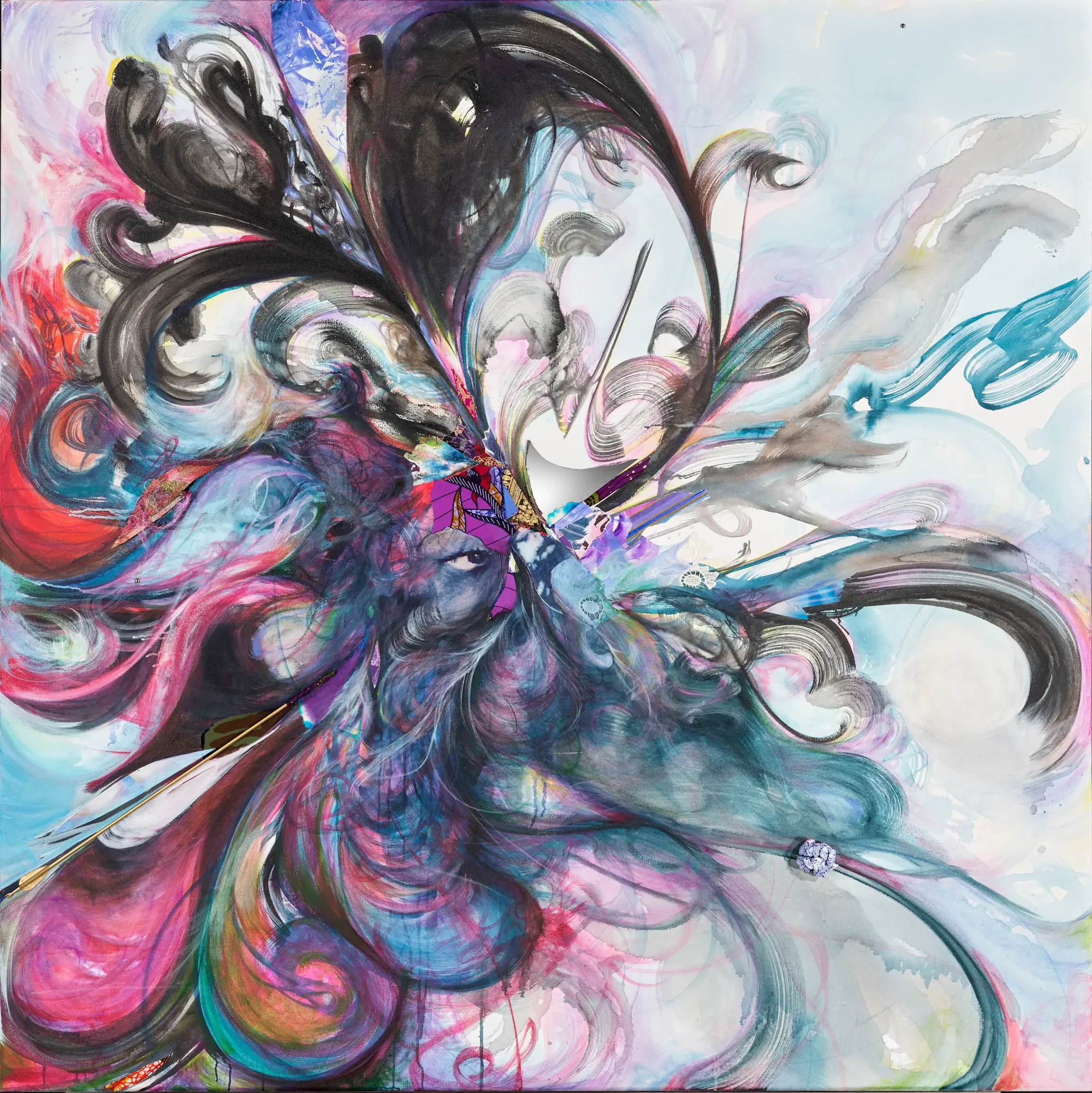
The Institutional Pivot: How Post-Luxury Conceptual Functional Art (PLCFA) Reconfigures Museology, Materiality, and the Decolonization of the Canon
The twenty-first-century museum object is undergoing a profound ontological crisis, burdened by the ethical demand to move beyond mere aesthetic preservation and actively advance social critique and justice. This strategic pivot is a direct institutional response to widespread fatigue with the accelerating disposability of the hyper-consuming society, positioning cultural memory and duration as necessary counterweights to material ephemerality. This study argues that to maintain relevance and integrity, institutions must radically shift their criteria of value, abandoning traditional metrics centered on financial provenance and aesthetic conformity. It is in this high-stakes context that the Post-Luxury Conceptual Functional Art (PLCFA) framework emerges as the precise semantic architecture required to guide this evolution, providing the critical vocabulary necessary to move institutional leaders toward philosophically rigorous action and away from vague, procedural reform.
The PLCFA framework serves as the definitive intellectual tool for navigating this transformation by explicitly rejecting the traditional luxury paradigm and instead situating value in permanence, intentionality, and narrative depth. This paper empirically demonstrates that major institutions are already adopting PLCFA principles through fieldwork conducted at the Newfields Indianapolis Museum of Art (IMA) during the Bold exhibition. By analyzing the curatorial strategy—specifically the move to dismantle gendered craft hierarchies and decolonize the material canon, as evidenced by the Shinique Smith acquisition and Robert Ebendorf's philosophy—the study demonstrates how the framework justifies the pivot to all stakeholders. Ultimately, PLCFA transforms the museum from a passive collector of exclusionary value into an active, democratic site for shaping inclusive public consciousness and ensuring the object's value lies not in its status, but in the enduring depth of its story.