
The Architecture of Intent
A Critical Lexicon
This collection of studies is the intellectual architecture of Post-Luxury Conceptual Functional Art (PLCFA).
The true artistry of this Maison resides not in the finished form, but in the rigorous thinking that precedes it. These essays serve as the conceptual foundation for PLCFA, using a critical lens to interrogate cultural phenomena, art history, and consumer paradigms—analyzing everything from the ephemeral spectacle of luxury to the pure architectural rigor of abstract principles.
This is an invitation into the workshop of the mind. By sharing this process, we validate the necessity of a new category of value and invite you toward a well-considered life, one founded on true craft, uncompromising narrative, and durable meaning.
New to PLCFA? Begin with Essential Reading below.
Exploring a specific area? Navigate by category.

What Happens When a Conceptual Art Program Builds Its Own Cognitive Infrastructure
The unique architectural design of the Objects of Affection Collection (OAC) fundamentally alters the relationship between critical theory and software engineering. Rather than deploying technology as an administrative afterthought, the institution treats cognitive infrastructure itself as a primary artistic medium governed by a proprietary critical framework. As mapped out in the system’s workflow schematic, five distinct live data streams—ranging from corporate market trajectories to real-time vocabulary appropriation press feeds—are continuously ingested into OAC Agent Command v6.6.4. This raw material is not merely aggregated; it is immediately subjected to a rigorous filtering process that ensures all incoming cultural signals are processed with deep theoretical intent.
At the heart of this sovereign apparatus lies a non-negotiable Constitutional Governance Engine, which actively forces the system to evaluate the world through OAC's 29-term proprietary lexicon and foundational institutional positions. From this central node, filtered data progresses through a multi-perspective dialectical synthesis protocol before being preserved inside a permanent, compounding cloud archive. This creates a highly functional, recursive cycle of meaning production: the published academic studies actively program the code, the code methodically processes contemporary culture, and the resulting intelligence output compounds the institution's historical memory. Ultimately, this infrastructure transforms the passive act of archival preservation into an active instrument of institutional foresight and cultural defense.
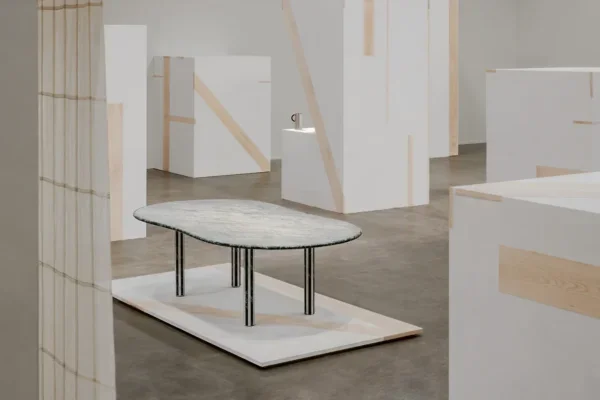
The Architecture of Absence: How Hermès Transformed La Pelota into the Most Precise Western Implementation of Ma Seen This Year
Every year, Milan Design Week produces one installation that the rest cannot replicate, and every year it is Hermès at La Pelota. For 2026, Charlotte Macaux Perelman and Alexis Fabry deployed plaster and beechwood volumes across the former Basque sports court in a loose grid — low blocks, raised elements, objects perched atop plinths as coordinates on a spatial map. The press called it a city of objects. OAC calls it something more precise: the most disciplined Western implementation of ma — the Japanese philosophy of productive emptiness — seen in any luxury presentation this year. Ma (間) is not minimalism. It is the recognition that the space between things is doing as much work as the things themselves. Hermès did not simply reduce. It constructed an argument out of absence, and that argument is what every other house at Salone could not make.
This study deploys the PLCFA framework to diagnose exactly how the architecture of the La Pelota installation functions as intellectual content rather than aesthetic preference — reading the grid through the lens of Semantic Burden, Zero-Sum Aura, Ceremonial Energy, and the Custodian's Contract. It asks why a privately held house with no quarterly earnings pressure consistently makes the spatial sacrifice that disclosure of meaning requires, and what that sacrifice reveals about the objects it surrounds. The conclusion is structural: the La Pelota installation works not because Hermès understands restraint, but because it understands that emptiness has a load-bearing function. The space is not scenic. It is the proof.
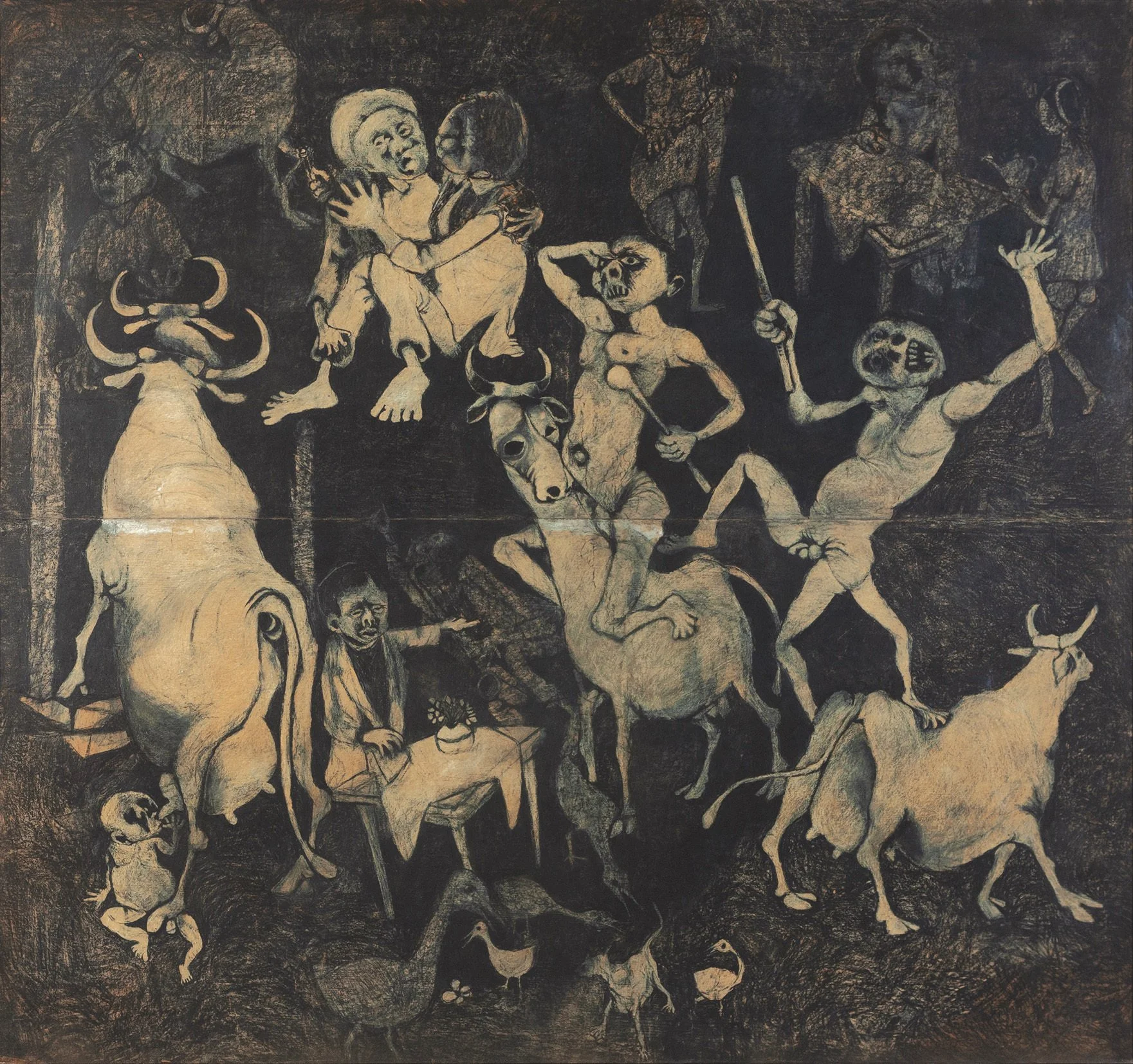
THE TYRANNY OF THE ARCHIVE
When Artnet announced a 13.3% surge in fine-art sales to $11.7 billion in 2025, the institutional apparatus celebrated a "recovery." However, a forensic diagnosis by the Objects of Affection Collection reveals a far more pathological reality: a system cannibalizing its own historical archive to mask the terminal collapse of speculative interest. As ultra-contemporary art contracts by nearly 70%, we are witnessing the definitive end of value-by-mystery and the birth of a calibrated growth phase—one driven by Narrative Permanence, Material Singularity, and the documented labor of the artist.
The Tyranny of the Archive ends here. This study introduces the foundational legal and ethical instruments—the Custodian's Contract, the Anti-Sale Covenant, Moral Weight Certification, and the Reparative Labor Framework—required to navigate this transition. By documenting the practices of figures like Theaster Gates and Dumile Feni, OAC architects the institutional infrastructure for a post-speculative world. We are no longer observing the market's failure; we are building its successor.

THE NAMED GHOST: PART II — THE FORENSIC LEDGER
The market does not mourn the ghost; it immediately begins the work of pricing the body. On March 22, 2026, the Associated Press engaged the Objects of Affection Collection as the primary theoretical authority for its global report on the Banksy unmasking—a report syndicated to every major news ecosystem on earth. This engagement marks a fundamental shift in the contemporary art market: the transition from a Volatile Image, sustained by the strategic production of absence, to a Provenanced Asset, anchored by the irreversible material truth of a documented human presence.
Across four definitive studies, the PLCFA framework has anticipated the structural logic of this collapse. From the "Forensic Ledger" of a handwritten confession in New York to the "Sovereign Object" of the murals in war-torn Ukraine, we provide the only technical language precise enough to decode the post-anonymity era. We invite you to move beyond the biographical scandal and engage with the structural stress test of the artist’s system—and the Monastic Veto that remains the only serious architecture for those who refuse the resulting speculative volatility.

THE WRONG FACE: On the Reuters Fact-Check, the London Man Misidentified as Banksy, and What the Collateral Damage of an Unmasking Reveals About the Market for Certainty
The Reuters investigation of March 2026 did more than name a man; it released a Semantic Burden that had been pressurized for thirty years within the vacuum of anonymity. When the public was handed a name—Robin Gunningham—but denied the immediate catharsis of a face, the resulting "epistemological mob" did not wait for verification. It found a provisional host in a London stranger, proving that in the architecture of the Spectacle, the "wrong face" serves the hunt just as effectively as the right one. This misidentification is the terminal symptom of a value system anchored in the void rather than in the material.
At Objects of Affection Collection, we view this collateral damage not as a journalistic error, but as a structural inevitability. Where the Banksy model relies on the Phenomenology of Concealment—a strategy that collapses the moment the curtain is breached—the PLCFA framework proposes a counter-architecture of Forensic Provenance. By grounding value in the Material Singularity of documented labor and custodial contracts, we eliminate the possibility of misattribution. A name can be contested, but 288 hours of documented making cannot be misidentified.
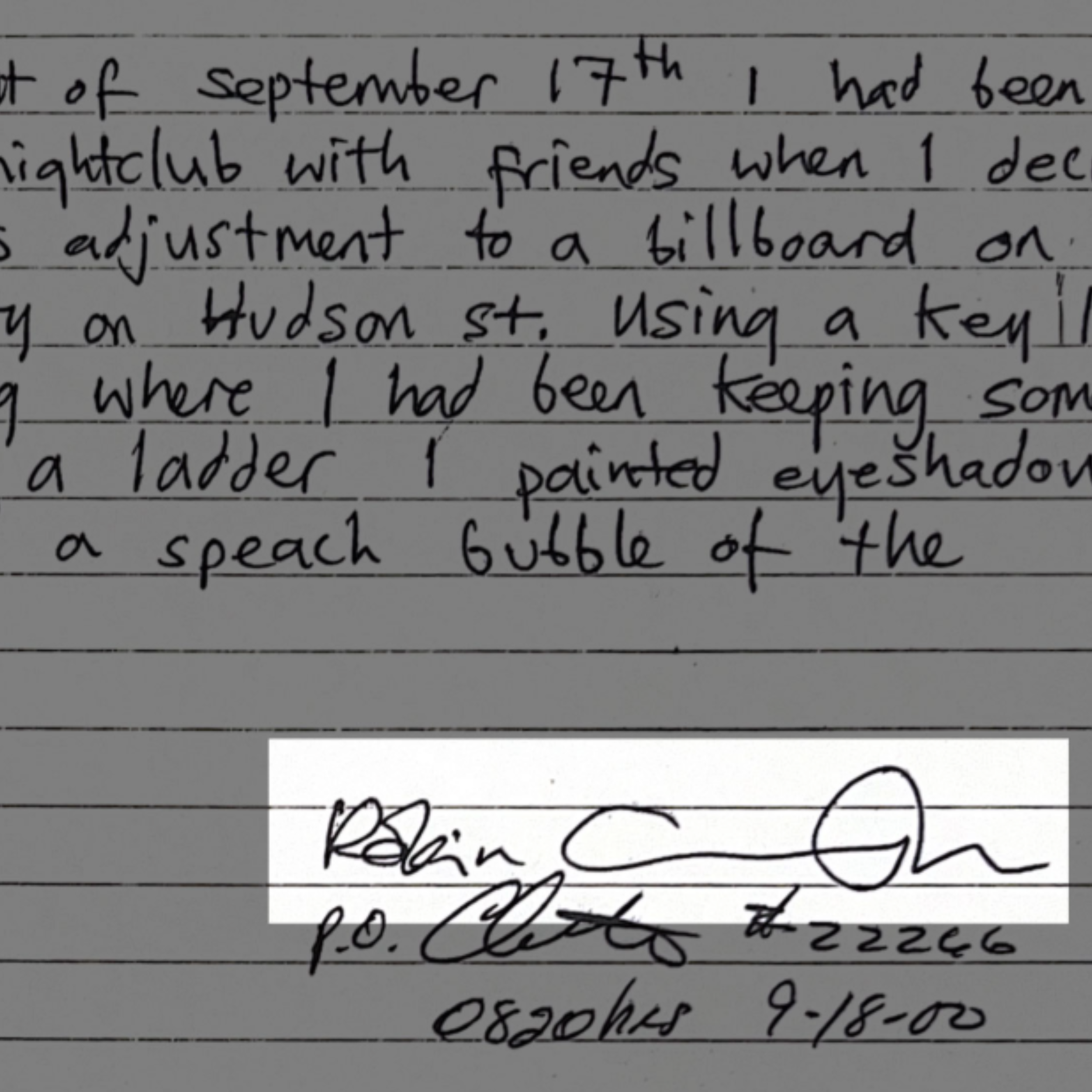
THE NAMED GHOST: On the Reuters Unmasking of Banksy, the Ontological Value of Anonymity, and What It Means When the Market's Most Profitable Secret Becomes a Name
The Reuters investigation of March 13, 2026, has done the unthinkable: it has replaced the industry’s most profitable enigma with a paper trail. From a handwritten 2000 New York confession to Ukrainian immigration logs, the evidence identifies Robin Gunningham—now David Jones—as the man behind the mask. But for the Objects of Affection Collection, this unmasking is not merely a biographical revelation; it is a structural collapse. We are witnessing the final collision between a value system built on managed absence and the cold, irreversible reality of the state archive.
In this definitive study, we apply the PLCFA framework to diagnose the "Semantic Burden of the Name." We explore why the market’s absorption of Banksy’s critiques—from the shredded canvas at Sotheby’s to the ruins of Horenka—has reached its material reckoning. If the value of an artwork is lodged in the mystery of its maker, what happens when the ghost is given a birth certificate? Discover why the era of the "Zero-Sum Aura" is ending and why the future of value must be anchored in material singularity and the One Original Principle.
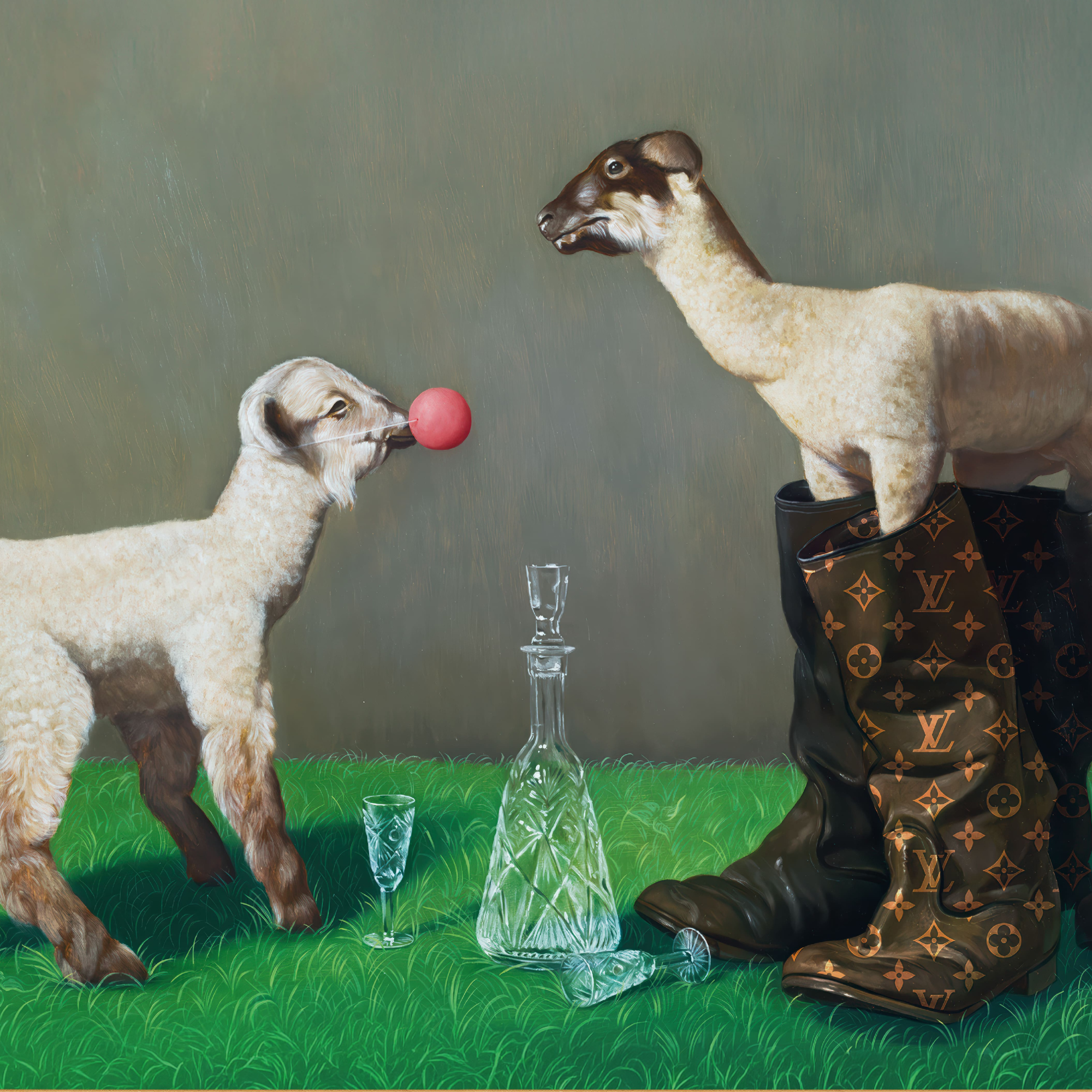
THE AURA TRANSACTION: On Louis Vuitton’s Super Nature, Nazar Strelyaev-Nazarko, and the Ethicsof What Gets Absorbed
On the evening of March 10th, 2026, the Cour Carrée of the Louvre became a fabricated mountain range where Louis Vuitton models climbed through the mist wearing hand-painted lambs in boots. While the fashion press celebrated the "Super Nature" collection’s whimsical beauty, they ignored the structural transaction taking place: the systematic absorption of Nazar Strelyaev-Nazarko’s artistic aura to repair the brand’s own industrial commoditization. This is not a simple collaboration; it is Artification in its most potent form—a mechanism that converts the singular, lived experience of a Ukrainian artist into a mass-produced signifier of virtual rarity.
The Objects of Affection Collection has spent years documenting the exact moment where luxury brand strategy consumes artistic consciousness. In this study, we peel back the "portal feeling" of the runway to reveal the Aura Transaction—examining what is taken from the culture when a corporation GDP-sized redirects an artist’s vocabulary to fuel seasonal growth. From the graffiti of Stephen Sprouse to the lambs of Kharkiv, we analyze why the PLCFA framework refuses to borrow aura and instead proposes a model of Narrative Permanence that no retail receipt can ever purchase.
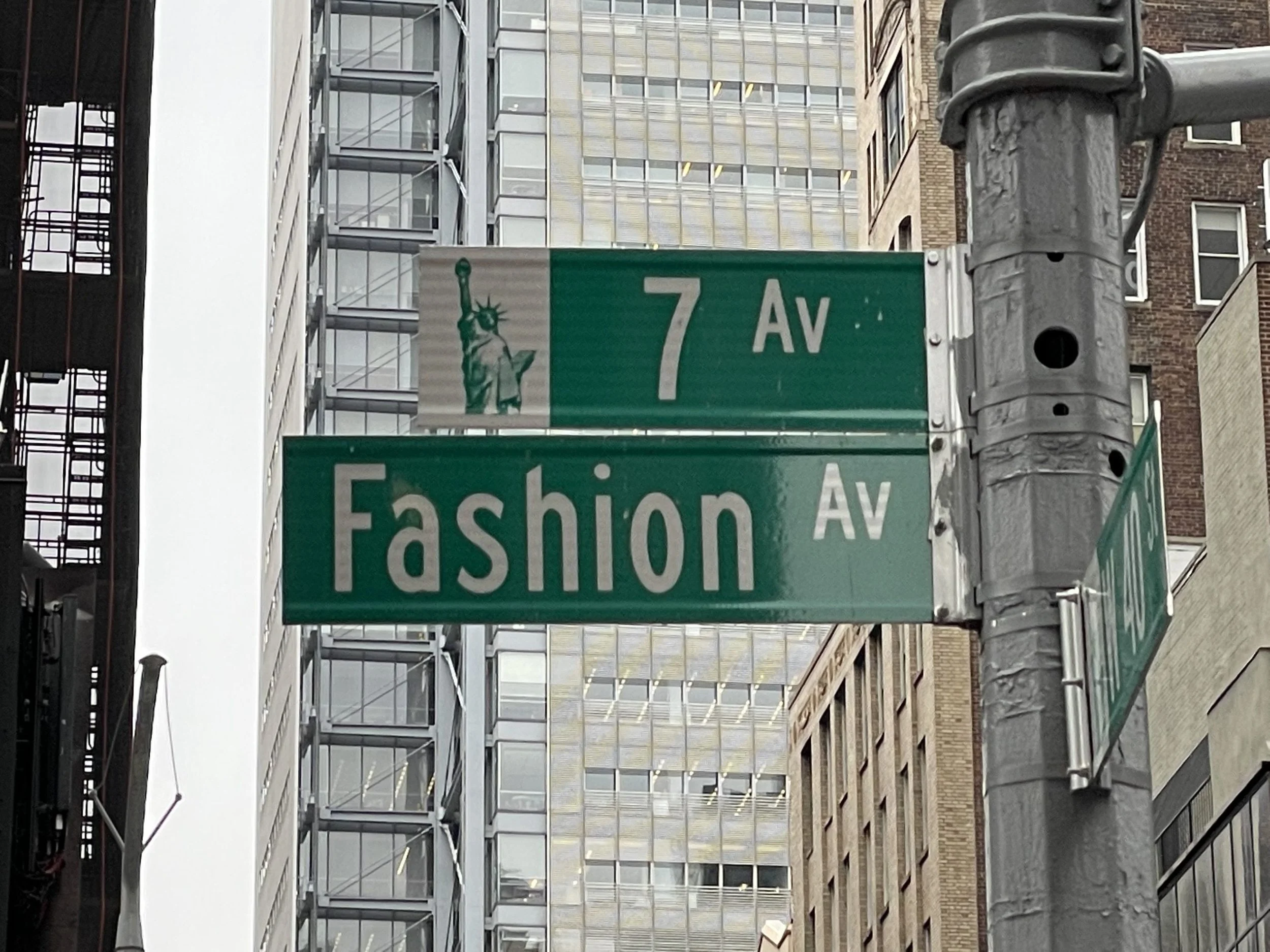
Finding the Heart: Objects of Affection Collection Comes Home to 469 Fashion Avenue
The luxury industry has spent the last decade selling us the simulation of quality while stripping the object of its soul. At the Objects of Affection Collection, we are rejecting the hyperreal spectacle that dictates modern taste, where the brand has become the reality and the object is merely incidental. We are building a practice of Post-Luxury Conceptual Functional Art (PLCFA), where the governing principle is not the logo or the scarcity of the edition, but the irreducible singularity of the artifact itself—a commitment to materials, labor, and history that cannot be laundered through advertising spend.
Our move to 469 Fashion Avenue is not a real estate strategy; it is a declaration of independence from the disposable. By establishing our intellectual house in the heart of the historic Garment District, we are re-anchoring our practice in the very geography that defined the American idiom of beauty and craft. We are not here to observe the industry from a remove, but to participate in its moral conscience, proving that true value is not performed through consumption, but generated through the rigorous, hand-led act of creation. This is where we work. This is our home.

Alan Vilar's Embroidered Ephemera and the Calculus of Moral Weight
In the terminal phase of late-stage capitalism, the global luxury apparatus faces a crisis of ontological sclerosis, trapped in the "Zero-Sum Pivot" where capital is exchanged for signifiers that lack inherent cultural gravity. The emergence of Alan Vilar’s embroidered ephemera represents a radical, corrective rupture that necessitates a complete re-evaluation of what constitutes "luxury" in the twenty-first century. Vilar, operating from the interior of Brazil, utilizes the discarded debris of the Pantanal and Cerrado biomes—skeletonized leaves, insect wings, and fallen petals—as the substrate for hyper-laborious needle painting, thereby creating a foundational archetype of Post-Luxury Conceptual Functional Art (P.L.C.F.A.). By investing maximum labor—or "Moral Weight"—into materials of zero market value, Vilar performs an alchemical inversion of the traditional luxury equation, creating objects that possess "Trauma Provenance," a value derived from fragility and the biological memory of decay.
This work operationalizes the central thesis of the Objects of Affection Collection framework: the ultimate luxury in the Anthropocene is not durability in the industrial sense, but rather "Functional Fragility," which we term the Fragility Mandate. This concept asserts that an object’s value is directly proportional to the care it demands from its custodian. Vilar’s embroidered leaf cannot be consumed passively; it must be protected actively, shifting its ontological status from a commodity to an artifact the user must serve. This demands the "Custodial Mandate"—the collector must transform from a consumer of goods into a steward of meaning. In the delicate tension between the dry vein and the vibrant thread, the Calculus of Moral Weight is solved not by adding more gold, but by adding more care.

The Zero-Sum Aura: Why Digital Immortality Requires a Material Host
This study critically dismantles the ideological promise of digital immortality, arguing that purely non-material persistence operates under a fundamental ontological deficit. Tracing the crisis from Walter Benjamin's critique of the withering Aura through Jean Baudrillard’s Pure Simulacrum, we establish the condition of the Zero-Sum Aura: any gain in digital reproducibility is met with a corresponding, systemic collapse in the artifact's singularity and intrinsic worth. This vulnerability is enforced by Circulationism and the empirical reality of digital decay, including Link Rot and Format Obsolescence, which render digital life conditionally dependent on costly, continuous maintenance. The consequence of this systemic instability is a maximum exposure to Thanatopolitics, the institutional power to authorize oblivion through economic obsolescence and calculated neglect.
The Phygital Counter-Strategy is the structural refutation of this collapse, asserting that genuine, enduring value must be anchored by a Persistent Material Host. Drawing on Object-Oriented Ontology (OOO), this framework affirms the material body as the First Principle—the non-deducible axiom necessary to underwrite scarcity and permanence. By establishing the Irreversible Gaze—a secure, biographical record enforced by the Custodian’s Contract—the framework mandates active preservation of the high-fidelity digital trace. Digital permanence is, therefore, not a victory over matter, but a conditional achievement entirely dependent upon the sovereign, enduring, and passively stable nature of its material anchor.