Smithsonian Heritage Erasure & Museum Heists: Institutional Necrophagy of Culture Exposed
On the report that called a museum a weapon, the crystal that could not be melted, and the two ways a culture learns to eat its own objects.
The Smithsonian Institution spent the weekend of America’s 250th birthday accused, in a 162-page federal document, of erasing the nation’s heritage. Three thousand miles away, thieves walked out of a small Alsatian museum before dawn with roughly four million euros of glass. The museum jewelry theft and the Smithsonian heritage controversy surfaced in the same morning’s art headlines, and nearly every reader filed them as unrelated: one a fight about American politics, the other a matter of cultural heritage preservation and museum security. This study argues they are the same story told twice. Both are episodes of Institutional Necrophagy: the process by which an institution’s objects are consumed, rhetorically or physically, until only a Hollowed Object remains. The report feeds on Narrative Permanence; the heist tests Material Singularity. Between the two stands the Custodial Mandate and its unglamorous twin, the Burden of Preservation.
The Correction: A Signal Is Not a Rumor
The OAC method requires that a study correct its own counsel in the open, because concealment is the one thing the method forbids. The pre-loaded arena that reached this desk argued the entire subject in the conditional. “If the reported events are true.” “If the subject exists as described.” One agent stated flatly that “no matching press is found” for these claims. That was a failure of retrieval, not a fact about the world. Both events are documented in detail: a named 162-page report from the White House Domestic Policy Council, led by Vince Haley, published July 4, 2026; and a theft at the Lalique Museum in Wingen-sur-Moder, valued at roughly €4 million across some twenty objects, reported by Le Monde and AFP. A study cannot inherit a frame that treats a completed event as a maybe.
The second correction cuts harder, because it inverts a premise the council leaned on. Several agents assumed the stolen jewelry would be melted, laundered, and injected into illicit markets as pure Speculative Velocity: price “decoupled entirely from material or cultural value.” The primary record says the opposite. The stolen pieces are René Lalique crystal. They contain no precious stones. They cannot be melted down, recut, or dissolved into fungible material. Their thief has stolen objects that are only ever themselves. This does not weaken the OAC thesis; it hands it a perfect specimen.
The theft of an object that cannot be melted is not a bet on its price. It is a wager against Material Singularity, and Material Singularity is what wins.
Two Ways to Eat an Object
Institutional Necrophagy has always had two mouths. The first is rhetorical: an object’s meaning is consumed when its custodian’s narrative is declared illegitimate, so that the thing survives physically while its story is hollowed. The second is physical: the object is forcibly removed from its custodian, so that the story survives while the thing is gone. July 2026 delivered one clean instance of each, in the same news cycle, as if to diagram the framework. The report performs the first operation on American history. The heists perform the second on French decorative art. Read together, they show that a culture need not burn its museums to lose them. It can talk the objects hollow, or it can carry them out the door, and the cultural heritage ends up equally consumed.
This is the competitive position the pack correctly identified, though it misstated the reason. The reporting on both events is abundant; the New York Times, CNN, Le Journal des Arts all covered them within hours. What is unoccupied is not the description but the diagnosis: nobody else is reading the report and the robbery as a single grammar of consumption. The instinct to keep them apart is itself the symptom: the belief that a museum’s meaning and a museum’s inventory are governed by different departments, answerable to different anxieties, when in fact they are the two halves of one duty. Separate them, and each half becomes easy prey: the story to whoever holds the microphone, the object to whoever holds the crowbar.
The Report as Rhetorical Necrophagy
The document is titled, without irony about the word, “Saving America’s Story: How Ideological Capture at the Smithsonian Institution’s National Museum of American History Erases Our Heritage.” It accuses the National Museum of American History of drifting from “straightforward historical education” toward “extreme political activism,” and names the museum’s director, Anthea Hartig, as promoting “an ideological agenda contradictory to the museum’s founding purpose of fostering patriotism.” The Smithsonian’s reply was brief: “For more than 180 years, the Smithsonian has served the American public with nonpartisan and independent scholarship, and we remain committed to doing so.”
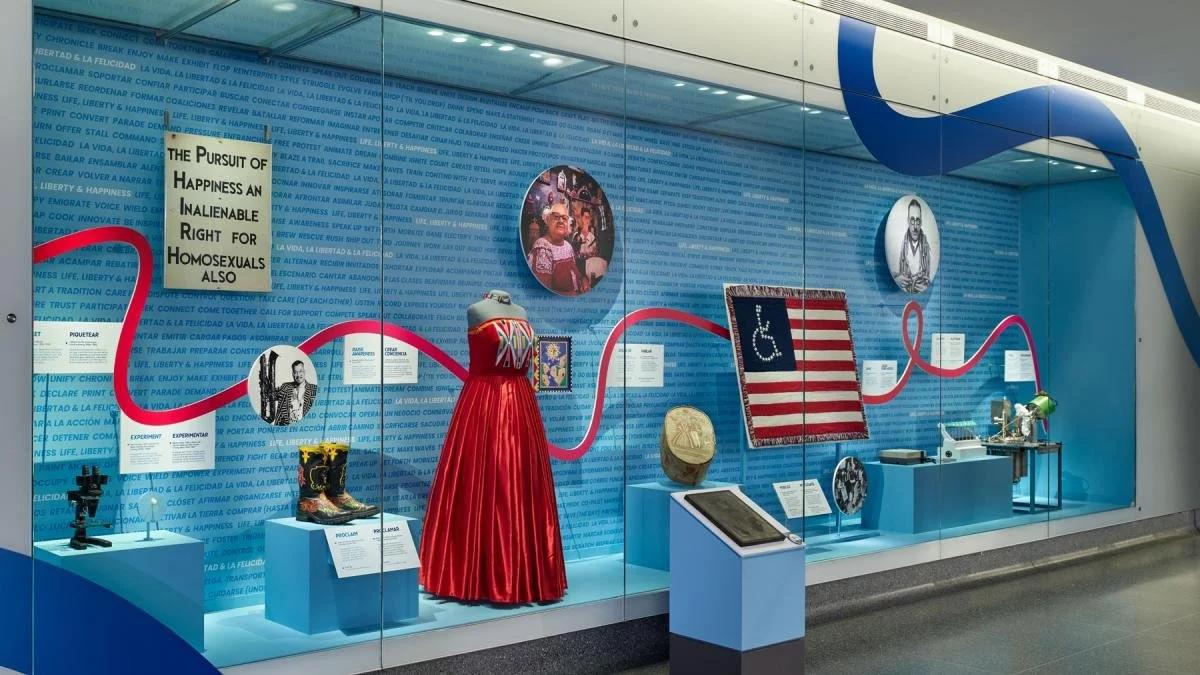
OAC takes no side in that dispute, and it is not the study’s business to adjudicate whether a given wall label is too celebratory or too critical. The structural fact is more interesting than either political claim. The word "doing the work" in the report’s own title is erasure: a charge of Heritage Erasure. And erasure is precisely the accusation that critics of the report level back at it. Each side says the other is consuming the nation’s Cultural Custodianship. This is not hypocrisy on anyone’s part; it is the mechanism's signature. When “heritage” becomes a term that both sides deploy as a weapon, the museum has already been converted from a custodian into contested territory: a case OAC has traced before in its reading of Institutional Lexical Hijacking.
When both parties to a fight accuse each other of erasing heritage, the object under discussion has already stopped being a possession and become a battlefield. That is the first bite.
Heritage as a Contested Instrument
The point deserves a fair hearing on both sides, because the study’s value depends on not flattening it. The report’s defenders argue, sincerely, that a national museum funded by all citizens owes them a story capacious enough to include pride, and that a relentless emphasis on “regret, tragedy and shame” is itself a form of narrative capture. The report’s critics argue, just as sincerely, that a history museum which sands off slavery, exclusion, and conquest to protect a patriotic mood is the one actually erasing the record. Both positions treat Americana as something that can be either preserved or hollowed by curatorial choice. Neither is wrong about the stakes.
What OAC adds is the observation that a museum cannot be governed by mood on either side without ceasing to be a custodian. The moment its narrative is set by decree, whether the decree is celebratory or penitent, the institution has surrendered custodianship for advocacy. This is the same architecture OAC diagnosed when a sitting president tried to rename a cultural institution outright, in the study of the Kennedy Center and the theft of aura. The lever is different: a report rather than a name, but the fulcrum is identical: control the narrative, and you have quietly annexed the object. It is Weaponized Bureaucracy aimed at Narrative Permanence itself.
The Crystal That Cannot Be Melted
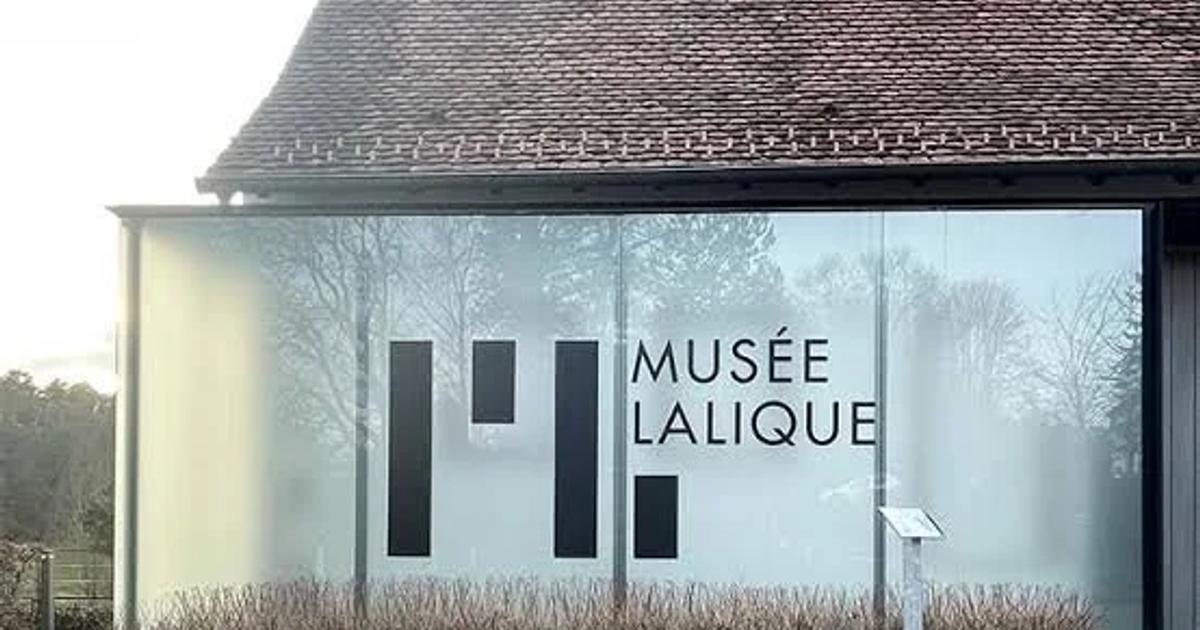
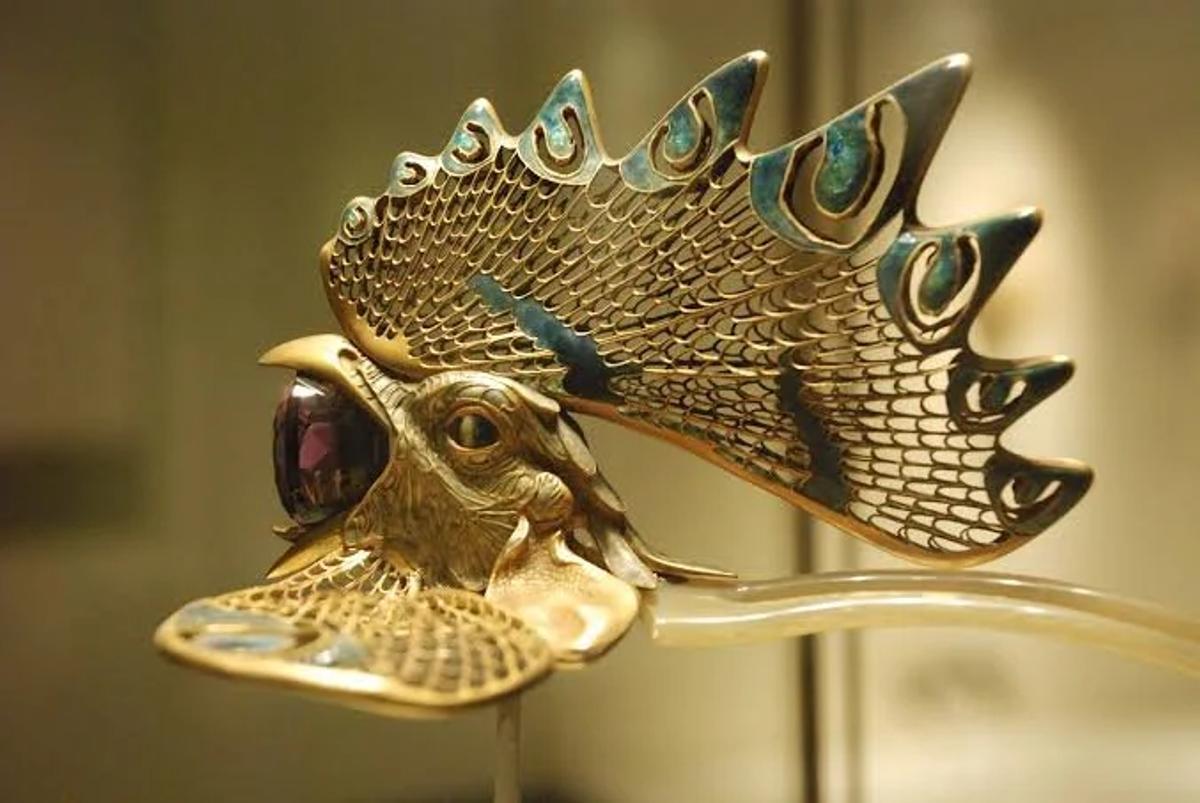
Now the second mouth. Early on a Sunday, thieves forced a door at the Lalique Museum, smashed six vitrines, and left with about twenty works before the alarm produced any human response. The security company’s checks were still underway when a cleaning worker arrived and called the police. The loss was put at nearly four million euros. And here the material facts are the argument. Lalique’s genius was to make luxury out of glass rather than gems, to invest crystal with the value that the market usually reserves for carbon and metal. Which means the stolen objects have almost no resale value. They cannot be broken to their materials, because their materials are worth nothing broken. They cannot be sold intact because, intact, they are unmistakably the stolen Laliques.
The Aura Transaction that a theft normally performs, converting a famous object into anonymous, spendable value, fails at the vitrine. What the thieves carried out was Material Singularity in its purest, most inconvenient form: an object so completely itself that possessing it confers no liquidity at all. The crime reveals the very property OAC keeps insisting upon, even as it tries and fails to negate it.
An object you cannot melt and cannot sell is an object the market cannot digest. The Lalique thief has stolen a hostage, not an asset.
The Louvre Precedent and the Fungibility Test
The contrast with October’s Louvre heist is the whole lesson. There, thieves took eight pieces of the French crown jewels, valued at nearly €88 million: gold settings and cut gemstones, objects designed, at the material level, to be reducible. Stones can be recut and re-certified; gold can be melted to bullion that remembers nothing. That fungibility is what makes gem theft a viable business and what makes those objects, in OAC terms, always already halfway to being Hollowed Objects: their Provenance is a thin film over a spendable core. The Lalique crystal has no such core. It is provenance all the way down.
So the two French thefts, months apart, run an unintended experiment in Speculative Velocity. The crown jewels accelerate; the crystal cannot. One object class is built to dissolve into market abstraction, the other to resist it. This is exactly the fault line OAC drew in its foundational reading of Institutional Necrophagy and object permanence: the more meltable the object, the more consumable the culture that holds it.
Security as the Physical Face of the Custodial Mandate
There was a third theft that week, largely unremarked: at the Centre archéologique du Montans, in France’s southwest, robbers took a clay vessel of ancient Gallic and Roman coins from a museum that had no video surveillance and had merely “planned” to install some. The Lalique, for its part, had been flagged for a security review after the Louvre and was found to have protections that a source called “not sufficient.” The pattern is not a run of bad luck. It is the Burden of Preservation being quietly declined: the recognition that museum security is not an operational afterthought but the physical body of the Custodial Mandate, and that a museum which underfunds its locks has already begun to abandon its objects.
This is where the two mouths of necrophagy meet. A report that consumes a museum’s narrative and a budget that neglects a museum’s alarms are the same abdication in different registers. Both treat the institution’s duty as negotiable. Both leave the Sovereign Object exposed: to rhetoric on one side, to a crowbar on the other. OAC has watched physical custody fail before, in its reading of Eileen Gray’s E.1027 and the trauma of vandalized heritage; the Montans vase is the same wound with the surveillance camera still in its box.
Who Owns the Story, and Who Guards the Thing
The deepest tension the council surfaced was whether the real crisis is material loss or the erosion of institutional aura. The July evidence resolves it: the crisis is that we have separated the two questions at all. The Smithsonian fight is conducted as though the museum’s objects were safe and only their meaning were at risk. The French thefts are treated as though the objects mattered and their meaning were incidental. But an object’s meaning and its matter are a single custodial obligation. To guard the thing while surrendering its story is to preserve a Hollowed Object. To defend the story while losing the thing is to keep a caption with nothing beneath it.
This is why OAC refuses the partisan framing on offer. The questions “does the Smithsonian erase or preserve heritage?” and “how did twenty Laliques leave the building?” are the same question about the Custodian’s two-part contract: keep the object, and keep it legible. A culture that cannot do both at once will lose its heritage twice, once to argument, once to theft, and call each loss by a different name.
Narrative Permanence and Material Singularity are not two obligations. They are one obligation seen from two sides, and an institution that honors only one has already failed both.
The Museum as a Body With Two Wounds
By the end of that week the objects were, in a strict sense, fine. The exhibits at the National Museum of American History still hung on their walls. The Lalique crystal still existed somewhere, unmeltable, unsellable, waiting. Nothing had been destroyed. And yet a report had tried to consume a museum’s right to tell its own story, and a crowbar had consumed another museum’s ability to keep its own things, and both institutions were a little more hollow on Monday than they had been on Friday. That is what Institutional Necrophagy looks like when it is working properly: no smoke, no ruin, just an object still present and a custody quietly gone. The Custodial Mandate is the only answer to either wound, and it is indivisible. You cannot melt the crystal, and you should not be able to melt the story. The whole task of a museum is to make sure that neither can be done, and to notice that they are, always, the same refusal.
A culture keeps its heritage the way a museum keeps its glass: only by refusing, at once, to let it be melted or rewritten.
Authored by Christopher Banks, Anthropologist of Luxury, Critical Theorist & Founder Objects of Affection Collection Office of Critical Theory & Curatorial Strategy 469 Fashion Avenue, 12th Floor, New York, NY 10018
Related OAC Studies
For readers approaching this study from adjacent angles, the following studies extend its argument across the framework:
The Framework of Consumption: Institutional Necrophagy: How Speculative Velocity Destroys Object Permanence and What the Custodian’s Contract Must Do About It
Political Control of Cultural Institutions: The Name That Couldn’t Stick: How the Attempt to Rename the Kennedy Center Exposed the Architecture of Aura Theft
Museums, Heritage, and Repatriation: Bayeux Tapestry British Museum Demand: Institutional Necrophagy’s High-Velocity Display
The Weaponized Vocabulary of Heritage: Institutional Lexical Hijacking: How Mass-Market Luxury Launders Post-Luxury Vocabulary
Custody, Damage, and Trauma Provenance: Eileen Gray E.1027: Le Corbusier’s Vandalism and the Trauma Provenance Deconstructed