The Sculpture Represents Nothing. Its Maker Said So First.
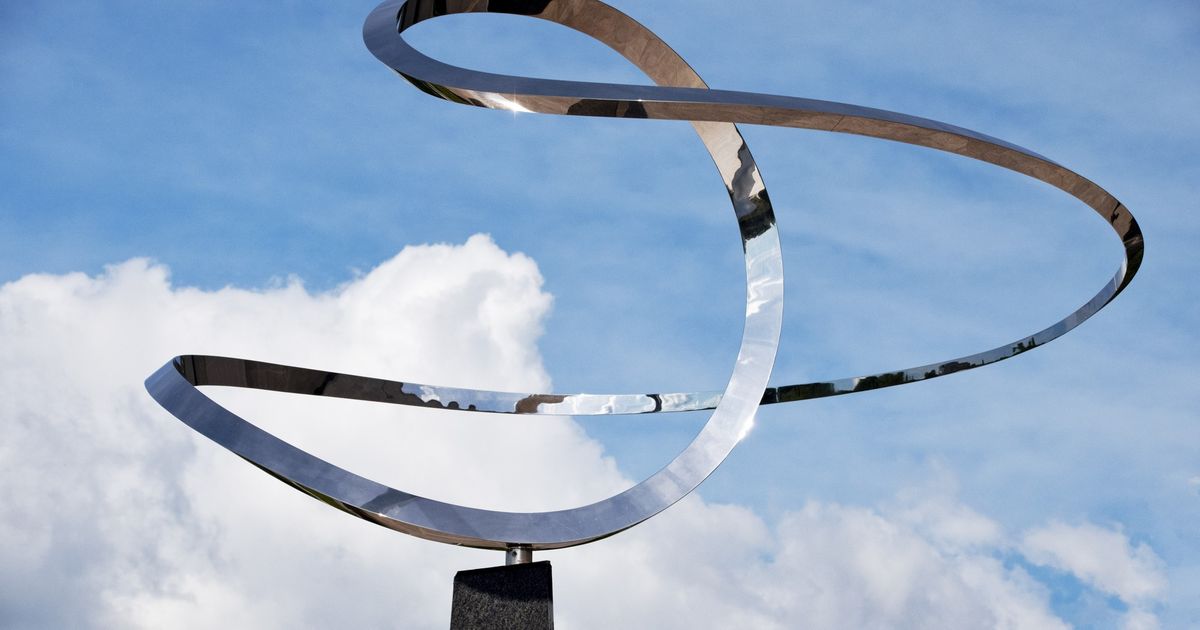
On the night of 11 September 2026 the President of the United States posted that a sculpture outside the National Museum of American History should be replaced with a thirty-foot statue of George Washington. He called it the so-called Infinity sculpture, and then: “That strange modernist sculpture tells visitors nothing about America, inspires no one, and honors none of our Great American Heroes.”
Three days earlier the Secretary of the Smithsonian had announced he was leaving. A week before that, two members of the administration had written to the Smithsonian's Board of Regents to say that federal agencies could no longer, in good conscience, support the institution under its current leadership.
This study is about what those three dates do to a record. It starts with the sculpture, because the sculpture's own maker agreed with the President about the first half of that sentence, and said so seventy years earlier.
What stands at the door
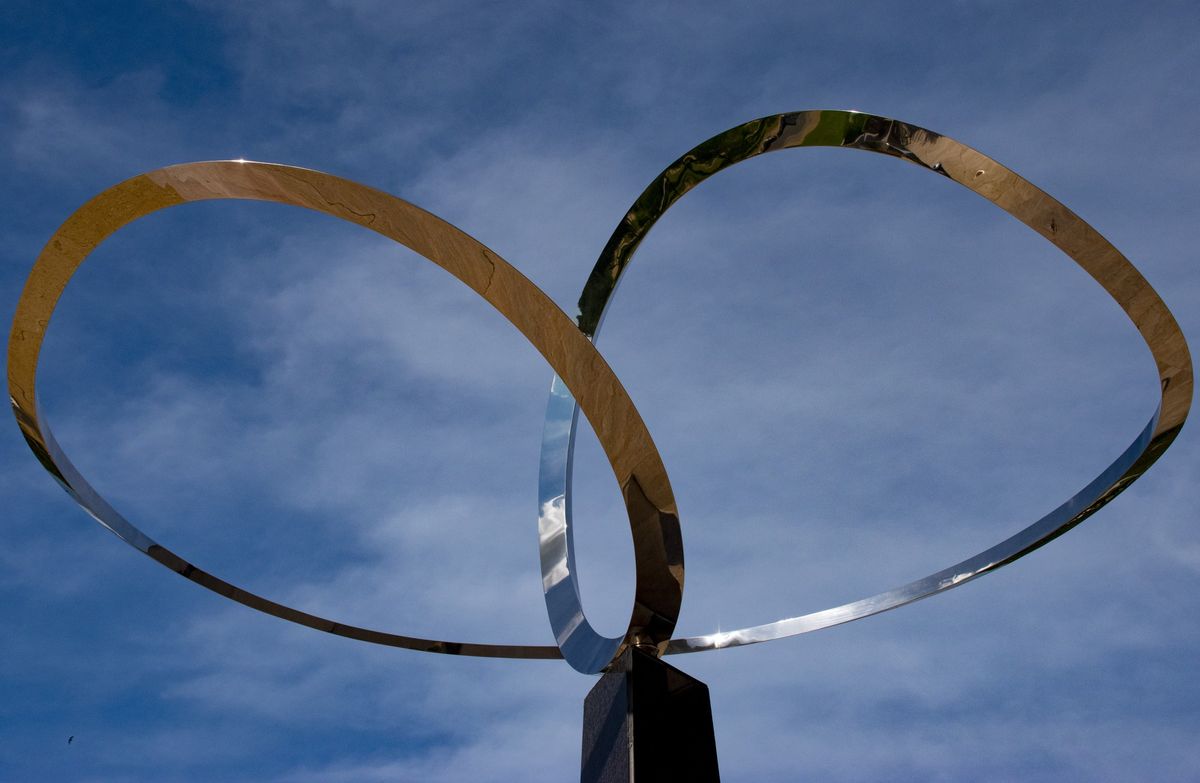
Infinity was commissioned by the General Services Administration in 1965, for $104,520, under the Art-in-Architecture program begun in the Kennedy administration. José de Rivera built it over two years in a Long Island studio with the sculptor Roy Gussow, out of eight hundred pounds of threaded rod and stainless steel plate, and in March 1967 he watched a crane lower it onto a black granite base outside the Mall entrance of what was then the National Museum of History and Technology. It is sixteen feet across. It turns once every six minutes. It was the first federally commissioned work of abstract art to stand on the National Mall.
All of that is in an essay the museum's own curator of engineering, David Shayt, published in 2008 in Curator: The Museum Journal, and it is worth knowing that the essay exists before going further, because it is the record this study is about.
De Rivera was asked, over and over, what the thing meant. His answer, given in 1956 about everything he made: “What I make represents nothing but itself.” And in 1967, the year it went up: “When I make an abstract sculpture, I give it an abstract name. Then they can discuss it all they want.”
Two men who agree
Set the two sentences beside each other.
The sculptor, 1956: what I make represents nothing but itself.
The President, 2026: that strange modernist sculpture tells visitors nothing about America.
They agree. Both say the object stands for nothing outside itself. The sculptor said it first, said it on purpose, and built the thing so that it would stay true. Seventy years later the same fact is offered as the reason to take it down.
So the disagreement is not about what Infinity means. It is about whether a museum may keep, at its front door, an object that means nothing but itself. That is a question about the institution and not about the sculpture, which is why the order of the three dates matters more than any one of them.
The custodian moves
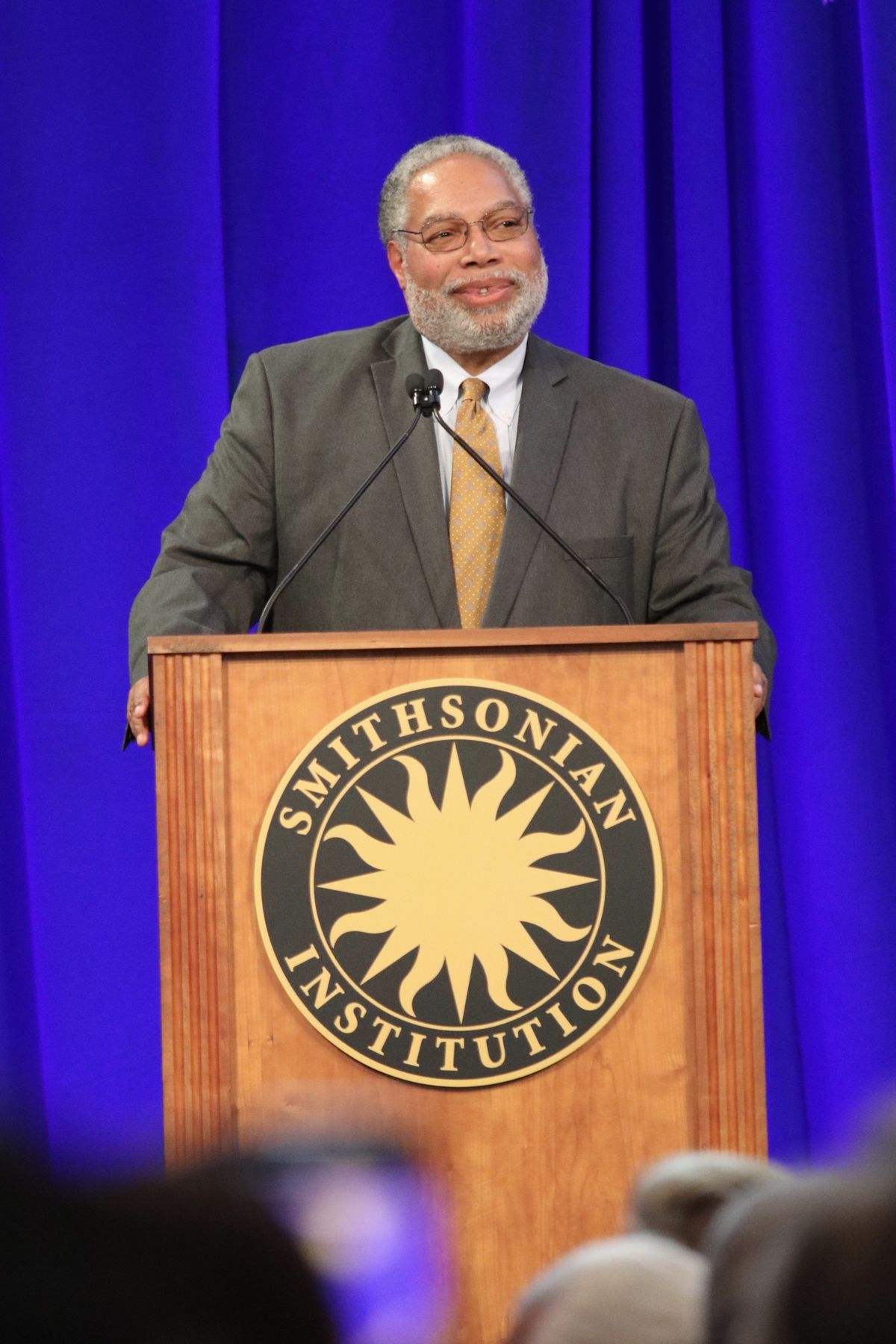
On 8 September the Smithsonian announced that Lonnie G. Bunch III, its fourteenth Secretary, would retire at the end of the year. He first joined the institution in 1978. He spent eleven years building the National Museum of African American History and Culture from no building, no collection, no funding and a staff of one, and seven years as Secretary, the first historian to hold the post. Nearly thirty-eight years in all.
His statement: “It is with very mixed emotions and heartfelt gratitude that I announce my retirement from the Smithsonian. I have spent nearly half of my life working at and being part of the Smithsonian family, and what a privilege it has been.” To ABC News he said something shorter: “I have fought for as long as I can.”
The Chancellor of the Smithsonian is the Chief Justice of the United States. John Roberts said the Regents would work with Bunch “to ensure a smooth transition for his successor.” The chair of the Regents, Franklin Raines, said the board “will be focused on ensuring stability during this time of transition.”
The letter that preceded all this was reported on 3 September. Signed by the Secretary of the Interior, Doug Burgum, and the President's domestic policy assistant, Vince Haley, and addressed to the Regents, it said that executive departments and agencies “cannot in good conscience continue to support the Smithsonian under current leadership by, for example, loaning artifacts for exhibits, enabling procurement processes and making discretionary grants.” Bunch's answer at the time was that the administration's account “is not a fair characterization of the work and totality of the National Museum of American History,” and that the work “is driven by scholarship, accuracy and an uncompromising commitment to tell the fullness of America's story.”
Two things had already happened inside the same institution. In June 2025 the director of the National Portrait Gallery, Kim Sajet, resigned two weeks after the President posted that he had fired her, a power the reporting at the time noted the executive branch does not hold over Smithsonian staff. And in August 2025 a placard about the impeachments of the current President was removed from the American Presidency exhibition and then reinstalled with its text changed: the word “alleged” added to the account of the first impeachment, and a sentence about “false statements” and a quotation from the second article of impeachment removed.
On 14 September this institution published a study on what a record loses when it moves, and its third case was the one where the custodian moves: a heritage steward whose museum's succession policy did not account for what was in her head. This is that case at the scale of the national collection. A custodian who held the account of the institution for thirty-eight years, and the account of why things are where they are for seven of them, is leaving, under a letter that named his leadership as the reason support would be withdrawn. Whoever arrives next will not hold that account. They will inherit the files.
The account the object already had
Here is the unusual thing about Infinity. Its account is in a file.
Shayt's essay is not a catalog entry. It is the museum's own curator explaining, in print, why the thing at the door is there and what it has been allowed to mean. He calls works like it “the noses on our museum faces.” He records that the architect, Walker Cain, sold the museum on it as a “twenty-first-century orrery,” a model of the solar system, and that there is no record of de Rivera ever sharing that reading. He records the Secretary of the day, Leonard Carmichael, finding “the infinite number of compositions” in it as it was designed. And he argues that its emptiness is the point: “an expressiveness that can evolve in step with the evolution of the museum whose entrance it fronts.” When the museum turned in 1980 from a museum of technology to a museum of American history, the sculpture did not have to change. It could be read as a Frisbee, a waving flag, a strand of cotton lint from a New England loom, or, in his phrase, “the intersecting whorls of contested historical narrative.”
The essay ends by looking ahead to a renovation of the grounds and asking that “room should still remain for this confection.”
That is a record of narrative permanence in its proper sense: not a claim that the object's meaning is fixed, but a written account of how the institution has held it and let it change. It exists because the museum held still long enough for one of its own people to write it down. Almost nothing at the door of any museum has that. This one does, and it was written eighteen years before anyone proposed removing the thing it describes.
What the record shows and what it does not
A study about a record has to be exact about the state of this one, so here is what is established and what is not.
The post calls on the Smithsonian. It does not order it. The Smithsonian is governed by its Board of Regents, whose Chancellor is the Chief Justice, and nothing in the post claims otherwise. This paragraph was re-checked on 15 October 2026, a month after it was first written, and it stands unchanged: nothing has been removed, no date for removal has been announced, and the Smithsonian has said nothing about Infinity at all. Lonnie Bunch leaves at the end of the year. The board said it would name an acting Secretary in due course and, as of 15 October, has not named one. This institution does not know what the Regents will decide and does not predict it.
What is established is the sequence. A letter naming the leadership as the reason support would be withdrawn. The leadership's departure. Then a request to replace the object at the door, made in a post that refers to the leadership as recently ended. Nobody in that sequence has said the three events are connected, and this study does not say so either. It records the order because the order is the record.
And one more date sits beside these. On 2 September, three miles away, the Kennedy Center began taking apart Joel Shapiro's Blue on its lawn with no announcement, which this institution wrote about at the time. On 15 September the Center's board voted to close the building. A public work left before the account of why it was there was written down, and then the building followed. Infinity is different in exactly one respect: its account was written down first.
The noses on our museum faces
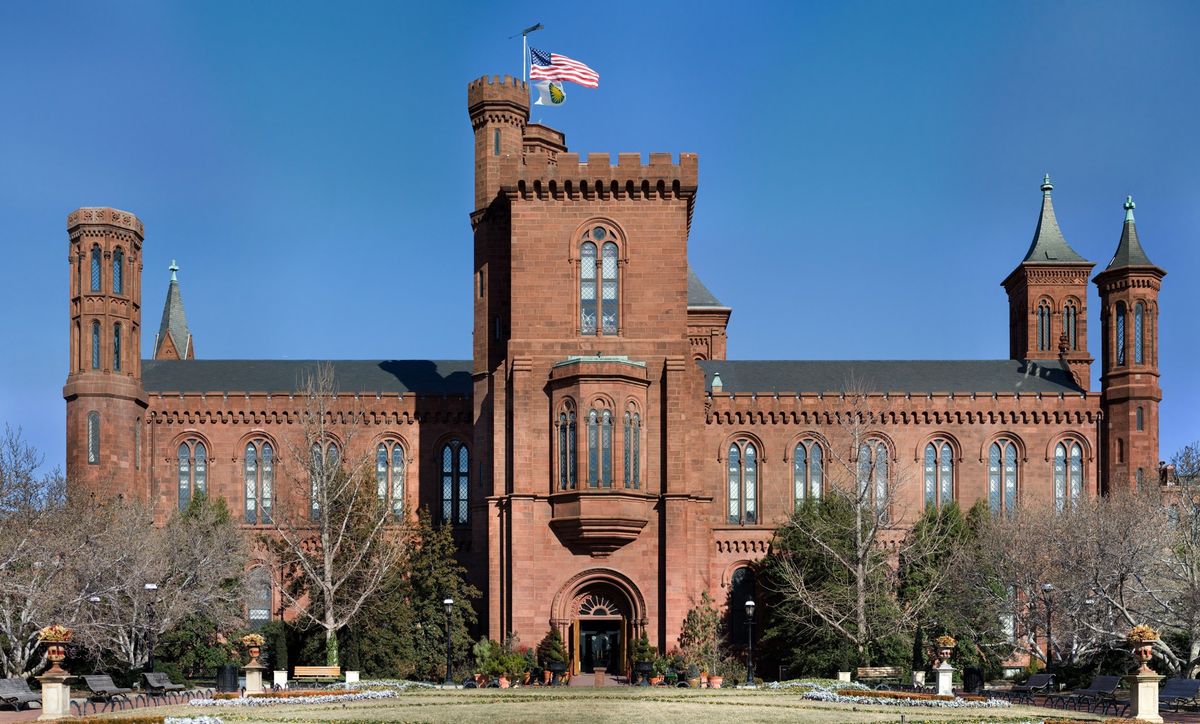
Shayt's phrase is the right one to end on, because it says what a museum's entrance sculpture is for. It is not decoration and it is not a monument. It is the institution's face, and a face is the one part of a body that is meant to be read by strangers.
Replace it and the institution has a new face. That may be what is wanted; it is not this study's place to say. What this study can say is what the change costs the record. The burden of preservation for Infinity is unusually light, because the work of writing down what it is and why it is there was done, by the museum, in 2008. Custodial stewardship of that account now passes to a successor who has not been named, under a board that has said its priority is stability, in an institution whose leadership has been told in writing that it is the reason support would stop.
The sculpture will keep turning once every six minutes until somebody decides otherwise. It represents nothing but itself, and everyone involved agrees on that. The only question the record can answer is whether anyone in charge will read what the museum wrote about it before they decide what it means.