Eileen Gray E.1027: Le Corbusier’s Vandalism and the Trauma Provenance Deconstructed.
On eight murals painted without consent, a sign bearing the wrong name, and the artist rebuilding the memory of modernism's most contested house
The Eileen Gray E.1027 controversy is the most complete case study in architectural Trauma Provenance that the modern canon possesses, and it has returned to the present tense. “Maison en Bord de Mer,” Canadian artist Lorna Bauer's exhibition at New York's Trotter&Sholer gallery (through August 8, 2026), reopens the file on Le Corbusier's vandalism of the house Gray built on the French Riviera a century ago, an episode The Guardian has documented at length, and on the Eileen Gray architect legacy that his murals nearly overwrote. The PLCFA framework terms in active structural use throughout this study: Material Singularity, Trauma Provenance, Narrative Permanence, Custodial Stewardship, Burden of Preservation, Material Memory, Hollowed Object, Spectacle of Dissent, and Institutional Necrophagy. This study reads the E.1027 dispute not as an architectural anecdote but as the foundational template for how a Sovereign Object survives an attempted re-authoring, and what legitimate reclamation requires.
The Event: A Lower East Side Gallery Reopens Modernism's Most Contested House
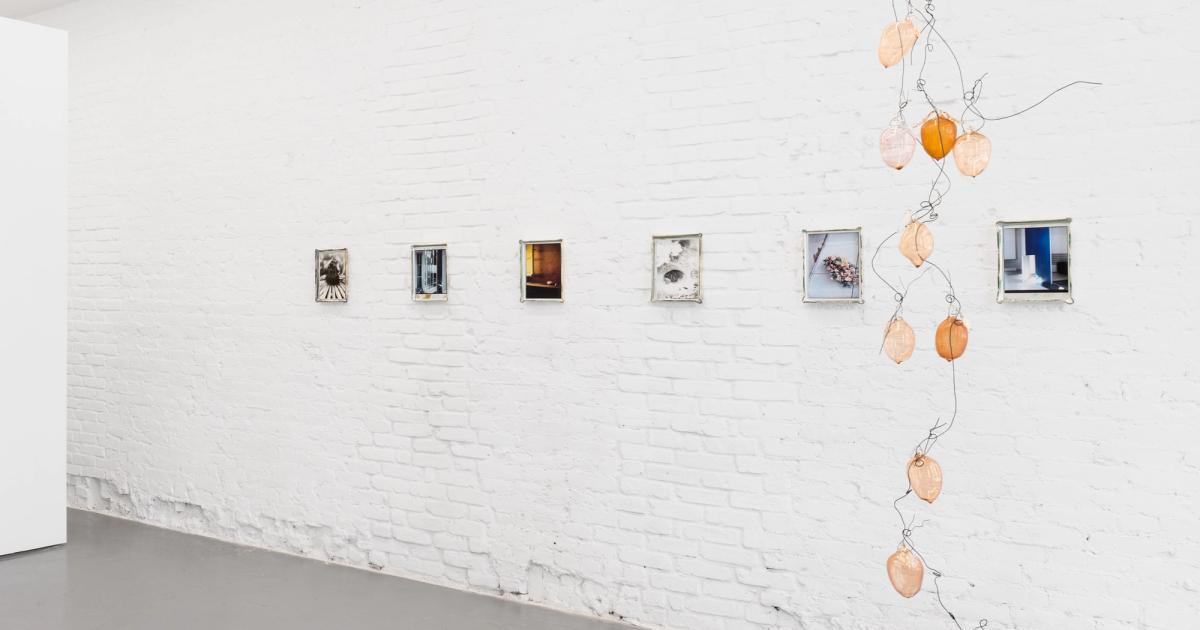
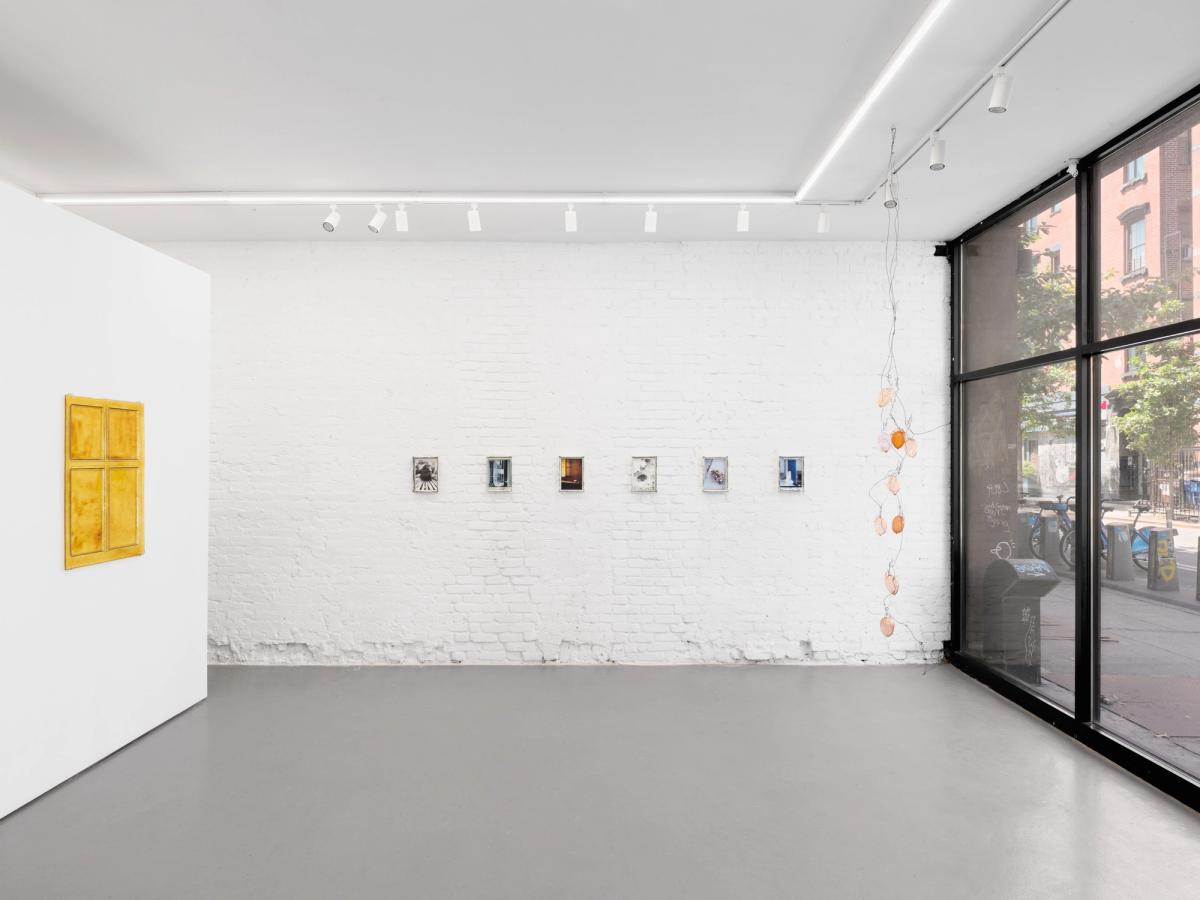
The occasion is specific. Lorna Bauer, a Montreal-based sculptor and photographer best known for kiln-formed glass and photographic works structured around art-historical episodes, has installed “Maison en Bord de Mer” at Trotter&Sholer on Suffolk Street. The Lorna Bauer E-1027 art intervention does not touch the house itself. It conjures it: wire vines of glass lemons (Lemon Tree), a glass phonograph honoring the house's “music corner” (Music Corner), kiln-formed glass embossed with ropes and bricks, and photographs from Bauer's single 2017 visit to the site, many framed in hand-mirrored glass. Bauer describes the panels as kiln-formed and fired over multiple cycles, with silver nitrate then applied by hand to create the mirrored surface.
Bauer's origin story for the project is the argument in miniature. Arriving at the house Eileen Gray designed and built, she encountered the site's signage. “There was a big sign that said ‘Le Corbusier,’” she recalled to Artnet News. “I was like, ‘didn't Eileen Gray build this?’ … I was kind of offended.” That sign, the wrong name, posted at the threshold of the right building, is the compressed form of a century-long dispute over architectural authorship that this study now deconstructs.
E.1027 as Sovereign Object: What Eileen Gray Actually Built
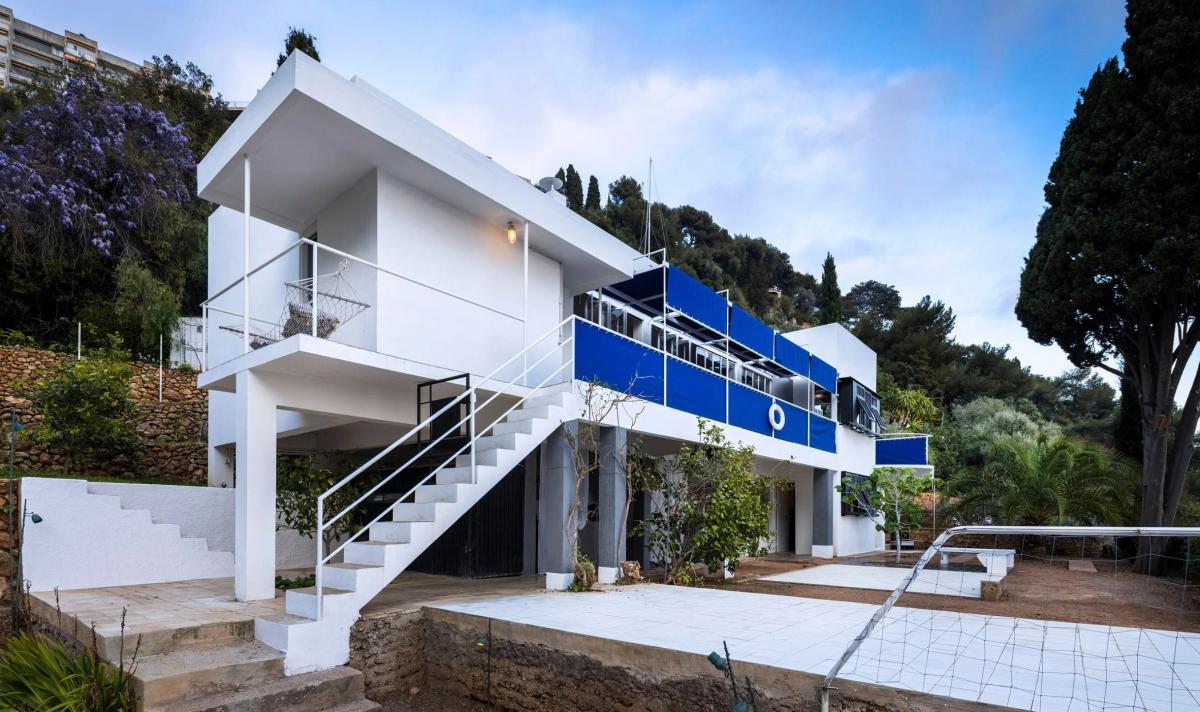
Between 1926 and 1929, on a terraced slope above the Mediterranean at Roquebrune-Cap-Martin, the Irish designer Eileen Gray, whose record MoMA holds, conceived and built her first work of architecture: a white, L-shaped villa she named E.1027. The name itself is an act of encoded authorship: E for Eileen, 10 for J (the tenth letter), 2 for B, 7 for G, her own initials wrapped around those of Jean Badovici, the Romanian architect and critic who was her collaborator and lover. The cipher matters because it establishes, in the object's very name, the authorship structure that would later be contested: Gray enclosing Badovici, not the reverse.
E.1027 was not a neutral exercise in the International Style. It was a pointed correction of it. Against Le Corbusier's dictum that a house is a machine for living in, Gray insisted the house was a living organism: “the shell of man,” designed from the interior outward, from the body's habits toward the envelope. She built the furniture as extensions of the architecture: the adjustable chrome side table designed so a guest could breakfast in bed, the Bibendum chair, cabinets that pivot to the hand. Her influence on modern design begins here, in an architecture of intimacy rather than doctrine. This is Material Singularity in its architectural register: one building, one authorial intelligence, one integrated system of object, envelope, and site that cannot be replicated because its logic is biographical rather than stylistic.
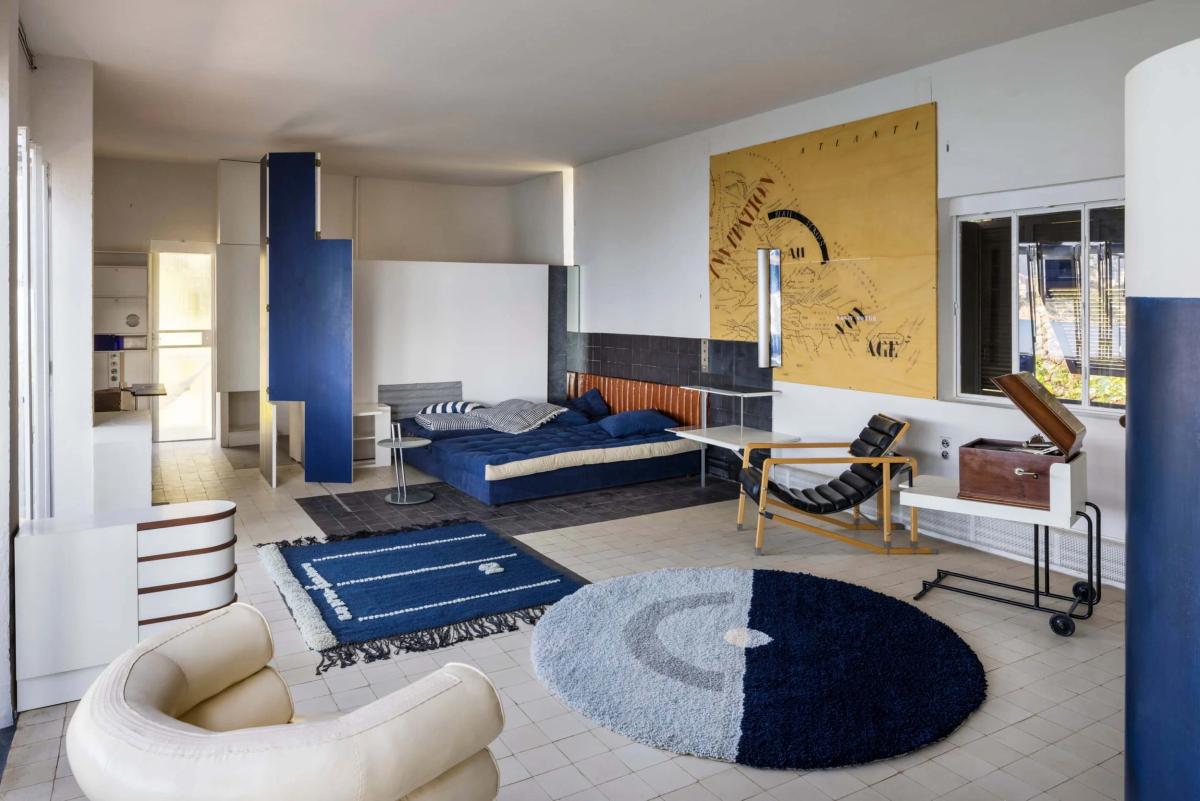
A Sovereign Object does not need to announce its author. It needs its author’s logic to remain legible in its material. Every subsequent violation of E.1027 was, at root, an attempt to replace that legibility with a louder signature.
The Murals as Material Desecration: Anatomy of a Vandalism
Le Corbusier encountered E.1027 as a guest of Badovici in the 1930s, after Gray and Badovici had separated and Gray had withdrawn to build Tempe à Pailla near Menton. The house impressed him; by most accounts, it unsettled him. Beginning in 1938, he painted a series of large, brightly colored Cubist-inflected murals across the villa's deliberately calibrated white walls. He had not sought Gray's permission. She regarded the act as vandalism, and the violation has been publicly named as such ever since. The critic Rowan Moore's reading (the one Bauer explicitly aligns with) is that the murals were an assertion of dominance: a celebrated male architect physically overwriting the interior logic of the century's most important woman-authored modernist building. Where E.1027 is clean, Bauer notes, “the murals feel bright and bold and brash.” They are still there.
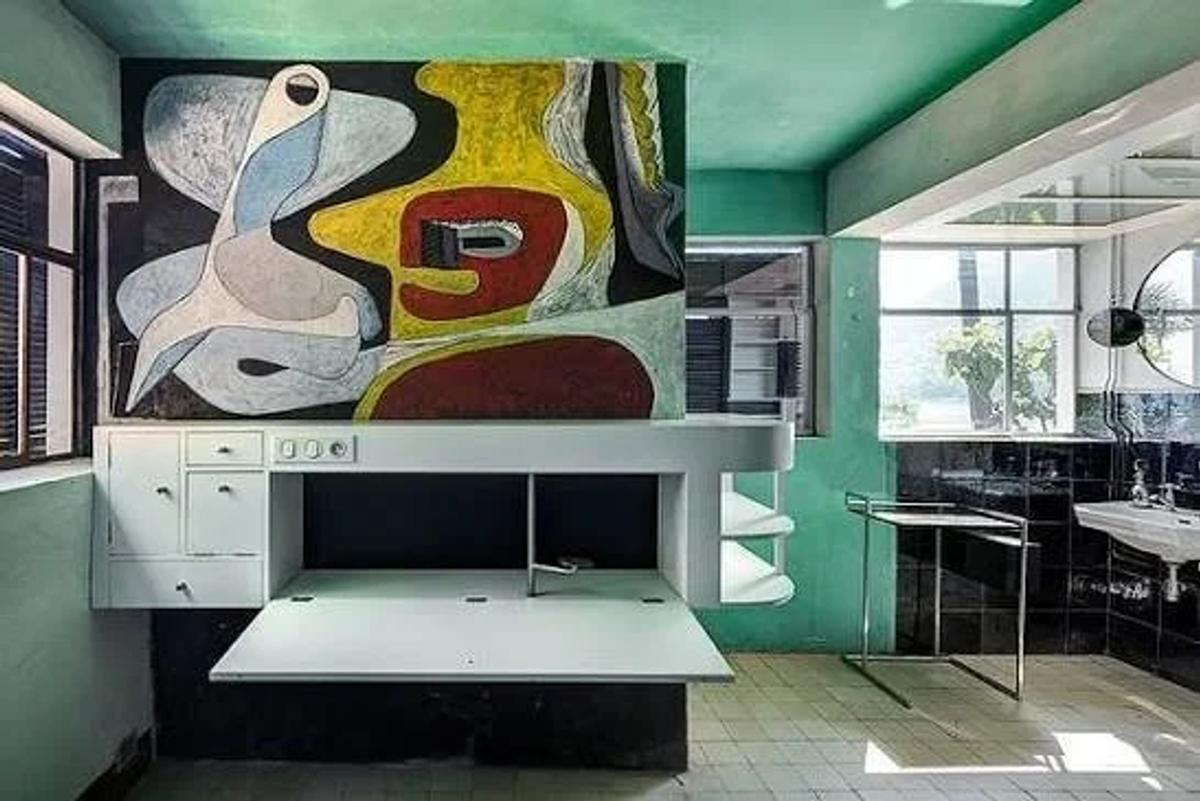
Within the PLCFA framework, this is not a colorful anecdote of modernist rivalry. It is the paradigmatic assault on E-1027's material integrity: a Semantic Burden imposed by force. The Le Corbusier E-1027 murals controversy is precisely a controversy of Material Memory: the walls now carry two irreconcilable material histories, the author's and the intruder's, and every subsequent custodian has been forced to adjudicate between them. Le Corbusier's later maneuvers compound the diagnosis. He attempted to buy the house from Badovici and failed. He then built his Cabanon directly beside it in 1952, a permanent observation post at the perimeter of the object he could not possess, and in 1965 he died swimming in the sea below it. Badovici had died in 1956; the house drifted into decades of neglect, sale, and decay, its authorship increasingly filed, in guidebooks and signage, under the name of the man who had painted on it.
Vandalism is the imposition of an unrequested Material Memory. What made Le Corbusier’s act structural rather than merely rude was that the art world ratified it: the murals became the reason to protect the building whose existence they had violated.
Trauma Provenance: When Violation Becomes Part of the Object
OAC defines Trauma Provenance as the condition in which an act of violation enters an object's provenance chain permanently, not as a footnote to the object's history but as a load-bearing element of its meaning. E.1027 is the foundational architectural case. The house cannot now be narrated without the murals, and the murals cannot be narrated without the violation. The wound is in the file.
Trauma Provenance is morally neutral as a mechanism and never neutral in its administration. It can deepen an object's Narrative Permanence, forcing every future custodian to tell the whole story, including its violence. Or it can be harvested: converted into spectacle, marketing, and attention by institutions that feed on contested histories. That second pathway is Institutional Necrophagy, and E.1027 has been subjected to versions of both. The restoration campaigns that saved the house from ruin also, for years, marketed the site through its most famous visitor rather than its author. The vandalism of historic buildings rarely receives an artist's response, as Bauer's does; it far more often receives a gift shop.
Trauma Provenance is not the scar. It is the requirement that the scar be narrated. The ethical question is never whether the wound is part of the object, it is, but who profits from its telling.
The Sign That Said Le Corbusier: Narrative Erasure and Institutional Necrophagy
The sign Bauer encountered in 2017 is the study's central exhibit because it demonstrates how erasure actually operates. No one denied that Eileen Gray built E.1027. Denial is not the mechanism. The mechanism is adjacency plus gravity: the site's Corbusian remainders, the murals, the Cabanon, the death in the bay, accumulated institutional weight until the ensemble was legible primarily through him. The architectural authorship dispute around Le Corbusier and E-1027 was never a courtroom argument; it was a signage decision, a caption convention, a habit of attribution repeated until it hardened into fact.
This is how the Eileen Gray legacy nearly became a subsidiary clause in Le Corbusier's. And it is why the periodic “rediscovery” of Gray (the restorations, the 2024 documentary, the recurring essays imploring the culture to refocus on her) must be read carefully. Recovery narratives can themselves become a Hollowed Object: the ritual of rediscovering a wronged woman designer, performed on a schedule, with the structural conditions of the original erasure left fully intact. The architectural heritage of women designers is not secured by cycles of commemoration. It is secured by custody, by who controls the file, the walls, and the name at the gate.
Erasure in architecture is not demolition. It is attribution drift: the slow transfer of an object’s Narrative Permanence to the most institutionally convenient name available. The sign is always the last thing to change.
The Preservation Paradox: Conserving the Wound
The Eileen Gray E-1027 restoration project (conducted under French public stewardship after the state's coastal conservancy acquired the derelict villa, and continuing in phases into the 2020s) inherited an impossible brief, and its impossibility is instructive. The murals that constitute the vandalism are themselves protected as cultural patrimony. The restorers were therefore mandated to conserve the violation with the same rigor as the violated. Gray's spatial logic and the intrusion painted across it now share a single Burden of Preservation.
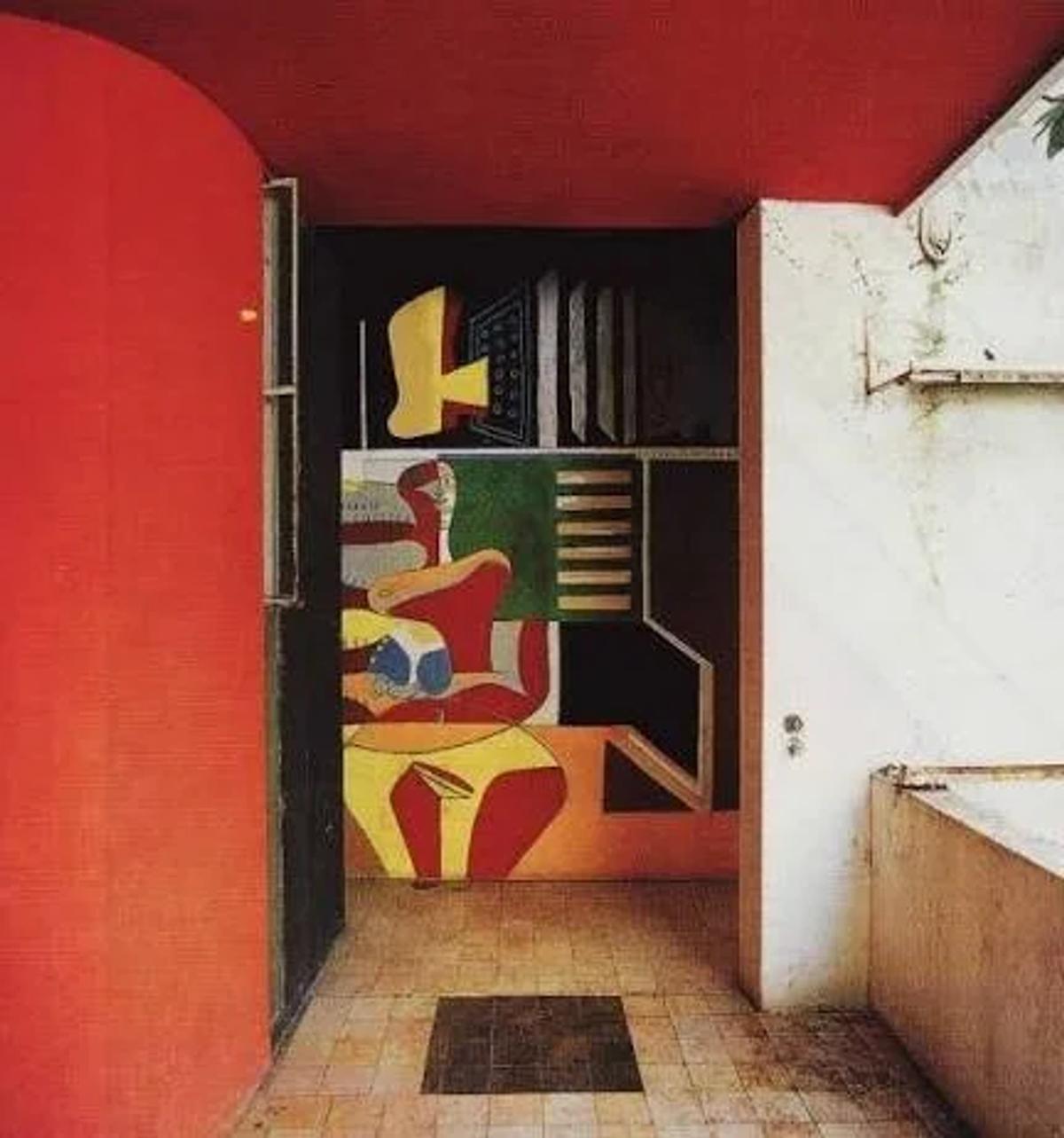
The modernist architecture preservation challenge here is unlike a leaking roof or failing concrete. It is philosophical: restoration cannot restore E.1027 to its 1929 state without committing a second erasure, this time of the historical record of the first. The PLCFA position is that the custodians are, in the main, correct to keep the wound visible. A restoration that scrubbed the murals would manufacture a false innocence, a simulacrum of the untouched original, and would quietly complete Le Corbusier's project of making the house's history about him, this time through the drama of his removal. The Custodian's Contract obligates the steward to the object's whole truth, not to its most flattering chapter. What the contract equally forbids is the inversion the site practiced for decades: conserving the wound while forgetting the body that bears it.
The Burden of Preservation at E.1027 is double: conserve the masterpiece, and conserve the crime against it, without allowing the crime to remain the headline. Custodial Stewardship is the discipline of holding both without letting the louder history win.
Bauer's Counter-Archive: Reclamation Without Possession
Against this history, the precision of Bauer's method matters. She does not paint over the murals, petition for their removal, or stage a protest at the gate; gestures that would enter the object's history as one more imposition, one more Spectacle of Dissent competing for wall space. Her intervention is built off-site, from memory, in glass: a material that holds an imprint only through heat, pressure, and time, and that shows the viewer their own reflection while they look at the past. The hand-mirrored frames make the mechanism explicit, and what is deliberate in them is not the imperfection but its survival. Bauer describes wanting, "Rather than producing a perfectly reflective surface," to "preserve variations and traces of the process." Memory streaks. Reflection distorts. Both, in her account, are kept on purpose. “The view ultimately depends where you're standing” is not a curatorial nicety; it is the exhibition's thesis about historiography.
The Chemistry, in Bauer's Own Description
Asked to describe the making rather than have it summarised, Lorna Bauer supplied an account of the process directly. The glass panels are kiln-formed and fired over multiple cycles; silver nitrate is then applied by hand to produce the mirrored surface. Embedded within the glass are analogue photographs, colour c-prints and fibre-based silver gelatin prints. The link between the two halves of her practice is chemical rather than metaphorical. In her words, she is interested in "the material and chemical relationship between photography and mirrored glass," because "both are rooted in silver-based processes."
That single fact reorganises the exhibition. A mirror and a photograph are not two media set beside each other for resemblance; they are the same silver chemistry asked to do two different jobs, one holding an image and one returning the viewer's own. The imperfection is not deliberate; keeping it is. Bauer is explicit that the accidents are real ones. She does not know in advance what expired film, silver nitrate or silver stain will do, and the tin sensitizer either bonds to the glass or it does not. What she controls is what happens afterwards: rather than producing a perfectly reflective surface she preserves the variations and traces of the process instead of correcting them, which means the streaking that reads as memory failing is in fact the record of the making being kept.
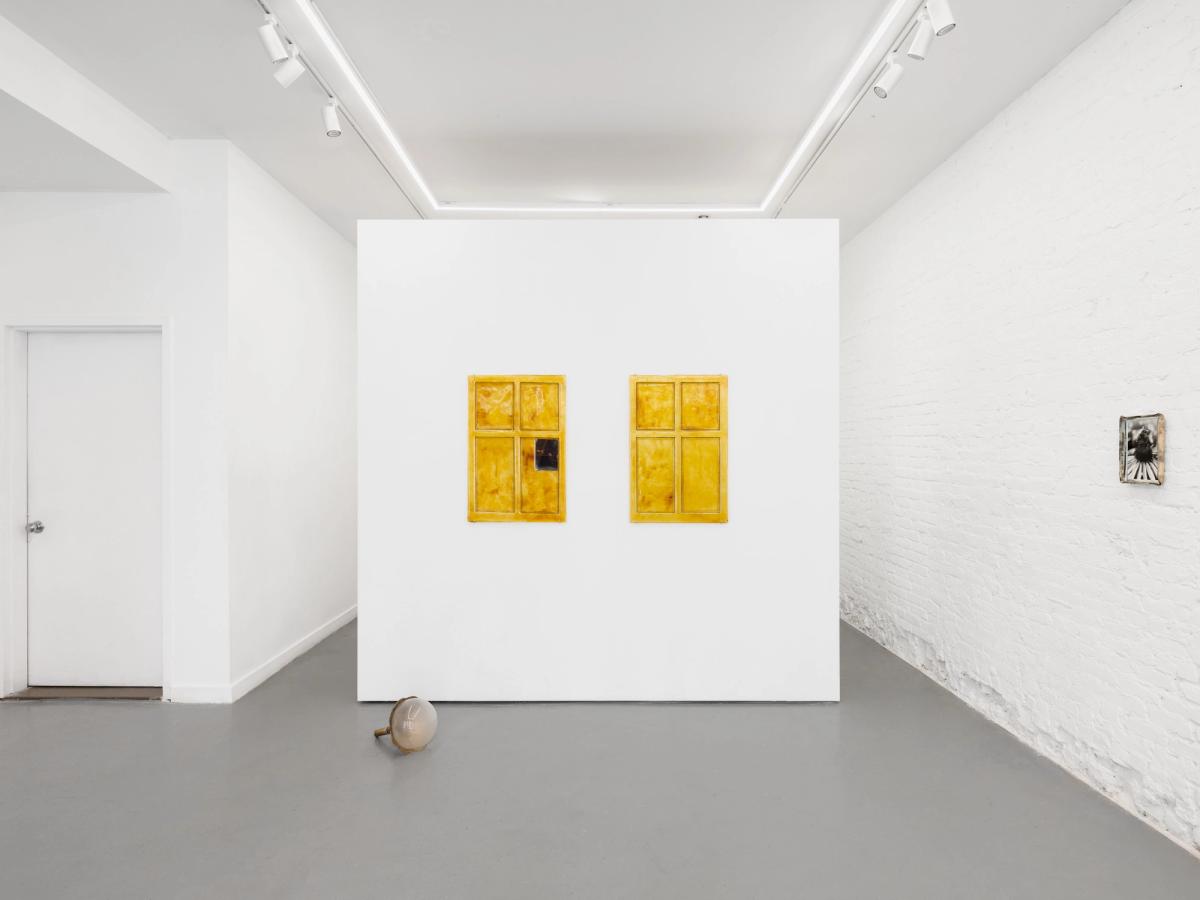
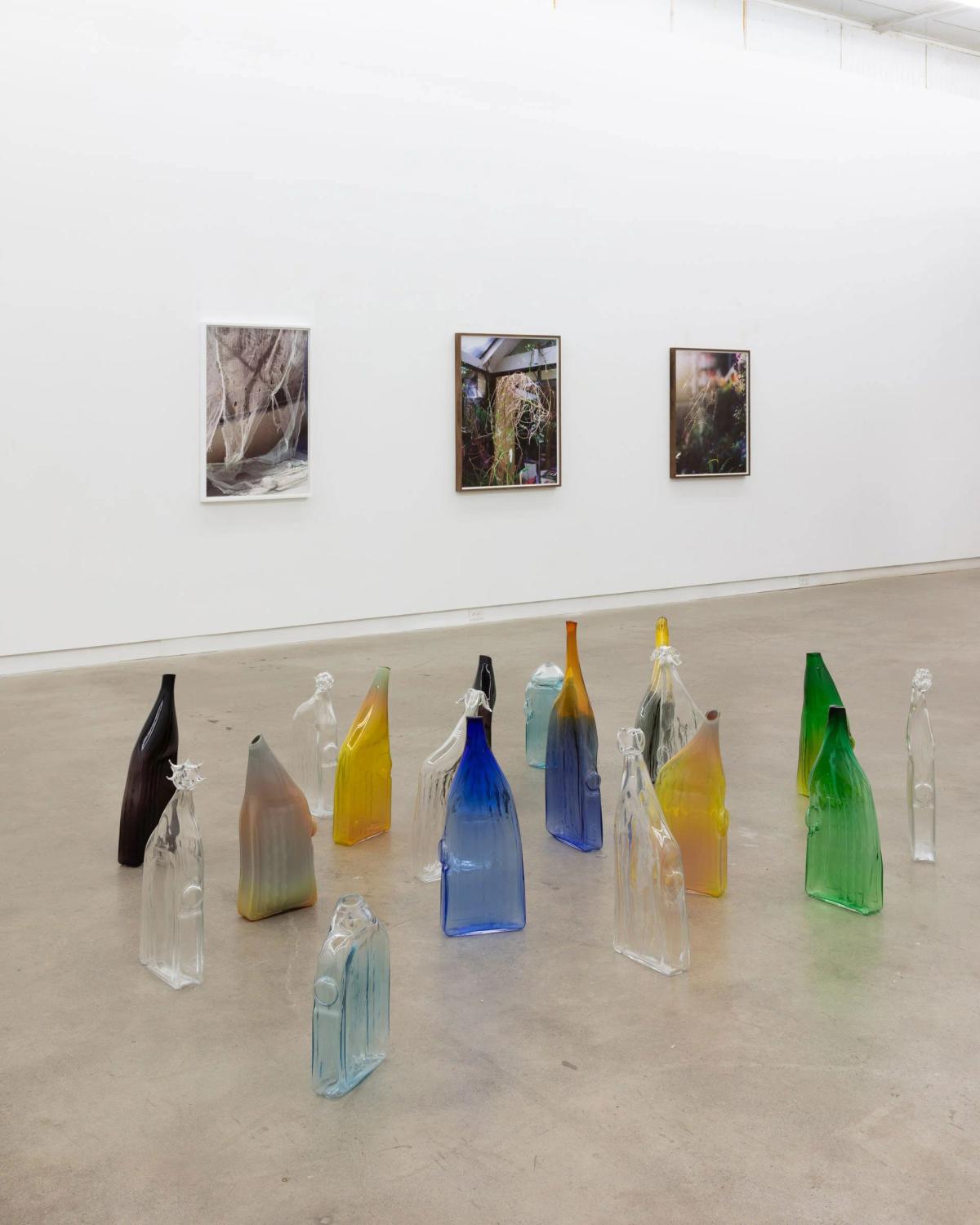
The individual works carry the same precision. Lemon Tree, Bauer says, is borosilicate glass worked with silver stain and kiln-fired; she notes that silver stain is a medieval glass-making process introduced in the early fourteenth century, produced from silver compounds, giving yellow and amber tones. Music Corner is blown glass taking the form of a phonograph, drawn from an architectural element Gray designed for E.1027. The photographs come from a visit Bauer made to the house in 2017, where she photographed over two days on 35mm and medium format.
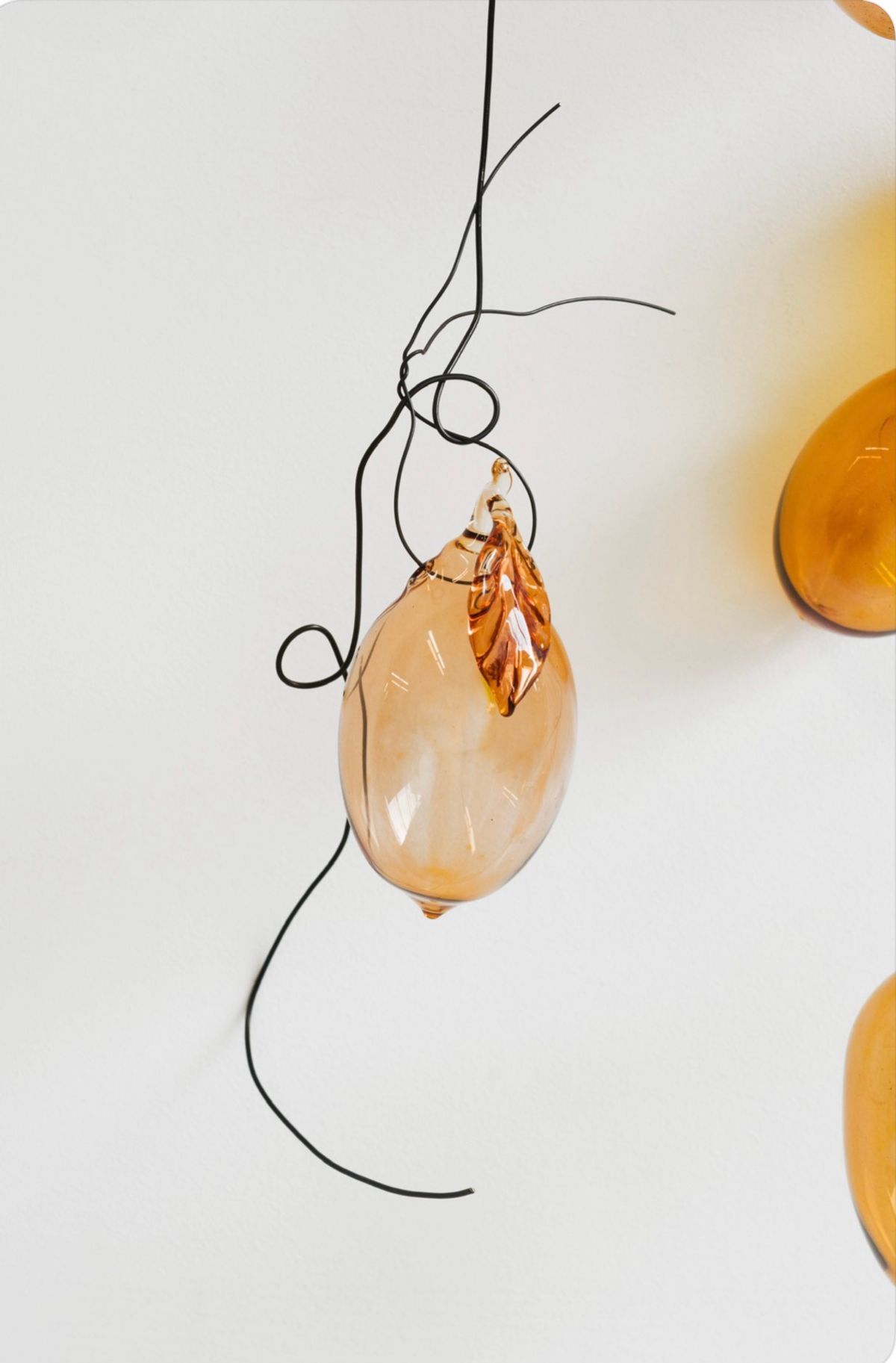
A seven-hundred-year-old staining process, a nineteenth-century silver emulsion, and a house finished in 1929 are held in one object. This is Labor Density that can be named rather than inferred, and Material Singularity warranted from the maker instead of read off the surface. It is worth stating plainly why that is unusual: this framework scores material claims constantly and can rarely source them from the person who did the work.
Bauer also describes the project's subject in terms that align with this study's own. She frames it as considering questions of legacy and "the ways in which history is recorded, circulated, interpreted, and ultimately accepted as truth," with E.1027 serving as a case study because the histories surrounding Gray, Le Corbusier, and the house itself continue to change as new evidence and perspectives emerge. That description is hers, offered about her own work. The reading of Trauma Provenance built on it in this study is the Collection's, and she has neither reviewed nor endorsed it.
This is what reparative Custodial Stewardship looks like when the steward owns nothing: an addition to the object's Material Memory that neither subtracts from, overwrites, nor monetizes the original. Bauer's labor is dense and slow, kiln-formed glass, blown glass, chemical mirroring, a project incubated since 2017 and a mirror-based body of work since 2021, and that Labor Density is the credential that separates reclamation from opportunism. Where Le Corbusier answered E.1027 with paint on walls he did not build, Bauer answers it with objects that never touch the house at all. One is an Aura Transaction executed by force; the other is aura built from scratch, adjacent to the wound, in the house's honor.
The test of legitimate reclamation is subtractive: remove the reclaiming artist’s name from the project and ask what remains. In Bauer’s case, what remains is Eileen Gray, more legible than before. That is the entire standard.
What Legitimate Reclamation Requires: The Standard
The unresolved tension the OAC dialectical council surfaced (between genuine reparative stewardship and the commodification of Trauma Provenance) resolves, in this case, through three verifiable criteria. First, direction of attention: the intervention must route attention toward the violated author, not toward the intervener or the violator; Bauer's exhibition is titled after Gray's own description of the house, maison en bord de mer, not after Le Corbusier's murals or Bauer's biography. Second, material restraint: the intervention must add Material Memory without claiming custody it has not earned; glass lemons in a Manhattan gallery make no claim on the walls at Roquebrune-Cap-Martin. Third, narrative repair: the intervention must transfer Narrative Permanence back toward the original author, measurable, crudely but genuinely, in whether coverage of the show leads with Gray's name. It does.
By these criteria, the E-1027 house (its material integrity violated once by paint and for decades by attribution) is currently the beneficiary of one of the rare artist responses to architectural vandalism that strengthens the original rather than feeding on it. The standard generalizes. Every contested monument, every overwritten interior, every building whose author was outshouted by its most famous guest now has a template: reclamation is legitimate when it is custodial, additive, and self-effacing; it is necrophagic when the trauma becomes the product.
Coda
Le Corbusier needed Eileen Gray's walls. That is the fact the murals cannot stop confessing, ninety years on: the century's most self-assured architect could not leave the century's most self-sufficient house alone. E.1027 required nothing from him, not color, not commentary, not a cabin at its shoulder, and its indifference is what his paint was for.
What the case confirms for the PLCFA framework: Trauma Provenance is permanent, but its administration is not. The same wound can be harvested or held. For seventy years institutions harvested it; the sign at the gate said so. The current restoration holds it, imperfectly. Bauer's glass holds it well.
What it leaves structurally open: whether the culture can learn to attribute before the violation, rather than commemorating after it. Eileen Gray waited half a century for the discourse to return to her house. The next Gray should not have to be rediscovered, because she should never be allowed to disappear.
OAC does not ask that the murals be removed. OAC asks that they be correctly filed: not as Le Corbusier’s contribution to E.1027, but as E.1027’s evidence against him. The house was always the author’s argument. It has simply been waiting for custodians willing to read it.
Authored by Christopher Banks, Anthropologist of Luxury, Critical Theorist & Founder Objects of Affection Collection Office of Critical Theory & Curatorial Strategy 469 Fashion Avenue, 12th Floor, New York, NY 10018
RELATED OAC STUDIES
Further critical reading from the OAC archive on trauma provenance, custodial stewardship, and the architecture of narrative permanence.
Trauma Provenance & the Violated Public Object · Wyland's Destroyed Dallas Whale Mural: What the FIFA World Cup Lawsuit Reveals About Public Art's False Permanence
Custodial Stewardship & Institutional Necrophagy · The Custodian of Looking: What David Hockney's Death Reveals About the Architecture of Post-Mortem Necrophagy
Material Singularity & Structural Captivity · Structural Captivity of Material Singularity
Labor Density & the One Original · Eve Schaub Is Growing a Dress: What the Year of the Dress Actually Confirms About Labor Density, Slow Fashion, and the One Original Object
Semantic Burden & Narrative Permanence · The Louis Vuitton Combi Isn't a Dupe: It's a Semantic Burden Transfer, and Vans Just Named It