Louis Vuitton Combi: Semantic Burden Transfer, Not a Dupe
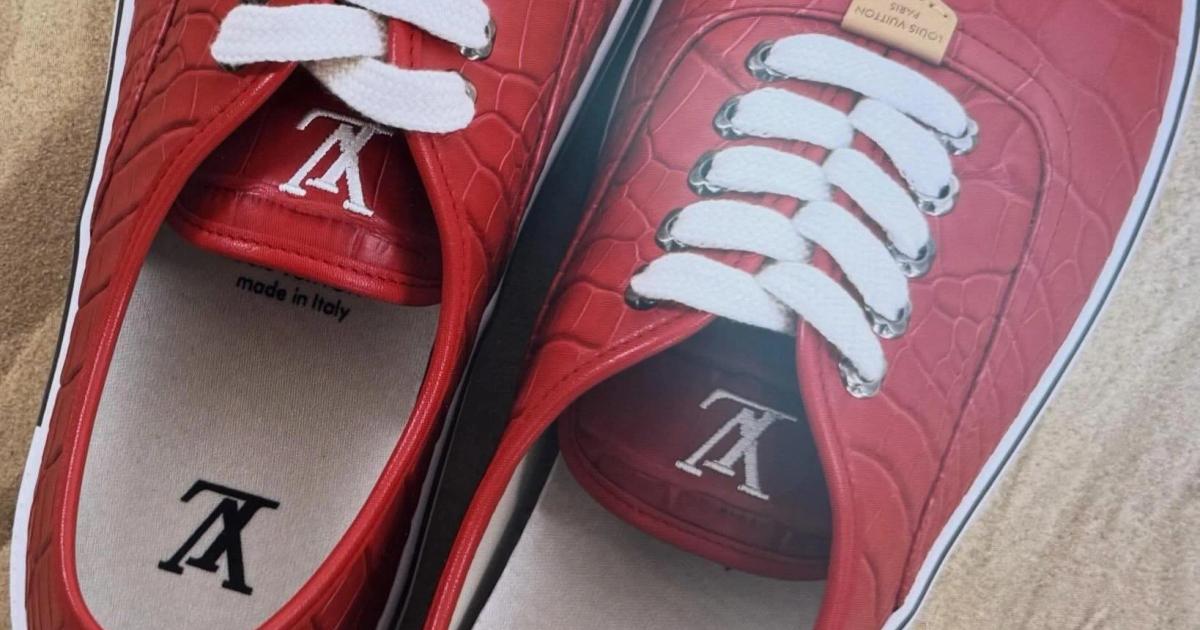
When Pharrell Williams unveiled the Louis Vuitton Combi at Paris Fashion Week 2026 on June 22, 2026, the internet reached an instant verdict: dupe. The silhouette (low-profile, vulcanized sole, wrapped toe panel, simple lacing) read as a structural echo of the Vans Authentic, the sixty-year-old skate icon that originated in Anaheim, California in 1966. Vans responded within hours, entering Pharrell's comments section with a Clipse lyric Pharrell himself produced: "Wanna know the time? Better clock us." The moment was read as brand banter. This study reads it as institutional structure.
The PLCFA framework terms in active structural use throughout this study: Semantic Burden, Sovereign Object, Hollowed Object, Labor Density, Aura Transaction, Narrative Permanence, and Subcultural Absorption. A Semantic Burden Transfer occurs when a luxury house extracts the accumulated cultural weight of a silhouette it did not originate, recoats it in premium materials, and sells that weight at luxury prices: without compensating or acknowledging the communities whose labor built the meaning. The Louis Vuitton Combi is the most structurally transparent instance of this mechanism in recent runway history.
The Event: What Happened and What Everyone Said
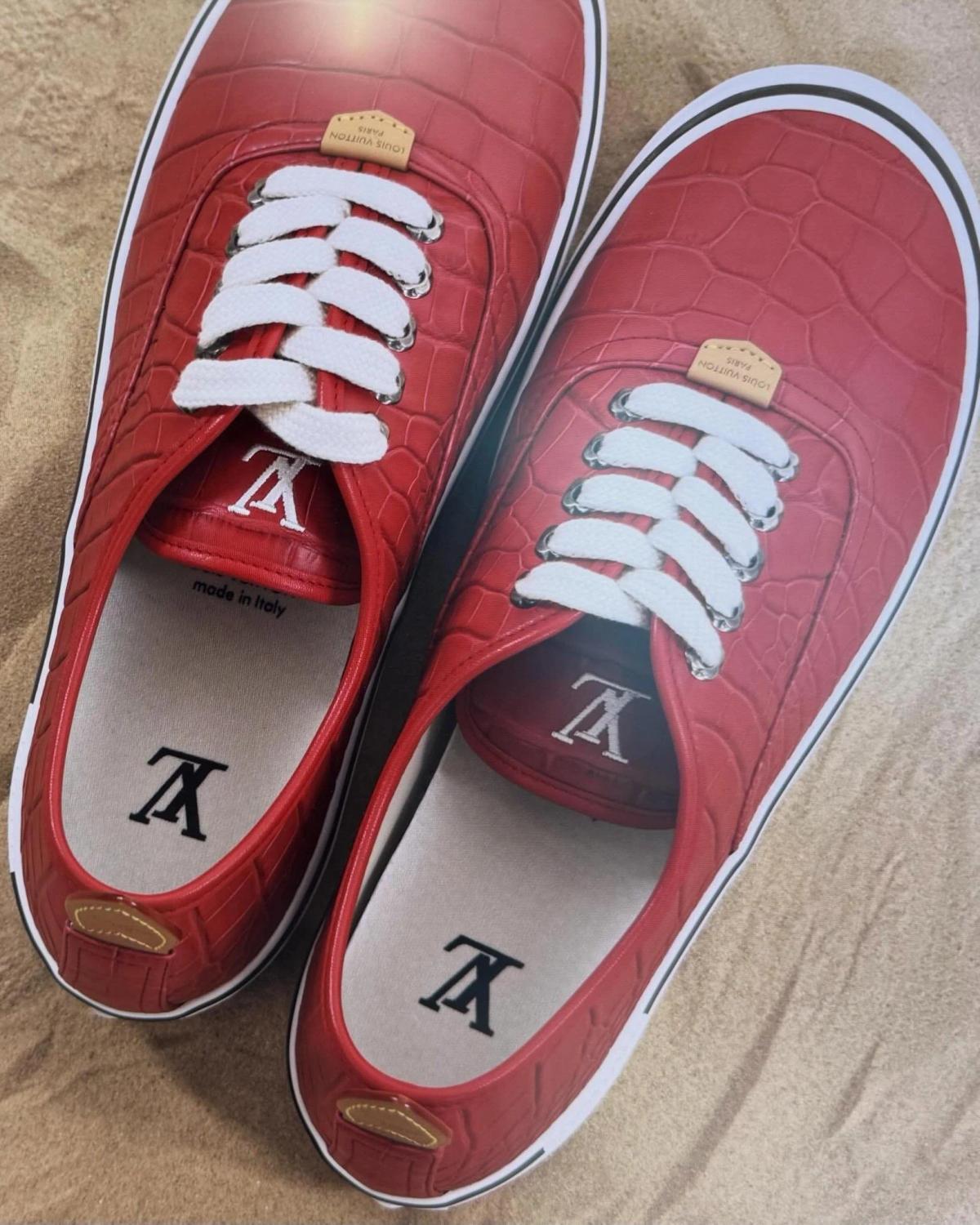
On the weekend before Louis Vuitton's Spring/Summer 2027 Menswear show in Paris, Pharrell Williams previewed a new sneaker via his personal Instagram account @skateboard. The shoe (named the Louis Vuitton Combi) featured a slim low-top profile, vulcanized sole, two-piece upper with midfoot stitching, metal eyelets, a Vachetta leather heel tab, and a striped rubber foxing. It arrived first in blood-red, crocodile-textured leather, followed by a brown monogram iteration that Future shared on Instagram Story.
Social media consensus was immediate. The Combi read as a structural echo of the Vans Authentic, the flat-soled, canvas-uppered, waffle-soled deck shoe that Paul and Jim Van Doren began producing on March 16, 1966, in a factory store on East Broadway in Anaheim, California. The comparisons were not casual. The toe wrap, the lacing configuration, the foxing stripe, the vulcanized sole profile: these were structural echoes, not shared adjacencies.
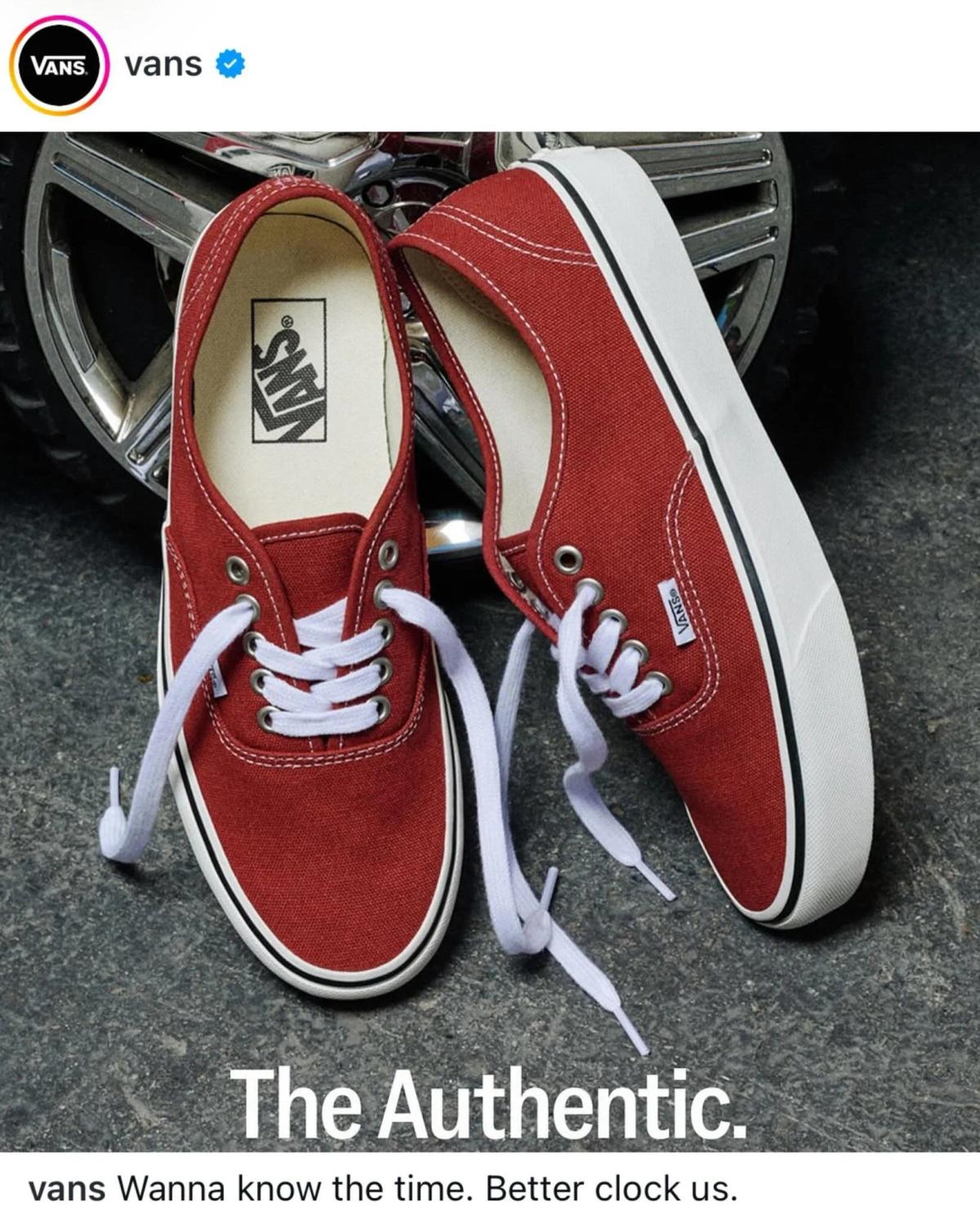
Vans responded within the same news cycle: the brand commented "Ohhhh bet" beneath Pharrell's post, then escalated to a promotional image of the Authentic in matching blood red with the caption drawn from Clipse's 2006 track "Mr. Me Too": "Wanna know the time? Better clock us." The choice of lyric was precise: Clipse is Pharrell's own production catalog. Vans was quoting Pharrell's past to mark his present.
Tyler, the Creator entered the discourse with historical accuracy and structural irrelevance: both simultaneously. “Y’ALL KNOW THIS STYLE OF DECK SHOE FOR BOATS HAS BEEN AROUND BEFORE VANS CORRECT? PRO KEDS, CONVERSE, ETC.” He was right about the genealogy. He was wrong about what genealogy means for the question at hand.
The discourse settled into two camps: those who called the Combi a Dupe Culture product, and those who cited design genealogy to absolve it. Neither camp named the mechanism. OAC names it here.
The Vans Authentic as Sovereign Object: Sixty Years of Skate Culture Labor
The Vans Authentic did not begin as a skate shoe. Style #44 was a deck shoe: a boat shoe variant designed for traction on wet surfaces. Its selling point on opening day in 1966 was a thick crepe rubber sole that gripped better than anything else on the California market. Nothing about it was subcultural.
What happened next is the essential fact of this study. Beginning in the early 1970s, California skateboarders, the same community emerging from surf culture's overflow into drained backyard pools and concrete drainage channels, began selecting the Authentic for reasons the Van Doren Rubber Company had not designed for. The waffle sole gripped the board. The low profile gave the board a feel. The canvas upper was cheap enough to destroy. The Z-Boys adopted it. The shoe became a Sovereign Object: an object whose sovereignty was not manufactured into it by brand decision but adopted into it by a subculture building its own identity language, and the Authentic became the ground-level semiotic unit of that world.
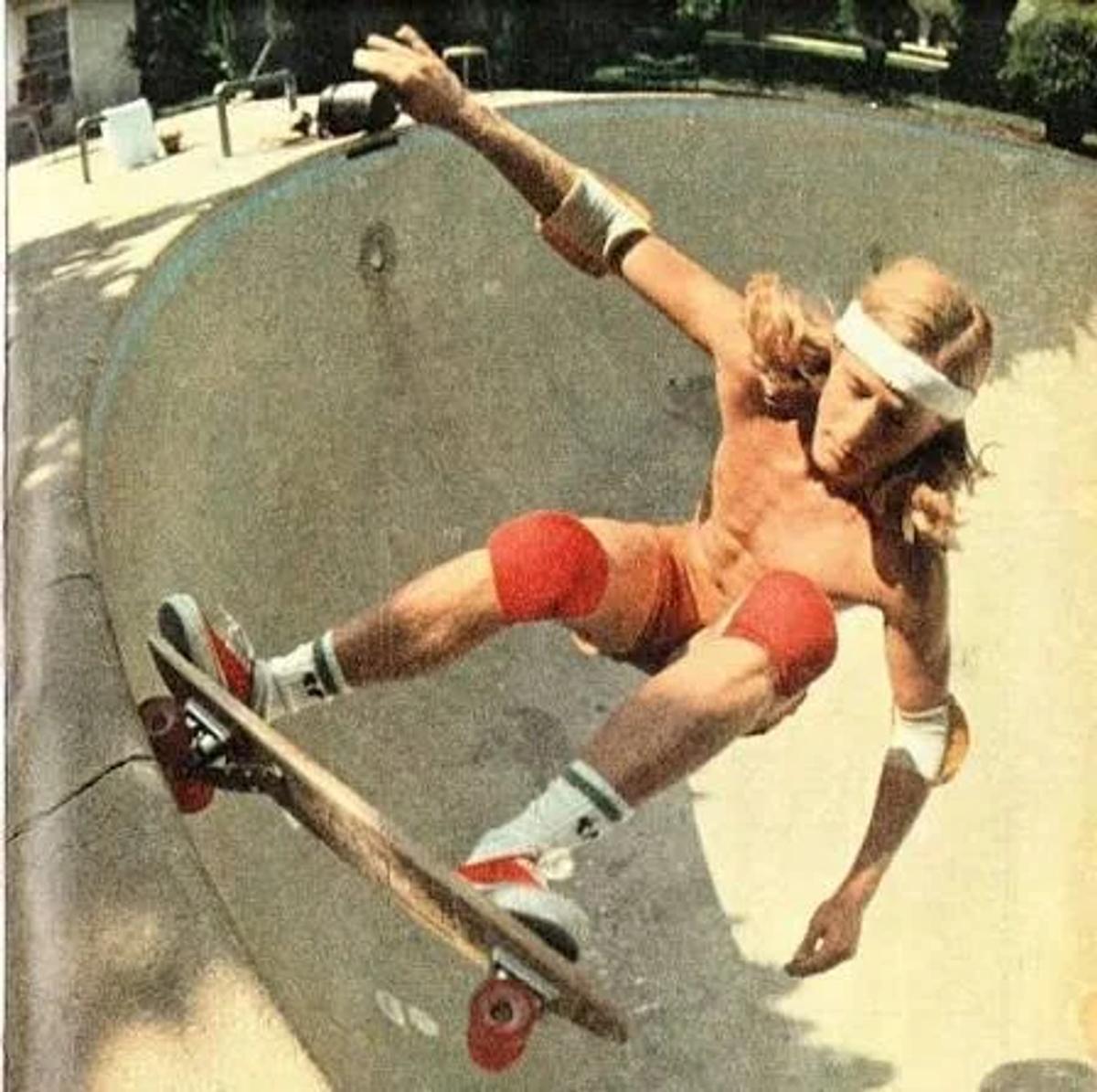
A Sovereign Object is not manufactured into sovereignty. It is adopted into it. The Authentic did not become sovereign because Vans decided it would. It became sovereign because sixty years of bodies, practices, identities, and risks moved through it: accumulating what the PLCFA framework calls Labor Density: the compound weight of authentic use that no marketing budget can replicate.
By 1976, Vans had recognized the adoption and responded institutionally: working with Tony Alva and Stacy Peralta to develop the Era, the first shoe designed explicitly for skating. But the Authentic's claim to Skate Culture was not a design decision. It was an accident of geography, material compatibility, and sixty years of compounding Labor Density: the accumulated body-hours of practice, injury, mastery, and identity construction that saturated the silhouette with meaning.
In 2026, Vans celebrated the Authentic's 60th anniversary with a retro refresh priced at $60: the anti-spectacle of an object so Sovereign Object it does not need to announce itself. That same week, Pharrell previewed a shoe that needed luxury materials and a Paris runway to justify its existence. The contrast is the argument.
Semantic Burden: The Architecture of Meaning in a Silhouette
In the PLCFA framework, Semantic Burden names the accumulated weight of meaning that an object carries as a direct result of the cultural Labor Density that has moved through it. It is not brand equity in the conventional marketing sense; brand equity is managed and manufactured. Semantic Burden is earned structurally, through the friction of subcultural adoption, through the compounding of generations of people who chose this object as the material expression of who they are and what they do.
The Vans Authentic carries extraordinary Semantic Burden. It carries the Z-Boys. It carries the Dogtown aesthetic. It carries every skateboarder who wore out a pair learning to ollie. It carries the punk shows it appeared at, the art-school students who adopted it as a marker of anti-fashion credibility, the global Streetwear ecosystem that absorbed it without evacuating it. It carries sixty years of Narrative Permanence: the shoe has been continuously meaningful, across changing cultural contexts, without requiring reinvention to remain legible.
Semantic Burden is non-transferable by design decision. It cannot be licensed. It cannot be acquired through material elevation. The crocodile leather on the Combi does not add to the Authentic’s Semantic Burden; it attempts to borrow it. That attempt is what OAC calls a Semantic Burden Transfer.
A Semantic Burden Transfer occurs when a luxury house takes a silhouette whose meaning was constructed by a subcultural community, recoats it in premium materials, attaches a luxury price point, and presents it as a new design proposition. The Transfer is not intellectual property theft in the legal sense; the deck shoe form predates Vans, as Tyler correctly noted. The Transfer is semiotic extraction: the house captures the cultural legibility of the shape, the result of six decades of Subcultural Absorption and community Labor Density, without any of the historical labor that made the shape legible. It offers the signal without the substance.
The Hollowed Object: What the LV Combi Actually Is
The Louis Vuitton Combi is a Hollowed Object. In the PLCFA framework, a Hollowed Object carries the external markers of value: luxury materials, elevated price, institutional provenance, Fashion Week positioning, without the internal structure of earned meaning that gives those markers their legitimacy. The Hollowed Object looks full. It is constructed to look full. But its apparent weight is borrowed from elsewhere.
The Combi's hollowness is not a function of poor craftsmanship. Crocodile leather is technically sophisticated. Vachetta leather heel tabs are materially significant. The shoe is not poorly made. It is well-made in the wrong direction: material elevation has been applied to a silhouette whose meaning was constructed through material reduction. The Authentic's power was always partly about its cheapness, its accessibility, its ability to be destroyed and replaced. The Combi takes that silhouette and prices it out of the community that gave the shape its soul.
This dynamic is not unique to Pharrell or to Louis Vuitton. As OAC's study on Hiroshi Fujiwara and the Architecture of Post-Luxury Influence established, luxury's relationship to Streetwear is structurally extractive across decades: the house arrives after the culture proves the form, recoats it, and resells it to an audience that cannot access the originating community.
What is new about the Combi moment is the speed and specificity of the institutional counter-response. Vans did not wait for a cultural critic to name the dynamic. Vans named it in real time, in Pharrell's own comments section, with Pharrell's own lyrics. That is not brand banter. That is an institution asserting its Narrative Permanence against a Hollowed Object dressed in crocodile.
The Aura Transaction: What Louis Vuitton Is Actually Buying
In the PLCFA framework, an Aura Transaction names the exchange that occurs when luxury appropriates the aura of an object it did not build. The transaction is not disclosed. It operates at the level of cultural semiotics: the buyer of the Combi is purchasing not just a shoe but the suggestion of Skate Culture credibility, Streetwear fluency, subcultural literacy, all mediated through the Louis Vuitton monogram and the Pharrell Williams creative director credit. The buyer is paying for proximity to the Authentic's world. But that world was constructed by people who could never afford the Combi.
The Aura Transaction is how luxury has absorbed Streetwear without crediting it across the post-Virgil era. As OAC's study on The New Avant-Garde established, Abloh named the extraction mechanism himself: he called it "the three percent rule"; change a reference by three percent, and it becomes new. The problem is not the three percent. The problem is that the other 97% carries a Semantic Burden that was not his to deploy.
Pharrell Williams is not a villain in this story. He is a symptom. The Louis Vuitton Combi is what the luxury system produces when it has run out of internal references and begins systematically mining the Semantic Burden of cultures built precisely in opposition to luxury’s logic.
The shoe's name compounds the reading. "Combi", widely associated with the Volkswagen Kombi, the passenger-and-cargo van, the vehicle of exactly the counterculture mobility that Skate Culture shares spiritual genealogy with, was given to a sneaker that looks exactly like Vans. If intentional, it is the most self-aware semiotic mischief in recent runway history. If unintentional, it is a near-perfect unconscious disclosure of how thoroughly luxury has absorbed, processed, and neutralized the aesthetic material of its cultural others.
Tyler's Defense and Its Structural Limit
Tyler, the Creator's intervention deserves serious engagement because it was the most technically sophisticated defense available. His argument: the deck shoe form predates Vans. Pro Keds, Converse, and others produced low-top vulcanized shoes before the Van Dorens opened their Anaheim factory in 1966. The shape has no owner. Louis Vuitton cannot be said to have copied Vans if Vans did not invent the form.
This is historically accurate and structurally insufficient. The PLCFA framework does not ground its analysis in intellectual property law. It grounds it in Semantic Burden. And the Semantic Burden does not reside in the shape. It resides in the cultural Labor Density that moved through a specific instantiation of that shape, over a specific period of time, in a specific subcultural context. Pro Keds did not produce the Z-Boys. Converse did not produce the Dogtown aesthetic. The deck shoe form existed. The Vans Authentic became a Sovereign Object.
The question is not who invented the silhouette. The question is who built the world that made the silhouette matter. The answer is: sixty years of Skate Culture, and the institution those skaters chose as their material partner. That institution is Vans, not Louis Vuitton.
Tyler's defense also carries an unacknowledged biographical irony. He has collaborated with both Louis Vuitton and Converse, two of the entities in the exact chain his all-caps comment was designed to protect. His defense of Pharrell was simultaneously a defense of his own institutional affiliations. This does not make his genealogical point wrong. It makes it interested. And the PLCFA framework requires that interested arguments be named as such.
The Vans Counter-Campaign as Institutional Assertion of Narrative Permanence
Van's response was neither accidental nor merely opportunistic. It was a precise institutional assertion executed in real time across two registers: the comment section (informal, present-tense, street-coded) and the counter-campaign image (institutional, archival, deliberate). The dual-register response was itself a demonstration of Narrative Permanence: the brand deployed its casual and archival voices simultaneously, and neither voice needed to explain itself.
The choice of the Clipse lyric was the most structurally loaded move in the campaign. "Wanna know the time? Better clock us", drawn from "Mr. Me Too," a track produced by Pharrell Williams himself. Vans was not merely quoting a hip-hop record. Vans was quoting Pharrell back at himself: using cultural currency he generated in 2006 to mark the cultural debt embedded in his shoe design in 2026. The lyric's original context, a track about jockers copying style, could not have been more precisely applicable if Vans had written it for this moment.
When an institution can respond to a cultural appropriation with the appropriator’s own words, it is not punching; it is demonstrating structural confidence. Narrative Permanence is the depth of cultural reference so extensive that almost any cultural moment can be addressed from within your own archive. Vans did not need to build a new argument. It reached sixty years back and found the exact right tool.
As OAC's study on The Banksy Enigma established, Narrative Permanence is the condition in which an institution's archive confers more authority than any single act. Vans's archive: sixty years of skate endorsement, subcultural adoption, and material integrity, is precisely such a condition. The Combi will be released and forgotten. The Authentic will outlast it.
Luxury's Dependency on Subcultural Labor Density: The Recurring Structure
The Louis Vuitton Combi is not an anomaly. It is a case study in luxury's structural dependency on subcultural Labor Density. Louis Vuitton under Pharrell Williams has now produced the Tilted (2025, skate-inspired) and the Combi (2026, Authentic-adjacent): two consecutive seasons of footwear anchored in Skate Culture silhouettes. The Buttersoft, previewed in early 2025, drew comparisons to the Nike Cortez. The pattern is systematic extraction, not accidental design convergence.
As OAC's study on The Miu Miu Problem analyzed, luxury brands extract the subcultural credibility of Streetwear moments while the originating communities receive none of the financial upside of the cultural attention their Labor Density generated. The Combi follows the same structural logic in material design: the house borrows Semantic Burden from a culture it did not build, cannot join, and does not compensate for.
Dior's Saltwind, released in the same period and also drawing Authentic comparisons, confirms that this is not a Pharrell problem; it is a luxury fashion system problem: a structural feature of how houses operating in the post-Streetwear moment generate aesthetic novelty without the authentic subcultural credibility that underwrites the novelty's value. The system has built a dependency on Subcultural Absorption, borrowing the Semantic Burden of cultures it cannot join or belong to, and converting that borrowed burden into margin.
This is the structural crisis that Post-Luxury Conceptual Functional Art (P.L.C.F.A.) names. Luxury is not running out of materials. Luxury is running out of meaning. And it is mining subcultural Labor Density to fill the deficit: at scale, without acknowledgment, without compensation, without sufficient originality to earn the transaction.
What Legitimate Engagement Would Look Like: The Standard of Semantic Burden Addition
This study is not an argument that luxury houses cannot engage with Skate Culture, deck shoe genealogy, or vulcanized construction. The argument is structural, not categorical. The question is not "can luxury touch this?" but "does the engagement add to the Semantic Burden of the form, or does it only extract from it?"
A legitimate engagement with the Vans Authentic's lineage would: acknowledge the source explicitly in design language and institutional communication; deploy the silhouette in a direction that opens new semiotic territory rather than replicating existing visual code; or establish an authentic institutional relationship with Skate Culture as it actually exists: not as runway material but as a living practice with living practitioners who carry the Labor Density that makes the form legible in the first place.
The Combi does none of these things. It replicates the visual code at an $800 price point, applies luxury materials, and offers institutional provenance as the sole differentiator from the $60 original. Material elevation without semiotic addition is not design. It is Hollowed Object production: the manufacture of an object that looks substantial while emptying the substance that made the look meaningful.
The standard for legitimate engagement is not copyright compliance. The standard is Semantic Burden Addition: does this new object add to the cultural weight of the form, or does it only extract? The Custodian's Contract that governs a Sovereign Object requires that anyone who touches it earns that touch through addition, not extraction.
CODA
Vans told Pharrell Williams to check the time. The deeper instruction is structural: when luxury borrows the clock face, the hands, the mechanism, and sixty years of wrist-hours from a culture it did not build, the culture still owns the time.
What the Louis Vuitton Combi confirms about the PLCFA framework: Semantic Burden Transfer is not an edge case. It is luxury's dominant design strategy in the post-Streetwear era. The system has consumed the authentic subcultural forms with such efficiency that it now requires their silhouettes to generate the legibility its own aesthetic vocabulary no longer produces.
What it leaves structurally open: whether the velocity of these transfers will eventually produce a semiotic debt crisis: a moment at which the borrowed Semantic Burden is so thoroughly hollowed by luxury extraction that it loses its power to generate cultural credibility. When the Vans Authentic no longer means what it means, the Combi has nothing left to transfer. That moment may be closer than the runway suggests.
OAC does not root for Vans over Louis Vuitton. OAC names what happened. What happened is: an institution with sixty years of Sovereign Object stewardship defended its Semantic Burden in real time, with its own cultural archive, against a Hollowed Object dressed in crocodile. That is not banter. That is structure.
Authored by Christopher Banks, Anthropologist of Luxury, Critical Theorist & Founder Objects of Affection Collection Office of Critical Theory & Curatorial Strategy 469 Fashion Avenue, 12th Floor, New York, NY 10018
RELATED OAC STUDIES
Further critical reading from the OAC archive on sovereignty, subcultural labor, aura, and the architecture of meaning in material culture.
Sovereign Objects & Subcultural Labor Density
· Hiroshi Fujiwara and the Architecture of Post-Luxury Influence
· The Miu Miu Problem: How Wisdom Kaye's Viral Meltdown Became a Blueprint for a New Philosophy
Aura, Narrative Control & Hollowing
· The Banksy Enigma: Mastering the Narrative of Modern Art
· The New Avant-Garde: Deconstructing Status and Utility in the Age of Post-Luxury
Foundational PLCFA Theory
· The New Avant-Garde: Deconstructing Status and Utility in the Age of Post-Luxury
· The Forging of a Legend: Goro's, A Philosophy Embodied in Silver and Gold
Brand Dilution & Market Collapse
· The Miu Miu Problem: How Wisdom Kaye's Viral Meltdown Became a Blueprint for a New Philosophy