She Was Never on the Title: Eileen Gray, E-1027, and Three Records That Had No Field for Her
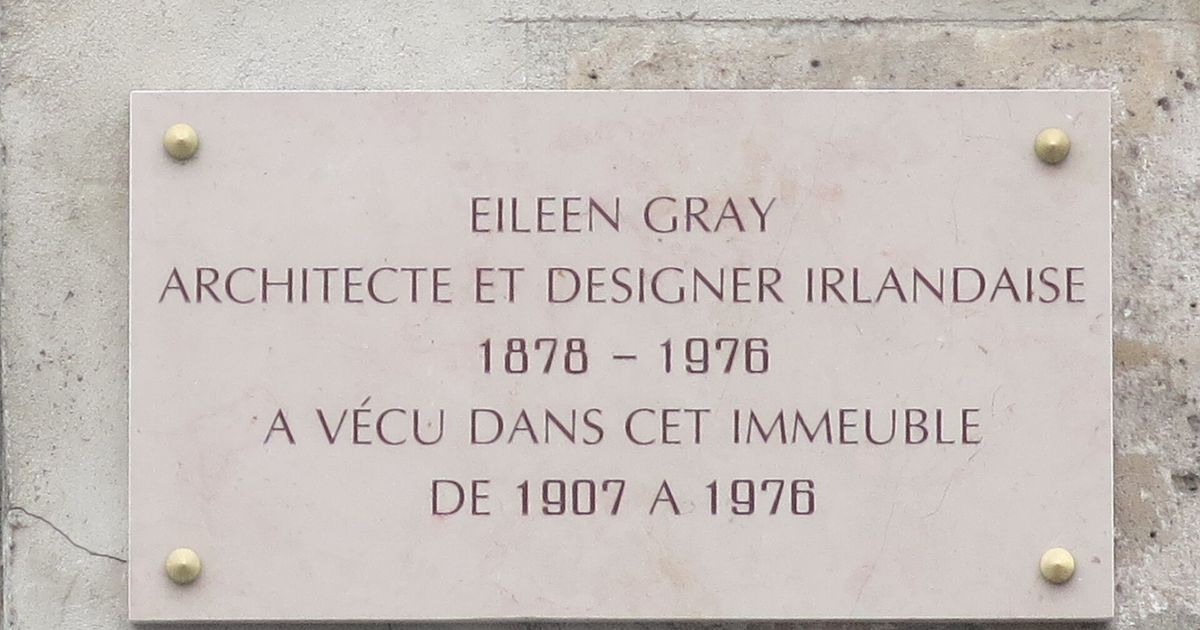
Eileen Gray designed E-1027, never appeared on its title, and was credited for it in print in December 1968, when she was ninety. This is a study of the paperwork, not of the murals.
Why This Record Exists
This institution has already written about what Le Corbusier did to the walls of E-1027. That study treated the murals as an act against an object and argued about moral rights, and it stands. Read it here.
This one asks a narrower question and reaches a worse answer. Set the painting aside entirely. Suppose the murals had never happened. Follow only the documents: the title deed, the design credit in print, and the record of what was inside the house. Does the name of the person who designed it appear in any of them, and when?
The answer is that it appears in none of the first, late in the second, and not at all in the third. The most famous attribution dispute in modern architecture is not primarily a story about a man with paint. It is a story about three separate records, each of which had a place for her name and none of which carried it, and about how long it took one of them to be corrected by one person writing one article.
Before the House: Twenty Years of Lacquer, and a Signature Somebody Else Demanded
E-1027 was Gray's first building and she was nearly fifty when she started it. Everything before that was objects.
She trained in lacquer, a discipline that takes years to learn and punishes impatience, and she worked at it in Paris through the 1910s and 1920s. The piece that made her name is a lacquer screen called Le Destin. The couturier and collector Jacques Doucet bought it, in 1913 or 1914 depending on the source, and became her first client.
One detail of that purchase belongs at the front of this study rather than buried in it. Doucet insisted she sign it. The screen carries the inscription Gray 1914 because the man who bought it required an authorship mark on the object, and the account of the sale says he had to press her for it.
Hold that beside everything that follows. The earliest surviving attribution of Eileen Gray's work exists because a collector demanded it, not because she volunteered it. Sixty years later the same reticence, operating on a building instead of a screen, would leave the design credit to drift for four decades. It is the identical behaviour at two scales, and only in the first case was there somebody in the room who insisted on the record.
She also ran a shop. Galerie Jean Désert, opened in Paris in 1922 under a name that was not hers, sold her lacquer, rugs and furniture. A woman trading under an invented male-sounding proprietor is a fact about the period and also a fact about the record: even her commercial identity was filed under something other than Eileen Gray.
What She Built, and the Name She Gave It
Between 1926 and 1929, on a terraced slope above the Mediterranean at Roquebrune-Cap-Martin, Eileen Gray built a white L-shaped house and called it E-1027.
The name is a cipher and it is the earliest piece of evidence in this study. E for Eileen. 10 for J, the tenth letter, for Jean. 2 for B, Badovici. 7 for G, Gray. Her initial opens it, his sit inside, hers closes it. Jean Badovici was a Romanian-born architect and critic, the editor of L'Architecture Vivante, her collaborator and her lover.
Whatever else is disputed, the building states an authorship structure in its own name, and it states hers as the enclosing one. It is the only document in this entire story that Gray controlled completely, a form of narrative permanence written into the thing itself, and she wrote it into the thing itself rather than into a file. That turns out to have been the correct instinct, for reasons the rest of this study is about.
She Was Never on the Title
Gray did not own E-1027. The land and the house were held by Badovici, and the house stayed with him when they separated in 1932. Published accounts differ on the mechanism, some saying the property was legally attributed to him from the outset, others that she gave it to him. This institution has not resolved which, and the distinction matters to a lawyer rather than to the argument here. Either way the ownership record of the house she designed begins with somebody else's name and never carries hers at all.
What follows is the custody chain as the published sources give it, and the gaps in it are as informative as the entries.
Badovici held the house until his death in 1956. The house then passed, by a route this study has not established from any source, to Marie-Louise Schelbert, a Swiss woman who owned it into 1980. She was found dead in her flat in Zurich in that year.
Her physician, Dr Peter Kägi, inherited the house. Before her death, by several accounts, he had removed almost all of Gray's original furniture from E-1027 and sold it at auction in Zurich. Sources differ on whether the removal and sale happened shortly before she died or across the following years, and none consulted here names the auction house or gives a lot list.
Kägi held the house until 1996, when he was murdered in it.
In 1999 the villa was bought by the Conservatoire du Littoral, the French public body that acquires coastal land, and restoration followed. It is open to visitors today as part of the Cap Moderne site.
Read that chain as a provenance record and it has one owner who kept it, one who died abroad, one who acquired it from his patient and was killed in the living room, and a public body that bought the wreckage. Gray appears nowhere in it. She is not a former owner, because she never was one. In the one record that is kept most carefully and transfers most reliably, the title, the architect of the building is not a party.
The Contents Left and Nobody Wrote It Down
The furniture is the part of this story that most resembles the rest of this institution's work, and it is the part least often told.
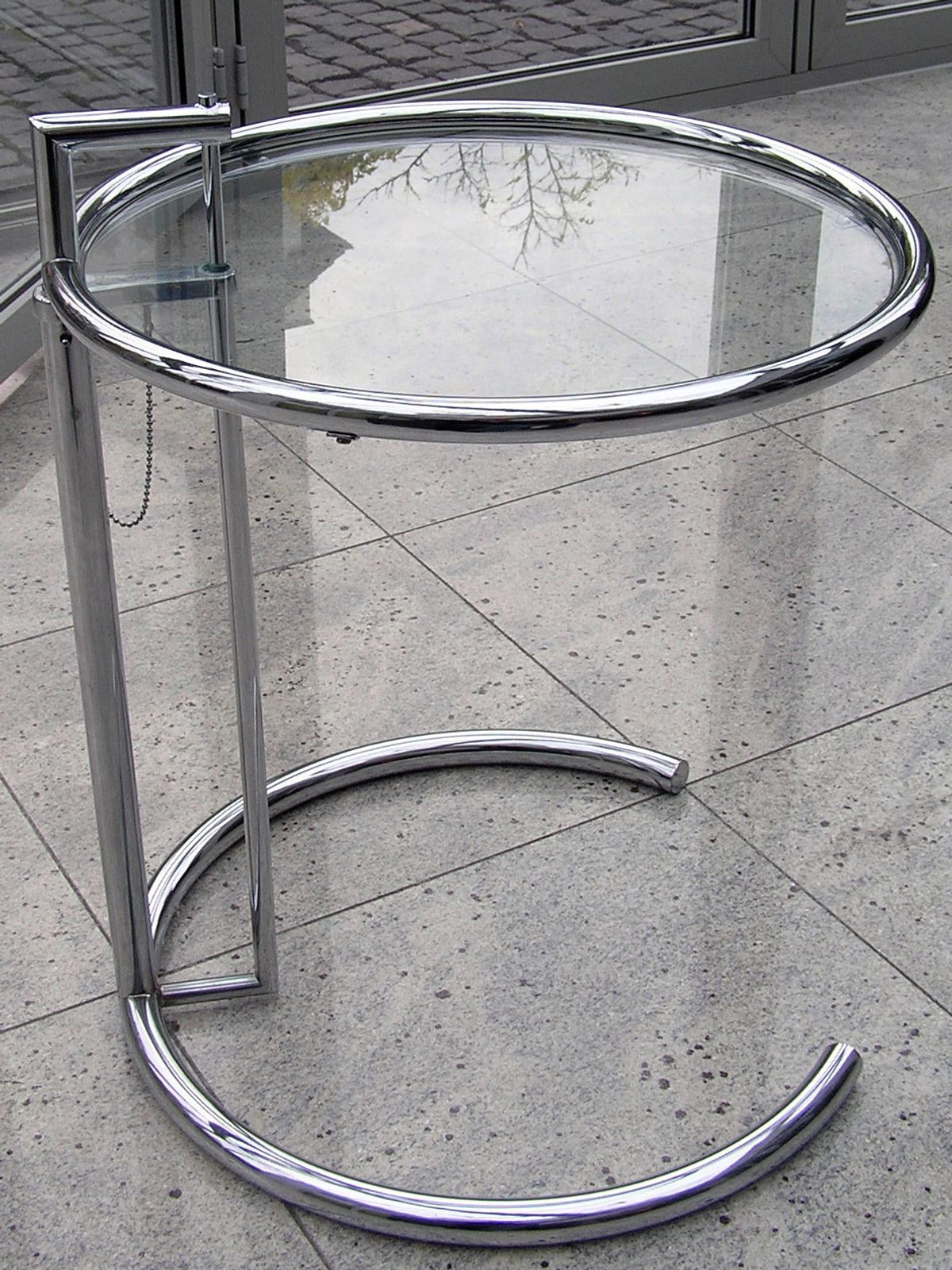
E-1027 was designed as a total interior. The furniture was made for the rooms it stood in, which is the strongest possible form of what this institution calls Material Singularity: an object whose meaning is partly its position. The adjustable table now sold worldwide as the E-1027 table was made for one bedroom in one house, to let one person eat breakfast in bed.
Almost all of it was taken out by the owner's doctor and auctioned in a different country.
That is a dispersal event of the first order, and the public record of it is a sentence or two in secondary sources. No source consulted here gives the date of the sale, the auction house, the number of lots, the prices, or where the pieces went. A collection made for a single building was broken up and scattered, and what survives of the event is an anecdote about a physician.
Compare what exists for the murals. They are photographed, dated, numbered, argued about in print for sixty years, and are the subject of a conservation programme. The paint has a better record than the furniture, and the reason is not that the paint matters more. It is that the paint is attached to a wall that an institution now owns, and the furniture went into private hands through a sale nobody catalogued publicly.
The Correction Has a Date, and She Was Ninety
Gray's authorship was not restored by a court, a campaign or an apology. It was restored by an article.
In December 1968, Joseph Rykwert published a tribute to her in the Italian magazine Domus, issue 469. It was reprinted as Eileen Gray: Pioneer of Design in the Architectural Review, volume 152, December 1972. Sources disagree on the Domus issue number, one bibliography giving 468, and this study uses 469 as the figure the magazine's own archive carries.
Before that article, by the account of several sources, credit for E-1027 had come to rest on Badovici and in places on Le Corbusier. After it, a revival followed: her furniture went back into production from 1972, a lacquer screen took a record price at the Doucet sale in Paris the same year, and the exhibitions began.
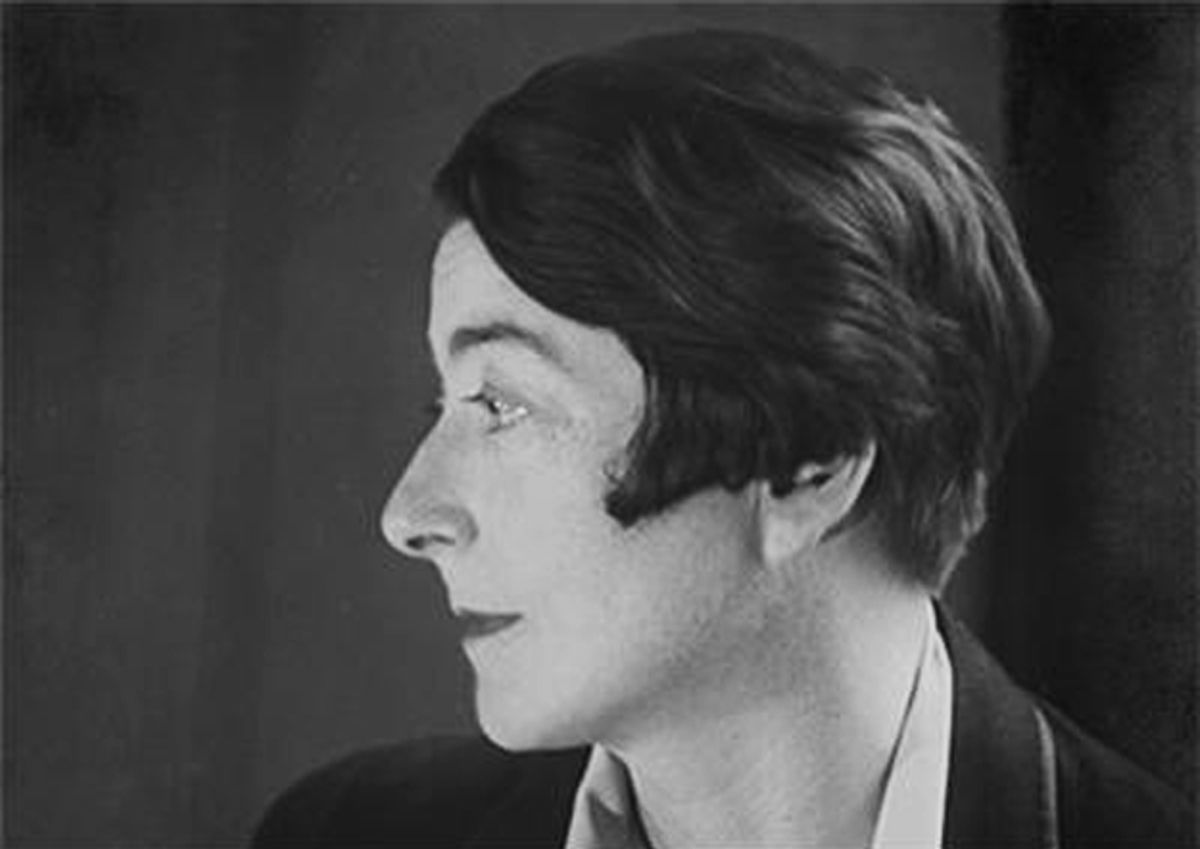
Eileen Gray was born in 1878 and died in 1976. When Rykwert's article appeared she was ninety years old. She had about eight years of being correctly credited, at the end of a working life of roughly sixty.
This is the number this study would most like a reader to keep. Not the forty years of misattribution, which is the usual figure quoted, but the eight. The correction arrived, and it arrived inside the lifetime of the person it concerned, which is rare and which is the only reason we know what she thought about any of it. The margin was one article and a nonagenarian's good health.
November 1972
The rediscovery has a month, and almost everything in this study passes through it.
On 8 November 1972, at Drouot in Paris, the estate of Jacques Doucet was sold. Le Destin, the screen he had bought from Gray sixty years earlier and made her sign, came up with a valuation of 20,000 francs. It sold for 170,000. Reports of the equivalent in dollars vary between roughly 36,000 and 64,000, and the identity of the buyer is itself contested, with Yves Saint Laurent named as a leading bidder and the American collector Robert Walker named as the purchaser. The sale was reported in Le Figaro, Le Monde and the Herald Tribune.
Gray was ninety four and living in Paris. Four years earlier, Rykwert's article had reintroduced her. In the same year, the London retailer Zeev Aram took her furniture back into production, beginning with the adjustable table she had made for E-1027 and the Bibendum chair. Aram, who first met her the following year, later recalled her response to the proposal as a question: did he really think it was worthwhile.
And in that same month of November 1972, the Sunday Times Magazine sent a writer to interview her.
The sale is why the interview happened. A screen makes a record price in Paris, three newspapers carry it, a London magazine commissions a profile of the ninety four year old who made it. That is an ordinary sequence and it is the system working exactly as it should: attention arrives, a journalist is dispatched, the record gets made.
The record did not get made.
The Interview That Was Never Published
In November 1972, a young writer for the Sunday Times Magazine went to Paris to interview her. His name was Bruce Chatwin.
The interview was never published. Chatwin's widow Elizabeth, asked about it decades later, said she did not know why, and did not think he had even written up his notes.
What survives of that afternoon is two things. The first is a letter from Chatwin to Gray dated 21 December 1972, thanking her for the most enjoyable Sunday afternoon he had spent in years. The second is a book about somewhere else.
On her wall was a map of Patagonia she had painted. She told him to go. He went in 1974, and In Patagonia came out of it, and it changed travel writing.
So the single most consequential surviving trace of that conversation is a book that is not about her. The record that was supposed to be made, by a professional, for a national newspaper, at the exact moment the world had started paying attention again, was not made at all. There are no notes. There is a thank-you letter and a masterpiece about Argentina.
This institution has a name for that shape. It is a declared absence with everything a record needs except the content: a named party, a dated occasion, a known reason for the meeting, and nothing inside it. It is not unknowable, because it happened and both participants knew what was said. It is not inapplicable. It is simply gone, and it went because one person did not write it up.
The sources carry a small disagreement about the date, one review placing the meeting in 1973 and most placing it in November 1972. The letter of 21 December 1972 is the strongest evidence and it supports the earlier date.
The Sentence Everyone Quotes
There is one line of Gray's that appears wherever her obscurity is discussed, usually in its short form:
I was not a pusher.
The fuller version, which is the one most publications carry, runs: I was not a pusher and maybe that's the reason I did not get the place I should have had.
This institution went looking for where it comes from, and the result is the finding of this section.
Measured on 25 October 2026 across the general-audience sources reachable that day, the J. Paul Getty Trust, Core77 and Wallpaper all carry the line and attribute it to Gray herself. The Getty gives it as did not get the place. Core77 gives it as did not get to the place. Not one of the three names an interview, a date, a publication or a page. Two further sources, the Royal Academy and one architecture site, refused automated requests and were not measured.
This is not an accusation that anybody invented it. Gray's biographer Peter Adam knew her personally and published a biography in 1987 drawing on her archives, and the line may well sit in it with a page number attached. This institution has not read that book and says so.
What can be said is narrower and still worth saying. The sentence used to explain why Eileen Gray's record failed is itself circulating without a record. It travels in at least two wordings, attributed to her by every outlet and sourced by none of them, exactly the way the attribution of her house travelled for forty years. A claim repeated confidently enough stops being asked for its source, which is the mechanism this entire study describes, operating on the sentence about the mechanism.
What a Conforming Record of E-1027 Would Contain
It is easy to say the record failed and harder to say what a working one would have held. Here is the house written out as a custody record of the kind this institution specifies, with every field this study could fill and every field it could not.
Origin. Designed by Eileen Gray, built 1926 to 1929 at Roquebrune-Cap-Martin, with Jean Badovici in a role the sources do not agree on. A conforming record does not force that. It states the dispute, names the sources on each side, and marks the division of labour as contested rather than choosing the convenient answer.
The authorship mark. The cipher in the building's name, readable since 1929. A record carries this because it is the only authorship statement the object makes about itself.
Held. Jean Badovici, from construction to his death in 1956. The architect is not the holder, and a conforming record makes that visible instead of letting the holder field stand in for the author field, which is precisely how the drift began.
Transfer. To Marie-Louise Schelbert, by a mechanism and on a date this study cannot establish. That is a typed absence, closable by the French land registry, and a record would say so and name the registry.
Contents removed. Almost all original furniture, taken from the house and sold at auction in Zurich, date unknown, auction house unnamed, lots uncounted. This is the entry most records would omit entirely, because nothing obliges anyone to record what leaves a building. A record built around declared absence would carry it as an open gap with a named closer, which is the auction house, if anyone can establish which one.
Transfer. To Peter Kägi, on inheritance, 1980.
Transfer. To the Conservatoire du Littoral, 1999, by purchase.
Intervention. Murals painted by Le Corbusier from 1938, without the designer's consent. Note that in the vocabulary of this institution's current specification there is no event kind for this at all, a defect published two studies ago and still open.
Eight entries. Four of them are complete and could have been written at the time by anyone holding a pen. Three are absences that remain closable today. One has no place to go in the schema. None of this required a historian. It required a form with the right fields on it, and no such form existed, and the consequence was that a woman spent forty years as a footnote to her own house.
The Mechanism, Stated Plainly
Nothing in the first forty years of this story required anybody to decide to erase Eileen Gray.
The title named the owner, correctly. The magazines named the famous man associated with the house, lazily. The sign at the gate named whoever drew visitors. The furniture left through a private sale that generated no public document. Each record did what it was built to do, and the architect was simply not a field in any of them.
That is the finding, and it is the same one this institution reached twice in the last week from completely different directions. A provenance names every owner and no maker of the keeping. A hem tag names the collective and never the woman who stitched it. A court order can produce an inventory in nine days that an institution would not publish on its own. In each case the missing name was not suppressed. There was nowhere to put it.
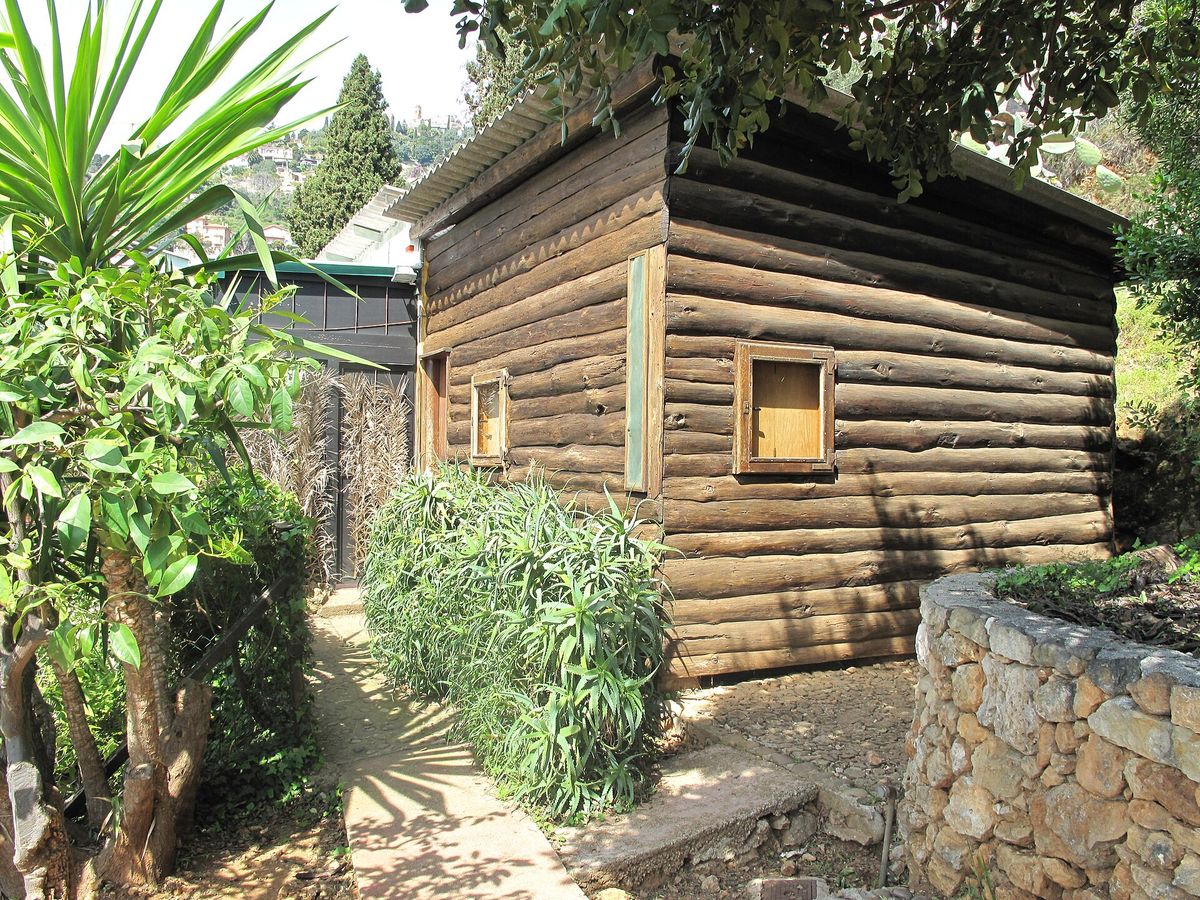
A record that has no field for the author will not acquire one through good intentions, and it will default, every time, to the name that is most institutionally convenient. Le Corbusier was convenient. He was famous, he was male, he was photographed there, he built his cabin next door in 1952, and he died swimming in the sea below the house in 1965. None of that makes him the architect, and all of it made him the easier caption.
What This Institution Is Not Saying
OAC does not authenticate, appraise or value, and nothing here is a judgment on the attribution of any specific drawing or object.
This study does not claim Badovici contributed nothing. Published scholarship differs on the division of labour, with at least one architectural analysis arguing from a comparison with Gray's other work that his role was closer to technical consultant and critic, and at least one reference work stating plainly that the individual contributions cannot now be separated. This institution does not resolve that and does not need to: the question here is what the records said, not what the drawing office did.
This study takes no position on how the villa should be interpreted, restored or presented today, and none on the murals, which are the subject of the earlier study and of a live conservation debate.
No claim is made here about Peter Adam's biography, which this institution has not read.
The Declared Gaps
Stated so that silence is not read as completeness.
How the house passed from Badovici's death in 1956 to Marie-Louise Schelbert is not established here. No source consulted gives the mechanism or the date.
The furniture sale is undocumented in every particular. No date, no auction house, no lot count, no prices, no buyers. The accounts differ even on whether it preceded or followed Schelbert's death.
The circumstances of Kägi's death in 1996 are reported by a small number of sources and were not corroborated here, beyond the fact of a killing in the house.
The Domus issue number is given as 469 by the magazine's own archive and as 468 by one bibliography. The page range of 33 to 46 appears in a single source and is unverified.
Whether the Chatwin notes survive anywhere is unknown. The statement that he never wrote them up is reported at second hand, from his widow, through a novelist who researched the episode.
Patricia O'Reilly's book about the meeting is a novel. The factual claims drawn from her research are used here as reported statements and not as archival findings, and the novel itself is not evidence of anything that was said that afternoon.
The quote's primary source has not been established and may well exist. The measurement above is over three general-audience publications on one day and is not a statement about the scholarly literature.
The price of Le Destin at the 1972 Doucet sale is reported three ways. 170,000 francs appears in one account with a dollar equivalent of about 36,000; another gives 64,000 dollars. The buyer is given as Robert Walker in one account and Yves Saint Laurent is named as a leading bidder in the same breath. This study states the franc figure and flags the rest.
The date Doucet bought Le Destin is given as both 1913 and 1914. The screen itself is inscribed 1914, which is evidence of when it was signed and not necessarily of when it was sold.
Gray's own account of the attribution is largely absent from this study because this institution has not reached her papers. The National Museum of Ireland holds a substantial Gray collection and her archive material sits across several institutions.
What Would Settle It
On the quote: the page. Somebody with Adam's 1987 biography can resolve in ten minutes a question that three major institutions have left open for years. If it is there, the sentence acquires its record and this section becomes a footnote. If it is not there, the question becomes considerably more interesting.
On the furniture: the Zurich auction catalogue. Auction records survive, and a dated sale of the contents of E-1027 would be the single most valuable document anyone could recover here. It would turn an anecdote about a doctor into a provenance chain for several dozen objects that are now among the most valuable modern furniture in existence.
On the Chatwin interview: his papers. If notes exist, they are the only first-hand account of Eileen Gray taken at the moment of her rediscovery by a writer of that calibre.
On the title: the deed. Whether the property was conveyed to Badovici or registered to him from the start is answerable from the French land record and would settle a point that secondary sources currently give two ways.
Coda
The house is named after both of them, in a code she wrote, with her initial on the outside.
That cipher is the only part of the record she controlled, and it is the only part that never drifted. The title went to somebody else and stayed there through four owners and seventy years. The design credit went to two men and took forty years and one article to come back. The furniture went to Zurich and the catalogue is not public. The interview was never written up.
But the name of the house still says E, then Jean Badovici, then Gray, and it has said so since 1929 to anybody who knew how to read it.
She put the attribution in the object because she could not put it in the file. Every study this institution has published in the last week has arrived at the same place from a different direction: the record is where authorship goes to be lost, and the object is where it sometimes survives.
She was ninety when the correction came. She had eight years.