Bayeux Tapestry British Museum Demand: Institutional Necrophagy’s High-Velocity Display.
On eighty thousand people in a digital queue, £2.5 million in a single day, and a nine-hundred-year-old embroidery asked to underwrite it all
On July 1, the scramble for Bayeux Tapestry British Museum tickets produced the biggest single ticketing day in the museum's 273-year history: more than £2.5 million in one day, an online queue that peaked above eighty thousand people, and a website strained to 4.7 times its normal traffic. The Bayeux Tapestry's London loan (September 10, 2026 through July 11, 2027, the first chance to see the Bayeux Tapestry in the UK since it was stitched, probably in England, nine centuries ago) has become the decade's cleanest demonstration of what the PLCFA framework calls the financialization of access. The lexicon terms in active structural use throughout this study: Material Singularity, Narrative Permanence, Sovereign Object, Zero-Sum Aura, Speculative Velocity, Labor Density, Burden of Preservation, Custodial Stewardship, Atmospheric Equity, and Institutional Necrophagy. This study also does something the OAC protocol requires but rarely gets to display: it corrects its own institutional council on the record.
The Event: Eighty Thousand in the Queue
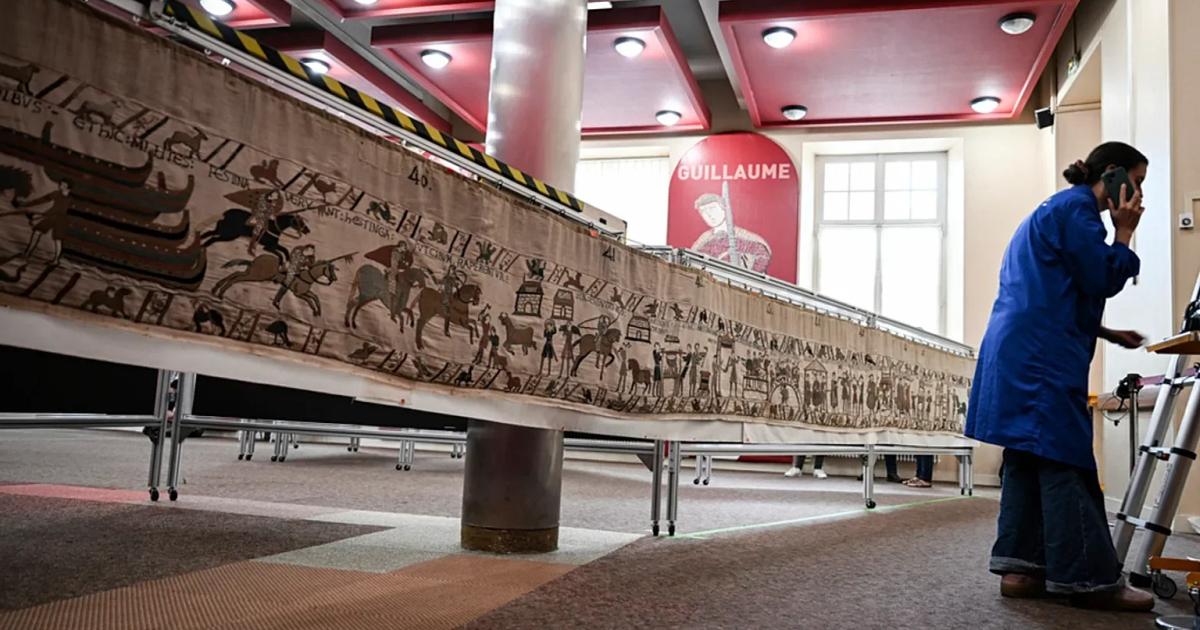
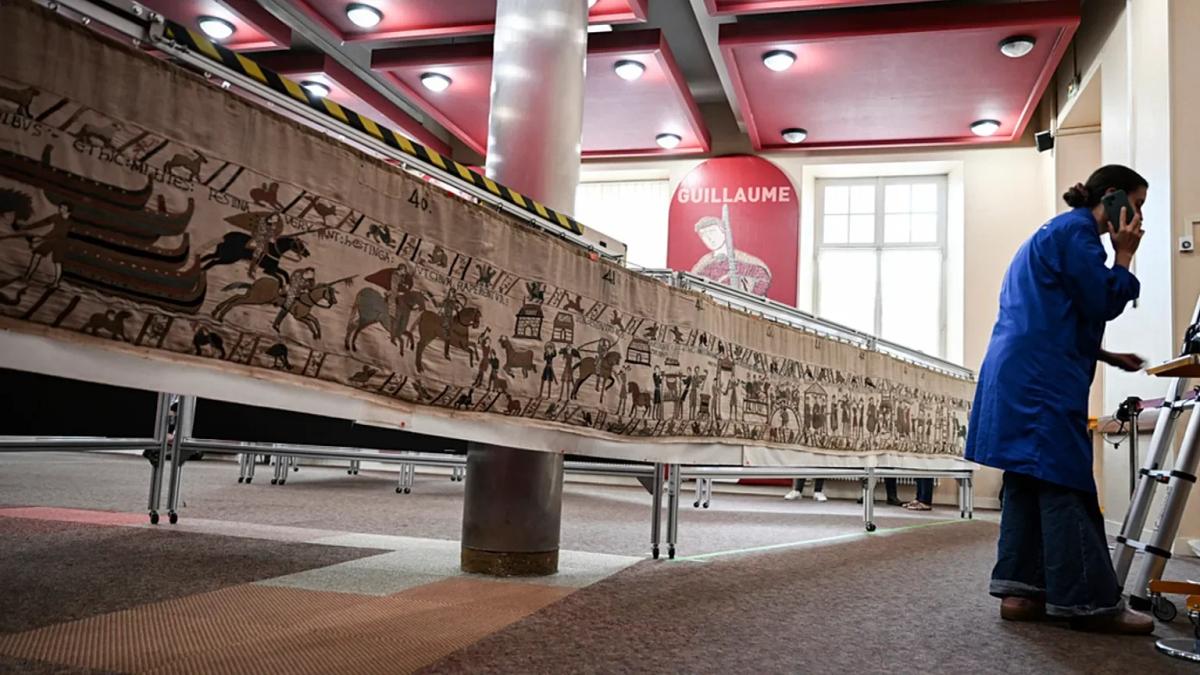
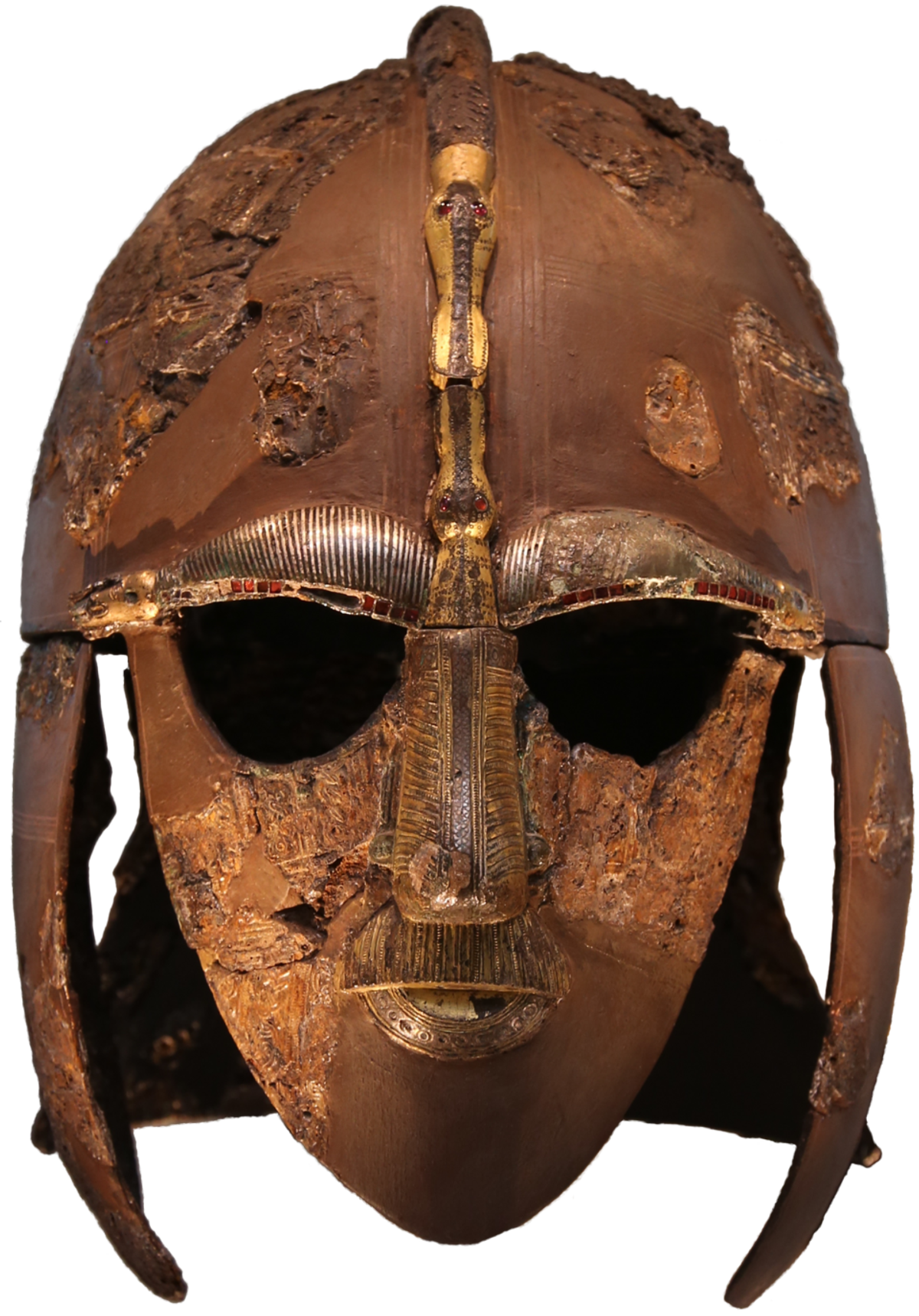
The verified facts. When tickets for “The Bayeux Tapestry” went on sale on July 1, the British Museum recorded, in the words of director Nicholas Cullinan, “the biggest ticketing day for any exhibition in the British Museum's history.” The digital queue peaked above 80,000. Ticket revenue exceeded £2.5 million in a single day. Entries for September through December sold out entirely; two further releases will cover January through July 2027. The exhibition itself (10 September 2026 to 11 July 2027 in the Sainsbury Exhibitions Gallery) will display the roughly seventy-metre embroidery flat, in one continuous length, for the first time in its modern history. The loan, agreed during the 2025 Franco-British state visit, sends the tapestry across the Channel while its home museum in France undergoes renovation; in exchange, the Sutton Hoo treasures and the Lewis Chessmen travel to Normandy. Every number in that paragraph is a measurement of the same underlying quantity: unmet demand for a single, unrepeatable object.
Correcting the File: What This Loan Is and Is Not
OAC's twelve-agent council argued this signal before verification, and several agents, the Decolonial Ecologist and Necrophage Profiler among them, framed the exhibition as a colonial institution displaying “a culturally appropriated artifact” awaiting repatriation. Verification against the primary record requires that framing to be struck. The Bayeux Tapestry is French-owned and has been kept at Bayeux for the better part of nine centuries; it is France lending to Britain, not Britain withholding from France. The deeper historical irony runs the other way: the embroidery was almost certainly made in England in the 1070s, likely in Canterbury workshops, before beginning its nine-hundred-year residence in Normandy. Its only previous departures from Bayeux were under duress: Napoleon's propaganda display of 1804, and its wartime transfer to the Louvre in 1944 under the German occupation, which had coveted it for its own mythology. This loan, by contrast, is voluntary, reciprocal, and time-bound. The history of Bayeux Tapestry ownership contains real trauma; this exhibition is not an instance of it. When the premise fails, the protocol says so, and relocates the critique to where it actually holds.
Verification is not a formality; it is the difference between criticism and mythology. The necrophagy in this case does not live in the provenance. It lives in the pricing of proximity.
The Sovereign Object: Nine Centuries of Material Singularity
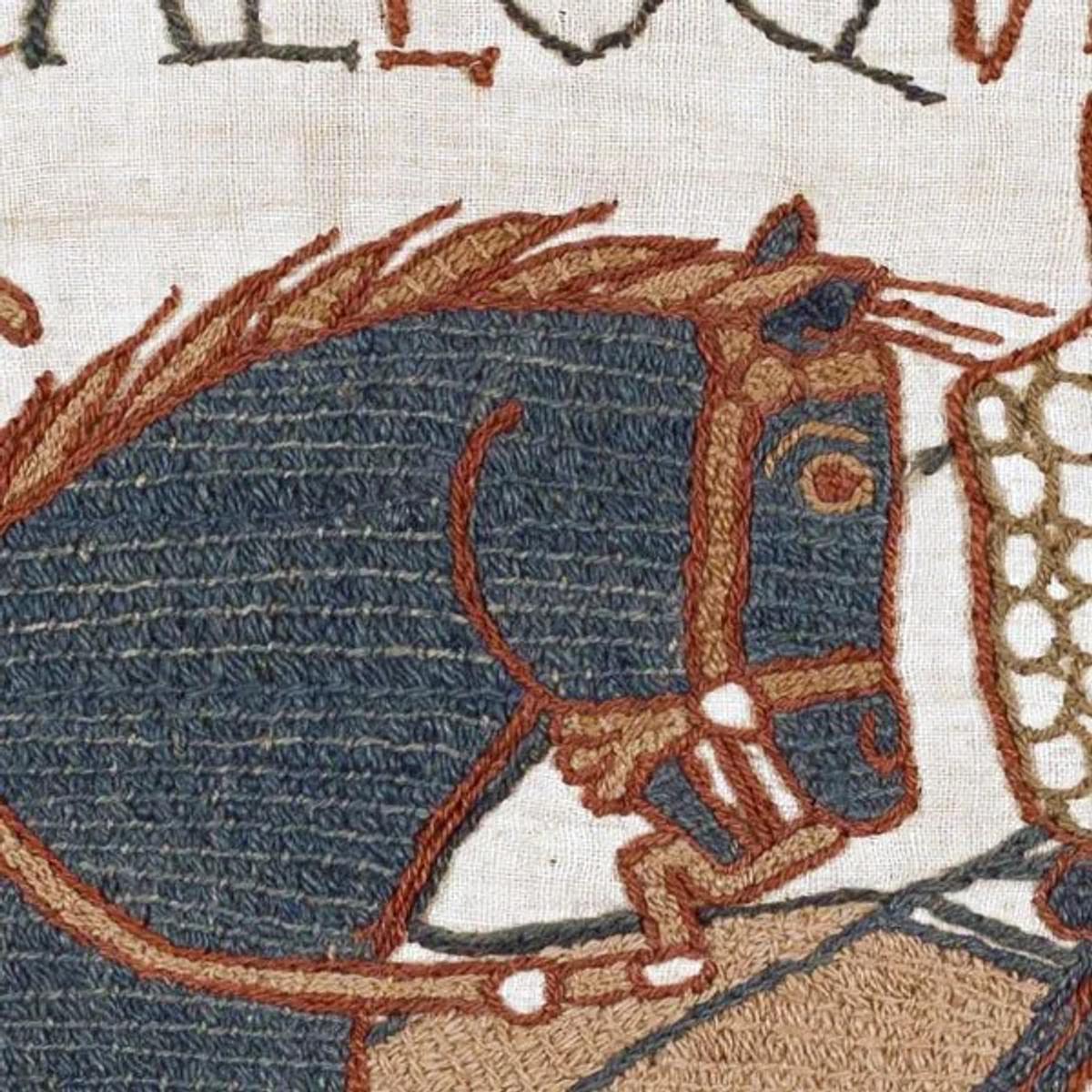
Why is the Bayeux Tapestry important enough to crash a museum's website? Because it is the rare object in which Material Singularity and Narrative Permanence are the same fact. Materially: roughly seventy meters of wool-embroidered linen, technically an embroidery, not a woven tapestry, executed by unnamed needleworkers, very probably women, whose accumulated Labor Density survives in something like fifty-eight scenes of thread that have outlasted every institution that ever claimed them. Narratively: it is not an object with a story attached; it is a story in object form, the near-contemporary account of the Norman Conquest of 1066, complete with named actors, a comet, and history's most argued-over arrow. The cultural heritage sector has no better example of a Sovereign Object: an artifact whose authority no institution confers and no institution can revoke; it is the institutions that borrow authority from the object.
The Bayeux Tapestry is not an object with a narrative. It is a narrative that took material form and then outlived every custodian who touched it. That is what Narrative Permanence means when it is earned rather than claimed.
The Financialization of Access: £2.5 Million for Proximity
The object cannot be bought. It has no auction estimate, no insurance-driven market comparables that mean anything, no Speculative Velocity in the conventional sense; it is the purest Anti-Speculative Entity in European culture. And yet on July 1 it generated £2.5 million in a day. What was sold? Not the object, and not even the image of the object, which is infinitely reproduced and freely available. What was sold was proximity: timed, ticketed, non-transferable nearness to the one original. This is the Aura Transaction in its most distilled form; the Zero-Sum Aura of a singular object converted into revenue at the precise rate the queue will bear. The market has discovered what OAC's framework predicted: when an object is genuinely unownable, access becomes the asset class, and scarcity of encounter replaces scarcity of possession as the engine of value.
When the object cannot be owned at any price, the market prices the encounter. The £2.5 million day is what Speculative Velocity looks like after it has been evicted from ownership: it moves into the queue.
The Queue as Product: Eighty Thousand Waiting
The eighty-thousand-person queue deserves its own analysis, because the queue as product is a mechanism OAC has previously documented in drop culture and luxury retail, and its appearance in the heritage sector confirms the mechanism has gone structural. The digital queue is not a neutral distribution tool; it is an experience that manufactures value. Waiting publicly for public access to rare museum exhibits converts a museum visit into a positional good: the ticket certifies not just entry but victory over 79,999 others. Attendance becomes conspicuous cultural leisure; the exhibition selfie is already priced into the demand curve. None of this is the public's failing. The yearning is real, and it is the study's most hopeful data point: in a culture allegedly anesthetized by infinite reproduction, eighty thousand people fought for the right to stand before nine hundred years of thread. The scarcity here is not manufactured; the packaging of it is.
The Fragility Mandate: What the Object Risks So the Institutions May Harvest
The preservation challenges of the Bayeux Tapestry are not rhetorical. Conservators have documented thousands of stains, creases, and micro-tears across the linen; the fragility debate delayed and nearly derailed the loan when it was first proposed in 2018, with French specialists warning that transporting the textile at all carried irreducible risk. The Burden of Preservation is therefore the study's hardest question: the object, which asked for none of this, bears the physical risk of transit and ten months of display so that two governments may harvest diplomatic capital and two museums may harvest attendance, revenue, and Atmospheric Equity. The exhibition's defenders answer that the Bayeux museum's renovation required the tapestry's removal regardless, and that the British Museum's specially engineered flat display may treat the textile more gently than its previous hanging. Both claims are plausible. Neither has been accompanied by the thing the Custodian's Contract demands: full public documentation of the condition before and after transit, so that the object's material cost can be audited against the institution's narrative gain.
The Fragility Mandate is simple: whoever profits from a Sovereign Object’s display owes the public the evidence of what the display cost the object. Aura extraction without condition transparency is necrophagy with better lighting.
Institutional Necrophagy, Correctly Diagnosed
With the false provenance charge struck, what remains of the council's dominant frame? This: the British Museum, the institution most burdened by the world's restitution debates, is staging, with an object it does not own, a flawless performance of exactly the reciprocity its critics demand of it. The loan is real, the exchange is real, and the institutional benefit is equally real: the museum renews its own contested Atmospheric Equity by association with an object whose moral file is clean. That is the precise sense in which Institutional Necrophagy survives verification here: not theft of the object, but a feeding on its accumulated meaning; nine centuries of Material Memory metabolized into one institution's best ticketing day. The tapestry lends the museum its innocence for ten months. Innocence is not a renewable resource; the Zero-Sum principle applies. What the museum gains in aura, the object spends in risk, handling, and the slow conversion of its meaning into Semantic Burden.
What Legitimate Custody Looks Like: The Covenant Standard
The standard is specifiable, and the loan already meets part of it. The reciprocal movement of the Sutton Hoo treasures and the Lewis Chessmen to France is genuine exchange rather than extraction; the strongest structural feature of the agreement. What the arrangement still lacks, and what OAC proposes as the Sovereign Object Custodial Covenant for all international loans of historical artifacts, is fourfold: published condition reports before departure and after return, so the Burden of Preservation is publicly auditable; a binding commitment of exhibition revenue to the object's own conservation and to its home institution's renovation, converting the £2.5 million day from harvest into stewardship; named credit for the object's makers in all interpretive material, the anonymous embroiderers whose Labor Density is the entire asset; and a standing rule that the borrowing institution's marketing may spend the object's aura only at the rate it reinvests in the object's future. By that covenant, this loan is redeemable, and the museum's own receipts have already demonstrated it can afford to be.
Coda
Eighty thousand people in a queue is not a scandal. It is the finding. It is empirical proof, at population scale, that the appetite for Material Singularity survived the age of infinite reproduction untouched; that no facsimile, however perfect, is a substitute for thread that was pulled through linen while the Conquest was living memory.
What the case confirms for the PLCFA framework: when ownership is impossible, the market does not surrender; it migrates into access, and the queue becomes the exchange floor. What it leaves structurally open: whether the institutions now holding £2.5 million of the public's yearning will convert it into the object's future, conservation funded, condition disclosed, makers named, or merely into their own next spectacular season.
OAC does not fault the eighty thousand. They are the healthiest signal in this file: proof that the culture still knows the difference between an image and an object. The question is whether the institutions that sold them the encounter still do.
Authored by Christopher Banks, Anthropologist of Luxury, Critical Theorist & Founder Objects of Affection Collection Office of Critical Theory & Curatorial Strategy 469 Fashion Avenue, 12th Floor, New York, NY 10018
RELATED OAC STUDIES
Further critical reading from the OAC archive on stewardship, necrophagy, and the economics of the singular object.
Custodial Stewardship & Trauma Provenance · Eileen Gray E.1027: Le Corbusier's Vandalism and the Trauma Provenance Deconstructed
Institutional Necrophagy & Posthumous Capture · The Custodian of Looking: What David Hockney's Death Reveals About the Architecture of Post-Mortem Necrophagy
The Hollowed Object & the Spectacle of Access · Balenciaga's Wellness Kick: What the Techwear Smoothie Activations Actually Reveal
Material Singularity & Structural Captivity · Structural Captivity of Material Singularity
Labor Density & the Textile Original · Eve Schaub Is Growing a Dress: What the Year of the Dress Actually Confirms About Labor Density, Slow Fashion, and the One Original Object