Downstream of a Missing Piece of Paper: What the Parthenon Record Holds, and What It Has Never Held
On the British Museum's homepage this month, the lead item is a historic loan from France. The Bayeux Tapestry crossed the Channel in September for the first time in nine hundred years. On the museum's own Parthenon page, four clicks away, is the sentence: a loan request has never been received.
Both statements are true. Neither page mentions the other. Reading them together is the most useful thing anyone can do with this dispute, because it dissolves almost every explanation usually given for why the Parthenon Sculptures cannot move, and leaves exactly one standing.
This institution takes no view on whether the sculptures should return to Athens, remain in London, or travel. That is not a question we answer, and nothing below is an argument for any party. What follows is about the record: what the documents say, what they do not say, what the two governments count, and which of their disagreements are about the past and which are about this month.
What a Loan of That Size Actually Required
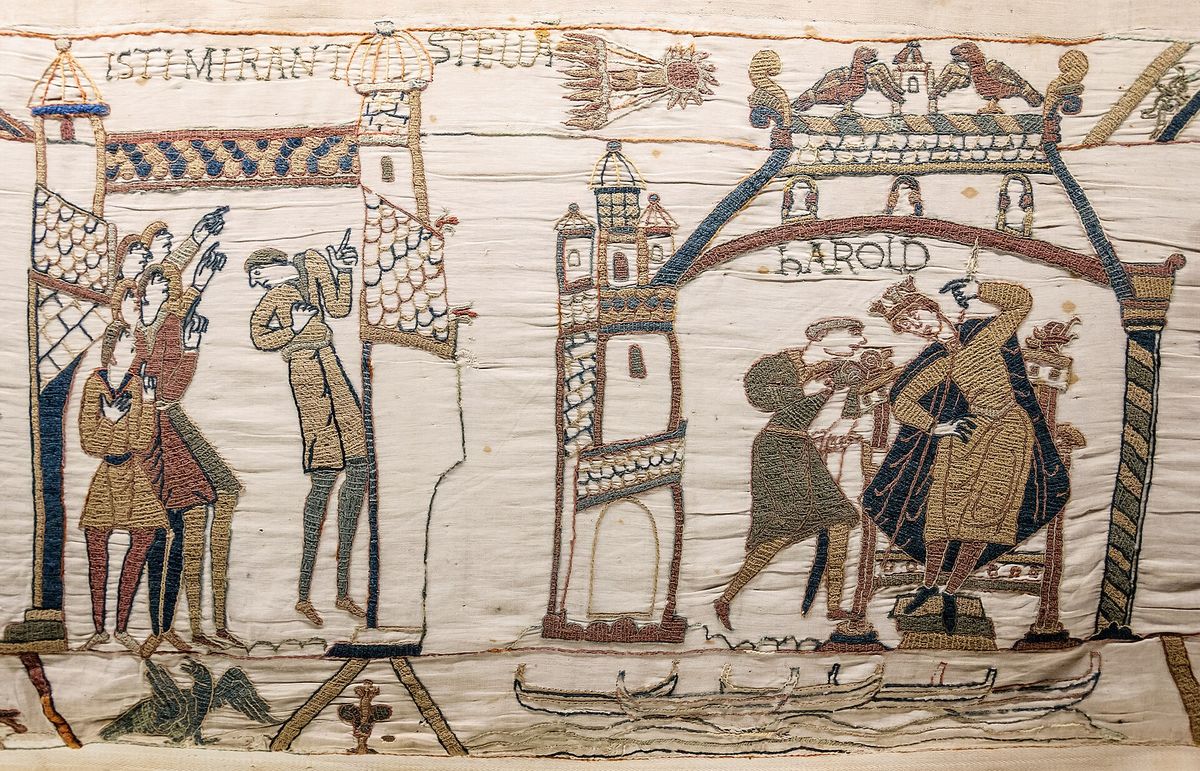
The Bayeux Tapestry is on display at the British Museum from 10 September 2026 to 11 July 2027. It is roughly seventy metres of eleventh century embroidered linen, it is a French national treasure of a symbolic weight comparable to anything in this argument, and it had not been in Britain since it was made.
The reasons it should not have been possible are instructive, because they are the same reasons usually given in the other case.
France resisted the loan for decades, by President Macron's own account, given at the British Museum itself. Macron acknowledged that he had overruled expert advice to push the agreement through. The conservation objection was not a formality: a petition launched by the critic Didier Rykner, warning that any transport, even minimal, represents a danger, gathered tens of thousands of signatures, and French protesters called the loan a heritage crime.
It was challenged in court. The association Sites and Monuments took the matter to France's highest administrative court, which rejected the appeal. The reported question was whether a court could review the president's decision at all, French law distinguishing acts inseparable from the conduct of international relations from those that are separable.
And the practical terms were enormous. The United Kingdom provided nail to nail cover through the Government Indemnity Scheme, reported at a record eight hundred million pounds, against a value supplied by the French state. A French state team ran a dry test of the transport route. The textile travelled in a crate compliant with isothermal preservation standards. The British Museum agreed to pay for the studies, adaptations and works needed to meet the premises conditions. In exchange, material from the Sutton Hoo ship burial and the twelfth century Lewis Chessmen go to institutions in Normandy.
The framework was published by the UK government as an Administrative Arrangement, which is explicit that the binding instruments are separate formal loan agreements between the parties.
So: decades of resistance, overruled conservators, a mass petition, a constitutional-scale legal challenge, a record indemnity and a reciprocal loan. It happened in a year.
Whatever else is true, nobody can argue that the machinery does not exist, that fragile objects of the highest symbolic value cannot be moved between these two countries, or that domestic opposition settles it. The British Museum is currently advertising the opposite on its front page.
Why That Is Not the Precedent It Appears to Be
Here is where most commentary goes wrong, and it is worth being exact, because the honest version is more interesting than the easy one.
The Bayeux Tapestry could travel precisely because nobody disputes who owns it.
France lent it. France retains title. The loan agreement is enforceable because both parties agree about the one thing that makes a loan a loan: that the object goes back. Every difficulty in that arrangement was practical, political or conservational, and not one of them touched ownership.
The Parthenon Sculptures are the inverse. Ownership is not a difficulty attending the question. It is the entire question, and it contaminates the instrument that would otherwise solve it.
That is why the museum's sentence and Greece's position are not actually in conflict, though they are usually reported as though they were. The British Museum says the Trustees will consider any loan request, subject to normal loan conditions, and that Greek governments have refused to acknowledge the Trustees' title. Greece's culture minister, Lina Mendoni, has said a loan is out of the question, because accepting one would be an indirect acknowledgment of ownership. Prime Minister Kyriakos Mitsotakis put it more plainly: Greece cannot accept a scheme under which it borrows parts of its own monument.
Both sides are describing the same trap from opposite ends. A loan requires a lender. Naming one settles the dispute in the act of resolving it, which is why the one mechanism that has just been demonstrated to work cannot be used here. The absence of a loan request is not an oversight on Greece's part and not a dodge on the museum's. It is the predictable output of a disagreement about title.
Which makes the title documents the only thing worth examining closely. So examine them.
The Document the Acquisition Rests On Does Not Exist
The British Museum's page states the acquisition in a single clause: Lord Elgin, then British Ambassador to the Ottoman Empire, successfully petitioned the authorities, and he was granted a permit (firman), under which between 1801 and 1805, acting under the oversight of the relevant authorities, he removed about half of the remaining sculptures.
Read that sentence beside the state of the record and something is missing from it.
No such firman has ever been produced. The original Ottoman document is not in the Ottoman archives, which are famously meticulous for exactly this period and this kind of administrative instrument. No record of any dealing between Elgin and the Ottoman government has been found in the Foreign Office files either.
What exists is an Italian translation, dated 1801, associated with Elgin's chaplain the Reverend Philip Hunt, and found among the Hunt family papers by the scholar William St Clair. The museum's own position is that this document is a translation of a lost original in which the acting grand vizier was authorised to permit the removals.
So the legal foundation of the most contested acquisition in any museum in the world is a translation, into a third language, of a document nobody has seen, discovered in a private family's papers.
The challenges to it are specific rather than rhetorical. Professor Vassilis Dimitriadis has argued that under Ottoman law only the Sultan could issue a firman, and that the surviving text carries neither the tughra, the Sultan's emblem, nor the invocation to God that such an instrument would carry. Others have said the Italian text does not match the structure of Ottoman diplomatic language of the period. David Rudenstine, after roughly twenty five years working on it, concluded that the basis of the museum's claim to legal ownership was faulty. The advocate George Bizos argued that the English version Elgin's party relied on may be a distorted translation of an Italian translation of an Ottoman original.
This institution is not in a position to adjudicate any of that, does not, and will not. Whether the document was a firman, a lesser authorisation, or something else entirely is a question for Ottoman diplomatics, and the specialists disagree.
What is not in dispute, and is the only thing stated here, is the shape of the evidence. The original has not been produced. The surviving text is a translation. The archive that should hold the original does not.
The Museum's Own Reading List Contains the Question Its Page Settles
There is a detail on that page that almost nobody notices, and it is the sharpest thing in this article.
Below the museum's account of the acquisition, under Further reading, the page recommends Dyfri Williams, Lord Elgin's firman, Journal of the History of Collections 21:1 (May 2009), 49 to 76, a twenty eight page scholarly article devoted to the status of that document. It also recommends William St Clair, Lord Elgin and the Marbles, in its third edition, by the scholar who found the Italian translation and who is among the acquisition's most forceful critics.
The page asserts in four words what the literature it directs you to spends decades examining. "He was granted a permit" is a settled statement. A journal article of that length exists only because the matter is not settled, and the museum knows this well enough to put it in front of the reader.
That is not an accusation of concealment. The citation is right there, which is the opposite of hiding. It is a precise observation about register: a public page writes in the voice of established fact, and its own bibliography is the record of an open question. The two live on one screen and almost no reader joins them.
This institution has argued before that a gap in a provenance record has two completely different prices depending on who is reading it, and that a document which asserts without pointing at something a reader can open is a claim wearing the clothes of evidence. The Parthenon case is the largest instance of that pattern anywhere. Here the pointer is supplied and the claim is made anyway, in a firmer tense than the pointer supports.
What Parliament Actually Did in 1816, and by What Margin
The museum's page says Elgin's actions were thoroughly investigated by a Parliamentary Select Committee in 1816 and found to be entirely legal, before the sculptures entered the collection by Act of Parliament. That is accurate, and the detail underneath it is worth having.
Elgin petitioned the Commons in February 1816, in financial difficulty. A Select Committee was appointed and reported on 25 March. It recommended purchase at £35,000. Elgin had sought something closer to £74,000, on his own accounting of what the operation had cost him, a reckoning that included bribes as a line of expenditure.
The Commons approved the purchase on 7 June. The reported division was 82 votes to 80.
The most famous collection in the British Museum entered it by a margin of two votes, at roughly half the price its seller asked, on the recommendation of a committee sitting fifteen years after the removals and in a country then at the height of its imperial confidence. The British Museum Act 1816 received royal assent on 1 July. It required that the collection be kept together, that it be named the Elgin Marbles, and that Elgin and his heirs be trustees. Those are the terms of a custodian's contract, written into statute, and two centuries later the naming clause is still doing work in every headline about the dispute.
None of that settles whether the acquisition was proper. It does establish that the parliamentary finding was contemporaneous with an interest, narrow, and made by one of the two parties to the dispute. A verdict delivered by one side's legislature is a fact about that legislature. It has nonetheless acquired narrative permanence: the 1816 finding is cited today as though it were an independent adjudication, which is a status no document can confer on itself. It is also the only judicial-style finding that has ever been made, which is the point usually left out when it is cited.
The Law Has No Category for the Question Being Asked
The obstacle everyone names is the British Museum Act 1963, and it is usually described loosely. The precise position is more interesting than the summary.
The Act's section 5 is headed Disposal of objects, and it is narrow. The Trustees may sell, exchange, give away or otherwise dispose of an object only where it is a duplicate of another such object; or where it was made after 1850, consists substantially of printed matter, and the Trustees hold a photographic copy; or where, in the Trustees' opinion, it is unfit to be retained in the collections and can be disposed of without detriment to the interests of students. A proviso protects conditions attached to gifts and bequests. Section 5(2) permits destruction or disposal of an object that has become useless through damage, deterioration or infestation.
Run the Parthenon Sculptures through that list. They are not duplicates. They are not printed matter made after 1850. They have not become useless through infestation.
The only door in the statute is the third one, and it requires the Trustees to form the opinion that the sculptures are unfit to be retained. Parliament in 1963 did not write a provision for an object that is perfectly fit to retain and whose retention is contested on other grounds, because that is not a category the drafters were thinking about. The law does not forbid the thing being asked for so much as fail to contain a word for it.
Two further sections matter and are usually skipped. Section 4 is Lending of objects, which is a live power and the one the Bayeux arrangement runs on in the other direction. Section 10 concerns authorised repositories, and at least one commentator has argued that a museum in Athens could in principle be designated as a place of authorised deposit, which would address location without touching ownership. That reading is contested, it is commentary rather than legal opinion, and this institution expresses no view on whether it is right.
The consequence is simply stated. Permanent transfer requires Parliament. Amendment bills have been introduced before, including a Private Member's Bill in 2009 whose sponsor acknowledged that the Parthenon Sculptures were effectively the only case it would be used for.
Nobody Agrees How Much Is in London, Because Nobody Agrees What to Divide By
This is the part of the dispute where the record itself is in disagreement, and it is a cleaner finding than anything about intent.
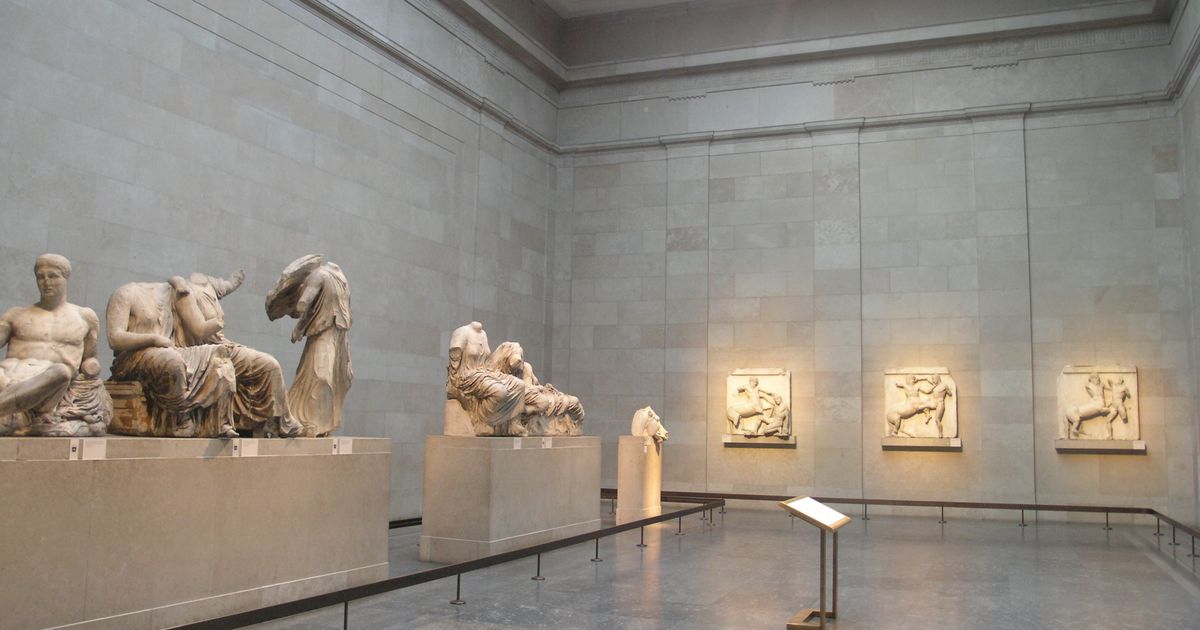
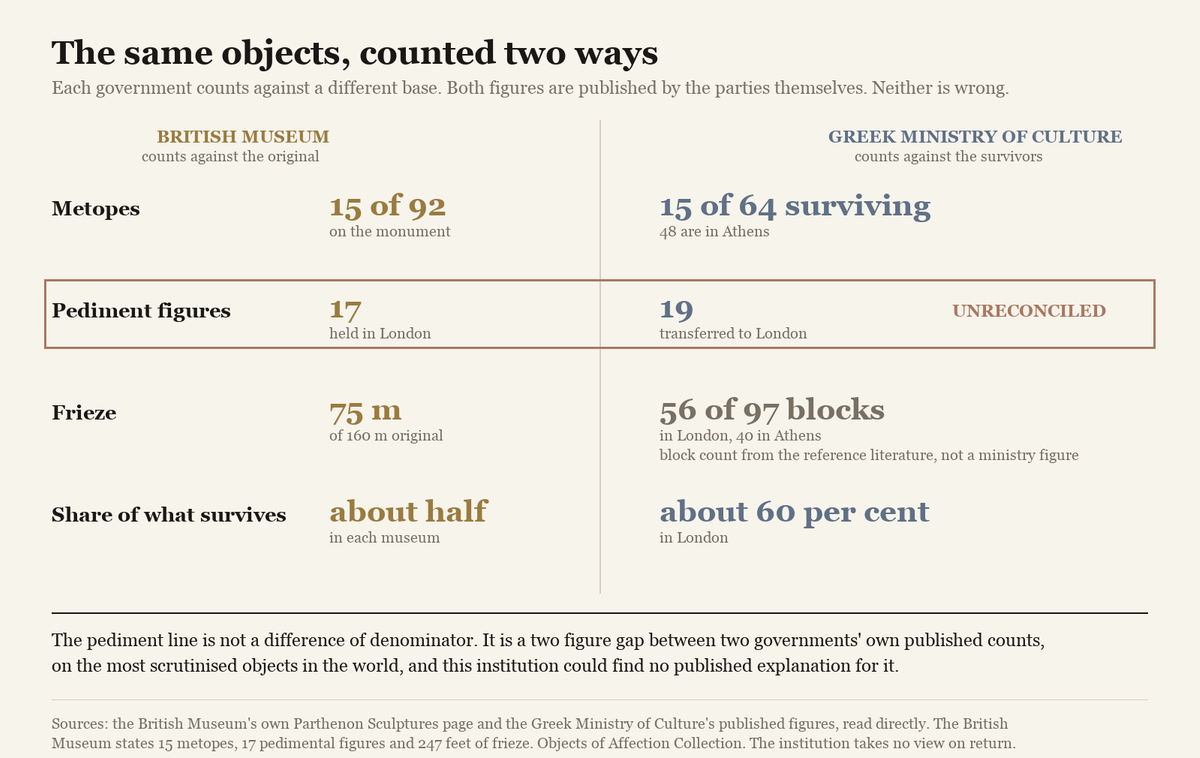
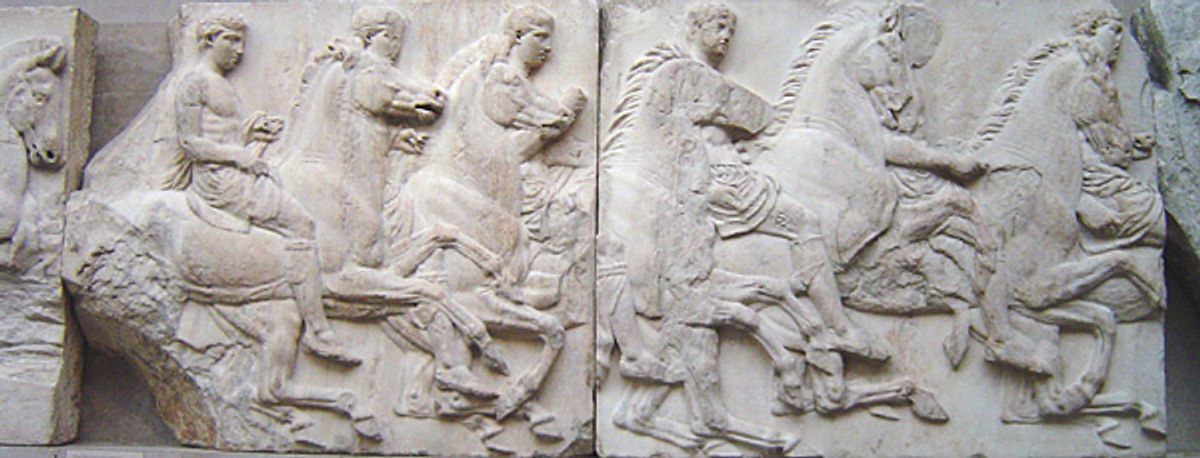
The British Museum's own page states that it houses 15 metopes, 17 pedimental figures and 247 feet, or 75 metres, of the original frieze. It says around fifty per cent of the original architectural decoration is now lost, and that of the fifty per cent that survives, about half is in the British Museum and half in Athens.
The Greek Ministry of Culture counts the same objects against a different base. Of 64 surviving metopes, it gives 48 in Athens and 15 taken to London. Of 28 preserved pediment figures, it gives 19 transferred to London and 9 in Athens. Its summary figure is that the London holdings are approximately 60 per cent of the remaining sculptural material.
Set the two accounts side by side and two distinct things are happening.
The first is a denominator. The museum counts against the original monument, where 15 of 92 metopes is a small fraction and the honest summary is about half of what survives. Greece counts against what still exists, where 15 of 64 surviving metopes sits beside 48 in Athens and the summary is sixty per cent. Neither is wrong. They are answers to different questions, and the choice of denominator is doing the rhetorical work in both directions.
The second is a straightforward discrepancy nobody has reconciled. The British Museum says it holds 17 pedimental figures. The Greek Ministry of Culture says 19 were transferred to London. Both are official statements by governments party to the dispute, published on their own websites, about the most scrutinised objects in the world. The gap is two figures and it has no public explanation.
It may be a counting convention, a fragment joined to a figure in one system and separate in another, or an object from the Erechtheion or the Propylaia sorted differently, since Elgin's permission extended to other buildings on the Acropolis, including the Erechtheion, the Temple of Athena Nike and the Propylaia, and material came from all of them. This institution does not know, and the point is that it does not appear anybody has written down which.
The Record of Harm the Institution Kept to Itself
One more episode belongs here, because it is a record question rather than an argument about ownership.
In 1937 and 1938 some of the sculptures were cleaned with copper tools and carborundum, an abrasive, at the urging of Lord Duveen, who was funding the gallery they were to be shown in and who wanted the surface patina removed. On 8 October 1938 the museum's own Standing Committee recorded that unauthorised and improper efforts had greatly damaged some important pieces. The keeper was permitted to retire on health grounds; an assistant was reprimanded and lost ten years of seniority and pay.
The museum then kept it quiet, and the full report remained unpublished until William St Clair brought it out in 1998. Sixty years. A former keeper had publicly denied the copper-tool account in a letter to The Times in 1939, saying only soap and water had been used. The curator Ian Jenkins later conceded the cleaning was a mistake while arguing the damage was being exaggerated for political reasons.
It is the same scholar, St Clair, who located the Italian firman translation and who published the cleaning file. Both of the documentary foundations of this dispute, the one that authorises and the one that damages, reached the public through one researcher working in private papers and closed institutional files. That is a fact about how thin the record is, and it is not a comfortable one for anybody's argument.
Four Descriptions of One Negotiation, All Current
Finally, the present, which is where the brief that prompted this article needs correcting in one important respect.
Andy Burnham became Prime Minister in July 2026. As Mayor of Greater Manchester in 2023 he had been asked directly whether the then chairman of the British Museum should return the sculptures and answered, without qualification, yes; he supported returning them with no strings attached and backed changing the legislation.
He no longer says that. In a Financial Times interview reported in late August 2026 he declined to repeat the call for unconditional return and said the future of the sculptures is a matter for the Trustees of the British Museum. The arrival of a sympathetic prime minister is not what happened this autumn. A sympathetic politician became prime minister and moved away from the position, and the Greek escalation that followed is better understood as a response to that than as an opportunity created by it.
What followed, in sequence. In late September, Mitsotakis called publicly for political will and courage, and in a Guardian article urged Burnham to find the political will for a permanent return. At the Dialogues for Athens conference on 6 October, he said Greece would press the matter in European Union discussions, on the argument that the sculptures are not solely a Greek question but a European one, and that the issue forms part of the debate about future EU and UK relations.
A note on how that has been reported. Some coverage renders it as a condition, that there can be no meaningful rapprochement between the EU and the UK unless the dispute is resolved. Other coverage renders it as the sculptures being part of the debate. His quoted words support the softer reading, and the harder one is an interpretation that has acquired the grammar of a quotation. We give the softer version because that is what the record carries.
Now set four statements beside each other, all from the same autumn.
Mitsotakis says five years of negotiation have broken down. Mendoni says a loan is out of the question. George Osborne, the museum's chairman, said in mid October that he is optimistic, hoping for an arrangement in which the London sculptures can be seen in Athens, while maintaining that they have to be shared. And the British Museum's own page says the museum has called for a new Parthenon partnership and that constructive discussions are ongoing.
Those are not four accounts of different events. They are four descriptions of the same negotiation, published in the same month, and they are not reconcilable as written. One party says the talks collapsed; the other says they are ongoing and constructive. Both are official. Neither is obviously untrue, because the parties are almost certainly describing different things by the word talks, and nothing in the public record says which.
That is the condition this dispute is actually in, and it is more informative than any argument about Elgin. Two governments cannot presently agree on how many pediment figures are in London, whether a request has been made, or whether negotiations exist.
What This Article Does Not Say
This institution takes no view on origin, export, return or restitution. It does not say the sculptures should go to Athens, or stay in London, or travel on loan. It does not say the firman was or was not valid, that Elgin acted lawfully or unlawfully, that the 1816 Committee was right or wrong, or that either government's count is the correct one. Those are not questions we answer, and a reader who finishes this article still holding their original opinion has not misread it.
It is not an argument that the Bayeux Tapestry is a precedent. The opposite is argued above: that loan was possible because title was never in question, which is the precise feature the Parthenon case lacks. The comparison establishes what the machinery can do, not what should be done with it.
On the firman, the claim made here is narrow and entirely about the record: the original has not been produced, the surviving instrument is an Italian translation, the Ottoman archives do not hold it, and specialists dispute its character. Whether any of that is legally decisive is not ours to say, and a reader should note that the museum's position, that the Italian text translates a lost original, is a coherent position held by serious people.
On the counts, both figures are taken from the parties' own published statements. The two-figure pediment discrepancy is reported as unexplained because we could not find an explanation, which is a statement about our search and not proof that none exists.
On sourcing. The Financial Times interview in which Burnham moved his position was read through secondary coverage rather than in the original. The Administrative Arrangement for the Bayeux loan is published by the UK government and was consulted through reporting of it rather than in full. The French court's reasoning is given as reported; we have not read the judgment, and the description of that court varies between sources. A claim in the originating brief that a specific newspaper reported Greece walking away from talks could not be verified, and the broader fact that negotiations broke down is carried instead, from Greek government statements.
The British Museum's own pages were read directly, which matters because the two sentences this article sets against each other are both the museum's own and neither is characterised from a secondary account.
Several of the works cited on both sides are advocacy, and the Turkish scholarly claim that the surviving document is an outright forgery is a press report of a single study and is not relied on here.
The Thing Worth Keeping
A visitor to the British Museum's website this month is told, on the front page, that a nation's most treasured object has crossed a border and is on display, and that this is a historic thing to come and see. It is. It took a president overruling his own conservators, a rejected lawsuit, a petition calling it a heritage crime, eight hundred million pounds of state indemnity and a reciprocal shipment of Anglo-Saxon gold to Normandy, and it worked.
Four clicks away, the same institution notes that in forty three years since the first formal request, no loan request has ever been received for the sculptures taken from the Parthenon.
Both pages are accurate. The distance between them is not about conservation, or transport, or politics, or the fragility of marble, because the first page is a demonstration that all four are solvable.
The distance is one question, which the 1963 Act has no word for, which Parliament settled by two votes in 1816 on the recommendation of its own committee, and which rests on a document that has never been produced in any archive in two hundred years.
Everything else in this dispute is downstream of a missing piece of paper, and both governments have spent four decades arguing about objects they cannot agree how to count.