The Market Does Not Pay for Restitution. It Pays for a Record Nobody Is Still Arguing About.
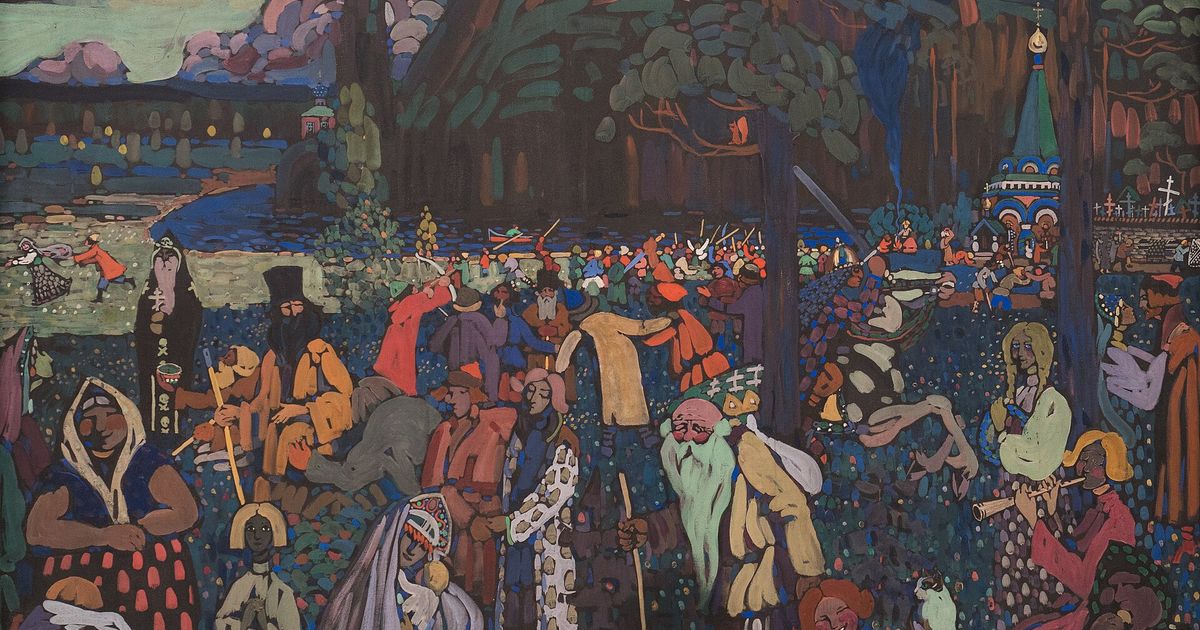
On 14 October a Kandinsky returned to the heirs of its Jewish owners made £31.56 million in London, well past its estimate. On the same day, in California, a museum filed in federal court to stop a claim on two paintings it has been fighting over for nineteen years. Both halves of that sentence are the same story.
Christie's sold Das bunte Leben on a Wednesday evening in London. Six minutes of bidding, a hammer of £27 million, £31,560,000 with fees, against an estimate of £18 to £25 million. Forty two million dollars. It was the highest valued lot of the night and it went to a buyer Christie's did not name.
That same day, 14 October 2026, the Norton Simon Museum in Pasadena and two related foundations filed an action in the United States District Court for the Central District of California, case 2:26-cv-11995, asking a judge to stop a renewed claim to a Cranach diptych of Adam and Eve. The claim had been filed a month earlier by the Jewish Federation of Los Angeles under amendments to the Holocaust Expropriated Art Recovery Act. The paintings have been in litigation, on and off, since 2007. They have never been to auction. They are still on the wall in Pasadena.
One object with a settled record sold for forty two million dollars. Another, with an unsettled one, has not been saleable for nineteen years.
The conventional reading of the Kandinsky result is that restituted works now carry a premium. That reading is popular, it is flattering to everyone involved, and the evidence does not quite support it. What the evidence supports is narrower, stranger and considerably more useful, and setting it out properly takes a dozen sales, three stalled lawsuits, one unexplained gap in a catalogue, and a change in German law that almost nobody outside the field has noticed.
What Was Actually Sold
The painting is early. Das bunte Leben, The Colourful Life, was made in 1907, before Kandinsky's name meant abstraction, and Christie's described it as a monumental turning point on the road toward it. About one hundred and thirty by one hundred and sixty two centimetres, signed, though published sources differ by a centimetre on the longer side.
Its ownership history is unusually well documented, which is the entire point of what follows.
In November 1927 it was bought by Emanuel Albert Lewenstein and his wife Hedwig, of Amsterdam. From 1933 it hung on loan at the Stedelijk Museum. The couple died before the war and the collection passed to their two children, who got out of Europe.
On 9 October 1940, less than five months into the German occupation of the Netherlands, the painting was auctioned. The language every careful account uses is that this happened under unclear circumstances. The buyer was Salomon Slijper, a Dutch Jewish businessman who himself survived the war in hiding.
That detail deserves a pause, because it is the kind of fact a tidy narrative loses. The man who acquired the picture in occupied Amsterdam in 1940 was not a beneficiary of the regime. He was one of its intended victims, and he lived because he hid. A record carrying only the word looted does not carry him, and a record that cannot carry him is not finished.
In 1972, the year after Slijper died, his widow Johanna sold the painting to Bayerische Landesbank, the Bavarian state bank, for 900,000 guilders. For the five decades that followed it hung on loan at the Lenbachhaus in Munich, where almost everyone who has seen it saw it.
In 2017 the Lewenstein heirs sued.
The Date Everybody Has Slightly Wrong
Here is a small thing that matters more than its size.
The story as it is usually told is that a German advisory commission recommended return in 2023 and the bank complied that June. Christie's has said as much.
The record is a month off, and the month contains a distinction.
Germany's Beratende Kommission NS-Raubgut, the advisory commission on cultural property seized as a result of Nazi persecution, decided on 16 May 2023 and published its recommendation on 13 June 2023. It found the painting had been lost for reasons of persecution.
The bank's compliance is a separate act with a separate date. A Bayerische Landesbank spokesperson's statement to dpa is dated 24 July. The budget committee of the Bavarian Landtag approved the return unanimously in mid-July. At least one researcher has pointed out that although Christie's repeatedly gives June 2023 as the restitution date, the official record shows no completed return in that month.
The June date is the recommendation. The return is July. One is a finding by a panel. The other is a decision by an owner, and by a parliament holding the public purse, to act on it. That second step was emphatically not a formality, for a reason that has since become a matter of German law.
The Machinery That Makes a Record Resolvable
Almost everything in this article depends on a distinction between a record that has been closed by a process and one that has not, so the process is worth a paragraph.
For twenty eight years the governing instrument was a set of non-binding principles agreed in Washington in 1998, committing signatory states to seek just and fair solutions for art taken during the Nazi era. Germany's expression of that commitment was the Beratende Kommission, established in 2003. It could hear a case only if both parties agreed to come, and its recommendations bound nobody. A holder could decline the process, or accept the process and decline the outcome.
That is why the Kandinsky's two dates are two dates. The commission found persecution. The bank and the Landtag then chose to comply. Had they chosen otherwise, the recommendation would have stood as a published opinion and the painting would have stayed in Munich.
On 1 December 2025 that commission ceased to exist. It was replaced by the Court of Arbitration for Nazi-looted Cultural Property, established under an administrative agreement signed in March 2025 between the Federal Republic, all sixteen states, and the three national associations of local authorities. The differences are not cosmetic:
Its awards are legally binding and enforceable, where the commission's were advisory. A claimant can bring a case unilaterally, without the holder's consent, where the commission needed both parties to agree. Public holders have given standing offers covering all the cultural property they hold, so consent is pre-committed rather than negotiated case by case. The panel is five members, three of them judges or judge-qualified, two of them specialists in twentieth century German history or Nazi-era provenance research. Proceedings are free of charge.
Read that against the thesis this article is testing and the significance is immediate. Germany has just industrialised the production of resolved records, and it did so eleven months before the Kandinsky sold. If resolution is what the market pays for, the supply of resolvable objects in German public hands has just changed character, and the price of refusing to resolve has gone up.
The Premium, Tested
Now the claim itself. Does a restituted work carry a premium?
The strongest evidence is not the Kandinsky, because one sale is one sale. It is the collection of Fritz Grünbaum, the Viennese cabaret performer who mocked Hitler from a stage, was arrested in 1938 and died in Dachau in 1941. His heirs have recovered Schieles over several years, and the recoveries have gone to auction in a sequence, which makes them something close to a series rather than an anecdote.
November 2022, Christie's New York. Woman in a Black Pinafore made $2.5 million. Woman Hiding Her Face made $500,000.
November 2023, Christie's New York. Six restituted Schieles. Four of them made $18 million between them. All three works in the twentieth century evening sale sold above estimate, against pre-sale ranges of $1 to $2 million for Stehende Frau (Dirne), $1 to $2 million for Selbstbildnis, and $1.5 to $2.5 million for Ich liebe Gegensätze. Three further works sold in an Impressionist and Modern works on paper sale the same month.
January 2024. Two more, Portrait of a Man and Girl With Black Hair, were returned and consigned. The Manhattan District Attorney's office had valued them at $1 million and $1.5 million.
March 2025, Christie's London. Knabe in Matrosenanzug, Boy in a Sailor Suit, of 1914. Estimate £1 to £1.5 million. It made £3.3 million, about $4.2 million, more than double the high estimate. Christie's brokered the settlement between consignor and heirs before the sale.
Against that, the single largest restitution sale on record. Christie's New York, 8 November 2006, four Klimts restituted to Maria Altmann and the Bloch-Bauer heirs after Austrian arbitration. Christie's had estimated the group would make in excess of $93 million. They made $192,704,000. Portrait of Adele Bloch-Bauer II, estimated at $40 to $60 million, took $87.9 million, then a record for the artist. Birch Forest made $40,336,000 and Apple Tree I $33,056,000. A fifth picture, Adele Bloch-Bauer I, had sold privately that June for a reported $135 million.
So: a dozen or more restituted works, repeatedly above estimate, sometimes at twice the high end, once at more than double the aggregate. On that evidence the premium looks established.
It is not, and the thing that breaks it is a Klimt with no restitution history at all.
The Control, and the Gap Inside It

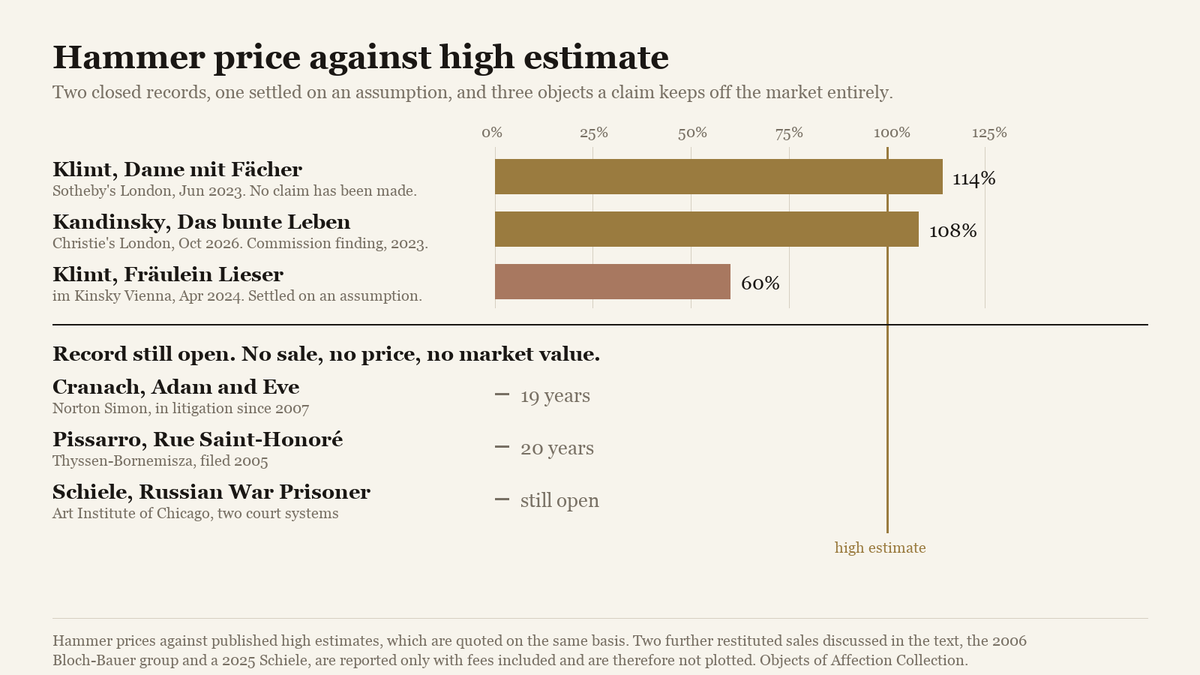
On 27 June 2023, four days after the German commission published its Kandinsky recommendation, Sotheby's London sold Gustav Klimt's Dame mit Fächer, Lady with a Fan, the last portrait he completed. Estimate around £65 million. After ten minutes of bidding it hammered at £74 million, £85.3 million with fees, about $108 million, to a Hong Kong collector. It remains the most expensive work ever sold at public auction in Europe. It had last changed hands at Sotheby's New York in 1994 for $11.66 million.
No restitution claim appears anywhere in the public record for this painting, and on the premium thesis it is therefore the control: a trophy Klimt that beat its estimate by about fourteen per cent and set a continental record without a single claimant involved. Which already means that beating the estimate is what a trophy picture does in a strong market, restituted or not, and a premium built only on restituted winners has no comparison group.
But the control is more interesting than that, because its own record is not clean.
Sotheby's published chain runs from the dealer Gustav Nebehay to Erwin Böhler in Vienna, acquired by 1920, then to his brother Heinrich, then to Heinrich's wife Mabel Böhler, who inherited it in 1940. The painting then surfaces with the Austrian collector Rudolf Leopold, whom Sotheby's places in possession by 1967 and who is known to have bought a large group of Schiele drawings from Mabel Böhler in 1952, possibly including this. One account has it reaching Leopold in the 1960s and passing to the American entrepreneur Wendell Cherry in 1988.
So there is an interval of roughly twelve years, from a 1940 inheritance to an early-1950s transfer, in precisely the period a provenance researcher examines hardest, and it is not documented in the catalogue. The Böhlers were Viennese and Swiss industrialists rather than a persecuted family, there is every reason to think the interval is entirely benign, and no claimant has ever come forward. This institution takes no view on whether one should, and raises the gap for one reason only: it is there, and the market did not price it.
A gap in the Nazi period, unexplained, on the most expensive picture ever sold in Europe, and it cost nothing. Hold that beside what follows.
The Case That Shows What the Market Actually Discounts
On 24 April 2024 the Vienna house im Kinsky offered Klimt's Portrait of Fräulein Lieser, begun in 1917 and left unfinished and unsigned in the studio when he died the following February. Between a Vienna exhibition in 1925 and its resurfacing around 1960, the only record of the painting is a single black and white photograph. The estimate was €30 to €50 million.
Its record was not resolved. It was arranged. The sale was conducted under the Washington Principles precisely because the work's history in the Nazi years could not be established, and the house brokered an agreement between the consignor and heirs of the Lieser family. The terms of that agreement are the sentence this entire article turns on: the settlement was based on the assumption that the portrait was unlawfully expropriated during the Nazi era, although this is not proven. Reporting on correspondence seen by The Art Newspaper put the split at sixty per cent of proceeds to the claimants and forty to the consignor.
It hammered at €30 million, €35 million with fees. The floor of the range. The bid came from an advisory acting for a Hong Kong collector. It was the highest price ever bid at auction in Austria, and simultaneously the lowest number the house had been willing to print.
Then the sale came apart. The buyer withdrew in April 2025. In April 2026 Patricia Leahy, a granddaughter of Hans Lieser, filed a complaint in the New York Supreme Court against im Kinsky and the current holder, seeking a declaration that she is a rightful heir and delivery of the painting.
That claim is contested and unproven, and it is worth being exact about its status, because an article arguing that unresolved records are expensive should not quietly treat an unresolved record as settled. As of mid-October 2026 the complaint had not been served. A lawyer for the holder describes it as unjustified. Representatives of another branch of the family say Hans Lieser's will named his second wife as sole heir. An Art Newspaper report of 20 October 2026 describes the 2024 sale as cancelled over disputes about the picture's tangled provenance and notes that litigation in the United States could keep the work off the market for years.
Nobody needs to decide who is right for the market effect to be complete. This institution has written about this painting before, in a study of the gap its own title admits to, and the finding there was that the hole which broke the sale was not the one anybody had documented. The point here is narrower and purely commercial: a settlement built on an assumption held exactly as long as nobody tested it, and the price it fetched was the floor.
Now set the three Klimts side by side, because together they say something none of them says alone.
Dame mit Fächer carries an undocumented twelve-year gap in the Nazi period and no claimant. Result: £85.3 million, a European record. The Altmann group carried persecution, flight, and a completed arbitration. Result: $192.7 million against a $93 million expectation. Fräulein Lieser carried a settlement resting on an unproven assumption and, latently, a second claimant. Result: the floor of the estimate, and then no sale at all.
The market did not discount the Lieser picture for being looted. It discounted the Altmann pictures not at all for being looted. What it discounted was an open question wearing the clothes of a closed one. A documented gap with nobody behind it is worth nothing against the price. An undocumented settlement with somebody behind it is worth everything, and the bill arrives after the hammer.
Three Objects With No Price At All
Which brings the argument back to the courts, where the clearest evidence in this whole field is sitting unexamined because it generates no auction results.
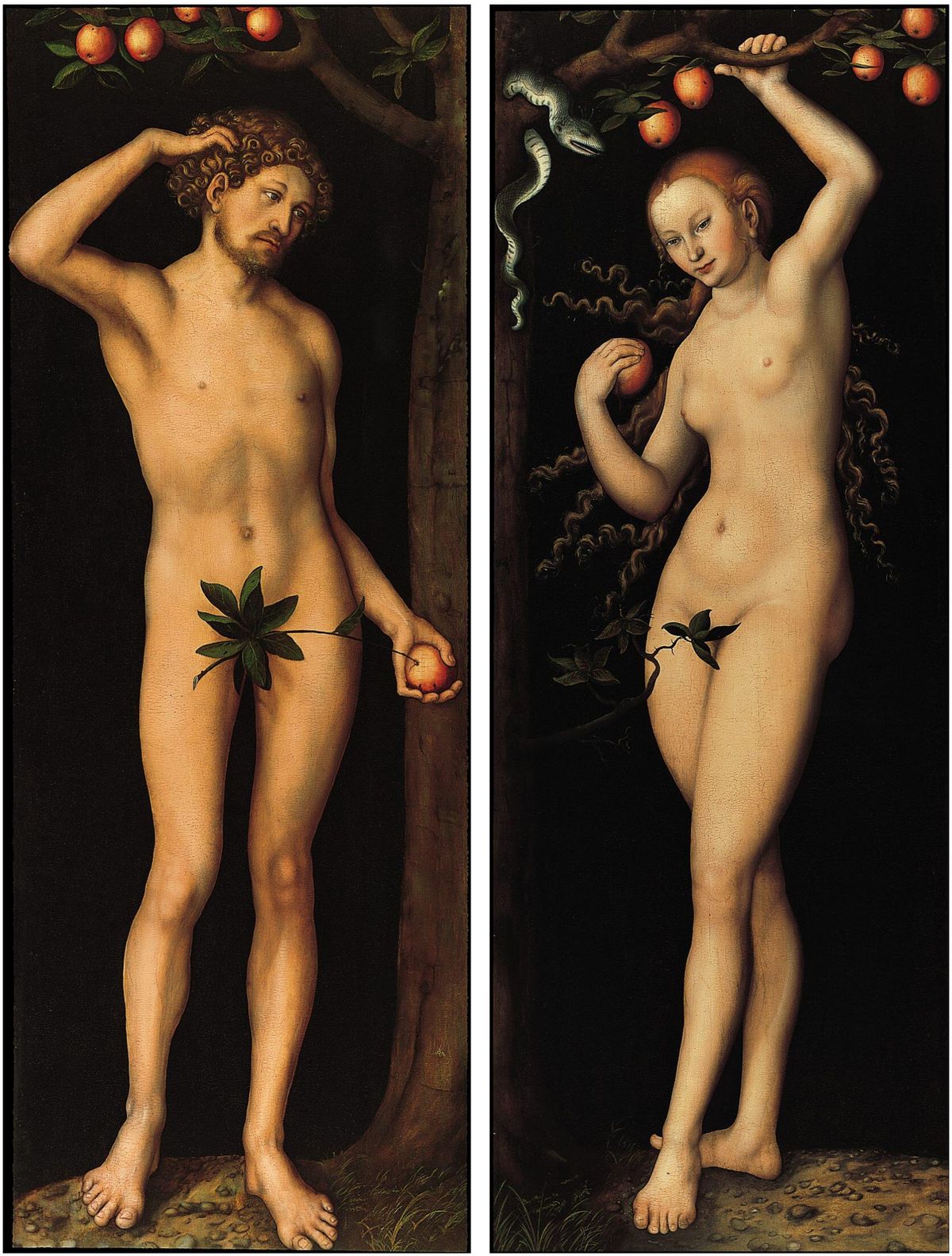
The Cranachs. Lucas Cranach the Elder's Adam and Eve were seized from the Amsterdam gallery of Jacques Goudstikker in 1940. After the war they passed through the Dutch state, which sold them in 1966; the Norton Simon acquired them in 1971. Marei von Saher, Goudstikker's heir, sued in 2007. A district court found for the museum in 2016, the Ninth Circuit affirmed in 2018 partly on the reasoning that a United States court cannot invalidate an act of the Dutch government, and in May 2019 the Supreme Court declined review. On 14 September 2026 the Jewish Federation of Los Angeles filed in Los Angeles Superior Court under HEAR Act amendments restricting defences including limitation periods and the act of state doctrine. On 14 October 2026 the museum and its foundations filed their federal action resting on res judicata. Both live. Nineteen years. No sale.
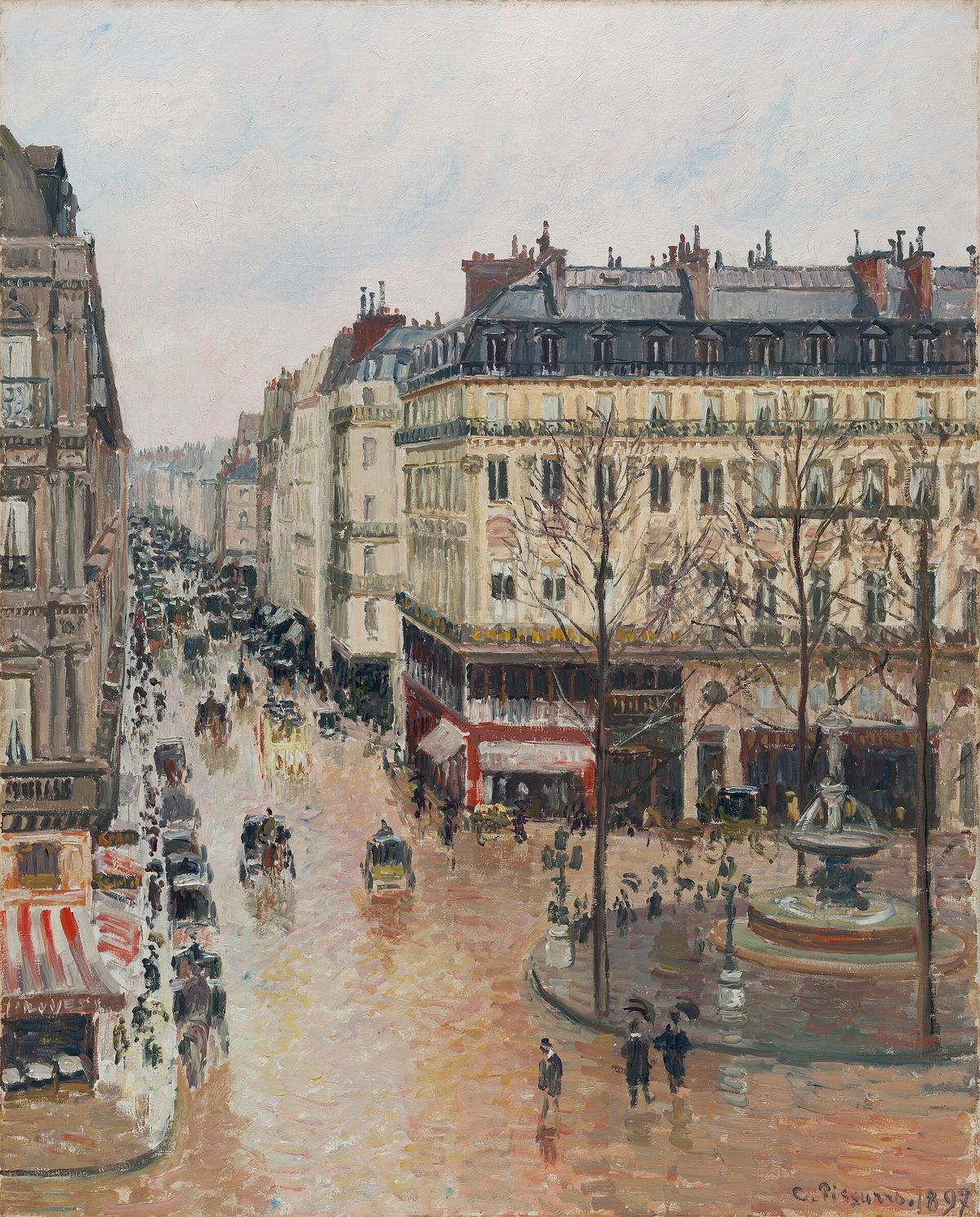
The Pissarro. Rue Saint-Honoré, Afternoon, Effect of Rain was surrendered by Lilly Cassirer in 1939 under Nazi duress. It has hung at the Thyssen-Bornemisza in Madrid since 1993. Claude Cassirer filed in May 2005. The district court found for the museum in 2019; the Ninth Circuit affirmed in 2020; the Supreme Court vacated unanimously in 2022, Justice Kagan writing, on the ground that California's choice-of-law rule should have been applied; the Ninth Circuit, applying Spanish law after a comparative impairment analysis, ruled on 9 January 2024 that the Foundation owns the painting, having held it long enough for prior claims to be extinguished. Critics called the reasoning thin. Twenty years, a unanimous Supreme Court, and the painting has never had a price.
And one from the Grünbaum collection itself, which is why that collection is the best evidence in this article rather than merely the largest. While a dozen of Grünbaum's Schieles were being restituted and sold above estimate, one has been stuck. Russian War Prisoner is at the Art Institute of Chicago, which has contested the claim. A New York trial court ordered the work returned in April 2025; an appellate judge granted an emergency stay; on 17 September 2026 the Appellate Division, First Department, dismissed the appeals from the turnover orders and granted the museum's Article 78 petition, voiding the Manhattan District Attorney's seizure route and holding that ownership belongs in the heirs' federal suit in Manhattan, where the dispute may be fully litigated. The federal case was dismissed on laches in September 2023, vacated by the Second Circuit and remanded; the museum argued its appeal in January 2026. The District Attorney's grand jury investigation remains open. The museum holds the drawing.
Same collector. Same artist. Same claim theory. Same heirs. The works whose records were closed sold, several at multiples of estimate. The work whose record is open has been in two court systems for years and has no market value whatsoever.
That is as close to a controlled experiment as this field is ever going to offer, and it did not require a single comparison between a Kandinsky and a Cranach.
The Price of a Record, Paid Without a Sale
There is one case that states the argument of this article more directly than any auction result, because it removes the auction entirely.
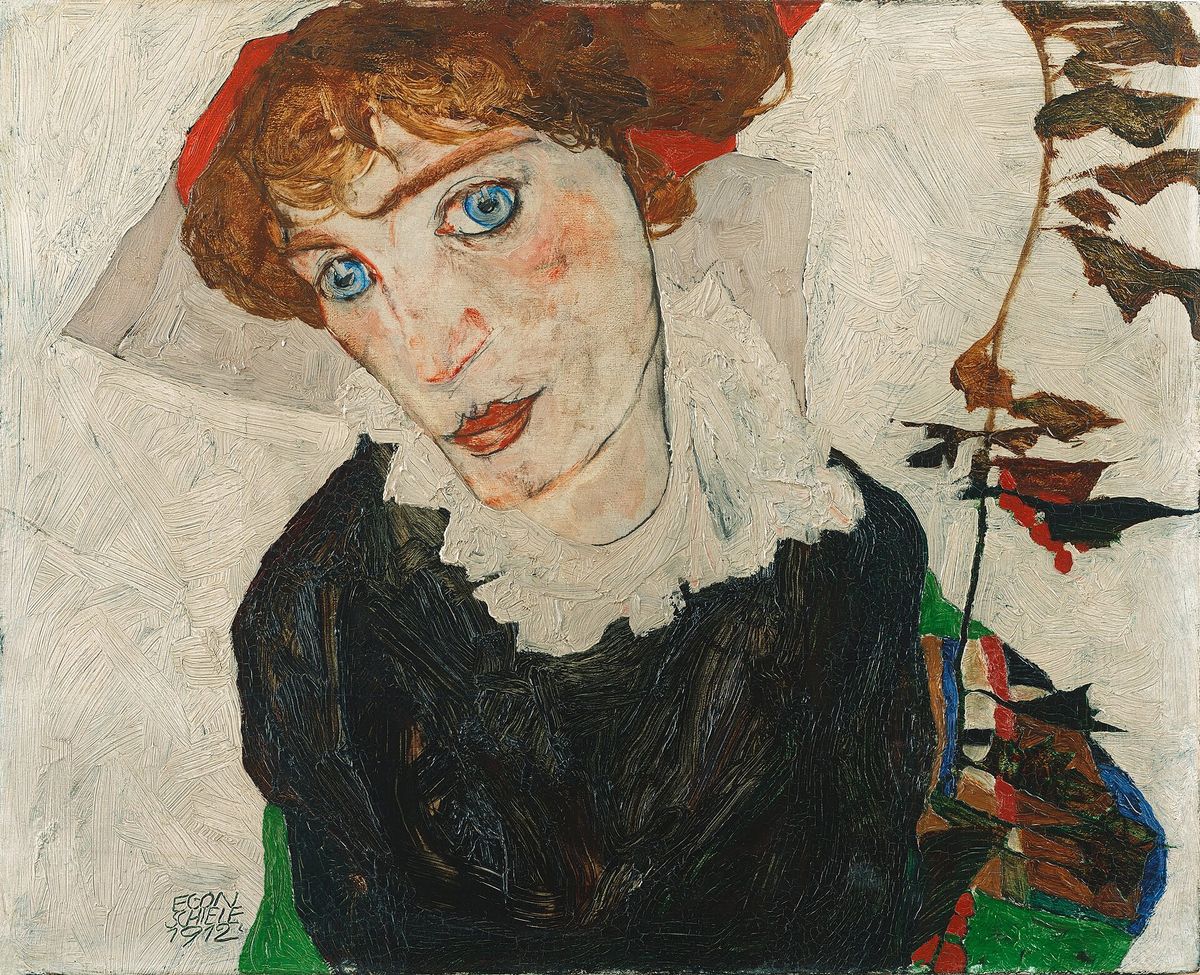
Egon Schiele's Portrait of Wally Neuzil of 1912 belonged to Lea Bondi Jaray, a Viennese dealer. It was taken from her by Friedrich Welz, a Nazi party member, around the time she fled Austria. After the war it entered the Austrian National Gallery by error and was acquired by the collector Rudolf Leopold, who in 1953 obtained it after Bondi Jaray had asked him to recover it on her behalf, swapping one of his own Schieles for it. She died in 1969 without getting it back.
In 1998 the painting travelled to the Museum of Modern Art in New York for a loan exhibition. It did not go home. Federal authorities seized it, and in 1999 the United States government commenced a civil forfeiture action alleging the work had been stolen during the Nazi era and imported in violation of American law. In 2009 Judge Loretta Preska of the Southern District of New York ruled that the painting had been Bondi Jaray's personal property and that Welz stole it.
In July 2010, less than a week before trial, the Leopold Museum agreed to pay the Bondi estate $19 million to keep the painting. The estate released its claim. The government dismissed the forfeiture. Judge Preska approved it.
Read what that transaction was. No work of art changed hands. The picture was in Vienna before and is in Vienna now, on the same wall, owned by the same museum. The museum did not buy a Schiele. It already had the Schiele, and had had it since 1953.
It paid $19 million for a sentence in the provenance.
That is the purest statement of the finding available anywhere in this field. Every auction result in this article is contaminated by the fact that a picture was also sold, so the premium and the price of the object are tangled together and have to be separated by argument. Here they are already separate. Strip out the object, strip out the market, strip out the artist, and the residue, the thing that was actually bought with the money, is the closure of a claim, and in 2010 it cost nineteen million dollars.
It also sets the other side of the ledger. Eleven years of federal litigation, a trial week away, and a nine-figure collection's most famous picture held hostage to it. Whatever the Leopold paid, it paid because the alternative had become more expensive, which is the same calculation the Norton Simon, the Art Institute and the Thyssen-Bornemisza have each made differently, and the same one Germany has now written into law.
What the Market Is Paying For
Put every case in order and the variable that moves the price is not whether an object was looted. It is whether the question is closed.
Where a record was closed by a documented process, whether Austrian arbitration in 2006, a brokered settlement with identified heirs in 2025, or a German commission plus a parliamentary vote in 2023, the work sold, and sold well, in a market where comparable works carrying no such history also sold well.
Where a record was closed by assumption, the work hammered at its floor and the transaction later dissolved.
Where a record is open, there is no transaction to discuss, for nineteen years, or twenty, or counting.
And where a record has a gap that nobody is claiming against, the market charges nothing for it at all.
So the premium, if that is even the word, is not paid for the moral fact of restitution. It is paid for the documentary fact of a chain with no live claim in it. A buyer at this level is not purchasing absolution. They are purchasing the ability to insure, lend, export, and eventually resell without a lawyer in the room, and that is a property of the paperwork rather than of the picture. The record has acquired narrative permanence the object never needed: the canvas was always the canvas, and what changed is a document that will now outlive everyone named in it.
This institution has written before that a gap in a provenance record has two completely different prices depending on who is reading it: in the market a gap is a discount a buyer absorbs, and in restitution the same gap is a claim whose remedy is loss of the object. The cases above add a third price, and it is the one nobody quotes. Where a claim is live, the gap is neither a discount nor a claim. It is a prohibition. The object leaves the market entirely, sometimes for decades, and in the meantime it is not cheap. It is priceless in the useless sense of the word.
The corollary is uncomfortable for the premium story and worth saying plainly. The works we can measure are the works somebody managed to resolve. Every restituted lot that reaches a major evening sale has already passed a filter: a claim settled, a consignment accepted, and an estimate set conservatively because specialists still treat the category as carrying risk. Conservative estimates produce results above estimate. That is arithmetic before it is vindication, and the studies that would correct for it, the ones covering works that never sold, are precisely the studies the public record does not collect.
The Arithmetic That Looks Like a Windfall and Is Not
One more number, because it will be misread otherwise.
Bayerische Landesbank bought the Kandinsky in 1972 for 900,000 guilders. It held the painting about fifty one years, lent it to a public museum for most of them, and returned it in 2023. The heirs sold it three years later for £31.56 million.
A reader can draw a sharp conclusion from those two numbers and it would be the wrong one. Almost all of that difference is fifty years of the art market, not a restitution dividend. It is speculative velocity of an ordinary kind, the price of a category accelerating away from any particular object inside it. A 1907 Kandinsky of that scale would have multiplied many times over between 1972 and 2026 in anybody's hands. The Klimt nobody ever claimed went from $11.66 million in 1994 to £85.3 million in 2023 with no lawyer involved at any point.
What restitution changed was not the value. It changed who held the asset when the value was realised, and whether the asset could be realised at all.
What This Means for the Objects Still Contested
If the market pays for resolution rather than for restitution, then the institutions holding contested work are not choosing between keeping an object and losing it. They are choosing between an object that can move and an object that cannot.
The Norton Simon has held the Cranachs since 1971 and cannot sell them, lend them easily, or stop the next filing. The Art Institute holds a drawing that two court systems are still arguing about. The Thyssen-Bornemisza won, definitively, on the law, and owns a painting whose catalogue entry will carry the Cassirer litigation permanently. None of those is a victory in the terms the market actually uses.
And for anyone drafting a settlement, the Lieser case is the one to read twice. A settlement that rests on an assumption rather than a finding does not close a record. It postpones it, and when it reopens it does so at the worst available moment: after the hammer, with a buyer in Hong Kong and a claimant in an American court.
Germany appears to have reached the same conclusion, which is why the advisory commission is gone and a binding tribunal with unilateral access and pre-committed standing offers took its place in December 2025. Whatever else that reform is, it is a bet that an unresolved record is more expensive than a resolved one, and the auction results in this article are the evidence for the bet.
What This Article Does Not Say
This institution holds no view on whether any object discussed here should be returned, retained, sold, or kept. It takes no position on origin, export, return, or restitution, and nothing above is an argument for any party in the Cranach, Cassirer, Grünbaum, or Lieser matters, all of which were or will be decided by people with far more evidence than is available here.
It does not say that restituted works are a good investment. That would need a far larger sample and controls for period, artist, and quality that no public dataset supports.
It does not allege anything about Dame mit Fächer. The gap between Mabel Böhler's 1940 inheritance and the early 1950s is stated because it is in the published chain and because no claim has been made against it. The second half of that sentence matters as much as the first.
It does not say the Lieser settlement was improper. It says the settlement described itself as resting on an assumption that was not proven, that a further claimant then appeared, and that the sale was subsequently cancelled, all of which are matters of record.
And a word on the limits of the figures. Estimates are published by houses that benefit from being beaten and are not audited. Hammer prices and prices with fees are mixed indiscriminately in press coverage, and currency conversions drift by several per cent between outlets. Figures above are given as reported, with the basis named where sources allowed. Roughly fifteen auction results, two of them from 2006, are an illustration and not a dataset. The one measurement that would settle the premium question properly, every restituted lot offered over a decade including the ones that failed to sell, does not exist in public form, and the three objects in this article with no price at all are a demonstration of why.
The Thing Worth Keeping
Somebody in a Vienna saleroom wrote a sentence in 2024 saying a settlement rested on an assumption that was not proven. That sentence was honest, and it was also the whole story: the market read it, priced the picture at the floor, and when the assumption failed, the transaction stopped existing.
Six minutes of bidding in London in October did not happen because a wrong had been righted. It happened because by then there was nothing left to argue about. A commission had made a finding. A bank and a parliament had acted on it. The heirs held clear title. The catalogue could say so, and a buyer could believe it.
The object had not changed since 1907. The paperwork had.
That is the entire premium, and it is available to anyone willing to finish the work.