The Title Is the Gap: A Klimt With Thirty Five Years Missing, a Record Bid, and the Absence Nobody Declared
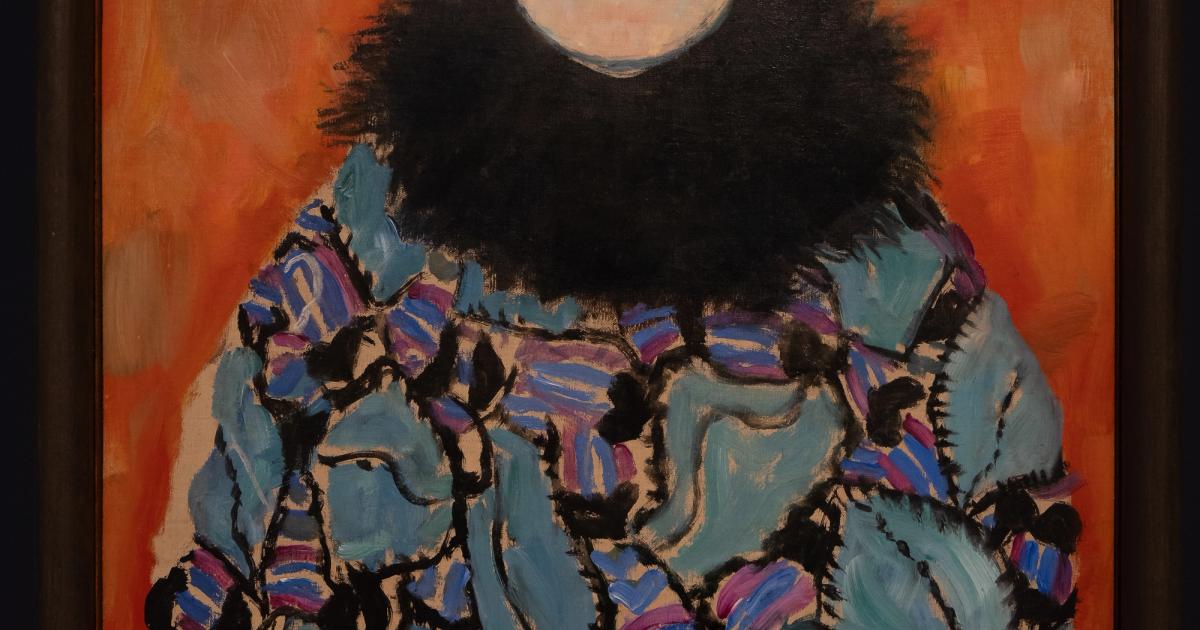
On a painting whose title names its own uncertainty, thirty five years that are missing from its history for a reason, a record bid that the missing years did not prevent, and the one absence nobody wrote down
This study takes no view on who owns this painting, on whether it should be returned, or on the merits of any claim or defence. Those are not questions this institution answers, and nothing below should be read as answering them. It is about the record: what it contains, what it cannot establish, and which of its two holes turned out to matter.
Gustav Klimt's Portrait of Fräulein Lieser sold in Vienna in April 2024 for thirty million euros, the highest bid ever made at auction in Austria. The sale has since collapsed, the buyer has withdrawn, and the painting is the subject of litigation in New York.
What Is Established, With Its Dates
Klimt painted it in 1917. The sitter is thought to have made nine visits to his studio in April and May of that year. He died in February 1918 and the portrait was unfinished and unsigned, still in the studio, and was given to the family that had commissioned it.
In 1925 it appeared in a Klimt exhibition in Vienna and then passed into a private collection, thought to have belonged to either Adolf or Henriette Lieser. The only record of it from that moment is a black and white photograph. After the Anschluss in 1938 the Lieser family were persecuted and their assets were seized. The painting surfaced again around 1960 and eventually reached an anonymous Austrian owner, who approached the auction house im Kinsky in 2024.
It sold on 24 April 2024 at im Kinsky in Vienna for thirty million euros hammer, thirty five million with fees, at the bottom of a thirty to fifty million estimate, to a buyer from Hong Kong. The sale was conducted under the Washington Principles of 1998, which exist to resolve claims over art taken in the Nazi period, because the work's history in those years could not be established.
In April 2025 the buyer withdrew. In April 2026 Patricia Leahy, a granddaughter of Hans Lieser, filed a complaint in the New York Supreme Court against im Kinsky and the current holder, Eva Ropper, seeking a declaration that she is a rightful heir and rightful owner and delivery of the painting. As of mid-October 2026 the complaint had not been served, and a lawyer for the holder describes it as unjustified. Representatives for another branch of the family say Hans Lieser's will named his second wife as sole heir.
The Title Is the Gap
Start with the name, because it is doing something unusual and almost nobody notices.
Fräulein Lieser is not the sitter's name. It means a Miss Lieser, an unmarried daughter of the Lieser family, with no first name attached. The title states the family and declines to state the person, because the person has never been established.
And she is still not established. The Klimt catalogue raisonné holds that Adolf Lieser commissioned a portrait of his daughter Margarethe Constance, and the scholar Tobias Natter maintains there is an overwhelming probability it is her. The auction house took a different view, that the commission came from Henriette Lieser and the sitter may be one of her daughters, Annie or Helene. A newspaper compared eye colour and favoured Helene. Margarethe's son said he had no doubt it was his mother; he died at ninety nine, without heirs, and the painting surfaced about a year later.
So the most famous thing about this painting is a question, and the title says so. By the standard this institution argues for everywhere else, that is a correctly formed record. It names what is known, which is the family, and refuses to name what is not, which is the woman. It has done that for a century without anybody treating it as a defect.
Thirty Five Years Are Missing, and the Reason Is Not Archival
The second hole is larger. The itinerary of the painting between 1925 and 1960 is unknown. Thirty five years in which an object the size of a door moved from a Viennese private collection to somewhere else entirely, and the record is silent.
It is important to say plainly why. Those years contain the Anschluss, the seizure of the family's property, and the murder of Henriette Lieser, who was deported to Riga on 11 January 1942 and killed there on 3 December 1943.
The gap in the record and the destruction of the family are not two facts. They are one fact described twice. Records of ownership are kept by owners. When the owners are dispossessed and then killed, the record stops, and what is missing afterwards is missing because of what was done to the people who would have kept it. This institution writes a great deal about absences in provenance. Most of them are carelessness. This one is not an absence in the record. It is the record of an absence.
For Ninety Nine Years It Was One Photograph
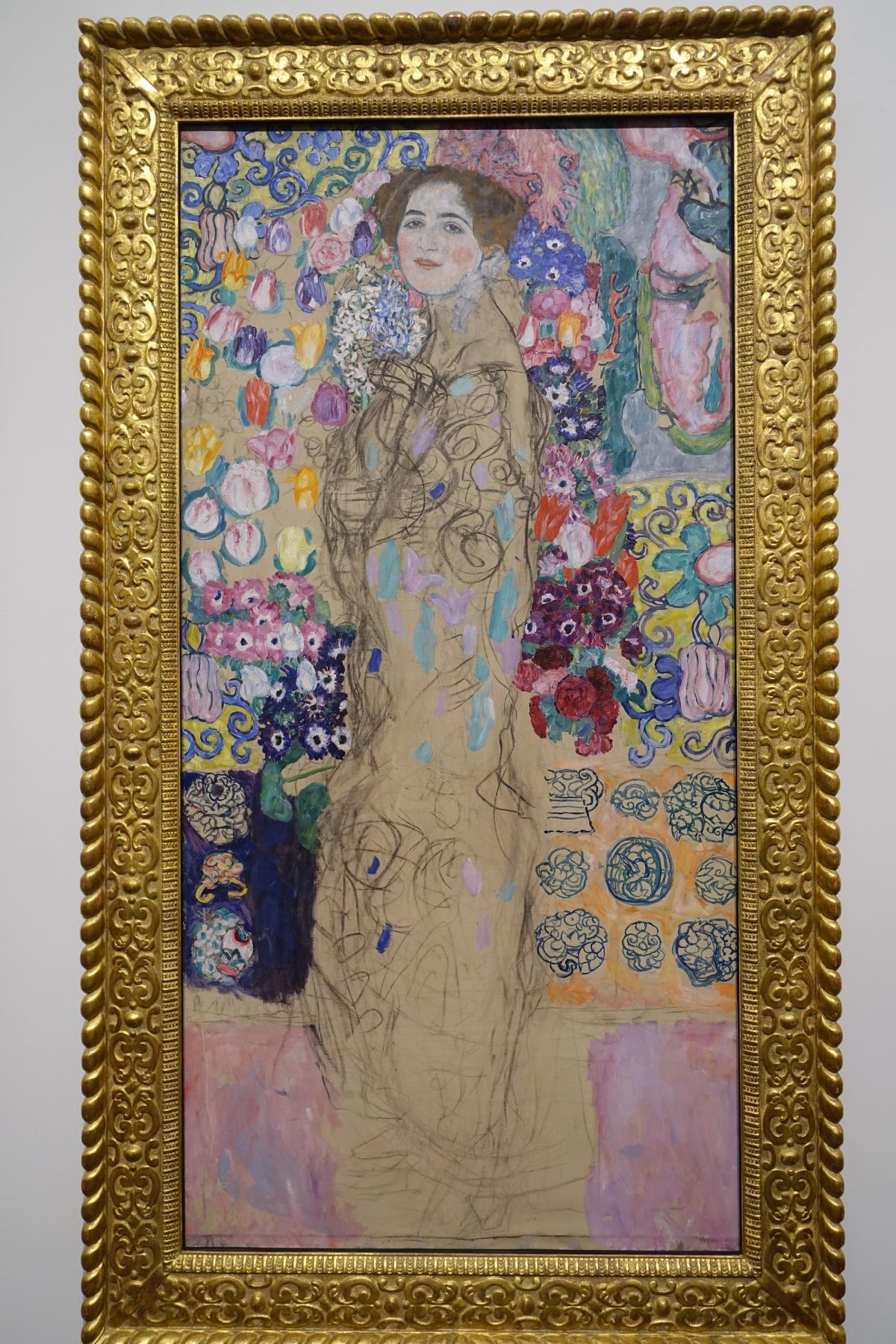
There is a detail in the provenance that deserves its own paragraph, because it changes what kind of absence this is.
Between the 1925 exhibition and the painting's reappearance in 2024, the only record of the work was a single black and white photograph taken around the time it was shown. Not a thin file. Not a disputed file. One image, without colour, of an unfinished canvas by one of the most reproduced painters who ever lived.
Everything a scholar might have wanted to argue from was therefore unavailable for most of a century. The palette, the state of the unfinished passages, the handling, the ground, the back of the canvas, any stamp or label a supplier or a shipper might have left: none of it could be consulted, because the object was not available and the surrogate was monochrome.
That is why the dispute about who is depicted could run for a hundred years without resolving. A newspaper comparing eye colour in 2024 was doing something nobody could have done in 1970, not because the method is new but because the evidence was not in the room. An argument conducted entirely from a black and white photograph and a family's recollections will produce exactly the pattern this case shows: confident positions on both sides, each consistent with the available surrogate, neither falsifiable.
It is also a caution about the other direction. The painting's return did not settle the question either. The object came back and the record did not come back with it, and an object without its record answers fewer questions than people expect it to.
The Settlement Was Built on a Declared Assumption
Here is what the auction house did, and it is worth setting out precisely because it is the opposite of concealment.
It could not establish that the painting had been unlawfully taken in the Nazi period. It also could not establish that it had not. Rather than treat an unprovable question as closed in either direction, it negotiated a settlement with heirs of two branches of the family and stated the basis openly: the agreement is based on the assumption that the portrait was unlawfully expropriated during the Nazi era, although this is not proven.
Read that as an instrument. It is a settlement whose own text records that its central premise is an assumption, names the assumption, and says it is unproven. The gap is not hidden inside the deal. The deal is explicitly built on top of a declared gap, which is exactly what the Washington Principles were written to permit: acting justly without demanding a proof that the same events destroyed.
That is a sophisticated and honest piece of drafting, and a reader of this institution's other work should recognise it immediately. It is the thing we keep asking catalogues to do. Here it is being done, under pressure, on an object worth tens of millions.
The Disclosed Hole Did Not Destroy the Value
Now the result, and it answers an objection this institution meets constantly.
The standing argument against declaring what a record cannot establish is that disclosure destroys value. Nobody, it is said, will pay for an object with a hole in its history, so the hole goes unmentioned and the catalogue states what it can state confidently.
This painting disclosed everything. An unidentified sitter, announced in its own title. A disputed commissioner. Thirty five years of unknown custody. A settlement premised on an unproven assumption of expropriation. All of it public before the sale.
It took thirty million euros and set the Austrian auction record. Not despite the disclosure, and not because of it: the disclosure simply was not what the market was pricing. The market was pricing a Klimt. A hole in a record, declared, turns out to be a thing a buyer can weigh. It is not a thing that stops them.
The Gap That Broke It Was the One Nobody Declared
And then it fell apart, which is the part worth the attention.
It did not fall apart over the sitter's identity, which was disclosed. It did not fall apart over the thirty five missing years, which were disclosed. It did not fall apart over the expropriation assumption, which was disclosed and written into the agreement.
It fell apart over who was entitled to sign. Almost all the identified heirs signed the settlement; one did not. A further claimant then emerged who had not been part of it at all, and the litigation now turns on whether she is an heir, which turns in part on a will, which turns on a family history reaching back through the same years the record is missing.
Look at the shape of that. The object's record carried three declared uncertainties and a fourth that was never declared, because there is no field for it. A settlement names its parties. Nothing in its form says this list of parties is not established to be complete. A settlement, by its nature, reads as closure. It is the document that exists to say a question is finished.
You can disclose a hole in an object's history. There is nowhere to disclose a hole in the list of people entitled to speak for it. The first kind of gap was stated, priced and survived. The second was not stated, could not easily have been stated in the available form, and is the one that stopped a thirty million euro sale and produced a lawsuit in another hemisphere.
Two Philosophies of What to Do With a Gap
There is a serious disagreement running underneath this case, and it is not about facts. It is about what an institution should do when a question cannot be answered, and both positions are held by reasonable people.
The first says: wait. Erika Jakubovits, of the Austrian Jewish community's executive, took the view that the auction should be postponed until the portrait's origin and the sitter's identity were definitively clarified. The argument is that a sale converts an unresolved history into a settled price, that money has a way of closing questions that evidence has not closed, and that an object which cannot yet be described should not yet be sold.
The second says: act, and declare the basis. This is the logic of the Washington Principles, and it is what im Kinsky followed. Its argument is that for this particular class of object the evidence will never arrive, because the archives and the people were destroyed together, so a standard of definitive clarification is a standard of permanent deferral. Waiting for proof that cannot exist is not neutrality. It leaves the object with whoever currently has it, indefinitely, which is itself an outcome and favours one party.
This institution does not adjudicate between them and has no standing to. But the second position is worth understanding properly, because it is frequently misread as a lowering of standards. It is not. It is a refusal to let an unmeetable evidentiary bar function as a decision.
What is useful here is that the case tests both. The settlement declared its assumption and the market accepted it, which is evidence for the second position. The settlement then turned out to rest on an incomplete list of parties, which is evidence for the first: something really was not clarified, and proceeding did cost something.
The honest reading is that both were right about different gaps. Acting on a declared assumption about the painting's wartime history worked. Acting on an undeclared assumption about the completeness of a family did not. The lesson is not wait or proceed. It is that the distinction between a gap you have named and a gap you have not noticed is the only one that reliably predicts which agreements hold.
The Buyer Withdrew Because Doubt Increased
One detail completes the mechanism. When the Hong Kong buyer withdrew in April 2025, the stated reason was that doubts about the provenance had increased in the meantime.
No fact about the painting changed between April 2024 and April 2025. No new seizure was discovered, no document surfaced that altered what happened between 1925 and 1960. What changed was the perceived completeness of the settlement, as a further claim appeared and the set of people with an interest turned out to be larger than the agreement had treated it as being.
So the asset lost its buyer not through a change in its history but through a change in confidence about a record of consent. An object can survive an acknowledged hole in its past. What it cannot survive is the discovery that a document which read as settled was not.
What This Institution Will Not Say
It is worth being explicit, because a study that described all of the above and then went quiet would be read as implying a conclusion.
This institution takes no view on whether the painting was unlawfully taken, on who should hold it now, on whether any claimant is an heir, on the validity of any will or agreement, or on the merits of the proceedings in New York. Restitution, return, export and origin are subjects this institution holds no view on by standing rule, and the rule governs what is said rather than what may be examined. Those are questions for the parties, their lawyers and a court, and every one of them is outside what a provenance record can settle. Our subject is the record, and the record's limits are the finding.
What can be said without entering any of that: every party to this dispute is arguing about a period the record does not cover, and they are doing so because the people who could have covered it were dispossessed and murdered. That is not a legal position. It is a description of why this case is hard, and it will be true whatever the court decides.
What the Record Would Have to Carry
Three things, and the first two already exist here.
A declared gap in the object's history, which this painting has in two forms, in the title and in the stated unknown years. A declared basis for any agreement about it, which the settlement supplies by naming its premise as an unproven assumption. And the one that is missing everywhere, not only here: a declared statement of whether the parties to an agreement are known to be all of them.
That third field would not have prevented this dispute. Patricia Leahy's claim would exist whatever the paperwork said. What it would have prevented is the appearance of closure, and with it a thirty million euro sale concluded on an understanding of completeness that nobody had actually established. A buyer told that the heir list was settled bought something different from what a buyer told that it was the best available reconstruction would have bought.
An agreement that declared its own coverage would have been worth less and held better. That trade is the whole of this institution's argument, and here it is with a number attached to both sides.
Coda
A woman sat nine times in a studio in Vienna in the spring of 1917 and nobody now knows who she was. The painter died before he finished her. Her family's property was taken, and one of the women she may have been related to was murdered in Riga at the end of 1943. For thirty five years the painting was somewhere, and there is no record of where.
A century later the object sold for more than any object had ever sold for in that country, with all of that stated, and then the sale came apart over a list of names.
The record was honest about the century and silent about the list. Object permanence is not the survival of the thing. The painting was never in danger. It is the survival of the account of who held it and by what right, and the part of that account which failed here was not the part about the distant past. It was the part written in 2024, by careful people, in a form that had no way to say we are not certain this is everybody.