Restitution Is a Provenance Argument With a Deadline

A gap in a provenance record has two completely different prices, and which one applies depends entirely on who is looking at it.
In the market a gap is a discount. Nobody pretends otherwise. A work with an unaccounted decade between two known owners sells for less than the same work with the decade filled, the buyer prices the uncertainty, the auction house discloses what it knows, and the transaction completes. The gap is a cost, it is absorbed, and everyone moves on. This institution has already written about what such a record leaves out, in its study of the unsettled consignment.
In restitution the same gap is not a discount. It is a claim. The absence in the record is the thing the claimant points at, and the remedy is not a lower price but the loss of the object. One absence, two instruments, and the instruments are not on a spectrum. They are opposites.
That is the reason restitution is worth this institution's attention even though it looks like a specialist legal subject. It is the only arena where provenance has consequences. Everywhere else provenance is a connoisseur's interest, a story that adds value and can be improved by research. Here it is the operative fact, and research into it can destroy the holding it describes.
The strongest provenance standard ever written has no legal force
The Washington Conference Principles on Nazi-Confiscated Art were agreed in 1998 by delegations from more than forty governments. They ask institutions to identify art confiscated during the Nazi era, to publicise what they find, to make records accessible, and to reach what the text calls a just and fair solution with heirs. The full text and the surrounding record are maintained by the Commission for Looted Art in Europe.
They are not law. No signatory undertook a binding obligation, no penalty attaches to ignoring them, and no tribunal enforces them. On any ordinary reading of how institutions behave, a voluntary code with no enforcement should have changed nothing.
It reorganised museum practice worldwide. Institutions built provenance research departments they had not had. The Association of Art Museum Directors and the International Council of Museums wrote the expectation into professional guidance. Museums began publishing the gaps in their own records rather than waiting to be asked, and the Museum of Fine Arts in Boston publishes its provenance research openly as a standing feature of the collection rather than a response to a claim.
The mechanism is worth naming precisely, because it is not goodwill. The Principles worked because after 1998 the reputational cost of being found holding looted material without having looked exceeded the cost of looking. The standard had no penalty and it acquired one, supplied not by a court but by the fact that everyone else had adopted it. An instruction with no enforcement holds exactly as long as breaking it costs more than obeying it.
The deadline is not a technicality. It is the whole mechanism.
Every legal system eventually extinguishes a claim. Statutes of limitation, laches, adverse possession and good-faith purchase rules differ enormously between jurisdictions, but they share one premise: at some point a defect in title stops being actionable, and the current holder's possession becomes ownership.
This is not an oversight in the law and it is not cynicism. It is the position that certainty of title is itself a public good, and that a market in which any object might be reclaimed at any remove is a market nobody can transact in. The deadline is what converts possession into property.
Restitution claims collide with that premise directly, because the interval involved is measured in generations. The United States Congress responded in 2016 with the Holocaust Expropriated Art Recovery Act, Public Law 114-308, which set a six-year window running not from the taking but from the claimant's actual discovery of the object's location and of their possible interest in it.
Read the structure of that rule rather than its subject. The clock does not start when the wrong happens. It starts when the claimant finds out. Which means the entire question of whether a claim survives turns on a research event.
Which means the research produces the clock
Follow that one step further and it produces the sharpest finding available in this subject.
If a limitation period runs from discovery, then discovery is what starts it. Provenance research is how discovery happens. And provenance research is conducted, funded and published overwhelmingly by the institutions that hold the objects.
So the holder controls the event that starts the clock against itself. An institution that researches its own collection thoroughly and publishes what it finds is manufacturing the notice that makes claims against it viable. An institution that does not look is not merely uninformed, it is protected by not looking.
This is the only category of research this institution has encountered where the researcher is straightforwardly worse off for doing it well. Everywhere else in the corpus, knowing more about an object raises its value. Here, knowing more can end the holding. The incentive points at ignorance, and it points there structurally rather than because anyone involved is acting badly.
That the Washington Principles worked anyway, against that incentive, is the strongest evidence available that reputational pressure can overcome a direct financial interest. It is also the reason the standard has to stay voluntary and public. A binding rule would be litigated over its edges. A published expectation is enforced by every peer institution at once.
One statute removes the object from the property system entirely
The Native American Graves Protection and Repatriation Act, enacted in the United States in 1990 and administered by the National Park Service, does something none of the other instruments here attempt. It does not adjudicate competing claims to property. It removes a category of material from the property system.
Human remains, funerary objects, sacred objects and objects of cultural patrimony are not, under that statute, things a museum owns and might be persuaded to give back. The remedy is repatriation rather than restitution, and the distinction is exact: restitution returns value, repatriation returns a relation.
The statute's operative mechanism is also unlike anything in the art market. It imposed an inventory duty. Institutions had to state what they held and notify the descendant communities concerned. Consider how unusual that is. In every other part of the object world, holdings are private information and disclosure is voluntary. Here the first obligation was to say what was in the building.
This institution has written before about what institutions do with material whose origin they would rather not examine, in the study of heritage erasure and museum heists. The pattern there is Institutional Necrophagy, an institution deriving its authority from material whose living context it helped end. NAGPRA is the only instrument examined here that names that mechanism and legislates against it directly.
A claim with no forum has no deadline, and that is not a favour
The instruments above all share a feature that is easy to miss: they presuppose somewhere to bring the argument. A statute names a court. An arbitration panel is constituted by agreement. The Washington Principles ask institutions to reach a solution, which presumes both parties are in the same conversation.
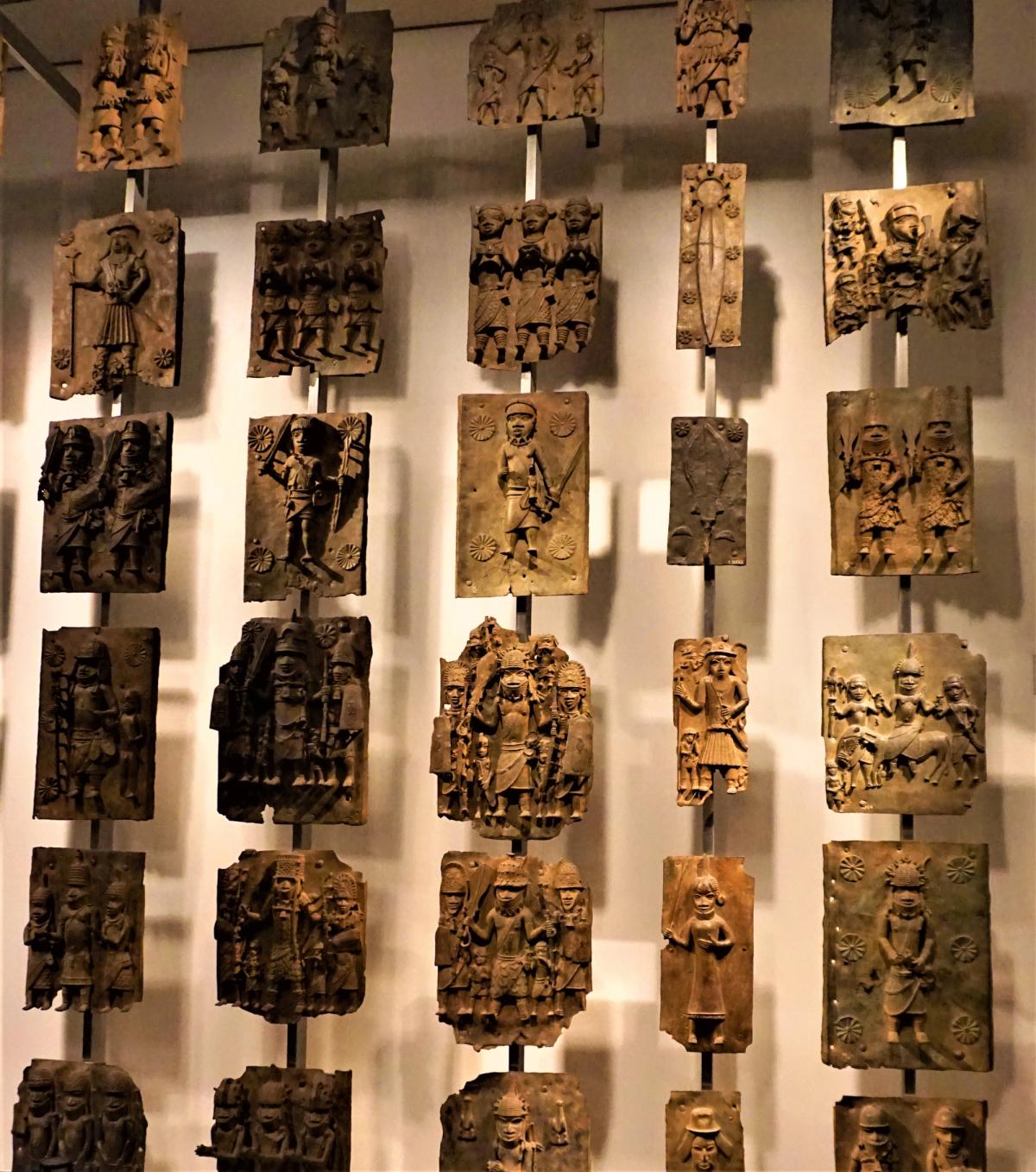
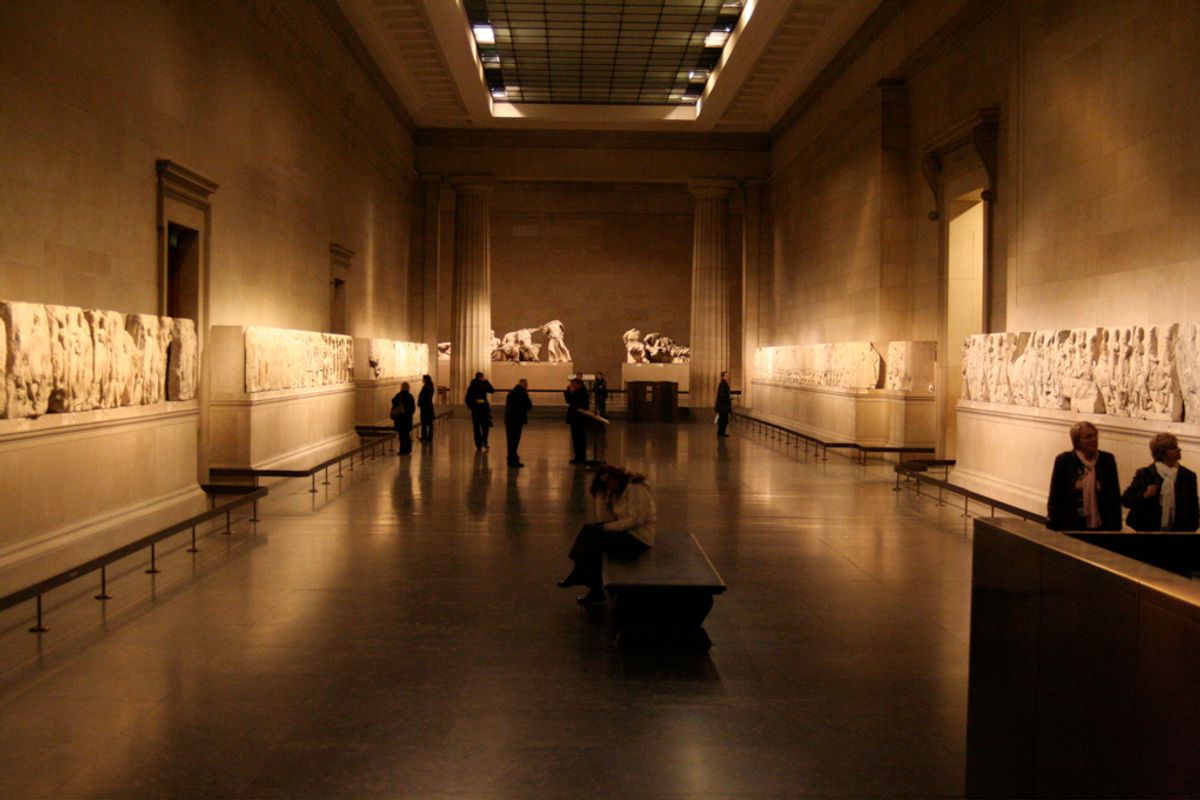
Where no forum exists, the claim does not expire. It also does not resolve. The Parthenon sculptures held by the British Museum are the most visible instance in the world: a claim pursued by a state, for over two centuries, with no tribunal holding jurisdiction over it and no statute setting a term. This institution has examined that museum's relationship to material it displays in the study of the Bayeux Tapestry loan.
An unlimited claim sounds like an advantage to the claimant, and it is the opposite. A deadline is what forces a decision. Without one there is no moment at which anything must be decided, and the object simply stays where it is while the argument continues indefinitely. That condition has a name in this institution's vocabulary. It is Structural Captivity: an object held in a position its claimants cannot reach, not by any single act of refusal, but by the shape of the system it sits in. Nobody has to say no. There is simply nowhere to say yes.

The registers record arrivals, not absences
Two kinds of register operate in this space and the difference between them decides what can be found. The Art Loss Register records objects reported stolen or missing, and a search against it tells a buyer whether a specific object has been reported. The Commission for Looted Art in Europe maintains a very different kind of record: the documentation of confiscation itself, the archival trail, and the institutional responses to claims.
Neither can record what nobody reported. A register is a list of things somebody knew to name, and the material at issue in restitution is disproportionately material whose owners did not survive to report it. The register's coverage is a function of who was left to file.
At the international level the 1970 UNESCO Convention addressed the flow rather than the record, obliging states to prohibit the import of cultural property removed illicitly from another state party. It is prospective. It fixes the future of the trade and reaches backwards only where a state chooses to make it do so.
The one instrument that does reach backwards through a court is jurisdictional rather than substantive. In Republic of Austria v. Altmann, reported at 541 U.S. 677 (2004), the Supreme Court of the United States held that the statute governing when a foreign state may be sued in American courts applied to conduct predating its own enactment. The holding decided where the argument could be heard. It did not decide who owned the paintings.
That is the correct note on which to leave the legal material. The most consequential decision in the field settled a question of forum. Everything substantive was resolved elsewhere, by negotiation and by panels constituted for the purpose, which is where the great majority of restitution outcomes are actually reached.
Where this leaves the Custodian's Contract
The instrument this institution issues with an object, the Custodian's Contract, records a chain running forward. It names who holds the object now, what obligations travel with it, and what a subsequent holder inherits. Its whole architecture assumes the chain begins with us and extends into the future. The full argument for that instrument is set out in the founding study of the Contract.
It has no mechanism for a claim arriving from behind.
Nothing in it contemplates a party asserting that the chain is defective at a point before the institution entered it. There is no clause stating what happens if a prior interest is established, no obligation on the holder to research the material's origin, no duty to disclose what is known about it, and no procedure by which a claim would be received at all.
For most of what this institution makes, that gap is theoretical, because the objects are commissioned and their origin is the making. It stops being theoretical the moment any material with a prior life enters the work. A found component, a salvaged textile, an acquired object incorporated into a new one, and the Contract is suddenly certifying a chain whose earlier links it never examined.
This is the same shape as the succession gap in the same instrument. Both are cases of a document that describes the present holding with precision and is silent about the object's life outside the window it was drafted for. A contract that records only the interval it can see is not wrong. It is narrow, and the narrowness is invisible from inside it.
What is not established
No claim is made here about any specific object, holder or claim. Nothing above asserts that any named institution holds material improperly, and no live dispute is characterised on its merits.
The outcome of the Altmann matter after the jurisdictional ruling was deliberately not asserted, because it was not verified against a primary source for this study. The prose states only what the Supreme Court decided, which is a question of forum.
The legal descriptions are general and jurisdictional detail varies enormously. Limitation periods, good-faith purchase protection and the treatment of stolen title differ so sharply between legal systems that a single rule stated generally will be wrong somewhere. Nothing here is legal advice and nothing here is a legal conclusion.
No figures appear in this study because none were sourced. Counts of claims filed, objects returned or institutions with provenance programmes exist in the literature and were not measured here, and this institution does not quote a number it has not derived.