MoMA Hosts Chess for Duchamp: The Museum Absorbs Its Own Disruptor
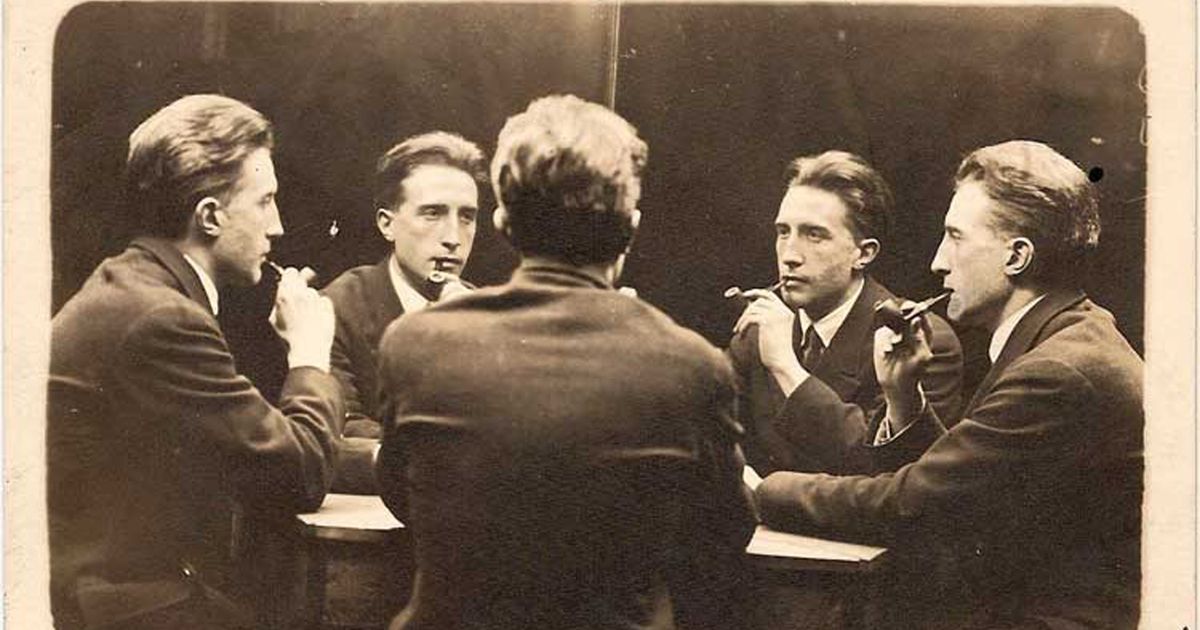
On the man who abandoned art for a game that cannot be sold, and the museum that has learned to sell the abandonment.
In the summer of 2026 the Museum of Modern Art mounted the first United States retrospective of Marcel Duchamp since 1973, some three hundred works spanning six decades of the century's most corrosive career, and, alongside it, announced that it would host chess matches in his honor. The gesture is elegant, well-meant, and almost perfectly self-cancelling. For the single most legible fact about Duchamp is that he walked away from the art world to play chess precisely because chess could not be turned into what MoMA is now turning it into: a program, an attraction, an event with a wall label. To honor that refusal with a staged version of the very thing refused is not a tribute. It is a demonstration of how completely an institution can metabolise its own critic.
The trade coverage will call this a curatorial homage. We will call it what it structurally is: the absorption and neutralisation of a radical anti-commodity gesture to generate institutional spectacle. The museum Duchamp spent his life outwitting has, at last, found the move that captures him, by loving him.
The Disruptor's Retirement
Recall what Duchamp actually did, because the legend has sanded it smooth. In 1917 he submitted a factory urinal, signed “R. Mutt,” to an exhibition that had promised to accept anything, and when it was refused, the refusal became the artwork. The readymade proposed that art was not a matter of the hand, the eye, or the object at all, but of the decision and the frame: a nomination. It was an argument designed to make the precious art object structurally unnecessary. Then, having detonated the object, Duchamp did the more radical thing. He stopped.
By the 1920s he had, to public appearance, given up art for competitive chess, playing for the French national team, writing chess columns, co-authoring a treatise on rare endgames. Critics have spent a century insisting he never really quit, that the retirement was itself a conceptual work. Perhaps. But the choice of chess was not arbitrary, and it was not a hobby. It was the logical terminus of the readymade's argument: if the object is unnecessary, choose the activity that produces no object at all.
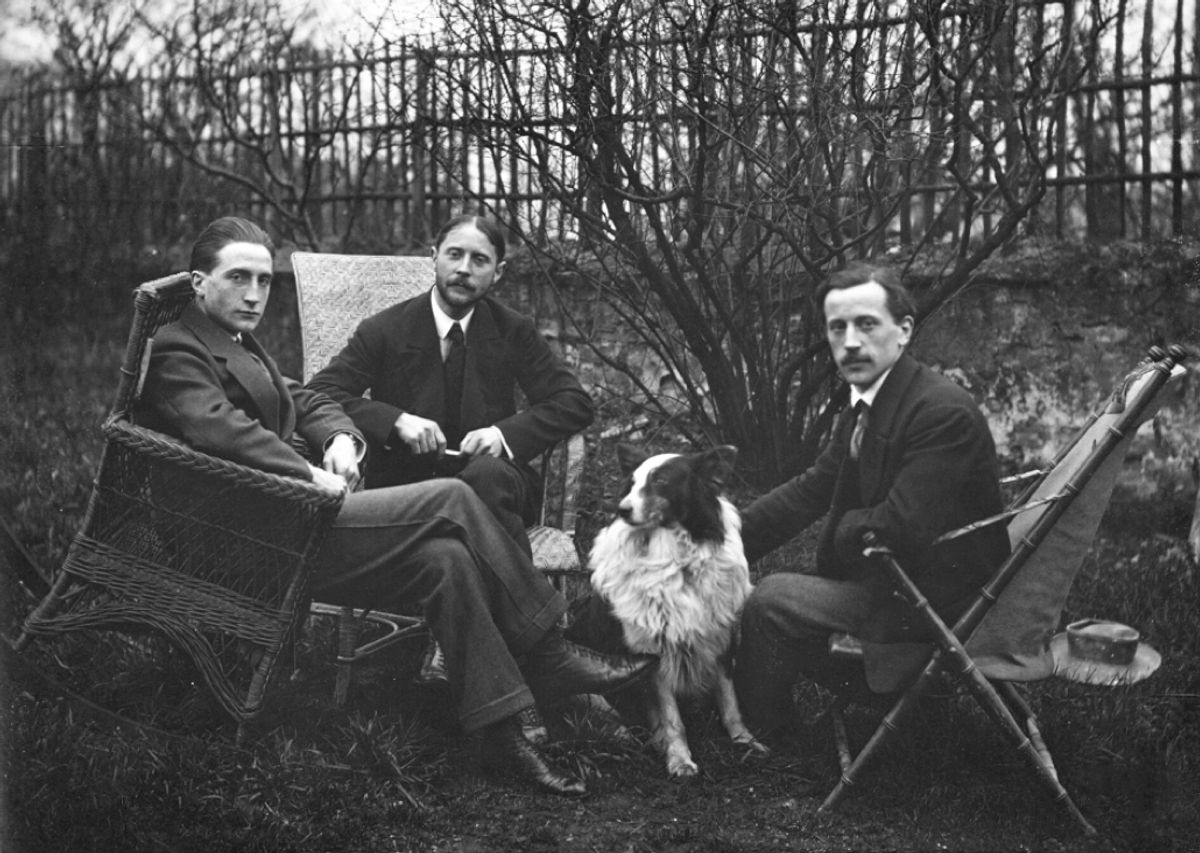
This is the gesture MoMA now proposes to celebrate, and the difficulty is immediate. You cannot hang a retirement. You cannot acquire a refusal. The museum's entire apparatus, collection, conservation, insurance, the vitrine, exists to preserve objects, and Duchamp's late move was the deliberate manufacture of nothing to preserve. The retrospective solves this the only way it can: by filling the rooms with the early explosions and treating the silence that followed as the final, framable masterpiece.
You cannot hang a retirement. You cannot acquire a refusal. So the museum frames the silence and calls it the masterpiece.
Why Chess
To see the sharpness of Duchamp's choice you have to take chess seriously as an anti-commodity. A game of chess yields no artefact. It cannot be sold; a played game survives only as notation, infinitely reproducible and worth nothing. It has no aura in our sense, no Aura Transaction is possible where there is no unique object to authenticate and no scarcity to defend. Two players sit down, think, and produce a structure of pure position that evaporates when the pieces are reset. Chess is the readymade's utopia: all Conceptual Depth zero material residue, nothing for a market to grip.
“I have come to the personal conclusion,” Duchamp said, “that while all artists are not chess players, all chess players are artists.” The remark is usually quoted as charm. Read it as strategy and it is a demolition: art, he implies, has been reduced to a subset of a purer game, one that never mistook its beauty for a saleable thing. Where the art market converts thought into an object and the object into a price, chess holds thought in suspension and lets it disperse. It is the exact inverse of Speculative Velocity: a practice engineered so that nothing can accelerate, because nothing changes hands.
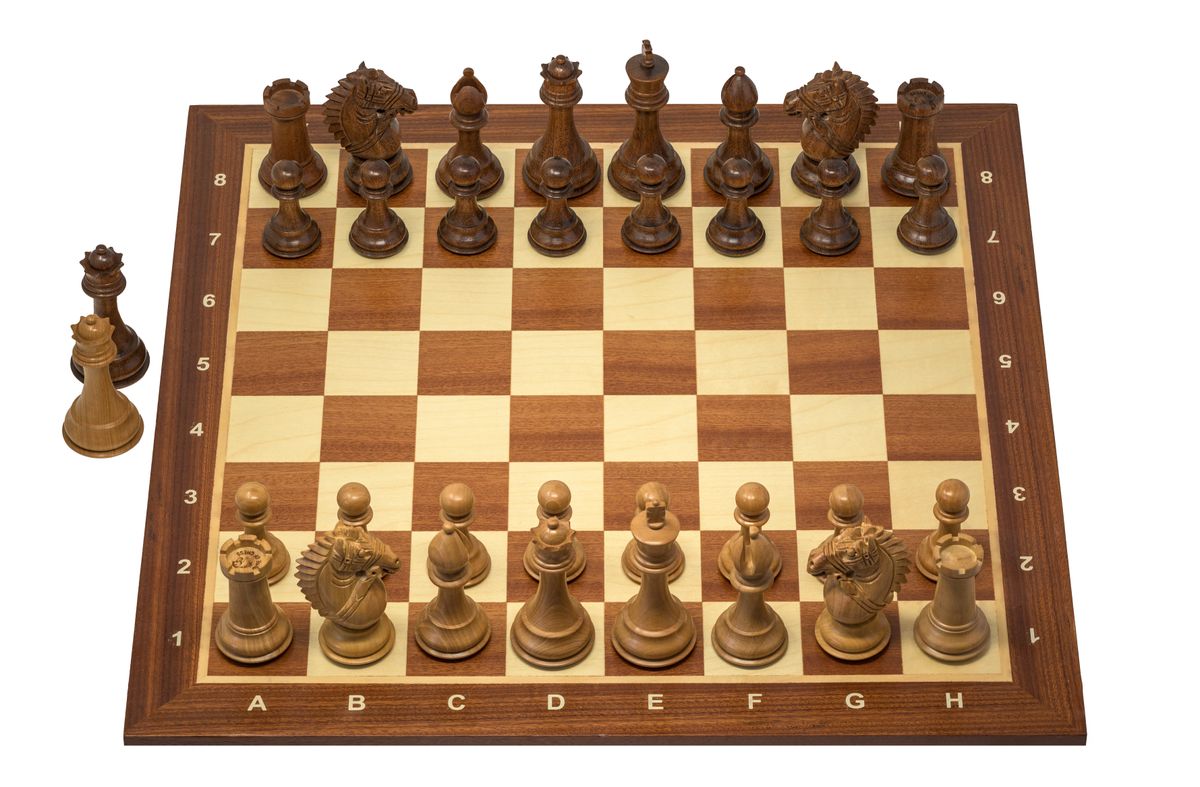
So when Duchamp chose the board over the canvas, he was not indulging an eccentric passion. He was completing a critique, moving from the object that shouldn't be precious (the readymade) to the practice that cannot be owned (the game). It is the most thorough Anti-Commodity Commitment in the history of modern art, and it is the thing a museum is least equipped to honor, because a museum is a machine for making things ownable.
The Strategist Who Played Both Sides
Honesty requires a complication, and it is the most interesting part of the case. Duchamp was no ascetic purist who fled the art world in disgust; he was a strategist who never stopped playing it. In 1966, two years before his death, he staged Hommage à Caïssaa chess-themed benefit at the Cordier & Ekstrom Gallery in New York, for which he produced thirty “readymade” chess sets, sold to raise more than thirty-two thousand dollars for the American Chess Foundation. He played a match at the opening; Salvador Dalí was among the players; Andy Warhol arranged for the Velvet Underground to supply the noise. It was a gallery event, a fundraiser, a spectacle, everything one might accuse MoMA of staging now.
This matters because it denies us the easy story of a pure gesture betrayed by a crass institution. Duchamp himself fused chess, commerce, celebrity, and performance; the museum's 2026 event has a genuine ancestor in the artist's own hand. But the ancestry also exposes the difference, and the difference is everything. Duchamp's spectacles were his moves, authored, ironic, retaining the sting of the man who could sell you a readymade chess set while grinning at the fact that you'd bought one. He weaponised the institution's tools against its pretensions. The museum, honoring him, inherits the tools and discards the weapon.
He had, after all, spent decades in disguise, inventing the alter ego Rrose Sélavy, signing works as her, sitting for Man Ray in her costume, turning even his own identity into a readymade to be reassigned. Duchamp treated the whole apparatus of authorship, authenticity, and celebrity as a board to be played, calmly, several moves ahead. The chess metaphor was never only about the game on the table; it was his stance toward the art world entire, a man who found the institution's certainties easy to checkmate. The quiet tragedy the retrospective cannot admit is that the institution has, at last, learned his openings.
The Retrospective as Reliquary
The critical reception of the retrospective has, to its credit, sensed the problem, even if it stops short of naming the mechanism. One review found Duchamp “vanishing into the shadow of his own legend”; another asked whether we have simply become too reverent of him; a third argued the show exposed the radical's bourgeois yearnings. The consensus, arrived at independently, is that MoMA has produced a monument so admiring that it embalms its subject. The disruptor has been canonised into harmlessness.
This is the deeper function of the reliquary. A retrospective of three hundred works does not merely display Duchamp; it settles him, fixes a provisional, self-contradicting, permanently mobile figure into a stable heritage asset, a Hollowed Object at the scale of a whole career. The man who insisted the artwork was a nomination becomes, himself, the nominated masterpiece: MoMA points at Duchamp and says this is artperforming on his corpse the exact operation he spent his life ridiculing. The frame he exposed as arbitrary is now bolted around him.
The proof runs deeper than a single show. Consider the afterlife of the urinal itself. The object Duchamp chose because it was worthless, mass-produced, and beneath aesthetic notice is today among the most valorised gestures in all of art history, its authorised replicas held in the great collections, insured, conserved, and, when one reaches the market, sold for sums that would have stunned the original manufacturer. The market did not reject the readymade. It waited, and then it priced it. The anti-object became the ultimate object; the joke about value became a store of value. Duchamp's turn to chess was, in part, a response to precisely this discovery, that the art world could absorb even the attack on the art world, and charge admission at the door.
Institutional Necrophagy
Which brings us to the chess matches, and to the precise name for what they enact. To stage chess, the worthless, unownable, market-proof game, as a museum event is to perform Institutional Necrophagy: the institution feeding on the radical gesture, converting an act of refusal into a source of attendance. The free game becomes a scheduled attraction. The activity Duchamp chose because it generated nothing to sell is enlisted, at last, to sell something, tickets, membership, the museum's own reputation for daring. The anti-commodity is re-commodified by the simple act of framing it.
We have watched this operation elsewhere, on other bodies: the museum that absorbs and neutralises the very heritage it claims to steward the market that converts the critical gesture into speculative velocity the moment it becomes collectible. Duchamp is only the most exquisite case, because he built his life's work specifically to be uncapturable, and the institution has captured it anyway, not by force but by embrace. There is no defence against being honored. That is the elegance of the move, and its violence.
There is no defence against being honored. It is how the institution captures what it could never buy.
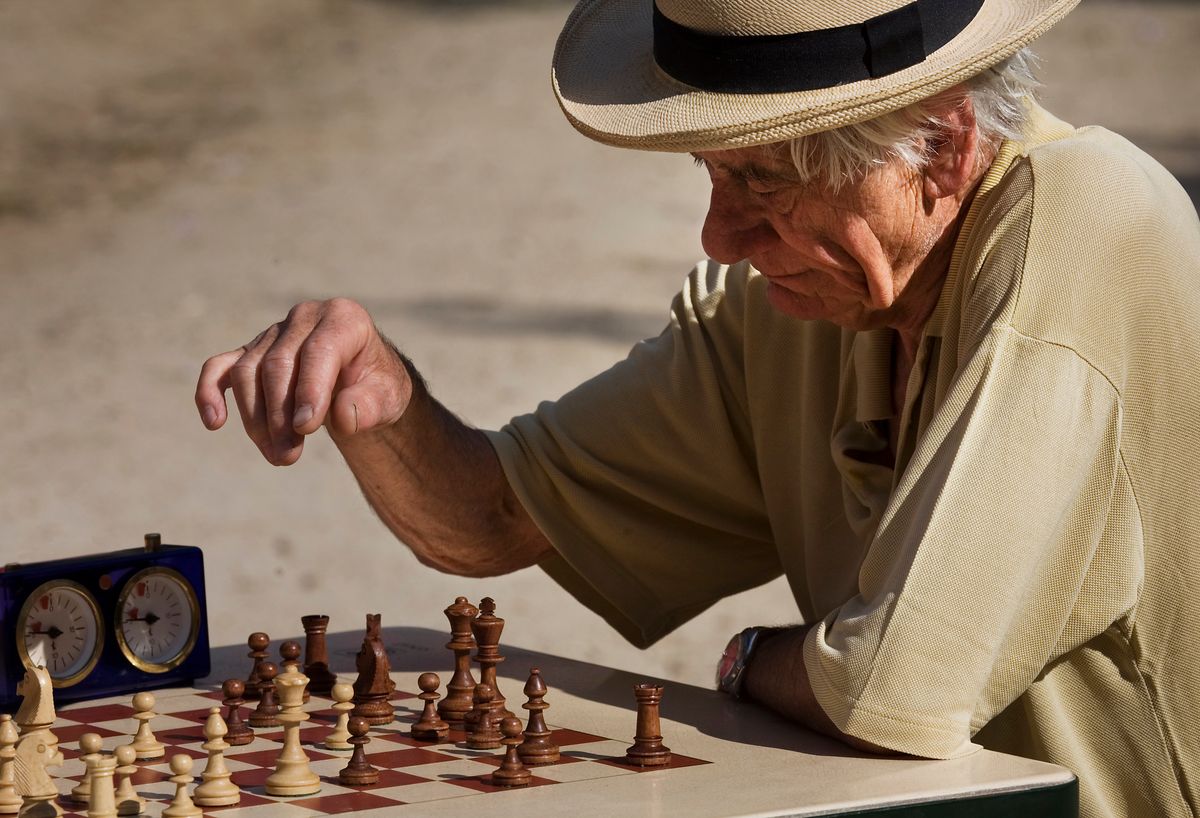
Notice, too, what the enclosure costs the game. Chess in a public park, the version Duchamp actually loved, the pastime of pensioners and hustlers and children, is free, ungated, and nobody's property. Move it into the museum and it acquires an admission price, a schedule, a rope line, a brand. The most democratic of activities is made, briefly, exclusive; the game that belonged to everyone is lent the aura of the institution that borrowed it. This is the small, exact inversion at the heart of the homage: Duchamp went to chess to escape the enclosure of value, and the museum has chosen to honor him by enclosing the chess.
The Sting Removed
The distinction the whole study turns on is between a gesture that retains its critique and one from which the critique has been extracted. Duchamp's chess was a Spectacle of Dissentit staged the game precisely to needle the art world's assumption that value must reside in a saleable object. MoMA's chess is a spectacle with the dissent removed: the same board, the same pieces, the same performance, drained of the danger that made the original mean anything. It is dissent reissued as amenity.
You can measure the extraction by comfort. Duchamp's gestures made the art world uneasy; they implied that its central premise was a con. A museum chess program implies nothing of the sort, it is warm, participatory, photogenic, and entirely safe for the institution that hosts it. Nobody leaves a MoMA chess match doubting whether the museum should exist. That comfort is the tell. A homage that costs the institution nothing, that threatens none of its premises, that converts a career-long attack into a pleasant afternoon, has not honored the artist. It has digested him and reported the meal as tribute.
What Honoring Duchamp Would Require
None of this is an argument against exhibiting Duchamp, or against chess, or against public programming. Access to the work is a genuine good, and the retrospective will introduce him to people who will be permanently altered by the encounter. The critique is narrower and harder: that to honor Duchamp, as opposed to merely displaying him, the institution would have to preserve the one thing its format is built to remove, which is the sting.
What would that look like? A homage faithful to Duchamp would be uncomfortable. It would implicate MoMA in the very market logic Duchamp attacked; it would let the chess matches ask, on the wall, whether the museum staging them is the institution he was trying to escape; it would refuse to resolve him into a hero and leave him, as he left himself, an open question that indicts the room. A Custodian's Contract with a figure like Duchamp is not a duty to celebrate him but a duty to keep him dangerous, to conserve the critique as carefully as the objects. The measure of a true homage is whether the honored artist could still embarrass the host. By that measure, a chess match in the atrium is not a move Duchamp would have respected. It is the one he would have seen coming.
Coda
Duchamp spent sixty years proving that the frame makes the art, that the institution's nomination is the whole of the magic, and that a man could therefore walk out of the game entirely and sit down at a different, cleaner one. MoMA's answer, six decades on, is to build the largest frame it has ever built and to set a chessboard inside it, to nominate the walking-away as the masterpiece and the refusal as the entertainment. It is a brilliant move, and it wins. It is also the precise thing Duchamp was warning us about: that there is no gesture so radical that the museum cannot, in time, learn to serve it with wine. The pieces have been reset. The house is playing white.