Betye Saar: The Sovereign Object
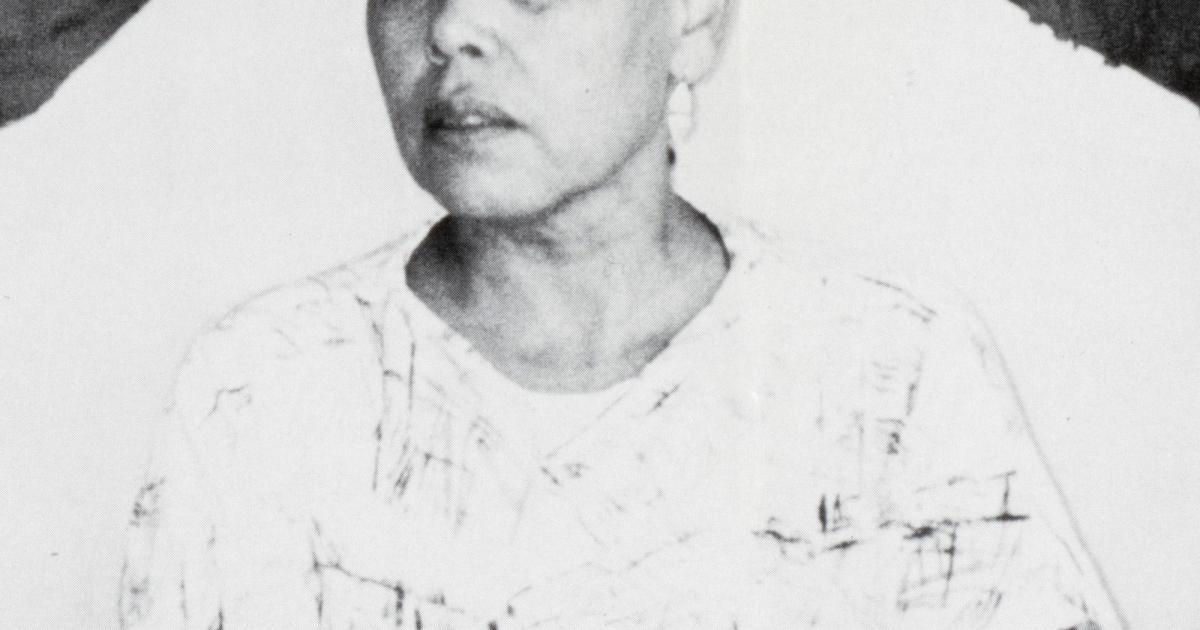
On sovereign objects, the mechanics of institutional capture, and what happens to radical material critique when the institutions finally arrive with acquisition budgets...
Four Days From a Hundred
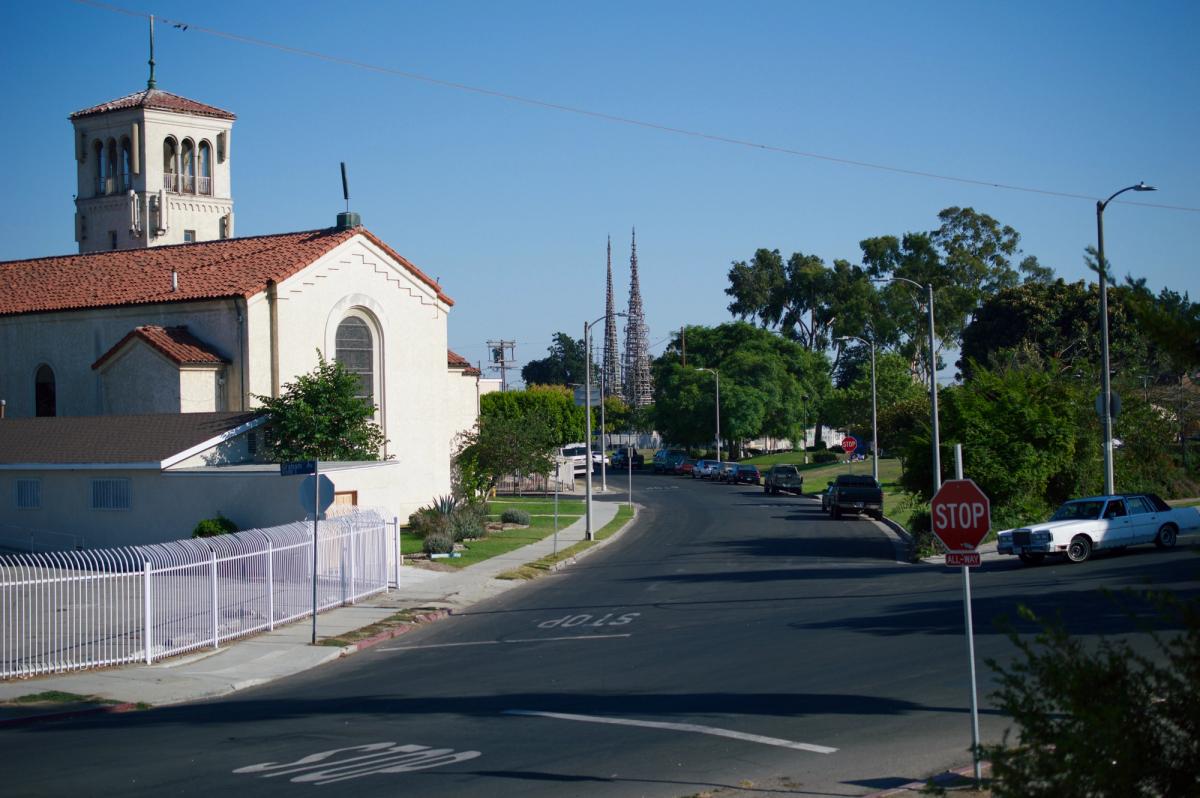
Betye Saar died on July 26, 2026, in the early hours of a Sunday morning, four days before she would have turned one hundred. She had spent those ninety-nine years in Los Angeles, in the same metropolitan landscape where, as a child growing up in Pasadena during the Great Depression, she watched Simon Rodia press ceramic tiles and broken glass into the towers he was slowly assembling in Watts: an immigrant's monumental act of reclamation, an entire architecture built from the discarded and the overlooked. That childhood encounter never left her. By the time she found her own artistic vocabulary, she had absorbed a lesson that most of her contemporaries had not: the discarded object was not a limitation to work around. It was the material.
The obituaries that followed were immediate, comprehensive, and largely correct. Saar was a founding figure of the Black Arts Movement, a pioneer of assemblage in the tradition of Joseph Cornell but radically relocated in its political and material register, a curator of the degraded object who spent six decades demonstrating that the things her culture had most thoroughly dehumanized were also, for precisely that reason, the objects most charged with meaning. The institutions that published these obituaries had, for most of her career, been conspicuously absent. The Museum of Modern Art acquired “Black Girl's Window” and mounted a dedicated solo exhibition in 2019, fifty years after the work was made. The Los Angeles County Museum of Art held its first comprehensive retrospective that same year. The Getty Research Institute acquired her archive in September 2018, as the inaugural acquisition of its newly established African American Art History Initiative.
These facts of her institutional reception constitute, by any rigorous structural analysis, a case study in Institutional Necrophagy: the process by which institutions absorb the critical vocabulary of figures they once neglected, incorporating the critique into the institutional body until it becomes indistinguishable from the prestige it was originally designed to interrogate. Saar's practice resisted this absorption for five decades. The question this study addresses is whether it can continue to resist it now that the artist is gone and the market's posthumous machinery has begun to operate.
The Object Before Anyone Was Looking
“Black Girl's Window” was made in 1969, one year after the assassination of Martin Luther King Jr. and four years after the Watts uprising had marked the city where Saar lived and worked. She constructed the piece from a Victorian window frame she had found abandoned: a wooden grid of panes, some filled with painted figures from Afro-diasporic spiritual traditions, some with photographic images, some with occult and cosmological symbols. At the bottom center, she placed her own silhouette, hands pressed against the glass from the inside, looking outward. The figure is simultaneously imprisoned and protective, aspiring and constrained. The window frame does not merely frame the image; it is the subject of the image. You are looking at someone looking through the limits of what they were permitted to see.
The work was not, in 1969, a subject of interest to the institutions now competing to define its place in art history. It was made during a period when the formal art world had no functional vocabulary for what Saar was constructing: assemblage by a Black woman from Los Angeles, using found materials that bore the marks of prior use, prior meaning, prior pain. The objects she collected on extensive travels through Africa, Mexico, Asia, and the Caribbean were not art-historical citations. They were nodes in what this study identifies as Material Singularity: the structural property of an object that has passed through genuine lived circumstance and cannot be separated from the weight of that passage. The vintage window frame had been a window in someone's house. The occult symbols were from living traditions. The silhouette was the artist herself. None of this was metaphor. It was material fact.
“The Liberation of Aunt Jemima,” made in 1972 and now in the collection of the Berkeley Art Museum and Pacific Film Archive, distilled Saar's method to its most concentrated form. She began with a pre-existing commercial figurine: the Aunt Jemima syrup-bottle promotional piece, a product designed to encode Black female servility into a consumer brand, to press the history of slavery into a functional kitchen object. Saar did not remove or conceal the figure's dehumanizing original function. She armed it. The mammy figure was supplemented with a pistol and a rifle, placed in a construction that surrounds the armed figure with additional stereotypical imagery, creating a context in which the figure's new weapons read as not merely symbolic but operational. Angela Davis identified the work as the starting point of the Black women's liberation movement.
The political reading is accurate, but the material reading is equally significant. Saar was performing what the framework calls Semantic Burden reversal: the systematic redistribution of meaning accumulated in a degraded object, where the reversal is accomplished not by destroying the object's prior history but by forcing that history into confrontation with its own contradiction. The Aunt Jemima figure does not disappear inside Saar's construction. It is more visible than it was on the syrup bottle, more legible, more formally present, and therefore more indicting.
“The Liberation of Aunt Jemima” did not argue against racist imagery. It weaponized the object itself against the system that produced it, making servility's own commercial form into the instrument of its critique.
The Cornell Pivot and the Grammar of Reclamation
Saar's decisive methodological shift came in 1968, when she attended a Joseph Cornell retrospective at the Pasadena Art Museum. Cornell had been building his shadow boxes for decades: sealed glass-fronted constructions that arranged found ephemera into dreamlike, hermetic environments. Maps, bird imagery, fragments of Victorian printing, hotel ledgers, old photographs. Cornell's found objects were gathered from antique shops and auction rooms, in the language of nostalgic connoisseurship. They carried no particular political charge. Their power was associative, private, oblique.
Saar took the Cornell form and relocated it into a completely different register of material provenance. Where Cornell's objects were historically remote, hers were historically proximate. Where Cornell's objects arrived at the assemblage already hallowed by their age and rarity, hers arrived already degraded by their use. This is not a minor difference in aesthetic sensibility. It is a structural inversion. Cornell was working with objects whose original meaning had been softened by time into atmosphere. Saar was working with objects whose original meaning was still active, still operating, still doing damage: racist commercial products, spiritual objects from traditions the art world had not learned to respect, personal and family ephemera with unresolved weight.
The Watts Towers were the other formative reference. Saar had encountered them as a child, watching Rodia work on a construction that would take thirty-three years to complete, built from broken tile, glass bottles, seashells, and embedded wire on a skeletal steel armature. Rodia described himself as building a ship, a vessel for departure. The towers are not art in the institutional sense, because Rodia did not think of them as art. They are the product of an obsessive reclamation practice that saw potential in the discarded and the overlooked, and that understood construction as a form of meaning-making available to anyone willing to commit the labor. Saar absorbed both lessons: the Cornell box as formal structure, and the Rodia tower as material ethics.
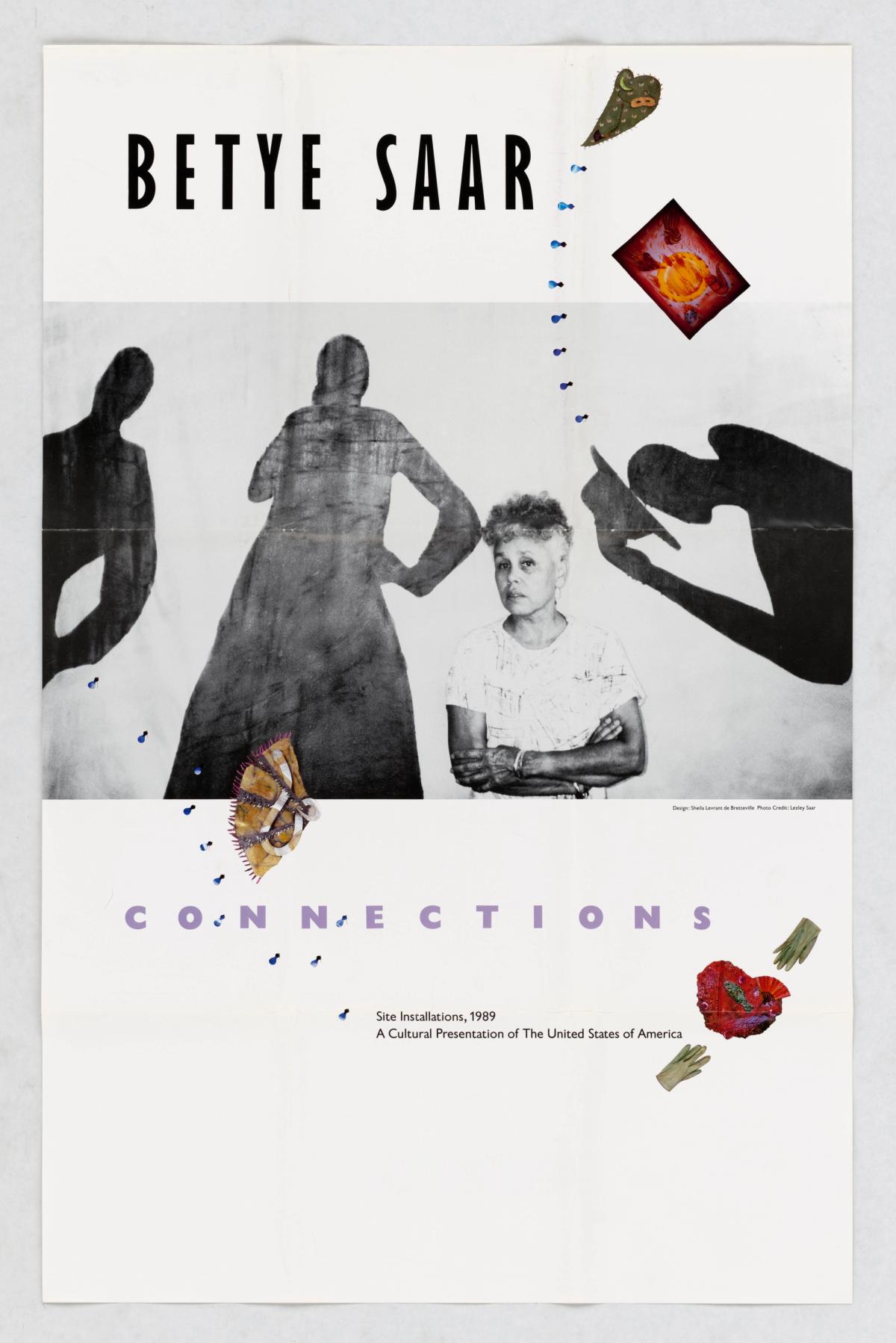
What she built over the next six decades constitutes, in the terms this institution has developed, one of the most sustained demonstrations of Labor Density in the American art canon. The assemblages do not conceal their making. They insist on it. The vintage window frame carries the marks of its prior existence. The found figurine carries the marks of its commercial production. The artist's hand is visible not as an expressive gesture but as a fact of accumulation: these objects, in this configuration, mean something they could not mean separately, and the work of assembly is the work of argument.
Trauma Provenance and the Architecture of the Found Object
Narrative Permanence describes the structural property of objects whose histories cannot be separated from their material existence: objects whose meaning is not imposed from outside by branding or market certification but accumulated through genuine historical passage. Saar's assemblages are constituted almost entirely of such objects, and in the most difficult possible register. The racist ephemera she collected over decades, the mammy figures and “black collectibles” and servitude iconography produced by American commercial culture to normalize the dehumanization of Black people, are objects with maximum Narrative Permanence in the most painful sense. Their story is the story of systematic oppression, encoded into ceramic and cardboard and tin, made portable and domestic and inescapable.
By incorporating these objects without sanitizing them, by placing them at the center of her work where their original function is still legible, Saar created a material archive of American racism that operates through the objects themselves rather than through text or image alone. A photograph of a mammy figurine is a representation of a degrading object. The mammy figurine in Saar's assemblage is the object, and its presence in the art context does not launder it. It confronts you with it. The discomfort is structural, not atmospheric: it is produced by the object's actual history, not by Saar's arrangement of it.
This is why the market found her practice illegible for so long. The Hollowed Object, the luxury commodity whose apparent uniqueness is a function of branding rather than genuine material singularity, is straightforward to price: you price the brand, the edition, the provenance of manufacture. You price the sign. Saar's objects refused this logic at the source. Their provenance was not manufacture but reclamation, and reclamation has no certified origin, no edition logic, no scarcity mechanism of the kind that market valuation depends on. The Zero-Sum Aura mechanism requires a legible scarcity signal: the sense that this particular object, in this particular form, cannot be replicated. Saar's objects generated that signal through genuine material singularity, through the actual history embedded in each component, and that is a signal the market has consistently been slow to recognize because it cannot be manufactured, certified, or separated from the painful specificity of its source.
Saar chose her materials precisely because the market had already discarded them. She was not finding objects despite their degradation; she was finding them because of it. The art market's contempt was the materials' recommendation.
The 2019 Moment: Fifty Years Late
In 2019, two of the most powerful art institutions in the United States moved simultaneously on Betye Saar. MoMA mounted “Betye Saar: The Legends of Black Girl's Window,” a solo exhibition that opened October 21, 2019 and ran through January 4, 2020, organized around the institution's acquisition of the 1969 work. LACMA opened “Betye Saar: Call and Response” at the Resnick Pavilion in September of that year, the first California museum retrospective to address the complete arc of her career. Saar was ninety-three years old.
The convergence of these two institutional commitments in the same season requires explanation. It did not arise from a sudden clarification of aesthetic value: Saar's practice had not changed. The same works made in the 1960s and 1970s that MoMA and LACMA declined to seriously engage with for decades were available, recognizable, and extensively documented throughout that period. What changed between 1969 and 2019 was not the work. What changed was the institutional calculus that determines which practices are legible as historically significant.
This calculus is not neutral. The 2019 institutional convergence arrived at the intersection of specific forces: the accelerating reassessment of African American art history that gathered momentum through the mid-2010s, the structural pressure on major institutions to address the composition of their permanent collections, and the practical reality that an artist who had been working for six decades was approaching the end of her career. When artists die, their estate relationships become more complex and their archive prices increase. The institutional window for acquiring major works at pre-posthumous prices closes. MoMA and LACMA were not immune to this calendar.
Saar herself was characteristically measured about the belated recognition. She had continued working throughout the decades of institutional indifference: installations at international venues, site-specific commissions, sustained engagement with the materials and questions that had always driven her practice. The work made in the decades when no major institution was paying attention has exactly the same material integrity as the work that MoMA now holds. The institution's attention changed the market. It did not change the object. That distinction is precisely what the framework's concept of Speculative Velocity is designed to mark: the acceleration of financial value that is decoupled from the underlying material contribution, responding instead to institutional certification and market timing.
The Getty Archive and the Terms of Custody
In September 2018, the Getty Research Institute announced the acquisition of Betye Saar's papers as the inaugural acquisition of its newly established African American Art History Initiative. The archive spans from 1926 to the present and includes sketchbooks, correspondence, prints, drawings, photographs, and documentation of her entire career. The Getty committed $5 million to the creation of a dedicated center for African American art history, with Saar's archive as the foundation of the collection.
The acquisition was consequential. The systematic underdocumentation of Black artists in American museum archives is a real structural failure with real scholarly and legal consequences. The Getty's decision to make Saar's papers the inaugural acquisition of a dedicated initiative represented an institutional commitment rather than a symbolic gesture. The endowment was not a purchase price for the archive; it was the infrastructure that would make the archive usable for future scholars.
But the framework's concept of the Custodian's Contract requires a precise accounting of the terms under which custody is exercised. When an institution acquires an archive, it acquires something more than the physical materials: it acquires the authority to determine how those materials are accessed, interpreted, and framed for subsequent scholars and the public. The Getty Research Institute's holdings become, in practice, the primary reference point for anyone who writes about Saar's career in the coming decades. The finding aids, the contextual essays, the exhibitions mounted around the archive's holdings, the scholars invited to work with the materials: all of these choices constitute interpretive acts that will shape how Saar's practice is understood long after the current generation of scholars has moved on.

This is not an argument against archival acquisition or against the Getty specifically. It is an argument for recognizing that the Burden of Preservation is never neutral, and that the custodial relationship between institution and archive carries structural terms that matter independently of the institution's intentions. The Getty is not a neutral repository. It is an institution with its own programmatic interests, its own donor relationships, its own curatorial priorities. The interpretation of Saar's archive will inevitably be shaped by those interests, even when those interests are genuinely aligned with scholarly responsibility. Scrutinizing the terms of custody is not a criticism of the custodian. It is the minimum standard of care that Saar's legacy deserves.
The Legacy Group and the Sovereign Estate
In 2025, approaching her centennial and aware of the institutional pressures that would intensify after her death, Saar established the Betye Saar Legacy Group in collaboration with Roberts Projects, her primary commercial gallery in Los Angeles. The group comprises nine international curators and scholars, selected by Saar directly for expertise in different dimensions of her practice. Its mandate is the preservation, advancement, and stewardship of her artistic legacy through exhibitions, publications, and ongoing scholarly engagement with her work and process.
This structure merits careful attention. The Legacy Group represents Saar's attempt to establish what the framework calls a Monastic Veto over her own estate: a designated body with interpretive authority, selected by the artist herself, positioned between the commercial market and the work's meaning. The model is unusual. Most artists' estate management is handled by commercial gallerists, family members, or institutional trustees, each of whom has interests that may or may not align with the intellectual substance of the artist's project. A scholarly committee charged with interpretive authority interposes an additional layer of accountability between the estate and the market.
The qualification is unavoidable: the structure is administered through Roberts Projects, which holds commercial interests in the secondary market performance of Saar's work. The nine scholars are drawn from the institutional art world that was, for most of Saar's career, absent from her practice. The structural question is whether the Legacy Group functions as a genuine custodial check on commercial and institutional capture, or whether it functions as the sophisticated form that such capture takes when the institution is careful enough to involve the artist in designing the apparatus. That question will not be answerable for years. What is visible now is that Saar anticipated the problem and attempted a structural response to it. Whether that response is adequate to the posthumous market pressures it will face is the institutional question of the next decade.
The Posthumous Market and the Sovereign Object Under Siege
Saar's death on July 26, 2026 initiated a sequence that is predictable, well-documented, and structurally indifferent to the content of the practice it is operating on. Prices for her works at auction will rise. Secondary market activity will accelerate. Galleries holding her works will reprice their inventories upward. Institutions that declined to make acquisitions while she was alive will make them now, when the institutional risk of non-acquisition has become legible. The obituary traffic will briefly concentrate attention on her name in digital environments, and that concentration will translate into commercial interest that has no structural relationship to the quality of any scholarship accompanying it.
This sequence is not a tribute to Saar's work. It is the art market identifying an arbitrage opportunity. The period between an artist's death and the stabilization of their posthumous canon is a window of maximum speculative yield: works whose prices have not yet adjusted to the artist's revised historical position can be acquired at rates that the post-stabilization market will substantially exceed. The institutions that understand this move first. The commercial galleries move slightly after. The secondary market collectors follow. By the time the speculative window has closed and prices have stabilized at the new permanent level, the institutional and commercial capture of the legacy is largely complete.
The challenge for the Betye Saar Legacy Group, for the Getty Research Institute, and for scholarship more broadly is to prevent this market sequence from doing to Saar's practice what she spent her career refusing: the conversion of genuine material complexity into a legible, priceable sign. Her assemblages resist this conversion not through formal inaccessibility but through material specificity. Each component carries a history that the market cannot price away. The Aunt Jemima figurine in “The Liberation of Aunt Jemima” retains its dehumanizing commercial history even inside MoMA's collection. The window frame in “Black Girl's Window” retains its status as a domestic object that once demarcated interior from exterior in someone's house. These histories are not removable. They are the work.
The Aura Transaction, the mechanism by which genuine material depth is abstracted into a tradeable asset that no longer depends on any particular understanding of the material, is not less powerful for operating unconsciously. The institutions and collectors who acquire Saar's works in the coming months will believe, almost certainly sincerely, that they are honoring the practice. The market will price the honor accordingly. And the gap between what the work actually is and what the market's certificate says it is worth will widen, as it always does, until the certificate becomes the primary reference and the work becomes the illustration of the certificate's validity.
Material economics of the assemblage practice, including the specific relationship between the discarded object's pre-reclamation value and its post-artistic position in the secondary market, may be examined through the Material Integrity Record, an instrument of the Objects of Affection Collection.
An artist who spent nine decades transforming the objects the market had discarded into sovereign artifacts now faces the most dangerous adversary of her career: an art world that has learned to want what was made in its despite, and a market that has learned to price the resistance without engaging its argument.
Coda
Betye Saar was four days from one hundred when she died. She had spent those ninety-nine years in the same city where she first watched Simon Rodia press shards of broken tile into something that refused to be finished. She had outlasted most of the critical frameworks built to explain her, and had outlasted the indifference of most of the institutions now competing to define her legacy. She had also outlasted the Aunt Jemima brand: Quaker Oats retired it on June 17, 2020, acknowledging its origins in racial stereotyping, forty-eight years after Saar had built that understanding into an armed assemblage and called it liberation.
What she left is a body of work that constitutes, in the terms this institution has developed, one of the most rigorous anti-speculative practices in the history of American art. Her objects bear their meaning in their material rather than in their market position. They were assembled by an artist who understood that the most powerful thing she could do with the objects her culture had degraded was refuse their degradation on their own terms, not by discarding the objects' painful histories but by insisting that those histories were exactly what made the objects worth attending to.
The institutions that now claim her legacy will write the terms of her reception for the generations that did not live through the decades when no institution was watching. This study records what her practice actually was before that institutional framing has completed its work. The Narrative Permanence she built into her objects is the only structural guarantee against the Institutional Necrophagy that now surrounds her estate. Whether that guarantee will hold against the posthumous market is the open critical question of the next fifty years.