Jake Muir Gong Bath: Sound Art's Challenge to Material Singularity and Permanence
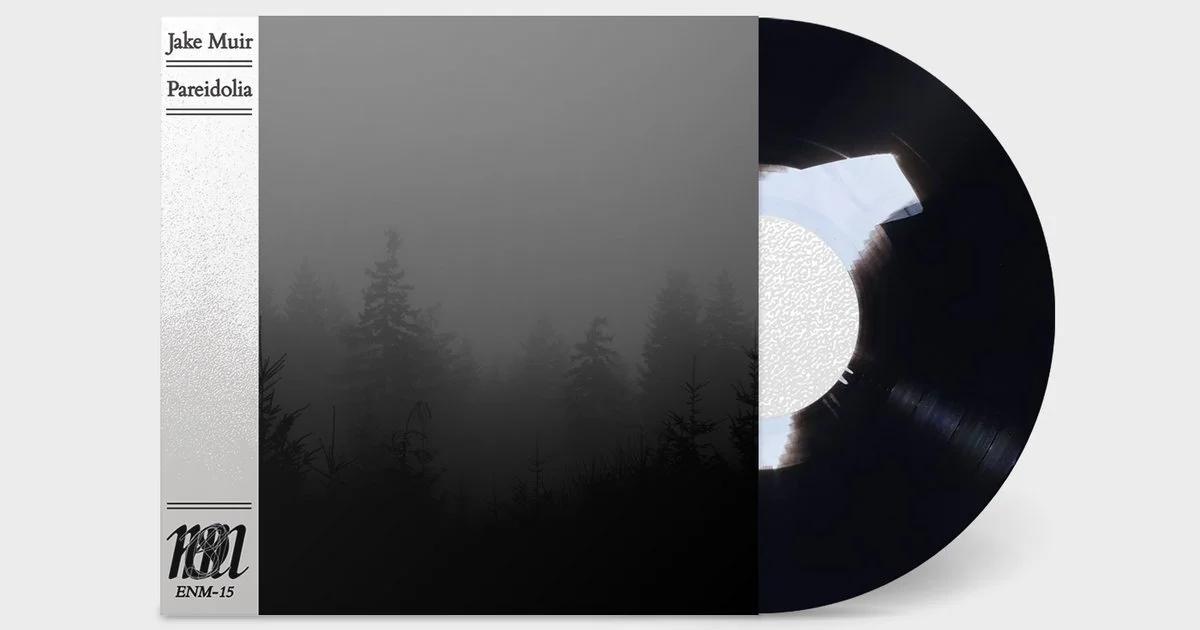
On a record made of metal, a metaphor made of wellness, and whether a sound you can hold in your hands still counts as an object.
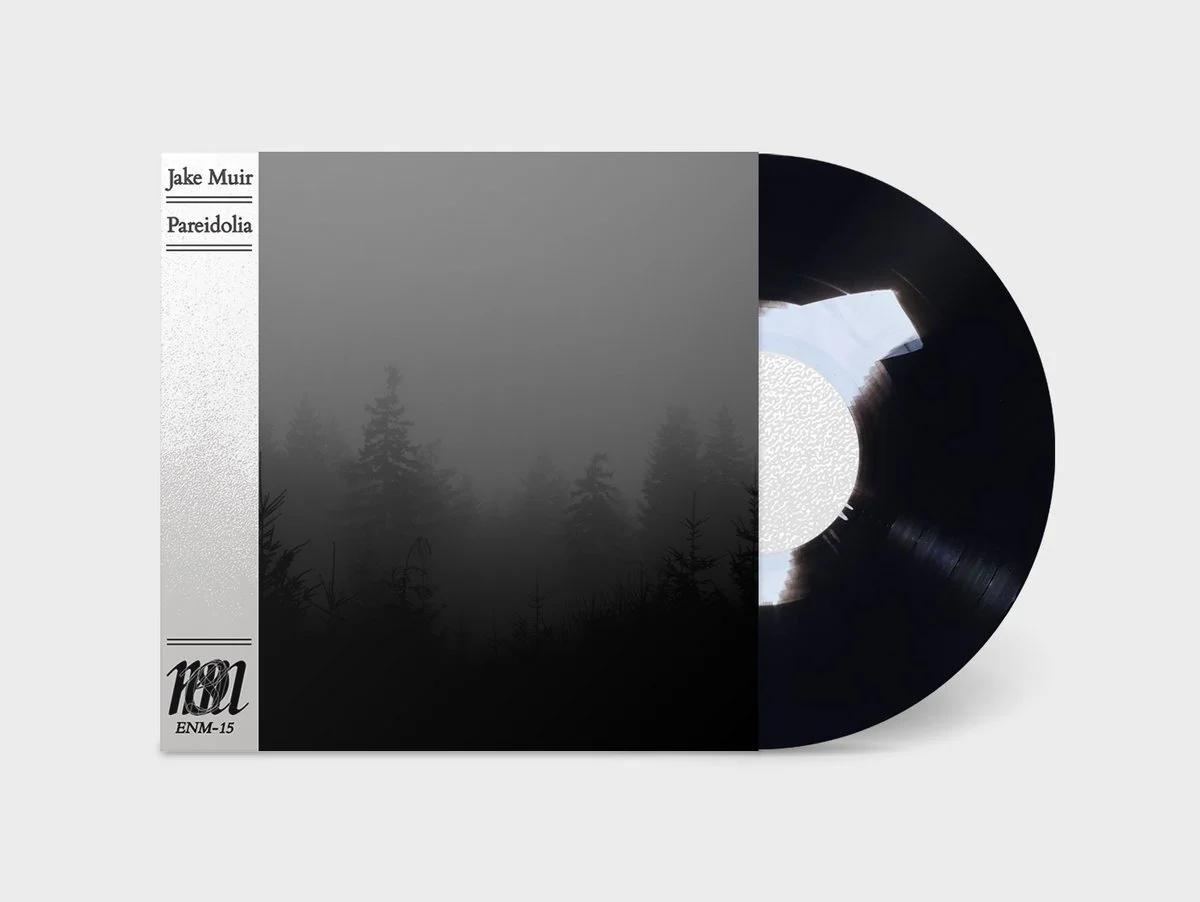
The Jake Muir review that occasions this study appeared in The Wire in June 2026 under a headline (“A bardo gong bath of in-betweenness”) that describes almost nothing about the object it names. The phrase reads like gong bath sound art, and it has since begun to circulate on its own, detached from the record; the question of ambient music permanence has been smuggled into a discourse that never asked it directly. This is a study about that smuggling. It is also a study about Pareidolia, the actual album under review: a fixed, editioned object assembled from roughly two hundred samples of death and black metal recordings, and therefore a case that forces the Objects of Affection Collection to test its own instruments: Material Singularity, the Hollowed Object, the Aura Transaction, the Semantic Burden against a work that refuses to behave the way the vocabulary predicts.
The Metaphor Is Not the Object
Our institutional intelligence arrived at this record already convinced that it had found a familiar villain: an ambient wellness product, a decontextualized bardo, a gong bath staged for the luxury wellness market and sold as spiritual depth. Nearly every agent in the pre-writing council argued as if Muir had assembled gongs, run a ceremony, and marketed the result with the borrowed grammar of Tibetan Buddhism. That reading is false, and the falseness is the study.
There is no gong bath. There are no gongs. There is no ceremony, no wellness event, no retreat, no spiritual service rendered. “A bardo gong bath of in-betweenness” is the critic’s metaphor, a reviewer’s image for how a particular record feels, and it enters the culture through the headline, not through the artist’s practice. Muir’s own account of what he did uses three plain words: pareidolia, sampling, place. The wellness frame is not in the object. It is in the language wrapped around the object.
The appropriation did not happen in the studio. It happened in the headline. The object was made of metal; the metaphor was made of wellness; and the collection nearly mistook the second for the first.
This correction is placed on the record deliberately because the entire analysis pivots on it. A critique of appropriation aimed at Muir would be aimed at a phantom. The same critique, aimed at the sentence that sells his record as a meditative in-between, lands on something real. We are not investigating a musician who dressed in the robes of a spiritual practice while sampling. We are investigating a critical vocabulary that dresses whatever it touches in those robes, and a market that reads the robes as the thing.
What Pareidolia Actually Is
The verified facts are narrower and stranger than the metaphor. Pareidolia (2026, released on the label Enmossed, on vinyl and download) is built from roughly 200 samples drawn from the ambient-leaning passages of death and black metal records: the drones, the decaying reverb tails, the moments when the genre stops being fast and becomes weather. Muir grouped these fragments by key, cut them, looped them, and let them run against each other in a process he calls “essentially… glacial improvisation.” The album’s tracks carry titles like “Beithir,” “Each Uisge,” “Celestial Visions,” “Oblivion,” and “Cathedral Of Decay.”
Muir is not a wellness practitioner. He is a United States field recordist, DJ, and composer whose prior releases, Lady’s Mantle (2018), Mana (2021), Bathhouse Blues (2023), sit squarely inside the tradition of ambient music and sound art. This matters because it locates the work’s genealogy in sampling and place, not in ritual. The pareidolia of the title is the actual method: the artist hears figures, melodies, spaces, a hovering choir, in material that never contained them, the way a face appears in a cliff face or a cloud. The record is a document of misrecognition, treated as a compositional principle.
The scale of the operation is worth holding in view, because it is where the Labor Density of the record lives. Two hundred sources do not group themselves by key, and metal does not volunteer its ambient passages; they must be hunted, isolated, matched, and coaxed into a coherence none of them possessed alone. What sounds effortless, a slow bath of tone, is the audible surface of an enormous editorial labor, the same paradox that governs any well-made object: the more work absorbed, the less work shown. To hear Pareidolia as passive ambiance is to mistake a dense fabrication for a found atmosphere, which is precisely the misreading the headline encourages.
Pareidolia is not a mood. It is a method: the disciplined act of hearing a cathedral inside a genre that was only ever trying to sound like the end of the world.
The Gong Bath That Never Happened
Why does the false frame stick so easily? Because the critical marketplace has an appetite the object itself does not feed. A record assembled from black metal loops is difficult to sell as an experience; a “bardo gong bath of in-betweenness” sells itself. The headline performs what the collection calls an Aura Transaction: it lends the work a borrowed gravitas, drawn from a spiritual tradition it never engaged, and it does so at no cost to the writer and no benefit to the artist. The gravitas is manufactured in the sentence and banked by the discourse.
Read this way, the headline is a small, precise instance of the experience economy colonizing description itself. It is not enough for criticism to say what a record is made of and how it moves; the record must be converted into a service, a session, a state you enter and leave. The bardo, the Tibetan intermediate state between death and rebirth, is recruited to name a forty-minute run of looped drones. The gong bath, a wellness-industry fixture, supplies the sensory promise. Neither is in the grooves. Both are in the byline.
Our earlier institutional reflex was to call this a Hollowed Object, a work whose spiritual signifier has been decoupled from any authentic practice. The correction is that the object was never hollowed, because the object never made the claim. What was hollowed is a set of words. This is the difference between institutional necrophagy committed by an artwork and the same operation committed by the language that reviews it. We propose a name for the latter: semantic capture: the conversion of a work’s actual material into a more marketable idea before the reader ever reaches the work.
Sampling, or the Field Recording From Nowhere
Where the object does become ontologically unstable is not in performance but in provenance. Pareidolia is made of recordings of recordings. Its raw material is not the world but the studio output of other bands, metal records that were themselves engineered, compressed, and mythologized. When Muir samples the ambient tail of a black metal track, he is field-recording a landscape that does not exist: a “nature” that was always already a production. The genre’s frost-bitten forests and cathedrals were sound-design gestures; Muir treats them as terrain and records the terrain.
This is the study’s real ontological engine, and it corrects the council’s materialist worry. The instability of the record is not that sound is ephemeral. The instability is that its Material Memory points backward through layers of prior mediation, each one a Sedimentary Object resting on the one beneath it. The album is a core sample drilled through a market’s worth of pre-recorded atmosphere.
Muir did not record the wilderness. He recorded the recordings that other men made when they wanted the wilderness to sound like grief. That is not a field recording. It is a field recording from nowhere.
Benjamin in Reverse
The obvious theoretical move, and the one the pre-writing council reached for, is Walter Benjamin: the aura of the original destroyed by mechanical reproduction. But Pareidolia runs Benjamin backward. There is no original here to lose. The samples were reproductions before Muir touched them; the “aura” the record generates is not the residue of a vanished authentic object but a new one, synthesized from copies that never had auras of their own. Reproduction is not the acid that dissolves the work. Reproduction is the raw ore the work is smelted from.
This inverts the usual anxiety about dematerialization. The fear that immaterial art cannot hold value assumes a lost body. Muir’s work never had that body to begin with, and it is not diminished by the absence. It demonstrates that a simulacrum can be a legitimate material, that you can build a singular thing out of copies, provided you take responsibility for the building. The aura is not found. It is manufactured, and the manufacturing is the labor.
Does an Ambient Record Have Material Singularity?
Here the collection must be honest against its own bias. Our framework was built for objects with obvious bodies, a chair, a garment, a building, and it has a standing temptation to deny Material Singularity to anything it cannot lift. The Materialist Ontologist in our council did exactly this, ruling that sound cannot be possessed and therefore cannot be singular. That ruling fails on contact with the facts.
Pareidolia is an editioned vinyl release. It can be bought, held, shelved, resold, and inherited. Its Object Permanence is not in question; a pressing is at least as durable as a painting. What the ambient prejudice mistakes for immateriality is really the record’s refusal of event, it does not announce itself, does not resolve, does not perform a climax you could sell tickets to. That refusal is an aesthetic, not an ontological, condition. The record is fully an object. It simply declines to behave like a spectacle, which is a different and, for OAC, a more admirable thing.
An artwork does not forfeit Material Singularity by being quiet. It forfeits it by being hollow. Pareidolia is quiet and full; the headline is loud and empty.

The Semantic Burden Belongs to Criticism
If there is a Semantic Burden in this affair, an unearned freight of meaning demanding to be carried, it does not sit on the artist. There is no evidence that Muir markets Pareidolia with the language of ritual, wellness, or the sacred. The spiritual vocabulary is entirely the critic’s, and the burden of justifying it is entirely the critic’s too. The music criticism that reaches for “bardo” and “gong bath” to describe a metal-sample record is the party that must answer for the appropriation, because it is the only party that performed one.
This is where OAC revises the Decolonial Ecologist’s otherwise vital concern. The worry about the facile absorption of non-Western spiritual concepts is correct, but its target was misidentified. The absorption occurred in the register of description, in the wellness-inflected reflex of a critical culture that cannot resist upgrading a drone to a devotion. To hold Muir responsible would be to let the actual mechanism, what we can call Sonic Necrophagy, the feeding of criticism on the depleted bodies of spiritual traditions, escape unnamed. Muir is not the villain here. Muir is the surface onto which the discourse projected its own habit.
Custodial Stewardship of a Record You Can Actually Hold
Because Pareidolia is a real, editioned object, the Custodian’s Contract applies to it in the ordinary way, which clarifies matters. The Burden of Preservation for this work is not the exotic problem of archiving an ephemeral experience; it is the mundane, tractable problem of keeping a pressing intact and its provenance legible. What must be preserved is not a vanishing atmosphere but the record of how the atmosphere was made, the two hundred sources, the method of looping, the artist’s own framing.
This is where Custodial Stewardship of an ambient record diverges instructively from stewardship of a spectacle. There is no atmosphere to bottle, no Atmospheric Equity to defend against evaporation, because the record was never selling atmosphere as such; it was selling a fixed arrangement of it. The custodial task is therefore documentary rather than conservational. Preserve the sources, the sequence, the method, the artist’s framing, and the work’s Narrative Permanence takes care of itself, the story of the object survives as long as the object’s making is legible. What erodes that legibility is not time. It is paraphrase.
The threat to this work, then, is not decay. It is Speculative Velocity operating at the level of language: the speed at which “gong bath” overtakes “metal samples” in the public memory of what the record is. A study like this one is a custodial act. It slows the sentence down. It insists that the object be remembered as the object, not as its most sellable paraphrase, an Anti-Commodity Commitment exercised not toward the artwork, which needs no defending, but toward the truth of its description.
To steward this record is to defend a fact against a phrase. The fact is quieter, harder to sell, and true. Custodianship, here, is simply refusing the upgrade.
Coda
The collection came to Pareidolia expecting a Hollowed Object and found instead a solid one, wrapped in a hollow sentence. The lesson generalizes past sound art. Everywhere the experience economy reaches, description precedes the object and arrives pre-monetized: the meal is a journey, the sneaker is a drop, the drone is a bardo. Our instruments were built to catch objects that betray themselves. They must be recalibrated to catch the more common case, the honest object betrayed by the language sent to represent it. Jake Muir made a record out of metal and misrecognition. The only thing that needed correcting was the headline, and the only villain was the reflex that wrote it.
The object was never the problem. The problem was the sentence that could not leave the object alone. OAC keeps the record and returns the metaphor to the sender.
Authored by Christopher Banks, Anthropologist of Luxury, Critical Theorist & Founder Objects of Affection Collection Office of Critical Theory & Curatorial Strategy 469 Fashion Avenue, 12th Floor, New York, NY 10018
RELATED OAC STUDIES
For readers tracing the collection’s argument across adjacent cases, the following studies extend the instruments applied above.
On the Hollowed Object and the Wellness Frame: Balenciaga’s Wellness Kick: What the Techwear Smoothie Activations Actually Reveal About the Hollowed Object
On the Aura Transaction: The Aura Transaction: On Louis Vuitton’s Super Nature, Nazar Strelyaev, and the Ethics of What Gets Absorbed
On Speculative Velocity and Object Permanence: Institutional Necrophagy: How Speculative Velocity Destroys Object Permanence and What the Custodian’s Contract Must Do About It
On Material Singularity: Structural Captivity of Material Singularity
On Labor Density and the One Original Object: Eve Schaub Is Growing a Dress: What the Year of the Dress Actually Confirms About Labor Density, Slow Fashion, and the One Original Object