High Line Art 2026: Public Commission, Private Capture
On public commissions, privatized corridors, and the art that legitimizes both...
The Elevated Structure
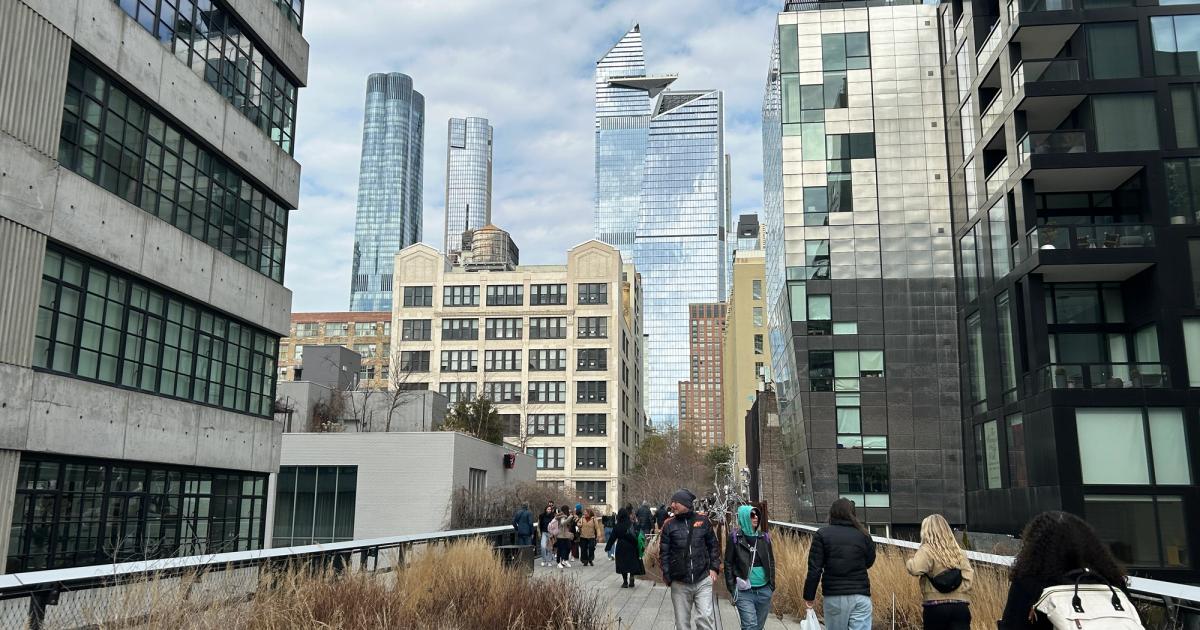
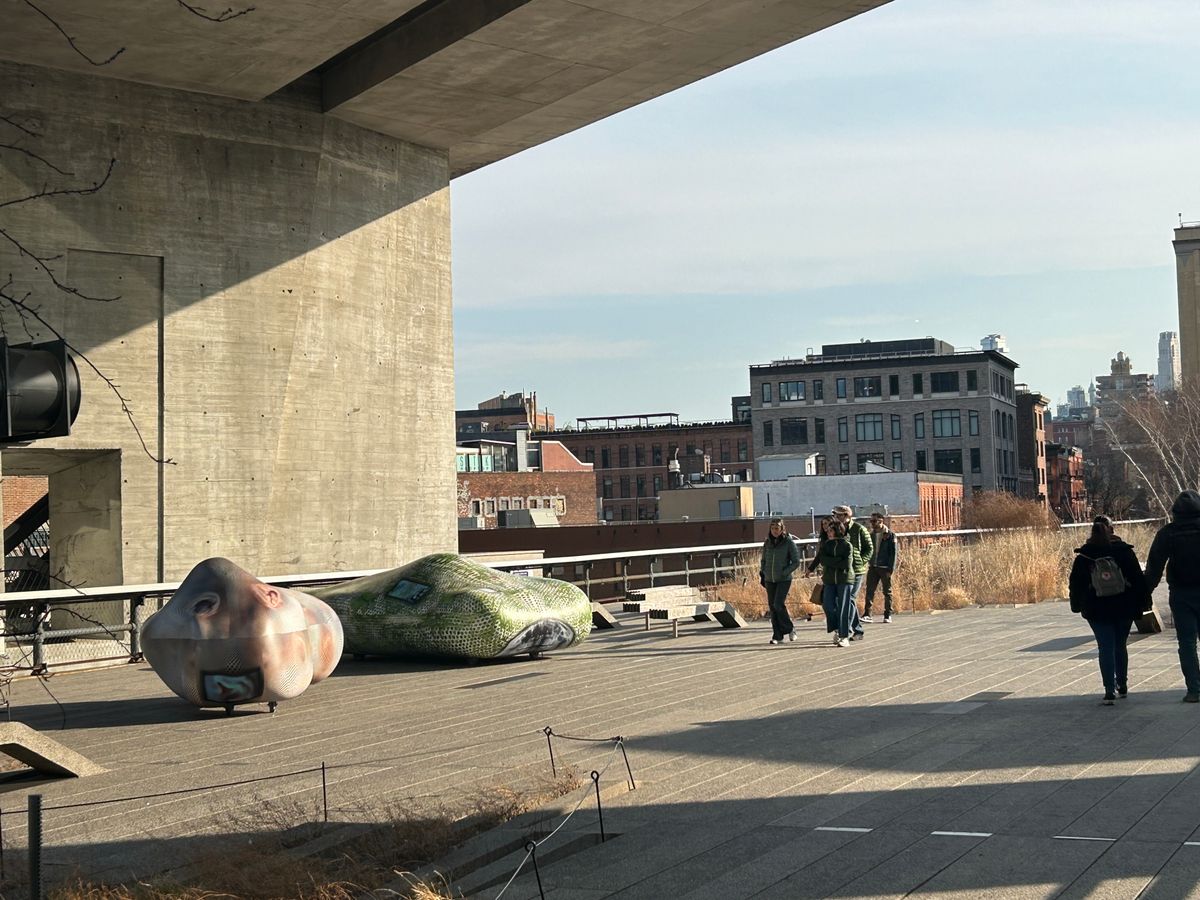
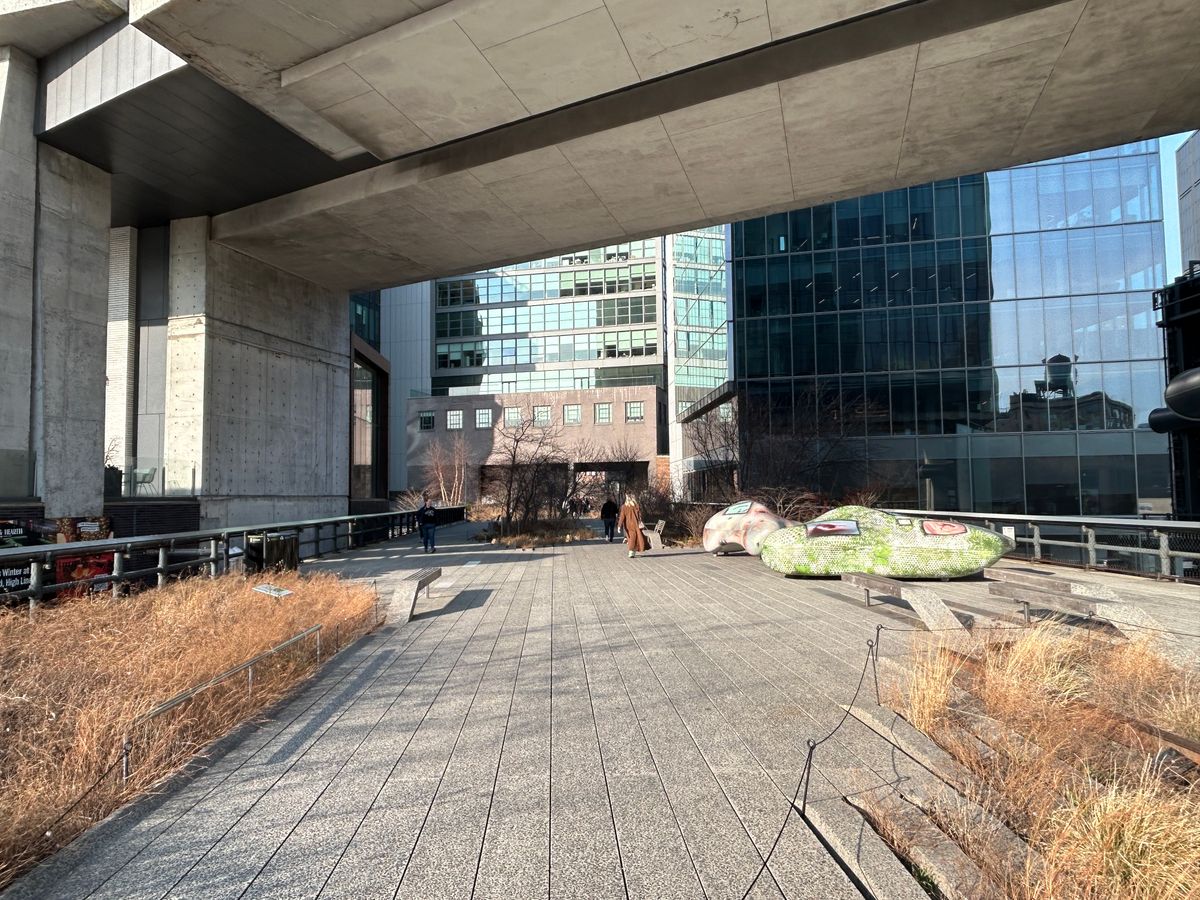
The High Line is a 1.45-mile elevated public park built on a decommissioned freight railway on Manhattan's West Side, running from Gansevoort Street in the Meatpacking District to 34th Street near Hudson Yards. It opened in 2009 under the management of Friends of the High Line, a private nonprofit operating under a partnership agreement with New York City's Department of Parks and Recreation. The city owns the infrastructure; the nonprofit raises the funds, manages the programming, and sets the cultural agenda.
The management model is worth stating plainly. Approximately 90 percent of the High Line's operating budget comes from private donations, corporate partnerships, and event revenue. The institution is, in structural terms, a privately governed entity operating public land. Its board includes developers, financiers, and philanthropists whose interests in the surrounding real estate are not incidental. The park's lead donor for its fall 2026 art season is identified as Amanda and Don Mullen: Don Mullen is the founder and chief executive of Pretium Partners, a real estate investment firm. The position of Director and Chief Curator of High Line Art is formally titled the Donald R. Mullen, Jr. Director and Chief Curator. The donor's name is inscribed in the curatorial title itself.
This is not an argument against private funding of public culture. It is a structural description. The High Line's art program does not exist independently of its financing architecture; it is produced by it. The distinction matters when the program's curatorial theme is labor.
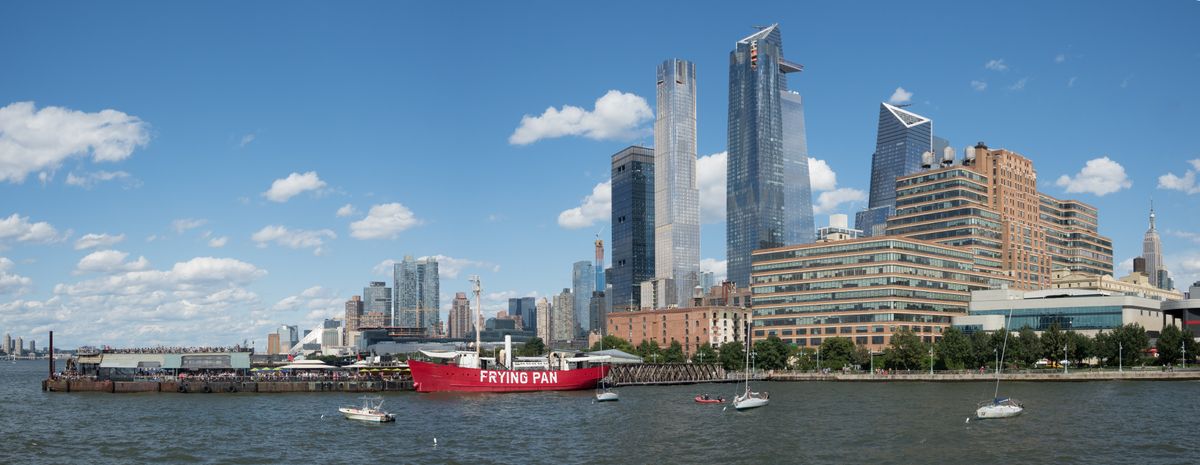
Since its opening, studies have documented that property values within a quarter-mile of the High Line increased by between 10 and 35 percent over the comparable New York City baseline. The park's northern terminus abuts Hudson Yards, an 18-million-square-foot private development by Related Companies and Oxford Properties, one of the largest and most expensive real estate projects in American urban history. The Coach Passage, the covered section of the High Line at 30th Street that runs through Coach's global headquarters at 10 Hudson Yards, is named for the Coach Foundation's capital gift. The architecture of the park and the architecture of the development are not adjacent to each other; they are continuous.
This is the institution within which High Line Art operates. The fall 2026 commission season, featuring Alvaro Barrington, Marianna Simnett, Amol K. Patil, and Christopher Williams, is the cultural program of that institution.
The Fall 2026 Season
Cecilia Alemani, the Donald R. Mullen, Jr. Director and Chief Curator of High Line Art, announced the fall 2026 commissions in late August 2026. The curatorial statement framed the works as exploring "relationships to various forms of labor and each other, in revealing and startling ways." The thematic continuity of the 2026 season centers on bodies, labor, and infrastructure: a vocabulary that OAC reads here not as a departure from the institution's economic logic but as its most refined cultural expression.
Marianna Simnett's "Interlude" opens in September 2026 at the High Line's 30th Street location, adjacent to the Coach Passage and the Hudson Yards development. The installation centers on a radioactive-orange resin concession cart with a looping video showing a food vendor preparing stadium hot dogs under fluorescent light, singing an eerie, melancholic song. The work runs through August 2027.
Amol K. Patil's "The Voices Cast in Dust" opens in October 2026 at 24th Street. A monumental bronze sculpture depicting interlocking human figures merged into a single collective mass, the work connects the labor histories of Mumbai's mill districts and New York's West Side, asking what monuments to working-class history look like when built for a park funded by real estate capital.
Alvaro Barrington's "Western Beef-High Line" opens in November 2026 above 14th Street, positioned toward the Hudson River. A steel billboard framework filled with colored plastic vinyl strips and milk crates, the work creates a stained-glass effect as daylight pierces the plastic. The title references a supermarket chain in the Bronx neighborhood where Barrington spent formative years. The work runs through October 2027.
Christopher Williams's "MODEL" occupies the High Line's billboard at 18th Street and 10th Avenue from September through November 2026. An enamel-on-glass design rendered at billboard scale, it presents the word "MODEL" in handmade brushstroke lettering, positioned against a skyline of luxury residential towers.
Four commissions. Four months. One curatorial frame: labor. The frame is the argument.
Western Beef-High Line: The Immigrant Sublime
Barrington's "Western Beef-High Line" compresses two visual vocabularies into a single structure. The first is vernacular: the colored plastic strips and milk crates of the corner supermarket, the material infrastructure of the immigrant-owned grocery store that supplies the Bronx communities Barrington grew up near. These materials carry a specific Material Singularity. The milk crate is one of the most semantically dense objects in American urban culture: a marker of informal economy, community infrastructure, and the resourcefulness of those operating at the margins of formal markets. The vinyl strip is the material of the provisional, the temporary divider, the curtain that marks where one territory ends and another begins.
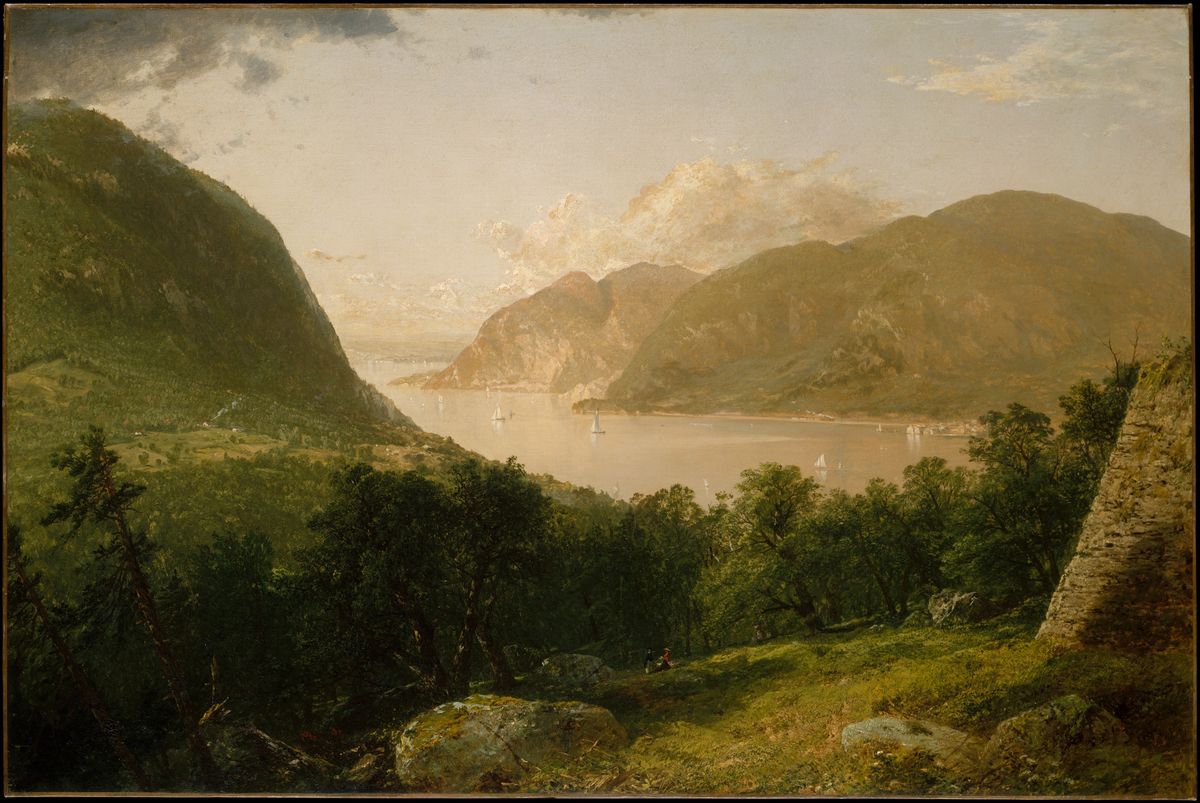
The second vocabulary is canonical. Barrington positions the work facing the Hudson River, entering into explicit dialogue with the Hudson River School, the nineteenth-century American landscape tradition whose painters made the Hudson Valley into a mythology of national expansion and westward destiny. Thomas Cole, Frederic Church, Albert Bierstadt: artists who looked at this river and saw the future of a continent. Barrington's work takes their compositional frame and fills it with the materials of the contemporary Bronx diaspora, Caribbean, transnational, arriving at a river that is now, at this particular bend, surrounded by some of the most expensive residential real estate in the Western world.
A steel billboard facing the Hudson River, assembled from supermarket materials: the immigrant vernacular pressed into the frame of the American sublime, at a site where that sublime is now priced by the square foot.
What the commissioning structure does to this formal ambition is the critical question. Barrington's work will hang above 14th Street, overlooking a stretch of the High Line where a one-bedroom apartment in the adjacent buildings begins above $3 million. The aesthetic labor of the immigrant vernacular, deployed here to create a glowing landscape visible from luxury residences at sunset, is doing cultural work that those residents will experience as beauty without necessarily naming as extraction. The work is genuine. The context is the argument.
Interlude: The Vendor at 30th Street
Simnett's "Interlude" is positioned at 30th Street, the precise location where the High Line crosses through Coach's 10 Hudson Yards headquarters. The installation places a food vendor in a pair of radioactive-orange concession stands at the edge of one of the most concentrated nodes of corporate capital in New York. The looping video shows the vendor preparing stadium food under fluorescent light, singing as she works, in a sequence that Simnett has described as examining vulnerability, repetition, and dark transformation.
The Semantic Burden of the work is explicit: the invisible urban worker made legible, given a stage, returned to visibility in a space that typically renders service labor as ambient. The high-visibility orange of the cart's resin housing is the color coding of urban service workers, the Hi-Vis palette of the person meant to be seen without being acknowledged. Simnett's installation literalizes this condition: the cart is the worker's actual site of labor, replicated at gallery scale on a platform that charges premium prices at its adjacent food kiosks.
What is the relationship between the food vendor in Simnett's "Interlude" and the food vendors who work the actual concession stands of the High Line's park infrastructure? The curatorial framing does not address this. The aesthetic of precarity and the infrastructure of precarity coexist on the same elevated platform, separated by the categorical distinction between art and labor that the commission reinforces even as its thematic content appears to dissolve it.
The High Line's northern end was built on, and generated, the displacement of the working-class and immigrant communities who populated Chelsea and Hell's Kitchen before 2009. The food vendor in Simnett's "Interlude" is a figure of those communities: not a specific person, but the generic type whose actual presence the park's development made economically impossible. The installation is technically accomplished. The location is the primary evidence.
The Voices Cast in Dust: What Bronze Promises
Of the four fall 2026 commissions, Patil's "The Voices Cast in Dust" makes the strongest formal claim to Object Permanence. Bronze is the material of monumental public sculpture precisely because it weathers, acquires patina, resists vandalism, and outlasts the institutions that commission it. The interlocking figures of Patil's work evoke both the collective solidarity of organized labor and the formal language of memorial: these figures are being preserved, not merely displayed.
Patil's practice centers on the performance, archival documentation, and material memory of subaltern labor in Mumbai's mill districts. The Girni Kamgar movement, the workers who ran Mumbai's textile mills before their demolition and real estate conversion beginning in the 1980s, is the historical ground of his research. The parallel with New York's West Side is not metaphorical: the industries that occupied the blocks below the High Line were cleared in the same period, through the same combination of deindustrialization and speculative real estate pressure, and the workers who ran them were dispersed into the same precarious informal economy. Patil's bronze connects these histories with deliberate structural precision.
The Labor Density of the work is genuine: it is the product of intensive artistic labor, of foundry craft, of research conducted over years and across continents. But the Custodian's Contract for a High Line commission is not determined by the artist's intent. Friends of the High Line determines placement, duration, and the conditions of any potential permanent acquisition. The bronze promises permanence. The contractual structure specifies the terms on which that permanence is granted or revoked. The commission gives the institution the cultural capital of a monument to labor history while retaining the institutional authority to demount it on a schedule of its own choosing.
MODEL: The Sign That Reads Its Surroundings
Christopher Williams's "MODEL" occupies the billboard at 18th Street and 10th Avenue with an enamel-on-glass design rendered at billboard scale, presenting the word "MODEL" in handmade brushstroke lettering that gives it the surface quality of a vintage industrial sign. Williams, an American conceptual photographer whose practice has examined the infrastructure of image production (advertising, exhibition distribution, and the institutional conditions that determine what becomes visible and at what scale) positions a word that is simultaneously emptied and overloaded with meaning.
A model is an ideal form. A fashion model is a body hired to make consumption desirable. A model is a hypothesis, a template, a prototype. A building model is what a developer presents before the concrete goes up. The term appears in architectural renderings, in economic projections, and in the vocabulary of the luxury residential market that surrounds the High Line's 18th Street location at every point of the compass. Williams's brushstroke lettering, which makes the word feel handmade and provisional against the polished glass and steel of the adjacent towers, performs a conceptual gap between the artisanal and the architectural.
The Aura Transaction Williams proposes is the classic conceptual move: occupy the infrastructure of commerce with the form of critical commentary, and let the friction between medium and message generate meaning. The High Line's billboard, by 2026, is itself a contested surface: institutional art infrastructure that is formally indistinguishable from advertising infrastructure. Williams's work is self-aware about this indistinction. Whether the commissioning institution shares that self-awareness is a question the work poses but cannot answer from within the terms of its own commissioning.
"MODEL" runs for three months, the shortest engagement of the four fall commissions. Its brevity is its own argument: the sign goes up, the luxury towers remain.
Atmospheric Equity: Art as Property Value
Atmospheric Equity is the conversion of cultural programming, institutional prestige, and artistic legitimacy into measurable increases in surrounding property values. The mechanism does not require intention; it operates structurally. A prestigious public art program does not merely decorate a space: it reclassifies it. It signals that the neighborhood is safe for investment, that its future residents are culturally sophisticated, that the urban environment delivers the amenities associated with the upper end of the residential market. This signal is capitalized in land values before the paint dries.
The High Line is the canonical American instance of this mechanism. The park was advocated, in significant part, by real estate interests who understood that a linear park on the West Side of Manhattan would create the preconditions for major development at its northern end. The park was completed in 2009; Hudson Yards followed. The correlation between the High Line's opening and the acceleration of displacement in Chelsea, the Meatpacking District, and Hell's Kitchen is documented by urban economists, housing advocates, and former residents who did not survive the neighborhood's reclassification at market rate.
The High Line's art program is continuous with this mechanism, not separate from it. It generates the cultural prestige that justifies the premium attached to proximity. The fall 2026 season's thematic focus on labor is not a critique of the park's economic function; it is that function's most sophisticated cultural expression. The institution commissions works engaging with the communities and labor histories its development displaced, presents that engagement as social responsibility, and generates thereby the legitimacy that makes the adjacent real estate more desirable. This is not a failure of the individual season; it is the structural operation of the institution as designed.
The High Line's art program is not a counterweight to gentrification. It is gentrification's cultural division: the branch office that makes the investment thesis legible as civic virtue.
OAC's framework adds precision to this argument: the art program is not decor on a real estate project. It is infrastructure for the project's self-presentation. Barrington, Simnett, Patil, and Williams are not decorators; they are artists whose commissioning, under this institutional frame, produces a specific cultural product, namely the legitimacy of an institution that has displaced the very communities whose labor histories its programming celebrates. That product is real and valuable in the most literal sense. It appears in the offering memoranda for adjacent residential buildings as cultural amenity.
Institutional Necrophagy and the Spectacle of Dissent
Institutional Necrophagy is the condition in which an institution consumes the critical discourse that would otherwise be directed against it and presents that consumed discourse as evidence of its own cultural vitality. The High Line's fall 2026 season, curated explicitly around bodies, labor, and infrastructure, exemplifies the mechanism at a level of refinement that warrants precise analysis.
Labor is the dominant critical vocabulary for analyzing the relationship between real estate capital and urban displacement. The erasure of working-class communities, the conversion of industrial sites into luxury residential corridors, the suppression of the informal and immigrant economy: these are labor-historical critiques. An institution that is itself the product of these processes commissions work that deploys precisely this critical vocabulary and presents it as the season's thematic ambition. The critical discourse has been absorbed; it now appears as the program.
The Hollowed Object is an object that retains the formal properties of meaning, including critical discourse, without retaining its structural content. The food vendor in Simnett's "Interlude" is not an activist demanding labor rights: she is an aesthetic figure of labor precarity, positioned where her structural meaning is neutralized by the commissioning context. The interlocking workers in Patil's bronze are not a monument to an active labor movement: they are a monument to the idea of collective struggle, installed in a park funded by the beneficiaries of its suppression. The vocabulary of the displaced is presented as the cultural program of the institution that displaced them.
The Arena synthesis identified this as relating to Speculative Velocity: the commissions generate institutional momentum for the artists, accelerating their positioning within the same circuit their work's thematic content implicitly critiques. A High Line commission is a significant market event; it appears in the press records that specialist advisors use to evaluate an artist's trajectory. The institution produces cultural capital for the artists and absorbs the critical energy of their work simultaneously. This is not hypocrisy. It is the normal operation of a platform whose economic function and cultural function are structurally aligned.
As OAC noted in its analysis of Blue Shapiro's deinstalled installation at the Kennedy Center, the institution's relationship to a commissioned work determines the work's meaning regardless of the artist's intent. The Structural Captivity of a commission is not a statement about the quality of the work; it is a statement about the conditions of its presentation.
The Arena's Reviewer Audit flagged a lexical error in the synthesis worth correcting in the record: the Hollowed Object is a noun describing a condition, not a verb. The High Line does not "hollow out" the Semantic Burden of labor discourse; it commissions that Semantic Burden to be carried within an institutional frame that cannot honor it. The distinction matters because the agency is the institution's, not the discourse's. The works do not fail; the structure produces their absorption in advance of their arrival.
Guy Debord named the Spectacle of Dissent as the moment when critical representation is absorbed by the spectacle it critiques and returned as content. The High Line's fall 2026 season is a precise and current instance of this absorption. Its curatorial framing of labor and community does not resist the institution's economic function. It is that function's most publicly legible form.
Coda
OAC's position is not that these commissions should not exist or that these artists should not accept them. The works are real, the artists are serious, and the critical readings they invite are genuine. The argument is structural: the frame within which they are shown is the primary text, and the institution that commissions them is, in its economic function, the subject of the critique.
Barrington's stained-glass immigrant vernacular above 14th Street. Simnett's fluorescent food vendor at 30th Street. Patil's bronze collective at 24th Street. Williams's handmade billboard at 18th Street. These are works of genuine formal ambition, produced by artists whose practices engage the histories of labor, displacement, and community with intelligence and rigor. They are also, in their placement, the cultural program of an institution whose economic logic their thematic content describes without fully naming.
The Custodial Stewardship that public art commissions claim to exercise requires an institutional architecture willing to honor a work's structural meaning: to fund not only the production but the conditions under which the critique the work generates can be received without institutional capture. The High Line, as currently constituted, provides the architecture of prestige without the architecture of protection. It commissions the aesthetics of labor solidarity and calls it stewardship.
The distinction between genuine custodianship and the Semantic Burden absorbed into institutional decor is OAC's primary critical territory. In the High Line's fall 2026 season, that distinction is the argument the institution's curatorial framing cannot afford to make, and that OAC is therefore obliged to make for it.